
万代

Search documents
连锅卖的爆米花,拿下日本11年销量冠军
3 6 Ke· 2025-11-10 01:26
买一份爆米花,还配一个"锅"? 在日本超市的零食区,你很容易发现一些不一样的零食。但大部分零食,你至少一眼就能判断它是什么。而眼前这个产品,一眼看到它压根想 不到是爆米花。 日本三叶草爆米花,图片来源:FISH&CO. 永旺零食区的クローバー爆米花 一份由消费者"引爆"的爆米花 这份爆米花自带一次性"锅",既能吃,还能让你自己上手做。 为了在爆米花赛道中做出差异,日本品牌クローバー (直译为三叶草)推出了一款怀旧煎锅爆米花,它比即食爆米花好吃,也比电影院的新 鲜爆米花更容易买到,甚至多了一些制作的"好玩"。一次性锅具加爆米花的组合,让消费者能够低门槛地自制爆米花,且做完也不用担心洗锅 的问题,直接将"锅"扔掉即可。 它挂在零食区的入口,三个一排挂在铁丝网上,和海苔之类的小零食一起占据半米左右的入口,很容易被忽略。但当你看到它,很可能就会好 奇这到底是什么零食。 它摸上去是空气炸锅常用的锡纸盘材质。不同的是,空气炸锅用的锡纸盘轻薄平整,而这个产品却明显"夹带私货"。 直到你认真看了产品包装的图片,再不自信的拿出翻译扫描它的产品包装文字,你可能才知道,这个用锡纸盘严丝合缝地扣在一起的"神秘小 银盒",原来是一份爆 ...


互联网行业新视角报告:全球潮玩市场广阔国产潮玩厂商突围
Sou Hu Cai Jing· 2025-11-06 01:53
Group 1 - The global潮玩 (trendy toy) market is experiencing rapid expansion, with the market size growing from 631.2 billion RMB in 2019 to 773.1 billion RMB in 2023, representing a compound annual growth rate (CAGR) of 5.2%. It is expected to reach 993.7 billion RMB by 2028, with a projected CAGR of 5.1% over the next three years [1][6][21] - North America, Europe, and Asia-Pacific are the top three markets, with sizes of 243.3 billion RMB, 214.0 billion RMB, and 213.6 billion RMB respectively in 2023. China is a major player in both production and consumption, with a projected潮玩 market size of 72.7 billion RMB in 2024, growing at a rate of 26% [1][7][21] - Supply chain management is a core competitive advantage for潮玩 companies, with advancements in technology reducing the product sampling cycle from six months to 72 hours, enabling small-batch production and lowering costs for independent designers [1][8][33] Group 2 - The trend of channel penetration and deep exploration is emerging as a new growth driver in a saturated market. The population in third-tier cities and below is 950 million, with a projected 7.8% increase in disposable income in 2024.潮玩 consumption penetration has tripled since 2020, indicating significant growth potential in these markets [2][10][11] - Leading brands are leveraging strategies such as celebrity collaborations, limited edition designs, and multi-channel engagement to create consumer events. However, risks such as speculation in the secondary market and regulatory uncertainties must be monitored [2][12] - The investment value assessment of the潮玩 sector should focus on four core dimensions: supply chain resilience, operational depth, distribution breadth, and craftsmanship precision. Companies excelling in these areas are more likely to dominate the market and achieve higher valuations [12][14] Group 3 - The潮玩 market is characterized by a dual-track competition, with established brands like LEGO and Bandai focusing on collectible products, while Chinese brands like泡泡玛特 and 布鲁可 are innovating through differentiated product offerings [24][31] - The潮玩 industry is transitioning from being a "cultural input country" to a "cultural output country," driven by cultural confidence, technological innovation, and sound business logic [24][31] - The market is witnessing a diversification of sales channels, with core urban areas, school surroundings, and community retail terminals becoming new sales venues. Brands are also utilizing online platforms to create an integrated sales approach [44][46]


2025潮玩市场出海研究报告
Sou Hu Cai Jing· 2025-11-05 17:13
Core Insights - The report focuses on the current status and strategies of Chinese潮玩 (trendy toys) brands going global, analyzing the global market situation and competitive landscape [1][6] - The潮玩 market is characterized by limited editions, artistic designs, and cultural symbolism, appealing to consumers' self-expression, curiosity, social needs, and the pursuit of artistic creativity and collectible value [1][10] Market Overview - The global潮玩 market is projected to grow from $8.7 billion in 2015 to $41.8 billion in 2024, indicating over 100% growth from 2020 to 2024 [1][18] - The Chinese潮玩 market is expected to reach approximately 764 billion yuan in 2024, with projections to exceed 1.1 trillion yuan by 2026 [1][20] Market Dynamics - The潮玩 market is driven by the rise of the Z generation, who value individual expression, social recognition, and emotional connections [1][23] - The IP economy is a significant driver, with the Chinese IP licensing market projected to reach 156.1 billion yuan by 2024, growing at a compound annual growth rate (CAGR) of 13% [1][26] Consumer Insights -潮玩 products fulfill emotional consumption needs, with 90% of Chinese consumers willing to pay a premium for emotional satisfaction [1][24] - The trend of "healing economy" is driving demand for adult emotional consumption, with the global healing economy market valued at $5.61 billion in 2022 and expected to grow to $8.47 billion by 2027 [1][15] Product Categories - Popular潮玩 categories include blind boxes, artistic toys, and IP-derived models, with brands like泡泡玛特 leading in the domestic market [1][11][36] - The blind box market is projected to reach $13.5 billion globally by 2031, with a CAGR of 5.5% from 2024 to 2031 [1][39] Competitive Landscape - Major global潮玩 companies include Disney, LEGO, and Bandai, with significant revenues and diverse distribution channels [1][33] -泡泡玛特 is a leading Chinese brand, with expected revenue of nearly 8 billion yuan in 2024 and presence in 23 overseas markets [1][1]

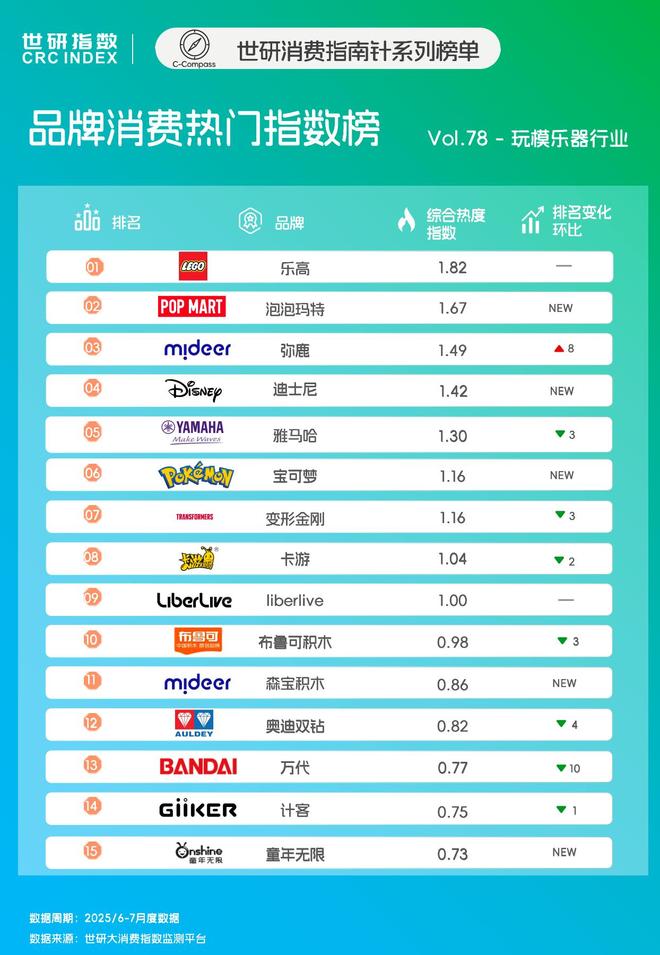
IP生态驱动价值升级,益智教育推动积木创新|世研消费指数品牌榜Vol.78
3 6 Ke· 2025-10-23 09:44
Group 1: Industry Trends - The core trend in the toy modeling industry is the integration of IP as a value core, driven by emotional and cultural demands, as seen in brands like LEGO, Disney, and 卡游 [2] - Successful brands are moving beyond just products to build ecosystems around "IP × culture × community," enhancing user loyalty through emotional and cultural connections [2] Group 2: Product Innovation - The demand for educational toys is driving innovation in building block products, with brands like 弥鹿, 布鲁可积木, and 森宝积木 focusing on parents' needs for cognitive development and skill-building [3] - 弥鹿 emphasizes "open-ended toys" and integrates technology like the "AI bilingual enlightenment board" to cater to parents' focus on art education and safety [3] - 布鲁可积木 targets younger children with large particle blocks that ensure safety and are backed by STEM education, while 森宝积木 leverages Chinese cultural IP to engage youth and adults [3]
“黑神话BLACKMYTH”零售店能否成为游戏IP挖掘新范本?
Zheng Quan Ri Bao Wang· 2025-09-23 13:57
Group 1 - The game "Black Myth: Wukong" has sparked a consumer frenzy with its official merchandise, achieving significant sales in a short period, such as over 2000 units of the "Yang Jian" collectible figure priced at 498 yuan within three days [1] - The official retail brand "Black Myth BLACKMYTH" is set to open its first offline store in Hangzhou on September 25, covering approximately 1000 square meters and offering around 120 SKUs across six categories [1] - The rise of the "Guzi economy" has led to substantial online sales for game merchandise, with some companies achieving over 100 million yuan in sales during major shopping events like "Double 11" [2] Group 2 - The traditional monetization model for game IPs often relies on low-risk licensing agreements, which limits control over product quality and design [3] - The opening of the "Black Myth BLACKMYTH" store represents a shift in the gaming industry towards deeper exploration of IP, moving from "traffic operation" to "brand operation" [3] - Offline retail stores serve as promotional platforms for games, enhancing player engagement and attracting new users, while also extending the lifecycle of the IP beyond the typical lifespan of games [4]
野村东方国际 玩具中的“爆款”和“潮流风险”
野村· 2025-09-15 01:49
Investment Rating - The report does not explicitly provide an investment rating for the toy industry Core Insights - The Japanese toy market has experienced stagnant growth over the past 30 years, with a shift in consumer preferences leading to a decline in traditional children's toys and a rise in emerging categories like card games and hobbies [1][3] - The market for assembly toys has shown volatility, with significant growth driven by blockbuster products in the late 1980s, followed by a decline, but a long-term upward trend as the player demographic expanded from children to adults [1][4] - The integration of intellectual property (IP) into the toy industry began in the 1970s, fostering collaboration between content creators and manufacturers, which has been crucial for the development of derivative markets [1][6] - The adultization trend in the toy industry became prominent after the 1990s, leading to increased demand for collectible items and the emergence of niche categories [1][8] Summary by Sections Market Trends - The Japanese toy industry has seen a significant shift in market share over the past two decades, with new categories like children's card games and hobbies gaining prominence while traditional toys have declined [5] - The assembly toy market has experienced notable volatility, with peaks in the late 1980s followed by declines, but a long-term trend of growth as the audience has expanded to include adults [4][10] Company Strategies - Major companies like Bandai and Takara Tomy have adopted platform strategies to monetize IP through acquisitions, diversifying their revenue streams and enhancing their ability to withstand market risks [2][15] - Bandai has successfully integrated various business models, targeting different age groups with a diverse range of products, thereby mitigating risks associated with market fluctuations [16] IP Development - The report highlights the importance of IP in the toy industry, with successful examples like "One Piece" demonstrating how a single IP can evolve and generate revenue across multiple platforms [14][13] - The assembly model market features key IPs such as Gundam, which has shown consistent growth, while others like Mini 4WD have experienced fluctuating popularity [10][11]
二次元经济遇到瓶颈?动漫星城收入降三成,角川利润降九成
3 6 Ke· 2025-09-12 02:51
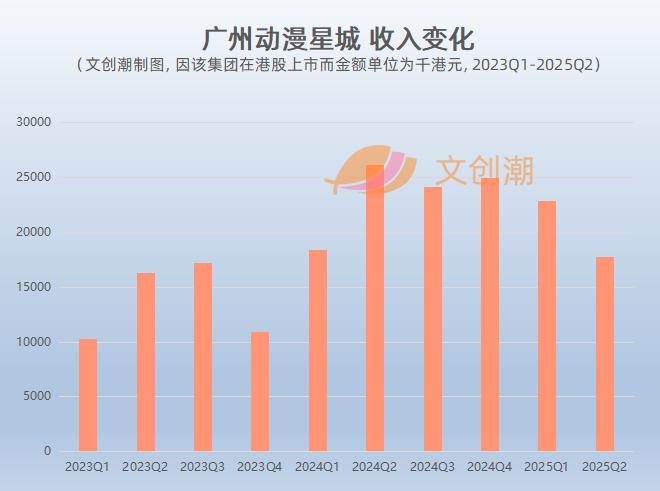
Core Insights - The overall sentiment in the anime and IP market is mixed, with some IPs like "Demon Slayer" driving significant revenue growth, while others like "Ultraman" and "Attack on Titan" are experiencing declines in income [1][25][36]. Group 1: Market Performance - The second quarter of 2025 saw a decline in revenue for several major IPs, with "Demon Slayer" contributing to a 50% increase in sales for Sony's animation and gaming sectors [1][36]. - Guangzhou's Anime Star City reported a 32% drop in revenue for Q2, despite maintaining a high occupancy rate of 99.8% [2]. - Wangfujing Joy Shopping Center, after strategic repositioning, saw a 48% increase in sales for the first half of 2025, although it still reported a loss of approximately 114 million yuan [4][6]. Group 2: IP-Specific Developments - Bandai's "Gundam" IP achieved a record sales figure of 103.2 billion yen in the first half of 2025, driven by the release of a new TV series and related merchandise [10][13]. - "Ultraman" faced a 1.47% decline in sales, with domestic sales plummeting by 66.96%, although overseas sales grew by 45.29% [25][27]. - Toho Animation reported a 6.79% increase in sales, primarily due to the strong performance of "One Piece" and "Dragon Ball" in overseas markets [36][42]. Group 3: Strategic Initiatives - Wangfujing Joy Shopping Center is transforming into a "New National Trend Shopping Center" to cater to the diverse needs of the Z generation [6]. - Sony is enhancing its IP development capabilities through strategic partnerships, including a significant investment in Kadokawa and collaboration with Bandai Namco [60][62]. - Sanrio's multi-character marketing strategy has proven successful, with a 47.4% increase in sales, particularly in the Chinese market, where sales surged by 91% [75][86].
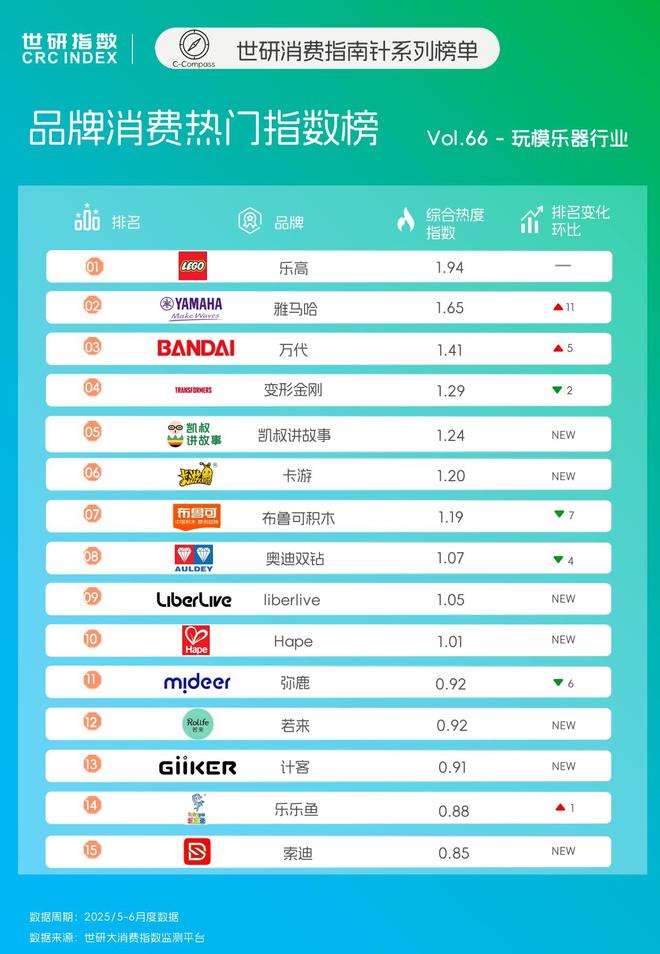
IP创新引爆市场,玩模乐器品牌错位竞争|世研消费指数品牌榜Vol.66
3 6 Ke· 2025-09-08 02:52
Group 1 - The core viewpoint highlights the competitive landscape of toy brands, with card game brand "卡游" regaining its position in the market through innovative strategies, including a secondary listing on the Hong Kong Stock Exchange and the launch of new products [3] - "卡游" has introduced new card series such as "卡游三国" and "秦时明月·英雄对决竞技加强版," while also expanding into scene-building blocks and 3D card figurines to create a comprehensive product matrix in the IP derivative market [3] - The brand has opened a flagship store in Shanghai and shifted its central store model from franchising to joint ventures, positioning itself for growth in the trading card game (TCG) sector [3] Group 2 - The traditional instrument market is evolving with the integration of smart technology, as seen with Yamaha's stable global market presence but challenges in the high-end piano segment due to declining domestic demand [4] - Yamaha is upgrading traditional instruments by promoting convenient upright digital pianos and updating its AVENTAGE AV amplifier products to support seamless connectivity with Sonos home audio systems [4] - New brand LiberLive is leveraging electronic touch and AI algorithms to attract beginner musicians and social users, while Yamaha relies on physical stores and professional channels for distribution [4] Group 3 - The "世研消费指南针" series of indices aims to objectively present consumer trends across various industries, including toys and musical instruments, helping brands track market trends and enhance competitive strength [5] - The index continuously monitors 12 major industries, including 3C digital products, apparel, food, home appliances, beauty, and toys, providing valuable insights for businesses [5]
卡牌市场向好?卡游供应商文创收入增六成
3 6 Ke· 2025-08-28 02:47
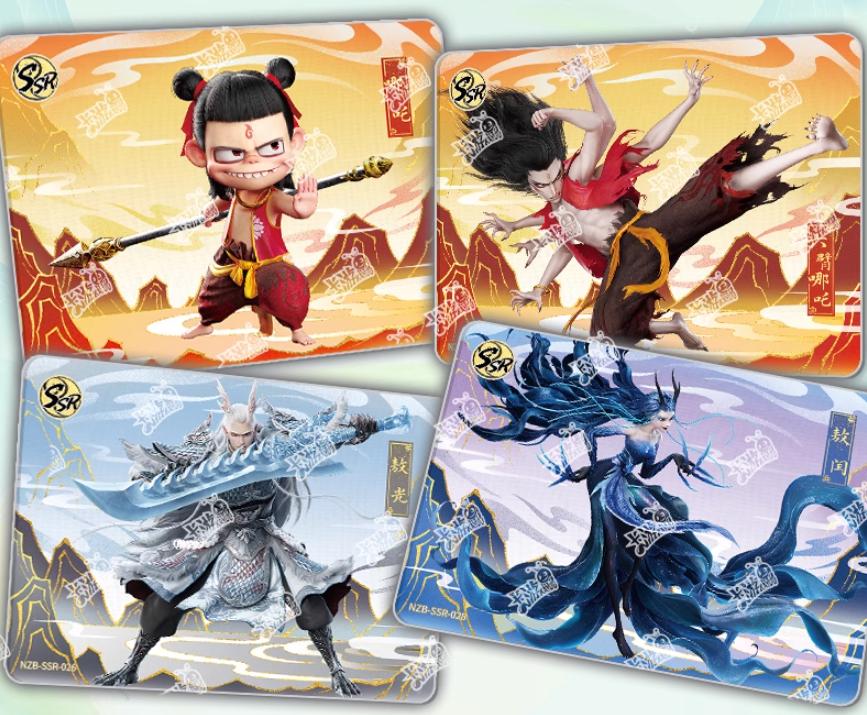
Core Insights - The article highlights the positive performance of major Japanese companies in the trading card game (TCG) sector for the first half of 2025, with notable sales growth across various brands [1] - In China, there is a surge in demand for card products, particularly following the release of the domestic film "Nezha: Birth of the Demon Child," which significantly boosted related card sales [1][2] Company Performance - Bandai's One Piece TCG released 10 new card packs, contributing to strong sales [1] - Bushiroad's TCG business saw a year-on-year sales increase of 34.42% [1] - Jinghua Laser reported a 61.98% year-on-year revenue growth in its cultural business, driven by the popularity of the "Nezha" card products [1][2] - Yaoji Technology's subsidiary "Katao" achieved approximately 105 million yuan in revenue, a 33% increase year-on-year, with a net profit of about 12 million yuan, up 39% [4] - Huali Technology's revenue from anime IP derivative products reached approximately 166 million yuan, a 14.51% increase, although its gross margin declined from 44% to 39% [7][9] Market Trends - The article notes a shift in the market, with three-dimensional IP card products experiencing explosive growth, while two-dimensional anime IP collectible cards are entering a period of adjustment [15] - The Ultraman franchise is facing challenges, with a 7.4% decline in toy revenue and a significant drop in other merchandise categories, despite a surge in TCG sales due to the launch of the "ULTRAMAN CARDGAME" [15][16] - The article emphasizes the need for new hit products in the two-dimensional IP collectible card market to revitalize interest, as no new titles have matched the success of "Nezha" or previous hits like "My Little Pony" and "Ultraman" [15][18]




潮玩行业研究:潮玩千亿赛道空间广阔,文化与全球化打开成长天花板
Yuan Da Xin Xi· 2025-08-26 11:09
Group 1 - The industry is transitioning into a new development stage characterized by innovation-driven features, with a blend of various cultural elements such as traditional Chinese culture, anime, sci-fi, and trendy art [1][15][16] - The market for trendy toys is experiencing exponential growth, with the global retail market size increasing from $8.7 billion in 2015 to $19.8 billion in 2019, and projected to reach $44.8 billion by 2024, demonstrating strong resilience through economic cycles [3][25][26] - The Chinese trendy toy market has grown from 6.3 billion yuan in 2015 to 34.5 billion yuan in 2021, with an average annual growth rate of 34%, and is expected to maintain a compound growth rate of 24% from 2022 to 2026, potentially exceeding 110.1 billion yuan by 2026 [3][26][30] Group 2 - The industry is driven by a dual engine of IP licensing and original design, with leading companies building extensive IP matrices through self-owned and licensed IPs, enhancing product offerings across various categories [2][19][20] - The consumer base for trendy toys is expanding, with Z generation (born 1995-2009) representing 38.4% of the market, and a notable increase in adult consumers, particularly women aged 15-25, who account for 65% of plush toy purchases [12][36] - The competitive landscape is becoming increasingly complex, with over 49,000 companies in the trendy toy sector as of 2024, and new registrations growing by 34% year-on-year [41][43] Group 3 - The integration of new technologies such as AR and AI is reshaping product experiences and industry paradigms, enhancing interactivity and personalization in trendy toys [20][21][54] - The rise of domestic cultural IPs is significantly increasing market penetration, with companies like Pop Mart and 52TOYS developing a robust portfolio of original IPs [37][39] - The market is witnessing a diversification of product categories beyond blind boxes and figurines, including assembly blocks, plush toys, and trading cards, catering to a wide range of consumer preferences [2][20][33]
