东鹏饮料

Search documents
食品饮料周报(25年第26周):飞天茅台价格已有企稳迹象,大众品关注新渠道、新产品-20250630
Guoxin Securities· 2025-06-30 06:59
Investment Rating - The report maintains an "Outperform the Market" rating for the food and beverage sector [4][5][73]. Core Views - The food and beverage sector has shown a slight increase of 0.02% this week, underperforming the Shanghai Composite Index by 1.89 percentage points [21]. - The report highlights that the price of Feitian Moutai has shown signs of stabilization, while the fundamentals of the liquor industry may accelerate to a bottom [2][11]. - The report emphasizes the importance of new channels and products in the consumer goods sector, particularly as beer and beverage consumption enters a peak season [3][14]. Summary by Sections Liquor Industry - The liquor industry is experiencing pressure on demand, with the white liquor index down by 1.7% this week. The report anticipates a subdued performance in the second quarter [2][13]. - Key recommendations include focusing on leading companies with strong risk resistance such as Guizhou Moutai, Shanxi Fenjiu, and Wuliangye, as well as companies like Luzhou Laojiao that are showing signs of valuation recovery [2][13]. Consumer Goods - The beer sector is benefiting from warmer weather, which is expected to boost consumption. The report suggests monitoring alpha-type stocks like Yanjing Beer and Zhujiang Beer for potential investment opportunities [14][15]. - The snack food sector is undergoing a trend of differentiation, with recommendations for companies that are innovating in new products and channels, such as Weilong and Yanjinpuzi [16]. - In the seasoning industry, the report notes resilience in basic seasoning leaders and suggests focusing on policy developments that could impact the sector [17]. Frozen Food - The frozen food sector is stable during the off-season, with companies actively developing new products. The report highlights the upcoming IPO of Anjins Food as a significant event [18]. Dairy Products - The dairy sector is expected to see a gradual recovery in demand, with potential policy catalysts aiding in supply-demand improvements by 2025 [19][20]. Beverage Sector - The beverage industry is entering a peak season, with leading companies expected to maintain positive growth. The report recommends focusing on companies like Dongpeng Beverage that are accelerating national and platform expansion [20].




大消费联合会议
2025-06-30 01:02
Summary of Key Points from Conference Call Industry Overview - **Industry Focus**: The conference call covers multiple industries including gold retail, logistics, motorcycle manufacturing, and beverages. - **Key Companies Mentioned**: Lao Pu Gold, JD Logistics, SF Express, Chuanfeng Power, Dongpeng Beverage, and others. Core Insights and Arguments Lao Pu Gold - **International Expansion**: Lao Pu Gold is actively expanding into overseas markets, starting with Singapore and planning to enter Japan, Southeast Asia, and Europe. The high proportion of Chinese residents and similar retail prices to domestic markets support this expansion [2][4]. - **Store Performance**: New stores in high-revenue malls, such as the Singapore Marina Bay Sands and Shanghai IFC, are expected to outperform existing stores, contributing significantly to revenue growth in the second half of the year [3]. Logistics Industry - **618 Shopping Festival Impact**: During the 618 shopping festival, logistics saw a 4% increase in collection and delivery volumes, with weekly parcel volumes nearing 4.1 billion. Year-on-year growth was below 15%, which is considered normal due to high base effects from the previous year [2][5]. - **JD Logistics Strategy**: JD Logistics is recruiting full-time riders to handle the increasing order volume from JD's food delivery service, aiming to enhance efficiency and service quality [7]. SF Express - **Capital Raising**: SF Express is raising capital through a stock issuance and convertible bonds to fill a funding gap from the previous year, focusing on technology and international business development [8][9]. - **Capital Expenditure Plans**: The company plans to maintain a stable but slightly reduced capital expenditure strategy, prioritizing the reduction of losses in international operations [10]. Motorcycle Industry - **Sales Growth**: In May 2025, the motorcycle industry saw over 100,000 units sold, a 30% year-on-year increase. Exports reached 150,000 units, driven by leading companies like Chuanfeng and Longxin [17][18]. - **Market Trends**: The market is experiencing a shift towards larger displacement motorcycles, with significant growth in the 500-800cc segment, indicating a trend towards higher-end products [20][23]. Beverage Industry - **Cost Reduction Benefits**: The beverage industry is benefiting from a decrease in PET costs, with rapid growth in categories like sugar-free tea and electrolyte water. Dongpeng Beverage reported nearly 40% monthly revenue growth in Q2 2025 [32][36]. - **New Product Launches**: Companies are expanding their product lines and entering new channels, such as Sam's Club, to drive growth [31]. Additional Important Insights - **Market Dynamics**: The logistics sector is seeing a differentiation in performance among companies, with direct models like SF and JD performing better than others [6]. - **Investment Opportunities**: The motorcycle sector presents significant investment opportunities due to recovering overseas demand and changing competitive dynamics, with Chinese companies poised to capture market share from struggling Western brands [30]. - **Beverage Market Competition**: The bottled water market is experiencing improved competition dynamics, with major players adjusting strategies to focus on overall sales growth rather than specific product lines [34][35]. This summary encapsulates the key points discussed in the conference call, highlighting the strategic directions and performance metrics of the involved companies and industries.

食品饮料行业周报:周观点:啤酒饮料正当旺季,持续关注渠道变化-20250629
GOLDEN SUN SECURITIES· 2025-06-29 07:31
Investment Rating - The report maintains an "Increase" rating for the food and beverage industry, indicating a positive outlook for the sector [4]. Core Insights - The beer and beverage sector is entering a peak season, with a focus on channel changes and growth opportunities. The report highlights three main investment lines for the liquor segment: leading brands, high-certainty regional brands, and elastic stocks benefiting from recovery and increased risk appetite [1][2]. - The white liquor industry is gradually bottoming out, with leading companies like Kweichow Moutai and Wuliangye showing low valuations and dividend value. The report emphasizes the importance of adapting to younger consumer preferences and enhancing brand quality [2]. - The beverage segment is characterized by high growth potential, with companies like Yanjing Beer and Zhujiang Beer being highlighted for their strong performance. The report also notes the introduction of new products by Xiangpiaopiao and the competitive landscape in the beverage market [3][6]. Summary by Sections White Liquor - Demand-side strategies focus on solidifying sales foundations, with companies actively managing supply and pricing to maintain strong sales [2]. - Supply-side initiatives include marketing transformations and product innovations aimed at younger consumers, such as low-alcohol and flavored products [2]. - The report indicates that the valuation of white liquor stocks has reached low levels, with current PE ratios around 17.7x, which is approximately 10% lower than the A-share market [2]. Beer and Beverage - The report notes the resignation of the chairman of China Resources Beer, which may present a buying opportunity post-adjustment [3][6]. - The beverage sector is experiencing intense competition, with new product launches and a focus on high-growth potential companies [6][7]. - The report highlights the ongoing transformation in retail, with companies like Sam's Club and Walmart leading in sales growth, indicating a shift in consumer purchasing behavior [7].
中国制造如何重返美国市场?| 出海峰会
吴晓波频道· 2025-06-28 01:21
Core Viewpoint - The article discusses the new opportunities and challenges faced by Chinese companies in the context of global supply chain shifts and international trade dynamics, particularly in relation to the U.S. and neighboring countries like Vietnam and Mexico [2][3][5]. Group 1: Current State and Challenges of Chinese Companies Going Global - Since 2018, China's share of U.S. imports has decreased from approximately 21% to 13%, with neighboring countries like Mexico and Vietnam benefiting from this shift [3]. - The traditional re-export trade model is facing difficulties, as new regulations in Vietnam are making it unsustainable for Chinese companies to simply relabel products for export to the U.S. [10][11]. - Chinese factories are adapting by relocating production to countries like Vietnam and Malaysia, as seen in the significant drop in Chinese cabinet exports to the U.S. [12]. Group 2: Supply Chain Restructuring - The phenomenon of "mobile factories" is emerging, where Chinese manufacturers are relocating their production capabilities to different regions, leading to a rapid reassembly of supply chains [14][15]. - The dependency of the U.S. on Chinese supply chains varies by industry, with some sectors like children's products remaining difficult to replace [15][16]. - Companies need to analyze their products at a granular level (SKU) to enhance resilience against supply chain changes [18]. Group 3: Strategies for Chinese Companies Going Global - Establishing a cognitive management system is crucial to overcome cognitive blind spots that hinder effective communication and collaboration among companies [24][26]. - A deep understanding of local markets and compliance is essential for successful international operations, as evidenced by the challenges faced by companies like Samsung in India [30][32]. - Companies should optimize their geographical layout by establishing multiple factories to mitigate tariff impacts and enhance operational efficiency [36][38]. Group 4: Organizational and Talent Development - Companies must break through traditional equity structures to avoid risks associated with over-concentration in local markets [41][43]. - Enhancing user insight and understanding local consumer needs is vital for product success in foreign markets [46][48]. - Developing localized management capabilities is necessary, as overseas operations often require different strategies than those used domestically [49][53][57].

2025年中国营养健康食品行业概览:从“朋克养生”到“精准营养”,Z世代健康消费觉醒下的行业发展新态势
Tou Bao Yan Jiu Yuan· 2025-06-26 13:11
Investment Rating - The report does not explicitly provide an investment rating for the health food industry Core Insights - The health food industry in China is transitioning from chaotic growth to regulated and rapid development, driven by e-commerce and a younger health concept [3][4] - The aging population and the rise of lifestyle diseases are increasing consumer focus on health, leading to a growing demand for nutritional interventions [3][6] - The market for nutritional health foods is expected to grow significantly, with the global market projected to reach 1,376.58 billion yuan by 2024 and 1,821.34 billion yuan by 2029 [12] - The industry is characterized by a competitive landscape where leading brands dominate market share, while small and medium enterprises face intense competition [4][41] Summary by Sections Market Overview - Nutritional health foods are categorized into health foods and functional foods, with health foods strictly regulated and functional foods having lower entry barriers [5] - The market is experiencing a significant increase in consumer health awareness, with per capita medical spending expected to reach 2,547 yuan in 2024, a 16% increase year-on-year [3] Industry Chain Analysis - The nutritional health food industry chain in China has formed a complete closed loop, with upstream relying on technological breakthroughs, midstream focusing on innovative formulations, and downstream utilizing diversified channels to reach younger consumers [14] - The industry is marked by a clear division between leading enterprises and small to medium-sized companies, with leading brands like汤臣倍健 and 仙乐健康 holding significant market shares [4][41] Consumer Insights - The consumer base for nutritional health foods is expanding, with middle-aged and elderly groups being the core consumers, while younger generations are emerging as key growth drivers [29][32] - Post-pandemic, over half of the population has shown increased interest in nutritional supplements, particularly among the 36-40 age group [31] Competitive Landscape - The competitive landscape of the nutritional health food industry is fragmented, with low industry concentration and significant differences in profit margins among companies [36][41] - Leading brands leverage their research capabilities and diverse product offerings to maintain market dominance, while smaller companies focus on niche markets [38][41] Development Trends - The industry is witnessing a trend towards product innovation, with a shift towards snack-like forms of nutritional health foods to cater to a broader consumer base [44][45] - Cross-industry collaboration is becoming more common, with traditional pharmaceutical companies and regular food enterprises expanding into the nutritional health food sector [47][49]
重磅意见发布,事关消费!茅台今日分红到账,规模领先的消费ETF(159928)小幅回调,连续2日获资金青睐!
Sou Hu Cai Jing· 2025-06-26 07:06
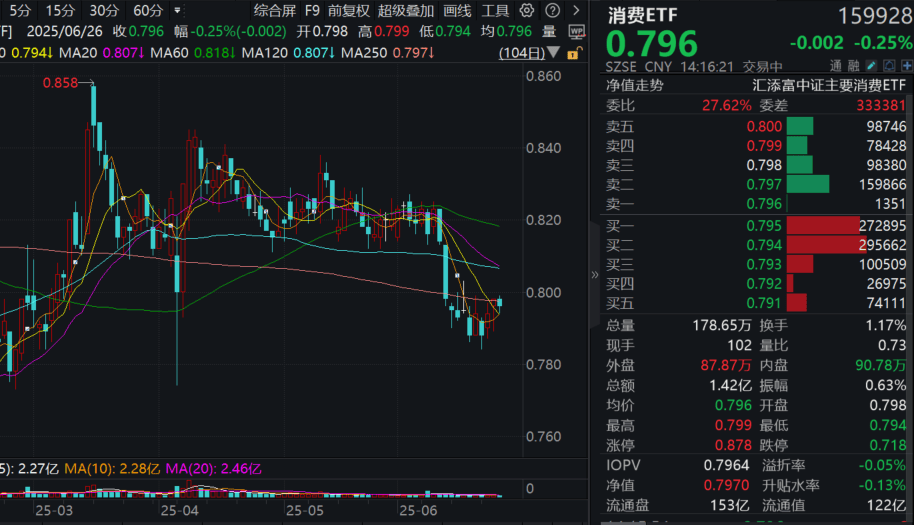
Group 1 - The A-share market showed a decline, particularly in the consumer sector, with the Consumption ETF (159928) slightly down by 0.25% and a trading volume exceeding 1.5 billion CNY [1] - The Consumption ETF has seen a net subscription of 18 million units, marking the second consecutive day of capital inflow, with a total scale surpassing 12.1 billion CNY, leading its category [1] - On June 24, six departments jointly issued guidelines to support and expand consumption, proposing 19 key measures across six areas to enhance financial services in the consumption sector [1][3] Group 2 - Shenzhen's Commerce Bureau released measures to promote high-quality service consumption, focusing on digital service consumption and new business formats such as e-sports and social e-commerce [2] - As of June 25, the index components of the Consumption ETF showed mixed performance, with notable gains in stocks like Yanghe Distillery and slight increases in Kweichow Moutai and Yili [2] - Kweichow Moutai announced a cash dividend of 276.73 CNY per 10 shares, with a total distribution amounting to 34.67 billion CNY [2] Group 3 - Longcheng Securities commented on the guidelines, emphasizing the need to stabilize consumer expectations and enhance financial support for the real economy [3][4] - The guidelines also focus on increasing employment and income for residents, promoting financial products that meet household wealth management needs [4] - The guidelines encourage the development of personal pension products and commercial health insurance to enhance consumer willingness to spend [5] Group 4 - The white liquor sector is expected to see a gradual recovery, with current demand at historical lows but limited downside risk, supported by favorable policies [7] - Guotai Junan Securities noted improvements in sentiment within the white liquor sector, driven by better-than-expected retail consumption data [8] - The Consumption ETF's top ten component stocks account for over 68% of its weight, with leading liquor stocks comprising 31% and major agricultural stocks 14% [9]
短期生机现,长期路漫漫
Dong Zheng Qi Huo· 2025-06-26 06:44
Report Industry Investment Rating - The rating for the bottle chip industry is "Oscillating" [5] Core Viewpoints of the Report - The bottle chip industry maintains a pattern of loose supply and demand, with absolute prices dominated by the cost side and difficult to have an independent market. Domestic demand growth falls short of expectations this year, and although exports are strong, they are insufficient to absorb the supply increment, leading to a faster accumulation of social inventory. However, the active adjustment by factories increases, and the supply side may continue to show periodic fluctuation characteristics, which will improve the industry's supply - demand situation periodically. The industry's profit is likely to remain sluggish, and the processing fee is expected to continue to oscillate at a low level, following the cost side. There are opportunities for operation in the range of 300 - 500 yuan/ton for the disk processing fee [3][74][75] Summary According to the Directory 1. 2025 H1 Bottle Chip Market Review - In H1 2025, bottle chip prices closely followed polyester raw materials, with significantly increased price volatility and a downward - shifted processing fee center. The market can be divided into three stages: In the first stage, weak oil prices and weak demand led to a downward trend in the polyester industry chain. Bottle chip processing fees first increased and then decreased. In the second stage, the adjustment of the US reciprocal tariff policy caused pulse - like fluctuations in the polyester industry chain prices. Bottle chip processing fees were passively expanded and then quickly weakened. In the third stage, geopolitical risks and domestic PX device load reduction pushed up polyester industry chain prices. The planned 20% production cut in July by bottle chip manufacturers was temporarily restricted by the strong raw materials [13][14] 2. Supply: Periodic Characteristics under Excess Capacity 2.1 Expansion Cycle Nearing Completion, Capacity Growth Rate Slowing - After high - speed capacity growth in 2023 - 2024, the capacity expansion speed of bottle chips slowed down in 2025. In H1, 125 tons/year of new capacity was added. It is expected that the new capacity in H2 will be about 67 tons/year, and the annual new capacity may reach 192 tons/year. The capacity growth rate in 2025 may drop to around 9.4% [21] 2.2 Significantly Increased Supply Elasticity - From January to May 2025, the total bottle chip production was 6.945 million tons, a year - on - year increase of 10.6%. In Q1, the industry's operating rate was at a historically low level, and production increased moderately. After entering 2025, due to low processing fees and inventory pressure, there were more device shutdowns. In Q2, as the peak demand season approached, the operating rate quickly rose to over 90%. The supply elasticity of bottle chips increased significantly this year, with greater fluctuations in the operating rate [25][27] 2.3 From Price War to Joint Production Cut - Since May, with the increase in bottle chip production, social and factory inventory pressures have increased. In mid - June, the bottle chip industry reached a 20% production cut decision. If the production cut is implemented, it will temporarily relieve the industry's supply pressure in Q3, but there may be a cycle between joint production cuts and price wars in the future [35] 3. Domestic Demand: Growth Falls Short of Expectations, Maintaining Low - speed Growth - In H1, the soft drink industry's demand grew moderately with a slowdown in growth rate. From January to May, soft drink production increased by 3.0% year - on - year, and beverage retail sales increased by 0.2%. The high - base effect, less policy stimulus, and lightweight packaging initiatives in the beverage industry affected bottle chip demand. In the edible oil and sheet material fields, the growth rate also slowed down. It is expected that the annual domestic demand growth rate of bottle chips will fall short of expectations and may return to the 3% - 5% low - growth range [38][41][54] 4. Exports: Strong Momentum, with a Slight Slowdown in Growth Rate Expected in H2 - In H1 2025, bottle chip exports maintained a high - speed growth, with a 21.5% year - on - year increase from January to May. Although there are trade frictions, their impact on the overall export pattern is limited. It is expected that the annual export volume of bottle chips will exceed 6.5 million tons, but the growth rate may slightly decline in H2 due to the high - base effect, with the annual growth rate likely to be in the 12% - 15% range [56][65] 5. Investment Suggestions - Fundamentally, the bottle chip industry maintains a loose supply - demand pattern. Strategically, industry profits are likely to remain sluggish, and the processing fee will continue to oscillate at a low level. There are opportunities for operation in the 300 - 500 yuan/ton range of the disk processing fee [74][75]
投关150强综合实力雄厚 高质量信披吸引长期投资
Zheng Quan Shi Bao· 2025-06-25 18:13
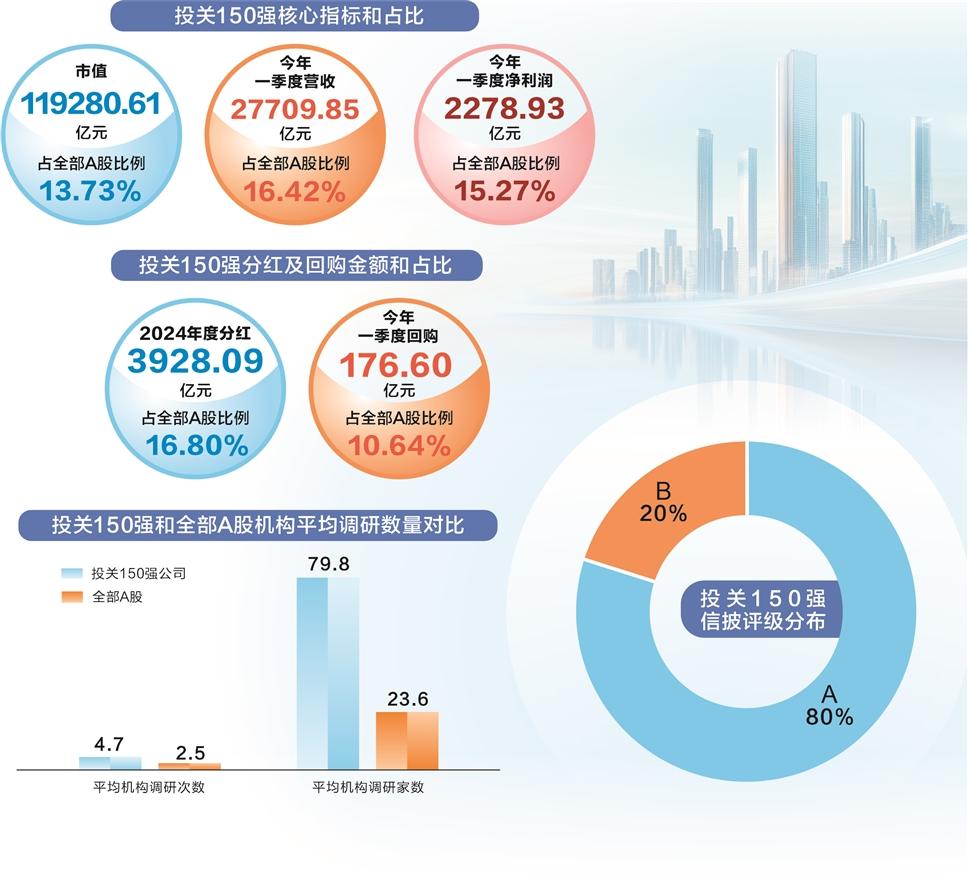
Core Viewpoint - Investor relations management is essential for listed companies to convey core value and stabilize market expectations, serving as a cornerstone for the stable operation of capital markets [2] Group 1: Performance and Strength - The 150 awarded companies have a total market capitalization of 11.93 trillion yuan, accounting for 13.70% of all A-shares, with over 30 companies having a market value exceeding 100 billion yuan [3] - In Q1 2025, these companies achieved a total revenue of 2.77 trillion yuan and a net profit of 227.89 billion yuan, representing 16.42% and 15.27% of all A-shares respectively [3] - The average revenue per company is 1.847 billion yuan, and the average profit is 151.9 million yuan, both nearly six times the average of all A-shares [3] Group 2: Profitability - The median return on equity (ROE) for these companies in Q1 is 3%, which is about 2 percentage points higher than the overall A-share market [4] - Companies like Kweichow Moutai and Dongpeng Beverage have maintained ROE above 30% for several years, while Wuliangye has consistently been above 20% [4] Group 3: Growth Potential - Two-thirds of the 150 companies reported year-on-year net profit growth in Q1, with the chemical, energy, and mining sectors showing significant revenue increases [5] - Companies such as Jinshi Resources and Shandong Gold saw revenue growth exceeding 50%, driven by the rise of AI-related companies like Guangxun Technology and Haiguang Information [5] Group 4: Market Value Management - In 2024, the awarded companies announced a total dividend of 392.81 billion yuan, accounting for 16.80% of all A-share dividends, with an average dividend of 2.62 billion yuan per company [7] - 96 of the awarded companies engaged in stock buybacks totaling 17.66 billion yuan, with nearly one-third of these companies repurchasing over 100 million yuan in stock [8] - The average stock price increase for these companies in 2024 was 19.30%, outperforming the Shanghai Composite Index by nearly 7 percentage points [8] Group 5: Information Disclosure and Investor Engagement - 118 of the 150 companies received an "A" rating for information disclosure, representing 78.70% of the total, with 78 companies maintaining this rating for three consecutive years [9] - The average response rate to investor inquiries among these companies is 99.10%, with nearly 80% achieving a 100% response rate [10] - On average, each company received 4.7 institutional research visits, significantly higher than the A-share average of 2.5 visits [10]

东鹏饮料(605499) - 东鹏饮料(集团)股份有限公司关于使用部分闲置募集资金进行现金管理到期赎回并继续进行现金管理的公告
2025-06-25 10:00
1.现金管理受托方:招商银行股份有限公司; 2.本次现金管理金额:合计 7,000.00 万元; 3.现金管理产品类型:结构性存款; 4.现金管理期限:105 天; 证券代码:605499 证券简称:东鹏饮料 公告编号:2025-039 东鹏饮料(集团)股份有限公司 关于使用部分闲置募集资金进行现金管理到期赎回 并继续进行现金管理的公告 本公司董事会及全体董事保证本公告内容不存在任何虚假记载、误导性陈述 或者重大遗漏,并对其内容的真实性、准确性和完整性承担法律责任。 重要内容提示: 5.履行的审议程序:东鹏饮料(集团)股份有限公司(以下简称"公司") 于 2025 年 3 月 7 日召开第三届董事会第十三次会议和第三届监事会第十二次会 议及 2025 年 4 月 2 日召开 2024 年年度股东大会,分别审议通过了《关于 2025 年度使用闲置募集资金进行现金管理的议案》,公司股东大会拟授权公司及其子 公司在保证日常经营资金需求和资金安全的前提下,使用不超过人民币 1 亿元的 范围内择机购买原则为安全性高、低风险、流动性好的理财产品、不影响募集资 金投资计划正常进行,使用期限自股东大会审议通过之日起至 202 ...

六部门19项举措促消费,消费板块“慢牛”趋势有望重现,主要消费ETF(159672)回调蓄势
Xin Lang Cai Jing· 2025-06-25 05:10
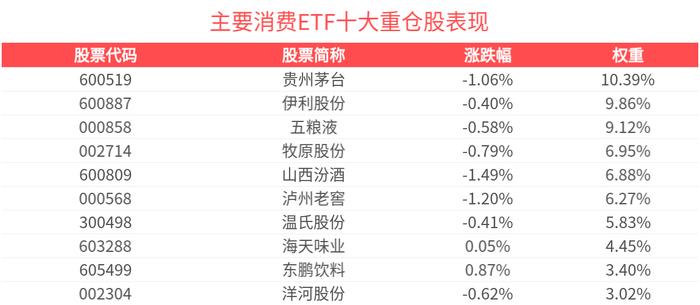
Group 1 - The core viewpoint of the news is that the People's Bank of China and other departments have issued guidelines to support and expand consumption, which is expected to stimulate the consumer sector and lead to a rebound in the consumption index [1] - The major consumption index (000932) has shown mixed performance among its constituent stocks, with Dongpeng Beverage leading the gain at 0.87% and Shanxi Fenjiu experiencing the largest decline at 1.49% [1] - The major consumption ETF (159672) has decreased by 0.27%, with the latest price at 0.75 yuan, indicating a slight downturn in the ETF market [1] Group 2 - As of June 24, 2025, the major consumption ETF has achieved a maximum monthly return of 24.35% since its inception, with an average monthly return of 4.87% during the months it has risen [2] - The major consumption ETF has a management fee rate of 0.50% and a custody fee rate of 0.10%, which are among the lowest in comparable funds [2] - The latest price-to-earnings ratio (PE-TTM) of the major consumption index is 18.86, indicating that it is at a historical low, being lower than 96.83% of the time over the past year [2] Group 3 - As of May 30, 2025, the top ten weighted stocks in the major consumption index account for 67.15% of the index, with Yili Group and Kweichow Moutai being the top two [3] - The top ten stocks include Kweichow Moutai (10.39% weight), Yili Group (9.86% weight), and Wuliangye (9.12% weight), among others [4]