元气森林

Search documents
2025肇庆市食品饮料产业招商大会举行
Nan Fang Du Shi Bao· 2025-10-24 05:15
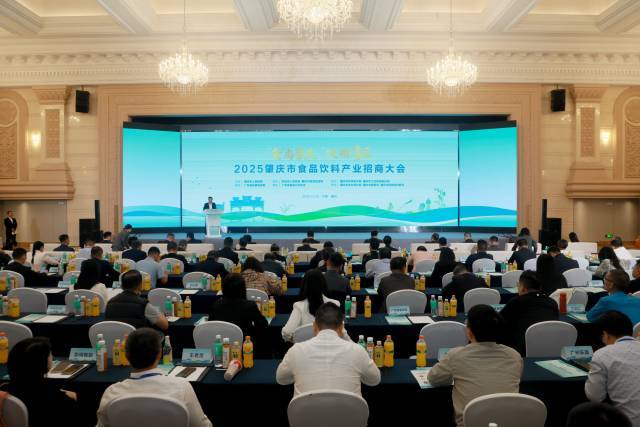
"食"尚肇庆,"饮"领湾区。10月23日,2025肇庆市食品饮料产业招商大会举行,全面推介肇庆市食品饮 料产业投资环境,促进肇庆深度对接优质食品饮料产业链、供应链、创新链。 张俊修表示,肇庆食品行业发展历史悠久,农业、南药种植资源丰富优质,发展食品饮料产业优势突 出、前景广阔。希望肇庆进一步坚定发展壮大食品饮料产业的信心决心,围绕"政策保障、规划布局、 标准制定"等方面下足功夫,全力推动产业做大做优做强,擦亮食品饮料行业的"肇庆名片",为全省食 品工业高质量发展作出新贡献。 2025年10月23日,2025肇庆市食品饮料产业招商大会举行。(主办方供图) 活动进行了肇庆市食品饮料与健康产业高质量发展行动计划介绍、肇庆市食品饮料产业科技创新能力介 绍、肇庆市农业产业资源发布等环节,播放了《肇庆农业全产业链篇:链向未来》短片,西江实验室有 关负责人就科技赋能食品饮料产业高质量发展作推介。活动还举办了2025肇庆食品饮料产业对接交流 会,四会市、封开县、怀集县作了专题推介。活动期间还将举办首届广东省健康饮料产业创新发展交流 会。 近年来,肇庆充分发挥资源禀赋、交通区位和产业基础等优势,大力发展食品饮料特色产业,全力打 ...

承德露露“卷”向养生水
Bei Jing Shang Bao· 2025-10-23 16:21
Core Viewpoint - The rise of traditional Chinese health drinks is evident, with various products like hawthorn and dried tangerine peel water gaining popularity, while leading plant protein beverage company Chengde Lulule is seeking new growth opportunities in a competitive market [1][3]. Group 1: Financial Performance - Chengde Lulule reported a revenue of 1.956 billion yuan for the first three quarters of the year, a year-on-year decrease of 9.42%, with a net profit attributable to shareholders of 384 million yuan, down 8.47% year-on-year [3]. - Quarterly revenue figures show approximately 1.002 billion yuan, 382 million yuan, and 572 million yuan for Q1, Q2, and Q3 respectively, with net profits of about 215 million yuan, 43 million yuan, and 125 million yuan, indicating a significant improvement in Q3 compared to Q2 [3]. - The gross profit margin for Q3 increased to 44.73%, attributed to lower procurement prices for raw materials and packaging [3]. Group 2: Market Trends and Strategies - The beverage industry is entering a peak season, prompting companies to enhance marketing efforts through promotions and new product launches [3]. - Chengde Lulule is adjusting its marketing strategy by leveraging online platforms like Douyin and focusing on convenience store and restaurant channels, including collaborations with hotpot chains [3]. - The company is also exploring new product lines, launching the "Lulule Herbal Series" with various flavors aimed at health-conscious consumers [4][5]. Group 3: Product Development - The herbal drinks are positioned as clean-label products with minimal ingredients, such as the goji berry and mulberry drink containing only five ingredients and low sugar content [5]. - The herbal series generated revenue of 32.85 million yuan in the first half of the year, accounting for 2.37% of total revenue, indicating early signs of growth [5]. - Chengde Lulule's R&D expenses have been declining for three consecutive years, with figures of approximately 18.48 million yuan, 11.97 million yuan, and 6.47 million yuan for the first three quarters of 2023 [5].

“压实‘两个责任’ 共享食品安全” 主题论坛举办
Zhong Guo Zhi Liang Xin Wen Wang· 2025-10-22 03:15
Core Viewpoint - The forum titled "Pressing the 'Two Responsibilities' and Sharing Food Safety" was held to enhance food safety governance and promote the implementation of the "Two Responsibilities" work mechanism, reflecting the achievements made in food safety management and the need for further collaboration among various stakeholders [1][2]. Group 1: Forum Highlights - The forum served as a platform for discussing new ideas and measures for food safety governance, emphasizing the importance of shared responsibility among government, enterprises, and society [1][2]. - Key discussions included the need to deepen the understanding of the "Two Responsibilities" and enhance the effectiveness of the work mechanism to ensure food safety [2][3]. Group 2: Government Initiatives - The State Administration for Market Regulation's Food Safety Director highlighted the establishment of a responsibility system and effective operation of the work mechanism, which has improved risk prevention capabilities and stabilized food safety conditions [2]. - Future efforts will focus on enhancing awareness, improving mechanisms, ensuring accountability, and fostering a collaborative environment for food safety governance [2]. Group 3: Local Government and Enterprise Contributions - Local government officials shared successful practices in implementing the "Two Responsibilities," showcasing innovative approaches and practical results in food safety management [3][4]. - Representatives from over 50 food production and platform enterprises discussed their commitment to food safety and the importance of corporate responsibility in ensuring safe food production [4][5]. Group 4: Community Engagement and Education - The forum emphasized the role of community engagement in food safety, with the launch of the "Food Safety Everyone is Responsible" initiative, encouraging enterprises to actively participate in food safety governance [4][5]. - The introduction of food safety observers and educational programs for children aims to raise awareness and promote healthy eating habits from a young age [5][6].
“压实‘两个责任’ 共享食品安全”主题论坛在京举办
Zhong Guo Zhi Liang Xin Wen Wang· 2025-10-21 11:33
Core Points - The forum titled "Implementing 'Two Responsibilities' for Shared Food Safety" was held in Beijing as part of the National Food Safety Publicity Week, emphasizing the importance of food safety governance and the implementation of the "Two Responsibilities" mechanism [1][2] - The forum served as a platform for discussing new ideas and measures for food safety governance, summarizing experiences in social co-governance of food safety [1][2] Group 1: Implementation of "Two Responsibilities" - The "Two Responsibilities" mechanism has shown strong vitality in practice, with a basic responsibility system established and effective operation of the work mechanism, leading to enhanced risk prevention capabilities and a stable food safety situation [2] - There are still imbalances and inadequacies in the implementation of responsibilities, requiring further deepening in certain areas and links [2] - Future efforts will focus on enhancing awareness, improving mechanisms, ensuring effective responsibility enforcement, and fostering a collaborative atmosphere for food safety governance [2] Group 2: Regulatory Measures and Innovations - The Food Production and Operation Department is working on improving regulatory systems for food safety throughout the production and operation process, focusing on key issues and enhancing risk awareness [4] - Local governments have shared successful practices in implementing responsibilities, showcasing innovative explorations and practical results in food safety governance [7][11] - The regulatory focus includes the entire chain of the catering sector, with an emphasis on areas like campus meals and online food delivery, aiming to build a comprehensive and precise regulatory system [8] Group 3: Local Government Initiatives - Jiamusi City has established a four-level responsibility system, managing 25,900 food entities and achieving significant economic output, with a brand value exceeding 20 billion yuan for "Jiamusi Rice" [9] - In Xinjiang, 51,500 officials are responsible for overseeing 331,000 food production and operation entities, implementing detailed preventive measures for 82 risk points in production [11] - Highmi City has developed a three-tier responsibility system covering over 10,431 food entities, promoting proactive regulatory measures and enhancing community satisfaction through various initiatives [16] Group 4: Corporate Responsibility - Representatives from over 50 food production and platform companies discussed the importance of corporate responsibility in food safety, with companies like Mengniu emphasizing their commitment to food safety through structured management systems [17] - The forum saw the launch of the "Food Safety Everyone is Responsible" initiative, calling for collective action to ensure food safety across the supply chain [20] Group 5: Community Engagement and Education - The China Quality Newspaper Society has initiated a program to recruit food safety volunteers, aiming to enhance public awareness and participation in food safety governance [22] - A children's food education themed play was launched to educate children and parents about food safety and healthy eating habits [24]

2025营养健康产品出海趋势观察-大数跨境
Sou Hu Cai Jing· 2025-10-20 15:06
Core Insights - The article highlights the shift in global health consumption demand from medical services to comprehensive health management, with nutritional health products transitioning from "optional supplements" to "daily necessities" in the post-pandemic era. Chinese companies are positioned to seize a golden opportunity for international expansion due to their advantages in raw materials and supply chains [1][2]. Market Overview - The global health food market reached a size of $942.04 billion in 2023 and is projected to grow to approximately $2.13 trillion by 2033, with a compound annual growth rate (CAGR) of 8.5%. Functional foods and beverages account for the largest segment at 38.4% [1][21]. - The dietary supplement market is expected to reach $348.27 billion by 2032, with vitamins making up 32.7% of this segment. The herbal medicine market is experiencing rapid growth, with a CAGR of 19.64% from 2024 to 2034 [1][27][32]. - The sports nutrition market is projected to reach $112.05 billion by 2034, with sports supplements holding nearly half of the market share [1][36]. Industry Analysis - North America is the largest market, accounting for 38.04% of the global market, with the U.S. dietary supplement market expected to reach $112.6 billion in 2024. The European market holds a 27.06% share, emphasizing safety certifications and sustainability [1][40][44]. - The Asia-Pacific region has a large population base, with the dietary supplement market projected to reach $192.44 billion in 2024. Regulatory differences across countries in this region are significant, with Southeast Asia relying heavily on social recommendations and direct sales channels [1][40][44]. Challenges and Opportunities - Chinese companies possess unique advantages for international expansion, including access to authentic raw materials and robust R&D and manufacturing systems. However, they face challenges such as cultural adaptation, high compliance costs, and insufficient product innovation [2]. - The pathways and channels for international expansion are diversifying, with brand exports suitable for companies with R&D and financial strength, while OEM/ODM and raw material supply models are better suited for manufacturing-focused firms [2]. Future Trends - The future of the industry is expected to focus on three main directions: the younger consumer demographic driving product transformation towards snackable and portable formats; precise demand leading to the development of tailored products for specific demographics and scenarios; and cultural empowerment allowing "new Chinese health concepts" to reach global audiences [2].

宗馥莉转身,娃哈哈迷航:一场未完成的商业继承
3 6 Ke· 2025-10-20 00:17
Core Viewpoint - The resignation of Zong Fuli from her positions at Wahaha Group marks a significant turning point for the company, highlighting the challenges of succession and control within a complex ownership structure [1][2][4]. Group 1: Resignation Context - Zong Fuli's resignation is her second in a year, differing from the previous one which was a strategic retreat; this time, it appears to be a definitive exit without attempts to retain her [1][2]. - The resignation follows the death of Zong Qinghou and is influenced by government and shareholder pressures, as well as unresolved family disputes and internal reform challenges [2][4]. - The ongoing legal battles over inheritance and trust assets, including a lawsuit involving $2.1 billion in trust assets and a 29.4% stake in Wahaha, have further complicated her position [2][3]. Group 2: Ownership Structure and Challenges - Wahaha's ownership structure is characterized by a mixed-ownership model, with significant stakes held by government entities and employee shareholding, complicating decision-making processes [2][4]. - Zong Fuli's attempts to implement reforms faced resistance due to the entrenched interests of long-time associates of Zong Qinghou, leading to her inability to gain true control despite holding the title of chairman [4][5]. - The lack of clear succession planning and unresolved equity arrangements from Zong Qinghou's tenure have created vulnerabilities for the company [4][13]. Group 3: Market Dynamics and Future Prospects - The departure of Zong Fuli opens a competitive landscape with the emergence of two new brands: "Wawa Xiaozong" led by Zong Fuli and "Wawa Xiaozhi" backed by Zong Zehou, each pursuing different business strategies [8][9]. - "Wawa Xiaozong" focuses on a long-term, asset-heavy model with a complete control over the supply chain, while "Wawa Xiaozhi" adopts a light-asset, rapid expansion approach [8][9]. - The competition between these two brands reflects broader trends in the beverage industry, where traditional loyalty and distribution networks are being challenged by new entrants and changing consumer preferences [12][14]. Group 4: Strategic Implications - The future of Wahaha is uncertain, heavily influenced by ongoing ownership disputes and the evolving competitive landscape, which includes established rivals like Nongfu Spring and emerging brands [13][14]. - The internal conflicts and market pressures suggest that Wahaha must navigate significant challenges to maintain its market position and adapt to the changing dynamics of the beverage industry [14][15].

数据首发:2025Q3线下零售速报
3 6 Ke· 2025-10-14 23:26
Core Insights - The offline retail market in Q3 2025 is under significant growth pressure, with sales down 12.26% year-on-year, indicating a return to double-digit declines. This is primarily driven by reduced consumer budgets and declining prices, leading to a shift towards lower-tier products [3][4]. Overall Quarterly Overview - The analysis covers four major categories: food, beverages, alcohol, and daily chemicals, using a continuous store model to assess performance [2]. Sales Performance - In Q3 2025, the overall sales performance shows a significant decline, with order numbers down 4.45% and average order spending down 8.18%. The decline in average spending is nearly double that of order numbers, suggesting heightened consumer sensitivity to price [3][4]. Price Levels - The WPI (Winning Price Index) indicates that the price levels for food, beverages, and daily chemicals remain under pressure, with all three categories maintaining a price index below 100, reflecting a year-on-year decline [5][7]. Key Category Insights - In the food category, the top three increasing segments are ice cream, soy sauce, and hot pot balls, while the top three declining segments are pure milk, puffed snacks, and jerky [10]. - For beverages, the notable decline in the dairy beverage segment is attributed to a high base from the previous year, while packaged water shows the largest year-on-year increase [14][18]. Consumer Behavior Trends - The trend towards convenience and health is evident, with increased demand for ready-to-eat and frozen foods, reflecting a shift in consumer preferences towards time-saving and healthier options [17][23]. - The snack category is experiencing a decline, driven by a growing health consciousness among consumers, leading to reduced demand for traditional high-sugar and high-fat snacks [17][23]. SKU and New Product Dynamics - The analysis of top SKUs reveals significant shifts in market share, with new entrants and established brands competing aggressively in the convenience food and beverage segments [45][46].



一周新消费NO.330|孙颖莎成为 OPPO 全球合作伙伴;郑钦文成为霸王茶姬首位全球品牌代言人
新消费智库· 2025-10-12 13:04
New Product Launches - Luckin Coffee collaborates with "Tom and Jerry" to launch "Milk Skin Latte," inspired by traditional Inner Mongolian dairy products, featuring a rich milk flavor and a pudding-like texture [6][4] - Heytea introduces "Sauce-flavored White Tofu Crushed Silver," combining Yunnan sweet soy sauce with butter for a unique taste experience [6][4] - Qiaqia partners with Dairy Dragon to launch "Growth Nuts," featuring cartoon packaging and added lutein and probiotics [6][4] - Yanjinpuzi collaborates with Nongshim to create "Spicy Kimchi Chips," utilizing a non-fried baking process and optimized for reduced fat, salt, and sugar [7][4] - Dongpeng Special Drink teams up with Wrigley's to launch a sugar-free gum flavored like Dongpeng Special Drink [6][4] - Let Tea launches "Guava Oil Kumquat Jasmine Tea," a new product emphasizing health with no sugar and added probiotics [11][8] - Yuanqi Forest releases a new 1.8L iced tea, priced around 8 yuan, expanding its product sizes [11][8] Industry Events - Sun Yingsha becomes a global partner for OPPO, unveiling the special edition "Chasing Light Red" for the Find X9 series [15][13] - General Mills announces the closure of factories and a restructuring plan costing approximately $82 million, aimed at enhancing supply chain competitiveness [16][12] - Pang Donglai reports sales of 681 million yuan over the National Day holiday, with the Times Square store leading at 188 million yuan [16][12] - UNDEFEATED SPORT launches a themed event in Anaya, promoting its fall/winter collection through interactive sports challenges [16][12] - RIMOWA introduces a new seasonal limited edition in ballet pink, enhancing its Essential series [19][17] - LG Life Health appoints a new CEO, Lee Sun-joo, who has extensive experience in the beauty industry [20][18] - Mengniu Dairy continues its stock buyback strategy, repurchasing shares on multiple occasions in October [20][18] - Zheng Qinwen becomes the first global brand ambassador for Bawang Tea [20][18] - Three Squirrels receives approval for its H-share listing, aiming to issue up to 81.5 million shares [23][21] Investment and Acquisitions - M Stand acquires RAC BAR, marking its entry into multi-brand development [25][24] - Mixue Ice Cream invests 285.6 million yuan in Fulu Beer, gaining a 51% stake to enter the fresh beer market [25][24] - Zhou Dasheng acquires German high-end audio brand MBL, preserving jobs and production facilities [25][24] - Froneri, the parent company of Häagen-Dazs in the U.S., secures 36 billion yuan in new funding to strengthen its asset holding [25][24] - Pernod Ricard invests over 50 million yuan in a Canadian distillery, reaffirming its commitment to the region [28][26] - Jianming Industrial acquires enzyme producer HJ Youtel, enhancing its capabilities in various sectors [30][29] Food Industry Developments - Central Park Coffee Co. announces the opening of a Friends-themed café in New York, offering immersive experiences for fans [31][30] - Meituan's Happy Monkey brand opens its first northern store in Yanjiao, Hebei [33][32] - Asahi Foods launches a new nursing food brand, focusing on enjoyable eating experiences for the elderly [33][32] - a2 Milk becomes the first official milk partner of the Australian Open [33][32] - Wangwang introduces "Wangzai Vegetable and Fruit Milk," made with 100% imported milk and various fruit and vegetable juices [35][34] - JD.com kicks off its 11.11 fresh food sales event, offering significant discounts [35][34] - Xiangpiaopiao announces Sun Yingsha as its brand ambassador, promoting its health-focused product line [35][34] - Baili Foods plans to list on the Beijing Stock Exchange, aiming to issue up to 54 million shares [38][36] - Vitasoy is launching new flavors to adapt to emerging tea drink trends and competitive pricing [38][36] - Shuanghui's premium light food brand Jian Song releases new products, emphasizing health and nutrition [38][36]


宗馥莉,放下了
创业家· 2025-10-12 10:07
Core Viewpoint - The article discusses the resignation of Kelly (Zong Fuli) from her positions at Wahaha, highlighting the internal and external challenges she faced during her tenure, including family conflicts and complex ownership structures [6][9][29]. Group 1: Resignation and Leadership Changes - Kelly Zong reformed the organizational structure internally and significantly altered the distributor system externally, dismissing underperforming distributors [5][6]. - Zong's resignation from key positions occurred after a little over a year in leadership, indicating a rapid rise and fall in power [6][10]. - Despite her efforts, Zong's leadership faced significant challenges from family disputes and complex ownership dynamics within Wahaha [9][10]. Group 2: Internal Reforms and Challenges - Zong initiated reforms focusing on standardization, process optimization, and digitalization, aiming to modernize Wahaha's operations [15][17]. - The reforms included new performance standards and financial approval processes, but the rapid implementation led to operational difficulties [17][18]. - Zong's approach to reform was met with resistance from long-standing employees loyal to the previous leadership style, complicating her efforts [16][19]. Group 3: Market Position and Performance - Wahaha experienced a 53% year-on-year increase in beverage sales revenue in 2024, marking the highest growth rate since its inception [9]. - Despite the strong sales performance, Zong's leadership was undermined by internal conflicts and external pressures, leading to her resignation [10][19]. - The competitive landscape for Wahaha remains challenging, with strong rivals like Nongfu Spring and Uni-President, and a lack of new blockbuster products in recent years [22][23]. Group 4: Family Dynamics and Ownership Issues - The ownership structure of Wahaha is complex, with significant stakes held by state-owned enterprises and family members, complicating Zong's authority [9][24]. - Family disputes over asset control and ownership rights have created additional pressure on Zong, impacting her leadership stability [9][24]. - The internal family dynamics and external market pressures contributed to Zong's urgency to prove her capabilities as a leader [20][23]. Group 5: Future Prospects - Following her resignation, Zong's core team, known as the Hongsheng system, is expected to continue operating, potentially launching new brands [26][27]. - The future direction of the Hongsheng system remains uncertain, but it may leverage its existing strengths to establish a new brand [27][28]. - Zong's leadership style and her approach to employee relations have garnered some positive sentiments, indicating her potential for future endeavors [28].

代糖战来了新角色
经济观察报· 2025-10-11 08:21
Core Viewpoint - The article discusses the emerging market for D-Allulose, a new sugar substitute approved for use in China, highlighting its potential applications and the industry's response to its commercialization [3][5][10]. Group 1: Market Potential and Demand - D-Allulose is recognized as a "new generation sugar substitute" with a sweetness level of 70% compared to sucrose and low caloric content, making it a promising alternative for the food industry [5][12]. - The global market for D-Allulose is projected to reach $14.77 million in 2024, with a compound annual growth rate (CAGR) exceeding 14% from 2025 to 2034 [6]. - The "Healthy China Action (2019-2030)" initiative aims to limit daily added sugar intake to 25 grams per person, increasing the demand for safer and higher-quality sugar substitutes [3][5]. Group 2: Production and Supply Chain - D-Allulose can be produced through two main methods: biological fermentation using E. coli and enzyme-catalyzed conversion, with the latter being more commonly adopted due to lower initial investment requirements [8][9]. - Major companies like COFCO and Baolingbao are ramping up production capabilities, with Baolingbao planning to reach an annual production capacity of approximately 30,000 tons by 2026 [9][12]. - The production process is currently limited by the availability of enzyme preparations, which are crucial for D-Allulose production [9][10]. Group 3: Industry Response and Challenges - Downstream companies, including Wahaha and Mengniu, are interested in testing D-Allulose in their products, but large-scale application is still in the research and testing phase [11][12]. - The cost of D-Allulose remains a significant barrier, with current prices ranging from 20,000 to 24,000 yuan per ton, compared to around 10,000 yuan per ton for erythritol [13][14]. - Concerns about potential overcapacity in the market exist, as seen with erythritol, which experienced a price drop due to oversupply [14][15]. Group 4: Future Outlook - The industry outlook for D-Allulose remains optimistic, with expectations that production costs will decrease as capacity increases [15]. - Key factors for market success include continuous technological innovation, cost control, and the establishment of a complete industrial ecosystem [15].