荣盛石化

Search documents
宏观对话行业-地缘扰动下的周期品走势
2026-01-21 02:57
宏观对话行业:地缘扰动下的周期品走势 20260120 摘要 美国战略重心转向美洲,强化"新门罗主义",引发市场对地缘政治风 险的担忧,尤其是在委内瑞拉的军事行动和对格陵兰岛资源的争夺,可 能加剧国际紧张局势。 中国通过稀土、大豆等资源应对美国的技术封锁,提升了市场对其国家 治理能力的信心。同时,中国可深化"一带一路"倡议,以应对美国在 西半球的影响,并提升出口韧性。 中国出口目的地结构发生变化,对墨西哥出口贡献转负,但欧洲和非洲 国家成为新的增长点,新兴经济体的工业化需求支撑了中国出口韧性, 应淡化对美国市场需求的研究。 地缘政治扰动下,有色金属板块存在投资机会,包括类货币金属(如黄 金)和科技金属。黄金受益于去美元化和地缘政治紧张,科技金属受益 于 AI 和电能改造等新兴需求。 建议关注供给脆弱性叠加需求扩张周期的科技金属,如锡,其价格预计 将超过 50 万元以上,推荐阿尔法表现突出的企业,如新银锡、华锡有 色等。 Q&A 过去几年地缘政治局势的变化对全球市场产生了哪些影响?2026 年有哪些潜 在的风险点需要投资者关注? 过去几年,尤其是 2025 年以来,地缘政治局势对全球市场产生了显著影响。 202 ...
东海证券晨会纪要-20260121
Donghai Securities· 2026-01-21 02:57
Group 1: Key Recommendations - The report emphasizes the revaluation of private refining companies in the petrochemical industry, highlighting that the petrochemical cycle is under pressure but shows signs of improvement ahead [6][7] - Key drivers for the petrochemical cycle include rising oil prices, supply-side capacity clearance, and demand-side stimulus from a loose monetary environment [6][7] - The report predicts that Brent oil prices will fluctuate between $55 and $75 per barrel in 2026, which could benefit refining profitability [7][8] Group 2: Economic Observations - The nominal GDP growth rate stabilized, with Q4 2025 GDP growth at 4.5%, slightly down from 4.8% in Q3 [11][12] - The contribution rates to GDP from final consumption, capital formation, and net exports were 52.9%, 16.0%, and 31.1% respectively in Q4 2025, indicating strong export support and stable consumption [13] - Investment showed a downward trend, with fixed asset investment growth at -3.8% for the year, highlighting the need for policy support to stabilize investment [15][16] Group 3: Industry Insights - TSMC's capital expenditure for 2026 is projected to be between $52 billion and $56 billion, significantly exceeding market expectations, driven by demand for AI and advanced process technologies [18][20] - The global smartphone market showed resilience in 2025, with a total shipment of 1.26 billion units, a 1.9% increase year-on-year, driven by high-end models and foldable screens [21][22] - The report suggests that the semiconductor industry is experiencing upward price trends, particularly in storage chips, indicating structural investment opportunities [19][23]

未知机构:西部化工新材料海外产能加速退出国内反内卷龙头企业产能大幅增长涨价弹-20260121
未知机构· 2026-01-21 02:15
【西部化工&新材料】"海外产能加速退出+国内反内卷",龙头企业产能大幅增长涨价弹性大,重视化工行业板块 机会! #化工龙头产能已大幅增长,涨价弹性大。 近年来化工行业海外产能加速退出,国内扩产接近尾声,叠加反内卷政策,化工行业价格价差有望修复。 我们认为市场忽视了化工企业扩产带来的涨价潜力,当前化工龙头尽管盈利仍然低于21年,但产能已较21年大幅 增长,且全球份额大幅领先,产品价格略做抬升后 【西部化工&新材料】"海外产能加速退出+国内反内卷",龙头企业产能大幅增长涨价弹性大,重视化工行业板块 机会! #化工龙头产能已大幅增长,涨价弹性大。 近年来化工行业海外产能加速退出,国内扩产接近尾声,叠加反内卷政策,化工行业价格价差有望修复。 我们认为市场忽视了化工企业扩产带来的涨价潜力,当前化工龙头尽管盈利仍然低于21年,但产能已较21年大幅 增长,且全球份额大幅领先,产品价格略做抬升后的业绩弹性将大于21年。 #我们对18家龙头进行分情景业绩弹性测算,欢迎联系我们交流! #受益标的: 原油(中国海油、中曼石油、洲际油气);炼化(中国石油、中国石化、恒力石化、荣盛石化); 长丝PTA(新凤鸣、桐昆股份)。 #农药:海 ...

未知机构:国信石化化工2026核心方向炼油炼化钾肥磷化工氟化工-20260121
未知机构· 2026-01-21 02:15
Summary of Conference Call Records Industry Overview - **Industry Focus**: The records primarily discuss the petrochemical industry, including segments such as refining, potassium fertilizers, phosphorus chemicals, fluorochemicals, MDI, sustainable aviation fuel (SAF), and electronic resins [1][2]. Key Insights and Arguments - **Oil and Gas Market**: - A global interest rate reduction cycle has begun, leading to a moderate recovery in oil demand. - OPEC+ has paused production increases, with a projected Brent oil price range of $60-65 per barrel by 2026, influenced by high fiscal balance prices and the elevated costs of new shale oil wells in the U.S. [1] - Natural gas consumption is expected to reach approximately 450 billion cubic meters by 2026, with a peak domestic consumption forecast of 650-700 billion cubic meters between 2030-2040 [1]. - **Refining and Petrochemical Sector**: - Stable crude oil prices at mid-high levels are expected to restore refining and petrochemical profits, with significant profit contributions from by-products like sulfur [2]. - The "anti-involution" policy signals are anticipated to optimize the supply side of refined oil and PX-PTA industries [2]. - **Potassium Fertilizer Market**: - The global potassium fertilizer industry is characterized by oligopoly and high concentration, with a tight balance between supply and demand, suggesting that prices may remain elevated [2]. - **Phosphorus Chemicals**: - Demand in the energy storage sector is driving significant growth in the demand for iron phosphate and phosphate rock, leading to a revaluation of phosphate rock prices, which are expected to remain high in the medium to long term [2]. - **Fluorochemicals**: - The refrigerant market is experiencing price increases due to supply constraints from quota limitations and high concentration, indicating a prolonged period of price growth [2]. - **MDI and TDI**: - The U.S. interest rate reduction cycle is expected to boost overseas MDI demand, while supply constraints and tariffs are raising global MDI trade costs, with declining raw material costs leading to continuous profit recovery [5]. - **Sustainable Aviation Fuel (SAF)**: - Under a green low-carbon framework, a mandatory 2% SAF blend in Europe by 2025 is likely to drive up bio-jet fuel prices, with potential for similar policies in other regions, suggesting sustained high-speed growth in SAF demand [5]. - **Electronic Resins**: - Electronic resins are critical materials for the production of copper-clad laminates, with increasing demand driven by AI servers and high-end electronic applications, particularly for PPO and ODV resins [6]. Additional Important Insights - **Liquid Cooling Solutions**: - Immersion and dual-phase cooling solutions are expected to drive rapid growth in the demand for upstream fluorinated liquids and refrigerants, highlighting the importance of liquid cooling applications [4]. - **Energy Storage Demand**: - Continuous optimization of the supply-demand relationship for PVDF fluoropolymers is anticipated due to energy storage needs [5]. This summary encapsulates the critical points from the conference call records, providing a comprehensive overview of the discussed industries and their future outlooks.
当前时点看民营大炼化的再估值 | 投研报告
Sou Hu Cai Jing· 2026-01-21 01:53
Group 1 - The core viewpoint of the report emphasizes that the petrochemical cycle is on an upward trend, driven by three main conditions: rising oil prices from the bottom, supply-side capacity clearance, and demand-side stimulation through a loose monetary environment [1][2] - The report predicts that by 2025, oil prices will stabilize at around $50 to $60 per barrel, nearing historical lows, with the World Bank forecasting moderate GDP growth in 2026 and 2027 [1][2] - The report highlights that the reduction in capital expenditure and the clearance of outdated capacity will be key drivers for the improvement of the cycle, with China's refining enterprises expected to see a significant convergence in the ratio of capital expenditure to depreciation starting in 2024 [1][2] Group 2 - The "anti-involution" policy is effectively controlling capacity, with the government setting a cap of 1 billion tons on refining capacity, signaling the end of the expansion cycle [2] - The report notes that the price spread between naphtha and ethylene has dropped to its lowest point in November 2025, but has since recovered, indicating a positive price transmission mechanism in the industry [2] - The report anticipates that global oil supply and demand will improve in 2026, with Brent crude oil prices expected to fluctuate between $55 and $75 per barrel, benefiting refining profitability [2] Group 3 - The report discusses the increasing influence of China's petrochemical sector on the global stage, as high energy prices in Europe have led to capacity clearance among Western chemical companies, creating a trend of "West retreating and East advancing" [3] - China's private refining enterprises are showing strong profitability resilience and are expected to continue outperforming international petrochemical leaders [3] - The report suggests that the valuation of leading private refining companies in China is at a relative low point, with potential for significant valuation increases if return on equity (ROE) improves [3]


东方证券:聚焦化工行业景气修复 主要看好MDI、石化、磷化工、PVC和聚酯瓶片
Zhi Tong Cai Jing· 2026-01-21 01:49
Core Viewpoint - The chemical industry is experiencing a collective shift in business strategies driven by multiple factors, leading to a recovery in industry prosperity [1] Group 1: Industry Trends - The long-standing focus on market share in China's chemical industry is being transformed, with companies now facing increased barriers to entry due to supply-side reforms, environmental checks, and dual carbon goals [1] - Internal policy adjustments and external anti-dumping investigations are signaling a necessary change in the expectations surrounding market share [2] Group 2: Business Strategy Shifts - Companies are moving towards sacrificing existing market share to enhance short-term return rates, as merely halting expansion is no longer sufficient to address inventory and excess capacity [2] - The change in business strategies is primarily driven by shifts in the mindset of entrepreneurs and management, marking a significant departure from previous industry recovery patterns [2] Group 3: Selection Criteria for Investment - The preferred selection criteria for the industry include the strength of expansion constraints and the depth of leading companies' advantages, with stronger constraints leading to lower expectations for market share-driven growth [3] - The depth of leading companies' advantages not only constrains industry expansion but also determines the potential recovery in industry return rates [3] Group 4: Investment Recommendations - Recommended investment opportunities include: - MDI: Wanhua Chemical (600309) - Petrochemicals: Sinopec (600028), Rongsheng Petrochemical (002493), Hengli Petrochemical (600346) - Phosphate Chemicals: Chuanheng Shares (002895), Yuntianhua (600096), Xingfa Group (600141) - PVC: Zhongtai Chemical (002092), Xinjiang Tianye (600075), Chlor-alkali Chemical (600618), Tianyuan Shares (002386) - Polyester Bottle Chips: Wankai New Materials (301216) [4]


逆势走强者是谁
猛兽派选股· 2026-01-20 16:05
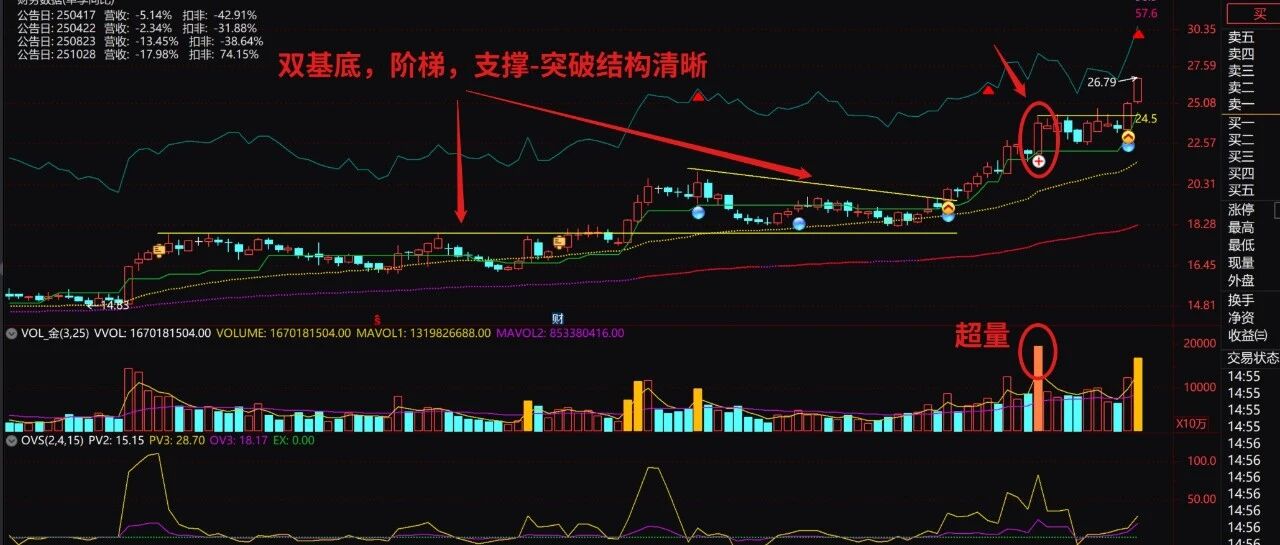
Group 1: Market Overview - The majority of stocks are underperforming today, but sectors such as electric grid, semiconductor equipment and materials, and chemicals continue to strengthen [1] - The chemical sector is entering an accelerated phase, similar to previous cycles where cyclical commodities performed well [2] Group 2: Chemical Sector Insights - Key companies in the chemical sector include: - Hengli Petrochemical (600346): Market cap of 47.089 billion, focusing on refining products [2] - Rongsheng Petrochemical (002493): Market cap of 32.776 billion, involved in refining and chemical products [2] - Lianhe Chemical (000301): Market cap of 24.954 billion, focusing on refining and other petrochemicals [2] - Other notable companies include Tongkun Co. (601233), Huafeng Chemical (002064), and Wanhua Chemical (600309) with respective market caps of 28.339 billion, 21.981 billion, and 142.694 billion [2] Group 3: Investment Strategy - A gradual accumulation strategy is being employed, indicating a traditional institutional operation method that has entered a stable second phase [3] - Holding onto these stocks over a longer period is expected to yield better returns compared to frequent trading [3] Group 4: Market Dynamics - Caution is advised regarding potential sudden market declines, although significant corrections are not anticipated [4] - The current market is characterized by oscillation, making sector selection crucial to avoid stark contrasts in performance [6] Group 5: Historical Context - Historical bull stocks serve as valuable lessons, with current bull stocks following similar patterns due to unchanging human behavior [6] - The characteristics of successful stocks include clear upward trends and compact adjustment structures [6] Group 6: Retail Investor Guidance - For retail investors, transitioning from the first to the second phase of stock performance is generally more successful than chasing high-performing stocks at peak levels [7]

从份额向回报,行业预期正迎来重构化工行业的心动时刻
Orient Securities· 2026-01-20 14:42
Core Insights - The chemical industry is undergoing a strategic shift from a focus on market share to profitability, driven by internal policy adjustments and external pressures such as anti-dumping investigations [4][7][11] - The report identifies five key sectors with investment potential: MDI, petrochemicals, phosphate chemicals, PVC, and polyester bottle flakes, emphasizing the importance of leading companies with significant market share and competitive advantages [4][12][55] Group 1: Industry Trends - The chemical industry has historically prioritized market share, but recent policies and market conditions are prompting a shift towards profitability [7][13] - The supply-side reforms and dual carbon goals have raised entry barriers, leading to increased industry concentration without curbing expansion ambitions [7][13] - The trend of sacrificing market share for improved returns is becoming more prevalent, as companies recognize the need to adapt to changing market dynamics [31][11] Group 2: Investment Recommendations - MDI: The leading company, Wanhua Chemical, is expected to benefit significantly from its strategic shift towards profitability, with potential for substantial earnings growth in 2026 [56] - Petrochemicals: Major players like Sinopec and Rongsheng Petrochemical are undergoing operational adjustments that could reshape industry trends [57] - Phosphate Chemicals: The sector is poised for revaluation due to a tight supply-demand balance and increasing recognition of phosphate's value in energy security [59][60] - PVC: The industry faces strong supply constraints, with emerging markets driving demand growth despite domestic challenges [60] - Polyester Bottle Flakes: The sector is experiencing a recovery in profitability due to high industry concentration and strategic production limitations by leading firms [61]

石油石化行业今日涨1.74% 主力资金净流出3227.56万元
Zheng Quan Shi Bao Wang· 2026-01-20 08:54
Market Overview - The Shanghai Composite Index fell by 0.01% on January 20, with 20 industries rising, led by the oil and petrochemical sector, which increased by 1.74% [1] - The communication and defense industries experienced the largest declines, with drops of 3.23% and 2.87% respectively [1] Capital Flow Analysis - The main capital outflow from the two markets totaled 95.723 billion yuan, with 11 industries seeing net inflows [1] - The banking sector had the highest net inflow, increasing by 0.80% with a net inflow of 1.472 billion yuan, followed by the real estate sector, which rose by 1.55% with a net inflow of 627 million yuan [1] Oil and Petrochemical Sector - The oil and petrochemical industry rose by 1.74%, with a net outflow of 32.276 million yuan [2] - Out of 47 stocks in this sector, 31 rose while 15 fell, with 18 stocks experiencing net inflows [2] - The top three stocks with significant net inflows were Hengli Petrochemical (1.75 billion yuan), Sinopec (890.169 million yuan), and Continental Oil (587.633 million yuan) [2] Notable Stocks in Oil and Petrochemical Sector - Major stocks with significant net outflows included Rongsheng Petrochemical (-68.2609 million yuan), Baomo Co. (-66.8692 million yuan), and Tongkun Co. (-44.9582 million yuan) [2] - The table of capital flow in the oil and petrochemical sector highlights various stocks, including Hengli Petrochemical with a 6.62% increase and a net inflow of 17.49715 million yuan, and Sinopec with a 1.35% increase and a net inflow of 890.169 million yuan [3]



超美国3倍,储备20亿桶石油,中国在全球扫货,释放什么信号?
Sou Hu Cai Jing· 2026-01-20 08:30
Group 1 - The United States seized a ship carrying 2 million barrels of crude oil destined for China, claiming it may violate sanctions, which China condemned as a violation of international law [1] - China's crude oil imports from January to October 2025 reached 471 million tons, a 3.1% increase compared to 2024, averaging about 11.54 million barrels per day [2][1] - The scale of China's oil imports is significant, surpassing Saudi Arabia's daily production capacity of approximately 10 million barrels [4][1] Group 2 - Saudi Arabia is increasing its production capacity to 10.1 million barrels per day by December 2025 and is investing in Chinese oil companies to strengthen ties [7][1] - China is expanding its overseas refining capabilities, with a $3.7 billion project in Sri Lanka that can process 2 million barrels of oil daily, enhancing its energy logistics and storage capabilities [9][1] - China is accelerating the construction of land oil pipelines from Russia, Kazakhstan, and Myanmar, significantly increasing its low-cost crude oil supply [11][1] Group 3 - China's push for energy reserves is driven by lessons from past experiences and the need to prevent resource blockades from other major powers [12][1] - Historical context shows that China relied heavily on oil imports in the early years, leading to vulnerabilities that prompted the development of domestic oil fields [14][1] - Recent incidents, such as an attack on a Chinese vessel in the Red Sea, highlight the risks associated with energy transportation and the need for diversified supply routes [18][1] Group 4 - China is also focusing on coal imports, with 38.76 million tons imported from January to October 2025, despite having significant domestic reserves due to high transportation costs [21][1][23] - Natural gas imports are projected to meet 65% of demand by 2030, with plans to expand domestic production and imports to 300 billion cubic meters each [26][29] - China has increased its gold reserves significantly, with estimates suggesting an increase of 250 tons, accounting for one-third of global purchases [31][1] Group 5 - China's grain storage capacity is substantial, with a total capacity of 730 million tons, sufficient to feed its population for over two years [32][1] - The country holds significant shares of global reserves for key crops like corn, rice, and wheat, emphasizing its strategy for resource accumulation [33][1] - Overall, China's accumulation of strategic resources is part of a long-term plan to secure its resource independence and stability [34][1]