
中国海油

Search documents
原油周报:美伊谈判重启,油价震荡波动-20260208
Xinda Securities· 2026-02-08 13:48
Investment Rating - The report maintains a "Positive" investment rating for the oil processing industry [1]. Core Insights - International oil prices experienced fluctuations due to geopolitical developments, including the potential resumption of nuclear talks between the U.S. and Iran, which initially eased risks but later saw a resurgence following military incidents [2][9]. - As of February 6, 2026, Brent and WTI oil prices were reported at $68.05 and $63.55 per barrel, respectively, reflecting a decrease of 1.83% and 2.55% from the previous week [2][25]. Summary by Sections Oil Price Review - Brent crude futures settled at $68.05 per barrel, down $1.27 (-1.83%), while WTI futures were at $63.55, down $1.66 (-2.55%) [2][25]. - The Urals crude price remained stable at $65.49 per barrel, and ESPO crude fell to $54.91, down $0.55 (-0.99%) [2][25]. Offshore Drilling Services - The number of global offshore self-elevating drilling rigs was 370, a decrease of 6 from the previous week, while floating drilling rigs totaled 132, down by 2 [28]. U.S. Oil Supply - U.S. crude oil production was reported at 13.215 million barrels per day, a decrease of 481,000 barrels from the previous week [35]. - The active rig count in the U.S. increased by 1 to 412 rigs as of February 6, 2026 [35]. U.S. Oil Demand - U.S. refinery crude processing averaged 16.029 million barrels per day, down by 180,000 barrels from the previous week, with a refinery utilization rate of 90.50%, a decrease of 0.4 percentage points [43]. U.S. Oil Inventory - Total U.S. crude oil inventories stood at 836 million barrels, a decrease of 3.241 million barrels (-0.39%) from the previous week [52]. - Strategic oil inventories increased slightly to 415 million barrels, while commercial inventories decreased to 420 million barrels [52]. Related Companies - Key companies in the sector include China National Offshore Oil Corporation (CNOOC), China Petroleum & Chemical Corporation (Sinopec), and China National Petroleum Corporation (PetroChina) [3].





关注“金三银四”化肥链与化纤链
Guotou Securities· 2026-02-08 13:27
Investment Rating - The report maintains an investment rating of "Outperform the Market" [3] Core Insights - The fertilizer market is entering a traditional demand peak with structural price increases expected due to the spring farming season, which accounts for approximately 45%-50% of annual fertilizer usage [1][7] - The chemical fiber industry is approaching its peak demand season, with low inventory varieties likely to show price elasticity [9][11] Summary by Sections Fertilizer Sector - Urea prices are expected to stabilize and potentially rise due to increased demand from delayed planting and government policies aimed at boosting grain yields [7] - Phosphate fertilizer prices are supported by strong cost factors, with a forecast of continued high prices due to supply constraints and stable demand [8] - Potash fertilizer prices are anticipated to rise as supply remains tight, with a contract price of $348 per ton for 2026, reflecting a slight increase from the previous year [8] Chemical Fiber Sector - The "golden March and silver April" period is a traditional peak for the chemical fiber industry, with downstream textile companies expected to increase procurement to meet seasonal demand [9] - Polyester filament production is being managed through coordinated reductions to improve profitability, with current inventory levels at historical lows [11] - Viscose staple fiber is experiencing high operating rates and low inventory, suggesting strong upward price potential [11] Overall Chemical Industry Performance - The chemical sector has seen a significant increase in attention due to a rebound in PPI and capital expenditure trends, with the industry valuation at a historical low [18][19] - The report suggests focusing on four main investment themes, including upstream resource assets, supply-side optimization, low valuation leading companies, and new productivity investments [19][20][21][22]
原油周报:美国原油产量下降,后续关注美伊谈判进展-20260208
Soochow Securities· 2026-02-08 11:08
Oil Market Overview - Brent and WTI crude oil futures averaged $67.7 and $63.5 per barrel this week, with changes of -$0.9 and +$0.1 respectively compared to last week[2] - U.S. total crude oil inventory stands at 84 million barrels, with commercial and strategic inventories at 42 million barrels each, reflecting changes of -324, -346, and +21 thousand barrels respectively[2] - U.S. crude oil production decreased to 13.22 million barrels per day, down by 480 thousand barrels per day from the previous week[2] Oil Demand and Supply - U.S. refinery crude processing volume is 16.03 million barrels per day, down by 180 thousand barrels per day, with a utilization rate of 90.5%, a decrease of 0.4 percentage points[2] - U.S. crude oil imports increased by 56 thousand barrels per day to 620 thousand barrels, while exports decreased by 54 thousand barrels to 405 thousand barrels, resulting in a net import increase of 110 thousand barrels per day[2] - Active U.S. oil rigs increased by 1 to 412, while active fracturing fleets decreased by 3 to 148[2] Refined Products - U.S. gasoline, diesel, and jet fuel prices averaged $80, $101, and $89 per barrel respectively, with changes of +$1.3, -$9.5, and -$5.1 per barrel[2] - U.S. gasoline inventory increased by 690 thousand barrels, while diesel and jet fuel inventories decreased by 555 and 66 thousand barrels respectively[2] - U.S. gasoline consumption decreased by 60 thousand barrels per day to 815 thousand barrels, while diesel and jet fuel consumption increased by 24 and 29 thousand barrels per day respectively[2] Investment Recommendations - Recommended stocks include China National Offshore Oil Corporation, PetroChina, Sinopec, and CNOOC Services[3] - Risks include geopolitical factors affecting oil prices, significant macroeconomic downturns, and potential changes in OPEC+ supply plans[3]

地缘延续动荡局势,短期油价支撑偏强
Ping An Securities· 2026-02-08 10:49
Investment Rating - The report maintains a "Strong Buy" rating for the oil and petrochemical sector, indicating a positive outlook despite geopolitical uncertainties [1]. Core Insights - The oil price is expected to remain supported in the short term due to ongoing geopolitical tensions, particularly in the Middle East, with specific focus on Iran and the Russia-Ukraine conflict [6][7]. - The fluorochemical sector is anticipated to maintain high levels of activity due to supply constraints and favorable demand driven by policy support [6][7]. Summary by Sections Oil and Petrochemicals - Geopolitical tensions continue to create uncertainty, with recent developments involving Iran and the ongoing Russia-Ukraine conflict impacting oil prices [6]. - WTI crude futures fell by 3.27% and Brent crude futures by 3.75% during the reporting period [6]. - Domestic oil companies are diversifying their resource sources and integrating upstream and downstream operations to mitigate the impact of volatile oil prices [7]. Fluorochemicals - Supply quotas and favorable demand from policy support are expected to sustain high market activity [6]. - Prices for popular refrigerants R32 and R134a remain stable, with supply constraints leading to a tight market for certain products [6]. - The issuance of HFC production quotas for 2026 shows an increase, indicating a positive outlook for the sector [6]. Semiconductor Materials - The semiconductor materials sector is experiencing a positive trend with inventory reduction and improving end-market fundamentals [7]. - The report suggests that the upward cycle in semiconductor materials, combined with domestic substitution, may lead to further price increases [7].
原油周报:美国原油产量下降,后续关注美伊谈判进展
Soochow Securities· 2026-02-08 08:24
Investment Rating - The industry investment rating is "Overweight," indicating an expected outperformance of the industry index relative to the benchmark by more than 5% in the next six months [173]. Core Insights - The report highlights a decrease in U.S. crude oil production, with a current output of 13.22 million barrels per day, down by 480,000 barrels per day from the previous period [2]. - The average weekly price for Brent and WTI crude oil futures is reported at $67.7 and $63.5 per barrel, respectively, with Brent experiencing a decrease of $0.9 and WTI an increase of $0.1 compared to the previous week [2]. - U.S. crude oil inventories have shown a decline, with total inventories at 84.51 million barrels, down by 3.24 million barrels [2]. - The report emphasizes the importance of monitoring the progress of U.S.-Iran negotiations, which could impact oil supply dynamics [1]. Summary by Sections 1. U.S. Crude Oil - Crude oil prices: Brent and WTI averaged $67.7 and $63.5 per barrel, with changes of -$0.9 and +$0.1 respectively [2]. - Crude oil inventories: Total U.S. crude oil inventory is 84.51 million barrels, with commercial inventories at 42.03 million barrels, showing a decrease of 3.24 million barrels [2]. - Crude oil production: U.S. production stands at 13.22 million barrels per day, down by 480,000 barrels per day [2]. - Crude oil demand: U.S. refinery crude processing is at 16.03 million barrels per day, down by 180,000 barrels per day [2]. - Crude oil imports and exports: U.S. imports are 6.20 million barrels per day, exports at 4.05 million barrels per day, resulting in a net import of 2.15 million barrels per day [2]. 2. U.S. Refined Oil Products - Refined oil prices: Average prices for gasoline, diesel, and jet fuel are $80, $101, and $89 per barrel, with changes of +$1.3, -$9.5, and -$5.1 respectively [2]. - Refined oil inventories: Gasoline, diesel, and jet fuel inventories are 26 million barrels, 13 million barrels, and 4 million barrels, with changes of +690, -555, and -66 thousand barrels respectively [2]. - Refined oil production: Gasoline, diesel, and jet fuel production are 9.01 million, 4.81 million, and 1.71 million barrels per day, with changes of -570, -10, and -40 thousand barrels per day respectively [2]. - Refined oil demand: Gasoline, diesel, and jet fuel consumption are 8.15 million, 4.31 million, and 1.66 million barrels per day, with changes of -600, +240, and +290 thousand barrels per day respectively [2]. 3. Related Listed Companies - Recommended companies include China National Offshore Oil Corporation (CNOOC), China Petroleum & Chemical Corporation (Sinopec), and China National Petroleum Corporation (PetroChina) [3]. - Companies to watch include Sinopec Oilfield Service Corporation and China Oilfield Services Limited [3].
石化周报:美伊会面,地缘演变导致油价震荡
Guolian Minsheng Securities· 2026-02-08 07:25
重点公司盈利预测、估值与评级 | 代码 | 简称 | 股价 | | EPS(元) | | | PE(X) | | 评级 | | --- | --- | --- | --- | --- | --- | --- | --- | --- | --- | | | | (元) | 2024A | 2025E | 2026E | 2024A | 2025E | 2026E | | | 601857.SH | 中国石油 | 10.77 | 0.90 | 0.87 | 0.89 | 12 | 12 | 12 | 推荐 | | 600938.SH | 中国海油 | 34.30 | 2.90 | 2.60 | 2.68 | 12 | 13 | 13 | 推荐 | | 600028.SH | 中国石化 | 6.50 | 0.41 | 0.31 | 0.34 | 16 | 21 | 19 | 推荐 | | 603619.SH | 中曼石油 | 32.59 | 1.76 | 1.48 | 1.99 | 19 | 22 | 16 | 推荐 | | 603393.SH | 新天然气 | 29.08 | 2.80 | 2.81 | 3.06 ...

石化周报:美伊会面,地缘演变导致油价震荡-20260208
Guolian Minsheng Securities· 2026-02-08 06:39
Investment Rating - The report maintains a "Buy" rating for major companies in the petrochemical sector, including China National Petroleum Corporation, China National Offshore Oil Corporation, China Petroleum & Chemical Corporation, Zhongman Petroleum, and New Natural Gas [2]. Core Views - The report highlights the impact of geopolitical developments, particularly the U.S.-Iran negotiations, on oil price volatility. The recent talks have led to fluctuations in oil prices, with Brent crude futures settling at $68.05 per barrel, down 3.73% week-on-week, and WTI futures at $63.55 per barrel, down 2.55% week-on-week [8][10]. - The report suggests that the decline in U.S. crude oil production, influenced by cold weather, has provided some support for oil prices. As of January 30, U.S. crude oil production was 13.22 million barrels per day, a decrease of 480,000 barrels per day week-on-week [11][12]. - Investment recommendations focus on three main lines: 1) Attention to industry leaders with stable performance and high dividends, such as China National Petroleum and China Petroleum & Chemical; 2) Focus on China National Offshore Oil Corporation, which has low production costs and increasing output; 3) Monitor Zhongman Petroleum and New Natural Gas, which are in a growth phase [12]. Summary by Sections Industry Investment Rating - The report provides a "Buy" rating for key companies in the petrochemical sector, indicating strong investment potential [2]. Market Performance - As of February 6, the petrochemical sector underperformed, with a decline of 2.4%, compared to a 1.3% drop in the CSI 300 index [14][17]. Company Performance - Notable stock movements include Runbei Hangkai, which increased by 16.35%, while PetroChina Oilfield Services saw a decline of 12.32% [20][21]. Industry Dynamics - The report discusses the geopolitical tensions in the Middle East and their effects on oil prices, emphasizing the need to monitor developments closely [10][23]. Petrochemical Data Tracking - The report includes detailed tracking of oil and gas prices, with Brent crude futures at $68.05 per barrel and WTI at $63.55 per barrel, reflecting recent market trends [45].
港股上市公司中国煤层气完成资产剥离!山西沁水民企2460万接盘...
Sou Hu Cai Jing· 2026-02-06 22:42
Core Viewpoint - China Gas Layer has sold its 100% stake in Shanxi Qingshui Shuntai Energy Development Co., Ltd. to Shanxi Shenggang Energy Co., Ltd. for 24.6093 million yuan, completing the industrial change registration, and no longer holds any rights in the target company [1] Company Overview - Shanxi Shenggang was established on April 27, 2020, with a registered capital of 5 million yuan, primarily engaged in the wholesale of sulfur, gasoline, diesel, natural gas, and methanol [2] - Shanxi Qingshui was founded on November 10, 2006, with a registered capital of 240 million Hong Kong dollars, previously having shareholders including Shanxi Wanzhi Logistics Co., Ltd. [2] Financial Performance - Since 2022, Shanxi Qingshui has experienced a continuous decline in revenue and profit, and due to aging core equipment and high maintenance costs, it has effectively been in a state of suspension [4] - The fair value of the target company was assessed at -30.33 million yuan as of July 31, 2025, indicating no commercial value, leading to the decision to sell the company at a loss [4] Industry Context - China Gas Layer is a Hong Kong-listed energy company with a focus on coalbed methane extraction, pipeline collection, LNG liquefaction, storage, sales, and related engineering services [5] - The company has invested over 2 billion yuan in projects across Tianjin, Hebei, and Shanxi, establishing a complete industrial chain in coalbed methane [5] - The sale of Shanxi Qingshui does not affect the long-term market outlook for coalbed methane resources in the Qingshui Basin, which remains attractive to major energy players [5] Market Developments - Since September of last year, four coalbed methane mining rights in the Qingshui Basin have been successfully auctioned, totaling 1.959 billion yuan, with major companies like CNOOC and Sinopec participating [6] - By 2030, Shanxi aims to achieve an unconventional natural gas annual output of 30 billion cubic meters, creating a trillion-level industrial cluster [6] - Two local leading enterprises have emerged in Jin City, including Shanxi Lanhua Coalbed Gas Co., Ltd. and the newly established Jin City Coalbed Gas Investment and Development Group Co., Ltd., which aims to integrate resources and enhance industry competitiveness [7]

以能源央企担当助力沿海高质量发展
Xin Hua Ri Bao· 2026-02-06 21:45
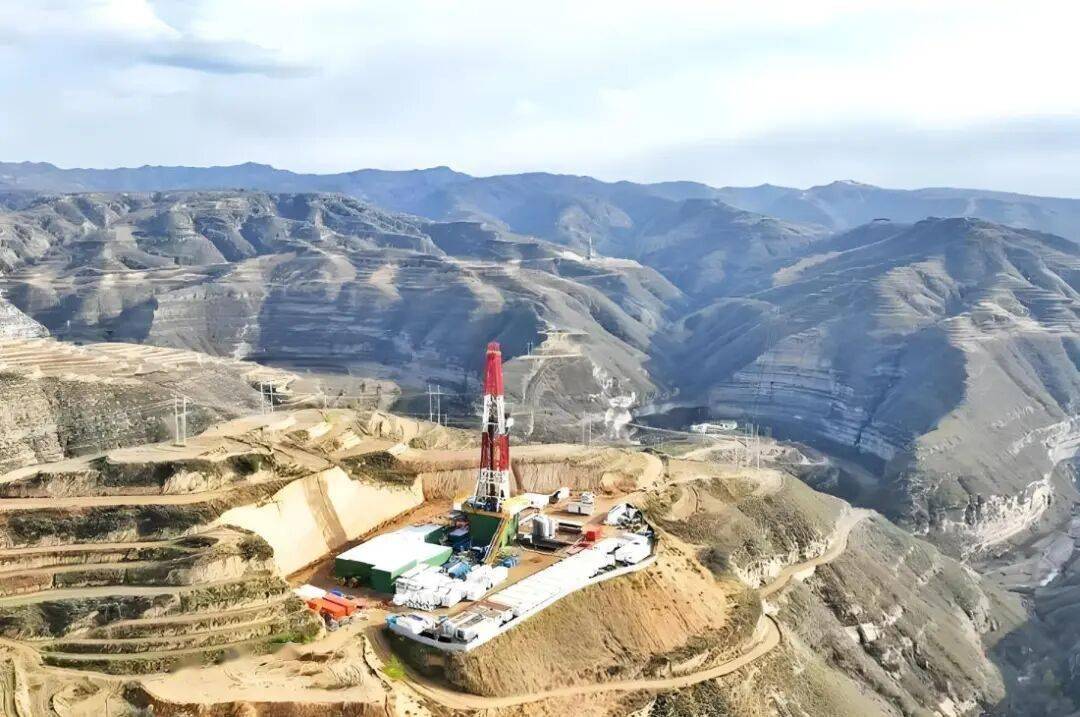
Core Viewpoint - The provincial government report emphasizes the need to strengthen deep-sea development and utilization, presenting significant growth opportunities for the company and the industry [1] Group 1: Company Initiatives - The company, as a state-owned energy enterprise, is committed to fulfilling its social responsibilities in energy supply and contributing to the economic development of Jiangsu by providing more clean energy [1] - The company plans to enhance the functionality of the national million-ton LNG reserve base and accelerate the planning of integrated storage and transportation facilities for clean energy such as hydrogen, ammonia, alcohol, and hydrocarbons at the Yancheng Green Energy Port [1] Group 2: Industry Development - The initiatives align with the construction of a new energy system and the green low-carbon transition in Jiangsu, supporting the province's goal of becoming a new growth pole for development [1]

石油石化行业:欧美天然气库存下降,英美天然气期货价涨
Dongxing Securities· 2026-02-06 11:07
Investment Rating - The report maintains a "Positive" outlook for the oil and petrochemical industry [3] Core Insights - As of January 30, 2026, domestic LNG ex-factory prices increased by 5.0% month-on-month, while U.S. natural gas futures prices rose by 19.0% month-on-month [2][8] - China's natural gas production in January 2026 increased by 11.67% month-on-month, indicating a positive trend in supply [2][16] - European natural gas inventories decreased by 22.75% month-on-month, reflecting tightening supply conditions [2][19] Price Summary - Domestic LNG ex-factory price reached 4045.00 CNY/ton, up 186.00 CNY/ton from the previous month [8] - LNG import price in China was 12.10 USD/MMBtu, a month-on-month increase of 26.62% [8] - U.S. NYMEX natural gas futures closed at 4.42 USD/MMBtu, reflecting a 19.00% month-on-month increase [8][11] Supply and Demand - China's natural gas production in January 2026 was 549,920 tons, an increase of 11.67% month-on-month [16] - China's apparent natural gas consumption rose to 40.812 billion cubic meters, an increase of 8.69% month-on-month [16] Inventory - U.S. LNG/LPG inventory as of January 23, 2026, was 164,365 thousand barrels, down 6.66% month-on-month [19] - European natural gas inventory was 47.514 billion kWh, a decrease of 32.89% month-on-month [19][23] Import and Export - European natural gas imports for the first three weeks of January 2026 totaled 18,278 million cubic meters, a decrease of 24.82% month-on-month [24] - Imports of natural gas from Russia to Europe also declined, with a month-on-month decrease of 26.10% [24][29]