
海尔智家

Search documents
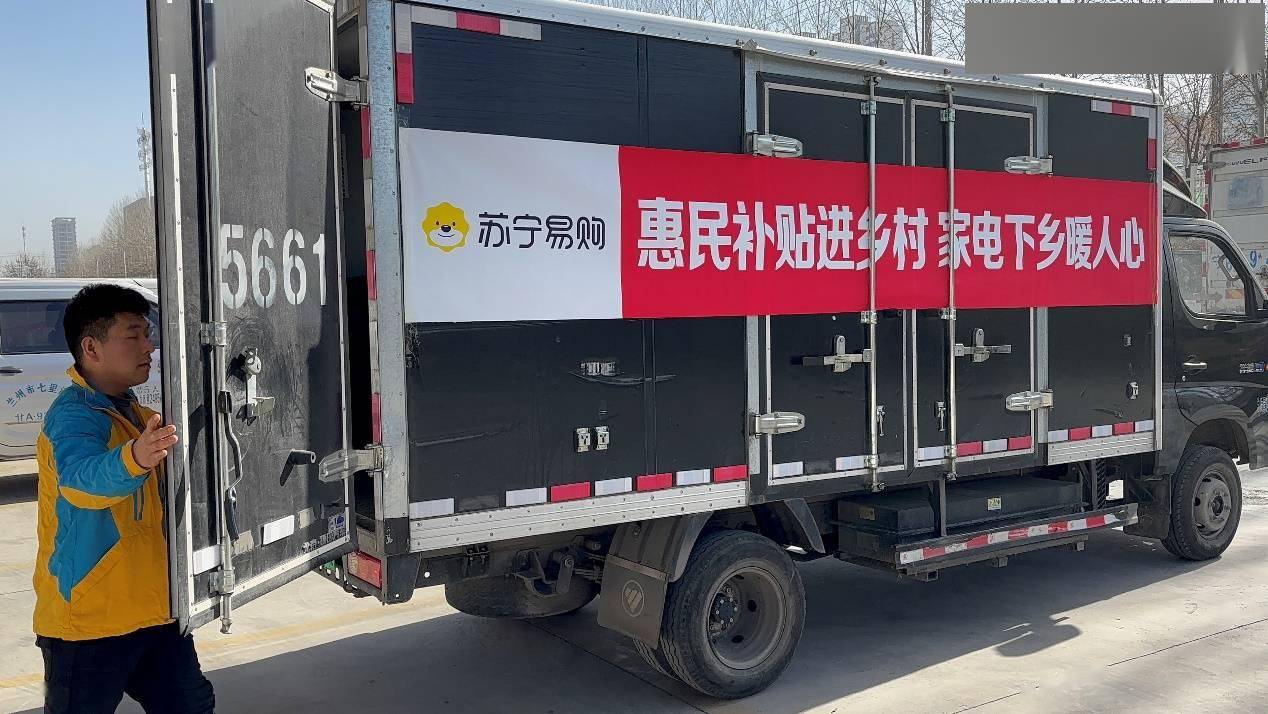
增长51%!苏宁零售云新智家电下乡迎“开门红”
Sou Hu Cai Jing· 2026-02-09 07:39
Core Insights - The 2026 Central Document emphasizes the modernization of agriculture and rural areas, supporting rural consumption upgrades and the recycling of old appliances [1] Group 1: Company Initiatives - Suning Retail Cloud plans to leverage the upcoming New Year Festival to launch the "Subsidy for Rural Areas" initiative across over 10,000 stores, enhancing rural consumer access to smart appliances [1][4] - The company is focusing on a "walk into villages" service model to facilitate the exchange of old appliances and promote consumption policies [1][4] Group 2: Market Trends - The county market is experiencing a generational shift in consumer demographics, with younger consumers prioritizing quality and digital experiences [3] - There is a transition in household consumption from basic appliances to a demand for smart, healthy, and comfortable home experiences [3] Group 3: Sales Performance - In January 2026, Suning Retail Cloud reported a 51% year-on-year increase in sales, with significant growth in "burden-reducing" and "atmospheric" appliances [6] - Specific product sales saw remarkable increases: robotic vacuum sales up 147%, dishwashers up 83%, and large-screen TVs up 75% [6] Group 4: Strategic Developments - Suning Retail Cloud is enhancing its large store strategy, with 24.10% of new franchise stores being large format, providing ample space for experiential retail [3] - The integration of local cultural elements into the "Subsidy for Rural Areas" initiative aims to create a festive atmosphere while facilitating consumer engagement [4][8] Group 5: Future Outlook - The comprehensive rollout of the "Subsidy for Rural Areas" initiative is expected to amplify the synergy between policy and market, invigorating the New Year consumption market [8] - The deep service model being explored by Suning Retail Cloud is anticipated to unlock further potential in rural consumption and improve residents' quality of life through smart appliance adoption [8]


2026中国十大消费品行业GEO现状及趋势研究报告2026
亿欧智库· 2026-02-09 06:25
Investment Rating - The report does not explicitly provide an investment rating for the industry. Core Insights - The transition from SEO (Search Engine Optimization) to GEO (Generative Engine Optimization) represents a fundamental shift in digital marketing, driven by generative AI technologies that change how brands interact with consumers [5][12][15]. - The report emphasizes the importance of understanding and mastering GEO logic for brands to capture new growth opportunities in the evolving digital landscape [6][36]. - The industry shows a clear tiered structure in GEO maturity, with significant disparities in development levels across different consumer goods sectors [41][49]. Summary by Sections Chapter 1: Background of the Transition from SEO to GEO - The shift from SEO to GEO is characterized by a change in search paradigms, where users now seek direct answers through natural language queries rather than keyword-based searches [11][15]. - Generative AI is reshaping the logic of brand exposure, requiring brands to adapt their strategies to ensure their products and narratives are accurately understood and recommended by AI [5][6]. Chapter 2: Overview of GEO Status in the Consumer Goods Industry - The report presents a GEO maturity index that categorizes the top ten consumer goods industries into three tiers: high maturity, medium maturity, and low maturity [49][50]. - Key indicators such as visibility, recommendation rate, and content quality are used to assess the performance of brands within these tiers [60][61]. Chapter 3: In-Depth Analysis of Key Consumer Goods Industries - The report highlights the top 50 brands in the consumer goods sector, with a focus on the home appliance, digital 3C, and maternal and infant industries, which are leading in GEO maturity [70][72]. - High maturity industries like home appliances and digital 3C benefit from standardized data and structured content, allowing for precise AI learning and logical reasoning [53][56]. Chapter 4: GEO Brand Rankings - The report provides a ranking of brands based on their GEO index, which is calculated from visibility, recommendation rate, and content quality [72][74]. - Brands such as Apple, Huawei, and Haier lead the rankings, showcasing high visibility and recommendation rates [72]. Chapter 5: Analysis of GEO Content Ecosystem and Implementation Guide - The report outlines the characteristics of effective brand content in the GEO era, emphasizing semantic richness, factual accuracy, and narrative coherence [30][34]. - Brands are encouraged to create content that is not only informative but also structured in a way that is easily understood by AI [34][36]. Chapter 6: Future Trends and Outlook - The report anticipates that brands that quickly adapt to the GEO landscape will secure a competitive advantage, as the digital marketing environment continues to evolve [6][41]. - It highlights the need for brands to build a robust semantic correction mechanism to monitor and correct AI-generated content related to their brand [45].




从功能消费到情绪消费:2026,人们把家“买”成了什么样?
第一财经· 2026-02-09 06:00
Core Insights - The article emphasizes the transformation in consumer behavior from merely purchasing products to seeking comprehensive "home living solutions" that cater to emotional and experiential needs [1][3][60] Group 1: Consumer Trends - The demand for "ceremony" is shifting inward, focusing on self-care rather than social display, with 40.2% of individuals preferring to spend personal time at home and 77.8% willing to pay a premium for home products that provide emotional value [4][10] - The concept of "meta-scenes" is introduced, breaking down the abstract notion of home rituals into four actionable categories: "reset," "link," "light up," and "renew," which brands can leverage to connect with consumers [6][12] - The trend of "AI personalization" indicates that consumers are willing to invest in smart appliances that understand and meet their needs, moving away from cold, technical specifications to more human-like interactions [14][17] Group 2: Marketing Trends - The integration of online and offline channels is crucial, as consumers prefer immersive experiences in physical stores while valuing the convenience of online shopping [34][35] - Emotional resonance is becoming a key marketing strategy, with brands creating "emotional events" that connect with consumers' feelings rather than relying on traditional advertising methods [40][42] - Products must be contextualized within familiar life scenarios, allowing their functional value to naturally integrate into consumers' daily lives [48][49] Group 3: Future Predictions - The future of smart home technology will focus on "emotional alignment," where devices not only respond to commands but also anticipate user emotions and needs [55][56] - Brands will need to cater to specific consumer segments, offering tailored products that meet the unique demands of different demographics [57] - A shift towards providing "holistic value" will be essential, where brands offer comprehensive solutions that encompass functionality, emotional connection, and service throughout the product lifecycle [58][59]


不搞一票否决!PE、产投、上市公司协同投资,有什么门道?
Sou Hu Cai Jing· 2026-02-09 05:52
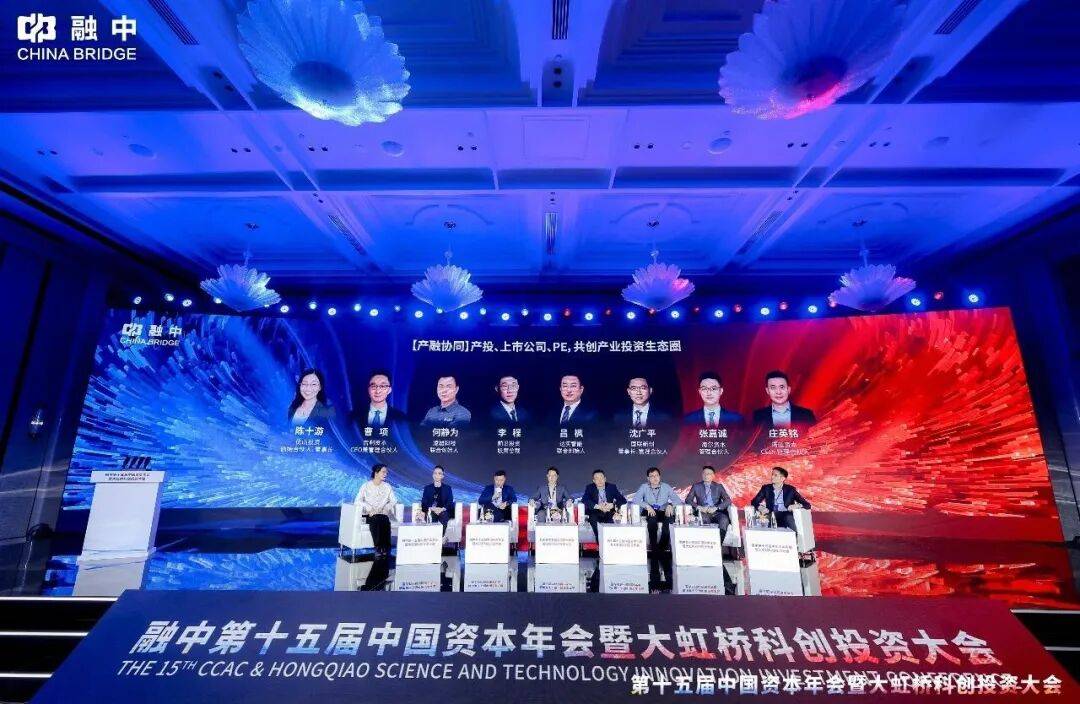
Core Insights - The article discusses the collaboration between private equity (PE), industrial investment, and listed companies to create a symbiotic investment ecosystem that bridges the gap from laboratory to market, particularly in hard technology and infrastructure sectors [2][20]. Group 1: Industry Collaboration - The current phase of the equity investment industry is characterized by a return to fundamentals and capability restructuring, emphasizing the need for deep coupling of policy resources, industrial foundations, and capital operation capabilities [2]. - The forum titled "Collaborative Industrial Investment Ecosystem" focused on how to address pain points such as differing interests and ineffective collaboration mechanisms among PE, industrial investment, and listed companies [2][20]. Group 2: Company Profiles - Ushan Investment, founded by Chen Shiyou, manages approximately 16 billion yuan and has invested in 45 direct projects, with plans for 10 more to go public this year [3]. - Geely Capital, led by CEO Cao Xiang, aims for over 4.1 million global vehicle sales by 2025 and has diversified into smart mobility and hard technology sectors, including low-altitude flight and Robotaxi services [3]. - Lingxiong Technology, represented by He Jingwei, focuses on Device as a Service (DaaS) and has been listed on the Hong Kong Stock Exchange since 2022, with major shareholders including Tencent and JD [4]. - Frontier Investment, led by Li Cheng, specializes in mid-to-late-stage investments in advanced manufacturing sectors, managing around 5 billion yuan across eight funds [4]. - Shenzhen Dash Smart, represented by Lü Feng, provides smart office and park management solutions leveraging IoT and AI technologies [5]. - Guolian New Venture, led by Shen Guangping, manages about 10 billion yuan and focuses on integrated circuits and AI, with over 120 investment projects [6]. - Haier Capital, represented by Zhang Jiacheng, has invested in nearly 200 projects with a focus on smart home ecosystems and digital economy sectors [6]. - Nuoyan Capital, led by Zhuang Yingming, focuses on industrial mergers and acquisitions, managing around 20 billion yuan [7]. Group 3: Investment Strategies - Effective collaboration requires clear positioning and advantages among PE, industrial investment, and listed companies, establishing a mechanism for risk-sharing and benefit-sharing [8][31]. - The investment process should involve phased resource injection to control risks and ensure collaborative benefits, with specific goals for each stage [8]. - Listed companies have inherent advantages in direct investment due to their ability to validate products and technologies, but they must avoid over-involvement in decision-making to maintain market independence [10][11]. Group 4: Challenges and Solutions - The dual nature of listed companies' investments can lead to hesitance in decision-making due to their deep understanding of technology, necessitating a balance between industry experience and independent judgment [11][12]. - Disagreements often arise in unfamiliar fields or with innovative technologies, requiring extensive communication and understanding among stakeholders [13][14]. - The success rate of mergers and acquisitions is generally low, with key factors including the commitment of the controlling shareholders and focusing on industry-specific mergers rather than cross-industry ones [19]. Group 5: Ecosystem Development - The integration of PE, industrial investment, and listed companies is crucial for facilitating technology transfer from R&D to market application, with a focus on collaborative models for resource sharing and project incubation [20][29]. - The establishment of innovation centers and partnerships with local governments can enhance the incubation process, ensuring that projects meet market needs and have opportunities for trial applications [29][30]. - A flexible profit-sharing mechanism is essential to align the interests of PE, industrial investors, and listed companies, ensuring that all parties benefit from the growth of invested enterprises [31][32].


西部证券晨会纪要-20260209
Western Securities· 2026-02-09 02:50
Group 1: Company Overview - Nanya Technology (688519.SH) is expected to achieve revenues of 49.48 billion, 61.75 billion, and 73.41 billion CNY for the years 2025 to 2027, with net profits of 2.24 billion, 5.11 billion, and 7.83 billion CNY respectively, leading to a target market value of 229.80 billion CNY and a target price of 97.88 CNY for 2026, receiving a "Buy" rating [2][7]. - Shunxin Agriculture (000860.SZ) is projected to have revenues of 72.6 billion, 79.6 billion, and 86.7 billion CNY from 2025 to 2027, with net profits of -1.5 billion, 0.6 billion, and 1.7 billion CNY, reflecting a significant decline in 2025 but recovery in subsequent years, and is rated "Accumulate" [4][21]. Group 2: Industry Insights - The demand for high-end CCL (Copper Clad Laminate) is expected to grow significantly, with a projected CAGR of 40% from 2024 to 2027, driven by AI and high-frequency applications, although the market is currently dominated by a few key players [8][9]. - The white liquor industry is facing significant pressure, with production showing negative growth and a shift in consumer preferences towards quality over quantity, leading to intensified competition and a focus on value rather than scale [20][21]. - The asset tokenization market is entering a new era of compliance management, providing more diverse financing channels for companies with quality underlying assets, which may optimize their financing structures and enhance compliance credibility [15][17].


海尔智家旗下Candy三筒洗衣机获评“法国消费者年度最佳产品”
Jin Tou Wang· 2026-02-09 02:33
2月3日,海尔智家(600690)旗下Candy三筒洗衣机荣获"法国消费者年度最佳产品"。该奖项不仅是近 五年来洗衣机行业首次获得此项认可,更是海尔智家持续深化全球化布局、推进高端化战略的有力印 证。 在法国,这一奖项被视作消费领域的"金字招牌"。它由Consumer's Vote机构于1987年创立,历经39年积 淀,其标志在法国消费者中的知晓率超过95%。每年,主办方邀请超过15000名消费者参与产品实测, 并由德勤监督的调研机构执行严格筛选,因此被视为欧洲消费市场的重要风向标。Candy三筒洗衣机能 够从中脱颖而出,并非偶然,而是其精准洞察本土需求、高效整合全球资源的必然成果。 当前,法国年轻家庭日益注重健康生活与高效体验。然而市面上的洗衣机要么容量不足,要么无法实现 彻底分区洗涤。针对这一痛点,海尔智家依托研发、制造、营销等十大全球化能力深度协同,将全球技 术资源与法国本土需求深度融合,为当地用户量身打造了这款三筒洗衣机。 此次Candy三筒洗衣机获奖,还充分印证了海尔高端化战略的长期成效。这款洗衣机是海尔智家"全球 研发、本土落地"模式的典范,它既融合全球研发智慧,又紧密结合法国本土生活方式与消费偏 ...
“年味地标”!从邻里聚落到亿元消费,百年乐山大集火热出圈丨新春走基层
证券时报· 2026-02-09 00:41
Core Viewpoint - The article highlights the transformation and significance of the Leshan Grand Market in Changchun, which has evolved from a local trading hub into a vibrant cultural and commercial center, especially during the festive season, showcasing the integration of traditional customs with modern consumerism [5][10]. Group 1: Market Overview - The Leshan Grand Market, established in 1874, has a rich history of over 150 years, serving as a key gathering place for local residents to purchase goods and celebrate cultural traditions [4]. - The market operates on specific days of the lunar calendar, becoming a focal point for community activities and commerce, particularly as the Chinese New Year approaches [5]. Group 2: Economic Impact - The market has seen a significant increase in consumer traffic, with a notable rise in visitors from outside the local area, driven by the internet's influence and the desire to experience traditional Northeast Chinese New Year customs [8]. - Sales at the market have surged, with annual revenue increasing from 5 million yuan to nearly 100 million yuan, contributing significantly to local farmers' incomes [10]. Group 3: Cultural Significance - The market not only serves as a shopping destination but also as a venue for cultural performances, such as traditional Chinese opera, enhancing the festive atmosphere and community engagement [10]. - The integration of modern brands and products into the market reflects a blend of traditional and contemporary consumer habits, attracting a diverse customer base [10].

可选消费W06周度趋势解析:海外消费业绩密集发布带动股价波动,A H股期待26年可选消费恢复
海通国际· 2026-02-09 00:30
Investment Rating - The report assigns an "Outperform" rating to multiple companies in the discretionary consumption sector, including Nike, Li Ning, Midea Group, JD Group, Haier Smart Home, Gree Electric, Anta Sports, and many others [1]. Core Insights - The report highlights that overseas consumer earnings releases have led to stock price volatility, with A/H shares anticipating a recovery in discretionary consumption in 2026 [1]. - The performance of various sectors is analyzed, with gaming, U.S. hotels, snacks, and retail showing positive trends, while luxury goods and overseas cosmetics are experiencing declines [4][12]. - The report notes that the gaming sector saw a strong increase in gross gaming revenue, with a year-on-year growth of 24%, exceeding market expectations [6][14]. Sector Performance Summary - **Gaming Sector**: Increased by 5.5%, driven by strong January gross gaming revenue growth and positive earnings from MGM China [6][14]. - **U.S. Hotels**: Also up by 5.5%, with Marriott and Hilton showing positive earnings forecasts [6][14]. - **Snacks**: Grew by 3.6%, with companies like Youyou Foods and Qiaqia Foods reporting significant growth expectations [6][14]. - **Retail Sector**: Increased by 3.5%, led by Walmart and Target, which exceeded market sales forecasts [8][14]. - **Domestic Sportswear**: Rose by 2.6%, with Li Ning benefiting from its partnership with the Chinese Olympic Committee [8][14]. - **Credit Card Sector**: Gained 2.3%, supported by strong earnings from Visa and Mastercard [8][14]. - **Domestic Cosmetics**: Increased by 2.1%, benefiting from overall strength in the beauty and skincare sector [8][14]. - **Luxury Goods**: Slightly up by 0.9%, influenced by a rebound in the U.S. market [8][14]. - **Overseas Cosmetics**: Decreased by 5.7%, with concerns over the sustainability of growth for Estée Lauder [9][15]. - **Pet Sector**: Down by 0.7%, with companies like Guai Bao Pet and Zhongchong Co. experiencing declines [8][14]. - **Gold and Jewelry**: Fell by 1.2%, affected by fluctuations in gold prices [8][14]. Valuation Analysis - The report indicates that the valuation of various sectors remains below their historical averages, with expected P/E ratios for 2025 showing significant discounts compared to the past five years [10].
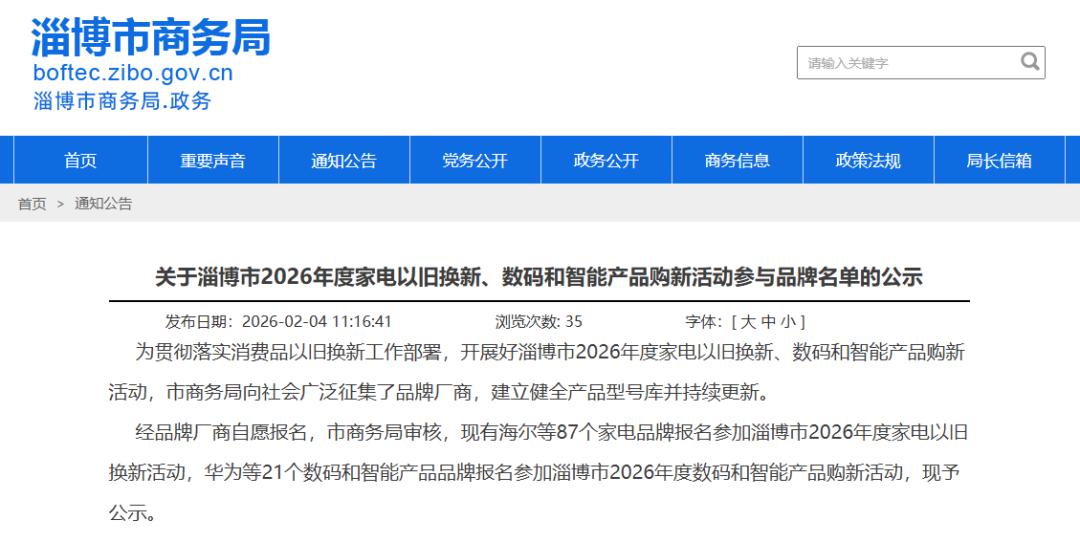
淄博市2026年度家电以旧换新、数码和智能产品购新活动参与品牌名单公示
Feng Huang Wang Cai Jing· 2026-02-09 00:14
Core Viewpoint - The Zibo Municipal Bureau of Commerce has announced the list of participating brands for the 2026 appliance recycling and new purchase activities, aiming to promote consumer goods recycling and stimulate local consumption [1][4]. Group 1: Appliance Recycling Program - The Zibo Municipal Bureau of Commerce has collected applications from brand manufacturers to establish a product model database for the 2026 appliance recycling program [4]. - A total of 87 home appliance brands, including Haier, Midea, and Gree, have registered to participate in the 2026 appliance recycling initiative [4][5]. - The participating brands cover various categories such as refrigerators, washing machines, air conditioners, and televisions [5][6]. Group 2: Digital and Smart Products Purchase Program - The program also includes a new purchase initiative for digital and smart products, with 21 brands, including Huawei and Apple, participating [4][8]. - The participating brands in the digital and smart products category offer a range of items including smartphones, tablets, and smartwatches [8].
可选消费W06周度趋势解析:海外消费业绩密集发布带动股价波动,A/H股期待26年可选消费恢复-20260208
Haitong Securities International· 2026-02-08 14:59
Investment Rating - The report assigns an "Outperform" rating to multiple companies in the discretionary consumption sector, including Nike, Li Ning, Midea Group, JD Group, Haier Smart Home, Gree Electric, Anta Sports, and many others [1]. Core Insights - The report highlights that overseas consumer earnings releases have led to stock price volatility, with A/H shares anticipating a recovery in discretionary consumption in 2026 [1]. - The performance of various sectors is analyzed, with gaming, U.S. hotels, snacks, and retail showing positive trends, while luxury goods and overseas cosmetics are experiencing declines [4][12]. - The report notes that the valuation of discretionary consumption sectors remains below the average of the past five years, indicating potential investment opportunities [10]. Sector Performance Summary - **Gaming Sector**: Increased by 5.5%, driven by strong growth in gross gaming revenue and positive earnings from major companies like MGM China [6][14]. - **U.S. Hotels**: Also up by 5.5%, with positive earnings forecasts from Marriott and Hilton [14]. - **Snacks Sector**: Rose by 3.6%, with companies like Youyou Foods and Qiaqia Foods showing strong sales growth [14]. - **Retail Sector**: Increased by 3.5%, led by Walmart and Target, which reported better-than-expected same-store sales [14]. - **Domestic Sportswear**: Grew by 2.6%, with Li Ning benefiting from its partnership with the Chinese Olympic Committee [14]. - **Credit Card Sector**: Up by 2.3%, supported by strong earnings from Visa and Mastercard [14]. - **Domestic Cosmetics**: Increased by 2.1%, benefiting from the overall strength in the beauty and skincare sector [14]. - **Luxury Goods**: Slightly up by 0.9%, influenced by a rebound in the U.S. market [14]. - **Overseas Sportswear**: Increased by 0.7%, with Nike announcing the opening of its first ACG store in Beijing [15]. - **Pet Sector**: Decreased by 0.7%, with companies like Guobao Pet and Zhongchong Co. facing declines [15]. - **Gold and Jewelry**: Down by 1.2%, affected by fluctuations in gold prices [15]. - **Overseas Cosmetics**: Fell by 5.7%, with Estée Lauder experiencing a significant drop [15].