英飞凌

Search documents
AI驱动、周期回暖!模拟芯片再焕新象
Wind万得· 2025-08-14 22:51
Core Viewpoint - The article discusses the growth potential of the Analog Integrated Circuit (AIDC) market driven by increasing capital expenditures from North American CSP companies and the end of a prolonged price war in the analog chip industry, particularly highlighted by Texas Instruments' (TI) price hikes on a vast number of products [3][11]. Group 1: AIDC Driving Analog Chip Growth - AIDC has become a focal point for cloud vendors, with over half of their capital expenditures directed towards AIDC construction, exemplified by Microsoft's $120 billion plan for FY2025, allocating approximately $80 billion to AIDC [5]. - The global AIDC market is projected to grow at a compound annual growth rate (CAGR) of 40.4% from 2023 to 2028, surpassing $1 trillion in market size [5]. - Power Management Integrated Circuits (PMIC) are crucial in AIDC, evolving from basic power management functions to becoming "power guardians" that ensure high performance and reliability [6][8]. Group 2: Analog Chip Market Overview - The global analog chip market is expected to grow from $79.433 billion in 2024 to $83.1 billion in 2025, with PMICs accounting for approximately 60% of the market [9]. - The market is characterized by a dominance of American companies in design, while China leads in demand, with a current domestic replacement rate of about 30% [9][10]. - The competition landscape is shifting as domestic manufacturers increase their market penetration, particularly in the automotive and industrial sectors, with expectations of a rise in penetration rates to over 20% by 2025 [15]. Group 3: Investment and Financing Dynamics - The investment landscape for the analog chip market in 2025 is marked by policy-driven initiatives, technological breakthroughs, and capital focus, particularly in the fields of new energy vehicles and industrial automation [16]. - Recent policy changes, such as the "origin of wafer manufacturing" rule, are expected to enhance the competitiveness of domestic manufacturers against international players [17]. - A list of financing events in the analog chip sector from 2025 highlights the active investment climate, with significant amounts raised by various companies [20].


半导体行业月报:美国发布《AI行动计划》,海外云厂商持续加大资本支出-20250814
Zhongyuan Securities· 2025-08-14 11:25
Investment Rating - The semiconductor industry is rated as "Outperform" [1] Core Insights - The semiconductor industry is currently in an upward cycle, driven significantly by AI as a key growth engine [4][5] - North America's four major cloud providers (Google, Microsoft, Meta, Amazon) have increased capital expenditures, with a total of $87.4 billion in Q2 2025, representing a year-on-year growth of 69% and a quarter-on-quarter growth of 23% [3][4] - Global semiconductor sales continued to grow year-on-year, with June 2025 sales increasing by 19.6%, marking the 20th consecutive month of growth [4][21] Summary by Sections 1. Market Performance - In July 2025, the domestic semiconductor industry rose by 3.06%, underperforming the CSI 300 index which increased by 3.54% [10] - The Philadelphia Semiconductor Index rose by 1.11% in July 2025, while the Nasdaq 100 increased by 2.38% [12][18] 2. Global Semiconductor Sales - Global semiconductor sales in June 2025 reached approximately $59.9 billion, with a year-on-year increase of 19.6% and a month-on-month increase of 1.5% [21][22] - The WSTS forecasts a global semiconductor market sales growth of 11.2% in 2025, reaching $700.9 billion [23] 3. Capital Expenditure Trends - Google raised its 2025 capital expenditure budget from $75 billion to $85 billion, while Meta's budget increased to $66-72 billion, reflecting a year-on-year growth of 68%-84% [3][4] - Microsoft is expected to exceed $30 billion in capital expenditures in Q3 2025 [5] 4. AI and Market Dynamics - The demand for AI computing hardware infrastructure remains strong, with significant investments in PCB, copper connections, and optical chips [5] - The penetration rate of AI smartphones is expected to rise rapidly to 34% by 2025, while AI PC penetration is projected to reach 35% [4][5] 5. Price Trends - In July 2025, the monthly spot prices for DRAM and NAND Flash continued to rise, with expectations for further increases in Q3 2025 [4][21]
功率半导体行业交流
2025-08-12 15:05
Summary of Conference Call on Power Semiconductor Industry Industry Overview - The conference call focused on the power semiconductor industry, specifically discussing the performance and outlook of Huahong and its various product platforms [1][2][3]. Key Points and Arguments Pricing and Revenue Trends - Huahong adjusted prices by 5%-8% in May, but the average selling price (ASP) declined in Q2 due to changes in product mix and new capacity at the factory [1][3]. - There is insufficient support for price increases in Q3, making the target of a 10% ASP increase for the year difficult to achieve [1][4]. - The overall order visibility is low, and the company expects to maintain the original ASP increase target, but the probability of achieving it is low [4]. Demand and Capacity Insights - Demand for the BCD process platform has significantly increased, with expected capacity growth by year-end [1][5]. - Major clients like MPs have increased orders, but there are concerns about dependency on single clients and the impact of pricing strategies on orders [1][5][6]. - The NODE platform has stable demand for ETOX, but demand for platforms like Ziguang and Jushen has decreased [1][9]. Product-Specific Developments - ETOX production is expected to increase, with stable demand from MCU and smart card applications [1][13][15]. - The MOSFET product structure is shifting from medium voltage SGT to low voltage products, with a decrease in demand for new energy orders [1][18][19]. - The eFlash total input volume is steadily increasing, with expectations to reach approximately 18-19k units by year-end [1][15]. Client and Order Dynamics - MPs' orders have increased from 14k at the beginning of 2024 to 16k in Q3, with a projected demand of 24k by year-end [6][7]. - Other clients like Nanxing and Aivi have also seen order increases, but overall demand has weakened [8][15]. - The DDIC production has been transferred to the factory, with stable customer demand but short-term design optimization issues affecting orders [30][31]. Future Outlook and Challenges - The company is cautious about future demand, particularly for 2026, with a pessimistic sales forecast [39]. - The overall market sentiment is weak, and there are concerns about the ability to meet ASP targets due to reduced demand and price sensitivity from end customers [36][39]. Additional Important Insights - The transition of production capacity to different product lines is ongoing, with plans to shift some capacity from ETOX to iFlash products [12]. - The company is facing challenges in maintaining production levels for IGBT and other products due to price constraints and customer demand fluctuations [26][27][28]. - The overall semiconductor supply chain, including silicon wafer prices, is stable, with a downward trend in prices noted [34]. This summary encapsulates the key discussions and insights from the conference call, highlighting the current state and future outlook of the power semiconductor industry.
这些国家,芯片新贵
半导体芯闻· 2025-08-12 09:48
Core Insights - The article discusses the ambitions of Mexico, Malaysia, and India to enhance their semiconductor design and manufacturing capabilities, aiming to reduce reliance on imports and improve their positions in the semiconductor supply chain [2][3][4]. Group 1: Mexico's Semiconductor Ambitions - Mexico plans to establish a semiconductor center that will significantly reduce its annual chip import expenditure by $24 billion [2]. - The country aims to transition from merely assembling chips to designing and manufacturing them, with a target for local companies to produce traditional chips by 2030 [4][5]. - Currently, Mexico has only a few local chip design companies, and it lacks advanced manufacturing facilities, requiring substantial investment and participation from both government and private entities [5][6]. Group 2: Malaysia's Strategy - Malaysia has launched a national semiconductor strategy aiming to attract approximately $116.8 billion in investments by 2030, focusing on building a substantial local industry [3][4]. - The country has signed an agreement to pay $250 million to ARM Holdings for chip design blueprints, intending to create ten local chip companies with potential revenues of up to $2 billion each [4]. - Despite its ambitions, Malaysia faces challenges such as a shortage of skilled engineers, with the demand in the electrical and electronics sector being ten times higher than the annual output of engineering graduates [9]. Group 3: India's Challenges - India has faced difficulties in establishing a comprehensive semiconductor industry despite significant government support and investment commitments, with past initiatives failing to materialize [6][7]. - The only large-scale project currently in preparation is a collaboration between Tata Electronics and Taiwan's PSMC to build a chip manufacturing plant valued at $11 billion, set to begin operations soon [7]. - India also struggles with a shortage of manufacturing and packaging talent, which hampers its ability to develop a self-sufficient semiconductor ecosystem [9]. Group 4: Expert Opinions and Concerns - Experts express skepticism about the feasibility of these countries achieving a complete semiconductor supply chain, citing the complexity of the industry [3]. - The lack of qualified engineers is a significant concern for all three countries, with many companies relying on foreign talent to fill gaps in expertise [8][9]. - The article highlights the need for substantial investments in training and development to build a sustainable semiconductor workforce in these nations [9].
天岳先进招股启幕:英伟达概念股,乘AI数据中心与AI眼镜东风
Ge Long Hui· 2025-08-12 04:06
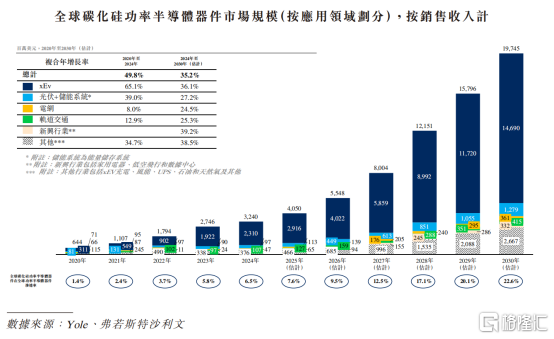
Core Viewpoint - Tianyue Advanced (02631.HK) has officially launched its IPO, with a global offering of 47.74 million H-shares, aiming to capitalize on the growing demand for silicon carbide (SiC) substrates in the semiconductor industry [1][3] Group 1: Industry Dynamics - The global SiC power device market is projected to grow at a compound annual growth rate (CAGR) of 35.2% from 2024 to 2030, with the market size expected to exceed $19.7 billion by 2030 [1] - The penetration rate of SiC in the overall power semiconductor market is anticipated to rise from 6.5% to 22.6% during the same period [1] - In 2024, Tianyue Advanced achieved a revenue of 1.768 billion RMB, a year-on-year increase of 41.4%, while major international competitors faced revenue declines [3] Group 2: Company Performance - Tianyue Advanced's overseas revenue reached 845 million RMB in 2024, marking a 104% increase and accounting for 47.8% of total revenue [3] - The company holds a 16.7% share of the global substrate market, ranking among the top three, and a 22.8% share in the conductive segment, placing it second globally [3] - Tianyue Advanced has successfully transitioned to mass production of 8-inch conductive substrates and plans to launch 12-inch substrates in 2024, achieving full coverage of 6/8/12-inch products [5] Group 3: Technological Advancements - The company is recognized as a leader in the mass delivery of 8-inch wafers and is listed among the top five core players in the SiC substrate patent field [5] - Tianyue Advanced's Shanghai Lingang factory has initiated large-scale production, with a current annual capacity exceeding 400,000 wafers, and plans to expand to 1 million wafers per year [5] Group 4: Market Applications - The application of SiC in electric vehicles is increasing, with partnerships established with major automotive electronics manufacturers [8] - Tianyue Advanced is also penetrating the AI sector, supplying materials for data center power systems and AI/AR glasses, with significant collaborations including entry into NVIDIA's supply chain [9][10] - The company has made technological breakthroughs in the application of SiC in optical waveguide technology for AR glasses, positioning itself favorably in a rapidly growing market [10] Group 5: Future Outlook - The company's growth is supported by its capacity expansion and technological advancements, particularly in transitioning from 8-inch to 12-inch substrates [11] - Continued collaboration with automotive and AI/AR sectors is expected to drive order volume and revenue growth [11] - The structural certainty of high growth and high realization in Tianyue Advanced's investment value is emphasized, with potential shifts in valuation from "supply scarcity premium" to "scale leader premium" [11]

全球SiC龙头呼之欲出,天岳先进以“硬科技”领跑关键半导体材料
Zhi Tong Cai Jing· 2025-08-10 01:31
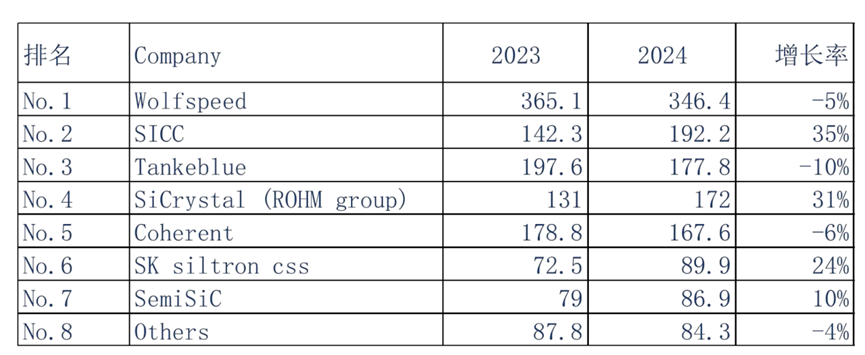
Core Viewpoint - Tianyue Advanced (688234.SH), a leading company in the silicon carbide (SiC) sector, is progressing steadily towards its IPO in Hong Kong, having passed the listing hearing on July 30. The company is recognized for its significant market share in SiC substrates and is poised to become a major player in the "hard technology" field with its upcoming listing [1][2]. Group 1: Company Overview - Tianyue Advanced specializes in the research, production, and sales of SiC single crystal substrate materials, having been established in November 2010. It became the first domestic company focused on wide bandgap semiconductor materials to be listed on the Science and Technology Innovation Board in January 2022 [2][4]. - The company has rapidly increased its market share, projected to reach 22.8% in 2024, making it the second-largest player globally, following Wolfspeed [2][3]. Group 2: Financial Performance - From 2022 to 2024, Tianyue Advanced's revenue is expected to grow from 417 million yuan to 1.768 billion yuan, with a compound annual growth rate (CAGR) of 96.75%, significantly outpacing competitors like Wolfspeed [3][4]. - The company is forecasted to achieve a market share of nearly 26% by 2025, indicating its potential to become a global leader in the SiC substrate market [3]. Group 3: Technological Advancements - Tianyue Advanced holds 503 patents, including 198 invention patents, ranking among the top five globally in terms of SiC substrate-related patents. The company has received recognition for its technological breakthroughs, including a prestigious award from a Japanese semiconductor media outlet [4][10]. - The company has developed an innovative method for producing 8-inch SiC substrates without macro defects and plans to launch the first 12-inch SiC substrate in November 2024, enhancing production efficiency and reducing costs [9][10]. Group 4: Market Applications and Growth Potential - SiC materials are increasingly applied in various sectors, including electric vehicles, photovoltaic energy storage, and AI glasses. The SiC power device market in the electric vehicle sector is projected to grow from $2.31 billion in 2024 to $14.69 billion by 2030, with a CAGR of 36.1% [11][13]. - The rapid growth of AI glasses, which are expected to see a shipment increase of 82.3% in 2023, is closely linked to the application of SiC materials, indicating a promising second growth curve for Tianyue Advanced [13]. Group 5: Future Plans and Funding - The company plans to allocate 70% of its IPO proceeds to expand its production capacity for 8-inch and larger SiC substrates, while also enhancing its R&D capabilities to improve defect control and detection [14]. - Tianyue Advanced's strategic focus on expanding its market presence and product offerings positions it well for future growth in the rapidly evolving semiconductor landscape [14][15].
全球SiC龙头呼之欲出,天岳先进(688234.SH)以“硬科技”领跑关键半导体材料
智通财经网· 2025-08-10 01:23
Core Viewpoint - Tianyue Advanced (688234.SH), a leading company in the silicon carbide (SiC) sector, is progressing steadily towards its IPO in Hong Kong, having passed the listing hearing on July 30. The company is recognized for its significant market share in SiC substrates and is poised to become a major player in the "hard technology" field with its upcoming listing [1][2]. Company Overview - Tianyue Advanced focuses on the research, production, and sales of SiC single crystal substrate materials since its establishment in November 2010. It became the first domestic company to list on the Sci-Tech Innovation Board, specializing in wide bandgap semiconductor materials [2][4]. - The company has rapidly increased its market share, projected to reach 22.8% in 2024, making it the second-largest player globally, following Wolfspeed [2][3]. Financial Performance - From 2022 to 2024, Tianyue Advanced's revenue is expected to grow from 417 million yuan to 1.768 billion yuan, with a compound annual growth rate (CAGR) of 96.75%, significantly outpacing competitors like Wolfspeed [3][4]. - The company is forecasted to achieve a market share of nearly 26% by 2025, indicating its potential to become a global leader in the SiC sector [3]. Technological Advancements - Tianyue Advanced holds 503 patents, including 198 invention patents, ranking among the top five globally in SiC substrate-related patents. The company has received recognition for its technological breakthroughs, including a prestigious award from a Japanese semiconductor media outlet [4][9]. - The company has developed an innovative method for producing 8-inch SiC substrates and plans to launch the first 12-inch SiC substrate in 2024, enhancing production efficiency and reducing costs [8][10]. Market Applications - SiC materials are increasingly utilized in various sectors, including electric vehicles, photovoltaic energy storage, and AI glasses. The SiC power device market in the electric vehicle sector is projected to grow from $2.31 billion in 2024 to $14.69 billion by 2030, with a CAGR of 36.1% [10][12]. - The rapid growth of AI glasses, which are expected to see a shipment increase of 82.3% in 2023, is closely linked to the application of SiC materials, enhancing user experience and reducing manufacturing complexity [12][10]. Strategic Initiatives - Tianyue Advanced plans to allocate 70% of its IPO proceeds to expand its production capacity for 8-inch and larger SiC substrates, focusing on quality and efficiency through automation [12][13]. - The company aims to enhance its R&D capabilities and defect control measures, further solidifying its market position and product offerings [13][9].
半导体关税、Intel、GPT-5
傅里叶的猫· 2025-08-08 11:30
Group 1: Semiconductor Tariffs - The core viewpoint is that companies building factories in the U.S. can be exempt from tariffs, benefiting firms like Apple, Nvidia, and TSMC, which have committed to expanding capacity in the U.S. [5][6] - Apple emerges as a significant winner as the tariffs help alleviate major supply chain uncertainties, despite its ongoing challenges in AI breakthroughs [6]. - In the analog chip sector, U.S. companies like Texas Instruments and Microchip may benefit, while European firms like Infineon and STMicroelectronics, with only about 15% of their business in the U.S., may face competitive disadvantages [6]. - In the foundry sector, TSMC and Samsung are expected to maintain growth momentum if they can strategically navigate the tariff impacts, while UMC, with a 15%-20% U.S. market share and lacking domestic production, may be pressured [6]. - U.S. firms like Corning and Coherent in the optical communication sector are likely to gain market share from Chinese competitors [7]. - Applied Materials, due to its significant domestic production and involvement in Apple-related projects, may benefit, while Lam Research's limited U.S. presence puts it at a relative disadvantage [7]. - The current market sentiment favors semiconductor hardware companies over software companies, reflecting a shift in investment preferences [7]. Group 2: Intel and Leadership Concerns - Former President Trump called for Intel CEO Pat Gelsinger to resign, citing conflicts of interest due to Gelsinger's extensive ties with Chinese companies, which could pose national security risks [8][9]. - Gelsinger's investments in China, reportedly exceeding $200 million, have raised concerns, especially given Intel's critical role in the U.S. semiconductor industry [9]. - The recent legal issues faced by Cadence, linked to Gelsinger's previous role as CEO, may further complicate Intel's situation if Gelsinger were to step down, potentially impacting Cadence's business prospects [9]. Group 3: AI Developments - The release of GPT-5 has not met high expectations, with users reporting no significant improvements over the previous version in text processing and search capabilities [14]. - The perceived overhype surrounding GPT-5's capabilities has led to a reassessment of the limitations of scaling laws in AI development [14].



十大芯片厂,三年来首次
半导体行业观察· 2025-08-06 02:00
Core Viewpoint - The global semiconductor equipment investment is expected to grow for the first time in three years, driven by AI demand, with an estimated increase of 7% to $135 billion in 2025 [2][3]. Group 1: Semiconductor Equipment Investment - The investment from the top 10 global semiconductor manufacturers, including TSMC, SK Hynix, Micron, SMIC, and Kioxia, is projected to increase, while Intel and Samsung are experiencing a decline in equipment investment [2]. - TSMC plans to invest between $38 billion to $42 billion for the construction of 9 factories in 2025, marking a year-on-year increase of approximately 30% [2]. - Micron is expected to significantly increase its investment in AI-related HBM (High Bandwidth Memory) by 70% to around $14 billion [2]. Group 2: Market Growth Projections - The AI semiconductor market is projected to reach $500 billion by 2030, more than three times the size in 2025, indicating strong growth potential [3]. - The global semiconductor sales forecast for 2025 has been revised upward to $700.87 billion, reflecting an 11.2% year-on-year increase, marking the second consecutive year of double-digit growth [3][4]. - The semiconductor sales are expected to continue growing, with a forecasted increase of 8.5% to $760.7 billion in 2026, setting a new historical record [4].



新股解读|传天岳先进(688234.SH)启动2.5-3亿美元IPO预路演 强劲增长预期或催热投资情绪
智通财经网· 2025-08-06 01:20
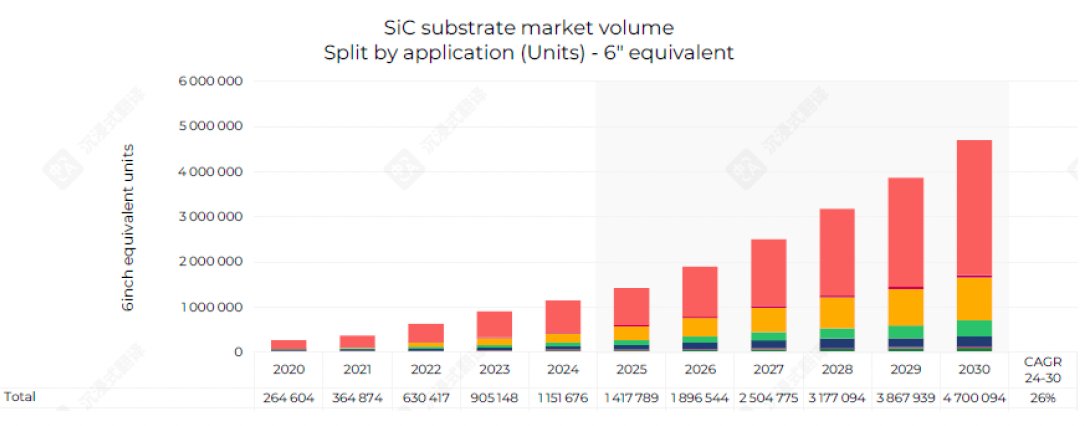
港股市场,或许很快就会迎来又一家掌握硬核实力的科技企业。据港交所披露,天岳先进(688234.SH)已于7月30日成功通过港交所上市聆讯,中金公司 和中信证券为其联席保荐人。近期又有进一步消息指出,天岳先进正进行香港IPO预路演,募资规模约为2.5至3亿美元。 作为第三代半导体碳化硅(SiC)衬底龙头的天岳先进,近年来依靠科技创新,已按下了发展的"加速键"。以2024年为例,天岳先进在衬底端实现了高达 41%的营收增长。考虑到受市场节奏变化影响,这一年不少国际同行的增长步伐显著放缓,这也意味着,本就在市占率指标上处于领先地位的天岳先进, 正朝着放大竞争优势、实现断档式领先的目标又迈出了一大步。 发展势头正盛,更值得称道的是,到目前为止天岳先进的增长后劲很可能还是为外界所低估了。智通财经注意到,近日,国际权威研究机构Yole发布了最 新市场报告,该报告系统分析了碳化硅市场当前的行业现状、供应链格局及竞争动态,并对行业接下来的发展趋势与看点进行了全方位的展望。在这份报 告中,天岳先进正是与意法半导体、英飞凌、Wolfspeed等国际巨头一齐被选为重点分析的潜力标的之一。 Yole的报告显示,全球功率碳化硅器件市场 ...