蚂蚁集团

Search documents
蚂蚁归来:一场回应普通人关切的AI进击
Sou Hu Cai Jing· 2026-02-02 04:21
Core Insights - Ant Group is re-entering the competitive landscape with a new AI-driven strategy, focusing on practical applications that address everyday concerns of ordinary people [1][2][4] Group 1: Business Strategy - Ant Group's CEO, Han Xinyi, outlined a clear strategy involving two main pillars: financial services ("You Can Spend") and health services ("You Can Live"), leveraging AI to transform these areas into sustainable products [1][4] - The company has adopted an "AI First" strategy, elevating AI to a central role in its business model, with significant advancements in AI applications and model development [2][3] - Ant Group's focus is on a few high-demand application scenarios, specifically in payment, finance, and healthcare, which are seen as foundational for the company's future growth [3][4] Group 2: AI Applications - The "Lingguang" application has enabled users to create over 12 million personalized apps, while the "Afu" health application has surpassed 30 million monthly active users, positioning it among the top AI applications in China [1][2] - The "One Tap" payment feature has achieved over 100 million daily transactions, covering 2,260 life scenarios, demonstrating the integration of AI into everyday financial transactions [1][2] - Ant Group's AI applications are designed to address common anxieties related to wealth and health, rather than merely enhancing productivity for specific user groups [4][7] Group 3: Technological Development - Ant Group has made significant investments in AI technology, including the development of its own large model, "Bailing," which has been registered for generative AI services [2][12] - The company has a history of focusing on individual needs, which has guided its approach to integrating AI into services that enhance the quality of life for ordinary users [8][9] - Ant Group's health service, "Afu," builds on previous investments in healthcare technology, including digital appointment systems and insurance services, creating a robust ecosystem for health-related AI applications [9][10] Group 4: Future Outlook - Ant Group plans to continue investing in core application scenarios like health and payment, while also maintaining a long-term focus on foundational AI model development and research [13] - The company aims to embed AI into everyday financial and health decisions, addressing real-world problems faced by users, which aligns with its mission of providing inclusive professional services [12][13]

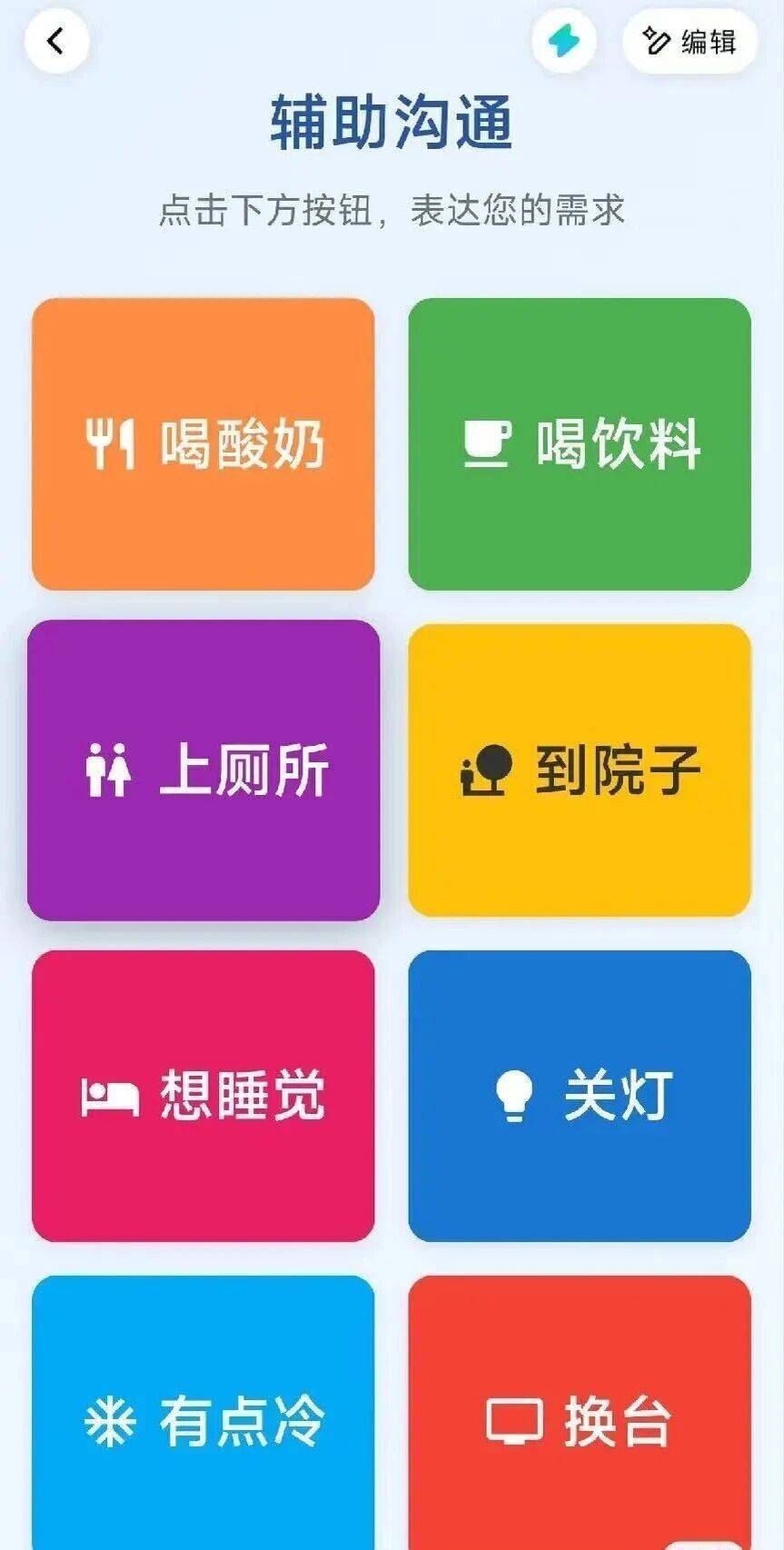
支付宝集福明日开启:新增“健康福”红包
Bei Jing Shang Bao· 2026-02-02 02:59
Core Insights - The 2026 Spring Festival "Alipay Collecting Blessings" event will launch on February 3 at midnight and run until New Year's Eve, allowing users to participate through the Alipay homepage [1] - A significant change this year is the introduction of the "Health Blessing," distributed by the health AI "Ant Ai Fu," in addition to the traditional "Five Blessings" [1] - Users can receive a health red envelope upon claiming the "Health Blessing," which is valid for use in offline scenarios within seven days [1] Group 1 - During the event, users can experience the Ai Fu feature and have the chance to obtain rare cards and universal blessings [2] - The 2026 Alipay Collecting Blessings event will feature 19 themed blessing cards, including classic Five Blessings and various IPs from games, trendy items, and films, allowing users to choose six sets to collect [2] - Each complete set will secure a red envelope worth 1.68 yuan, with all IP blessing red envelopes drawn on New Year's Eve at 22:18 [2] Group 2 - The Alipay Collecting Blessings event has been held annually since its launch in 2016, accumulating participation from over 1 billion people [3]
迈向数字文明的资本有序扩张生态阈值模型
Jing Ji Guan Cha Wang· 2026-02-02 02:55
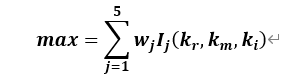
Core Viewpoint - The article introduces a novel theoretical framework called the Capital Ordered Expansion Ecological Threshold Model, aimed at balancing the dynamic interaction between digital capital vitality and sustainable civilization development in the context of the global digital economy [1]. Group 1: Theoretical Foundation - The model is rooted in the "Threefold Five-Dimensional" integration framework, emphasizing the need for a healthy "ecological interval" to prevent systemic risks arising from the interrelated nature of capital relationships, movement characteristics, and benefit essence in the digital age [2]. - The model identifies three bottom-line constraints: social equity (α), ecological sustainability (β), and data sovereignty security (γ), which must be maintained to avoid systemic collapse [2]. - The model aims to maximize five dimensions of interests through a coordinated framework, ensuring that no single dimension expands unchecked [2]. Group 2: Model Core - The core of the model is a target function designed to achieve the maximization of five-dimensional interests, expressed mathematically [3]. - The model incorporates governance philosophies and technical logic, such as clarifying data property rights and ensuring algorithm transparency and accountability [4]. Group 3: Decision Variables - The model defines three key decision variables: Kr (relationship variables), Km (movement variables), and Ki (benefit variables), which represent policy levers aimed at optimizing production relationships, capital movement forms, and benefit distribution patterns, respectively [5][8]. - Specific examples include the introduction of employee stock ownership in companies like China Unicom and Eastern Airlines to adjust internal capital and labor relations [8]. Group 4: Five-Dimensional Interest Function - The model specifies five measurable dimensions of interests, including subjective interests (Is), objective interests (Io), process interests (Ip), time interests (It), and spatial interests (Isp), each with its own key indicators [6][9]. - For instance, the implementation of data rights in Shenzhen has led to increased income for delivery workers, reflecting an enhancement of subjective interests [9]. Group 5: Constraints and Governance - The optimization of the target function is bounded by four rigid constraints, which form the model's lifeline: social equity (α), ecological sustainability (β), data sovereignty security (γ), and a coordination degree constraint (δ) [10][11]. - The model emphasizes the importance of maintaining a dynamic harmony index (δ) of at least 0.7 to ensure effective policy coordination across the three dimensions [13]. Group 6: Global Significance of China's Approach - The Capital Ordered Expansion Ecological Threshold Model represents a theoretical innovation and a "Chinese solution" for global digital governance, transcending both technological utopianism and market fundamentalism [11]. - The model provides a practical governance toolbox that translates abstract concepts of fairness, sustainability, and security into quantifiable indicators, facilitating precise management [11]. - It embodies the concept of a "community with a shared future for mankind," reflecting a commitment to global development and long-term sustainability [12].
元宝红包席卷群聊,春节AI角斗场走向“默认入口”争夺战
3 6 Ke· 2026-02-02 01:38
2月1日早上醒来,很多人的微信群已经被元宝派红包的链接刷屏,"某某给你发了一个现金红包!"点开链接才发现,确实有钱入账,但更多时候只是把一 个入口转发出去。 更早一些,零点刚过,转发就已经在朋友圈和群聊里滚动起来,这种节奏本身就像一次"定点投放",把红包从节日氛围推到了公共话题的前排。 果然,一代人有一代人的鸡蛋要领,现在,轮到我们领取电子鸡蛋了。 在嗅态的精神股东群里,大家在分享元宝红包链接 从时间维度上看,这股刷屏潮有更明确的动作。腾讯旗下的元宝在2月1日至2月17日(大年初一)推出分10亿元现金红包的活动。百度则让文心助手在百 度App内从1月26日持续到3月12日投入5亿元现金红包,并将红包与多种春节AI玩法绑定。支付宝也在同一时间段启动了集福相关活动,早鸟阶段从1月27 日00:00持续到2月2日22:00,早鸟专属口令红包总金额为300万元。 多家媒体把这种同窗期加码概括为"超15亿元规模的春节AI红包战"。与其把它理解为促活,不如把它视作平台用现金和社交转发链路去抢一段稀缺的高频 窗口,让红包承担起更明确的组织目标。 这种解读有一组更有分量的背景数据支撑。据QuestMobile披露,在12月8 ...



未来产业周报第8期(2026、1、25-2026、1、31):IonQ收购整合量子制造,中科卫星星地激光通信突破-20260201
Shenwan Hongyuan Securities· 2026-02-01 13:51
Quantum Technology - IonQ announced an $1.8 billion acquisition of SkyWater Technology to accelerate its roadmap towards fault-tolerant quantum computing, with plans to start functionality testing of 200,000 qubit QPUs by 2028 [6][8] - A Chinese research team discovered new principles in quantum systems using the 78-qubit superconducting quantum processor "Zhuangzi No. 2," which enhances the application of quantum computing in fields like financial modeling and drug development [7][9] Biomanufacturing - Kangnuo Biopharmaceutical submitted an application for listing on the Hong Kong Stock Exchange, focusing on mitochondrial medicine and NAD+ applications, with projected revenues of 303 million yuan in 2023 [10][11] - Guangdong Province released an action plan aiming for a 40% self-sufficiency rate in core strains of biomanufacturing by 2027, with a total output value exceeding 500 billion yuan [11] Hydrogen Energy and Nuclear Fusion - Sichuan Fusion New Energy Industry Investment Development Co., Ltd. officially commenced operations, supporting the construction of China's first internationally recognized fusion city [13] - CIMC Anrui announced the successful launch of China's first IV-type hydrogen gas bundle container, marking a significant advancement in domestic hydrogen storage and transportation technology [14] - Mingyang Electric and global leaders in hydrogen equipment established Guangdong Mingnuo Hydrogen Technology Co., focusing on high-end hydrogen equipment production [15] Brain-Computer Interface - Neuralink reported 21 participants in its human trials, with plans to enhance device performance by three times and introduce "blindsight" technology for the visually impaired by late 2026 [23][24] - The National Medical Products Administration in China is advancing the establishment of industry standards for brain-computer interface medical devices [28] Embodied Intelligence - Ant Group's Lingbo Technology open-sourced the LingBot-Depth model, significantly lowering development barriers in the industry and enhancing its competitive edge [31][32] 6G and Commercial Aerospace - CASIC successfully conducted a 120 Gbps laser communication experiment, doubling the previous rate and laying the groundwork for high-speed data transmission in commercial aerospace [33][34] - China plans to expand its "Space+" future industries, focusing on space infrastructure, resource development, and space tourism [36] Future Industry Catalysts - Key milestones for future industries in 2026 include significant events in quantum technology, biomanufacturing, hydrogen energy, brain-computer interfaces, embodied intelligence, and 6G [37][38]



策略周报:衡以待:行情下半场的配置思路
Guoxin Securities· 2026-02-01 00:50
Group 1: Market Trends - The A-share market is expected to maintain stability and has further upward potential, with a balanced allocation strategy recommended, particularly focusing on technology represented by AI applications and traditional assets like liquor and real estate[1] - Since December 17, 2025, the A-share spring market has gradually unfolded, with significant contributions from broad-based ETFs, flexible foreign capital, and leveraged funds[1] - The cumulative excess returns of growth and cyclical sectors have recently declined, while the negative excess returns of financial and consumer sectors have significantly recovered[1] Group 2: Historical Context - Historically, during spring market periods, both growth and value styles have performed well, with average maximum gains of 24.0% for growth and 23.5% for value since 2005[2] - The current market structure is showing signs of convergence towards balance as the spring market progresses into its later stages, consistent with historical patterns observed in previous bull markets[2] - The A-share industry rotation strength was at a historical low of 18% as of January 23, indicating a lack of significant rotation, but this metric has recently shown signs of recovery[1] Group 3: Future Outlook - The current A-share index has a potential upside of approximately 20%, while the maximum increase since December 17, 2025, has only been 9.8%, indicating room for growth[3] - Continued macroeconomic policy support is expected to provide a fundamental basis for market growth, with a focus on stabilizing the real estate market as announced by the Ministry of Housing and Urban-Rural Development[3] - The upcoming bull market in 2026 is anticipated to enter its later stages, driven by the recovery of macro and micro fundamentals and increased participation from retail investors[3]
年度AI产品十大赛道TOP 3|量子位智库AI 100
量子位· 2026-01-31 07:30
Core Insights - The article discusses the significant evolution of AI products in 2025, highlighting a shift from merely "talking" to "doing" [3][4] - The focus is on the transformation of interaction paradigms and the integration of AI into both digital and physical realms [5][6] - The article introduces the "AI 100" product list, categorizing AI products into flagship and innovative segments, along with five major application categories [6][9] Group 1: AI Product Development - AI products have shown differentiated growth across various sectors, with strong demand in general scenarios and AI efficiency, while AI life products are exploring better user experiences [14] - The common goal across all sectors is moving towards end-to-end delivery of productivity, shifting the value measurement from "how well it answers" to "how completely it delivers" [14][15] Group 2: Flagship AI Products - The "Flagship AI 100" and "Innovative AI 100" categories represent the strongest and most promising AI products, respectively [7][13] - The article outlines ten core tracks for AI applications, including AI smart assistants, AI agents, AI browsers, AI workstations, Vibe Coding, AI education, AI entertainment, AI health, multimodal creation, and AI consumer hardware [9][10] Group 3: AI Smart Assistants - AI smart assistants are the most traffic-intensive and revenue-near segment, evolving from answering questions to solving problems [16] - Top products in this category include: - Doubao from ByteDance, with over 57 million daily active users [18] - DeepSeek, known for its innovative interaction method that showcases AI reasoning [20] - Tencent Yuanbao, integrating various social networks for enhanced user experience [22] Group 4: AI Agents - AI agents have transitioned from mere conversational tools to executing tasks [23] - Notable products include: - Nano AI from 360 Group, which integrates over 80 large models for task execution [24] - Kouzi, a one-stop AI office space from ByteDance, automating complex workflows [26] - Xingliu, a new generation AI creation tool from Singularity Star, facilitating end-to-end creative processes [30] Group 5: AI Browsers - AI browsers are evolving from passive information displays to active task executors [32] - Key products include: - QQ Browser from Tencent, which integrates AI capabilities to understand user intent [33] - Quark from Alibaba, combining search, reading, and creation functionalities [36] - Fellou, focusing on a unified search and task experience [40] Group 6: AI Workstations - The competition in AI workstations has shifted from the number of features to complete workflow integration [41] - Leading products include: - Baidu Wenku, transforming from a document tool to a knowledge productivity platform [42] - Feishu, integrating AI capabilities into team workflows [46] - Tiangong, focusing on enhancing office and creative efficiency [50] Group 7: AI Education - AI education products are evolving to provide personalized tutoring and enhance learning experiences [61] - Top products include: - KuaiDui AI from Zuoyebang, focusing on personalized tutoring [62] - XiaoYuan AI from Yuanfudao, assisting parents and teachers in managing homework [65] - CapWords, an innovative language learning tool [69] Group 8: AI Entertainment - AI entertainment products are exploring how to provide unique value beyond traditional non-AI products [70] - Notable products include: - Kapi Camera, which enhances user photography experiences [73] - Xingye, a platform for emotional companionship and content creation [76] - DouDou Game Partner, focusing on gaming companionship [79] Group 9: AI Health - The AI health sector is cautiously exploring compliance and user experience [80] - Key products include: - Antifufu, a health management assistant from Ant Group [81] - XiaoHe AI Doctor, providing health consultations based on authoritative medical data [85] - OtterLife, a gamified health management product [88] Group 10: Multimodal Creation - AI creation tools are becoming integral to daily workflows for content creators [90] - Leading products include: - Jidream AI, focusing on video creation processes [91] - Liblib AI, a comprehensive AI creation platform [95] - Keling AI, a creative productivity platform leveraging short video and advertising [97] Group 11: AI Consumer Hardware - The AI consumer hardware sector is characterized by rapid innovation and high turnover [98] - Notable products include: - Plaud Note, an AI note-taking tool [99] - Thunderbird V3 AI glasses, integrating various functionalities [102] - CocoMate, an emotional companion toy [107]
大事不好:机器人学会预测未来了
3 6 Ke· 2026-01-31 01:39
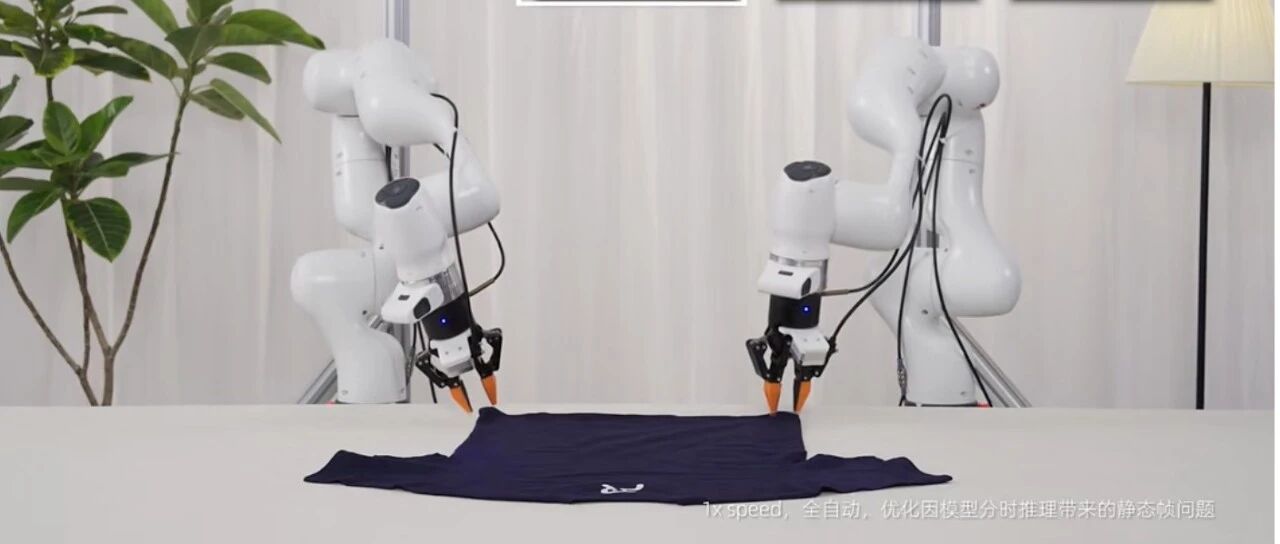
Core Insights - Ant Group's LingBot-VA represents a significant advancement in general robotics, enabling robots to predict future actions before executing them, thus moving beyond traditional "observe-react" models [1][3][5] Group 1: Technological Advancements - LingBot-VA introduces a causal video-action world model that allows robots to imagine future scenarios before taking action, enhancing decision-making capabilities [3][5] - The model retains memory during long sequence tasks, demonstrating strong state awareness and the ability to adapt to new tasks with minimal examples [5][6] - The architecture separates visual understanding, physical reasoning, and action control, improving sample efficiency and generalization [6][7] Group 2: Performance and Testing - In real-world tests, LingBot-VA successfully handled complex tasks such as preparing breakfast and high-precision actions like cleaning test tubes, showcasing its stability and adaptability [21][22][25] - The model achieved a success rate of 92.93% in easy scenarios and 91.55% in hard scenarios on the RoboTwin 2.0 benchmark, outperforming competitors [28][30] - In the LIBERO benchmark, LingBot-VA achieved an average success rate of 98.5%, setting a new state-of-the-art record [30][31] Group 3: Industry Impact - The continuous open-sourcing of LingBot-VA and its predecessors signals a strategic move by Ant Group to establish leadership in the global robotics field [34][38] - The integration of video as a medium for reasoning and action in robotics represents a paradigm shift, addressing challenges in long tasks and complex environments [35][36] - The emergence of LingBot-VA positions world models as a central capability in robotics, evolving from mere action to thoughtful action [36][40]


放大招!蚂蚁灵波“王炸”模型四连发,机器人要成精了?
机器人大讲堂· 2026-01-30 14:10
Core Viewpoint - Ant Group's Lingbo Technology has launched a comprehensive open-source initiative, unveiling four advanced models that enhance embodied intelligence, covering perception, decision-making, simulation, and execution [1][21]. Group 1: Vision Model - LingBot-Depth - LingBot-Depth addresses the challenge of transparency in robotic vision, enabling robots to "see the invisible" by overcoming limitations of traditional depth cameras [1]. - The model employs a Masked Depth Modeling (MDM) algorithm, enhancing existing sensors' capabilities without requiring expensive hardware upgrades, achieving a 47% reduction in error for sparse depth completion tasks and over 70% in indoor scenarios [2]. - In practical tests, robots using LingBot-Depth improved their success rate in grasping transparent objects from 0% to 50% [3]. Group 2: Brain Model - LingBot-VLA - LingBot-VLA utilizes 20,000 hours of real robot operation data, significantly enhancing the model's common sense and generalization capabilities, setting a new record in the open-source domain [5]. - The model's architecture incorporates a mixed Transformer design, integrating depth information from LingBot-Depth, resulting in an average success rate of 17.3% in real robot evaluations, surpassing the previous best [7]. - In the RoboTwin 2.0 simulation benchmark, LingBot-VLA outperformed the leading model by nearly 10 percentage points under highly randomized conditions [10]. Group 3: Simulation Model - LingBot-World - LingBot-World creates a high-fidelity, interactive simulation environment that adheres to physical laws, allowing robots to conduct zero-cost simulations and learn skills [13][17]. - The model can generate long videos without stability issues and allows real-time interaction, enabling users to manipulate the environment through natural language commands [14]. - This environment facilitates extensive trial and error, providing a platform for robots to learn and adapt before applying skills in the real world [17]. Group 4: Execution Model - LingBot-VA - LingBot-VA is the first self-regressive video-action integrated world model, enabling robots to "act while predicting" by generating the next frame and corresponding actions simultaneously [18]. - It features long-term memory capabilities, allowing it to distinguish between similar states in tasks, thus avoiding repetitive errors [20]. - The model demonstrates rapid learning with minimal demonstrations, achieving a 20% improvement in success rates for complex tasks compared to top baseline models, and reaching over 90% success in dual-arm collaborative operations [20]. Conclusion and Future Outlook - Ant Group's open-source initiative addresses the fragmentation and non-standardization in the robotics industry, offering a "base + adaptation" paradigm that allows companies to quickly adapt models to specific scenarios with less data and lower computational costs [21]. - This strategic positioning emphasizes the development of scalable, reusable core capabilities rather than manufacturing physical robots, marking a significant step towards a collaborative future in embodied intelligence [21].
大事不好!机器人学会预测未来了
量子位· 2026-01-30 13:34
Core Viewpoint - The article discusses the groundbreaking advancements made by Ant Group's LingBot-VA, which represents a significant leap in robot control by enabling robots to predict future actions before executing them, thus enhancing their decision-making capabilities [2][11][56]. Group 1: Technological Innovations - LingBot-VA introduces a causal video-action world model that allows robots to visualize future scenarios before taking action, moving beyond the traditional "observe-react" model [6][12]. - The model features strong memory retention, enabling it to remember previous actions during long sequences, and demonstrates high adaptability with minimal training samples [8][10]. - The architecture separates visual understanding and action control, enhancing sample efficiency and generalization capabilities [14][15]. Group 2: Performance and Testing - In real-world tests, LingBot-VA successfully handled complex tasks such as preparing breakfast and manipulating delicate objects, showcasing its stability and precision [34][36]. - The model achieved a success rate of 92.93% in the RoboTwin 2.0 benchmark for easy tasks, outperforming competitors by 4.2% [40]. - In the LIBERO benchmark, LingBot-VA set a new state-of-the-art record with a 98.5% average success rate [42]. Group 3: Industry Impact - The continuous open-sourcing of LingBot-VA and its related projects signals a shift towards a video-centric approach in robotics, where video becomes a medium for reasoning and action [46][48]. - The advancements in LingBot-VA position world models as a central capability in robotics, evolving from mere action to thoughtful decision-making [49][56]. - The ripple effect of these innovations is evident, with increased attention from global tech companies and media, indicating a strategic move in the competitive landscape of robotics [52][56].