茶百道

Search documents
茶百道(02555) - 截至二零二五年十一月三十日止月份之股份发行人的证券变动月报表
2025-12-03 08:40
股份發行人及根據《上市規則》第十九B章上市的香港預託證券發行人的證券變動月報表 截至月份: 2025年11月30日 狀態: 新提交 致:香港交易及結算所有限公司 公司名稱: 四川百茶百道實業股份有限公司(「本公司」) 呈交日期: 2025年12月3日 I. 法定/註冊股本變動 | 1. 股份分類 | 普通股 | 股份類別 | H | | 於香港聯交所上市 (註1) | | 是 | | | --- | --- | --- | --- | --- | --- | --- | --- | --- | | 證券代號 (如上市) | 02555 | 說明 | H股 | | | | | | | | | 法定/註冊股份數目 | | | 面值 | | 法定/註冊股本 | | | 上月底結存 | | | 1,477,634,250 | RMB | | 0.1 RMB | | 147,763,425 | | 增加 / 減少 (-) | | | 0 | | | RMB | | 0 | | 本月底結存 | | | 1,477,634,250 | RMB | | 0.1 RMB | | 147,763,425 | 本月底法定/註冊股本 ...
独家数据!逾千款应用或偷走隐私,一款APP竟测出9项违规
Nan Fang Du Shi Bao· 2025-12-03 03:01
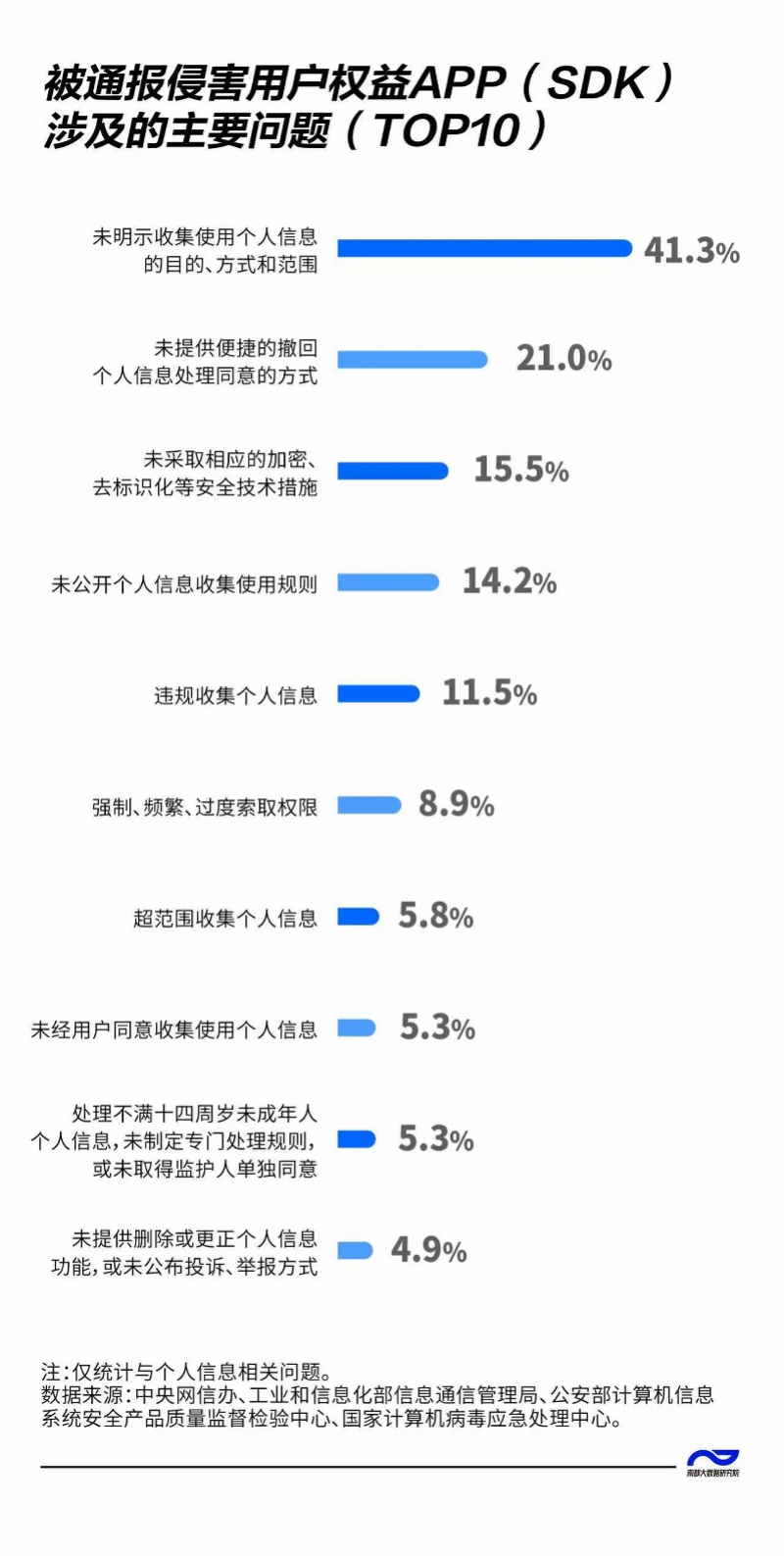
Core Insights - The article highlights the increasing scrutiny and regulation of applications (APPs) that infringe on user rights, particularly regarding personal information protection, with over 1,115 APPs reported for violations in 2025 [2][4][8]. Group 1: Regulatory Actions - Regulatory bodies, including the Central Cyberspace Administration, Ministry of Industry and Information Technology, and Ministry of Public Security, have been actively monitoring and reporting APPs that violate user rights, with a focus on personal information protection [2][3]. - The trend in 2025 shows a more pronounced regulatory direction, emphasizing core issues of personal information protection and compliance, as outlined in a special action announcement [2][3]. Group 2: Types of Violations - The most common violation type is the failure to clearly state the purpose, method, and scope of personal information collection, accounting for 41.3% of reported cases [4][6]. - Other significant issues include the lack of convenient methods for users to withdraw consent for personal information processing (21.0%) and inadequate security measures such as encryption and de-identification (15.5%) [6][8]. Group 3: APP Categories and Examples - Utility APPs are notably problematic, representing 28.8% of violations, with many developers lacking sufficient security investments and compliance measures [11][12]. - Well-known applications like "7 ELEVEN" and "T3 Travel" have been flagged for multiple violations, including inaccessible privacy policies and failure to inform users about data processing practices [8][12]. Group 4: Industry Impact - Various sectors, including finance, healthcare, and hospitality, have seen multiple APPs reported for non-compliance with personal information regulations, indicating a widespread issue across industries [16][17]. - The article emphasizes the need for companies to prioritize user data security and compliance as fundamental operational responsibilities [11][16].

告别烧钱的“疯狂联名” 新茶饮开启轻量化营销
Mei Ri Shang Bao· 2025-12-02 23:35
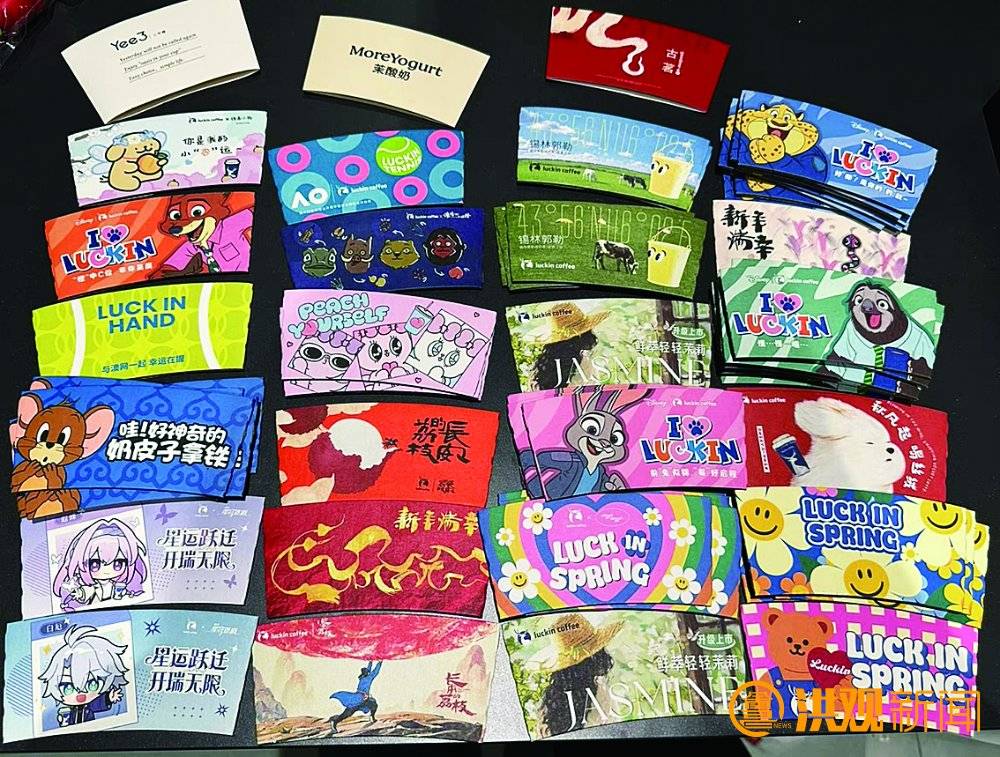
Core Insights - The new tea beverage industry is experiencing a shift from a "traffic-driven" marketing approach to a "value-driven" one, as exemplified by Heytea's introduction of a "hand-drawn custom cup sticker" feature that allows users to create personalized stickers, enhancing customer engagement and experience [1][2][3] Group 1: Marketing Innovations - Heytea's new feature allows users to upload their designs for cup stickers via a mini-program, which has gained popularity on social media platforms, reflecting a new direction in user-centric marketing [1] - The success of this feature has led to the emergence of related services on second-hand trading platforms, with prices for custom designs ranging from 3 to over 20 yuan, indicating a growing market for personalized products [2] Group 2: Industry Trends - The trend of co-creation between brands and consumers is not unique to Heytea; other brands like Kawan Kawa and Momo Milk Tea have also launched similar initiatives, showing a broader industry movement towards interactive marketing [2] - The frequency of brand collaborations has significantly decreased in 2023, with Heytea's partnerships dropping from 39 last year to just one this year, indicating a cooling off of the previously popular IP collaboration strategy [2][3] Group 3: Financial Implications - The financial reports indicate a significant increase in sales and distribution expenses for new tea brands, with Gu Ming at 480 million yuan (up 42.4%), Cha Bai Dao at nearly 400 million yuan (up 201.6%), and Mi Xue Bing Cheng at nearly 1.6 billion yuan (up 21.3%) [3] - The decline in effective brand collaborations has led to consumer fatigue, reducing the long-term brand recall and effectiveness of these marketing strategies [3]
“衍生产品”走红 年轻人爱上“情怀消费”
Sou Hu Cai Jing· 2025-12-02 07:57
Core Insights - The rise of "derivative products" such as free packaging bags and cup sleeves from tea and coffee brands has become popular among young consumers, leading to significant sales on second-hand platforms [1][5][9] - Young consumers are increasingly collecting limited edition packaging associated with popular IPs, driven by nostalgia and the desire for unique items [3][4][6] Group 1: Consumer Behavior - Young consumers, like 26-year-old Zhu Yongzhi, actively seek out limited edition packaging from popular films and brands, often purchasing from multiple stores to complete their collections [3][4] - University student Tao Xiaoqing shares her collection of IP-themed paper bags on social media, indicating a community of collectors who exchange and trade items on second-hand platforms [4][9] - The popularity of these items is evident as consumers often request specific limited edition packaging when making purchases, highlighting a shift in consumer priorities [5][6] Group 2: Market Dynamics - Second-hand platforms show a high volume of listings for tea and coffee packaging, with prices varying significantly based on brand and popularity, ranging from 0.5 to 50 yuan [4][9] - The demand for limited edition packaging is linked to the IP economy and the trend of scarcity, as young consumers seek personalized and unique products [6][9] - Some sellers on second-hand platforms emphasize the condition and authenticity of the packaging, indicating a market that values quality and provenance [9]
从秀场到日常,新中式如何重塑中国人的“吃穿住行”?
3 6 Ke· 2025-12-02 03:50
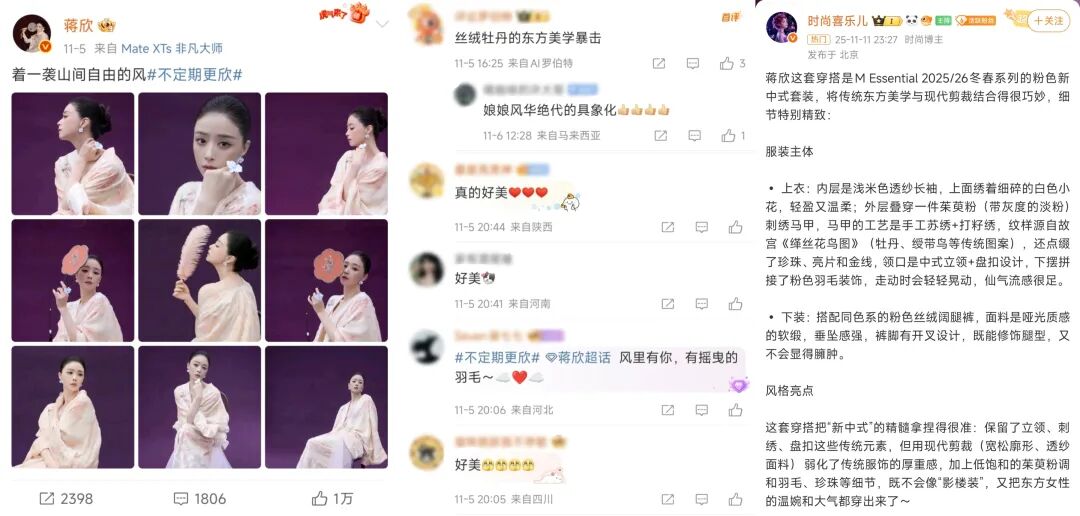
Core Insights - The rise of "New Chinese Style" is a cultural phenomenon that blends traditional aesthetics with modern sensibilities, significantly impacting various aspects of daily life and consumer behavior [1][8][82] - The popularity of New Chinese Style has surged, with social media discussions and trends reflecting its integration into fashion, food, home decor, and travel experiences [3][4][25] Group 1: Cultural Impact - The hashtag NewChineseStyle has garnered over 350 million views on Weibo, indicating its status as a cultural phenomenon [3][4] - New Chinese Style has transcended niche markets, becoming a mainstream lifestyle choice that influences contemporary Chinese people's daily lives [7][25] Group 2: Fashion and Aesthetics - The emergence of simplified and versatile "improved Hanfu" has made traditional clothing more accessible, facilitating its adoption in everyday life [9][10][11] - Celebrity endorsements and social media influencers have played a crucial role in popularizing New Chinese Style, with significant engagement metrics for related content [13][19][20] Group 3: Culinary Innovations - New Chinese culinary experiences are being created, blending traditional ingredients with modern cooking techniques, appealing to contemporary consumer tastes [26][28] - Brands like "霸王茶姬" are successfully integrating traditional tea culture into modern consumer experiences, enhancing brand engagement [29] Group 4: Home and Lifestyle - New Chinese home decor emphasizes simplicity and natural materials, appealing to modern aesthetic preferences while retaining cultural significance [50][53] - Social media influencers are actively sharing New Chinese home design inspirations, contributing to its growing popularity [50] Group 5: Travel and Cultural Experiences - New Chinese Style is being incorporated into travel experiences, allowing tourists to engage with traditional culture through activities like wearing Hanfu and learning traditional crafts [53][62] - Local tourism initiatives are leveraging New Chinese Style to enhance cultural experiences, driving economic benefits for smaller towns and cities [55][62] Group 6: Commercial Potential - New Chinese aesthetics are becoming a rich resource for brand marketing, with companies creatively integrating cultural elements into their products and campaigns [64][72] - The concept of New Chinese Style is being utilized as a cultural differentiator for brands expanding into international markets, enhancing their global appeal [72][78] Group 7: Technological Integration - The integration of AI in content creation is revolutionizing how New Chinese Style is represented in media, allowing for innovative storytelling and engagement [79][81] - The use of AR and AI technologies in events like the Spring Festival Gala showcases the potential for modern interpretations of traditional culture [81]
集体上糖水,茶饮品牌在赌下一个“超级品类”
3 6 Ke· 2025-12-02 00:11
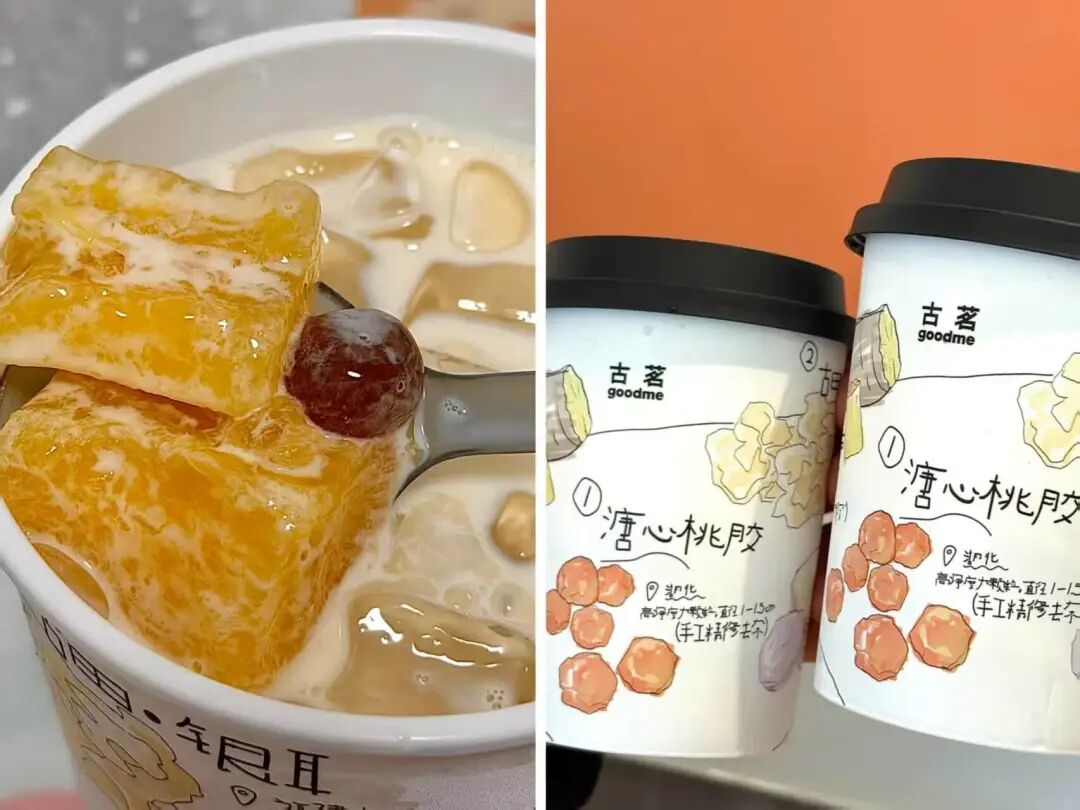
Core Viewpoint - The tea beverage industry is experiencing a surge in the introduction of sugar water products, with major brands launching new offerings to attract consumers and enhance their product lines [1][3][10]. Group 1: New Product Launches - Several leading tea brands have recently introduced sugar water products, such as Gu Ming's peach gum tapioca milk and CoCo's amber peach gum sugar water bowl, which have seen high demand and sold out in many locations [1][3]. - The number of new sugar water products launched by tea brands has increased significantly, with 8 new sugar water products identified among 74 brands in September and October [3]. Group 2: Strategies for Sugar Water Integration - Tea brands are adopting three main strategies for integrating sugar water into their offerings: adding sugar water directly to menus, creating dedicated sugar water sections in existing stores, and establishing sub-brands focused on sugar water [5][7][10]. - For example, brands like Ji Dong and Cha Yan Yue Se have successfully created dedicated sugar water stores, with Ji Dong's upgraded stores seeing performance increases of over 200% [5][7]. Group 3: Market Trends and Consumer Behavior - The resurgence of sugar water has attracted new players in the market, particularly those offering "new-style sugar water," which appeals to younger consumers' aesthetic and health concerns [8][10]. - Social media platforms have seen significant engagement with sugar water content, indicating a strong consumer interest in this product category [8]. Group 4: Industry Evolution and Competitive Landscape - The tea beverage industry is transitioning from a focus on single product breakthroughs to a more integrated ecosystem approach, expanding into adjacent categories like sugar water, coffee, and desserts [11][12]. - As competition intensifies, brands are increasingly looking to diversify their product offerings to extend operational hours and enhance customer loyalty [13][15]. Group 5: Future Outlook and Consolidation Trends - The industry is expected to undergo a consolidation wave, with leading companies exploring mergers and acquisitions to build brand matrices and expand product boundaries [16]. - The competition is evolving from single products to an ecosystem-based approach, with sugar water being a strategic move in this broader trend [16].
餐饮会员流量跟踪系列:从美团与霸王茶姬财报再议外卖大战的得与失
Guoxin Securities· 2025-12-01 15:30
Investment Rating - The report maintains an "Outperform" rating for the industry [5][37]. Core Insights - The report analyzes the recent financial performance of major players in the food delivery sector, including Meituan, JD Group, Alibaba, and Bawang Chaji, highlighting the impact of the ongoing delivery battle on their operations and profitability [1][2][3]. - It emphasizes that the low-frequency, low-ticket order subsidies are the primary reason for the significant losses in the instant retail business, which includes food delivery [2][19]. - The report suggests that the platforms are likely to return to a more rational subsidy strategy, focusing on high-ticket orders to improve unit economics [2][19]. Summary by Sections Meituan - In Q3 2025, Meituan reported revenues of 954.9 billion yuan, a year-on-year increase of 2.0%, but faced an adjusted net loss of 160.1 billion yuan, shifting from profit to loss [1][6]. - The core local business revenue was 674.5 billion yuan, down 2.8%, with an operating loss of 140.7 billion yuan [8][10]. - The food delivery segment is expected to see a 15% increase in order volume, but a 13% decline in revenue due to a decrease in average order value (AOV) and lower monetization rates [8][10]. JD Group and Alibaba - JD Group's Q3 2025 new business losses reached 157 billion yuan, while Alibaba's instant retail business incurred losses of approximately 361 billion yuan, with a per-order loss of about 5.3 yuan [2][17]. - Both companies are experiencing significant pressure on their overall performance due to the losses in their instant retail segments [2][19]. Bawang Chaji - Bawang Chaji reported a revenue of 32.08 billion yuan in Q3 2025, a decrease of 9.4%, with an adjusted net profit of 5.03 billion yuan, down 22.2% [3][21]. - The company has chosen a cautious approach to the delivery battle, avoiding price wars to maintain brand integrity and product strategy [3][32]. - The report notes that Bawang Chaji's same-store GMV declined by 27.9% in the Greater China region, reflecting the competitive pressures in the market [21][32]. Recommendations - The report recommends focusing on leading restaurant brands that are likely to benefit from increased subsidy efforts and are in a strong operational season, such as Guoquan, Haidilao, Yum China, and Xiaocaiyuan [3][37]. - It also highlights the potential of tea brands like Guming and Mixue Group, which are actively expanding their product offerings and private traffic strategies [3][37].
食品饮料行业周报:茅台反馈定海神针,关注年底子板块行情-20251201
Huaxin Securities· 2025-12-01 06:35
Investment Rating - The report maintains a "Recommended" investment rating for the food and beverage & commercial sectors [6][52]. Core Insights - The liquor sector shows clear signs of bottoming out, with Kweichow Moutai's shareholder meeting reinforcing market confidence and presenting a good opportunity for low valuation positioning [51]. - The consumer goods sector is experiencing structural differentiation, with the snack food segment remaining strong while soft drinks enter the off-season [52]. - The restaurant supply chain industry is at a clearing point, with key stocks leading the recovery [52]. Summary by Sections 1. Weekly News Summary - Industry news includes a 2.6% increase in liquor production in Luliang from January to October and a 9.6% increase in the added value of the liquor and tea industry in Bozhou during the same period [14]. - Company news highlights Kweichow Moutai's focus on five key areas and the appointment of new leadership at various liquor companies [14]. 2. Key Company Feedback - The report provides insights into the performance of key companies, with a focus on their stock price movements and market strategies [25][26]. 3. Industry Rating and Investment Strategy - The liquor sector is advised for long-term investment in high-dividend leaders such as Kweichow Moutai, Wuliangye, and Luzhou Laojiao, while also considering flexible stocks that have corrected to appropriate levels [51][52]. - The consumer goods sector is recommended for companies like Anjuke Food and Baidu Food, which are adapting to market changes and consumer preferences [52]. 4. Key Companies and Earnings Forecast - The report lists several companies with their respective earnings per share (EPS) and price-to-earnings (PE) ratios, recommending a "Buy" rating for all listed companies [54].

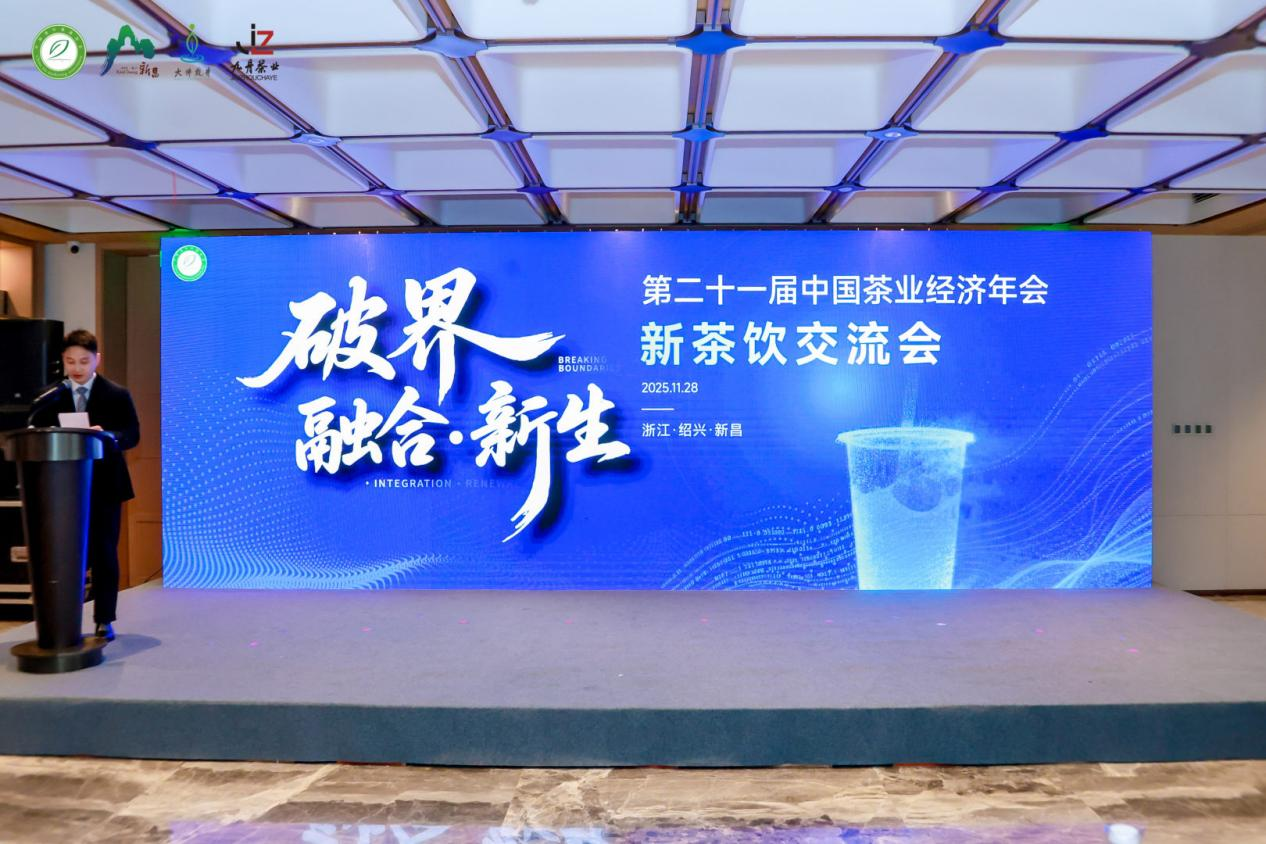
茶饮跃迁迎新势,破界融合焕新生——第二十一届中国茶业经济年会新茶饮交流会成功举办
Zhong Guo Jin Rong Xin Xi Wang· 2025-12-01 03:54
Core Insights - The 21st China Tea Economy Annual Conference focused on the theme "Breaking Boundaries, Integration, and Rebirth," gathering representatives from new tea beverage brands, supply chain companies, research institutions, and industry experts to discuss innovation and international expansion in the tea industry [2][19] - The event highlighted the transformation of traditional tea consumption towards multi-scenario and experiential approaches, emphasizing the importance of collaboration in driving the tea industry's value [3][10] Industry Trends - The new tea beverage sector is experiencing a shift from single product competition to collaborative innovation across the entire industry chain, which is crucial for high-quality development and integration with new consumer trends [10][19] - The conference featured reports from key industry figures, including the founder of Gu Ming and representatives from Nestlé and the Chinese Academy of Agricultural Sciences, showcasing the latest advancements in raw material application, flavor development, and supply chain integration [10][11] Cultural and Educational Initiatives - The launch of the book "New Style Tea Beverage: Eastern Flavor" represents a significant step in summarizing theoretical and practical aspects of the new tea beverage industry, highlighting the collaborative efforts of various brands and organizations [13][15] - The book aims to present the innovation logic and cultural expressions of the Chinese new tea beverage industry, providing valuable insights for future development [13][15] Collaborative Efforts - The event served as a platform for deep exchanges among industry leaders, focusing on cultural expression, supply chain efficiency, and international development directions for new tea beverages [17][19] - The China Tea Circulation Association plans to continue fostering innovation and collaboration within the industry to enhance the quality and global presence of Chinese tea culture [19]

奶茶黑马赚钱快分红狠,古茗一年分红37亿,创始人王云安独揽15亿
3 6 Ke· 2025-12-01 03:46
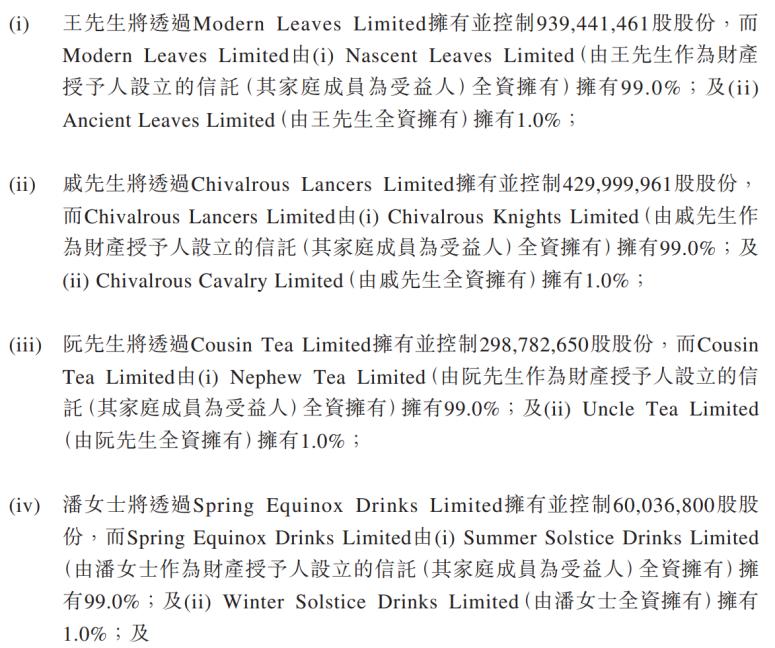
古茗突然宣布大手笔分红,创始人王云安及一众高管成为最大赢家。 古茗(1364.HK)日前发布公告称,公司计划派发特别股息0.93港元/股,以23.78亿总股本计算,合计派发股息22.12亿港元,且无须缴纳预 扣税。 这已是古茗年内第二次宣布派息。今年1月,古茗就宣布分红17.4亿元人民币。截至6月底,这笔股息已派发了8.7亿元,其余部分将于明年 3月前派发完毕。 上市刚9个多月,古茗的分红额已经超过了公司的募资额。今年2月上市时,古茗的募资净额为19.30亿港元,而年内两次分红就分出了超37 亿元。 值得注意的是,由于古茗股权极为集中,上述分红多数流入了古茗创始人、董事长兼CEO王云安及部分高管的海外信托之中。 截至今年6月底,王云安、戚侠、阮修迪、潘萍萍4位控股股东通过家族信托,合计控制公司72.77%的股权。算下来王云安4人从本次派息 中分得约16亿港元,约合14.7亿人民币。若算上年初那次分红,王云安4人共可取得超28亿元分红,其中王云安独揽逾15亿元。 此外,随着古茗市值拔升,王云安等人的身价也水涨船高。以古茗596亿港元的市值计算,四位控股股东的合计持股市值约为433亿港元, 王云安个人的身价为23 ...