奈雪的茶

Search documents
10月现制茶饮:开店3247家、关店3062家
Ge Long Hui· 2025-11-21 14:45
Core Insights - The new tea beverage industry is experiencing a slowdown in store expansion, with a total of 13.38 million existing stores and a net increase of 186 stores in October 2025, reflecting a month-on-month growth rate of 0.14% [2][4]. Store Opening and Closing Summary - In October, 30 chain brands opened a total of 3,247 stores while closing 3,062, resulting in a net increase of 186 stores [2][4]. - The leading brand, Mixue Ice City, closed 804 stores, resulting in a net decrease of 68 stores, while maintaining 44,166 existing stores, a decline of 0.15% month-on-month [4][9]. - Gu Ming achieved a net increase of 215 stores, with a month-on-month growth rate of 1.69%, totaling 12,905 existing stores [4][9]. - Eleven brands reported positive net growth, with Hu Shang A Yi leading with a net increase of 271 stores, and Yi Dian Dian showing the fastest growth rate of 3.59% with a net increase of 140 stores, surpassing 4,000 stores [7]. Brand Performance - Significant closures were noted among brands, with Mixue Ice City leading in closures, followed by Tian La La with 341 closures and Gu Ming with 226 closures [9][14]. - Other brands like Shuyi Burned Immortal Grass and Bawang Tea Princess also saw closures exceeding 100 stores [14]. Market Expansion Trends - The expansion is primarily concentrated in second and third-tier cities, which account for 65.1% of new store openings, with third-tier cities leading with 754 new stores (23.2% of total) [17]. - In contrast, first-tier cities only saw 302 new stores, representing 9.3% of the total, indicating a continued penetration of new tea brands into lower-tier markets [17]. Special Location Insights - Campuses emerged as a key battleground for brand expansion, with Gu Ming adding 35 campus stores and Tian La La adding 30, contributing to a total of 125 new campus stores, which accounted for 71.84% of the total increase in campus stores for October [20]. - In shopping centers, brands like Bawang Tea Princess, Yi Dian Dian, and Hu Shang A Yi showed strong expansion, with net increases of 57, 43, and 40 stores respectively, while brands like Tea Hundred Road and Xi Tea experienced significant reductions [21]. Transportation Hub Expansion - Brands exhibited cautious expansion in transportation hubs, with only Bawang Tea Princess achieving a double-digit net increase, while other brands did not exceed six new stores [22].


“品质零售·融聚共生”绘就产业高质量发展新图景2025北京零售商品博览会盛大启幕!
Jing Ji Guan Cha Wang· 2025-11-21 10:47
Core Insights - The 2025 Beijing Retail Goods Expo aims to create a high-end exchange platform for the retail industry, focusing on resource integration, trend analysis, and innovation display [1] - The expo's theme is "Quality Retail · Integration and Coexistence," emphasizing the connection between various stakeholders in the retail supply chain to stimulate industry upgrades and consumer potential [1] Group 1: Event Overview - The expo covers an exhibition area of over 6,000 square meters, featuring more than 100 quality exhibitors and showcasing 200 innovative products across key consumer sectors such as imported food, dairy beverages, and daily necessities [1] - Notable brands participating include North Ice, Mengniu, Yili, Qingdao Beer, and others, highlighting the diverse appeal and innovative vitality of the retail industry [1] Group 2: Industry Significance - The retail sector is identified as a foundational industry crucial for national economic stability, influencing production guidance, consumption expansion, employment absorption, and livelihood security [2] - The China Commercial Association emphasizes its role in bridging government and enterprises, promoting the reform and development of the commercial circulation industry [2] Group 3: High-Quality Development - High-quality development is highlighted as a primary task for modernization in China, requiring the retail industry to move beyond single products and markets towards a more integrated, green, and intelligent platform [2] - Industry experts discuss challenges such as insufficient digital transformation and supply chain inefficiencies, advocating for a focus on consumer needs and embedding products into daily life for sustainable growth [4] Group 4: Innovative Practices - Companies like North Ice and 京客隆 are implementing innovative strategies such as digital communication channels and community-focused business models to enhance brand engagement and consumer experience [4][6] - The introduction of transparent supply chains and cultural elements in product development is seen as a way to attract younger consumers and rejuvenate traditional markets [6] Group 5: Supporting Activities - The expo includes various supporting events like the New Consumption Summit and retail procurement meetings, aimed at fostering precise supply-demand matching and deepening industry dialogue [7] - The event serves as a platform for showcasing retail innovation and building consensus on development paths, contributing to the high-quality growth of the retail sector and supporting Beijing's status as an international consumption center [7]
当外卖带不动电商,茶饮行业开始入冬
雷峰网· 2025-11-21 09:31
Core Viewpoint - The takeaway from the article is that the current food delivery war mirrors the e-commerce subsidy wars of the past, characterized by aggressive price cuts and subsidies that disrupt industry norms and create unsustainable business models for tea beverage brands [4][40]. Group 1: Industry Dynamics - The tea beverage industry is experiencing a significant downturn as seasonal demand declines and platform subsidies wane, leading many businesses to express concerns about survival through the winter [4][6]. - The delivery war has resulted in a drastic increase in the number of tea beverage outlets, with a net addition of 26,000 stores in the third quarter alone, nearly doubling year-on-year [6]. - The high return rates and pressures faced by downstream e-commerce businesses, such as the 90% return rate in women's apparel, reflect the broader challenges within the industry [4]. Group 2: Financial Implications - Luckin Coffee reported delivery expenses of 2.89 billion RMB in Q3, significantly higher than the previous year, consuming all incremental profits for the season [5][16]. - The financial performance of brands like Mixue Ice City has also suffered, with stock prices dropping from 600 HKD to 376 HKD, indicating diminishing returns from delivery subsidies [5]. - The article highlights that during the peak of the subsidy war, brands like Nai Xue's Tea saw a 50% increase in delivery orders, but the profitability per order was severely compromised, averaging only 4-5 RMB after costs [11][30]. Group 3: Market Behavior and Consumer Trends - The article notes a shift in consumer behavior, with over half of the increased order volume during the delivery war coming from tea and coffee, compared to only 20% the previous year [10]. - The delivery war has altered the business model for tea brands, with the ratio of dine-in to delivery orders shifting dramatically from 3:1 to 1:7 for many businesses [21][22]. - There is a growing concern among tea beverage entrepreneurs that consumers may become accustomed to lower prices due to subsidies, making it difficult to revert to higher price points post-subsidy [16]. Group 4: Strategic Responses - To adapt to the changing landscape, tea brands are focusing on building membership systems and enhancing private domain operations to retain existing customers and attract new ones [32][34]. - The article suggests that effective supply chain management is crucial for brands to survive and thrive, emphasizing the need for higher cost-performance ratios rather than just low prices [33][36]. - Brands like Gu Ming have successfully leveraged their supply chain capabilities to handle sudden spikes in order volume, showcasing the importance of operational efficiency in a competitive market [36].


一杯奶茶的钱 买一个废弃的袋子:年轻人到底在买什么?
Xin Jing Bao· 2025-11-21 04:37
Core Viewpoint - The second-hand market for milk tea bags is experiencing a surge in popularity, with ordinary bags selling for 0.5 to 2 yuan, while special edition bags can fetch prices between 15 to 50 yuan, driven by their scarcity and branding [1][2][4]. Group 1: Market Dynamics - Ordinary milk tea bags are priced between 0.5 to 2 yuan, while limited edition bags can reach 15 to 50 yuan due to their perceived value and branding [1][2]. - The phenomenon of reselling milk tea bags has gained traction, with some sellers reporting earnings of hundreds to thousands of yuan from these transactions [1][3]. - The demand for milk tea bags is primarily driven by young consumers, particularly those who are trend-sensitive and value unique items [5][6]. Group 2: Consumer Behavior - The main buyers of second-hand milk tea bags include Gen Z consumers who are sensitive to trends and seek to express their individuality through unique items [5][6]. - Practicality also plays a role, as some consumers use these bags as everyday carry items, aligning with sustainable living trends [5][6]. - Collectors view these bags as trendy derivatives, similar to sneakers or blind boxes, and are motivated by the desire for rarity and completeness in their collections [5][6]. Group 3: Legal and Ethical Considerations - The resale of personal, unused milk tea bags is legal; however, bulk sales without brand authorization may infringe on intellectual property rights [4][6]. - Brands like Heytea and Nayuki have not authorized the sale of their bags, raising concerns about potential infringement by sellers on second-hand platforms [4][6]. Group 4: Future Outlook - The sustainability of the milk tea bag trend in the second-hand market depends on brands continuing to release attractive designs and maintaining supply-demand dynamics [6]. - The current market is in an early expansion phase, but the lack of stable supply and the potential for market saturation could lead to a decline in interest [6].
茶颜悦色上市再提速?从港股转战看新茶饮巨头的资本突围战
Sou Hu Cai Jing· 2025-11-21 01:27
Core Viewpoint - The tea brand Cha Yan Yue Se is transitioning from the consumer market to the capital stage, preparing for a Hong Kong IPO, which reflects not only its growth but also the future of the new tea beverage industry [2][3] Group 1: IPO Strategy - Cha Yan Yue Se's parent company, Hunan Cha Yue Cultural Industry Development Group, is accelerating its Hong Kong IPO plans, aiming to raise between $500 million and $800 million for supply chain upgrades and national expansion [3] - The estimated valuation for Cha Yan Yue Se is between $4.8 billion and $5.5 billion, with a stronger cultural recognition in the Hong Kong market compared to the U.S. [3] - Recent regulatory changes in China have simplified the process for companies to raise funds overseas, providing support for Cha Yan Yue Se's IPO [3][8] Group 2: Shareholder Structure and Brand Development - In 2024, significant changes in shareholder structure occurred, with early investors exiting and new Hong Kong-based shareholders entering, indicating a move towards a VIE structure for overseas listing [4] - The launch of the sub-brand "Cha Yan Coffee" in over 1,200 self-operated stores reflects the brand's strategy to deepen its "tea-coffee fusion" approach, enhancing growth potential [4] Group 3: Business Model and Market Position - Cha Yan Yue Se maintains a direct sales model, with 1,312 self-operated stores as of September 2025, focusing on quality and profitability despite a smaller scale compared to franchise brands [5] - The company reported a revenue of approximately 3.12 billion yuan and a net profit of 460 million yuan in 2024, with a net profit margin of 14.7%, significantly higher than the industry average [5] - The brand's direct sales model has led to high customer loyalty and a strong ecosystem of products and culture, with 30% of revenue coming from peripheral products [5] Group 4: Competitive Landscape and Growth Strategy - Competition in Hunan has intensified, with rival brands increasing their presence, prompting Cha Yan Yue Se to adopt a strategy of "regional densification and sub-brand penetration" to enhance market share [6] - The introduction of new sub-brands aims to cater to diverse consumer needs while maintaining brand integrity, although balancing expansion and profitability remains a challenge [6] Group 5: Market Environment and Challenges - The new tea beverage market is experiencing a slowdown, with growth rates declining to 5.1% in 2025, which poses challenges for new entrants and existing players [7] - Cha Yan Yue Se's unique cultural branding has helped it maintain competitive strength, but it must continue to demonstrate its differentiation and innovation to sustain investor confidence [7][8] - The choice of Hong Kong for the IPO is influenced by regulatory environments and market expectations, with a focus on profitability and cost control in the direct sales model [8]
杨枝甘露“固体化”,让茶饮品牌卷到冒烟
3 6 Ke· 2025-11-21 00:11
Core Insights - The emergence of solid mango sago has created a significant trend in the beverage industry, transforming a traditional drink into a portable dessert, which has led to a surge in popularity and sales [1][28][42] - Major tea brands have quickly entered the market, recognizing the potential of solid mango sago, resulting in a competitive landscape with various pricing strategies and product variations [7][10][13][15] Product Overview - Solid mango sago is a reimagined version of the classic liquid mango sago, presented in a handheld solid form, typically using half a mango as a base, layered with yogurt and topped with various ingredients [5][6] - The product's appeal lies in its innovative form, which addresses issues of portability and visual presentation, enhancing consumer satisfaction [25][26] Market Response - The initial launch of solid mango sago saw remarkable sales, with brands like Cha Bai Dao selling nearly 250,000 portions on the first day, and other brands like Heytea and Nayuki also reporting high sales figures shortly after their releases [16][17][27] - The product has generated significant online buzz, with millions of views and discussions across social media platforms, indicating a strong consumer interest [1][18] Industry Trends - The success of solid mango sago reflects a broader trend in the beverage industry towards "edible" drinks, where traditional liquid beverages are being transformed into solid or semi-solid forms, expanding their consumption scenarios [28][29] - This trend is not limited to mango sago; other beverages, such as coffee and tea, are also being innovatively restructured into solid forms, indicating a shift in consumer preferences [31][36] Competitive Landscape - Various tea brands have introduced their versions of solid mango sago, with different pricing tiers ranging from budget-friendly options to premium versions with added health benefits [10][13][15] - The market has seen a rapid influx of similar products, leading to concerns about homogenization and price wars as brands compete for market share [37][38] Challenges Ahead - Despite its popularity, solid mango sago faces challenges such as rising production costs, potential food safety issues, and the risk of product homogenization, which could impact its long-term viability [39][40][41] - The industry may need to establish standards and innovate further to maintain consumer interest and ensure product safety [41][42]

中国VC没有合伙人?20年血泪史揭示三大真相
3 6 Ke· 2025-11-19 23:28
Core Insights - The ultimate dream for many Chinese venture capitalists (VCs) is independence rather than partnership, indicating a systemic failure of the Chinese partnership model [1][3][4] - The article discusses three major truths about the Chinese VC industry over the past 20 years: the dilemma of partnerships, the evolution of buyback clauses, and the disillusionment with post-investment support [1][21] Group 1: Partnership Dilemma - There is a prevailing belief that true partners do not exist in Chinese VC, with most firms having a single decision-maker despite the title of "partner" [3][4] - The dominance of strong individuals in the industry leads to a lack of collaborative decision-making, as seen in the experiences of early adopters of the partnership model [5][6] - Many young partners find that achieving the title of "partner" does not equate to commensurate financial rewards or decision-making power [6][7] Group 2: Buyback Clause Evolution - The concept of "buyback clauses" has become a significant topic in the VC landscape, highlighted by a public dispute involving prominent figures in 2023 [9][10] - The history of buyback clauses in China shows their transition from a protective measure to a tool that can question the essence of venture capital [11][12] - Regulatory changes have redefined buyback clauses, categorizing them as liabilities rather than equity, which alters their impact on investment agreements [12] Group 3: Disillusionment with Post-Investment Support - Post-investment support was once viewed as a core competitive advantage for VCs, but this perception has shifted dramatically since 2022 [13][17] - The development of post-investment services peaked around 2021, with many firms investing heavily in dedicated teams, but this trend reversed as market conditions worsened [14][16] - The once-promising post-investment support has now been recognized as a cost center rather than a value-adding component of the investment process [17] Group 4: Consumer Investment Trends - The consumer sector has been a focal point for VC investments, with notable successes and failures illustrating the volatility of this market [18][19] - The rise and fall of companies like Bubble Mart and Yuanqi Forest exemplify the rapid changes in consumer sentiment and investment viability [19] Group 5: Future Prospects in Technology Investment - Despite challenges in the consumer sector, technology investments are emerging as a new area of hope, with companies like DeepSeek and Yuzhu Technology gaining attention [20] - These cases suggest that China still has the potential to produce world-class technology firms, prompting a reevaluation of investment strategies in uncertain market conditions [20] Group 6: The Path Forward - The evolution of the Chinese VC industry reflects a journey from failed partnership models to a search for a unique organizational innovation that fits the local context [21]

IPO动态|美股上市双样本:霸王茶姬高光首秀与瑞幸的二次逆袭!
Sou Hu Cai Jing· 2025-11-19 05:42
Core Insights - The article discusses the contrasting paths of two Chinese beverage brands, Bawang Chaji and Luckin Coffee, in their journey to the U.S. stock market, highlighting Bawang Chaji's successful IPO and Luckin Coffee's efforts to return to the market after a scandal [1][2]. Group 1: Bawang Chaji's Success - Bawang Chaji became the first Chinese ready-to-drink tea brand to list on the U.S. stock market, achieving a remarkable IPO with a first-day stock price increase of nearly 16%, resulting in a market capitalization of $5.95 billion [1][3]. - The company raised $411 million through its IPO, which significantly boosted its growth, with net revenue soaring from 492 million yuan in 2022 to 12.406 billion yuan in 2024, and net profit turning from a loss of 90.7 million yuan to a profit of 2.515 billion yuan, achieving a profit margin of 20.3% [3]. - Bawang Chaji's store count exploded from 1,087 at the end of 2022 to 6,440 by the end of 2024, with international expansion underway, including 156 stores in Malaysia and Singapore, and a store in Los Angeles in preparation [3]. Group 2: Luckin Coffee's Recovery - Luckin Coffee made a record-breaking entry into the U.S. market within 18 months, although it faced initial skepticism and a drop in stock price post-IPO; however, the capital raised supported its business expansion [5]. - The company reported a staggering 540% year-over-year revenue growth in Q3 2019, adding 717 new stores and surpassing 30 million cumulative transaction users [5]. - Luckin Coffee optimized its operational structure post-IPO, reducing marketing expenses from 400% of revenue in Q1 2018 to 36% in Q3 2019, which helped it achieve profitability [5]. Group 3: Advantages of U.S. Market Listing - Both companies benefited from the unique ecosystem of the U.S. stock market, which provided critical funding and strategic upgrades for their growth [7]. - The U.S. market offers higher valuations for growth-oriented consumer companies, with Bawang Chaji's differentiated positioning allowing it to achieve a favorable valuation compared to competitors [8]. - The strong liquidity of the U.S. market enabled Bawang Chaji to secure $411 million for technology investment, new product development, and global expansion, while Luckin leveraged its IPO to rapidly open new stores and build a digital ordering system [9]. Group 4: Global Brand Influence and Governance - Listing on the U.S. stock market serves as a global branding opportunity, with Bawang Chaji using the stock code "CHA" to promote Chinese tea culture internationally [10]. - The stringent regulatory environment of the U.S. market led Bawang Chaji to enhance its operational governance, maintaining low closure rates, while Luckin improved its digital management to optimize store locations and product development [11]. Group 5: Lessons for Future Listings - The experiences of Bawang Chaji and Luckin Coffee provide insights for other companies considering overseas listings, emphasizing the importance of aligning with market preferences and strengthening core competencies [12]. - Companies should utilize funds raised from IPOs for long-term strategic initiatives, creating a cycle of financing, development, and value enhancement [12]. - The success of these Chinese beverage brands in the U.S. market illustrates the potential for Eastern consumer brands to gain global capital recognition and enhance their brand value and competitiveness [12].
北京王府井商圈的“五大王牌”都有了新变化
3 6 Ke· 2025-11-19 02:20
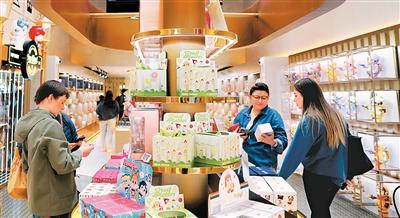
Core Insights - Wangfujing area is undergoing a new round of public space renovation, with major commercial projects simultaneously upgrading and refreshing their offerings [1] Group 1: Wangfujing Zhonghuan - Wangfujing Zhonghuan is optimizing its brand matrix, with the luxury brand Loewe's original location now under renovation, and several brands like Solar lab and DVF have exited [2] - In the dining sector, the last store of nama cocoa has closed, making way for BLACK TREE Thai Tea's first store in Beijing, alongside new tea brands and restaurants [4] Group 2: Beijing APM - Beijing APM is enhancing its sports brand matrix, with HOKA ONE ONE prominently positioned on the first floor, while several brands like Burberry Beauty have exited [5] - The dining options are expanding with new entries like Peppers Water Boiled Fish, while several other restaurants have closed [5] Group 3: Wangfujing Yintai in88 - Wangfujing Yintai in88 is introducing over 10 new dining brands on the fourth floor, which was previously not a commercial space, including several first stores in Beijing [8] Group 4: Dongfang Xintiandi - Dongfang Xintiandi is shifting towards a more accessible brand lineup, with new openings like COCOON and Zhengda Coffee, while several brands have closed [10] Group 5: Wangfujing Joy City - Wangfujing Joy City is adjusting its second-floor and first-floor dining matrices, with a new Disney pop-up store attracting attention, and a large KKV replacing previous retail spaces [12] Group 6: Visitor Statistics - Official data indicates that the Wangfujing area is expected to receive 130 million visitors in 2024, with a daily average of 355,000 visitors, marking a 30% year-on-year increase [13]


从茶饮热销到潮玩圈粉
Ren Min Ri Bao Hai Wai Ban· 2025-11-18 07:40
Group 1: Chinese Beverage Brands - Chinese beverage brands such as Bawang Chaji, Mixue Ice City, Nayuki, and Heytea are expanding internationally, leveraging a "culture + product" model to stand out in overseas markets [2] - Bawang Chaji's stores in Malaysia feature design elements like wooden furniture and ink wash wall decorations, creating a "Chinese aesthetic" ambiance [2] - The popularity of Chinese milk tea in Malaysia is attributed not only to taste but also to brand image, aesthetic representation, and cultural innovation [2] Group 2: Chinese Cultural Influence in Vietnam - Chinese historical dramas have gained significant popularity in Vietnam, with many young viewers actively discussing and engaging with the content [3] - Vietnamese youth are increasingly interested in Chinese culture, as evidenced by the formation of clubs dedicated to watching Chinese historical dramas [3] - The themes of loyalty, filial piety, and national sentiment in Chinese dramas resonate deeply with Vietnamese audiences [3] Group 3: Chinese Toy Brands - Chinese toy brand Pop Mart has opened 10 stores in major UK cities and plans to add 12 more by the end of 2026, indicating strong market expansion [4] - The brand Miniso has seen a significant increase in sales in the UK, with one blind box selling every three minutes, leading to a 63% sales growth over the past year [5] - Chinese toys are increasingly incorporating cultural elements, with brands like 52TOYS achieving success in Thailand through unique designs based on Chinese cultural symbols [5] Group 4: Market Trends and Consumer Engagement - The rise of Chinese trendy toys has created a fashion wave, appealing to emotional needs of consumers, which is a departure from traditional Chinese brands focused on electronics and automobiles [5] - The success of these brands in international markets highlights a new trend in cultural exchange and consumer engagement through innovative product offerings [5]