
奔驰

Search documents
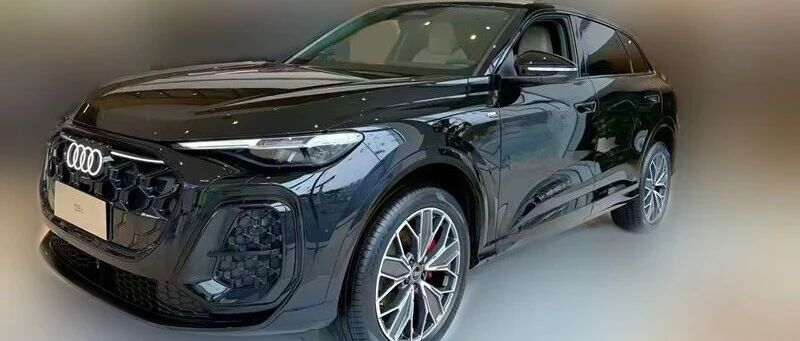
全新奥迪Q5L:竞品既有燃油也有增程,车主说终于和豪华沾边了
车fans· 2026-01-16 00:30
Core Viewpoint - The newly launched Audi Q5L is positioned as a fuel SUV featuring Huawei's advanced driving technology and hybrid capabilities, enhancing its fuel efficiency and driving performance compared to previous models [5]. Group 1: Product Arrival and Specifications - The new Q5L arrived at the dealership in mid-December, with a total of 5 vehicles available by the end of the month, including a special edition for users [2]. - The pricing for the new Q5L ranges from 309,800 to 384,800 RMB, with various promotional offers such as a deposit discount and complimentary maintenance [3]. Group 2: Customer Reception and Market Position - Customer traffic at the dealership averages 25 groups daily, with less than 10% specifically seeking the new Q5L, but half of the customers in-store show interest in it [7]. - Most customers appreciate the new Q5L's interior design and find its exterior more luxurious and sporty compared to previous models [8]. Group 3: Competitive Analysis - The Q5L is compared against competitors like the Mercedes-Benz GLCL and BMW X3 for fuel vehicles, and against Li Auto L7 and AITO M7 for extended-range vehicles, highlighting its advantages in fuel efficiency and power [12]. - Some customers express concerns about the pricing of the new model, noting that the previous model's price after discounts was significantly lower [14]. Group 4: Financial Options and Recommendations - The primary financing option promotes a 5-year installment plan with the first two years focusing on principal repayment, offering a 0% interest rate for the first 18 months during the pre-sale period [19]. - It is anticipated that there will be no additional discounts for the new Q5L in the next six months, suggesting that customers who can accept the price should consider purchasing soon [23]. Group 5: Sales Insights - The new Q5L features advanced functionalities, including heated and ventilated front seats, which are not available in some higher-end models like the A8L [17]. - The removal of the previous generation's variable intake grille has received mixed feedback, but the overall design and technology improvements are seen positively [24].

8点1氪丨西贝关店102家,贾国龙最新发声;爱马仕客服回应一个悠悠球售价超1.8万;霸王茶姬及创始人起诉网民,公司回应
3 6 Ke· 2026-01-16 00:05
Group 1 - The People's Bank of China indicates there is still room for interest rate cuts this year, with the current average reserve requirement ratio at 6.3% [6] - Xiaomi launches a 7-year low-interest car purchase policy for its new electric SUV, with monthly payments starting at 2,593 yuan [10] - The Philippines announces visa-free entry for Chinese citizens starting January 16, 2026, allowing a stay of up to 14 days [10] Group 2 - Xunlei restarts litigation against former CEO Chen Lei, claiming he secretly siphoned off company assets, seeking 200 million yuan in damages [10] - Golden Dragon Fish plans to transfer 50% stakes in its Shanghai and Kunshan subsidiaries to Mars China for a total consideration of 60 million USD [11] - SF Express and Jitu Express announce a strategic mutual shareholding agreement, with a total investment amounting to 8.3 billion HKD [8] Group 3 - Wang's Restaurant announces the closure of 102 stores, representing 30% of its total outlets, while ensuring all employees will receive their wages and customers can refund their prepaid cards [1] - The luxury brand Hermès responds to the controversy over an 18,000 yuan yo-yo, stating it is a new product with thoughtful design [4] - The Louvre Museum increases ticket prices for non-European Economic Area visitors by approximately 45% to fund infrastructure upgrades [13] Group 4 - KKR completes fundraising of 2.5 billion USD for a private credit fund focused on high-quality credit assets in the Asia-Pacific region [21] - TSMC forecasts Q1 2026 revenue between 34.6 billion to 35.8 billion USD, indicating a 4.4% quarter-over-quarter increase [17] - Li Ning reports a low single-digit decline in retail sales for the fourth quarter, with a total of 6,091 sales points in China [18]





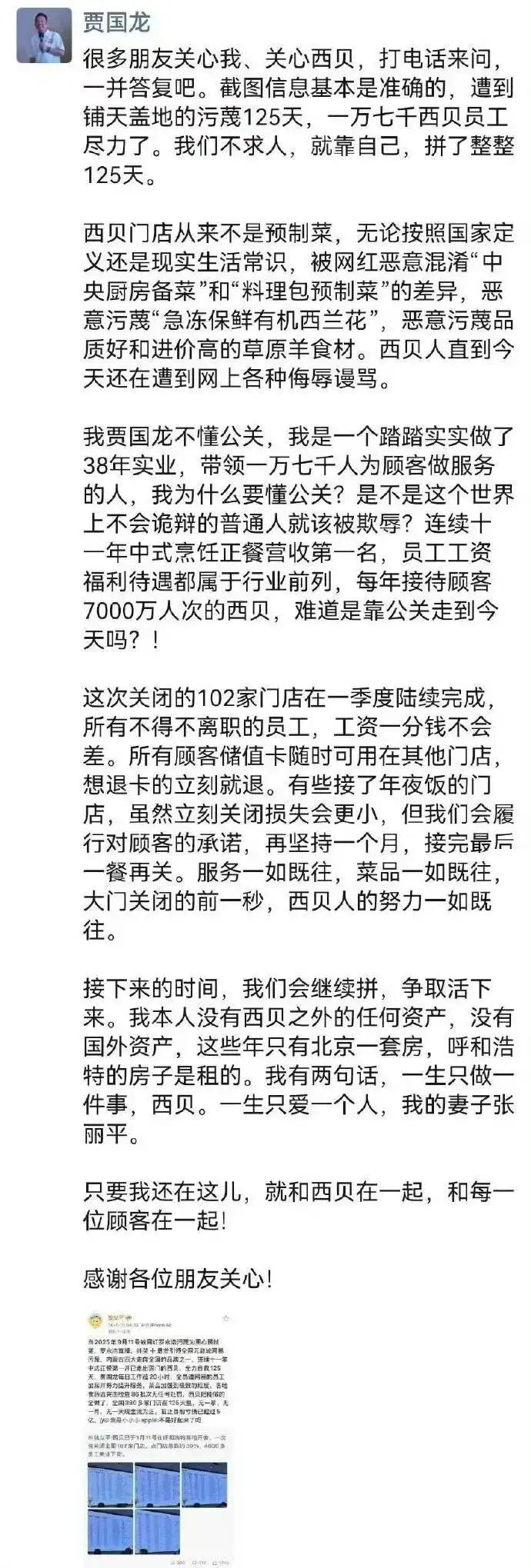
8点1氪:西贝关店102家,贾国龙最新发声;爱马仕客服回应一个悠悠球售价超1.8万;霸王茶姬及创始人起诉网民,公司回应
36氪· 2026-01-15 23:55
Group 1 - Xibei announced the closure of 102 stores, accounting for 30% of all its locations, with plans to complete this by the end of Q1 [3] - Founder Jia Guolong stated that all employees affected will receive their full wages and customers can use or refund their prepaid cards at other locations [3] - Xibei has maintained its position as the top revenue generator in Chinese cuisine for eleven consecutive years, serving 70 million customers annually [3] Group 2 - The People's Bank of China indicated that there is still room for interest rate cuts this year, with the current average reserve requirement ratio at 6.3% [8] - The bank's measures aim to stabilize net interest margins and reduce costs for banks, creating a conducive environment for potential rate cuts [8] Group 3 - Xiaomi launched a 7-year low-interest car purchase policy for its new electric SUV, with monthly payments starting at 2,593 yuan [13] - This initiative follows a similar financing policy introduced by Tesla, indicating a competitive response in the electric vehicle market [13] Group 4 - KKR announced the completion of a $2.5 billion fundraising for private credit investments in the Asia-Pacific region [21] - The fund will focus on high-quality credit assets in the non-public market [21] Group 5 - TSMC projected its Q1 2026 revenue to reach between $34.6 billion and $35.8 billion, with a quarter-on-quarter growth of approximately 4.4% [17] - The company expects continued growth in gross and operating margins [17] Group 6 - Li Ning reported a low single-digit decline in retail revenue for the fourth quarter, with a net reduction of 41 sales points [18] - The total number of sales points in China reached 6,091 by the end of 2025 [18] Group 7 - Luoyang Molybdenum Company forecasted a net profit of 20 billion to 20.8 billion yuan for 2025, representing a year-on-year increase of 48% to 54% [19] - The growth is attributed to rising product prices and effective cost management [19] Group 8 - Jingjia Micro announced an expected net loss of 120 million to 180 million yuan for 2025, despite a revenue increase of approximately 39.38% to 82.27% [20] - The loss is primarily due to high R&D expenses related to GPU and AI chip development [20]
腾讯研究院AI速递 20260116
腾讯研究院· 2026-01-15 16:06
Group 1: AI Chip Regulations - The U.S. has imposed a 25% tariff on advanced AI chips like Nvidia's H200 and AMD's MI325X, with export licenses now subject to case-by-case review instead of presumed denial [1] - New regulations stipulate that the number of chips exported to China cannot exceed half of the total quantity for U.S. customers and must meet specific safety standards [1] - The U.S. House of Representatives has passed the Remote Access Security Act to restrict China's access to AI chips via cloud computing services [1] Group 2: Google AI Developments - Google has launched the Personal Intelligence feature powered by the Gemini3 model, integrating data across Gmail, Photos, YouTube, and Search for contextual understanding [2] - This feature includes a natural language correction mechanism, allowing users to correct AI errors in real-time, thus lowering the management threshold for data models [2] - Currently in beta testing, it is available to paid users and will eventually be accessible to free users across multiple platforms [2] Group 3: Nvidia's Autonomous Driving - Nvidia's new L2++ level driving system in the Mercedes CLA has successfully completed a 40-minute test in San Francisco, demonstrating capabilities comparable to Tesla's FSD [3] - Nvidia plans to launch L2 highway and city driving features by mid-2026, with a goal to expand Robotaxi deployment by 2027 and achieve L3 highway driving by 2028 [3] - The company has achieved city autonomous driving functionality in just one year, utilizing the Drive AGX Thor chip, which costs approximately $3,500 [3] Group 4: AI Shopping Innovations - The Qianwen App has introduced over 400 service functions, enabling AI-driven shopping experiences across various Alibaba ecosystem services [4] - New features include AI food ordering, shopping, restaurant reservations, and direct access to 50 government services, enhancing user convenience [4] - The app's "Task Assistant" function leverages breakthroughs in AI coding and multimodal understanding for various applications [4] Group 5: Didi's AI Assistant - Didi has launched an AI assistant named "Xiao Di," allowing users to specify vehicle preferences through simple phrases, including vague requests like "for large luggage" [6] - The assistant prioritizes user needs into categories such as "necessary," "priority," and "preferable," enhancing the personalization of service [6] - After three months of iterations, the AI has improved user experience by remembering habits and preferences [6] Group 6: Step-Audio-R1 Model - The Step-Audio-R1.1 model has topped the Artificial Analysis Speech Reasoning leaderboard with a 96.4% accuracy rate, surpassing other leading models [7] - It is the first open-source native speech reasoning model capable of end-to-end understanding and real-time responses without added latency [7] - The model will have a complete real-time speech API available by February, with current chat modes supporting fluid reasoning [7] Group 7: GPT-5.2 Browser Development - The CEO of Cursor has utilized GPT-5.2 to autonomously write 3 million lines of code over a week, creating a complete browser from scratch [8] - The project employed a multi-agent system with planners and executors to ensure efficient task completion with minimal conflicts [8] - Results indicate that GPT-5.2 can maintain focus and follow instructions effectively over extended periods, outperforming other models in planning capabilities [8] Group 8: Robot Rental Platform - The world's first robot rental platform, "Qingtian Rent," has completed seed funding, led by Hillhouse Capital and supported by several other investors [9] - Within three weeks of launch, the platform has registered over 200,000 users and maintains an average of over 200 rental orders daily [9] - The platform employs a shared rental and scheduling model, with rental prices ranging from 200 yuan per day for long-term rentals to over 1,000 yuan for daily rentals [9] Group 9: AI in Robotics - A research project from Columbia University has been featured on the cover of Science Robotics, showcasing a humanoid robot capable of synchronized lip movements using deep learning [10] - The robot's facial structure contains over 20 micro-motors hidden beneath flexible silicone skin, utilizing self-supervised learning to control expressions [11] - It can convert sound signals into natural lip movements across various languages and environments, demonstrating robust cross-linguistic capabilities [11]


中欧电动汽车反补贴案,突破性进展
21世纪经济报道· 2026-01-15 12:10
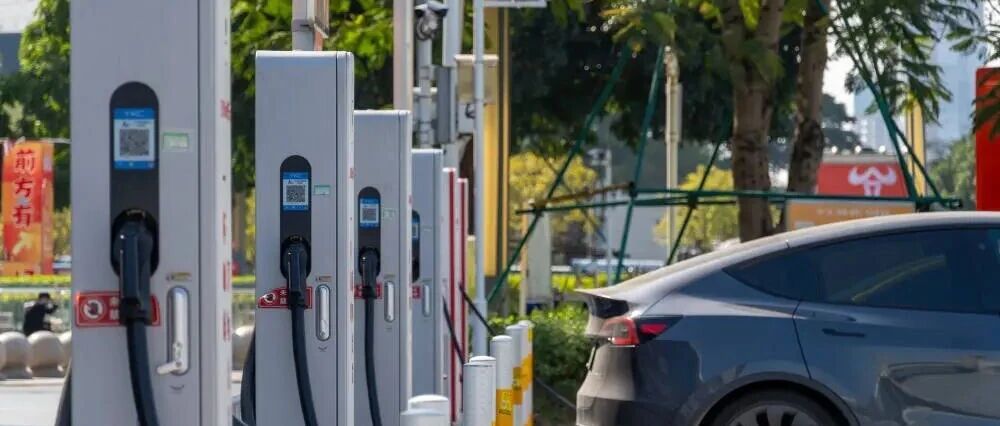
Core Viewpoint - The negotiations regarding the EU's anti-subsidy measures on Chinese electric vehicles have made significant progress, with the EU set to issue guidelines for price commitment applications, allowing Chinese manufacturers to potentially avoid high tariffs by committing to minimum pricing [1][3]. Group 1: Background and Developments - The EU initiated an anti-subsidy investigation into Chinese electric vehicles in October 2023, leading to the imposition of high tariffs starting October 2024, with rates as high as 35.3% for non-cooperating companies [3]. - The recent agreement allows Chinese electric vehicle manufacturers to submit price commitments based on the EU's guidelines, which could replace the anti-subsidy tariffs [3][4]. - The agreement is seen as a "soft landing" for the ongoing trade tensions, with experts noting that it reflects a cooperative outcome between China and the EU [1][4]. Group 2: Market Implications - The new pricing commitments may not significantly alter the selling prices of Chinese electric vehicles in Europe, but they provide a more stable policy environment for long-term operations [4]. - The average selling price of Chinese electric vehicles in Europe is projected to be around €25,000 by 2025, compared to €30,000 for all imported electric vehicles [4]. - Chinese manufacturers have been facing an average price increase of 118% when selling vehicles in Europe compared to domestic prices, but the new agreement could allow for better profit margins [5]. Group 3: Industry Dynamics - The EU's policy aims to prevent aggressive price competition from Chinese manufacturers that could harm local automotive industries, while still allowing for a degree of flexibility in pricing [4][5]. - European automakers, such as Volkswagen and BMW, are expected to benefit from the revised tariff policies, as they have established production facilities in China and can leverage these changes for exports [6][12]. - The collaboration between Chinese and European automakers is anticipated to deepen, with joint ventures and investments in technology and production facilities becoming more common [13].


奔驰、宝马2026年预测不足50万辆,退回十年前丨36氪独家
36氪· 2026-01-15 09:41
Core Insights - The article discusses the competitive landscape of the high-end automotive market in China, highlighting the aggressive growth targets of domestic brands compared to the more conservative outlook of German luxury brands [4][6][10]. Group 1: Market Predictions - By 2026, domestic brands like NIO aim for a sales increase of 40-50%, targeting approximately 460,000 units, while Xiaomi aims for 550,000 units, a 34% increase [4]. - German brands Mercedes-Benz and BMW have projected annual sales of less than 500,000 units each, returning to levels seen a decade ago [4][8]. Group 2: Sales Performance - NIO's ES8 model saw a monthly sales peak of 22,000 units in December, while the AITO brand's models surpassed 100,000 units annually [5]. - In contrast, Mercedes-Benz's sales in China fell by 19% to 551,900 units in 2025, and BMW's sales dropped by 12.5% to 625,500 units, marking two consecutive years of over 10% decline for both brands [8]. Group 3: New Product Launches - In 2026, Mercedes-Benz plans to launch over 15 new and updated models, including the long-wheelbase pure electric GLC and GLE [9][18]. - BMW will introduce more than 20 new models, including the long-wheelbase iX3, as part of its second electric vehicle strategy [19]. Group 4: Market Dynamics - The article notes that the penetration rate of new energy vehicles in China is expected to exceed 60% in 2026, indicating a shift towards a new energy-dominated market [13]. - Traditional luxury brands are struggling with their electric transformation, with electric models contributing less than 10% to their total sales [14]. Group 5: Competitive Challenges - Domestic brands are aggressively targeting the high-end market, with AITO's luxury brand achieving significant sales in the premium segment [15]. - The competition is intensifying as domestic brands leverage product, technology, and brand strategies to challenge the established German luxury brands [20].
德系豪华三强,连续两年失守中国市场
第一财经· 2026-01-15 08:47
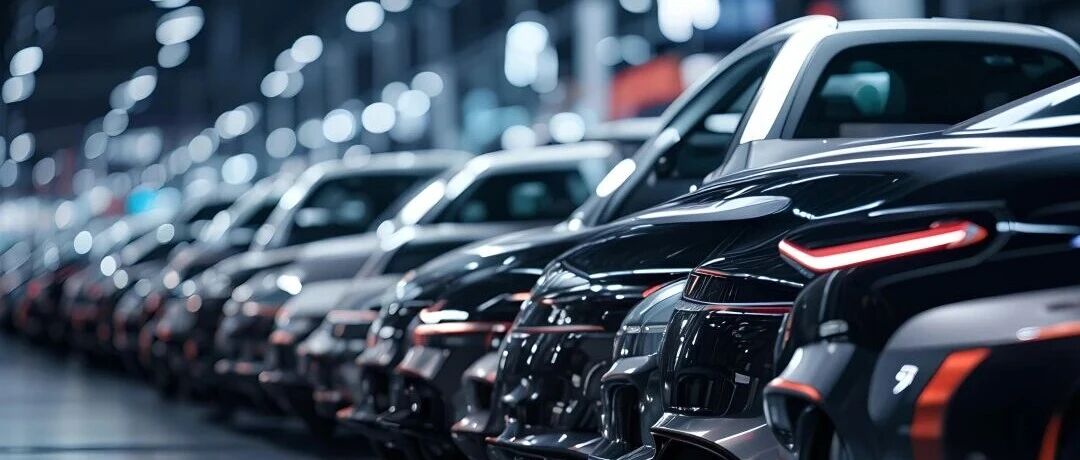
Core Viewpoint - The German luxury car trio, BMW, Mercedes-Benz, and Audi (collectively referred to as "BBA"), has experienced a decline in sales in the Chinese market for two consecutive years, with significant drops in 2025 compared to previous years [3][4]. Group 1: Sales Performance - In 2025, BMW's sales in China were 626,000 units, down 12.5% year-on-year; Audi's sales were 617,000 units, down 5.6%; and Mercedes-Benz's sales were 552,000 units, down 19% [3][4]. - The sales gap between BBA brands is narrowing, with Audi's sales rising to second place in China, trailing BMW by less than 10,000 units [3][4]. Group 2: Market Dynamics - The decline in BBA's sales is attributed to structural changes in the Chinese luxury car market, where brands like Li Auto, NIO, and AITO are attracting traditional BBA customers with their smart technology offerings [4][5]. - The overall market structure is shifting, with the market share of vehicles priced above 400,000 yuan dropping from 6.3% to 5.2%, and the share of vehicles priced between 300,000 and 400,000 yuan falling from 9% to 8.4% [5]. Group 3: Competitive Environment - The competitive landscape has led to significant price reductions for luxury brands, with discounts exceeding 100,000 yuan on popular models like the Mercedes-Benz E-Class, Audi A6L, and BMW 5 Series [5]. - The intense competition has also impacted the dealer network, with frequent reports of luxury brand dealers exiting the market and manufacturers adjusting sales targets and policies to alleviate pressure on dealers [5][6]. Group 4: Future Strategies - BBA plans to launch new products based on a new electric vehicle platform in China and enhance local R&D and partnerships with Chinese tech companies to address their technological shortcomings [6]. - The transition to electric and smart vehicles is critical for maintaining competitiveness, as traditional luxury brand strengths in mechanical performance and brand premium are becoming less relevant [6].
德系豪华三强,连续两年失守中国市场
Di Yi Cai Jing· 2026-01-15 07:34
Core Viewpoint - The German luxury trio BMW, Mercedes-Benz, and Audi (collectively referred to as "BBA") has experienced a decline in sales in the Chinese market for two consecutive years, with significant drops in 2025 compared to previous years [2]. Group 1: Sales Performance - In 2025, BMW (including BMW and MINI) sold 626,000 units in China, a year-on-year decline of 12.5% [2] - Audi's sales reached 617,000 units, down 5.6% year-on-year [2] - Mercedes-Benz (excluding commercial vehicles) saw sales of 552,000 units, a decrease of 19% [2] - The sales gap between BBA brands is narrowing, with Audi's sales rising to second place, trailing BMW by less than 10,000 units [2]. Group 2: Market Dynamics - The decline in BBA's sales is linked to structural changes in the Chinese luxury car market, where brands like Li Auto, NIO, and AITO are attracting traditional BBA customers with their smart features [3] - BBA's slow transition to electric vehicles (EVs) is a contributing factor, with new products based on a pure electric platform not expected until 2026 [3]. - The overall market structure is shifting, with the market share of vehicles priced above 400,000 yuan dropping from 6.3% to 5.2%, and those in the 300,000-400,000 yuan range falling from 9% to 8.4% [3]. Group 3: Dealer Network and Pricing - The competitive environment has led to significant price reductions for luxury brands, with discounts exceeding 100,000 yuan on popular models like the Mercedes-Benz E-Class, Audi A6L, and BMW 5 Series [3]. - There has been an increase in incidents of luxury brand dealers "running away," prompting some brands to terminate authorization for problematic dealers [3]. - Manufacturers are adjusting their dealer networks by relaxing sales targets, optimizing or reducing the network, and empowering dealers through digital means [3]. Group 4: Future Strategies - BBA plans to launch new products based on a new electric vehicle platform in China and enhance local R&D and partnerships with Chinese tech companies to address their technological shortcomings [4]. - The transition to electric and smart vehicles is critical, as traditional luxury brand strengths in mechanical performance and brand premium are becoming less competitive [4]. - The competition in the luxury car market is expected to intensify in 2026, marking a significant shift in the landscape [4].
AI重塑汽车产业:从CES 2026看智能化革命的深度演进
Zhong Guo Qi Che Bao Wang· 2026-01-15 06:23
Core Insights - The CES 2026 event highlighted the accelerated transformation of the automotive industry towards smart technology, with AI becoming a core element in redefining automotive products [1] - The concept of "smart driving equity" emerged as a key theme in 2025, with advanced driving systems becoming accessible across a wider range of vehicle price points [2] - The rapid proliferation of smart driving technology necessitates new requirements for vehicle after-sales service systems, leveraging AI for efficient diagnostics [3] - The commercialization of Robotaxi services is gaining momentum, with significant growth in revenue and operational scale in major Chinese cities [5] - The evolution of smart cockpits is transforming vehicles into personalized assistants, enhancing user interaction and experience [6] - AI-driven marketing services are reshaping automotive marketing from broad outreach to precision targeting [7] - The competitive landscape is shifting towards ecosystem collaboration among automotive companies and technology suppliers, fostering innovation and efficiency [9] - The future of the automotive industry will be defined by AI, with a focus on collaborative ecosystems and comprehensive digital transformation [10] Group 1: Smart Driving Technology - The introduction of advanced driving systems like BYD's "Heavenly Eye" and Xiaopeng's XNGP is making smart driving features available in lower-priced vehicles [2] - The VLA architecture enables a more human-like decision-making process in driving, significantly reducing reliance on real vehicle data for testing [2] - The cost reduction in high-level driving systems, such as the integration of solid-state LiDAR, is facilitating their adoption in more affordable models [2] Group 2: After-Sales Service Innovations - The establishment of an AI-driven diagnostic system has achieved a 98.1% accuracy rate in diagnosing electric vehicle systems, significantly improving service efficiency [3] - The AI system reduces the time to address individual faults to approximately 20 seconds, enhancing the overall after-sales service experience [3] Group 3: Commercialization of Robotaxi - Major cities in China are rapidly expanding Robotaxi operations, with Wuhan leading in testing mileage and population coverage [5] - Companies like Pony.ai and WeRide are reporting substantial revenue growth in their Robotaxi services, indicating a shift towards profitability [5] - The market for Robotaxi services is projected to grow significantly, with estimates reaching $4.7 billion by 2035 [5] Group 4: Smart Cockpit Developments - The integration of advanced AI models in vehicle cockpits is transforming them into intelligent assistants capable of understanding user emotions and preferences [6] - The trend towards end-to-end AI solutions in cockpits is expected to enhance user experience and interaction [6] Group 5: Marketing and Service Automation - AI-driven marketing tools are enabling automotive brands to identify high-intent customers and streamline communication processes [7] - The use of AI in customer outreach has led to improved engagement rates and more efficient service delivery [8] Group 6: Ecosystem Collaboration - Automotive companies are increasingly forming strategic partnerships with technology suppliers to enhance their capabilities and reduce R&D costs [9] - The collaborative model is leading to faster product iteration cycles and improved technology deployment [9] Group 7: Future Outlook - The automotive industry is entering a new era defined by AI, with a focus on collaborative ecosystems and comprehensive digital transformation [10] - The competition will center around the efficiency of ecosystem collaboration and the ability to innovate rapidly [10]
Momenta:2025年公司在第三方NOA供应商市场的市占率超60%
Zheng Quan Ri Bao Wang· 2026-01-15 04:02
Group 1 - The report released by the China Automotive Industry Association indicates that from January to November 2025, the cumulative sales of passenger cars equipped with urban NOA (Navigation on Autopilot) reached 3.129 million units, with vehicles using Momenta's NOA system accounting for 414,400 units, representing approximately 61.06% of the third-party supplier market share [1] - Momenta has established partnerships with eight out of the top ten global automotive manufacturers, covering major domestic passenger car companies, which highlights its significant market presence and influence [1] - The report emphasizes that third-party technology suppliers like Momenta are providing a "Chinese solution" for the global intelligent driving industry, attracting collaboration from well-known automotive brands from Germany, the United States, Japan, and South Korea, thereby enhancing China's voice in the global automotive industry value chain [1] Group 2 - Momenta's core technology route is based on "reinforcement learning + end-to-end architecture," and it employs a dual-track product strategy of mass production assistance and scalable autonomous driving, leveraging vast data for continuous algorithm iteration [2] - The company has developed a multi-dimensional cooperation ecosystem with automakers, including SAIC, GAC, BYD, Mercedes-Benz, BMW, Audi, and Toyota, focusing on technology co-research and customized solutions [2] - Momenta's R6 reinforcement learning model is the first in China to achieve mass production based on an end-to-end foundation, officially entering production in the third quarter of 2025 [2]