
奈雪的茶

Search documents
从茶饮热销到潮玩圈粉——中国文创产品走红海外市场
Xin Hua Wang· 2025-11-16 02:53
Group 1: Chinese Tea Beverage Industry - The rise of Chinese tea beverage brands like Bawang Chaji, Mixue Ice City, and Nayuki Tea in overseas markets, particularly in Malaysia, showcases a successful blend of culture and product innovation [2][3] - Malaysian consumers appreciate the unique flavors and cultural elements of these tea beverages, which differ from local brands, enhancing the cultural appeal of Chinese products [2][3] - The incorporation of traditional Chinese visual elements into branding has been identified as a strategy to increase brand recognition and consumer loyalty in foreign markets [3] Group 2: Chinese Cultural Products in Film and Television - Chinese historical dramas have gained significant popularity in Vietnam, with shows like "Nirvana in Fire" and "The Story of Yanxi Palace" resonating deeply with local audiences [4][5] - The themes of loyalty, family values, and respect for tradition in these dramas have struck a chord with viewers, leading to increased interest in Chinese culture and language [4][5] - Cultural exchanges through media are strengthening the ties between China and Vietnam, fostering mutual understanding and friendship [5] Group 3: Chinese Trendy Toys Industry - Chinese trendy toy brands like Pop Mart are expanding rapidly in the UK, with plans to open additional stores, reflecting a growing demand for these products [6][7] - The success of blind box toys in the UK market, with sales increasing by 63% for Miniso, indicates a strong consumer interest in Chinese cultural elements [6][7] - The integration of traditional Chinese stories and aesthetics into trendy toys is seen as a way to tap into a broader market potential, appealing to emotional needs of consumers [7]
2025年中国轻食行业门店运营分析 一线及新一线门店较多【组图】
Sou Hu Cai Jing· 2025-11-14 13:16
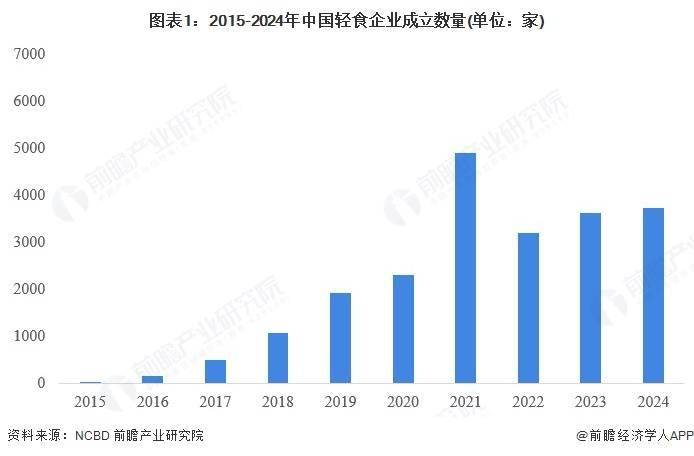
Group 1 - The number of light food-related restaurant establishments in China reached a record high of 4,905 in 2021, followed by a rational development phase with 3,738 establishments projected for 2024 [1] - The majority of light food stores are concentrated in first-tier, new first-tier, and some second-tier cities, with first-tier cities accounting for 13.4% of the total and new first-tier cities making up nearly 25% [3] - As of 2025, the top ten cities with the highest number of light food stores in China are Shanghai, Guangzhou, Beijing, Shenzhen, Chengdu, Hangzhou, Chongqing, Wuhan, Suzhou, and Dongguan [4] Group 2 - The leading brands in the light food industry as of August 2025 include Jinshi Fitness Nutrition Meal, Shaye Light Food, Manwei Light Food, Chaoneng Deer Battle Team, and Shiye SAYYEAH Creative Light Food [5] - The closure rate for light food establishments is relatively high, with a closure rate of 27.0% from 2023 to 2024, exceeding the average closure rate of 22.6% for the restaurant industry, indicating it is a "high-risk category" [8]

被上亿人围观的“顶流小狗”,击中全球年轻人
3 6 Ke· 2025-11-14 07:26
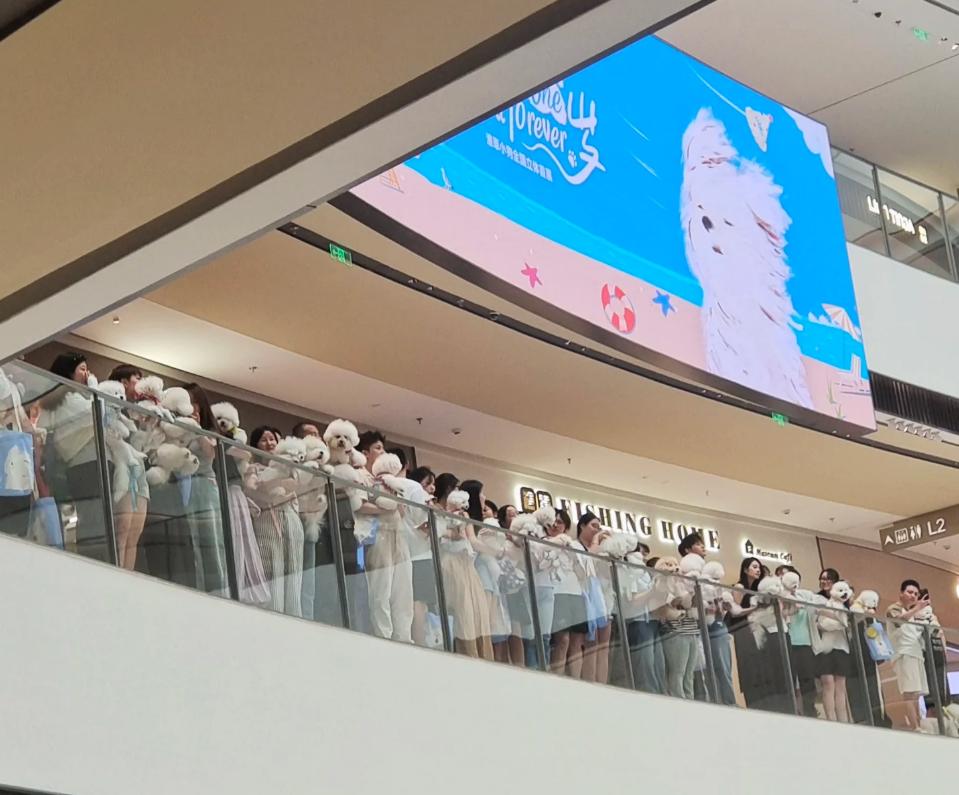
Core Insights - The article discusses the rising popularity of the "Lazy Dog" IP, which has captivated a large audience, particularly among young people, through its emotional resonance and relatable themes [1][10][30] Group 1: Popularity and Cultural Impact - The "Lazy Dog" has generated significant buzz on social media platforms, with over 1.2 billion discussions on Douyin and thousands of notes on Xiaohongshu [3] - The character has been featured in high-profile exhibitions, including one at the Kaikai Kiki gallery founded by renowned artist Takashi Murakami, indicating its cultural significance [4] - The character's appeal transcends traditional demographics, attracting a diverse audience including men, children, and the elderly during exhibitions [25] Group 2: Creator and Origin - The original creator of the "Lazy Dog" is Korean artist YEYE, who transitioned from a corporate job to become a children's book author [14] - The character was inspired by YEYE's own dog, Moonge, and reflects her personal experiences and emotional journey [16][20] - The character's backstory includes themes of companionship and healing, resonating deeply with audiences [22][24] Group 3: Marketing and Collaborations - The success of the "Lazy Dog" is partly attributed to strategic collaborations with major brands like Luckin Coffee, which launched a limited-time product featuring the character [32][35] - The character has become a marketing phenomenon, with brands leveraging its popularity to enhance their own visibility and appeal [37] - The rise of "emotional consumption" among younger consumers has created a lucrative market for IP collaborations, as seen in the surge of partnerships in the beverage industry [38][40] Group 4: Market Trends - The global IP licensing market has surpassed 2 trillion yuan, with China's market expected to grow significantly, indicating a robust demand for emotional and relatable IPs [42] - The trend of emotional consumption is reshaping consumer behavior, with brands increasingly focusing on emotional value to attract younger audiences [44]

一汪创投活水,润泽大湾区“科创雨林”
Zheng Quan Shi Bao· 2025-11-14 02:26
Core Insights - The integration of private venture capital, state-owned capital, and Hong Kong-Macau resources is creating a comprehensive capital network that supports the entire lifecycle of enterprises in the Guangdong-Hong Kong-Macau Greater Bay Area [1] - The Greater Bay Area is rapidly becoming a global hub for technological innovation and venture capital, driven by the collaboration of various capital sources [1] Group 1: Private Venture Capital - Private venture capital is a significant highlight in the Greater Bay Area, with firms like Dongfang Fuhai, Dacheng Caizhi, and others deeply engaged in the market [3] - The professional specialization among private venture capital firms is deepening, with specific focuses such as consumer sectors, hard technology, and precision medicine, enhancing investment accuracy and creating a collaborative ecosystem [3] - The success story of Ying Shi Innovation, which saw a 164% increase in R&D investment and a 90% rise in revenue, exemplifies the effective partnership between capital and technological innovation [2][3] Group 2: State-Owned Capital - State-owned venture capital plays a crucial role in the investment landscape, acting as a key funding source and shaping the investment framework in the Greater Bay Area [4] - The establishment of various funds, including a 150 billion yuan angel fund and a 500 billion yuan venture capital fund, demonstrates the commitment to fostering innovation and supporting emerging industries [4][5] - Shenzhen's state-owned capital has built a comprehensive innovation ecosystem, facilitating significant projects in the semiconductor industry and supporting early-stage investments through a network of seed funds [5][6] Group 3: Cross-Border Collaboration - Cross-border collaboration is being enhanced through institutional innovations, with many investment firms establishing connections between mainland China and Hong Kong to explore diverse investment opportunities [7][8] - The establishment of funds like the Qianhai Shenzhen-Hong Kong Youth Dream Factory Fund illustrates the growing trend of integrating resources and capital across borders to support early-stage projects in various sectors [7][8] - The unique conditions of the Greater Bay Area, characterized by "one country, two systems," present both challenges and opportunities for regional integration and development [8]
2025年以来中国茶饮市场增速已放缓至5%~7% 奶茶里加酱油、海苔等,茶饮行业在秋冬季“变脸”
Mei Ri Jing Ji Xin Wen· 2025-11-13 13:48
Core Viewpoint - The beverage industry, particularly in the coffee and tea segment, is witnessing a shift towards salty flavors, with major brands launching salty milk tea products to attract consumers amidst increasing competition in a saturated market [1][4]. Group 1: Market Trends - Salty milk tea has become a central focus for major brands like Heytea, Naixue, and Luckin Coffee, with products such as "Salty Milk Tea Latte" and "Salty Cheese Milk Tea" gaining popularity [1][2]. - The trend of salty flavors is not entirely new, as it has historical roots in northern China and has gained traction internationally with products like sea salt and cheese [3]. - The introduction of salty milk tea aligns with the industry's need for innovation to combat homogenization and declining growth rates, with the Chinese tea beverage market growth slowing to 5%-7% since 2025 [4][5]. Group 2: Consumer Behavior - Social media plays a significant role in the popularity of salty milk tea, with discussions and reviews driving consumer interest and engagement [3][4]. - The younger demographic is particularly open to trying new flavors, contributing to the trend's visibility and potential success [3][4]. Group 3: Product Development - The number of new product launches in the beverage sector is substantial, with tea brands accounting for 70.7% of new products, indicating a competitive landscape [5]. - Brands are increasingly incorporating diverse ingredients, such as grains, into their offerings to enhance flavor and appeal to health-conscious consumers [4][5]. Group 4: Future Outlook - The long-term viability of salty milk tea as a mainstream product remains uncertain and will require further market validation [6].
成熟企业做新品牌往往很难成功,为什么?
创业家· 2025-11-13 10:30
Core Insights - The article emphasizes the challenges mature companies face when launching new brands, primarily due to the disconnect between established entrepreneurs and customer engagement [4] - It highlights the importance of focusing on cognitive outcomes rather than vanity metrics during the initial stages of business development [5][6][7] - The necessity for leaders to engage directly with the market to gain valuable insights is stressed [8] Investment and Growth - Tian Tu Capital has become the first Chinese VC to be listed on the Hong Kong Stock Exchange as of October 6, 2023 [9] - The firm currently manages over 20 billion yuan in funds and has invested in more than 200 companies [10] - The "Feng Weidong Brand Entrepreneurship Laboratory" has empowered 274 companies since its inception in 2015, with direct investments exceeding 300 million yuan [11] Market Trends and Brand Strategy - The concept of "wind direction" is described as a fleeting trend, with the underlying logic of competition being the true determinant of a company's fate [13][14] - The article asserts that the sole purpose of a business is to create customers, who are primarily concerned with brand perception [15] - There is a focus on founders who can innovate around new demands and leverage new channels and technologies to create new categories [16] Upcoming Events - An event is scheduled from November 20 to November 22, where entrepreneurs will explore brand positioning, funding strategies, and cash flow management [17][19] - The event aims to enhance entrepreneurial leadership and brand positioning through collaborative learning and experience sharing [26][27]


华创证券:首予古茗“推荐”评级 目标价27.84港元
Zhi Tong Cai Jing· 2025-11-13 06:19
Core Viewpoint - The report from Huachuang Securities indicates that Guming (01364) is a leading player in the domestic mid-range tea beverage market, with potential for stable performance growth driven by new product categories, store expansion, and cost reduction in raw materials [1] Group 1: Company Performance and Projections - The company is expected to achieve revenue of 111.59 billion, 134.19 billion, and 158.18 billion yuan for the years 2025-2027, with year-on-year growth rates of 26.9%, 20.3%, and 17.9% respectively [1] - The projected net profit attributable to shareholders is 24.87 billion, 26.25 billion, and 31.55 billion yuan for the same period, with year-on-year growth rates of 68.2%, 5.5%, and 20.2% respectively [1] - The target price for the stock is set at 27.84 HKD, with a "recommended" rating reflecting confidence in its growth potential as a leader in the fresh tea beverage industry [1] Group 2: Market Position and Strategy - As of the end of 2023, the company ranks second in the national ready-to-drink tea market and first in the mid-range segment, having expanded to 11,179 stores through franchising [2] - The company offers a diverse range of fresh tea products priced between 10-18 yuan, successfully penetrating lower-tier markets with a strategy of "fresh and accessible" offerings [2] - Key competitive advantages include a robust supply chain that supports rapid store expansion and a strong cold chain logistics system, enabling the company to deliver fresh fruits and milk to stores within two days [2] Group 3: Industry Trends and Insights - The ready-to-drink beverage industry is characterized by price differentiation, operational efficiency, and the integration of tea and coffee products [3] - The market size for ready-to-drink tea is projected to exceed 600 billion yuan by 2035, driven by expanding consumer demographics and increasing frequency of consumption [3] - The competitive landscape is shifting, with weaker brands exiting the market, creating structural expansion opportunities for leading brands like Guming [3] Group 4: Growth Drivers - The coffee business is expected to become a new growth engine, with over 8,000 stores covered by mid-2025 and significant potential in lower-tier cities [4] - Store expansion is anticipated to continue, with many domestic provinces and overseas markets still underdeveloped, allowing for replicable success based on supply chain advantages [4] - There is considerable room for cost reduction in key agricultural raw materials, which will enhance profit margins as scale effects and supply chain efficiencies improve [4]
喜茶“失速” 历经800天后加盟商何去何从?
Jing Ji Guan Cha Wang· 2025-11-12 05:47
据极海数据显示,截至2025年10月底,喜茶加盟门店数为3977家,而2024年底为4477家,10个月净关店 500家。短短一年,喜茶从"再扩张"转向"主动降速",这场突如其来的"刹车"引发业内关注。 当喜茶"被迫"按下加盟"暂停键"的那一刻,不是某个品牌的战略收缩,而是一个时代的落幕——新茶饮 行业那个靠疯狂拓店、加盟费收割就能躺赢的时代,彻底结束了。11月,首批喜茶加盟店合约即将到 期,加盟商未来何去何从?正对同质化竞争严重的茶饮行业发出"灵魂拷问"。 头部品牌喜茶加盟门店"关闭潮"愈演愈烈,一年内关店500家,总数同比下降11.2%,新茶饮行业或许正 在经历一场静默的"雪崩"。 双重内卷"回旋镖" 价格战与加盟模式的双重内卷,正在将整个新茶饮行业拖入恶性循环。喜茶作为头部品牌之一,曾以价 格战和加盟模式快速扩张,试图在市场中占据更大份额,然而这两把"回旋镖"正在"反噬"喜茶自己。 2022年初,喜茶率先开启降价模式,"喜茶告别30元"的话题还一度登上热搜,率先打响了新茶饮行业价 格战的第一枪,紧接着奈雪的茶、乐乐茶也都进行了价格的下调。 包括奈雪的茶、沪上阿姨、茶百道在内的多个品牌都推出过9.9元甚至 ...
董事长张轩松,减持永辉超市丨消费参考
2 1 Shi Ji Jing Ji Bao Dao· 2025-11-12 04:16
Core Viewpoint - Zhang Xuansong, the chairman of Yonghui Supermarket, plans to reduce his stake in the company by selling up to 90,750,000 shares, which is no more than 1% of the total share capital, due to personal financial needs [1][2]. Company Summary - As of June 30, 2025, Zhang Xuansong and his associates hold a total of 1,274,987,806 shares in Yonghui Supermarket, accounting for 14.05% of the company [2]. - In 2024, Miniso's wholly-owned subsidiary, Jun Cai International, acquired 29.4% of Yonghui Supermarket for 6.27 billion yuan, making Miniso the largest shareholder [3]. - Yonghui Supermarket is undergoing significant adjustments, including the establishment of a reform leadership group led by Miniso's controlling person, Ye Guofu, to accelerate its transformation [3][5]. - The company appointed Wang Shoucheng as CEO on September 18, 2025, indicating a shift in leadership dynamics [3][4]. Financial Performance - In the third quarter, Yonghui Supermarket reported a revenue decline of 25.55% year-on-year to 12.486 billion yuan, with a net loss of 469 million yuan, an increase in losses of 116 million yuan compared to the previous year [6]. - The company attributes the revenue decline to intense industry competition, changing consumer habits, and a decrease in foot traffic and average spending at existing stores [6]. - Yonghui is optimizing its store operations, having remodeled 222 stores by the end of the third quarter, with plans to reach 300 remodeled stores by the 2026 Spring Festival, which is expected to significantly enhance contributions from these stores [6].

港股新消费概念股集体走强,沪上阿姨涨近13%,锅圈涨6%,毛戈平涨超5%,奈雪的茶涨超4%,蜜雪集团、茶百道涨超3%
Ge Long Hui· 2025-11-12 02:42
Group 1 - The Hong Kong stock market saw a strong performance in new consumption concept stocks, with notable gains in several companies [1] - Companies such as "沪上阿姨" increased by nearly 13%, "锅圈" by 6%, "毛戈平" by over 5%, "奈雪的茶" by over 4%, and others like "蜜雪集团" and "茶百道" rising by over 3% [1] Group 2 - "沪上阿姨" (Code: 02589) rose by 12.52% to a latest price of 102.000, with a total market value of 10.731 billion and a year-to-date decline of 9.83% [2] - "锅圈" (Code: 02517) increased by 6.02% to 4.400, with a market cap of 11.61 billion and a year-to-date increase of 147.22% [2] - "毛戈平" (Code: 01318) saw a rise of 5.41% to 95.500, with a market value of 46.813 billion and a year-to-date increase of 66.16% [2] - "奈雪的茶" (Code: 02150) increased by 4.17% to 1.250, with a market cap of 21.31 billion and a year-to-date decline of 8.09% [2] - "蜜雪集团" (Code: 02097) rose by 3.55% to 431.800, with a total market value of 163.919 billion and a year-to-date increase of 113.23% [2] - "茶百道" (Code: 02555) increased by 3.28% to 7.560, with a market cap of 11.171 billion and a year-to-date decline of 27.98% [2]
