AWS

Search documents
新力量New Force总第4864期
First Shanghai Securities· 2025-09-22 08:47
Group 1: Company Overview - NetDragon's revenue for the first half of 2025 was RMB 2.38 billion, a year-on-year decline of 28%[5] - The gross profit was RMB 1.7 billion, down 24.7% year-on-year, but the gross margin improved by 2.9 percentage points to 69.5%[5] - The company has a net cash position of approximately RMB 2.3 billion and holds 12,000 Ethereum as digital asset reserves[5] Group 2: Business Segments - The gaming and other businesses generated RMB 1.74 billion in revenue, a decrease of 18% year-on-year, but only a 4% decline compared to the second half of 2024, indicating stabilization[6] - The education segment, Mynd.ai, reported revenue of RMB 640 million, impacted by tightened customer budgets, with ongoing cost optimization efforts[7] Group 3: Financial Projections - The target price for NetDragon is set at HKD 20.24, representing a 71% upside from the last closing price[8] - The adjusted EPS for 2025 is projected at HKD 1.004, a decrease of 25% from previous estimates, while 2026 EPS is expected to be HKD 1.175, down 22%[2] Group 4: Market Strategy - The company plans to return at least HKD 600 million to shareholders through dividends and share buybacks over the next year[5] - New game titles and expansion into overseas markets are expected to drive future growth, with several products in the pipeline for release[6]

SiC 进入先进封装主舞台:观察台积电的 SiC 策略 --- SiC Enters the Advanced Packaging Mainstage_ Observing TSMC’s SiC Strategy
2025-09-22 00:59
Summary of Key Points from the Conference Call Industry and Company Overview - The discussion centers around the semiconductor industry, particularly focusing on advanced packaging technologies and the role of Silicon Carbide (SiC) in AI chip design and manufacturing. Key players mentioned include TSMC, NVIDIA, AMD, Google, and AWS, with a specific emphasis on TSMC's strategies and innovations in packaging solutions [1][2][3]. Core Insights and Arguments 1. **Challenges in AI Chip Design**: The increasing complexity and power demands of AI chips have led to significant challenges in power delivery networks (PDNs) and thermal management. Traditional methods are becoming inadequate, with single GPUs now requiring over 1000A of current [5][19]. 2. **Innovative Solutions**: Companies like Marvell and ASE are proposing solutions such as Package-Integrated Voltage Regulators (PIVR) and optimized PDN platforms to address these challenges. TSMC is also innovating with its CoWoS-L platform, which integrates embedded voltage regulators and advanced thermal management techniques [7][10][11]. 3. **Emergence of SiC**: SiC is highlighted as a critical material for AI chip and system design due to its superior properties, including high thermal conductivity and mechanical strength. It is increasingly being viewed as essential for advanced packaging and heterogeneous integration [13][14][16]. 4. **Market Demand**: The demand for ultra-large-scale GPUs and ASICs is driven by generative AI and large-scale model training, with power consumption often exceeding 1 kW. This has exposed bottlenecks in thermal management and power delivery [19][20]. 5. **Bottlenecks Identified**: The exponential growth in AI computing has revealed three critical bottlenecks: thermal challenges, power delivery bottlenecks, and electro-optical integration demands. TSMC is actively addressing these through its 3DFabric strategy and various packaging solutions [22][28][30][32]. Additional Important Content 1. **SiC's Role in Advanced Packaging**: SiC is positioned as a hybrid integration enabler, linking power delivery, thermal dissipation, and optical interconnects. Its unique properties make it suitable for high-voltage integrated circuits (HVICs) and optical interposers [40][44]. 2. **Competitive Landscape**: TSMC's exploration of SiC as an interposer material could provide a competitive edge in thermal management and electro-optical integration, especially compared to Intel and Samsung, who are also advancing their own technologies [45][46]. 3. **Challenges Ahead**: The successful commercialization of SiC in advanced packaging faces challenges such as defect density control in large-size wafers, process compatibility, and cost structure improvements [53][54]. 4. **Future Directions**: The integration of SiC into TSMC's platforms like COUPE and CoWoS-Next could reshape the AI semiconductor supply chain, establishing new industrial advantages in the AI and high-performance computing (HPC) era [44][97]. This summary encapsulates the critical insights and developments discussed in the conference call, emphasizing the strategic importance of SiC in the evolving semiconductor landscape.


Yuki Unveils Budget Page, Giving Enterprises Real-Time Governance of Snowflake Costs
Globenewswire· 2025-09-18 09:36
NEW YORK, Sept. 18, 2025 (GLOBE NEWSWIRE) -- Yuki, the real-time Snowflake cost optimization platform, today announced the launch of its Budget Page, a new feature that provides enterprises with clear, real-time visibility into Snowflake costs. With the Budget Page, organizations can govern spend by department, project, or workload and set flexible budgets that align with financial goals, all while driving transparency across teams. “If you’re waiting for your Snowflake invoice to understand spend, you’re a ...

Omdia:中国财富500强的企业中正在部署或已经使用GenAI技术达到74.6%
智通财经网· 2025-09-18 06:59
Group 1 - The adoption rate of GenAI technology among China's Fortune 500 companies has reached 74.6%, driven by full-stack solutions from GenAI cloud giants and the rise of open-source models and tools [1] - Leading GenAI providers in China include Alibaba Cloud and DeepSeek, serving 40% and 38% of Fortune 500 companies respectively, with a trend towards multi-vendor strategies where companies use an average of 2.1 GenAI suppliers [1] - Open-source models play a crucial role in the rise of GenAI in China, providing openness, transparency, customization, and flexibility for rapid deployment of large models [1] Group 2 - Adoption rates of GenAI vary significantly across industries, with 100% in telecommunications, automotive, and IT, 90% in financial services, and 80% in manufacturing, influenced by digital infrastructure maturity and regulatory environments [2] - Companies are actively applying GenAI in various scenarios, including enhancing employee productivity, customer service, sales and marketing, and process optimization, with notable examples such as NIO generating 30% of its software code through GenAI [2] - In customer service, companies like FAW Group improved query resolution rates from 37% to 84% using GenAI, while Ctrip saved 10,000 work hours daily through virtual assistants [2] Group 3 - By 2025, the largest verticals for GenAI software revenue in China will be IT, healthcare, retail, consumer, and professional services, with continued growth expected through 2029 [3] - Conversational tools are anticipated to be the most popular use case in the coming years due to the availability of language and text data and the maturity of language processing [3] - Companies are encouraged to ensure that GenAI deployments provide a return on investment while prioritizing trustworthy, secure, and robust solutions, and many are beginning to embrace the benefits of agent-based AI [3]
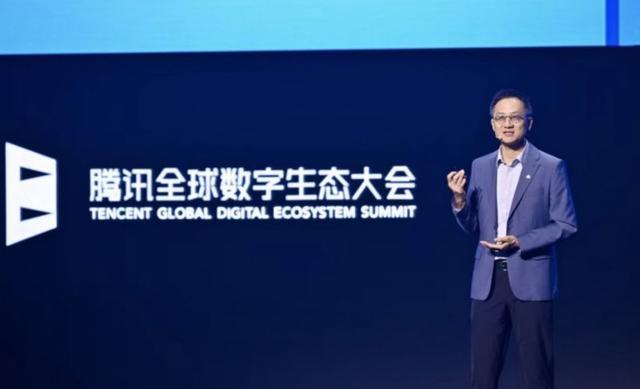
竞逐AI红利,云计算厂商热战升温,腾讯云出海提速
Hua Xia Shi Bao· 2025-09-18 05:43
Core Insights - The article discusses the significant growth opportunities for cloud computing companies driven by AI and globalization, with Tencent Cloud announcing its comprehensive AI strategy aimed at enhancing industry efficiency and revenue scale [2][6]. Group 1: AI Strategy and Development - Tencent Cloud launched its AI Development Platform (ADP) 3.0, which has rapidly developed nearly 600 requirements in three months, showcasing its commitment to AI technology [3]. - The year is referred to as the "Year of Intelligent Agents," indicating the growing importance of AI agents in the industry, with companies expected to increase investments in this area [4]. - AI has become a crucial growth driver for cloud computing firms, with predictions that by 2026, inference computing demand may account for over 70% of total AI computing needs [4]. Group 2: Financial Performance and Market Competition - Tencent's capital expenditure reached 83.16 billion yuan over the past three quarters, reflecting significant investment in AI infrastructure [5]. - Tencent's To B revenue achieved double-digit growth, reaching 55.5 billion yuan in Q2, despite increasing competition in the B-end market [5]. - The Chinese AI cloud market is projected to reach 22.3 billion yuan by mid-2025, with the top five vendors holding over 75% market share, highlighting intense competition [5]. Group 3: Global Expansion and Infrastructure Investment - Tencent Cloud reported high double-digit growth in its international business over the past three years, with a significant increase in overseas customer base [6]. - The company plans to invest $150 million in building its first data center in the Middle East and expand its presence in Japan, indicating a strong commitment to global infrastructure [7]. - The global cloud infrastructure service spending is projected to reach $95.3 billion by Q2 2025, with major players like AWS, Microsoft Azure, and Google Cloud dominating the market [8]. Group 4: Competitive Landscape and Strategic Focus - Domestic cloud computing firms are narrowing the gap with international competitors, leveraging advantages in audio-visual technology and supply chain [8]. - The focus of competition has shifted from price to "AI + scenarios," with Chinese cloud firms finding niches in real-time audio-visual and gaming social PaaS [8]. - Tencent Cloud's strengths in low latency and AI noise reduction in gaming and social business scenarios create a competitive moat [8].


Arm芯片,改变游戏规则
半导体行业观察· 2025-09-18 02:09
Core Viewpoint - Arm has established itself as a dominant player in the chip architecture market, transitioning from a focus on general computing solutions to developing infrastructure-specific technologies with its Neoverse product line, which caters to data centers, edge computing, and high-performance computing (HPC) [2][3][4]. Group 1: Arm's Market Position and Product Lines - Arm was founded in 1990 and began licensing its processor IP in 1993, later acquired by SoftBank for $32 billion in 2016, and went public again in 2023 while remaining under SoftBank's majority ownership [2]. - The Neoverse product line is categorized into three main series: the V series for high-performance general computing, the N series for server markets, and the E series for edge computing [3][4]. - The V2 series is utilized by major companies like AWS, Google, and Nvidia, while the N2 series is used in Microsoft's Cobalt chips, highlighting Arm's integration into significant cloud and AI workloads [4][8]. Group 2: Industry Trends and Challenges - The industry is shifting focus from traditional computing to encompass networking and storage, driven by the emergence of Data Processing Units (DPUs) and the need for more integrated solutions [5][10]. - Arm's approach to Neoverse has evolved to provide integrated subsystems that allow for rapid customization without significant investment, changing the game for data center optimization [7][12]. - The demand for performance is increasing, with a blurred line between power and performance in AI systems, necessitating a focus on optimizing infrastructure to meet these demands [10][11]. Group 3: Future Directions and Innovations - Arm aims to facilitate seamless workload migration across infrastructures, emphasizing the importance of efficiency and performance in a system-level world [13]. - The company is recognized for its partnerships with major hyperscale companies, which enhances its reputation and assures new clients of the longevity and reliability of its products [12]. - By 2025, a significant portion of infrastructure investments is expected to concentrate on a few technology providers, most of whom collaborate with Arm, indicating a trend towards customizable chips designed for specific workloads [11][12].
X @Bankless
Bankless· 2025-09-17 16:01
AWS and the hyperscalers was a 0 to 1 moment for the internet.@sytaylor says payment chains will do the same for money.Stablecoins strip out 80% of cost & complexity in finance. When transaction capacity heads to infinity, things get crazy.Buckle up. https://t.co/E56s810Kr8 ...
COWOS,被看好
半导体芯闻· 2025-09-17 10:24
Core Viewpoint - Morgan Stanley's recent report indicates that Oracle's orders exceeded expectations, positively impacting the overall AI semiconductor market sentiment, leading to an "overweight" rating for TSMC and an increased target price for King Yuan Electronics to 188 TWD [2] Group 1: Oracle and AI Semiconductor Market - Oracle's financial performance serves as a catalyst for NVIDIA and the AI supply chain, with expectations of 28,000 NVL 72 server cabinet orders by 2026 [2] - Broadcom has secured a $10 billion customized AI chip order from a fourth cloud customer, likely OpenAI, although Morgan Stanley analysts suggest this figure may represent cabinet value rather than guaranteed revenue [2] Group 2: TSMC and CoWoS Supply Chain - TSMC's COO mentioned that semiconductor technology has entered the "Moore's Law 2.0" era, emphasizing system integration over mere chip miniaturization [2] - TSMC's CoWoS capacity is projected to reach 93 kpwm by 2026, with OpenAI accounting for a small portion of approximately 10,000 units [3] Group 3: NVIDIA and Other Collaborations - NVIDIA's Rubin GPU chip is expected to begin mass production in Q2 2026, according to supply chain surveys [3] - Google, in collaboration with Broadcom, is increasing the production forecast for its 3nm TPU v7 to 300,000 units by 2026, while the 3nm TPU v8's output forecast has been revised down to 200,000-300,000 units due to delays [3][4] Group 4: King Yuan Electronics - With the anticipated ramp-up of TSMC's CoWoS TPU, Morgan Stanley expects an upward revision in King Yuan Electronics' 2026 TPU testing volume, raising its target price from 158 TWD to 188 TWD [5]


自动驾驶:万亿赛道的终极博弈,下一个十年谁主沉浮?
Ge Long Hui A P P· 2025-09-16 09:53
若说过去十年是移动互联网重塑生活的黄金期,未来十年,自动驾驶必将成为改写人类出行逻辑的核心 力量。 从科技巨头到传统车企,再到资本市场的敏锐玩家,都清楚这不仅是技术革新,更是对万亿级市场蛋糕 的激烈角逐。 如今FSDV12已实现"端到端决策",无需依赖预设规则,直接输出驾驶指令,复杂场景应对能力显著提 升。但短板也突出:暴雨、大雾、强光等场景下,摄像头感知精度易受影响。 技术路线之争:两条路径的较量与进化 如今试驾主流新能源车,L2+级辅助驾驶已不新鲜:自动跟车、车道保持、高速领航,部分车型甚至能 实现城市道路自主变道。 2023年起,城市NOA快速落地,标志着自动驾驶从"简单高速场景"迈向"复杂城市环境",但这只是行业 序幕。 按国际汽车工程师学会(SAE)标准,自动驾驶分L0至L5六级。目前量产车型多处于L2向L3过渡阶 段,真正的"无人驾驶"(L4/L5)仍局限于特定场景——如Waymo在旧金山的全无人出租车、封闭园区 的自动驾驶物流车。 即便头部企业有局部突破,L4级大规模落地仍面临技术可靠性、法规适配性与成本控制三重考验,而 行业在技术路线选择上已形成两大阵营: 1.纯视觉派:特斯拉的"数据驱动"之 ...

自动驾驶:万亿赛道的终极博弈,下一个十年谁主沉浮?
格隆汇APP· 2025-09-16 09:21
Core Viewpoint - The next decade will see autonomous driving as a core force reshaping human mobility, with significant competition for a trillion-dollar market among tech giants, traditional automakers, and capital market players [2] Group 1: Technological Evolution - The transition from "assisted driving" to "fully autonomous driving" is a critical turning point, with the race to achieve large-scale commercial deployment of Level 4 (L4) autonomous driving [2][4] - Current mass-produced vehicles are mostly transitioning from Level 2 (L2) to Level 3 (L3), while true "driverless" capabilities (L4/L5) are still limited to specific scenarios [5] - Two main technological paths have emerged: the "pure vision" approach led by Tesla, which relies on cameras and AI algorithms, and the "multi-sensor fusion" approach adopted by companies like Waymo and Huawei, which emphasizes safety through redundancy [6][7] Group 2: Market Opportunities - The autonomous driving ecosystem can be broken down into four layers, each presenting key investment opportunities: 1. Perception Layer: Comprising sensors like cameras and LiDAR, with companies like Hesai and Suoteng Ju Chuang achieving near-international performance levels [7] 2. Decision Layer: Involves chips and algorithms for planning, with NVIDIA's DRIVE Orin being a preferred choice for L4 solutions [8] 3. Execution Layer: Focuses on components that translate decisions into actions, with companies like Bosch and Continental leading in mass production of drive-by-wire systems [10] 4. Support Layer: Encompasses infrastructure like 5G and cloud computing, crucial for real-time vehicle connectivity and data processing [11] Group 3: Investment Landscape - The autonomous driving industry is on the brink of a breakthrough, with significant advancements in AI models enhancing decision-making capabilities [15] - Investment opportunities can be categorized into four segments: 1. Vehicle and solution providers (e.g., Tesla, Waymo) with high potential returns but also high risks [16] 2. Key technology suppliers (e.g., NVIDIA, Horizon Robotics) with more stable business models [16] 3. Infrastructure and service providers (e.g., Baidu Maps, Tencent) with clearer profit models [16] 4. Application and operation service providers focusing on specific commercial scenarios [16] Group 4: Future Outlook - The commercialization of autonomous driving is expected to accelerate, with 2025 potentially being a pivotal year [18] - The industry faces challenges not only in technology but also in societal acceptance, legal frameworks, and business models [18]