
中宠股份

Search documents
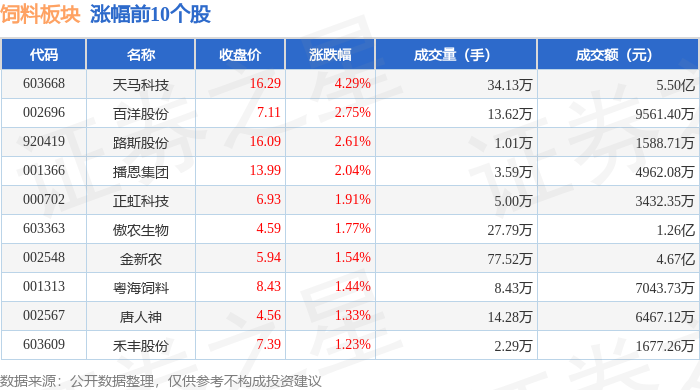
饲料板块12月5日涨0.27%,天马科技领涨,主力资金净流入3987.42万元
Zheng Xing Xing Ye Ri Bao· 2025-12-05 09:07
证券之星消息,12月5日饲料板块较上一交易日上涨0.27%,天马科技领涨。当日上证指数报收于 3902.81,上涨0.7%。深证成指报收于13147.68,上涨1.08%。饲料板块个股涨跌见下表: | 代码 | 名称 | 收盘价 | 涨跌幅 | 成交量(手) | 成交额(元) | | | --- | --- | --- | --- | --- | --- | --- | | 603668 | 天马科技 | 16.29 | 4.29% | 34.13万 | | 5.50亿 | | 002696 | 自洋股份 | 7.11 | 2.75% | 13.62万 | | 9561.40万 | | 920419 | 路斯股份 | 16.09 | 2.61% | ● 1.01万 | | 1588.71万 | | 001366 | 播恩集团 | 66'EI | 2.04% | - 3.59万 | | 4962.08万 | | 000702 | 正虹科技 | 6.93 | 1.91% | | 5.00万 | 3432.35万 | | 603363 | 傲农生物 | 4.59 | 1.77% | 27.79万 | | 1.26亿 ...


联合行业-出海链大涨解读与重点推荐
2025-12-04 02:22
Summary of Key Points from Conference Call Records Industry or Company Involved - **Industry**: Outbound Supply Chain, E-commerce Logistics, Manufacturing, Home Appliances, Cement, Pet Food - **Companies**: Financial Securities, Jitu Express, Beibu Gulf Port, Xiaogoods City, Zhongchong Co., Ltd. Core Points and Arguments - **Outbound Supply Chain Growth**: Financial Securities recommends leading companies in the outbound supply chain due to benefits from U.S. fiscal expansion, capital inflow from emerging markets, and a shift in policy focus towards manufacturing, which will drive growth through increased industry concentration and global demand recovery [1][3][4] - **"Running Horse 50" Portfolio**: The portfolio is constructed using the RCA competitive advantage index to select export-advantaged products, resulting in an excess return of approximately 4% since its launch [1][5] - **Jitu Express Performance**: Jitu Express is experiencing significant growth in Southeast Asia and Latin America, particularly driven by e-commerce platforms like TikTok, with package growth rates reaching 79% in Q3 [1][6][7] - **Beibu Gulf Port Growth**: The port has seen a 22.7% increase in cargo throughput and double-digit growth in container throughput, benefiting from trade with ASEAN countries [1][7] - **Focus on Mechanical Products**: In the current interest rate cut cycle, attention is drawn to mechanical products with significant alpha attributes, particularly tools and pet sales, which are showing signs of recovery [1][8][9] - **Home Appliance Export Trends**: The home appliance export chain is expected to show a trend of internal stability and external strength by 2026, with emerging markets projected to achieve double-digit growth [1][13][14] - **Xiaogoods City Export Performance**: Xiaogoods City reported a 26% year-on-year increase in import and export scale, with exports reaching 550 billion yuan [1][19][21] - **Cement Industry Opportunities**: The cement industry is focusing on overseas expansion, particularly in Southeast Asia and Africa, where per capita cement demand is still low [1][16][17] - **Zhongchong Co., Ltd. Global Supply Chain**: The company has established factories in various countries, benefiting from tariff exemptions under trade agreements, and is expected to see significant production value growth in the coming years [1][22][23] Other Important but Possibly Overlooked Content - **Market Adjustment Factors**: The market is experiencing adjustments due to unresolved overseas liquidity issues and uncertainties regarding future monetary policy, with the Shanghai Composite Index seen as a potential bottoming point around 3,800 [2] - **Emerging Market Investment**: Emerging markets like Mexico are benefiting from capital outflows from the U.S., leading to increased local employment and consumption [1][4] - **Pet Food Market Growth**: The global pet food market is valued at $150 billion, with significant growth potential for Chinese brands in overseas markets [1][23]

整个社会都在喊没钱了,为什么这些公司反而年赚百亿?
创业家· 2025-12-03 10:19
Core Insights - The article emphasizes that despite the prevailing narrative of economic hardship, certain industries are thriving and generating substantial profits, particularly in the context of Japan's "lost 30 years" and its implications for China [3][4]. Group 1: Economic Trends - The concept of a "low-desire society" does not equate to a lack of opportunities, as consumer behavior is shifting towards different spending patterns [4]. - The article identifies "consumption upgrading" and "demand migration" as significant business opportunities in the current economic landscape [5]. Group 2: Key Industries - The second-hand economy is booming, with examples like Japan's "Daikokuya" and China's "Hongbulin" and "Panghu" seeing significant revenue increases as consumers opt for second-hand luxury goods [6][7]. - The pet economy is on the rise, with brands like "Inaba" in Japan and "Guobao" in China experiencing strong sales growth, reflecting a shift in spending towards pet care products [12][13][14]. - The adult care market is expanding, with Japan's "Unicharm" leading the adult diaper segment, which has surpassed $10 billion in market size [17][18]. - Health food and beverage sectors are thriving due to changing demographics and rising health consciousness, with brands like "Oriental Tree Leaf" and "Jianchun" gaining traction in China [21]. - The beauty economy remains robust, with products like collagen supplements and home beauty devices seeing high sales, indicating a persistent consumer desire for self-improvement [23][24][26]. - Outdoor leisure activities are gaining popularity, with brands like "Kailas" and "Camel" in China experiencing rapid sales growth as consumers seek outdoor experiences [29][31]. - The "lazy economy" is emerging, with increased demand for convenience foods and smart home appliances, as consumers prioritize time-saving solutions over traditional cooking [39][40][42]. Group 3: Market Opportunities - The article suggests that the current economic climate presents opportunities for those willing to invest in counter-cyclical sectors, highlighting the importance of recognizing and seizing these opportunities [44].

量化大势研判:继续增配低估值质量类资产
Guolian Minsheng Securities· 2025-12-03 07:16
Quantitative Models and Construction Methods 1. Model Name: Quantitative Market Trend Judgment Framework - **Model Construction Idea**: The model aims to address the systematic rotation of market styles by identifying the dominant asset characteristics that represent the future mainstream market style. It evaluates assets based on the priority of "g > ROE > D" to determine whether there are good assets and whether they are overvalued[5][8][12] - **Model Construction Process**: 1. Define five style stages based on the industry lifecycle: external growth, quality growth, quality dividend, value dividend, and bankruptcy value[8] 2. Use the "g > ROE > D" priority to compare assets, focusing on growth (g), profitability (ROE), and dividend yield (D)[5][8] 3. Incorporate factors such as expected growth (gf), actual growth (g), profitability (ROE), and valuation metrics (PB, DP, BP) to classify and evaluate assets[9][12] 4. Apply the framework to select industries and allocate them equally within each strategy[19] - **Model Evaluation**: The framework has demonstrated strong explanatory power for A-share market style rotation since 2009, achieving an annualized return of 27.06%[19] --- Model Backtesting Results Quantitative Market Trend Judgment Framework - **Annualized Return**: 27.06% since 2009[19] - **Excess Returns by Year**: - 2017: 27% - 2020: 44% - 2022: 62% - 2024: 52% - 2025 (YTD): 8%[22] --- Quantitative Factors and Construction Methods 1. Factor Name: Expected Growth (gf) - **Factor Construction Idea**: Measures the expected growth rate of industries based on analysts' forecasts, regardless of the lifecycle stage[9] - **Factor Construction Process**: 1. Calculate the expected growth rate (gf) for each industry 2. Rank industries based on the highest expected growth rates 3. Select top-performing industries for allocation[9][38] - **Factor Evaluation**: The factor has shown significant excess returns since 2019, with notable performance in 2014-2015 and 2025[38] 2. Factor Name: Actual Growth (g) - **Factor Construction Idea**: Focuses on industries with the highest earnings momentum (△g), particularly during transition and growth phases[9] - **Factor Construction Process**: 1. Use △g to represent earnings momentum 2. Rank industries based on △g and select the top-performing ones 3. Incorporate additional factors such as SUE, SUR, and JOR for refinement[40] - **Factor Evaluation**: The factor has consistently delivered significant excess returns, especially in growth-dominant environments[40] 3. Factor Name: Profitability (ROE) - **Factor Construction Idea**: Targets industries with high ROE and low valuation under the PB-ROE framework, focusing on mature stages[9] - **Factor Construction Process**: 1. Calculate PB-ROE residuals for each industry 2. Rank industries based on residuals and select the top-performing ones[43] - **Factor Evaluation**: The factor performed strongly from 2016 to 2020 but has weakened since 2021[43] 4. Factor Name: Quality Dividend (DP + ROE) - **Factor Construction Idea**: Combines dividend yield (DP) and ROE to identify industries with the highest scores, focusing on mature stages[9] - **Factor Construction Process**: 1. Calculate DP and ROE for each industry 2. Combine the two metrics into a composite score 3. Rank industries and select the top-performing ones[46] - **Factor Evaluation**: The factor has shown significant excess returns in 2016, 2017, and 2023[46] 5. Factor Name: Value Dividend (DP + BP) - **Factor Construction Idea**: Combines dividend yield (DP) and book-to-price ratio (BP) to identify undervalued industries, focusing on mature stages[9] - **Factor Construction Process**: 1. Calculate DP and BP for each industry 2. Combine the two metrics into a composite score 3. Rank industries and select the top-performing ones[49] - **Factor Evaluation**: The factor has delivered significant excess returns in 2009, 2017, and 2021-2023[49] 6. Factor Name: Bankruptcy Value (PB + SIZE) - **Factor Construction Idea**: Targets industries with the lowest PB and SIZE scores, focusing on stagnation and recession stages[9] - **Factor Construction Process**: 1. Calculate PB and SIZE for each industry 2. Combine the two metrics into a composite score 3. Rank industries and select the lowest-scoring ones[52] - **Factor Evaluation**: The factor has shown significant excess returns in 2015-2016 and 2021-2023[52] --- Factor Backtesting Results Expected Growth (gf) - **Recent Performance**: - Lithium: +51.15% (3 months) - Frozen Food: +14.08% (3 months)[38] Actual Growth (g) - **Recent Performance**: - Lithium Chemicals: +51.88% (3 months) - Other Home Appliances: +14.93% (3 months)[41] Profitability (ROE) - **Recent Performance**: - Network Equipment: +12.18% (3 months) - Buses: +10.46% (3 months)[43] Quality Dividend (DP + ROE) - **Recent Performance**: - Timber Processing: +145.24% (3 months) - Lithium Equipment: +21.95% (3 months)[46] Value Dividend (DP + BP) - **Recent Performance**: - Network Equipment: +12.18% (3 months) - Security: -2.24% (3 months)[49] Bankruptcy Value (PB + SIZE) - **Recent Performance**: - Gas: +15.88% (3 months) - Building Renovation: +16.42% (3 months)[52]
业景气前瞻-宠物食品、宠物保健专家交流
2025-12-03 02:12
Summary of Key Points from the Conference Call Industry Overview - The domestic pet food market is highly competitive, with domestic brands holding over 70% market share, including brands like Guobao, Royal Canin, Xianlang, and NetEase Tiancheng [1][4] - The pet food market is experiencing intensified price competition, with major brands engaging in price wars to capture market share, which is squeezing the survival space for smaller brands [1][5] - Online sales channels have become mainstream, contributing to 80% of brand sales, while offline channels help capture loyal customers [1][10] Market Trends - Domestic companies are expected to adopt international strategies, including establishing overseas factories to expand their global market presence [1][4] - The pet health product market is projected to exceed 15 billion yuan (factory price) and nearly 30 billion yuan in retail sales by 2025, with a trend towards more refined and personalized products [1][11] Competitive Landscape - Guobao is a leading player with significant supply chain advantages, controlling meat and grain sourcing and reducing costs through overseas factories [1][8] - Zhongchong operates a multi-brand strategy and has made extensive investments in raw materials and supply chains, showing strong growth potential [1][8] - The market is divided into four tiers, with Guobao and Royal Canin leading, followed by Xianlang and emerging brands like NetEase Tiancheng [4][8] Pricing Dynamics - Economic conditions have led to decreased consumer willingness to spend, prompting brands to engage in aggressive pricing strategies [5][6] - Major players are expected to continue using price wars to gain market share while maintaining strict quality control to avoid losing consumer trust [6][5] Channel Strategy - Brands face challenges in balancing online and offline investments, with many opting to establish online reputations before investing in offline channels [7][10] - The trend indicates that brands that can balance price and quality will stand out in an increasingly competitive market [7] Consumer Perception and Brand Trust - Consumers generally perceive imported pet health products as superior to domestic ones, which affects the market dynamics [13] - Domestic brands need to improve research and development and raw material selection to enhance product quality and consumer trust [13][16] Regulatory and Trade Challenges - The U.S. tariff policies pose significant challenges for Chinese brands, leading to increased uncertainty and pressure on smaller enterprises [17][18] - Chinese brands are responding by establishing overseas factories to mitigate tariff impacts and enhance competitiveness [21] Future Outlook - The pet industry is expected to see significant growth by 2026, particularly in pet healthcare, pet health products, and pet food sectors [19] - The market for pet food is projected to reach 120 to 150 billion yuan (factory price) and 280 to 300 billion yuan in retail sales, with a growing share of high-end products [19] Emerging Trends and Opportunities - Emotional consumption products and niche markets for exotic pets are experiencing rapid growth, with significant potential for local brands [22][23] - The pet funeral service sector is emerging as a high-profit area, although it requires strong empathy and faces regulatory challenges [23]
渤海证券研究所晨会纪要(2025.12.03)-20251203
BOHAI SECURITIES· 2025-12-03 01:47
Fixed Income Research - The overall issuance guidance rates for credit bonds have decreased, with a range of -14BP to -5BP [2] - In November, the issuance scale of credit bonds increased month-on-month, with corporate bonds and short-term financing bonds seeing a decrease in issuance amounts [2] - The net financing amount for credit bonds increased month-on-month, with corporate bonds and short-term financing bonds showing negative net financing [2] - The secondary market saw an increase in transaction volume for credit bonds, with yields remaining low and showing a downward trend [2] - The overall credit spread for credit bonds narrowed month-on-month, with most varieties at historical low levels [2] Company Research - The company reported a revenue of 343 million yuan for Q3 2025, a year-on-year increase of 21.77%, and a net profit of 91.17 million yuan, up 28.88% [18] - The company's profitability has improved, with a gross margin of 40.37% and a net margin of 26.16%, both showing year-on-year increases [19] - The company has seen significant cash flow growth, with net cash flow from operating activities increasing by 255.32% year-on-year [19] - The company is expanding its production capacity and has initiated new product developments, including a new line for functional paper-based materials [21] Industry Research - The "ice and snow holiday" policy is expected to boost consumption in related sectors, particularly in tourism and sports [24] - The retail sales of furniture from January to October reached 169.51 billion yuan, a year-on-year increase of 19.90% [25] - The textile and apparel retail sales during the same period amounted to 1,205.28 billion yuan, growing by 3.50% year-on-year [25] - The light industry manufacturing sector outperformed the Shanghai and Shenzhen 300 index by 4.77 percentage points from November 3 to November 28 [26] - The new consumption promotion plan emphasizes supply-demand matching, which is expected to benefit sectors like home appliances and textiles [26]
中宠股份:截至11月30日公司股东户数为29829户
Zheng Quan Ri Bao Wang· 2025-12-02 14:12
Group 1 - The company, Zhongchong Co., Ltd. (002891), reported that as of November 30, 2025, the number of shareholders is 29,829 [1]
头豹词条报告系列:毛孩子营养革命:宠物营养品赛道功能细分与国牌崛起的双轮驱动
Tou Bao Yan Jiu Yuan· 2025-12-02 12:24
Investment Rating - The report rates the pet nutrition industry as a high-growth sector with a compound annual growth rate (CAGR) of 28.3% from 2020 to 2024, expected to continue growing at a CAGR of 14.21% from 2025 to 2029 [5][41]. Core Insights - The pet nutrition industry is experiencing rapid growth driven by increasing pet ownership, changing consumer attitudes towards pet care, and a shift towards premium, functional products. The market size is projected to grow from 31 billion RMB in 2020 to 84 billion RMB in 2024, and further to 164.7 billion RMB by 2029 [5][41]. - The industry is characterized by product functionalization and segmentation, the rise of domestic brands, and diversified sales channels, particularly online [5][10][13]. Summary by Sections Industry Definition - The pet nutrition industry focuses on developing and selling nutritional supplements tailored to pets' various life stages and physiological needs, including products like pastes, fish oil, probiotics, and vitamins [6]. Industry Characteristics - The industry is moving from basic nutrition to functional and segmented products, with a strong preference for gastrointestinal and immune-boosting products [11]. - Domestic brands have gained significant market share, accounting for 61% of the market by 2024, surpassing foreign brands [12]. - Sales channels have diversified, with e-commerce platforms dominating, accounting for 50% of sales [13]. Development History - The industry has evolved through three stages: initial awareness (2001-2010), rapid growth (2011-2020), and maturity with diversification (2021-present) [14][16]. Industry Chain Analysis - The industry chain consists of upstream raw material suppliers, midstream brand manufacturers, and downstream sales channels [17]. - Upstream suppliers are increasingly focusing on quality and innovation in response to consumer demands for safety and transparency [23][24]. Market Dynamics - The pet nutrition market reached 84 billion RMB in 2024, with a CAGR of 28.3% from 2020 to 2024, indicating strong demand [19][37]. - The leading brand, RedDog, dominates the market with significant sales in key segments, reflecting a concentrated competitive landscape [21][40][56]. Future Growth Trends - The market is expected to grow to 185.9 billion RMB by 2030, with a CAGR of 13.9% from 2025 to 2030, driven by consumer demand for high-quality, functional products [47][49]. - The pet paste market is projected to reach 50.7 billion RMB by 2030, with significant growth in specific categories like hairball pastes and fish oil [45][49].
千亿宠粮赛道,为何“巨头”难产?
3 6 Ke· 2025-12-02 10:23
Core Insights - The Chinese pet market is approaching a scale of 300 billion yuan, with a remarkable compound growth rate, being referred to as the "last blue ocean" for investment opportunities [1] - Despite being a major producer of pet snacks globally, China has yet to develop a domestic brand that commands consumer trust and premium pricing [1][3] Industry Overview - The pet food industry in China has evolved from a manufacturing base to a market-driven sector, with companies like Zhongchong Co., Petty Co., and Guibao Pet relying heavily on OEM/ODM services for foreign brands [3] - The "manufacturing-heavy, branding-light" model has created a dependency that hinders the development of strong domestic brands, as companies struggle to shift from cost control to brand value creation [3][4] Challenges in Branding - Many companies focus on raw material specifications and cost-effectiveness, neglecting brand identity, emotional connection, and user experience, which are crucial for building a strong brand [4] - The dual role of being both competitors and partners to foreign brands complicates strategic decisions, leading to a lack of focus on brand development [4] Financial Dynamics - The industry is caught in a "burning money" cycle, with many new brands relying on social media marketing and influencer partnerships to drive sales, resulting in high sales expenses but low R&D investment [7][8] - Sales expense ratios for leading companies are alarmingly high, often between 15% and 25%, while R&D spending remains low at around 1.5% to 2.5% [8] Trust Issues - A significant "trust deficit" exists in the Chinese pet food market, stemming from past scandals and a perception of domestic products as inferior, which perpetuates a cycle of low pricing and low quality [11][12] - Efforts to rebuild trust through transparency and regulatory compliance have not fully addressed consumer concerns, leaving many brands trapped in low-end market segments [12] Future Outlook - The current market dynamics suggest that true industry leaders will emerge not from flashy marketing but from a focus on quality and technological innovation [13] - The shift in investor sentiment towards profitability and sustainable growth indicates that brands relying solely on aggressive marketing strategies may struggle to survive [12][13]
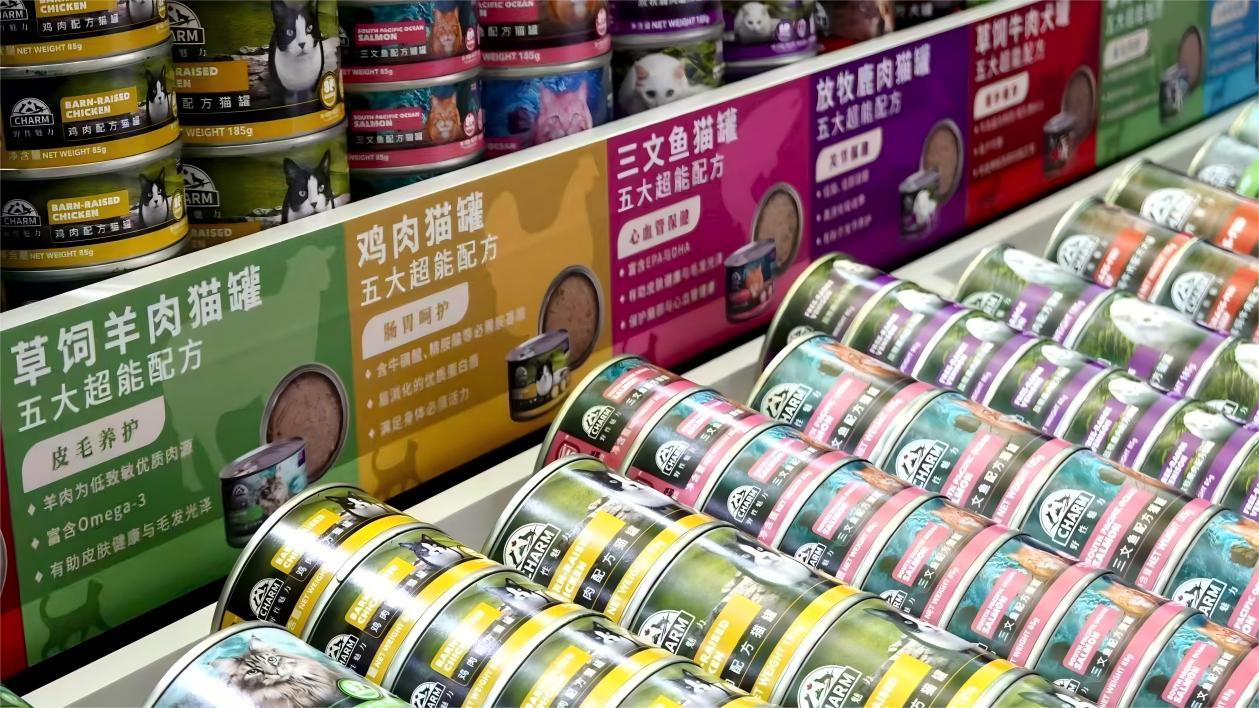
农林牧渔行业:宠物消费韧性强,多元化、精细化趋势显现
Dongxing Securities· 2025-12-02 09:19
Investment Rating - The report maintains a "Positive" investment rating for the agriculture, forestry, animal husbandry, and fishery industry [2] Core Insights - The pet consumption market shows strong resilience, with a significant growth potential and structural changes observed during the Double Eleven shopping festival, where total sales reached 16,191 billion yuan, a year-on-year increase of 12.30%, with pet food sales at 9.4 billion yuan [3][17] - The report identifies three key trends: the rise of domestic brands, diversification and increased experience demand in pet consumption, and a shift towards health and precision in pet care [4][6][35] Summary by Sections Pet Consumption Performance - The Double Eleven shopping festival demonstrated robust performance in pet consumption, with a sales explosion coefficient of 201% for pet categories, indicating strong consumer resilience and growth potential [3][17] - Tmall remains the primary channel for pet consumption, holding a 64% market share, followed by JD and Douyin at 21% and 14% respectively [17] Trends in Pet Consumption - The trend of domestic brands rising continues, with only three overseas brands making it to the Tmall pet brand top 10 list during Double Eleven [4][22] - Pet consumption is diversifying, with a decrease in the Engel coefficient, indicating a shift from basic needs to more varied and premium offerings [4][22] - Health and precision in pet care are leading industry growth, with new processing techniques and functional foods gaining popularity [4][33] E-commerce Channel Preferences - Different e-commerce platforms exhibit varying consumer preferences, with Tmall showing strong competition in pet food, while Douyin focuses on content marketing and emotional consumption [5][41] - The report highlights the competitive landscape in pet food, with brands like Toptrees and Xucuihua showing significant growth [5][35] Export Market Challenges - The export of pet food faces pressure, with a decline in both quantity and value, indicating challenges in the international market due to tariffs and trade disputes [5][41] Long-term Outlook - The report expresses optimism for the long-term development of the pet food industry, recommending attention to companies like Zhongchong Co., Ltd. and Petty Co., Ltd. as well as other leading pet food brands [6][44]