伊利股份

Search documents
广发证券:白酒有望迎来“估值+业绩”双底 大众品看好个股超赢机会
智通财经网· 2026-01-26 03:53
Group 1 - The food and beverage sector's heavy stockholding ratio decreased to 6.1% in Q4 2025, down 0.3 percentage points from Q2 2025, with an excess allocation of +2.4 percentage points compared to Wind All A [1] - The proportion of active equity funds holding food and beverage stocks fell to 32.3% in Q4 2025, while passive funds increased to 63.3% [1] - The liquor sector has experienced a four-year adjustment period and is expected to see a "valuation + performance" double bottom [1] Group 2 - In the liquor segment, the fund holding ratio slightly decreased, with a total and active equity holding ratio of 5.1% and 2.9% respectively, down 0.4 and 0.3 percentage points [2] - The excess allocation for liquor funds is at +2.7 percentage points for total and +0.5 percentage points for active equity [2] - The holding ratio for consumer goods increased slightly to 0.97% in Q4 2025, although it remains in a low allocation state [2] Group 3 - The holding ratio for individual liquor stocks generally declined, with Kweichow Moutai remaining the only food and beverage company in the top 20 heavy stocks, dropping from second to fourth place [3] - The holding ratio for Shanxi Fenjiu rose to second place among liquor stocks [3] - Some leading consumer goods companies, such as Yili and Anjiexin Foods, saw a noticeable increase in fund holding ratios and the number of funds holding them in Q4 2025 [3]


食品饮料周报(26年第4周):各品类春节备货有序进行,预制菜国标将征求意见-20260126
Guoxin Securities· 2026-01-26 02:59
Investment Rating - The report maintains an "Outperform the Market" rating for the food and beverage sector [4][5][11]. Core Views - The food and beverage sector is expected to perform well in 2026, driven by cost advantages, efficiency improvements, innovation, and potential recovery opportunities in the liquor segment [3][11][15]. - The report highlights a diversified performance across sub-sectors, with beverages outperforming food and liquor categories [2][11]. Summary by Relevant Sections 1. Sector Overview - The food and beverage sector saw a cumulative decline of 1.37% this week, with A-shares down 1.57% and H-shares up 1.21% [1]. - Key performers included companies like Hao Xiang Ni and Wei Zhi Xiang, with significant weekly gains [1]. 2. Sub-sector Insights - **Liquor**: - Moutai's price remains stable with an upward trend, and the focus is on sales momentum during the Spring Festival. Recommendations include Moutai, Shanxi Fenjiu, and Luzhou Laojiao [2][11]. - **Beverages**: - The dairy segment is seeing orderly preparations for the Spring Festival, with a focus on leading companies like Yili. Recommendations include Nongfu Spring and Dongpeng Beverage [2][15]. - **Snacks**: - The report emphasizes strong alpha stocks in the snack sector, particularly in konjac products, with companies like Weidong and Yanjinpuzi showing strong innovation [2][13]. - **Catering Supply Chain**: - The sector is entering a peak season for inventory and sales, with new standards for prepared dishes being solicited for public opinion [2][14]. 3. Investment Recommendations - The report suggests a focus on four main lines for investment: cost advantages, efficiency improvements, innovation-driven companies, and potential recovery in the liquor sector [3][11]. - Recommended stocks include Baba Foods, Dongpeng Beverage, Weidong, and Shanxi Fenjiu, which have shown resilience and growth potential [17][19]. 4. Earnings Forecasts - Key companies are projected to maintain strong earnings growth, with Moutai expected to achieve a stable performance and Yili showing significant recovery potential [4][15][19]. - The report provides detailed earnings forecasts for several companies, indicating a positive outlook for the food and beverage sector [4][19].




中国消费行业:2026 年 GCC 会议要点 -估值仍具吸引力,消费复苏迹象显现-China Consumer Sector_ 2026 GCC takeaways_ Sector valuation remains attractive with signs of consumption recovery
2026-01-26 02:50
Summary of Key Points from the Conference Call Industry Overview - **Sector**: China Consumer Sector - **Key Insights**: The sector shows signs of consumption recovery despite a near-term property market downturn. Valuation remains attractive, approximately 1 standard deviation below 10-year averages, indicating that a consumption recovery is not yet priced in [2][21]. Consumer Staples - **Baijiu**: Anticipated demand support for mid-end baijiu due to easing alcohol bans and private consumption growth. Companies are expected to accelerate channel transformations for sustainable EPS growth [3][8]. - **Beer**: Premiumization continues through product diversification and in-home channel expansion, despite on-trade softness. CR Beer expects low-single-digit volume growth in 2025, with Heineken volumes projected to grow by 20% YoY [3][8]. - **Dairy**: Liquid milk sales are expected to recover modestly in 2026, driven by marketing and innovation, despite a weak 2025. Fresh milk shows resilience with double-digit growth [3][8]. - **Freshly-Made Beverages (FMB)**: Guming is expected to maintain steady SSSG in 2026 through category expansion and dine-in growth, despite the phase-out of delivery subsidies [3][8][19]. - **Condiments**: Sequentially improving demand is expected, with Haitian focusing on multi-product categories and Jonjee anticipating a cleaner 2026 after a weak 4Q25 [3][8]. Consumer Discretionary - **Home Appliances**: Companies like Midea and Haier expect higher overseas growth compared to domestic markets in 2026. Strategies include price hikes and operational efficiencies [4][10]. - **Jewelry**: Brands with unique designs may consolidate post-VAT reform. Laopu is expected to achieve strong sales growth due to increased focus on value-added services [4][10]. - **Restaurants**: Intense competition leads to divergent strategies, with some companies lowering prices while others upgrade offerings. DPC Dash is on track for expansion despite market uncertainties [4][10]. Stock Implications - **Most Preferred Stocks**: CR Beer, Guming, MIXUE, China Foods, YUM China, among others, are highlighted as preferred investments due to their growth potential [5]. - **Least Preferred Stocks**: Companies like Swellfun, Nongfu, and Gree are noted as less favorable due to various challenges [5]. Key Risks - Risks include demand recovery uncertainties, cost inflation or deflation, and changes in the competitive landscape. These factors could significantly impact the consumer sector's performance [21]. Additional Insights - **Pet Food**: The industry is shifting towards online sales, with over 85% of sales occurring digitally. Competition is intensifying, pushing brands towards innovation and product differentiation [13]. - **Snack Sector**: Rapid category diversification and channel restructuring are creating growth opportunities, particularly through snack discounters [9][12]. This summary encapsulates the essential insights and projections from the conference call, providing a comprehensive overview of the current state and future outlook of the China consumer sector.




牛系列-一体化企业如何看奶价-看消费
2026-01-26 02:49
Summary of Key Points from Conference Call Records Industry Overview - The Chinese dairy industry is undergoing structural adjustments, with a projected elimination of approximately 200,000 cows in 2026 due to insufficient heifer supply, accelerating industry reshuffling [1][11] - The scale of dairy farms is increasing, although full costs remain in loss, the loss margin is narrowing, and group enterprises are enhancing their self-controlled milk source ratio [1][2] Core Insights and Arguments - The cash cost for large-scale dairy farms is around 2.8 RMB per kg, while the total cost is approximately 3.3-3.4 RMB per kg, including depreciation costs of about 0.6 RMB [2] - The loss rate among dairy farms has decreased from 95% to 65%, indicating an improvement in financial health [2] - Group enterprises like Mengniu and Yili have achieved a self-controlled milk source ratio of 50%-70%, focusing on cost reduction to gain market advantage [3] - The rapid expansion of deep processing enterprises in Ningxia is notable, although it poses risks of blind expansion [4][5] Market Trends - The Chinese dairy product market is experiencing structural changes driven by consumer preferences for high cost-performance products, with exports becoming increasingly competitive [1][6] - The average price of bulk fresh milk is expected to fluctuate between 3.2-3.6 RMB per kg over the next two years [6] - The demand for deep processing is pushing farms to focus on milk components, with major companies enhancing protein content to meet the needs of specialized foods and health products [1][7][9] Competitive Landscape - China's dairy industry is facing competition from international food companies like Nestlé and Danone, which are experiencing profit erosion due to China's decreasing production costs [14][23] - The average production cost of milk in China has dropped to around 1.7 RMB per kg, with some regions like Ningxia achieving costs as low as 1.5 RMB per kg, enhancing international competitiveness [13][16] Future Development and Strategies - To enhance competitiveness, Chinese dairy farms should focus on continuous cost reduction, improving breeding technologies, and embracing digital agriculture [15][18] - The solid milk sector is growing rapidly, with a projected annual growth rate of about 20%, driven by increasing consumer demand for high-quality dairy products [19][20] - The export of Chinese dairy products is supported by favorable policies and strong industrial capabilities, with significant potential in Southeast Asia and the Middle East markets [21][22] Additional Insights - The upcoming consumption peak around the Spring Festival may have varying impacts on milk prices across regions, with a general expectation of a smoother price cycle due to changing consumer perceptions [12] - The meat cattle industry is expected to experience a bullish cycle in the next two to three years due to tight supply and increasing domestic demand [24]
吃喝板块突遇“闪崩”,洋河股份暴跌近9%!食品饮料ETF华宝(515710)跌超1%,估值低位布局正当时?
Xin Lang Ji Jin· 2026-01-26 02:29
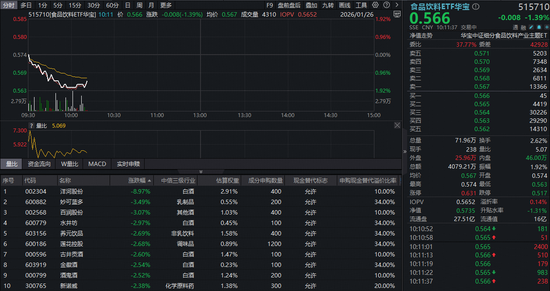
Group 1 - The food and beverage sector continues to experience a downturn, with the Huabao Food and Beverage ETF (515710) showing a decline of 1.39% as of the latest report [1][2] - Major stocks in the sector, particularly in the liquor category, have seen significant drops, with Yanghe Co. falling nearly 9% and other brands like Gujing Gongjiu and Shui Jing Fang dropping over 2% [1][3] - The recent addition of new shipping warehouses in Nanjing and Beijing by "iMoutai" aims to enhance logistics efficiency in response to increased order volumes and winter weather challenges [3][4] Group 2 - Analysts suggest that the food and beverage sector is currently at a historical low in terms of valuation, making it a potentially good time for left-side positioning in the market [3][4] - The price-to-earnings ratio for the food and beverage ETF is reported at 19.39, which is at the 1.76% percentile of the last decade, indicating a favorable long-term investment opportunity [3][4] - Market trends indicate a preference for sectors like snacks and dairy, which are expected to perform well due to policy support and improving monthly data, while the liquor sector is in a phase of consolidation and preparation for upcoming demand [4][5]


中信证券:当下到三月,或是消费链的增配时点
Mei Ri Jing Ji Xin Wen· 2026-01-26 01:30
Core Viewpoint - The current timing for increasing allocation in the consumer chain is now, particularly around the important meetings in March, with a focus on "expected trading" [1] - The real estate chain may also see significant recovery during this period, indicating that the building materials sector has already started to respond to domestic new construction [1] Group 1: Consumer Sector Insights - The food and beverage industry has undergone continuous adjustments for five years, aligning with characteristics of "low expectations, low holdings, and low valuations," suggesting that pessimistic expectations are already reflected in stock performance [1] - Historical data shows that sectors experiencing declines for 3-4 years often see reversals, with leading gains this year observed in sectors such as non-ferrous metals, chemicals, power equipment, and pharmaceuticals, all of which had previously adjusted for over three years [1] Group 2: Investment Strategies - It is challenging for individual investors to accurately identify "bottom-fishing" signals in the food and beverage sector; therefore, utilizing industry-themed ETFs, such as the food and beverage ETF, can help capture the potential reversal opportunities [1] - The food and beverage ETF tracks the largest sub-index of the food sector, including leading companies in various segments such as liquor, dairy, soft drinks, condiments, and snacks, featuring stocks like Kweichow Moutai, Luzhou Laojiao, Haitian Flavoring, Yili, Dongpeng Beverage, and Angel Yeast, making it a suitable tool for low-threshold investment in leading companies [1]

研判2026!中国药食同源行业政策汇总、销售额、销量、竞争格局及发展趋势分析:市场需求爆发,新兴成分表现出强劲增长势头[图]
Chan Ye Xin Xi Wang· 2026-01-26 01:21
Core Insights - The health-conscious consumer trend is driving demand for food products that offer health benefits, leading to increased interest in "food-medicine" products like goji berries, yam, and red dates [1][3][4] Industry Overview - The "food-medicine" concept is rooted in traditional Chinese medicine, emphasizing the dual role of certain foods as both nutrition and medicine [3] - The market for "food-medicine" products in China is projected to reach 56.78 billion yuan in 2024, with a year-on-year growth of 3% [1][6] Market Dynamics - The nutritional health food market in China is expected to grow to 678 billion yuan in 2024, reflecting a 7.3% increase year-on-year, providing a solid foundation for the "food-medicine" industry [6][7] - Sales of traditional ingredients like bird's nest and goji berries remain strong, while new ingredients like poria and astragalus are gaining traction, with astragalus seeing a 75.2% increase in sales [7][8] Competitive Landscape - The "food-medicine" industry features diverse competition from traditional pharmaceutical companies, food enterprises, new retail businesses, and internet health companies [9][10] - Major players include Tongrentang, Yunnan Baiyao, and Kang En Bei, which leverage their traditional medicine expertise to develop health-oriented food products [10][11] Development Trends - Future product development will focus on functional and scenario-specific offerings, catering to various consumer needs, such as liver health for night owls and digestive health for the elderly [12][15] - Cross-industry collaborations will become common, integrating "food-medicine" with baked goods, beverages, and other food categories to enhance flavor and health benefits [14][15] - Young consumers are emerging as a new growth segment, with increased interest in health products and innovative formats appealing to their preferences [15][16] - Stricter regulatory policies are expected to drive the industry towards higher quality standards, with ongoing support for traditional health culture and product innovation [16]


科技产业链显现多元化机会 傅鹏博、李晓星四季报调仓路径分化明显
Zhong Guo Jing Ji Wang· 2026-01-26 00:37
Core Insights - The article highlights the contrasting investment strategies of two prominent fund managers, Fu Pengbo and Li Xiaoxing, as they adjust their portfolios in response to market conditions and their investment philosophies [1][2][3]. Group 1: Fu Pengbo's Strategy - Fu Pengbo significantly reduced holdings in major stocks like CATL and Tencent, decreasing positions by 23% and 18% respectively, while increasing investments in hard tech companies such as Maiwei and Cambrian [1][2]. - The total assets under management for Fu's fund reached 31.2 billion yuan, maintaining a high stock position of 92% [1]. - Fu's rationale centers on the belief that the global tech competition will focus on critical manufacturing sectors with core technological barriers, suggesting a shift from platform companies to manufacturing firms [2][3]. Group 2: Li Xiaoxing's Strategy - In contrast, Li Xiaoxing increased his stakes in internet platform companies, raising Tencent's position from 1.8 billion yuan to 2.6 billion yuan, and Alibaba by 35% to 1.9 billion yuan [3]. - Li's fund size is 28.5 billion yuan, and he believes that the internet sector is undervalued due to regulatory pressures and economic expectations, predicting a recovery in 2026 [3]. - His strategy reflects a dual focus on consumer and technology sectors, with significant investments in companies like Yili [3]. Group 3: Market Implications - The divergence in strategies between the two fund managers illustrates a broader trend in the public fund industry, where funds focusing on electronics outperformed those in computing sectors [4]. - The article suggests that the technology sector presents diverse opportunities across various stages of the supply chain, from semiconductor equipment to AI chips and platform applications [5]. - It emphasizes the importance of selecting investments based on valuation and growth potential, while also noting the liquidity constraints faced by larger funds [5][6].

白酒减仓至历史底部,餐饮链及节庆食品迎催化:食品饮料行业周报(20260119-20260125)-20260126
Huachuang Securities· 2026-01-26 00:15
证 券 研 究 报 告 食品饮料行业周报(20260119-20260125) 推荐(维持) 白酒减仓至历史底部,餐饮链及节庆食品迎催化 行业研究 食品饮料 2026 年 01 月 26 日 华创证券研究所 证券分析师:欧阳予 邮箱:ouyangyu@hcyjs.com 执业编号:S0360520070001 证券分析师:范子盼 联系人:王培培 邮箱:fanzipan@hcyjs.com 执业编号:S0360520090001 证券分析师:田晨曦 邮箱:tianchenxi@hcyjs.com 执业编号:S0360522090005 证券分析师:刘旭德 邮箱:liuxude@hcyjs.com 执业编号:S0360523080010 证券分析师:严文炀 邮箱:yanwenyang@hcyjs.com 执业编号:S0360525070006 证券分析师:董广阳 邮箱:dongguangyang@hcyjs.com 执业编号:S0360518040001 邮箱:wangpeipei@hcyjs.com 联系人:寸特彬 邮箱:cuntebin@hcyjs.com 行业基本数据 | | | 占比% | | --- | ...
中国乳业「老三」要IPO了,年营收近200亿,负债率77%
Sou Hu Cai Jing· 2026-01-25 13:48
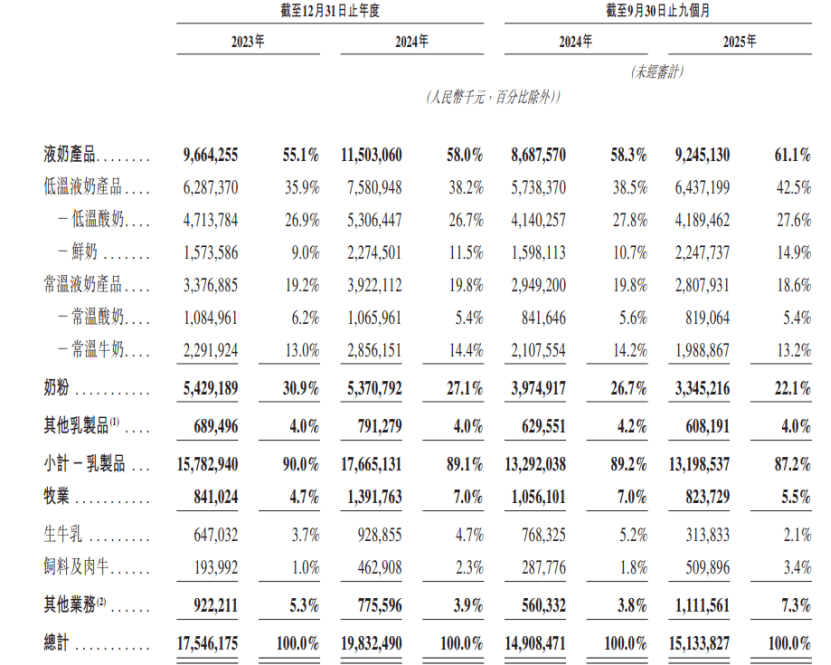
Core Viewpoint - Junlebao Dairy Group has submitted an application for a mainboard listing on the Hong Kong Stock Exchange, shifting focus from A-share listing to overseas market expansion [1] Group 1: Company Overview - Junlebao was founded in 1995 by Wei Lihua in Shijiazhuang, Hebei, initially having a tripartite shareholding structure with Wei holding 33%, Hongqi Dairy holding 33%, and Sanlu Group holding 34% [3] - After Sanlu's bankruptcy, Wei repurchased shares in 2009, increasing his stake to 83.53% [3] - In December 2010, Junlebao introduced strategic investor Mengniu, transferring 51% control for 469.2 million yuan [3] - Junlebao regained independence in 2019 when Mengniu divested its shares, leading to new investments from various institutions including Sequoia China and Ping An Capital [3] Group 2: Shareholding Structure - Prior to the IPO, Wei Lihua held 37.54% of shares, while management controlled 59.26% through various employee incentive platforms [4] - Sequoia China is the largest external institutional shareholder with an 8.59% stake, followed by Springhua Capital at 7.68% and Ping An Capital at 4.84% [4] Group 3: Financial Performance - Junlebao's revenue for 2023, 2024, and the first nine months of 2025 was approximately 17.546 billion yuan, 19.832 billion yuan, and 15.134 billion yuan, respectively, with net profits of 5.58 million yuan, 1.115 billion yuan, and 902 million yuan [10] - The company has a high debt level, with total liabilities reaching 17.57 billion yuan and a debt-to-asset ratio of 77.1%, significantly above the industry average of 50%-60% [10] - Junlebao has paid out approximately 1.625 billion yuan in dividends from 2023 to the first nine months of 2025, with a total of over 2.6 billion yuan in dividends over three years [10] Group 4: Product Portfolio - Junlebao's main revenue comes from dairy products, including low-temperature yogurt, fresh milk, and milk powder, with brands such as Junlebao and Yuxianhuo [6] - As of the first nine months of 2025, low-temperature dairy products contributed 15.134 billion yuan in revenue, accounting for 42.5% of total revenue [7] - The company holds a 5% market share in the infant formula market, ranking fifth among competitors [7] Group 5: Market Trends and Challenges - The overall dairy product market in China is experiencing a decline, with a projected market size of 659 billion yuan in 2024, down 3.1% year-on-year [14] - Junlebao has been actively pursuing mergers and acquisitions to explore new growth opportunities, completing eight investments since 2021 [15] - Despite the potential in cheese and yogurt markets, Junlebao faces challenges due to low consumer demand for dairy products in traditional diets [15][16]