
吉利

Search documents
锐新科技(300828.SZ):公司生产的汽车部品及部件主要应用于丰田、比亚迪等传统燃油车及新能源车
Ge Long Hui· 2025-10-24 08:15
Group 1 - The core viewpoint of the article is that Ruixin Technology (300828.SZ) is actively expanding its market presence and aims to attract more high-end clients in the automotive parts sector [1] Group 2 - The company produces automotive parts and components primarily used in traditional fuel vehicles and new energy vehicles from brands such as Toyota, Honda, Geely, Volvo, Audi, BMW, and BYD [1] - Currently, the company's products have not been applied to Chery Automobile [1] - The company plans to strengthen its market expansion efforts in the future [1]


下个万亿级市场,中国已抢占先机?
3 6 Ke· 2025-10-24 03:37
Core Viewpoint - The flying car industry is on the verge of significant growth, with companies like XPeng Heavens securing large orders and the potential for market entry by 2026, indicating a new era for urban air mobility [3][5][28]. Market Overview - XPeng Heavens received its first batch of 600 flying car orders at the 2025 Dubai GITEX, setting a record for overseas orders in the flying car sector, bringing total orders to over 7,000 globally [3][5]. - The global eVTOL market is projected to reach $12 billion in 2024, with a compound annual growth rate (CAGR) exceeding 35% [7]. - China's low-altitude economy is expected to exceed 5 trillion yuan in 2024, with eVTOLs as a core component, and is forecasted to reach 1.5 trillion yuan by 2025 and 3.5 trillion yuan by 2035 [7]. Industry Challenges - The flying car industry faces significant challenges, including issues with range, safety, regulatory standards, and infrastructure requirements [15][17][19]. - The high energy consumption of eVTOLs compared to traditional electric vehicles poses a major hurdle, along with the need for advanced safety measures to prevent accidents [15][17]. - The lack of unified airworthiness certification standards globally complicates the regulatory landscape for flying cars [17]. Competitive Landscape - China is positioned to become a leader in the flying car market, with Morgan Stanley predicting that by 2040, the global urban air mobility market could reach $1.5 trillion, with China potentially capturing 30% of that market [23]. - The Chinese market benefits from strong policy support, a dense population, and a robust industrial chain, with many domestic companies, including XPeng, Geely, and BYD, actively developing flying car technologies [25][27]. Technological Advantages - Approximately 70-80% of the supply chain and manufacturing processes for flying cars can leverage existing technologies from the electric vehicle sector, providing a competitive edge for Chinese manufacturers [25]. - The cost of components, such as electric motors, is significantly lower in China compared to overseas prices, enhancing the feasibility of local production [27]. Conclusion - While the flying car industry in China has substantial advantages and potential for growth, it must address existing challenges and build a solid foundation for future development to ensure sustainable progress in this emerging market [28].


菜鸟、美团、滴滴抢滩,出海“新大陆”已找到
3 6 Ke· 2025-10-23 12:49
Core Insights - Brazil is emerging as a new frontier for Chinese companies expanding overseas, with significant investments and operations being established in various sectors, particularly in food delivery and manufacturing [1][2][4]. Group 1: Investment Trends - Meituan's international food delivery brand Keeta is set to launch operations in Brazil by the end of the month, while Didi's 99Food has begun trial operations in Rio de Janeiro [1]. - Chinese companies are increasingly investing in Brazil, with plans such as Mijue Ice City investing 3.2 billion Brazilian Reais to open stores and build a supply chain factory, and Great Wall Motors planning to invest 6 billion Brazilian Reais to expand its factory [1][2]. - Approximately 40 Chinese companies have expressed interest in establishing subsidiaries in Brazil since last year, a significant increase from the previous average of 15 to 20 inquiries per year [1][4]. Group 2: Market Dynamics - The automotive sector is a leading area for Chinese investment in Brazil, with at least eight Chinese car manufacturers conducting market research in 2024, and GAC planning to invest over 1 billion USD to build a factory [2]. - The perception of Chinese companies in Brazil is shifting, with local families now seeking partnerships with Chinese firms, recognizing their advancements in high technology beyond just low-cost goods [2][3]. Group 3: E-commerce and Logistics - The Brazilian e-commerce market is maturing, with platforms like TikTok Shop achieving significant growth, reaching a GMV of 46.135 million USD within four months of entry, marking a 45-fold increase [3]. - Cainiao, a logistics company, has secured a commercial customs clearance license in Brazil and is focusing on ensuring timely logistics for the upcoming peak season, particularly for Brazil and Mexico [3][5]. Group 4: Challenges and Opportunities - Despite the potential, Chinese companies face challenges in Brazil, including complex tax regulations and compliance issues that increase operational costs [5][6]. - The urbanization rate in Brazil is high at 83%, but the service sector remains underdeveloped, presenting opportunities for Chinese companies to fill the investment gap in infrastructure and services [4].

禾赛已连续7个月车载主激光雷达市占率第一
Zheng Quan Ri Bao Zhi Sheng· 2025-10-23 11:11
Core Insights - The report from Gaishi Automotive Research Institute indicates that Hesai Technology has maintained its position as the leading supplier of automotive LiDAR systems, achieving a market share of 46% as of August 2025, which is 1.5 times that of the second place and 2.4 times that of the third place [1][2] Group 1: Market Performance - In the period from January to August 2025, the cumulative installation of main LiDAR systems in China's front-mounted production reached 1.31 million units, with Hesai's contribution being 510,000 units [1] - Hesai's monthly installation volume of LiDAR systems has surged from 33,485 units to 97,583 units, nearly tripling [1] - The penetration rate of LiDAR in new energy passenger vehicles reached 19% by August 2025, indicating that nearly one in five new cars is equipped with this technology [1] Group 2: Production and Strategic Developments - Hesai plans to achieve an annual production capacity exceeding 2 million units in 2025, with expected deliveries ranging from 1.2 million to 1.5 million units [2] - As of the end of September 2025, Hesai became the first company globally to produce over 1 million LiDAR units in a year, marking the entry into a "million-unit" mass production era [2] - Hesai has officially listed on the Hong Kong Stock Exchange, becoming the first company in the industry to achieve dual listing on both US and Hong Kong markets, reflecting international market recognition of Chinese LiDAR technology [2] Group 3: Client Base and Product Applications - This year, Hesai's LiDAR technology has supported the launch of several popular vehicle models, including Li Auto's i6, Xiaomi's YU7, and Leap Motor's B10 [2] - Hesai has secured mass production contracts with over 24 OEMs for more than 120 vehicle models, with planned deliveries from 2025 to 2027 [2] - Key clients include top-tier automotive manufacturers such as a leading European OEM, a global champion in new energy vehicle sales, and major Chinese brands like Geely, Great Wall, and Changan [2]
零跑B10:用户多数是男性,优惠6000还有5000免息额度
车fans· 2025-10-23 00:30
Core Viewpoint - The sales performance of the Leap B10 has significantly declined since its launch, with a notable drop in customer interest and sales figures compared to the initial hype [2][4]. Sales Performance - In a four-tier city, only 8 units of the B10 were sold last month, with a total of 41 vehicles sold in the store [2]. - The current inventory includes only 5 units of the B10, with most being mid-range configurations [2]. Customer Demographics - The primary buyers of the B10 are males aged 22 to 50, including young professionals and small business owners, with many being first-time car buyers [3]. - Customers often compare the B10 with competitors like the Deep Blue S05 and Galaxy E5, with a significant focus on value for money [6]. Competitive Landscape - The B10 is frequently compared to the Deep Blue S05, with 25% of customers considering it as an alternative [6]. - Customers express concerns about brand reliability, often favoring established brands like Geely over newer entrants like Leap [9]. Pricing and Discounts - The B10 has recently introduced discounts, with cash incentives up to ¥6,000 available [11][22]. - Financing options are attractive, with the possibility of interest-free loans for amounts up to ¥75,000 [14]. Customer Preferences - The most popular configuration is the mid-range 510 Joy Edition, with 60% of sales coming from this model [17]. - The color preference leans towards the free "Xilu Purple," chosen by 40% of customers [17]. Customer Feedback - Common complaints include minor software bugs and battery range issues, which are typical in the industry [19][21]. - Maintenance costs are relatively low, averaging ¥150 per service in smaller cities [21]. Buying Considerations - Customers are advised to take advantage of current discounts and promotions, as the combined savings can reach up to ¥6,000 [22].

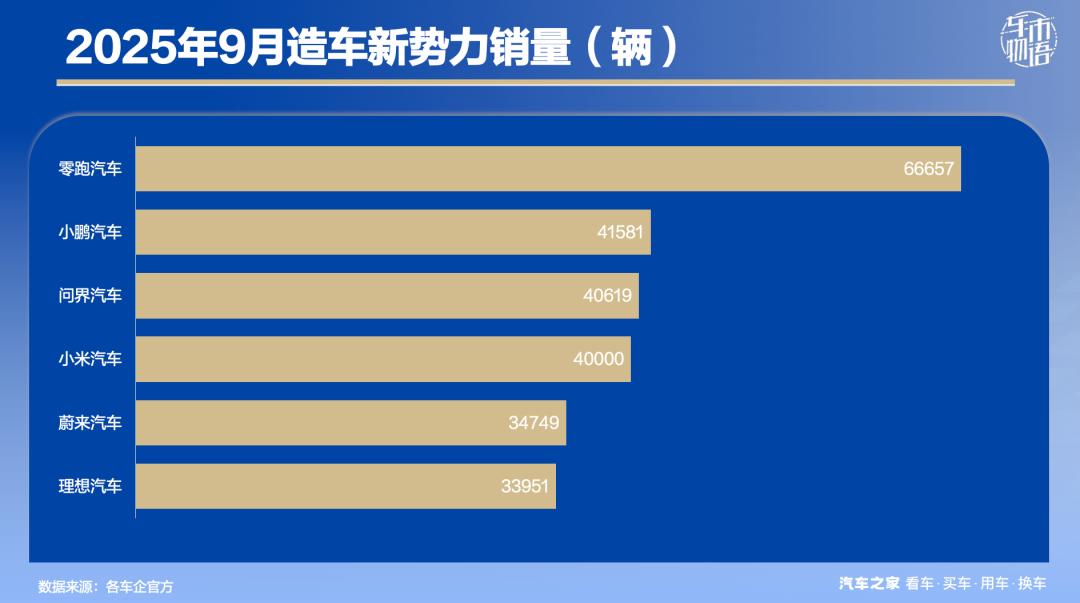
最强增程!只卖30万?月销6万台的零跑真的飘了?
电动车公社· 2025-10-22 16:21
Core Viewpoint - Leap Motor's flagship D19 model showcases advanced technology and competitive pricing, positioning itself strongly in the market against established competitors [3][14][60]. Group 1: Product Features and Technology - The D19 features an 80 kWh range extender battery with a range of 500 km and a pure electric version with a 1000V architecture, highlighting its technological advancements [3][24]. - The vehicle is equipped with the Qualcomm dual 8797 chip, which offers a computing power of 1280 TOPS, making it a significant player in the industry [36][42]. - Key components of the D19 are sourced from top suppliers, including CATL batteries and Bosch steering systems, indicating a shift from previous cost-cutting measures to a focus on quality [18][52]. Group 2: Marketing and Brand Positioning - Leap Motor has adopted a more aggressive marketing strategy for the D19, contrasting its historically low-key approach, which included cost-saving measures in previous launches [5][13]. - The brand aims to maintain its identity as a "tech equality" company, ensuring that the D19 is not priced as a luxury vehicle despite its high-end features [21][23]. - The D19 is positioned competitively against models like the AITO M9 and Li Auto L9, with a target price range that could potentially undercut these competitors [43][56]. Group 3: Cost Management and Self-Development - Leap Motor continues to emphasize cost efficiency through self-developed components, which now account for 65% of the BOM cost of each vehicle [54][56]. - The integration of the drive and generator into a single unit in the D19's dual motor system exemplifies the company's strategy to reduce costs while maintaining performance [28][30]. - The company has plans to expand its self-developed parts to further reduce reliance on external suppliers, enhancing its competitive edge [52][55]. Group 4: Market Performance and Future Outlook - In the first nine months of the year, Leap Motor delivered nearly 400,000 vehicles, surpassing a cumulative delivery of 1 million units, indicating strong market demand [58][60]. - The introduction of the D19 is timely, as it aims to capture a growing market for large electric SUVs while enhancing the brand's image and product line [61][62]. - The company remains cautious about future competition and market dynamics, recognizing that maintaining leadership in the automotive industry requires continuous innovation and customer focus [66][68].

委员领读丨县政协委员陈正荣:好书推荐《中国民营经济四十年 从零到“五六七八九”》
Sou Hu Cai Jing· 2025-10-22 13:13
庄聪生先生长期从事统一战线和民营经济的理论研究工作,曾任全国工商联副主席、中国民营经济研究会会长。2024年我参与工商联工作后,在泰商驿站 书屋看到了这本书。读完之后,不仅对民营经济发展的历史逻辑有了更深的认识,也为我们深入学习贯彻习近平总书记在民营企业座谈会上的重要讲话精 神、全面宣传贯彻《民营经济促进法》,提供了很深刻的启发。 这本书的第一版是2018年9月由民主与建设出版社出版的,正好是改革开放40周年。书中用"56789"这组数字,生动概括了民营经济的地位:税收贡献超过 50%,国民生产总值占比超过60%,技术创新和新产品研发占比超过70%,城镇就业超过80%,企业数量占比超过90%。民营经济在稳定增长、促进创 新、增加就业、改善民生等方面发挥着重要作用,已然成为稳定经济的重要基础、国家税收的重要来源、技术创新的重要主体、金融发展的重要依托,以 及经济持续健康发展的重要力量。这也是书名从零到"五六七八九"的由来。 全书按时间段分成四个篇章,清晰梳理了民营经济四十年的发展脉络: JE FORD 20 廊桥悦读 书香政协 好书推荐《中国民营经济四十年》 泰顺县政协委员 陈正荣 政 协 泰 顺 县 委 员 ...

智能驾驶深度报告:世界模型与VLA技术路线并行发展
Guoyuan Securities· 2025-10-22 08:56
Investment Rating - The report does not explicitly state an investment rating for the smart driving industry Core Insights - The smart driving industry is experiencing rapid evolution driven by "end-to-end" and "smart driving equity" concepts, with significant growth in both new energy vehicle sales and smart driving functionalities [3][4][9] - The penetration rate of L2-level smart driving in new energy vehicles in China has increased from approximately 7% in 2019 to around 65% by the first half of 2025, indicating a strong correlation between new energy vehicle sales and the adoption of smart driving technologies [9][10] - The smart driving market is projected to exceed 5 trillion yuan by 2030, with a compound annual growth rate driven by technological advancements and increased consumer acceptance [15][16] Summary by Sections 1. "Equity + End-to-End" Accelerating Smart Driving Evolution - The smart driving industry has seen a significant increase in new energy vehicle sales, which has created a positive feedback loop for the adoption of smart driving technologies [9][10] - The penetration of L2-level smart driving features in new energy vehicles has rapidly increased, reflecting the growing consumer acceptance and market expansion of smart driving technologies [9][10] 2. End-to-End Smart Driving Review - The evolution of end-to-end smart driving can be categorized into four main stages, with advancements in perception, decision-making, and control processes [30][32] - The introduction of the "occupancy network" has enhanced environmental perception capabilities, allowing for more accurate and stable decision-making in complex driving scenarios [46][47] 3. VLA Technology Route - The VLA (Vision-Language-Action) model is emerging as a key driver of paradigm shifts in autonomous driving, integrating visual, linguistic, and action modalities into a cohesive framework [70][71] - The VLA model's development is divided into four stages, with significant advancements in task understanding and execution capabilities [76][77] 4. World Model Technology Route - The world model approach emphasizes physical reasoning and spatial understanding, representing a long-term evolution path for smart driving technologies [69][70] - The integration of world models with cloud computing is expected to enhance the iterative optimization of end-to-end smart driving systems [65][66]




IDC:中国AI基础设施市场爆发式增长,阿里云第一
Cai Jing Wang· 2025-10-22 08:20
Core Insights - The Chinese AI Infrastructure as a Service (IaaS) market is projected to grow by 122.4% year-on-year, reaching 19.87 billion by the first half of 2025, driven by the demand for AI capabilities across various industries [1][2] - Alibaba Cloud leads the market with a 24.7% share, excelling in both Generative AI IaaS and Other AI IaaS segments [1] - The Generative AI IaaS segment is expected to account for over 80% of the AI IaaS market, with a staggering growth of 219.3% year-on-year [1] Market Dynamics - The demand for AI services is robust across multiple sectors, including internet, automotive, mobile manufacturing, finance, and government, with automotive companies intensifying competition for smart driving solutions [2] - Alibaba Cloud has established partnerships with major Chinese automotive manufacturers, such as FAW, BYD, Geely, NIO, and Xpeng, to enhance their smart capabilities [2] Future Projections - The importance of inference infrastructure, necessary for running AI agents, is expected to significantly increase, becoming a core component of AI cloud services [2] - The overall AI infrastructure market is anticipated to approach 150 billion by 2029 [2]
山西证券研究早观点-20251022
Shanxi Securities· 2025-10-22 00:49
Group 1: Coal Industry - In September 2025, coal supply showed a marginal decrease, with cumulative production reaching 3.57 billion tons, a year-on-year increase of 2.0%, but the growth rate is declining [5] - Demand for coal is supported by manufacturing and infrastructure, with fixed asset investment down 0.5% year-on-year, while thermal power and cement production showed negative growth [5] - Coal prices remained stable in September, with a slight increase in thermal coal prices and a decrease in coke prices, indicating a mixed performance across different coal types [5] - The report suggests a positive outlook for the coal sector in Q4 2025, with expectations of better performance compared to Q3, driven by limited supply growth and potential demand increases during the winter peak [5][6] Group 2: Chemical Raw Materials - The new materials sector experienced a decline, with the new materials index down 5.20%, while synthetic biology and semiconductor materials also faced significant drops [6] - The rapid penetration of generative artificial intelligence is highlighted, with user numbers doubling in six months, indicating a growing opportunity in AI-related new materials [6][7] - The report emphasizes the need for advanced materials in AI server production, which is expected to see explosive growth in demand due to increasing computational needs [6][7] Group 3: Electric Equipment and New Energy - The launch of the new industrial-grade interactive robot, ZhiYuan G2, marks a significant advancement in the robotics sector, with substantial orders already secured [9] - The report notes the increase in new energy projects, particularly in solar and wind power, with a total of 8,658 new projects registered in August 2025 [9][10] - The National Development and Reform Commission's initiative to regulate price competition in the energy sector is expected to impact market dynamics positively [9] Group 4: Automotive Components - The penetration rate of intelligent driving features in vehicles is rapidly increasing, with expectations for the Chinese market to reach 99.7% by 2030 [11][13] - Domestic chip manufacturers are gaining market share in the automotive sector, with significant advancements in ADAS technology and increasing demand for local solutions [13] - The report highlights the growth potential for companies involved in high-level intelligent driving solutions, with a focus on domestic suppliers [13] Group 5: Instant Delivery Services - The instant delivery industry is projected to grow at a CAGR of 18.9% from 2023 to 2028, driven by the increasing demand for high-quality delivery services [16] - SF Express's instant delivery platform is positioned to capitalize on this growth, with a focus on becoming a leading independent third-party service provider [16][17] - The company's profitability is expected to improve significantly, with projected net profits of 3.09 billion yuan in 2025, reflecting a strong growth trajectory [16][17]