
奔驰

Search documents
瑞承:硬科技突围,中国智造撬动万亿绿色物流市场
Jin Tou Wang· 2026-01-13 03:37
Core Insights - The article highlights the rapid rise of Windrose Technology, a Chinese startup, in the international heavy-duty truck market, driven by a focus on pure electric vehicles and innovative design [1] Group 1: Market Positioning - Windrose Technology has developed the R700, an electric heavy-duty truck with a range of 670 kilometers and an energy consumption of 1.0 kWh/km, entering markets in 17 countries including the US, Europe, and Australia [1][2] - The company aims to replace 20% of the fuel heavy truck market within three years, with a sales target of 10,000 units annually [4] Group 2: Technological Innovations - Unlike most electric trucks that modify traditional fuel platforms, Windrose focuses on a new architecture designed specifically for electric trucks, featuring a 729 kWh battery that supports fast charging, allowing for 400 kilometers of range in just 35 minutes [2] - The R700's design incorporates a unique "truss + side beam" chassis, reducing vehicle weight by 650-700 kg and achieving a drag coefficient of 0.2755, setting a world record for heavy commercial vehicles [3] Group 3: Future Developments - Windrose is developing a fully redundant drive-by-wire chassis to support future Level 4 autonomous driving capabilities, positioning itself ahead in the technological competition [4] - The company operates with a dual-center model, with R&D in Hefei and local adaptation in Antwerp, ensuring compliance with European regulations and customer needs [4]
宝马为什么降价?
汽车商业评论· 2026-01-12 23:06
Core Viewpoint - The article discusses the significant price reductions by BMW in the Chinese luxury car market, highlighting the competitive pressures from domestic brands and the changing consumer preferences in China [4][5][7]. Group 1: Price Reduction Impact - BMW will implement price cuts on January 1, 2026, affecting 31 models, with 24 models seeing reductions over 10% and 5 models over 20%, the largest being a reduction of 301,000 yuan for the i7 M70L [4]. - Following the price cuts, the number of BMW models priced below 300,000 yuan will increase from 3 to 10 [4]. - The price threshold for main models has dropped to the 200,000-250,000 yuan range, aligning with the entry-level pricing of Chinese high-end brands [5]. Group 2: Market Dynamics - Over the past three years, the exit of government subsidies for electric vehicles led to price wars initiated by Tesla and BYD, resulting in a continuous decline in prices within the 300,000 yuan segment [7]. - BMW's sales in China reached 825,000 units in 2023, a 4.2% increase, while global sales were 2.555 million units, up 6.5% [7]. - The luxury segment above 300,000 yuan is facing challenges as new models from domestic brands like Hongmeng Zhixing, NIO, and Li Auto are rapidly gaining market share [7]. Group 3: Consumer Behavior and Sales Data - A study of foot traffic in 10 cities showed that in 7 cities, the number of visitors to BMW dealerships did not significantly increase post-price cut, while 3 cities (Guangzhou, Nanjing, and Shenyang) saw a notable rise [11][13]. - Despite the official price reductions, actual transaction prices for models like the BMW X3 remain lower than the new official prices, indicating that consumers are not perceiving the price cuts as substantial [13][14]. - Dealers express that the price cuts primarily benefit them by reducing procurement costs, but they are concerned about the long-term impact on brand perception [14]. Group 4: Future Challenges - The article suggests that the announcement of price cuts will attract consumer interest, but the luxury automotive market may face increasing challenges ahead [15]. - The need for traditional luxury brands to reduce costs is emphasized, with potential difficulties in managing expenses related to safety testing, materials, and supply chains [15]. - The article raises the question of whether BMW's price cuts will trigger a domino effect among other luxury brands in the market [15].


【招商电子】CES 2026跟踪报告:AI赋能依旧是主旋律,聚焦穿戴/IoT、智能车、机器人等新品创新
招商电子· 2026-01-12 12:03
Core Viewpoint - CES 2026 showcased significant advancements in AI-driven consumer electronics, with a focus on wearable devices, automotive technology, robotics, and IoT innovations, highlighting the integration of AI across various sectors [2][5][6]. Group 1: Wearable/IOT - AI glasses and camera headphones remain focal points in wearable technology, with over 50 companies participating, primarily from mainland China, emphasizing design improvements and multi-modal interactions [2][10]. - Headphone innovations shifted from audio performance to a combination of sound quality, AI integration, and multi-modal capabilities, with products featuring cameras and environmental awareness [2][13]. - New IoT categories, including smart imaging devices and AI home products, are gaining traction, with many startups entering the market [2][16]. Group 2: Automotive - AI is driving a comprehensive upgrade in automotive technology, with high-level autonomous driving expected to scale commercially [3][19]. - NVIDIA introduced the Alpamayo series of open-source AI models, enhancing the development of autonomous driving capabilities [3][19]. - Major automotive companies like Geely and Great Wall showcased their AI systems, while international brands are partnering with AI giants to enhance their offerings [3][24][26]. Group 3: Robotics - The robotics sector is evolving from household and service robots to humanoid collaboration, with significant participation from electronic companies [4][34]. - Innovations in household robots include advanced cleaning capabilities and a broader range of applications, while humanoid robots are becoming more sophisticated in interaction and movement [4][34]. - Chinese electronic companies are increasingly showcasing key components and technologies in robotics at CES 2026 [4][34]. Group 4: PC/Smartphone - Lenovo launched its first personal super intelligent system, Lenovo Qira, and announced a partnership with NVIDIA for AI infrastructure [4][36]. - Chip manufacturers like Intel, Qualcomm, and AMD are upgrading their products to enhance AI performance and user experience in PCs [4][39]. - The focus on AI integration in smartphones and PCs is expected to drive innovation and market growth in the coming years [4][39].







合资车企的生死500天
3 6 Ke· 2026-01-12 11:25
Core Viewpoint - The automotive landscape in China has dramatically changed, with joint venture car manufacturers facing significant challenges and competition from domestic brands and new energy vehicles [2][3][4]. Group 1: Challenges Faced by Joint Venture Car Manufacturers - 2023 and 2024 are considered the most difficult years for joint venture car manufacturers in China, with several brands like Changan Suzuki and Dongfeng Renault exiting the market [3]. - Joint venture brands that once thrived in China are now losing market share to domestic brands and Tesla, with their product competitiveness being heavily criticized [4]. - The perception of joint venture brands has shifted, with consumers questioning their value compared to domestic electric vehicle brands [4]. Group 2: Signs of Recovery - In 2023, some joint venture brands began to show signs of recovery, such as GAC Toyota's Platinum 3X, which received 10,000 orders within an hour of its launch [5]. - Dongfeng Nissan's N7 model also performed well, achieving over 40,000 deliveries in six months despite later production issues [6]. - The emergence of new models from joint ventures indicates a potential turnaround, with some industry observers suggesting a "comeback" for these brands [7][8]. Group 3: The 2023 Shanghai Auto Show - The 2023 Shanghai Auto Show marked a turning point, showcasing the strength of domestic brands and the challenges faced by joint ventures [9][17]. - Executives from major global automotive companies were reportedly shocked by the advancements of domestic brands, which now offer competitive products [12][13]. - The event highlighted a shift in market dynamics, with domestic brands beginning to lead industry trends while joint ventures are seen as followers [18]. Group 4: Internal Changes and Strategy Shifts - Joint venture manufacturers are now allowing their Chinese teams more autonomy in product development, moving away from a global model to a more localized approach [31][32]. - This shift includes empowering local teams to design and develop products tailored to the Chinese market, as seen with Nissan's N7 and GAC Toyota's Platinum 3X [34][39]. - The focus on local development is part of a broader strategy to enhance competitiveness in the rapidly evolving automotive landscape [44][50]. Group 5: The Concept of Reverse Joint Ventures - The trend of "reverse joint ventures" is emerging, where foreign companies collaborate with Chinese brands to leverage local technology and market knowledge [54][57]. - This shift indicates a significant change in the dynamics of the automotive industry, with Chinese companies now taking the lead in technology and product development [62][63]. - The evolving landscape suggests that foreign manufacturers are increasingly reliant on Chinese innovation to remain competitive in the global market [64][68].




宝马“官降”30万背后
第一财经· 2026-01-12 11:00
Core Viewpoint - BMW China has officially reduced the prices of 31 models, with the highest reduction reaching 301,000 yuan, aiming to attract customer traffic, although the actual transaction prices have not significantly decreased [3][4]. Pricing Strategy - The official price adjustments did not include popular models like the BMW 3 Series, X3, and 5 Series, which still have substantial discounts, such as the X3's final price around 350,000 yuan and the 3 Series offering discounts of about 100,000 yuan [5][6]. - Some models, like the BMW 5 Series and X5, have seen price increases due to strong sales and tight inventory, while high-performance M series models have increased their discount offers [6]. Dealer Dynamics - Dealers are adjusting their pricing strategies based on inventory and market dynamics, with the official price reduction helping to alleviate financial costs and inventory pressures [6]. - The profitability of luxury brand dealers has shifted from relying solely on new car sales to generating profits from after-sales services, with annual maintenance costs exceeding 20,000 yuan and gross margins reaching 60%-70% [6]. Market Competition - The luxury car market is experiencing significant discounts across brands, with competitors like Mercedes-Benz and Audi also offering substantial price reductions [7]. - The overall car prices are fluctuating, with discounts of 10,000 to 20,000 yuan annually, and promotional strategies are being employed to attract younger consumers caught between "domestic high-end" and "luxury entry-level" options [7][8]. Promotional Trends - Following BMW's price cuts, over 20 car manufacturers have announced promotional policies, including cash discounts and financing options [9]. - Notable promotions include Cadillac's new XT5 priced at 229,900 yuan, a reduction of nearly 40%, and Toyota's bZ3 with a price drop of 76,000 yuan [9]. Industry Challenges - The luxury car market is facing multiple pressures, including the rise of electric vehicles, which have surpassed a 50% penetration rate, impacting traditional luxury brands' market share [8][10]. - Sales figures for luxury brands have declined, with the average price of luxury cars dropping by 18,000 yuan year-on-year [9][10]. Consumer Behavior - Consumers are now presented with more choices due to promotional activities, but they should be cautious of potential pitfalls such as "hidden price increases" and "bundled sales" [11].
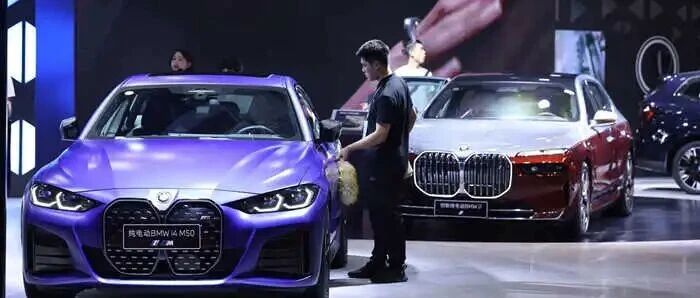
汽车行业周报:全年销量符合预期,智驾引领再提速-20260112
Guoyuan Securities· 2026-01-12 09:47
Investment Rating - The report maintains a "Recommended" investment rating for the automotive and automotive parts industry [6] Core Insights - The overall sales of passenger vehicles met expectations with a year-on-year growth of 9%, while new energy passenger vehicles saw a growth of 25% [1][2] - In December 2025, the retail sales of passenger vehicles were 2.296 million units, a year-on-year decrease of 13%, but a month-on-month increase of 3%. Cumulatively, retail sales for the year reached 23.779 million units, a year-on-year increase of 4% [1][20] - The report highlights the rapid advancements in intelligent driving technologies, with multiple automakers updating their systems and competing in the autonomous driving sector [3][4] Summary by Sections Sales Performance - In December 2025, wholesale sales of passenger vehicles were 2.759 million units, a year-on-year decrease of 10%, with cumulative wholesale sales for the year reaching 29.524 million units, a year-on-year increase of 9% [1][20] - For new energy vehicles, December retail sales were 1.387 million units, a year-on-year increase of 7%, with cumulative retail sales for the year at 12.859 million units, a year-on-year increase of 18% [1][20] Industry Developments - Several automakers, including Zeekr and Geely, are enhancing their intelligent driving systems, indicating a shift towards integrated decision-making models in vehicle technology [3][4][32] - The report emphasizes the importance of continued policy support for the automotive industry and the potential investment opportunities arising from advancements in autonomous driving technology [4] Market Trends - The automotive sector saw a 2.53% increase in the week of January 3-9, 2026, with most related sub-sectors also experiencing growth [12] - The report notes that the intelligent driving technology is becoming a key competitive area among automakers, with significant investments and innovations being made [3][4][39]
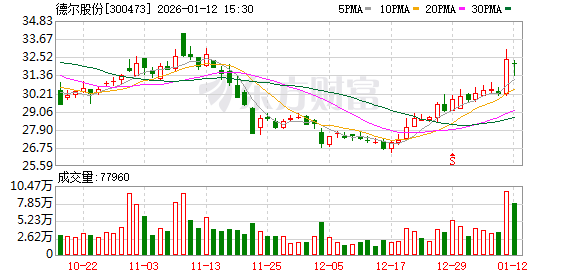
德尔股份:2024年和2025年上半年公司海外收入占比均在70%以上
Zheng Quan Ri Bao· 2026-01-12 09:09
Core Viewpoint - The company, Del Shares, anticipates that overseas revenue will account for over 70% in both 2024 and the first half of 2025, indicating a strong focus on international markets [2]. Group 1: International Revenue - The company has established an international R&D base through its subsidiary, Kaku Si, with locations in the US, Mexico, Germany, Spain, Belgium, Poland, Austria, and Slovakia [2]. - The company has developed partnerships with several well-known overseas clients, including Mercedes-Benz, BMW, Audi, Volkswagen, Ford, General Motors, Stellantis, and Porsche, by deepening its presence in the European and American markets [2].

全球电动车转型走到十字路口:中国、欧盟与美国路径分化
Counterpoint Research· 2026-01-12 02:45
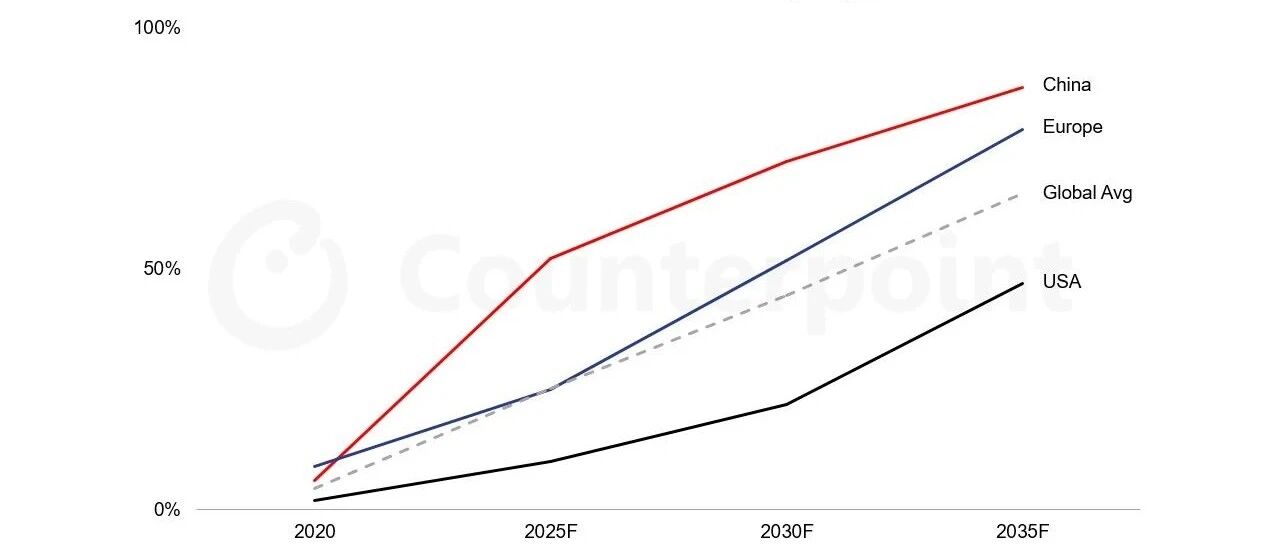
Core Viewpoint - The global electric vehicle (EV) market is entering a phase of significant differentiation, with China rapidly advancing while the EU and the US exhibit hesitance and policy adjustments that may slow their electric vehicle transitions [4][5][7]. Group 1: Electric Vehicle Market Dynamics - China's electric vehicle sales have surpassed 50% of total passenger car sales, indicating a shift from policy-driven to market-driven growth [4][7]. - The US electric vehicle market is experiencing a slowdown due to the potential rollback of federal EV purchase subsidies and weakened emissions regulations, leading manufacturers to refocus on hybrid and internal combustion engine (ICE) vehicles [5][11]. - The EU is recalibrating its electric vehicle strategy by relaxing the 2035 ban on ICE vehicles and introducing the M1E category for small electric cars, aiming to balance decarbonization goals with industry pressures [8][9][10]. Group 2: EU Policy Adjustments - The EU's new policy allows for a 90% reduction in CO2 emissions by 2035 instead of a complete ban, enabling the continued sale of hybrid and ICE vehicles under certain conditions [8][9]. - The introduction of the M1E category aims to promote affordable small electric vehicles, which could mirror the success seen in China's compact EV market [9][10]. - The EU's "super credit" system for M1E vehicles incentivizes local production and sales, potentially benefiting companies like BYD that are expanding in the EU market [10]. Group 3: Challenges for Global Automakers - The differentiation in regional policies forces automakers to adapt their strategies, impacting economies of scale and increasing overall costs [11]. - Companies like Ford and General Motors are facing significant financial challenges, with Ford reporting approximately $19.5 billion in EV-related losses and adjusting their strategies towards hybrids [11]. - The need for regional adaptability in strategy is becoming as crucial as global scale, influencing the competitive landscape of the electric vehicle market [11].
氢能汽车商业化前景广阔
Zheng Quan Ri Bao· 2026-01-11 17:04
Core Insights - GAC Aion's successful delivery of 340 hydrogen fuel cell vehicles marks a significant milestone in the commercialization of hydrogen fuel cell vehicles in China [1] - The hydrogen fuel cell vehicle market is expected to exceed $11 billion globally by 2026, with China's domestic market continuing to grow rapidly due to demand in sectors like heavy trucks and cold chain logistics [2] - Domestic hydrogen fuel cell vehicle ownership is projected to reach approximately 30,000 units by the end of 2025, with over 70% of core components expected to be domestically produced [2] Group 1: Company Developments - GAC Aion aims to deepen industry chain collaboration and continue exploring the hydrogen fuel cell vehicle sector, leveraging its role as a core member of the hydrogen energy industry innovation consortium in Guangzhou [1] - Proton Automotive Technology Co., Ltd. announced plans to achieve sales of 760 hydrogen vehicles by 2025, doubling both sales and revenue [2] - Dongfeng Motor Group's 400kW hydrogen fuel cell stack has been recognized as a significant innovation product, with plans for demonstration operations in logistics in Wuhan and expansion to other cities [3] Group 2: Industry Trends - The hydrogen fuel cell vehicle industry is recognized as a key direction for the transformation and upgrading of China's automotive sector, with nearly zero pollution and greenhouse gas emissions during operation [2] - Major international automotive companies, including BMW and Hyundai, are accelerating their hydrogen vehicle initiatives in China, indicating a competitive global landscape [3] - The domestic market is seeing frequent large-scale deliveries and contracts in the commercial vehicle sector, driven by policy support and market demand [3]
代驾出车祸28000元车损谁来赔?
Xin Lang Cai Jing· 2026-01-11 01:44
Group 1 - The incident involves a car accident where the driver, Mr. Li, hired a ride-hailing service after consuming alcohol, leading to a collision with another vehicle [1] - The total damage cost for Mr. Li's new Mercedes-Benz is determined to be over 28,000 yuan, with the ride-hailing service deemed primarily responsible for the accident [1] - The insurance company of the ride-hailing platform only covers personal safety liability, while the vehicle damage insurance is an additional low-cost coverage, resulting in insufficient compensation for the vehicle damage [1] Group 2 - Mr. Li's own insurance company initially refused to compensate, stating he was not at fault in the accident, but later agreed to cover the repair costs and seek reimbursement from the ride-hailing service's insurance [1] - Legal experts indicate that under labor contract law, the insurance company of the ride-hailing service should bear the primary responsibility for the accident, with the service platform also liable for compensation [1]