速腾聚创

Search documents
速腾聚创系列六-三季报点评:单三季度激光雷达销量同比增长34%,致力于成为全球领先的机器人技术平台公司【国信汽车】
车中旭霞· 2025-12-15 09:31
Core Viewpoint - In Q3 2025, the company achieved revenue of 407 million yuan, a year-on-year decrease of 0.2% [3][9]. Financial Performance - In Q3 2025, the company reported a net loss of 101 million yuan, compared to a loss of 51 million yuan in Q2 2025 and a loss of 82 million yuan in Q3 2024 [3][9]. - The company's gross margin in Q3 2025 was 23.9%, an increase of 6.5 percentage points year-on-year, but a decrease of 3.8 percentage points quarter-on-quarter [4][5][14]. - For the first three quarters of 2025, the company achieved revenue of 1.19 billion yuan, a year-on-year increase of 1.2% [9]. Product Performance - In Q3 2025, total sales volume of LiDAR products reached 185,600 units, a year-on-year increase of 34.0% and a quarter-on-quarter increase of 17.3% [10]. - Revenue from ADAS application LiDAR products in Q3 2025 was 245 million yuan, a year-on-year decrease of 25.7% and a quarter-on-quarter decrease of 9.8% [3][9]. - Revenue from LiDAR products for robotics and other applications was 142 million yuan, a year-on-year increase of 157.8% [3][9]. Market Position and Strategy - The company is positioned as a global leader in the LiDAR and perception solutions market, integrating hardware and software to provide advanced perception capabilities for vehicles and robots [18]. - The company has established partnerships with over 90% of global Robotaxi and Robotruck enterprises, including major players like Didi and Pony.ai [55]. - The company aims to become a leading robotics technology platform, focusing on chip development, algorithms, and digital architecture [61]. Research and Development - In Q3 2025, the company's R&D expenses increased, with a R&D expense ratio of 44.15%, reflecting a year-on-year increase of 6.95 percentage points [20]. - The company has developed proprietary SPAD-SoC chips and 2D VCSEL chips, which have passed AEC-Q automotive certification, marking a significant technological advancement [27][26]. Product Innovations - The company launched the "Active Camera" as part of its robotics vision product line, integrating multiple sensor technologies to enhance robotic perception capabilities [39][32]. - The company has introduced a digital product matrix, including the EM platform, which has secured contracts with 13 automakers for 56 vehicle models [45][51]. Market Expansion - The company has received significant orders from major automotive manufacturers, with total orders exceeding one million units [51]. - The company is actively exploring the embodied intelligence field, focusing on autonomous movement and operation capabilities for robots [29].


深圳登顶全国“专精特新第一城”
2 1 Shi Ji Jing Ji Bao Dao· 2025-12-15 09:05
Group 1 - Shenzhen leads China with a total of 1,333 "specialized, refined, distinctive, and innovative" (专精特新) "little giant" enterprises, surpassing Beijing (1,210) and Shanghai (1,032) [2][3] - The growth of "little giant" enterprises in Shenzhen reflects a focus on key segments of the industrial chain, mastery of core technologies, and high market share, indicating a high level of development in China's manufacturing sector [3] - Shenzhen's proportion of newly added "little giants" has increased from 6.3% in 2022 to 8.4% in 2023, and is projected to reach 9.8% in 2024 and 9.9% in 2025, maintaining the top position in the country for three consecutive years [4] Group 2 - Notable "little giants" include Jieput's MOPA pulsed fiber laser, which holds over 70% of the domestic market and ranks first globally, and Guangyue Technology, which has developed world-leading high-power transmission cable series [4] - Shenzhen's "little giants" exhibit an average R&D intensity of 7.63%, with annual R&D expenditure averaging 33.39 million yuan, surpassing the national average for similar enterprises [4] - The city has established a comprehensive nurturing system for enterprises, with plans to support "gazelle" and "unicorn" companies through a structured service system aimed at fostering innovation and collaboration within the electronic manufacturing ecosystem [5]

华泰证券今日早参-20251215
HTSC· 2025-12-15 03:25
Group 1: Macroeconomic Insights - The Federal Reserve is likely to enter an "observation period" after the recent interest rate cut, amid conflicting inflation and employment indicators [2][3] - The Central Economic Work Conference emphasizes a moderate expansion policy and high-quality development, with a more positive stance on real estate policies [3][4] - Domestic macro data shows active resident travel but subdued industrial production, with a focus on the impact of real estate policies and fiscal measures for the upcoming year [3][4] Group 2: Investment Strategies - A bottom-up approach is recommended for positioning in the spring market, focusing on five structural themes, including AI computing power and lithium battery storage [3][4] - The market sentiment in Hong Kong remains pessimistic, with potential catalysts for future rallies identified, such as RMB appreciation and domestic technological advancements [4] - Investors are advised to adopt a trading mindset in convertible bonds, focusing on short-term opportunities while being cautious of credit events [7][8] Group 3: Sector-Specific Developments - The Hong Kong Stock Exchange launched the HKEX Technology 100 Index, which has outperformed the Hang Seng Tech Index, indicating a broader coverage of tech-related sectors [5] - The energy sector is shifting focus from supply to demand research, with AI infrastructure driving significant growth in electricity demand [12] - The investment focus in the solid-state battery equipment sector is shifting towards production engineering, with expectations for significant growth in the coming years [13]
交银国际_汽车行业2026年展望:穿越周期的新动能智驾商用、储能共振与机器人量产_
2025-12-15 02:13
Summary of the Conference Call Industry Overview - **Industry**: Automotive Industry - **Date**: December 5, 2025 - **Rating**: Leading - **2026 Outlook**: New driving forces through cycles - smart driving commercial use, energy storage resonance, and mass production of robots [1] Key Points Automotive Market Trends - **Passenger Vehicles**: - After stimulus, the market is entering a high-level consolidation phase. - Expected retail sales for 2026 are projected to increase by 0.3% year-on-year to 24.45 million units, with a penetration rate of new energy vehicles (NEV) exceeding 60% [5][19]. - Growth is driven by product iterations and cost advantages from domestic brands in hybrid and pure electric technologies [5][20]. - **Exports**: - Total overseas sales are expected to reach 7.5-8 million units in 2026, with a shift towards localized manufacturing to address trade uncertainties [5][10]. - In the first ten months of 2025, cumulative exports reached 6.51 million units, a year-on-year increase of 23.3%, with NEVs accounting for nearly 40% of exports [10][36]. Heavy-Duty Trucks - **Market Growth**: - Anticipated sales for heavy-duty trucks in 2026 are around 1.1 million units, a 5% increase year-on-year, with better performance expected in the second half of the year [5][10]. - The market is benefiting from policy incentives and accelerated penetration of new energy vehicles [5][10]. Smart Driving - **L3 Commercialization**: - 2026 is expected to be the year of large-scale commercialization for L3 autonomous driving, with several manufacturers accelerating development [9][11]. - The penetration rate for L2 and above smart driving systems reached 87% in the first eight months of 2025 [9]. Robotics - **Market Development**: - The robotics sector is transitioning from "technological breakthroughs" to "commercial realization," with significant advancements expected in 2026 [13][14]. - The sector is entering a consolidation phase, focusing on actual delivery capabilities and performance realization [14]. Lithium Battery Sector - **Demand Growth**: - Global lithium battery demand is projected to grow by approximately 22% in 2026, with energy storage demand expected to grow faster than power batteries [15][16]. - The industry is experiencing a recovery in profitability, but caution is advised regarding the price of lithium carbonate and supply chain uncertainties [16][17]. Investment Recommendations - **Short-term (H1 2026)**: - Market adjustments may occur post-policy withdrawal, but structural opportunities will emerge, particularly in high-level smart driving [11]. - **Mid-term (H2 2026)**: - The entry of L3 into mass production will drive product iterations and new purchasing momentum [11]. - **Long-term (2027 and beyond)**: - Focus on the sustainability of embodied intelligence and the Robotaxi/AI ecosystem [11]. Additional Insights - **Market Dynamics**: - The automotive market is shifting from a growth-driven model to one focused on replacement demand, with significant implications for market structure and competition [19][20]. - **Technological Advancements**: - The integration of advanced technologies in vehicles is reshaping consumer preferences and driving demand for new energy vehicles [27][29]. This summary encapsulates the key insights and projections from the conference call, highlighting the automotive industry's evolving landscape and investment opportunities.




中泰国际每日晨讯-20251215
ZHONGTAI INTERNATIONAL SECURITIES· 2025-12-15 01:50
Market Overview - On December 12, the Central Economic Work Conference emphasized the need for internal strengthening to address external challenges and to continue implementing a moderately loose monetary policy[1] - The Hang Seng Index rose by 446 points (1.8%) to close at 25,976 points, with a peak increase of 475 points during the day[1] - The Hang Seng Technology Index increased by 103 points (1.9%) to close at 5,638 points, with total market turnover expanding to HKD 242.7 billion[1] - Southbound capital experienced a net outflow of HKD 5.29 billion[1] Sector Performance - Gold prices increased, with Zijin Mining (2899 HK) rising by 3.6%, Shandong Gold (1787 HK) and Zhaojin Mining (1818 HK) both up by 3.4%[1] - Consumer stocks performed well, with Mengniu Dairy (2319 HK) up 2.7%, Nongfu Spring (9633 HK) up 2.2%, and Haidilao (6862 HK) up 2.9%[1] - Technology stocks also saw gains, with Alibaba (9988 HK) and Tencent (700 HK) rising by 2.3% and 2.4%, respectively[1] U.S. Market Dynamics - Despite interest rate cuts, U.S. tech stocks continued to decline, with the Nasdaq Composite falling by 245 points (0.5%) to close at 48,458 points[2] - The S&P 500 index dropped by 73 points, closing at 6,827 points, while long-term bond yields rose to 4.189%[2] Macroeconomic Indicators - As of the end of November, China's broad money supply (M2) stood at CNY 336.99 trillion, growing by 8% year-on-year, slightly below the market expectation of 8.2%[3] - Narrow money supply (M1) reached CNY 112.89 trillion, with a year-on-year growth of 4.9%, also below the expected 5.7%[3] - The loan balance grew by 6.4% year-on-year, down from the previous 6.5%[3] Industry Insights - In the automotive sector, stocks related to smart driving performed well, with Xiaoma Zhixing (2026 HK) up 4.9% and Horizon Robotics (9660 HK) up 3.8%[4] - The energy/utilities sector saw traditional power equipment stocks rise, with Dongfang Electric (1072 HK) increasing by 16.8% over the week[4] - The pharmaceutical sector remained stable, with WuXi AppTec (2359 HK) and WuXi Biologics (2269 HK) showing solid performance despite potential regulatory challenges[5]
速腾聚创(02498)获得东风日产前装量产定点 订单规模接近百万台
Zhi Tong Cai Jing· 2025-12-15 01:45
日前,速腾聚创已经连续获得丰田、奥迪、大众、北美新能源等国际车企定点。凭借数字化激光雷达的 领先技术实力与卓越产品性能,速腾聚创正成为全球主流车企的共同选择,为汽车产业智能化升级注入 核心感知力量。 智通财经APP获悉,RoboSense速腾聚创(02498)宣布获得东风日产前装量产定点,将为其多款车型提供 数字化激光雷达产品,订单规模接近百万台,预计将于2026年陆续启动量产交付。 ...
速腾聚创获得东风日产前装量产定点 订单规模接近百万台
Zhi Tong Cai Jing· 2025-12-15 01:41
日前,速腾聚创已经连续获得丰田、奥迪、大众、北美新能源等国际车企定点。凭借数字化激光雷达的 领先技术实力与卓越产品性能,速腾聚创正成为全球主流车企的共同选择,为汽车产业智能化升级注入 核心感知力量。 RoboSense速腾聚创(02498)宣布获得东风日产前装量产定点,将为其多款车型提供数字化激光雷达产 品,订单规模接近百万台,预计将于2026年陆续启动量产交付。 ...
2025年中国智能机器人空间感知解决方案行业政策、市场规模、代表企业经营现状及竞争趋势研判:行业呈现较强的发展势头,市场规模将增长到139亿元[图]
Chan Ye Xin Xi Wang· 2025-12-14 02:12
Core Insights - The intelligent robot spatial perception solution integrates sensor technology, algorithms, and data processing to address core issues such as robot positioning, environment modeling, dynamic obstacle avoidance, and target recognition, facilitating the transition from structured to complex open environments [1][3] - China is a major market for intelligent robots, driven by strong policy support and significant market demand, leading to robust growth in the spatial perception solution sector [5] Market Size and Growth - The global market for intelligent robot spatial perception solutions is projected to grow to 26 billion yuan in 2024, an increase of 5.7 billion yuan from 2023 [1][3] - The Chinese market for intelligent robot spatial perception solutions is expected to reach 10.8 billion yuan in 2024, up by 2.5 billion yuan from 2023, with further growth anticipated to 13.9 billion yuan by 2025 [5] Industry Development Status - The demand for advanced spatial perception capabilities in robots is increasing across various sectors, including home services, industrial production, and security inspections, necessitating improvements in perception technology [3][5] - Current perception technologies struggle to meet the diverse environmental needs of intelligent robots, particularly in challenging conditions such as darkness and confined spaces [3] Industry Chain - The upstream of the intelligent robot spatial perception solution industry includes hardware such as sensors, chips, and LiDAR, along with foundational software and algorithms [5] - The midstream consists of solution providers and system integrators, while the downstream includes robot manufacturers and end-users across various applications [5] Policy Environment - The Chinese government has implemented numerous policies to promote the development, application, and industrialization of intelligent robots, aiming to accelerate innovation and growth in the sector [5][6] Competitive Landscape - Key players in the intelligent robot spatial perception solution industry include SLAMTEC, DJI, SUTENG, Hesai Technology, and UBTECH, among others [2][7] - The industry faces challenges in algorithm innovation and high-end hardware development, with domestic companies achieving significant advancements in mid-to-low-end markets [7] Future Trends - The intelligent robot technology sector is expected to evolve towards high-precision spatial perception systems, enabling robots to transition from passive execution to autonomous decision-making [10] - High-quality scene data will become a critical competitive barrier, with major companies investing in technology and platform systems to enhance their capabilities [10]


计算机行业2026年投资策略:模型迭代驱动、应用突破与算力国产引领行业发展
GF SECURITIES· 2025-12-12 14:48
Core Insights - The report emphasizes that the computer industry is driven by model iteration, application breakthroughs, and domestic computing power leadership, with a buy rating for the sector [2][4][17]. Industry Overview - The AI infrastructure sector is transitioning from "testing and trial" to "large-scale rollout in 2026" for domestic AI chip replacements, with a narrowing gap between domestic and international leading models [8][17][26]. - The AI application sector is categorized into three types of companies: those with recognized benchmark clients but in early stages, those with long-term trends but uncertain timelines, and those leveraging AI with reachable inflection points [8][17][19]. - The EDA and R&D software sector is seeing rapid improvement in domestic product capabilities, with mergers and acquisitions expected to accelerate due to policy support [8][17][21]. - In the intelligent driving and robotics sector, the report suggests focusing on competitive chip tracks, overseas expansion, and new autonomous driving opportunities, recommending global AMR leader Geek+ [8][18][21]. - The report notes that traditional trust and innovation directions are facing funding delays, while the release of HarmonyOS PC in 2025 is seen as a catalyst for business growth and technological upgrades [8][18][21]. - The energy information sector is expected to benefit from stable capital expenditures and market reforms, although policy implementation timelines need to be monitored [8][18][21]. Key Companies - In the AI infrastructure sector, recommended companies include Cambricon, Inspur, and Unisoc, with attention to Sugon [8][19]. - For AI applications, notable companies are Jingtaikong, Rainbowsoft, and Kingdee International, with additional focus on Hancloud and Guangyun Technology [8][19][21]. - In the intelligent driving and robotics sector, key players include Geek+, Black Sesame Intelligence, and Rui Ming Technology, with recommendations to monitor Desay SV and SOTER [8][19][21]. - In the EDA and R&D software sector, companies like GigaDevice, Gexin Electronics, and BGI are highlighted, with attention to Zhongkong Technology and Haocen Software [8][19][21]. - For trust and innovation, recommended companies include Kingsoft and Softcom, with additional focus on Taiji Co. and China Software International [8][19][21]. - In the energy information sector, notable companies are Guoneng Rixin and Longxin Group, with attention to State Grid Information and South Grid Digital [8][19][22].


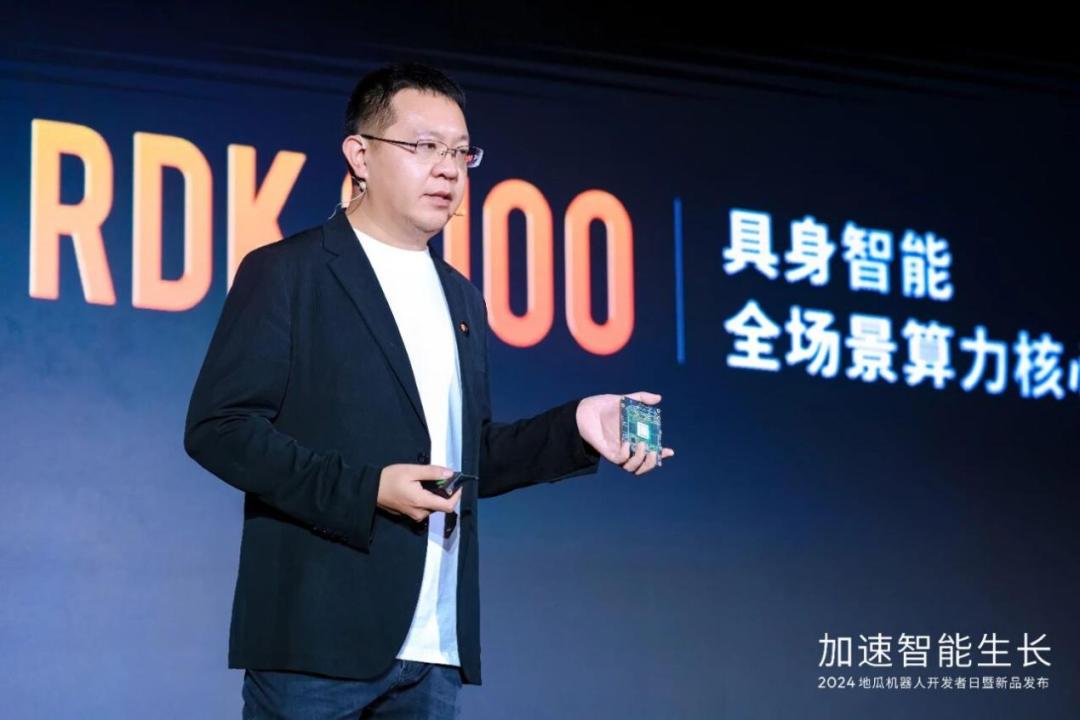
中东豪门,刚投一个深圳团队
3 6 Ke· 2025-12-12 09:20
Core Insights - The article highlights the significant investment in Digua Robotics, which has completed a multi-million dollar Series B financing round, attracting interest from various dollar funds and strategic investors, including Prosperity7 Ventures, a fund under Saudi Aramco [1][5]. Company Overview - Digua Robotics, founded in 2024 in Shenzhen, originated from Horizon Robotics and completed a $100 million Series A financing round in May 2023 [1][4]. - The company has over 200 small and medium-sized creators, 200 leading universities, and more than 50,000 individual developers on its platform, creating over 50 categories of intelligent robots [1]. Investment Details - The Series B financing round saw participation from multiple investors, with Prosperity7 Ventures emphasizing the unique advantages of Digua Robotics in the evolving robotics industry [5]. - Prosperity7 Ventures is a diversified growth fund focused on scalable startups in China and the U.S., investing in sectors like IT, fintech, AI, and healthcare [5]. Market Context - The article notes that the robotics industry is entering a new development phase, with increasing demand for unified, reliable, and scalable infrastructure [5]. - Shenzhen's Nanshan District is highlighted as a hub for the robotics industry, housing over 200 key enterprises and fostering a robust ecosystem for innovation and development [6][7]. Industry Trends - The investment landscape in robotics is becoming increasingly competitive, with numerous venture capital firms actively investing in Shenzhen-based robotics companies [8]. - The article mentions the emergence of a cluster effect in the robotics industry, with many innovative companies rising in Shenzhen, supported by a strong supply chain [8][9]. Broader Implications - The influx of Middle Eastern capital into Chinese tech companies reflects a broader trend of re-evaluating Chinese technology assets, with a focus on sectors like AI, renewable energy, and robotics [11]. - Middle Eastern investors are keen to capitalize on the growth of Chinese tech firms, aligning with their own economic diversification strategies [11].