
Waymo

Search documents
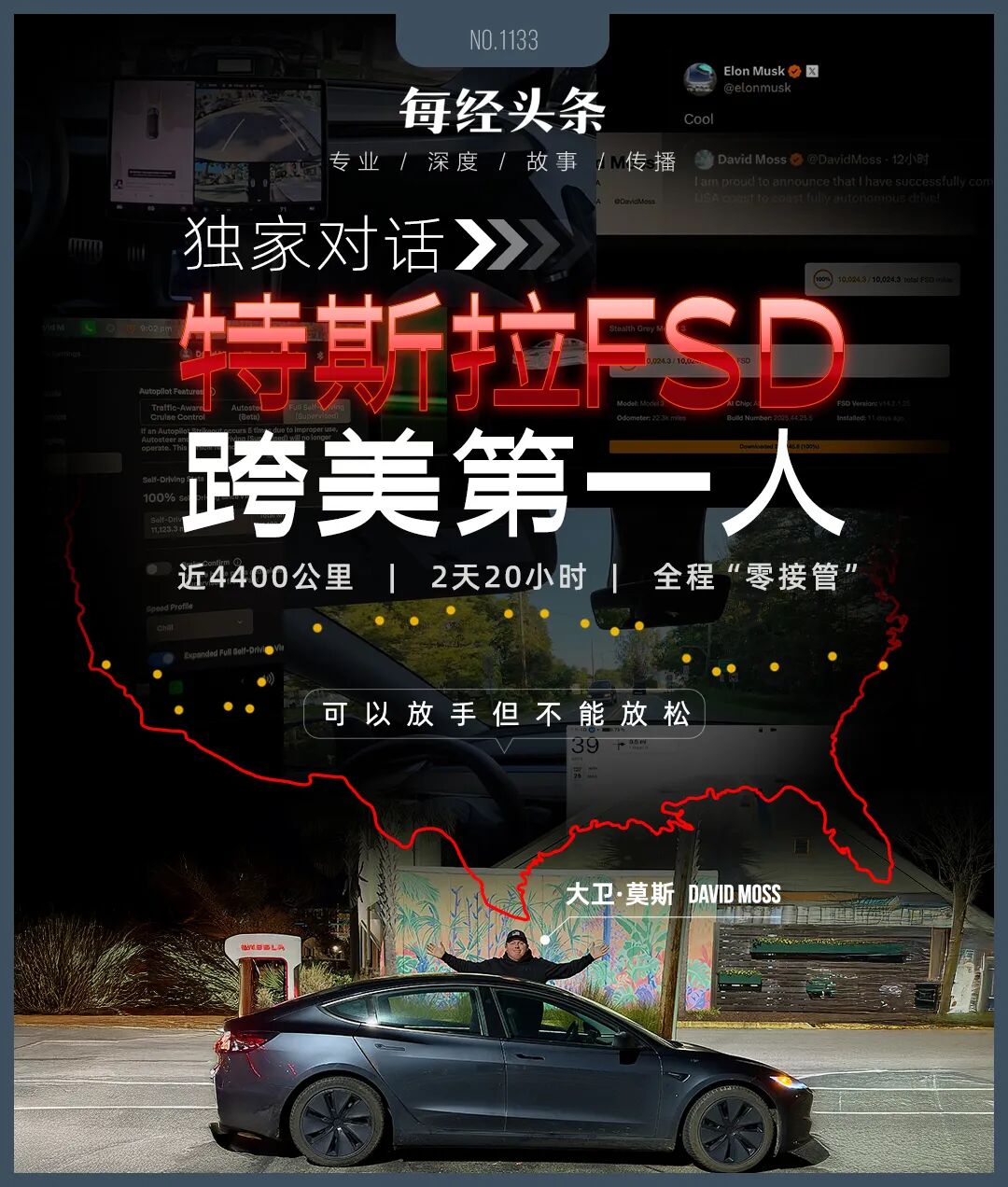
独家对话特斯拉FSD横跨美国第一人:4400公里“零接管”,手没碰过方向盘!作为激光雷达销售员,他为何站队马斯克的“纯视觉”?
Mei Ri Jing Ji Xin Wen· 2026-01-08 12:14
Core Insights - The journey of David Moss across the United States using Tesla's Full Self-Driving (FSD) system demonstrates the potential of achieving fully autonomous driving without the need for LiDAR technology [2][17]. Group 1: Journey Overview - David Moss completed a 2-day, 20-hour journey covering 2,732.4 miles (approximately 4,397 kilometers) from Los Angeles to Myrtle Beach, South Carolina, without manual intervention [2][3]. - The trip faced various challenges, including low visibility fog, sudden rain, and complex urban traffic, yet the FSD system did not encounter any dangerous situations [5][6]. - Moss maintained an average speed of approximately 120 km/h, with a maximum speed of 136 km/h, and took about 12 hours of rest during the journey [5][6]. Group 2: FSD System Performance - The FSD system effectively managed tasks such as lane changes, traffic signal recognition, and parking at charging stations autonomously [5][6]. - Moss emphasized the need for constant attention to the road, as the system is still classified as a Level 2 driving assistance system, requiring driver supervision [6][9]. Group 3: Technology Comparison - Moss, originally a LiDAR salesperson, now supports Tesla's "pure vision" approach over multi-sensor fusion systems like Waymo's, arguing that achieving full autonomy does not necessarily require LiDAR [17][18]. - Tesla's FSD relies on a pure vision system that simulates human vision using cameras, while Waymo employs a multi-sensor approach that includes LiDAR and radar [18]. - The debate continues regarding the effectiveness of each system, particularly in extreme weather conditions and complex scenarios [17][18]. Group 4: Challenges to Commercialization - The successful completion of the journey does not equate to the readiness for commercial deployment of fully autonomous driving, as there are significant challenges to overcome [19][24]. - Key challenges include addressing long-tail risks, aligning technology with regulatory definitions, and the absence of a comprehensive regulatory framework for autonomous driving [21][23][24]. - Moss aims to highlight the value of autonomous driving technology, emphasizing its potential to benefit individuals who are unable to drive [24].


Tesla stock will crash to $25, warns Wall Street expert
Finbold· 2026-01-08 11:48
Core Viewpoint - Wall Street experts are generally not optimistic about Tesla stock, with Gordon Johnson of GJL Research being particularly bearish, forecasting a 95% decline in stock price from $429.97 to $25.28, despite this being an upgrade from a previous target of $19.05 [1][2]. Group 1: Delivery Performance and Market Position - Tesla lost its position as the world's largest EV manufacturer to BYD in 2025, with Tesla's sales at 1.63 million compared to BYD's 2.26 million [4]. - The disappointing delivery figures have contributed to the bearish outlook on Tesla's stock [8]. Group 2: Promises and Technology Development - Elon Musk has a history of making promises regarding technological advancements, such as full self-driving capabilities, which have not materialized as expected, leading to skepticism about Tesla's future [3][5]. - GJL Research criticizes Tesla's reliance on an optics-only approach for self-driving technology, noting that companies like Hyundai are not interested in licensing this technology [6][7]. Group 3: Market Perception and Valuation - GJL Research suggests that Tesla should be valued as a traditional car manufacturer rather than a technology and AI leader, indicating a shift in how the market should perceive the company [9]. - Despite the bearish forecasts, Tesla's stock has shown resilience, rallying 8.87% over the past year, closing at $429.97 on January 7 [8].
全球汽车业2026八大猜想
Zhong Guo Qi Che Bao Wang· 2026-01-08 11:43
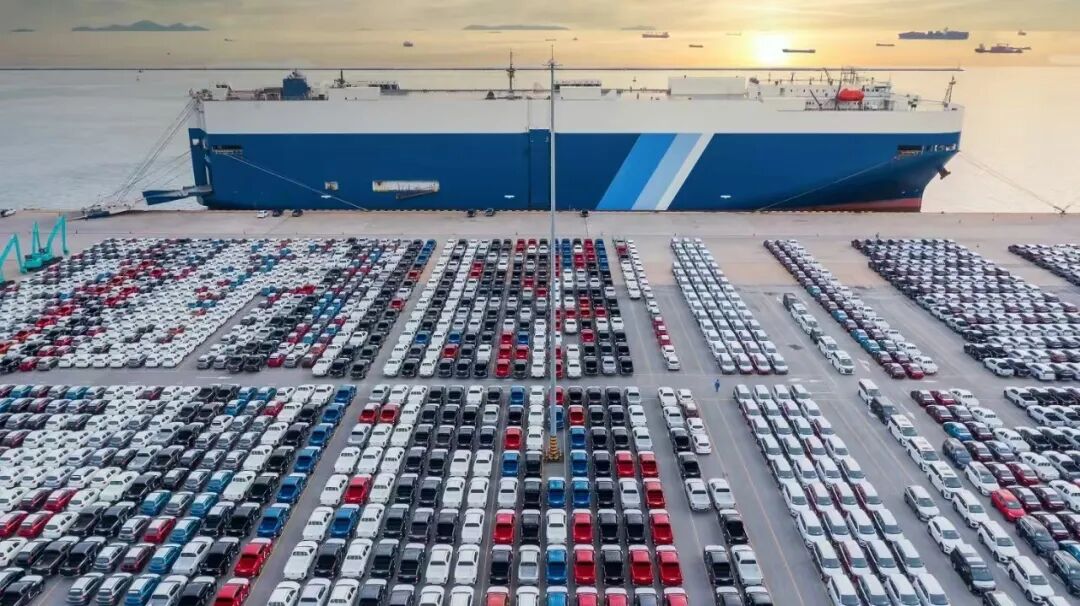
Group 1 - The global automotive trade is expected to face increased tensions in 2026, with significant downward pressure on trade growth predicted by organizations like the WTO and IMF, projecting growth rates of only 0.5% and 0.6% respectively, down from 2.4% in 2025 [2][3] - The rise of trade protectionism is a core driver of this tension, as various countries implement unilateral trade measures, disrupting the established rhythm of the global automotive supply chain and increasing uncertainty in international trade [3] Group 2 - The global electric vehicle (EV) market is anticipated to experience a slowdown in sales growth in 2026, with the U.S. market showing particularly pessimistic trends due to the cancellation of favorable policies under the Trump administration, leading to a significant drop in consumer purchasing intent [4][5] - In China, the growth forecast for domestic electric vehicle sales has been revised down from 16% to 14% for 2026, attributed to high base effects and the reintroduction of purchase taxes despite continued government subsidies [5] Group 3 - Chinese automotive companies are accelerating their localization strategies overseas, transitioning from simple vehicle exports to localized production and comprehensive system output, as evidenced by projects like Changan's factory in Thailand and BYD's plans in Hungary and Malaysia [6][7] - Major Chinese automakers are implementing diverse strategies to enhance localization, including CKD exports to reduce tariff costs and partnerships with local firms to quickly integrate into new markets [7] Group 4 - The collaboration model between Chinese and foreign automotive companies is evolving, moving from a "market for technology" approach to a deeper integration based on technology output and resource sharing, extending cooperation beyond China to global markets [8][9] Group 5 - 2026 is projected to be a pivotal year for the commercialization of Robotaxi services, with advancements in technology, policy support, and reduced costs driving the transition from pilot programs to large-scale operations [11][12] - In China, companies like Pony.ai and Baidu are achieving significant milestones in Robotaxi deployment, with Baidu's service reportedly handling over 250,000 fully autonomous orders weekly [12] Group 6 - The year 2026 is recognized as a critical period for the validation of solid-state battery technology, with multiple automakers planning to conduct vehicle testing, marking a significant step towards overcoming limitations of current lithium-ion batteries [13] - Chinese automakers are actively pursuing diverse technological routes for solid-state battery production, with companies like SAIC and GAC announcing plans for testing and production timelines [13] Group 7 - The integration of AI large models into the automotive sector is expected to redefine value creation in 2026, with advancements in smart driving and intelligent cockpit technologies enhancing user engagement and operational efficiency [14][15] - The market for AI-driven automotive services is projected to expand significantly, with estimates suggesting that the AI model-derived market could exceed 100 billion yuan by 2028 [15] Group 8 - 2026 is anticipated to be a key year for the mass production and delivery of humanoid robots by automotive companies, with significant advancements in technology and a focus on commercial applications across various sectors [16][17] - Companies like Tesla and Xpeng are leading the charge in humanoid robot development, with plans for large-scale production and deployment in industrial and service contexts [17]
独家对话特斯拉FSD跨美第一人:4400公里“零接管”,手没碰过方向盘!作为激光雷达销售员,他为何站队马斯克的“纯视觉”?
Mei Ri Jing Ji Xin Wen· 2026-01-08 11:17
Core Insights - The journey of David Moss across the United States using Tesla's Full Self-Driving (FSD) system demonstrates the potential of achieving fully autonomous driving without the need for LiDAR technology [2][19] - Moss's experience highlights the effectiveness of Tesla's "pure vision" approach compared to multi-sensor fusion systems like those used by Waymo [19][21] Group 1: Journey Overview - David Moss completed a 2-day, 20-hour journey covering 2,732.4 miles (approximately 4,397 kilometers) from Los Angeles to Myrtle Beach, South Carolina, without manual intervention [2][4] - The FSD system managed various challenging conditions, including low visibility fog, sudden rain, and heavy traffic, without any incidents [7][14] - Moss maintained a supervisory role throughout the journey, focusing on system alerts and ensuring he remained attentive [4][8] Group 2: Technical Insights - The FSD V14.2 version allowed for end-to-end driving capabilities, including city navigation, highway merging, and parking, which previously required driver intervention [11][19] - Moss's experience suggests that Tesla's "pure vision" approach, relying solely on cameras, can be effective, although it faces challenges in extreme lighting and weather conditions [19][23] - In contrast, Waymo's multi-sensor approach offers advantages in certain scenarios but comes with higher costs and complexity [21][19] Group 3: Industry Implications - The successful completion of the journey raises questions about the future of autonomous driving technology and its commercial viability [24][30] - There are significant hurdles to overcome for full commercialization, including addressing long-tail risks, regulatory definitions, and the lack of a comprehensive regulatory framework [27][29] - Moss aims to showcase the value of autonomous driving technology, emphasizing its potential to benefit individuals who are unable to drive [30]
Waymo is rebranding its Zeekr robotaxi
TechCrunch· 2026-01-08 02:43
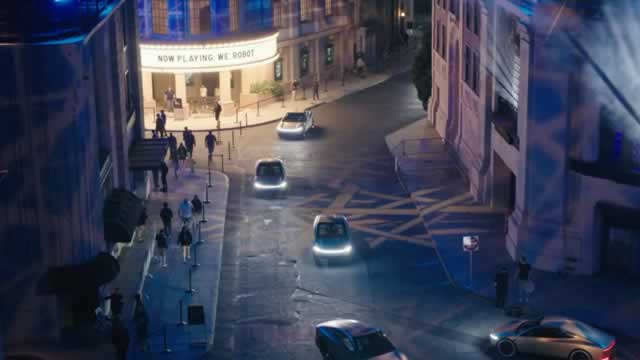
Core Insights - Waymo has rebranded its Zeekr RT robotaxi to Ojai, named after a village in California, to enhance brand recognition in the U.S. market [1][2] - The Ojai robotaxi will greet passengers with "Oh hi" and their name, aiming to create a friendly user experience [2] - Waymo's partnership with Zeekr began in 2021, leading to the development of a purpose-built robotaxi prototype [3] Development and Features - The Ojai has undergone extensive testing in cities like Phoenix and San Francisco, with significant hardware features including 13 cameras, four lidar, and six radar [4][6] - The vehicle's paint color has been updated from a bluish tint to a more silver shade as part of final adjustments before its commercial launch [6] Expansion Plans - Waymo is rapidly expanding its commercial robotaxi service, currently operating in five cities and planning to launch in a dozen more, including Denver, Las Vegas, and London, within the next year [7]

Ford Says Making Self-Driving Tech in-House Cheaper Than Licensing
Business Insider· 2026-01-08 02:48
Core Viewpoint - Ford is developing autonomous driving capabilities, including eyes-off driving, expected to be ready for public roads by 2028, and believes in-house development of self-driving technology will be more cost-effective than outsourcing to suppliers [1]. Group 1: Cost Efficiency and In-House Development - Ford claims that owning the technology for its driver assistance systems allows it to deliver significantly more capability at a 30% lower cost compared to purchasing from outside suppliers [2]. - The company emphasizes that in-house development provides greater oversight on sensor utilization and integration into vehicles, enhancing performance and cost-effectiveness [6]. - By reducing the number of separate computer modules in vehicles to a single unit, Ford aims to achieve smaller, cheaper, and higher-performing systems [7][8]. Group 2: Competitive Landscape and Partnerships - Ford acknowledges the presence of competitors in the ADAS licensing market, such as Nvidia, Waymo, and Wayve, and previously partnered with Mobileye to develop its ADAS software, BlueCruise [8]. - Leading EV companies like Tesla and Rivian have also adopted in-house approaches for self-driving technology, with Rivian recently designing its own silicon chip for autonomous driving [9]. - However, Ford has no plans to develop its own chips and prefers to work with existing suppliers, focusing on volume rather than custom silicon [10].

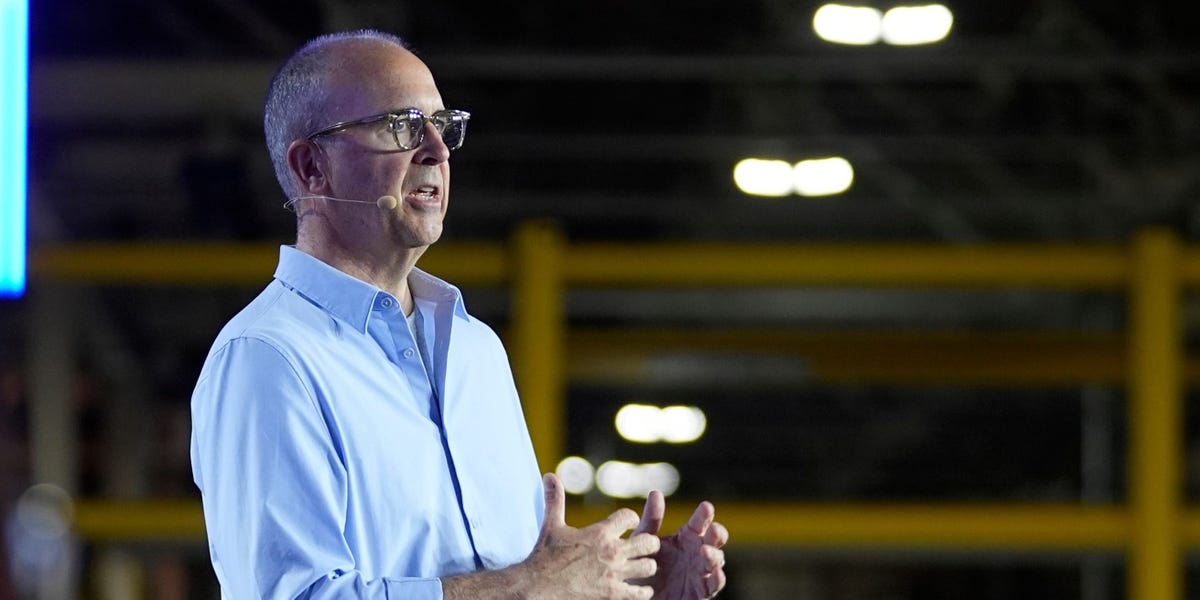
英伟达Alpamayo对智能驾驶行业影响
2026-01-08 02:07
Summary of Key Points from Conference Call Company and Industry Involved - **Company**: NVIDIA - **Industry**: Intelligent Driving and Autonomous Vehicles Core Insights and Arguments - **Alpaca Model Launch**: NVIDIA has released the open-source Alpaca model aimed at creating an integrated hardware-software ecosystem for autonomous driving, similar to the competition between Android and Apple ecosystems [1][2] - **Performance Improvements**: The Alpaca model enhances trajectory generation through FlowMatting technology, achieving a 12% performance improvement on complex intersections and reducing closed-road boundary crossing rates from 17% to 11%, and near-collision scenarios from 4% to 3% [1][2] - **Real-time Processing**: The model meets automotive-grade requirements with a total processing time of 99 milliseconds under the RTS6,000 architecture, which is within the 100 milliseconds threshold [2] - **Challenges**: High costs associated with data labeling and engineering complexity are significant hurdles for implementation. The model requires extensive manual annotation and optimization efforts [2][5] - **Ecosystem Impact**: Companies that partner with NVIDIA can accelerate their deployment processes but must pay collaboration fees. Domestic self-research manufacturers like NIO, Xpeng, and Li Auto are less affected and can adapt NVIDIA's strategies [1][6] - **Third-party Algorithm Companies**: Companies like Zhuoyu and Qingzhou, which collaborate with Qualcomm, may face market pressure as manufacturers opt for NVIDIA's solutions, potentially squeezing their market space [7] Additional Important Content - **Future Developments**: The Apache Maestro model shows a latency of approximately 125 milliseconds on A100 chips, with real-world testing yielding around 60 milliseconds on SOR Ultra 750 tops chips, indicating a need for further optimization [8][9] - **2026 as a Key Year**: The year 2026 is anticipated to be pivotal for the proliferation of intelligent driving technologies, focusing on engineering optimization and data training loops to enhance widespread application [10][12] - **Competitor Developments**: Waymo's self-developed BMC chip is set to launch with SAIC in Q3 2026, while BYD's self-developed chip is expected to be ready by Q4 2026 [3][14][15] - **OpenMA Ecosystem**: The OpenMA ecosystem is expected to accelerate the deployment of high-end intelligent driving technologies for companies like Mercedes and GM, although domestic manufacturers are slower to expand internationally [19] - **Robotaxi Impact**: The new autonomous driving model from NVIDIA may not achieve the operational efficiency of competitors like Waymo or Tesla in the short term, particularly due to challenges with long-tail scenarios [13] - **Data Collection for L4 Robotaxi**: NVIDIA's data collection for L4 Robotaxi operations relies on self-collected and anonymized data, with a focus on extensive annotation as a critical component [22] This summary encapsulates the essential points discussed in the conference call, highlighting the implications of NVIDIA's advancements in the intelligent driving sector and the competitive landscape.

【AI智能汽车1月投资策略】特斯拉无接管横穿美国,工信部首批L3准入,看好智能化
东吴汽车黄细里团队· 2026-01-07 12:21
Core Viewpoint - The article emphasizes the significant advancements in L4 and L3 autonomous driving technologies, highlighting a dual stronghold in the U.S. and China, with notable developments in commercial applications and regulatory approvals [3][10]. Group 1: December Smartization Marginal Changes Summary - L4 commercialization is experiencing global resonance, while L3 policies have made a "0-1" breakthrough. Tesla has initiated pure unmanned testing in Austin without safety drivers or passengers, and the Chinese version of FSD has completed compliance construction in Shanghai [3][10]. - Waymo's monthly active users have increased by 96.6% year-on-year to 1.64 million, accelerating the validation of its business model. Domestic players like Pony.ai have integrated into the WeChat ecosystem, and CAOCAO's "Ten Years, One Hundred Cities, One Hundred Billion" Robotaxi strategy continues to expand [3][10]. - The policy side for L3 has seen a milestone breakthrough with the issuance of the first batch of L3 permits by the Ministry of Industry and Information Technology, marking a transition from assisted driving to conditionally automated driving in China [3][10]. Group 2: January Smartization Catalysts - The industry may enter a year of Robotaxi explosion, driven by both technology and policy, accelerating towards an "iPhone moment" for AI smart vehicles. CES 2026 is expected to be a key industry indicator, with NVIDIA's CEO focusing on the latest advancements in physical AI [4][10]. - In the L4 dimension, attention is on Tesla's FSD V14.2 performance across the U.S. without driver intervention and the expansion of its fleet. For L3, January 2026 will mark the first complete month for public road commercial trials in cities like Chongqing and Beijing, with a focus on operational takeover rates and accident liability cases [4][10]. Group 3: Investment Recommendations - The company maintains a strong outlook for the L4 RoboX theme in 2026, favoring B-end software stocks over C-end hardware stocks. Preferred H-shares include Xpeng Motors, Horizon Robotics, Pony.ai, WeRide, CAOCAO, and Black Sesame Intelligence, while A-shares include Qianli Technology, Desay SV, and Jingwei Hirain [5][10]. - Relevant downstream application stocks include those in the Robotaxi sector, such as Tesla and Xpeng Motors, as well as technology providers like Horizon and Baidu. The transformation of ride-hailing and taxi services involves companies like Didi, CAOCAO, and others [5][10]. Group 4: Supply Chain Insights - In the upstream supply chain, key players include B-end unmanned vehicle manufacturers like BAIC BluePark, GAC Group, and Jiangling Motors, along with core suppliers for testing services, chips, domain controllers, sensors, and other components [5][10]. - The investment landscape is characterized by a spiral upward iteration of hardware and software, with significant opportunities in both sectors as the industry transitions from the 0-1 stage to more advanced phases [15][10].


Mobileye砸63亿杀入具身智能,百辆Robotaxi今年Q3进美国
3 6 Ke· 2026-01-07 10:42
Core Insights - Mobileye has acquired Mentee Robotics for $900 million, which includes $612 million in cash and up to 26.2 million shares of Class A common stock, signaling a strategic move towards integrating humanoid robotics into its operations [4][6][8] - The acquisition is seen as a ticket to a new frontier, as Mobileye aims to combine autonomous driving with humanoid robotics, enhancing its capabilities in physical AI [3][18] - Mentee Robotics, founded in 2022, focuses on humanoid robot development and has a unique AI architecture that allows for efficient skill acquisition with minimal data, which could lower deployment barriers in various industrial settings [8][11][13] Mobileye's Strategic Direction - The acquisition is part of Mobileye's broader strategy to transition from a focus solely on autonomous driving to a more comprehensive approach to physical AI, which includes understanding context, reasoning intentions, and safe actions in the physical world [18] - Mobileye's core business remains strong, with recent contracts for its new generation of surround ADAS expected to deliver up to 9 million units [6][19] - The company plans to leverage its proven safety models and large-scale AI training infrastructure to support Mentee's humanoid robotics, while Mentee's technology could enhance Mobileye's autonomous driving capabilities [16][18] Future Developments - Mobileye's roadmap includes deploying Mentee's robots for concept validation in 2026, small-scale production in 2027, and large-scale deployment in structured environments by 2028, with plans to enter unstructured environments by 2030 [23][25] - The humanoid robots developed by Mentee are designed to be versatile, with capabilities suited for logistics and manufacturing, and are expected to play a significant role in the future of robotics [23][25] - The competitive landscape for Robotaxi services in the U.S. is set to intensify, with Mobileye planning to launch its services in collaboration with major partners, positioning itself against established players like Waymo and Tesla [21][25]
库克送礼,老黄放贷,马斯克画饼:2025科技圈的"生存三部曲"
3 6 Ke· 2026-01-07 10:09
2025年,科技圈的幻梦还是碎了,库克的礼物早就暗示了真相!Cursor与Waymo疯狂收割未来,背后的英伟达却在靠「赊账」维持盛世。科技不再相信 眼泪,别再迷恋金色的底座,在这场关于权力的交接仪式里,究竟谁在透支未来,谁在体面生存? 2025年8月,科技界发生了一件平常,却暗含深意的「小事」。 库克送了特朗普一个定制的玻璃雕塑:主体透明,中间镂空出苹果的logo,最下面是24k纯金打造的底座。 这件礼物,抛出了一个精准的暗示——上层是晶莹剔透、看似无所不能的AI幻梦,下层则是沉甸甸、透露着冷酷的商业博弈。 AI能独自写出千万行代码,Waymo的无人车接单上百万,大家都在欢呼新纪元终于到来。 然而,数据之下,底层的商业逻辑早已悄然变色。 在2026即将到来之际,让我们剥开那些昂贵的装饰,去见证2025年新神的野蛮崛起,与旧王那场体面的落寞。 新神登场:在幻梦里接管世界 如果2025年有奇迹,那它的名字一定叫Cursor。 在2025年的Y Combinator创业营里,「某某行业的Uber」这种说法已经过时了,取而代之的是「某某行业的Cursor」。 有18家初创公司在融资时标榜自己是「某行业的Cursor」 ...
