
奔驰

Search documents
宝马开年挥刀,2026豪华车卷生卷死
3 6 Ke· 2026-01-08 01:08
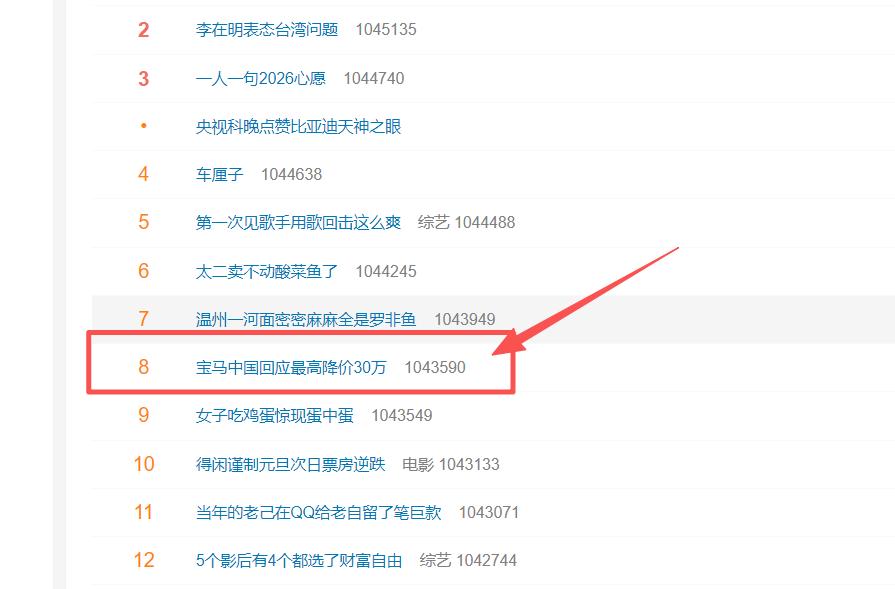
Core Viewpoint - The luxury car market is experiencing significant changes due to price adjustments by major brands like BMW, which are interpreted as a response to increased competition from domestic manufacturers and shifting consumer preferences towards technology and value rather than traditional luxury symbols [2][3][4]. Group 1: Price Adjustments and Market Response - BMW announced price reductions on 31 key models in China, with 24 models seeing reductions of over 10% and 5 models over 20%, including the iX1 eDrive25L with a 24% drop and the i7 M70L with a maximum reduction of 301,000 yuan [2]. - The adjustments have led to an increase in the number of BMW models priced below 300,000 yuan, indicating a shift towards more competitive pricing in the luxury segment [2]. - BMW claims these price changes are part of a value upgrade strategy rather than a price war, although market interpretations suggest otherwise, especially following reports of Porsche closing several showrooms in China [3]. Group 2: Market Dynamics and Competitive Landscape - The luxury car market, particularly the BBA (BMW, Benz, Audi) trio, is facing declining profits, with net profits dropping significantly: Mercedes-Benz by 55.8%, Audi by 37.5%, and BMW by 29% in the first half of 2025 [3]. - The traditional dominance of BBA is being challenged by domestic brands like BYD and Xiaomi, which are gaining traction among younger consumers who prioritize technology and personalized experiences over brand prestige [5][7]. - The penetration rate of domestic electric vehicles in the 300,000 to 500,000 yuan price range has surged from under 10% in 2020 to over 40% by 2025, directly impacting BBA's sales [7]. Group 3: Strategic Challenges for BBA - BBA's transition to electric vehicles is perceived as slow, with Mercedes-Benz and Audi adjusting their electrification goals and timelines, while BMW has also revised its electric vehicle sales expectations downward by over 20% [9][11]. - The traditional luxury brands are struggling with high production costs and lengthy product development cycles, which hinder their ability to compete effectively with agile domestic brands [11]. - BBA's marketing strategies, rooted in traditional luxury branding, are becoming less effective in an era where consumers seek innovation and technological engagement [12]. Group 4: Future Outlook and Consumer Impact - The ongoing price competition may lead to increased efficiency and technological advancements in the luxury car sector, ultimately benefiting consumers [13][14]. - Analysts predict that more luxury brands may be forced to adjust their strategies or exit the Chinese market in the coming years due to intensified competition [13].

蔚来全新ES8:新款调整价格后火爆,对比最多的是问界M9
车fans· 2026-01-08 00:31
Core Viewpoint - The newly launched NIO ES8 has gained significant popularity due to its competitive pricing and enhanced features compared to the previous generation, leading to a stable order volume despite a waiting period of 4-5 months for delivery [2][3]. Sales Performance - The new ES8 is approximately 100,000 yuan cheaper than its predecessor, which has contributed to its strong market performance [2]. - The best-selling configuration is the six-seat Executive Luxury version priced at 406,800 yuan, followed by the six-seat Executive Signature version at 446,800 yuan [3]. Customer Demographics - The primary buyers of the ES8 are business owners, including those in construction, logistics, and high-level executives, predominantly aged between 40-55 years [5]. - A notable customer profile includes individuals from humble backgrounds who aspire to own luxury vehicles, viewing NIO as a prestigious brand comparable to traditional luxury brands [7][9]. Consumer Preferences - Customers are attracted to the NIO brand for its luxury image and strong business attributes, as well as the mature technology of the third-generation ES8, which offers battery swapping options [11]. - The most frequently compared model is the AITO M9, with buyers often swayed by Huawei's brand reputation and the M9's advanced driving assistance features [12][13]. Purchase Options - The most common financing option is a 5-year plan with 2 years of zero interest, along with a Battery-as-a-Service (BaaS) rental scheme [15]. - For the six-seat Executive Luxury version under the BaaS plan, the monthly battery rental is 1,128 yuan, with the vehicle price set at 298,800 yuan [15]. Customer Feedback - Current customer complaints include the inadequacy of the advanced driving assistance system and the limited availability of battery swap stations in rural areas [21]. - Maintenance costs for the ES8 are relatively low, with the first service free and subsequent services costing between 600-800 yuan [20]. Recent Customer Rights - Recent customer rights include a newly announced trade-in policy for old vehicles [29].

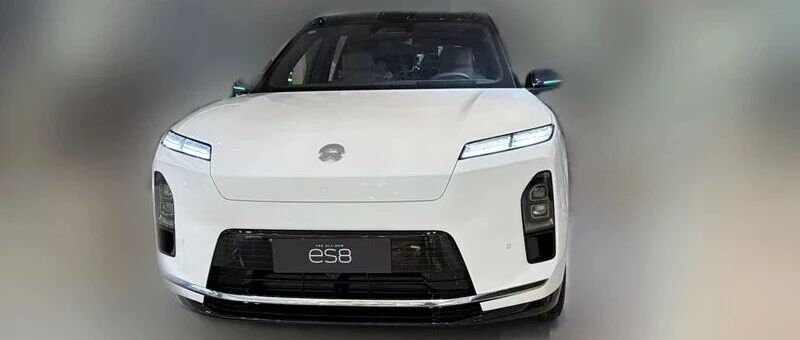
雷军直播回应争议:澄清营销标签、续航误解及多项质疑
Xin Lang Cai Jing· 2026-01-08 00:02
炒股就看金麒麟分析师研报,权威,专业,及时,全面,助您挖掘潜力主题机会! 来源:DoNews 雷军直播回应争议:澄清营销标签、续航误解及多项质疑 1月7日,雷军在直播中回应了近日小米与"万能的大熊"合作引发的争议以及外界针对其个人和公司的多 方面质疑。 雷军表示,此次对相关KOL的处罚是经过认真调查和管理层慎重商量后的决定。事件起因并非该KOL 批评小米或得罪米粉,而是因其长期攻击贬低小米用户,甚至诅咒小米用户,这是公司不能容忍的行 为。雷军强调,保护用户是企业的底线,必须坚定维护用户和车主利益,绝不与诋毁用户的KOL合 作。 同时,雷军承认公关部在处理过程中存在不足,公司已决定对其进行批评和处罚。他指出,公关部在过 去八九个月持续承受高烈度负面舆情压力,工作出现变形,希望米粉理解并给予改过机会,共同维护理 性舆论环境。 针对"雷军曾称不做投放"的说法,小米集团公关部总经理徐洁云回应称,十多年前小米创业初期确实依 靠工程师在社区和微博直接沟通,没有专门市场或公关团队。如今公司规模从初创发展至拥有七八万名 员工,业务复杂度大幅提升,已逐步建立市场营销体系,做法需结合当前实际情况看待,不可简单对比 过去。 对于被 ...

厦门港二手汽车出口迎“开门红”
Xin Lang Cai Jing· 2026-01-07 23:22
Core Insights - The export of used cars from Xiamen is experiencing a significant boost, with 1,607 vehicles set to depart for the UAE, marking a strong start for the used car export sector in 2026 [1] - The current period is characterized by favorable policies and surging market demand, providing a golden opportunity for the used car export industry in China [1] Industry Overview - The used car export sector benefits from abundant vehicle supply and a mature supply chain system, which are key advantages for China's exports [1] - Xiamen is one of the first ten cities authorized to pilot used car exports, indicating its strategic importance in this emerging market [1] Policy and Operational Support - Continuous policy support and accompanying services in Xiamen are accelerating the potential for used car exports [1] - The East Dutu Customs has proactively engaged with enterprises to facilitate the export process, ensuring timely completion of customs procedures for 97 used car export declarations [1]
小米雷军再谈“丢轮保车”:豪华车型成熟技术,大家不要再质疑了
Feng Huang Wang· 2026-01-07 13:45
凤凰网科技讯1月7日,小米公司创始人、董事长、首席执行官雷军在直播中再次谈到小米YU7"丢轮保 车"的设计。他表示,"丢轮保车"不是一碰就掉,而是在特定工况下,避免车轮侵入乘员舱,对乘客造 成伤害,也是豪华车型比较成熟的安全技术,以后大家就不要再质疑了。 直播中还提到,"丢轮保车"的设计比较早就有,最早是奔驰1959年提出过的,此外,沃尔沃也采用了这 种设计。 ...

雷军再回应“丢轮保车”:并非简单车轮脱落,系行业成熟解决方案
Sou Hu Cai Jing· 2026-01-07 12:49
这一技术并非小米首创,而是汽车行业成熟的解决方案。虽然很多人认为这是沃尔沃的独创技术,但据 行业交流信息,奔驰早在1959年就已提出类似方案。如今,包括奔驰、沃尔沃在内的豪华汽车品牌都采 用了类似的设计。 在电动车时代,由于车辆重量较大,需要通过巧妙的设计来解决小偏置碰撞的技术难题。碰撞测试体系 中,除了100%的正面碰撞和40%的偏置碰撞外,还有25%的小偏置碰撞。这种碰撞在实际交通环境中发 生概率较高,因此相关技术尤为重要。 雷军以及小米相关负责人介绍称,这一技术并非简单的车轮脱落,而是一种经过严谨设计的主动安全策 略。其核心在于通过传力和卸力的方式,让车轮在碰撞后按可预测的设计偏摆并脱离车身,从而保护乘 员舱的安全。 在日常使用中,无论是马路牙子的冲击,还是坑洼路面的颠簸,相关测试均已在实验场完成。即使是倒 车时快速上马路牙子的工况,也有严格的标准和测试流程。并非所有碰撞都会导致车轮脱落,只有在特 定工况下,为了更好地应对碰撞,车轮才会按照设计脱落。 1月7日,在今晚直播中,雷军在直播间再次谈到小米汽车的"丢轮保车"技术。 "丢轮保车"技术并非简单的碰撞就丢轮,而是在特定工况下,为了降低乘员舱侵入风险而 ...
宝马开年即官降:豪华车溢价神话的终场哨
Zhong Guo Qi Che Bao Wang· 2026-01-07 10:05
Core Viewpoint - BMW's significant price cuts in the Chinese luxury car market signal a shift in the competitive landscape, indicating the collapse of the premium pricing strategy that has long defined luxury brands in China [1][2][3] Group 1: Price Adjustments and Market Dynamics - BMW announced price reductions for 31 models, with 24 models seeing cuts exceeding 10% and 5 models over 20%, with entry-level models dropping to 208,000 yuan [1] - The price cuts are a response to declining sales and inventory pressures, marking a retreat from previous attempts to maintain high pricing strategies [1][2] - Other luxury brands like Mercedes-Benz and Audi are also offering significant discounts, indicating a broader trend among luxury brands to lower prices in response to competitive pressures from Chinese brands [2][3] Group 2: Competitive Landscape and Consumer Preferences - Chinese brands have gained a foothold in the 300,000 to 500,000 yuan price range, offering advanced features that challenge traditional luxury brands [3][4] - The shift in consumer preferences towards technology and experience over brand prestige is reshaping the luxury car market, with younger consumers prioritizing features like intelligent driving and user experience [3][5] - The luxury car market is experiencing a structural shift, with traditional luxury brands losing market share to Chinese competitors who are innovating rapidly in electric and smart vehicle technologies [4][5] Group 3: Industry Transformation Signals - The price cuts by BMW represent a breakdown of the price barrier between luxury and regular brands, fundamentally altering consumer perceptions of luxury pricing [4][6] - The traditional rules of the luxury car market, previously dictated by brands like BMW, are being redefined by Chinese brands that focus on rapid product iteration and customer-centric service models [4][5] - The ongoing transformation in the luxury car market is not merely a price war but a comprehensive restructuring of value systems, emphasizing the need for luxury brands to adapt to changing market dynamics [6][7] Group 4: Strategic Recommendations for Luxury Brands - Luxury brands must embrace electric and smart technologies, moving away from a "technology neutrality" stance to remain competitive in the evolving market [5][6] - A shift from brand-centric to user-centric product development is essential, focusing on local market needs and preferences rather than global models [5][6] - Establishing a new value system that prioritizes transparency in pricing and configuration will be crucial for rebuilding consumer trust and avoiding the pitfalls of price wars [6][7]
黄仁勋2026第一场演讲,点赞中国3个大模型
3 6 Ke· 2026-01-07 03:24
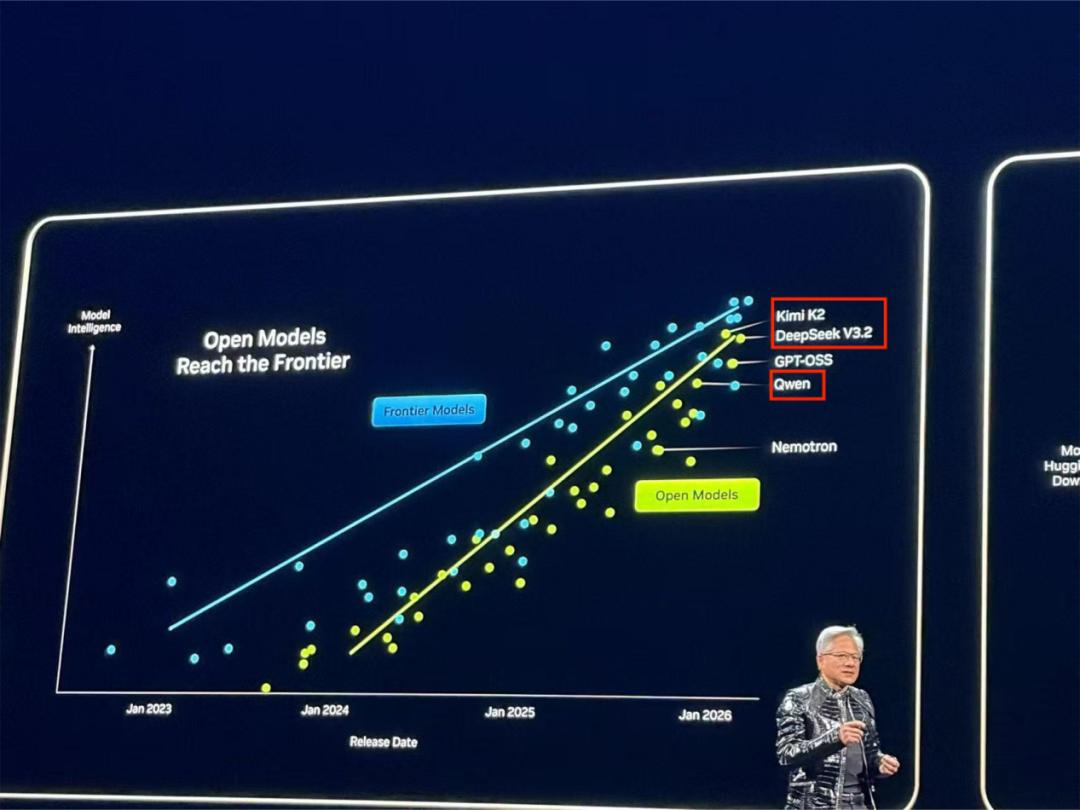
Core Insights - NVIDIA's CEO Jensen Huang emphasized the shift towards physical AI during his keynote at CES, moving away from consumer graphics cards to focus on advancements in AI technology [1][2] Group 1: AI Industry Developments - Huang highlighted the significant impact of open-source models on the AI industry, stating that they have become a catalyst for global innovation [2] - The emergence of the DeepSeek R1 model has notably accelerated industry transformation, surprising many in the field [2] - Open-source models are rapidly approaching top-tier performance, with a current gap of about six months compared to proprietary models, which is gradually narrowing [4] Group 2: NVIDIA's Innovations - NVIDIA introduced a comprehensive open-source model matrix covering six key areas, including agent AI, physical AI, autonomous driving, and robotics [5] - Huang defined physical AI as the fourth stage of AI development, capable of understanding physical causality in the real world, marking a transition from digital to physical applications [8] - The company launched the Alpamayo model, the world's first open-source autonomous driving inference model, which competes directly with Tesla's Full Self-Driving (FSD) technology [8] Group 3: Technical Advancements - The new Vera Rubin architecture was unveiled, named after astronomer Vera Rubin, and is designed to overcome limitations posed by the slowing of Moore's Law [11][13] - Rubin architecture features six chips working collaboratively, achieving a performance of 50 PFLOPS for inference tasks, which is five times that of the previous Blackwell architecture [13] - The cost of inference using Rubin has decreased by ten times, allowing for faster training and lower latency in decision-making processes [15] Group 4: Future Outlook - Huang expressed confidence that a significant portion of vehicles will be highly autonomous within the next decade [9] - The convergence of open-source model advancements, breakthroughs in physical AI, and the introduction of the Rubin architecture is expected to reshape industries and daily life [17]

英伟达加速进军智驾业务-继续重点推荐智能汽车板块
2026-01-07 03:05
Summary of Conference Call on NVIDIA and the Smart Automotive Sector Industry Overview - The conference call focuses on the smart automotive sector, particularly the advancements in autonomous driving technology led by NVIDIA in collaboration with Mercedes-Benz [1][2]. Key Points and Arguments - **NVIDIA and Mercedes-Benz Collaboration**: This partnership signifies a major advancement in the autonomous driving field, with a clear production timeline set for 2026. Testing will begin in the U.S. in Q1 2026, followed by deployment in Europe in Q2, and expansion into Asia later in the year. By the end of 2026, the vehicles are expected to have urban operational vehicle (OV) capabilities, positioning NVIDIA as a potential third-party leader in the global autonomous driving market [1][2]. - **Impact on Competition**: The collaboration is expected to have a significant demonstration effect in overseas markets, potentially attracting more automotive companies to accelerate their efforts to catch up with Tesla. This will intensify competition in the Chinese market and promote the development of Robotaxi services, which is particularly crucial for non-Chinese markets where competition is currently limited [1][3]. - **Investment Recommendations**: - For H-shares, the focus should be on XPeng (closest to Tesla's model) and Horizon Robotics (best mapping). Additionally, companies like Pony.ai and WeRide, which are purely focused on L4 Robotaxi, are highlighted for their potential. - For A-shares, Desay SV Automotive is noted as the best mapping object, while Qianli Technology is recognized as the only company actively engaged in Robotaxi-related business. Other small to mid-cap stocks like Beijing Junzheng and Dazhongnan are also recommended for investment [1][4]. Future Catalysts - Key future catalysts that may influence the smart automotive sector include: - The introduction of L3/L4 national standards - Full domestic rollout of Tesla's Full Self-Driving (FSD) technology - Launch of new models by XPeng and iterations of the second-generation Vehicle Operating Architecture (VOA) - Doubling of sales targets by companies like Pony.ai, LoBot, and WeRide - Continued progress by third-party players like Horizon Robotics and Momenta in L4 development - The implementation of electrification policies, which will alleviate overall concerns and shift the focus of autonomous driving to B-end applications [1][5]. Market Outlook for 2026 - The outlook for the smart automotive sector in 2026 is increasingly centered on L4 autonomous vehicle scenarios, particularly the Robotaxi market, which is expected to be the largest and most accommodating for various players. Since September, numerous catalysts, including Tesla's record highs and new model launches from XPeng, indicate that the industry is in a phase of positive development. Investors are advised to closely monitor NVIDIA, Tesla, and related mapping stocks like XPeng, Horizon Robotics, Pony.ai, and WeRide, while keeping an eye on upcoming policies and technological advancements to seize investment opportunities [1][6][7].

英伟达发布开源智驾模型与L4生态,关注港股通汽车ETF易方达(159121)投资机会
Mei Ri Jing Ji Xin Wen· 2026-01-07 03:02
Core Insights - Nvidia has launched the new open-source VLA model Alpamayo at the CES conference, which will first be integrated into the new Mercedes-Benz CLA model [1] - The unveiling of Nvidia's global L4 autonomous driving and Robotaxi ecosystem indicates that the "chip + algorithm" integrated model is becoming the mainstream supply path for advanced intelligent driving [1] - The industry is entering a critical acceleration phase for commercial operation of L4 autonomous driving, with a resonance of trends both domestically and internationally, presenting opportunities for valuation recovery from technology development to scale profitability [1] Industry Overview - The Hang Seng Hong Kong Stock Connect Automotive Theme Index consists of 40 stocks related to the automotive industry within the Stock Connect range, covering leading companies in the Hong Kong automotive sector and core companies in the intelligent supply chain [1] - Investors can track investment opportunities in the intelligent driving industry chain through products like the E Fund Automotive ETF (159121) [1]