黑芝麻智能

Search documents
频现百亿级配售!科技板块掀融资热,地平线4个月狂筹110亿!
Sou Hu Cai Jing· 2025-09-26 11:59
Group 1 - The Hong Kong stock market has experienced a strong upward trend since the beginning of 2025, with the Hang Seng Index rising over 30% and trading volume significantly increasing [2] - A wave of equity placements has emerged alongside the market rally, with many listed companies announcing fundraising plans, including large-scale offerings exceeding 10 billion HKD [2] - In the first eight months of this year, the total refinancing amount in the Hong Kong stock market surpassed 230 billion HKD, representing a year-on-year increase of over 2.5 times, exceeding the IPO fundraising amount by nearly 100 billion HKD [2] Group 2 - Horizon Robotics announced a placement and subscription agreement to raise approximately 63.39 billion HKD by selling 639 million existing shares at a price of 9.99 HKD per share, a discount of about 5.75% from the previous closing price [3][5] - Following the announcement, Horizon Robotics' stock price fell by 8.49% on September 26, with a trading volume of 11.9 billion HKD, marking the largest single-day trading volume since its listing [5] Group 3 - This is not the first fundraising for Horizon Robotics this year; in June, the company raised approximately 46.74 billion HKD through a similar placement, selling 681 million shares at a price of 6.93 HKD per share, a discount of about 6.85% [7] - Overall, Horizon Robotics has raised over 110 billion HKD through two placements this year [9] Group 4 - The technology sector has seen significant placement fundraising, with over 284 billion HKD raised by Hong Kong-listed companies through placements by September 26, far exceeding the total for the entire year of 2024 [11] - The pharmaceutical and biotechnology sectors have seen over 50 placement cases this year, while real estate and software services have also seen significant activity [12] Group 5 - Many technology companies are in a rapid growth phase, requiring substantial investment for research and market capture, which has led to increased reliance on external financing [13] - Despite the strong stock performance, many of these companies, including Horizon Robotics, are facing significant losses, with adjusted net losses expanding in 2024 and the first half of 2025 [15] Group 6 - The long-term potential of the intelligent driving and robotics sectors is promising, supported by policy backing, technological breakthroughs, and ongoing capital investment [17] - The Hong Kong Stock Exchange is adapting to reflect new market dynamics, with the upcoming 12th Hong Kong Stock 100 ranking set to highlight emerging forces in the technology sector [17][18]


具身智能,为何成为智驾公司的下一个战场?
雷峰网· 2025-09-26 04:17
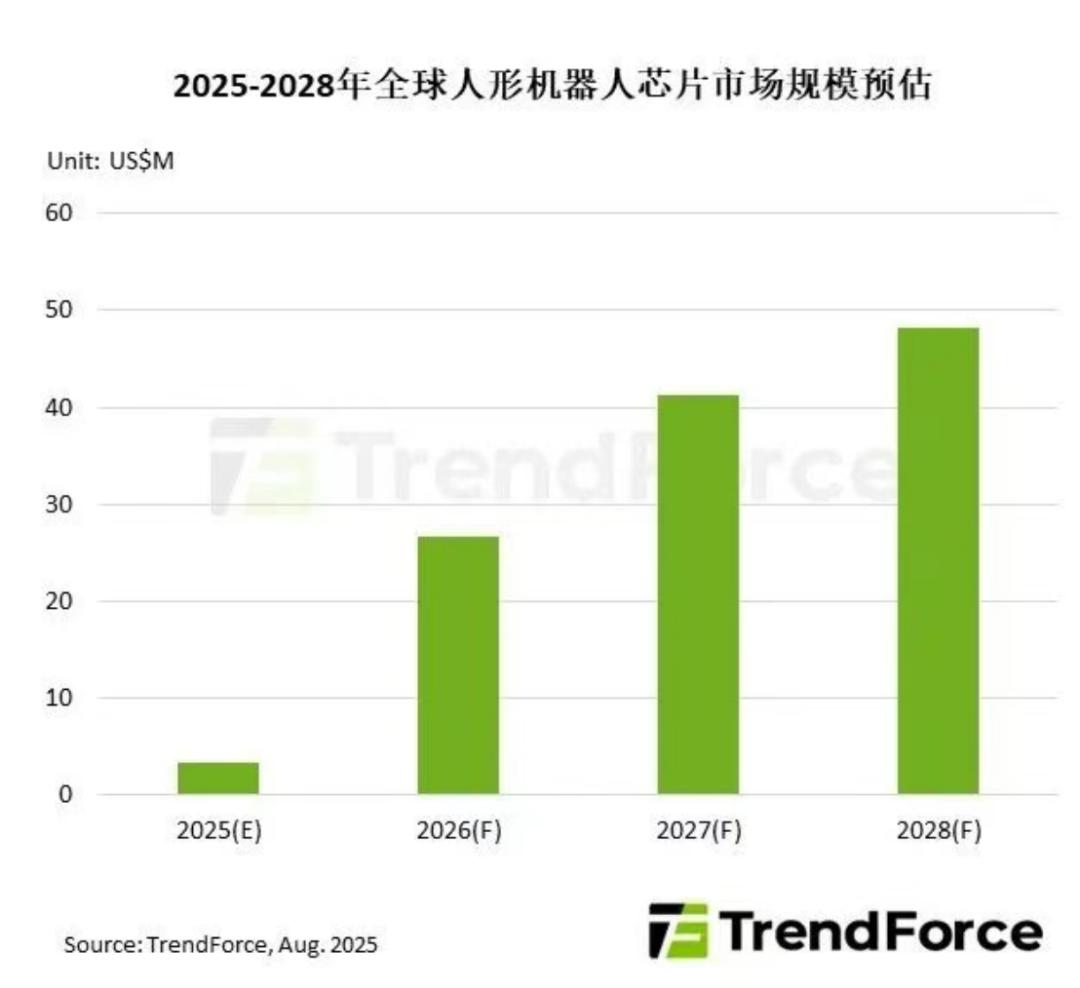
Core Viewpoint - Embodied intelligence is emerging as the next battleground for smart driving entrepreneurs, with significant investments and developments in the sector [2][4]. Market Overview - The global embodied intelligence market is on the verge of explosion, with China's market expected to reach 5.295 billion yuan by 2025, accounting for approximately 27% of the global market [3][21]. - The humanoid robot market is projected to reach 8.239 billion yuan, representing about 50% of the global market [3]. Industry Trends - Several smart driving companies, including Horizon Robotics and Zhixing Technology, are strategically investing in embodied intelligence through mergers, acquisitions, and subsidiary establishments to seize historical opportunities [4]. - The influx of talent from the smart driving sector into embodied intelligence has been notable since 2022, with many professionals making the transition in 2023 [13]. Technological Integration - The integration of smart driving and embodied intelligence is based on the concept of "embodied cognition," where intelligent behavior is formed through continuous interaction with the physical environment [6]. - The technical pathways for both fields are highly aligned, with smart driving vehicles functioning as embodied intelligent agents through multi-sensor perception, algorithmic decision-making, and control systems [6]. Technical Framework - The technical layers of smart driving applications and their migration to embodied intelligence include: - Perception Layer: Multi-sensor fusion for environmental modeling and object recognition [7]. - Decision Layer: Path planning and behavior prediction for task planning and interaction strategies [7]. - Control Layer: Vehicle dynamics control for motion control and execution [7]. - Simulation Layer: Virtual scene testing for skill learning and adaptive training [7]. Investment and Growth Potential - The embodied intelligence market is expected to maintain a growth rate of over 40% annually, providing a valuable channel for smart driving companies facing growth bottlenecks [21]. - The dual development pattern of humanoid and specialized robots allows smart driving companies to leverage their technological strengths for market entry [22]. Profitability Insights - The gross profit margins for embodied intelligence products are generally higher than those for smart driving solutions, with professional service robots achieving margins over 50%, compared to 15-25% for autonomous driving kits [23][25]. - This profit difference arises from the stronger differentiation and lower marginal costs of embodied intelligence products, allowing for rapid market entry and reduced development costs [25]. Future Outlook - The boundaries between smart driving and embodied intelligence are increasingly blurring, with companies like Tesla viewing autonomous vehicles as "wheeled robots" and developing humanoid robots based on similar AI architectures [26]. - Early movers in this transition are likely to secure advantageous positions in the future intelligent machine ecosystem [26].

政策助推L3级自驾,国产厂商“烧钱”争夺汽车“大脑”
是说芯语· 2025-09-24 03:31
Core Viewpoint - The release of the "Automobile Industry Stabilization and Growth Work Plan (2025-2026)" by the Ministry of Industry and Information Technology and other departments marks a significant step towards the commercialization of L3 level autonomous driving, indicating a shift from the technology reserve phase to practical implementation in the intelligent driving industry [1] Group 1: Policy and Market Dynamics - The approval of L3 level vehicle production access is a crucial regulatory milestone that accelerates the development of the intelligent driving industry [1] - The intelligent driving industry is transitioning from a technology reserve phase to a practical implementation phase, driven by policy support [1] Group 2: Chip Technology and Market Players - L3 autonomous driving technology requires high-performance, low-power AI chips to process vast amounts of sensor data and run complex algorithms [3] - Major players in the autonomous driving SoC market include both domestic companies like Black Sesame Technology and Horizon Robotics, and international firms such as NVIDIA and Mobileye [3] - Black Sesame Technology reported a revenue of 253 million yuan in the first half of 2025, a year-on-year increase of 40.4%, with R&D expenses reaching 618 million yuan, resulting in an R&D expense ratio of 244% [3] Group 3: Product Development and Innovation - In 2025, Black Sesame Technology is expected to achieve significant breakthroughs in chip technology, with the launch of the new "Hua Shan" and "Wu Dang" chip families [5] - The new Hua Shan A2000 family chip has achieved a 367% increase in computing power compared to the previous generation, supporting advanced driving scenarios [6] - The Wu Dang C1200 family chip integrates multiple systems, reducing complexity and cost, and is set to be used in various new models by Dongfeng [8] Group 4: Market Expansion and Applications - Black Sesame Technology has expanded into new markets, including robotics and overseas markets, achieving significant milestones [9] - The company has partnered with Intel to enter the European and American markets, leveraging Intel's global resources [11] - The deployment of low-latency perception solutions in cities has improved traffic efficiency and reduced accident rates, contributing to national standards [12] Group 5: Conclusion and Future Outlook - The domestic automotive chip industry is undergoing a transformation similar to that of mobile chips, moving from reliance on foreign technology to achieving breakthroughs and market success [13]

东吴证券晨会纪要-20250924
Soochow Securities· 2025-09-24 01:32
Group 1: Macro Strategy - The current economic situation indicates increasing pressure on stabilizing investment and consumption, suggesting that a new round of growth-stabilizing policies is imminent [26][27] - The expected GDP growth for the third quarter is between 4.7% and 4.9%, with a cumulative growth of approximately 5.1% for the first three quarters [26][27] - The policy direction includes utilizing debt limits, introducing new policy financial tools, and the likelihood of interest rate cuts to lower costs for homebuyers and businesses [26][27] Group 2: Stock and Bond Correlation - The correlation coefficient between stock and bond returns is projected to range from -0.216 to -0.229 from September to November 2025, indicating a continued upward trend compared to August 2025 [28][29] - The relationship between economic growth and inflation significantly influences stock and bond returns, with economic growth typically having an inverse effect on stock and bond yields [28][29] Group 3: Industry Insights - The Robotaxi industry is identified as a key investment theme for the next five years, with a focus on the revenue-generating capabilities of AI vehicles [19][20] - The copper market is experiencing a supply tightness due to maintenance in domestic smelting plants and disruptions in major mines, while demand is expected to increase as the holiday season approaches [21] - The aluminum market is seeing a slight increase in production capacity utilization, with expectations of price stability as demand rises during the peak season [21]
组合驾驶辅助系统乘用车新车市场渗透率超60% 政策与市场驱动下产业链迎机遇(附概念股)
Zhi Tong Cai Jing· 2025-09-23 23:34
Core Insights - The penetration rate of passenger cars equipped with combined driving assistance systems in China reached 62.6% in the first seven months of 2025, an increase of 40 percentage points compared to the same period in 2021, with sales of 7.76 million units [1] - The current market primarily features L2-level systems, which assist with basic driving tasks but do not provide full autonomous driving capabilities, placing the ultimate responsibility on the driver [1] - The development of intelligent driving in China is accelerating due to policy support, with significant initiatives expected to be implemented in 2025, including the introduction of national standards for combined driving assistance systems [1][2] Industry Developments - The introduction of national standards for L2-level driving assistance is anticipated to provide regulatory support and encourage innovation and quality improvement within the intelligent driving industry [2] - Major automotive manufacturers are shifting from fully in-house development of driving assistance technologies to strategic collaborations with solution providers, enhancing the penetration of intelligent driving technologies [2] - The supply chain for intelligent driving components, including lidar, cameras, and radar systems, is strengthening, with domestic suppliers increasing their influence and moving towards integrated hardware and software solutions [2] Company Highlights - Black Sesame (000716) is recognized as a key player in the domestic autonomous driving chip market, benefiting from the commercialization of L2+ technology and advancements towards L3 and L4 scenarios [3] - Horizon Robotics (09660) has achieved significant production milestones with its HSD series chips, establishing partnerships with international clients and positioning itself as a leader in integrated intelligent driving solutions [3] - SUTENG (02498) has successfully mass-produced high-line count lidar products, which are now featured in new models from various automotive brands [3] - Youjia Innovation (02431) has launched its unmanned logistics brand "Xiaozhu Unmanned Vehicle," marking its entry into the L4 autonomous driving sector and showcasing its ongoing commitment to high-level autonomous driving commercialization [4]
港股概念追踪 | 组合驾驶辅助系统乘用车新车市场渗透率超60% 政策与市场驱动下产业链迎机遇(附概念股)
智通财经网· 2025-09-23 23:21
Core Insights - The penetration rate of passenger cars equipped with combined driving assistance systems in China reached 62.6% from January to July 2025, an increase of 5.7 million units and 40 percentage points compared to the same period in 2021 [1] - The current market primarily features L2 level systems, which assist with basic driving tasks but do not provide full autonomous driving capabilities, leaving the driver responsible [1] - The development of intelligent driving in China is accelerating due to policy support, with significant regulations and standards being established to enhance safety and performance in the industry [1][2] Industry Developments - The introduction of national standards for L2 level driving assistance is expected to provide regulatory support and drive innovation within the intelligent driving industry, benefiting the entire supply chain [2] - Major automotive manufacturers are shifting from fully self-developed solutions to strategic collaborations with technology providers, enhancing the integration of AI capabilities and increasing the penetration of intelligent driving technologies [2] - Domestic suppliers of components such as lidar, cameras, and radar are strengthening their influence in the industry and moving towards integrated hardware and software solutions [2] Relevant Companies - Black Sesame Intelligence (02533) is positioned to benefit from the commercialization of L2+ technology and advancements in L3 and L4 scenarios, having launched high-performance intelligent driving chips [3] - Horizon Robotics (09660) has achieved significant production milestones with its HSD chip series and is establishing international partnerships, aiming to expand its intelligent driving solutions globally [3] - Suoteng Juchuang (02498) has successfully mass-produced high-line count lidar products, which are now featured in new intelligent SUV models [3] - Youjia Innovation (02431) has entered the unmanned logistics sector with its "Xiaozhu" brand, showcasing its commitment to advancing high-level autonomous driving commercialization [4]
博泰车联开启招股:中国高端智能座舱龙头企业
Xin Lang Cai Jing· 2025-09-23 02:47
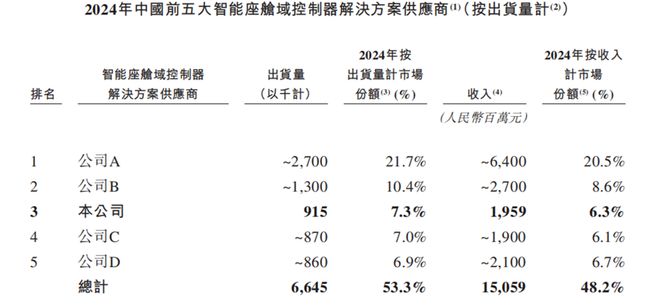
Core Viewpoint - 博泰车联科技 is a leading player in the automotive intelligence sector in China, officially launching its IPO on the Hong Kong Stock Exchange with a planned global offering of 10.4369 million H-shares at a price of HKD 102.23 per share, aiming to raise significant capital to support its growth and expansion in the smart cockpit solutions market [1][2]. Company Overview - Founded in 2009 and headquartered in Shanghai, 博泰车联 focuses on the automotive intelligence sector, being one of the earliest developers of smart cockpit solutions in China. The company has established a comprehensive industry chain covering R&D, production, and sales [5]. - 博泰车联 has a unique "software + hardware + cloud service" integrated model, providing customized smart cockpit solutions to meet diverse OEM and Tier 1 customer needs, with a growing international market presence [5][11]. Financial Performance - The company has experienced rapid revenue growth, with total revenue increasing from RMB 1.218 billion in 2022 to RMB 2.557 billion in 2024, representing a compound annual growth rate (CAGR) of 44.9%. The revenue from domain controllers, a key product, grew at a CAGR of 70.5% during the same period [9][10]. - For the five months ending May 31, 2025, revenue reached RMB 754 million, a year-on-year increase of 34.4%, driven by steady growth in domain controller shipments and an increase in high-end product sales [9]. Market Position and Competitive Advantage - 博泰车联 ranks as the third largest supplier of smart cockpit domain controller solutions in China, holding a market share of 7.3% as of 2024, with significant competitive advantages in technology and innovation [6][15]. - The company has established strategic partnerships with major automotive manufacturers and technology firms, enhancing its market position and enabling rapid response to market demands [11][15]. Industry Outlook - The Chinese automotive smart cockpit solutions market is projected to grow significantly, with an expected market size of RMB 129 billion in 2024, increasing to RMB 299.5 billion by 2029, reflecting a CAGR of 18.4% [13]. - The penetration rate of domain controllers in passenger vehicles is anticipated to rise from 13.7% in 2020 to over 90% by 2029, indicating substantial growth opportunities for leading companies like 博泰车联 [13]. Valuation Analysis - The IPO price of HKD 102.23 per share implies a market capitalization of HKD 15.334 billion. Based on the latest revenue figures, the company's price-to-sales (P/S) ratio is 5.1, which is significantly lower than the median P/S ratio of comparable companies at 13.04, suggesting that the company is undervalued [16].
药捷安康,继续大跌
中国基金报· 2025-09-19 12:59
Core Viewpoint - The article discusses the recent performance of various stocks in the Hong Kong market, highlighting significant movements, particularly the sharp decline of Yaojie Ankang -B after a substantial increase since its IPO [2][5]. Group 1: Stock Performance - On September 19, Yaojie Ankang -B closed at HKD 149.90 per share, down 18.18%, with a trading volume of HKD 635 million and a total market capitalization of HKD 59.5 billion. Since its IPO at HKD 13.15 per share, the stock has seen an increase of over 10 times, with a peak increase of more than 50 times [5][7]. - The Hang Seng Index closed flat at 26,545.10 points, while the Hang Seng Technology Index rose by 0.37% to 6,294.42 points. The total market turnover for the day was HKD 376.8 billion, with net purchases from southbound funds amounting to HKD 9.838 billion [2][3]. Group 2: Company Developments - Yaojie Ankang was listed on the Hong Kong Stock Exchange on June 23, with an IPO price of HKD 13.15 per share and a total share capital of approximately 397 million shares, resulting in an initial market capitalization of about HKD 5.2 billion. The stock's limited tradable shares have contributed to its volatility [7]. - SenseTime -W saw a counter-trend increase of 4.58% on the same day, with HSBC raising its target price by 82.4% to HKD 3.1 per share, maintaining a "Hold" rating due to improved profit margins and reduced competitive pressure [8][9][11]. - Meituan -W increased by 0.76%, with the company responding to consumer feedback regarding the "hot dishes freshly made" feature on its app, indicating a trial phase for better transparency [14][15]. Group 3: Industry Trends - On September 19, stocks related to smart driving showed strong performance, with Hongteng Precision rising by 21.44%, Black Sesame Intelligence by 1.2%, and Leap Motor by 2.44%. This surge is attributed to recent strategic investments and collaborations in the Robotaxi sector [16][17][19]. - CATL (Contemporary Amperex Technology Co., Limited) shares rose by 2.08%, with analysts noting its low valuation compared to peers in the battery manufacturing sector, leading to an upgrade in its H-share rating [22][23].

药捷安康,继续大跌
Zhong Guo Ji Jin Bao· 2025-09-19 11:24
Market Overview - On September 19, the Hong Kong stock market showed mixed results with the Hang Seng Index closing flat at 26,545.10 points, the Hang Seng Tech Index rising by 0.37% to 6,294.42 points, and the Hang Seng China Enterprises Index increasing by 0.17% to 9,472.35 points. The total market turnover was HKD 376.8 billion, with net buying from southbound funds amounting to HKD 9.838 billion [2][3]. Company Performance - On September 19, Yaojie Ankang-B experienced a significant drop of 18.18%, closing at HKD 149.90 per share. Despite this decline, the stock has seen a cumulative increase of over 10 times since its IPO price of HKD 13.15 per share, with a peak increase exceeding 50 times during this period [4][6]. - Yaojie Ankang was listed on June 23, 2023, with a total market capitalization of approximately HKD 52 billion at the time of its IPO. The company had a total share capital of about 397 million shares, with only around 549 million shares available for trading in the secondary market [6]. - SenseTime-W saw a contrary increase of 4.58% on September 19, following a report from HSBC that raised its target price by 82.4% to HKD 3.1 per share, maintaining a "hold" rating due to improved profit margins and reduced competitive pressure [6][11]. Sector Trends - The smart driving concept stocks showed strong performance on September 19, with Hongteng Precision rising by 21.44%, Hezhima Intelligent increasing by 1.2%, and Leap Motor gaining 2.44% [10]. - Haier announced that its Robotaxi business received strategic investment from Alibaba Group, indicating a deepening collaboration in the fields of intelligent driving models and commercializing Robotaxi services [13]. - CATL (Contemporary Amperex Technology Co., Limited) closed at HKD 515.5 per share, up 2.08%. Analysts noted that despite a projected P/E ratio of 22 times for the next 12 months, CATL's valuation remains low compared to its peers in the battery manufacturing sector [14][16].
国产人形机器人,用的哪家处理器?
3 6 Ke· 2025-09-19 10:47
Group 1 - The humanoid robot market is on the verge of explosive growth, with a projected market size of approximately 9 billion in 2025, expected to soar to 150 billion by 2029, reflecting a compound annual growth rate (CAGR) exceeding 75% [2] - The core drivers of this market growth will be industrial handling and medical applications, highlighting the importance of advanced processing capabilities in humanoid robots [2][5] - The performance of processors is critical as it directly influences the intelligence level and application potential of humanoid robots, making them the foundational element of the robotics industry [1][5] Group 2 - The current processor supply for humanoid robots is dominated by NVIDIA and Intel, while domestic chip manufacturers are still in the catch-up phase [6] - Tesla is noted for its capability to develop its own chips, such as the Dojo chip for AI model training and the FSD chip for real-time operations in robots, while other manufacturers primarily rely on Intel and NVIDIA chips [6][8] - The Jetson Orin series from NVIDIA is widely used, providing up to 275 TOPS of computing power, significantly enhancing the capabilities of humanoid robots [9][10] Group 3 - Domestic manufacturers are accelerating the development of their own humanoid robot chips to compete with foreign dominance, focusing on integrating general intelligence with practical application needs [10][11] - The RK3588 and RK3588S chips from Rockchip have been adopted by several humanoid robot manufacturers, showcasing their potential in the robotics field [11] - The RDK S100 development kit from Horizon Robotics integrates both "brain" and "cerebellum" functions into a single SoC, simplifying hardware architecture and reducing development costs [12][14] Group 4 - The trend towards "brain-cerebellum fusion" architecture aims to enhance the synchronization and efficiency of humanoid robots by integrating cognitive decision-making and motion control into a unified system [15][17] - Current challenges in the humanoid robot market include insufficient data accumulation, hardware architecture optimization, high costs, and safety concerns, which need to be addressed for large-scale commercialization [18][19][20]