
海底捞

Search documents
4年三换帅!创始人张勇重掌海底捞 创新业务能否“捞”出新天地?
Mei Ri Jing Ji Xin Wen· 2026-01-15 13:40
Core Viewpoint - Haidilao has undergone a significant management restructuring, with Zhang Yong returning as CEO, indicating a shift towards a governance structure that emphasizes founder leadership during a challenging period for the company's core hotpot business [1][4][9]. Management Changes - On January 13, Haidilao announced the resignation of Guo Yiqun as CEO and executive director, with Zhang Yong appointed as the new CEO, maintaining his role as chairman [1][4]. - This marks the third CEO change in four years, reflecting ongoing strategic adjustments within the company [3][7]. - Guo Yiqun will continue to play a crucial role in the company, focusing on the automation and digitalization of management processes [4][6]. Board Composition - The board has appointed four new executive directors, all with extensive experience in operational and core functional roles, to support innovation and long-term development [5][6]. - The average tenure of the new executive directors is nearly 20 years, indicating a strong internal leadership pipeline [6]. Business Performance - Haidilao's financial performance has shown a decline, with revenue for the first half of 2025 at 20.703 billion yuan, down 3.7% year-on-year, and net profit at 1.755 billion yuan, down 13.7% [9]. - The average table turnover rate decreased to 3.8 times per day, down from 4.2 times in the previous year, attributed to increased competition and changing consumer behavior [9]. Strategic Focus - The company is accelerating its exploration of new growth avenues, including takeout, multi-brand strategies, and franchising, particularly through the "Pomegranate Plan," which has successfully incubated 14 restaurant brands [9][10]. - The takeout business has seen a significant increase, with revenue growing nearly 60% to 928 million yuan, driven by a focus on single-serving hotpot offerings [9]. Future Outlook - The return of Zhang Yong as CEO is viewed as timely and necessary to balance resources and enhance efficiency across multiple business lines [10].


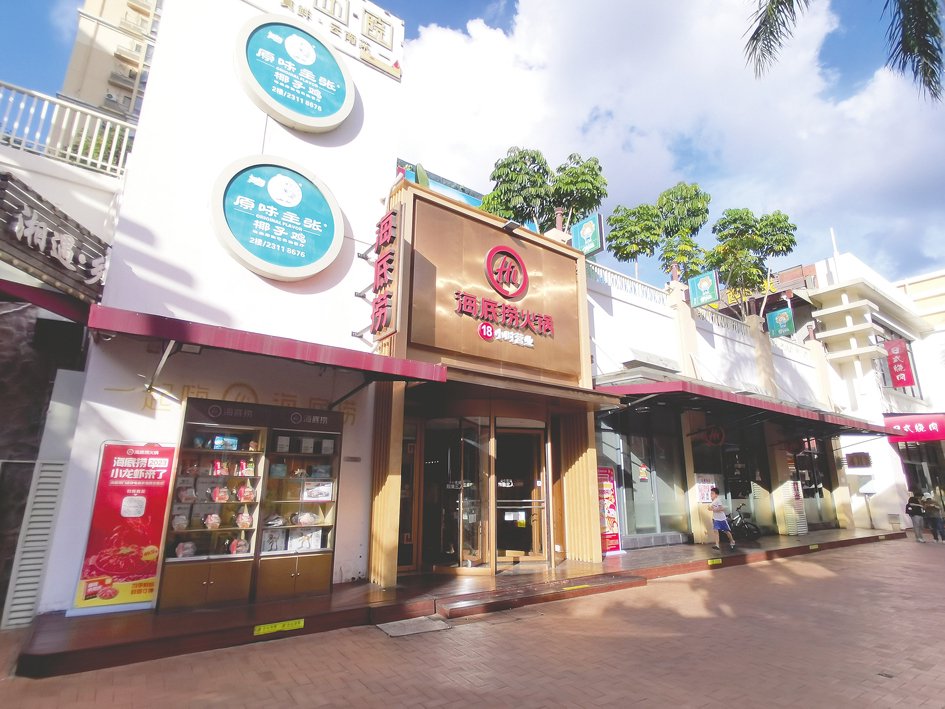
西贝贾国龙再发声:当时谁帮西贝说话就被挂出来攻击,于东来跟我完全不认识
Xin Lang Cai Jing· 2026-01-15 13:29
Core Viewpoint - The chairman of Xibei, Jia Guolong, acknowledges the company's plan for "large-scale store closures" while defending Huashan against online attacks, questioning the bias against domestic brands compared to foreign ones [1][4]. Group 1: Company Background and Operations - Xibei has been collaborating with Huayi Huayi for ten years, focusing on brand building and business consulting [6]. - The company emphasizes customer service, offering refunds for any dissatisfaction, and claims to prioritize food quality and safety, asserting it ranks among the industry's leaders [6]. Group 2: Online Attacks and Public Relations - Jia Guolong expresses frustration over the online harassment faced by Xibei, stating that those who supported the company were also targeted, including notable figures like Yu Donglai and Yu Minhong [1][4]. - He criticizes the notion that domestic entrepreneurs are labeled as "local bosses" while foreign counterparts are favored, highlighting a perceived bias in public perception [1][6]. Group 3: Call for Regulatory Action - Jia questions the lack of regulatory oversight regarding online harassment and the impact on the business environment, urging for measures to stabilize enterprises and market expectations [3][7]. - He reaffirms the commitment to continue working with Huayi Huayi, describing Huashan as a loyal and principled individual [7].
西贝贾国龙为华与华“正名”:当初和现在都跟华与华无关,有事冲我来!
Xin Lang Cai Jing· 2026-01-15 13:29
他还表示,"当初跟华与华无关,现在跟华与华也无关,有事冲着我来!" 他称,"只要西贝还在,我还是跟华与华合作,华杉是个重情义的人,华与华是最好的企业咨询公司。" 以下为西贝董事长贾国龙朋友圈全文: 1月15日,西贝董事长贾国龙在承认将"大规模关店"后,再发朋友圈为华杉发声正名。 贾国龙回忆:"说到底,当时谁帮西贝说话就带领网暴攻击谁,于东来跟我之前完全不认识,就帮西贝 说句话,马上就挂出来威胁。俞敏洪说两句"西贝似乎也没什么错",马上被挂出来攻击。华杉是愣头青 性格,帮西贝说两句话,被全网嘲弄,连华与华的客户都被威胁。" 他强调,对这样的恶劣行径,有关部门不该管吗?网络乱象,营商环境,稳企业,稳市场,稳预期,谁 来帮助努力规范经营不懂公关的民营企业? 说我傻,说我蠢,我认。说我不懂公关,我认。但是说西贝"预制菜,贵,恶心",我不认! 西贝这几十年,培训所有员工七个字,真实,真诚,真性情。我认为这就是最好的公关。 华与华服务过海底捞、天猫、蜜雪冰城、德邦快递等上百家知名企业,怎么这些企业家都成了土老板? 只有网红认定的是洋老板? 说到底,当时谁帮西贝说话就带领网暴攻击谁,于东来跟我之前完全不认识,就帮西贝说句话 ...
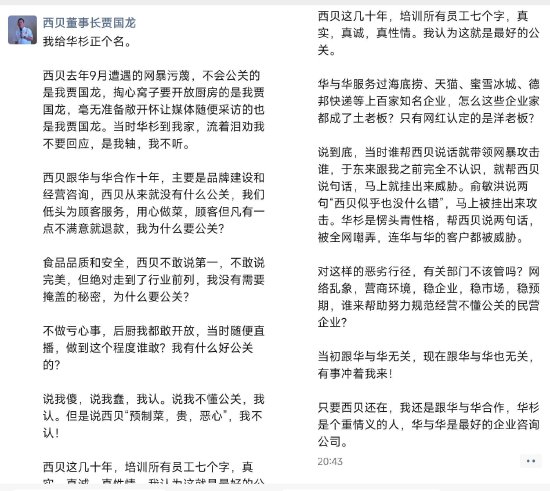
西贝贾国龙再发声:说我傻我认,说西贝“预制菜,贵,恶心”,我不认!
Xin Lang Cai Jing· 2026-01-15 13:24
Core Viewpoint - The chairman of Xibei, Jia Guolong, acknowledges the company's plan for "large-scale store closures" while defending the brand against negative public sentiment regarding its pre-made dishes, emphasizing the importance of authenticity and sincerity in their operations [1][3]. Group 1: Company Operations and Public Relations - Xibei has been training its employees with the principles of "real, sincere, and genuine" for decades, which Jia believes is the best form of public relations [1][4]. - The company has faced online harassment and negative publicity, which Jia attributes to a lack of understanding of public relations rather than issues with the food quality or service [2][4]. - Xibei has a policy of refunding customers if they are not satisfied, indicating a strong commitment to customer service [4]. Group 2: Collaboration and Industry Context - Xibei has collaborated with the consulting firm Hua Yu Hua for ten years, focusing on brand building and operational consulting [4]. - The firm has worked with numerous well-known companies, raising questions about the perception of entrepreneurs in the industry and the challenges faced by private enterprises in managing public relations [2][4]. - Jia expresses concern over the negative impact of online bullying on business leaders who support Xibei, highlighting the need for regulatory oversight to improve the business environment [2][4].
西贝贾国龙为华杉“正名”:去年要开放厨房的是我,华杉到家流泪劝我,是我不听!
Xin Lang Cai Jing· 2026-01-15 13:24
1月15日,西贝董事长贾国龙在承认将"大规模关店"后,再发朋友圈为华杉发声正名。 贾国龙表示,西贝去年9月遭遇的网暴污蔑,不会公关的是我贾国龙,掏心窝子要开放厨房的是我贾国 龙,毫无准备敞开怀让媒体随便采访的也是我贾国龙。"当时华杉到我家,流着泪劝我不要回应,是我 轴,我不听。" 以下为西贝董事长贾国龙朋友圈全文: 我给华杉正个名。 西贝去年9月遭遇的网暴污蔑,不会公关的是我贾国龙,掏心窝子要开放厨房的是我贾国龙,毫无准备 敞开怀让媒体随便采访的也是我贾国龙。当时华杉到我家,流着泪劝我不要回应,是我轴,我不听。 西贝跟华与华合作十年,主要是品牌建设和经营咨询,西贝从来就没有什么公关,我们低头为顾客服 务,用心做菜,顾客但凡有一点不满意就退款,我为什么要公关? 食品品质和安全,西贝不敢说第一,不敢说完美,但绝对走到了行业前列,我没有需要掩盖的秘密,为 什么要公关? 西贝这几十年,培训所有员工七个字,真实,真诚,真性情。我认为这就是最好的公关。 不做亏心事,后厨我都敢开放,当时随便直播,做到这个程度谁敢?我有什么好公关的? 说我傻,说我蠢,我认。说我不懂公关,我认。但是说西贝"预制菜,贵,恶心",我不认! 华与华 ...
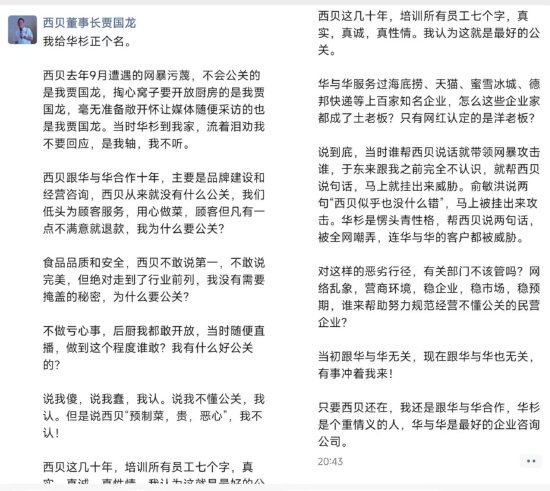
寿司郎赢得毫不费力
36氪· 2026-01-15 13:24
Core Viewpoint - Sushi Ramen has emerged as a standout success in the restaurant industry, particularly in China, where it has achieved remarkable growth and popularity despite challenges faced by other dining brands [4][10]. Group 1: Company Performance - Sushi Ramen's parent company, F&LC, reported a record sales revenue of 429.5 billion yen for the fiscal year 2025, with an overall operating profit increase of 54.4% [7]. - The overseas market, led by China, contributed significantly to this growth, with a revenue increase of 42.6%, making up 30% of total business [7]. - Sushi Ramen aims to open 500 stores in China by the fiscal year 2035, a target that took competitors like Salvia 23 years to achieve [7]. Group 2: Market Positioning - Unlike other sushi brands that have struggled, Sushi Ramen has maintained a strong presence in the market, with a unique operational model that emphasizes efficiency and technology [12][18]. - The brand has successfully adapted to consumer preferences, offering a combination of high-quality ingredients at competitive prices, which has resonated with Chinese consumers [27][36]. - Sushi Ramen's pricing strategy allows it to charge around 10 yuan per sushi piece, significantly higher than the original price of 5 yuan, while still being perceived as a value option by consumers [46]. Group 3: Operational Efficiency - Sushi Ramen has implemented advanced technology in its operations, including robots capable of producing 3,600 sushi pieces per hour and a data-driven system for predicting customer demand [12][18]. - The introduction of the "Sushi New Shinkansen" model has further improved efficiency, reducing food waste from an industry average of 10-15% to nearly 0% and decreasing customer wait times from 5 minutes to 3 minutes [18]. - The restaurant's layout and management practices have also enhanced customer capacity and turnover rates, allowing for up to 15 table turnovers per day during peak hours [18]. Group 4: Supply Chain and Ingredient Sourcing - Following the nuclear wastewater incident in 2023, Sushi Ramen accelerated the localization of its supply chain in China, sourcing ingredients from local suppliers to maintain quality and reduce costs [29][30]. - The cost of domestic ingredients, such as sea urchin and eel, is significantly lower than imported options, allowing Sushi Ramen to offer high-quality sushi at competitive prices [29][30]. - The brand has developed a diverse product lineup with over 200 SKUs, enhancing its appeal and allowing for strategic pricing that attracts a wide range of customers [33][34].
朝阳区领跑 2025年北京新增1068家首店
Bei Jing Shang Bao· 2026-01-15 12:07
Group 1 - The core viewpoint of the article highlights that Beijing is set to add 1,068 new flagship stores by 2025, representing an 11.3% increase compared to 2024, showcasing strong commercial vitality and attractiveness [1] - Beijing has gathered 159 high-level flagship stores, including global, Asian, and Chinese first stores, as well as flagship and innovative concept stores, indicating a trend towards high-quality retail experiences [1] - The trend of specialization is emerging in the high-level flagship store economy, with 21 new flagship stores and 107 innovative concept stores added in 2025, moving from "check-in consumption" to "regular integration" [1] Group 2 - The spatial distribution of flagship stores continues to follow a "Chaoyang leading, multi-district collaboration" pattern, with Chaoyang District accounting for nearly 40% of new stores, followed by Dongcheng, Haidian, and Xicheng districts [2] - Shopping centers and commercial streets are the most attractive locations for product consumption flagship stores, with about 70% choosing shopping centers for their customer flow and synergy advantages [2] - Service consumption flagship stores are increasingly favoring community commercial spaces and industrial parks, with over 40% prioritizing these types of locations to meet local service needs [2] Group 3 - The new flagship stores in Beijing in 2025 are characterized by a dominance of local brands, particularly in retail, dining, and service sectors, with a focus on cultural and creative retail [3] - International brands are entering the high-end consumption market, with 20 countries represented, focusing on luxury goods, high-end dining, and lifestyle sectors [3] - Local brands are emphasizing traditional Chinese culture and consumer needs, with new offerings in dining and service sectors, such as art and heritage flagship stores [3] Group 4 - Looking ahead, Beijing has been approved as a pilot city for new consumption formats and scenarios, aiming to support various commercial spaces and create a multi-layered platform for brand launches and experiential consumption [4] - The city plans to attract domestic and international flagship stores and innovative concept stores to create a diverse and fashionable commercial environment [4] - Through effective funding guidance and a robust service system, Beijing's flagship economy is expected to evolve with higher quality and vitality, enhancing consumer supply and experience [4]
暂缓退休,张勇重回海底捞“救场”?
Sou Hu Cai Jing· 2026-01-15 11:14
Core Viewpoint - The return of Zhang Yong as CEO of Haidilao is a strategic move to address the company's current growth challenges and to implement a significant management restructuring, which has been positively received by the market, as evidenced by a stock price increase of over 10% on the announcement day [2][5][11]. Group 1: Management Changes - Zhang Yong has officially resumed his role as CEO, replacing Guo Yiqun, who will now focus on the automation and intelligence planning of the group's management processes [3]. - The board of directors has undergone a significant transformation, with four young female executives appointed as new executive directors, indicating a shift towards a younger leadership team [6][12]. Group 2: Strategic Context - Zhang Yong's return is interpreted as a decisive response to Haidilao's current growth bottlenecks, with the company facing declining revenue and increased competition in the hot pot industry [5][11]. - The company has experienced a decline in key performance indicators, including a 3.7% drop in revenue and a 13.7% decrease in net profit in the first half of 2025 [9]. Group 3: Future Plans and Leadership Development - The "Founder Plan" initiated by Zhang Yong in 2020 aimed to gradually withdraw from daily management while establishing a systematic talent selection and training framework [7]. - The recent changes are seen as a pathway to the "succession plan," with younger leaders being groomed for future leadership roles, while Zhang Yong's return serves as a transitional phase to guide them [18].
总规模超3500亿,成都最大产业基金集群来了
FOFWEEKLY· 2026-01-15 10:01
Core Viewpoint - Sichuan is accelerating its venture capital landscape with a total fund size of 355.3 billion yuan, driven by policy innovation and capital aggregation [2][3]. Group 1: Fund Size and Investment Focus - As of January 14, 2026, Sichuan has signed 174 funds with a total scale of 355.3 billion yuan, focusing on key industries such as electronic information, healthcare, and artificial intelligence [5]. - The "Chengdu High-tech Zone Industry Fund Investment List" has been released, detailing the 355.3 billion yuan fund cluster and facilitating capital and project information disclosure [6]. Group 2: Policy Framework and Goals - In May 2025, Sichuan announced measures to promote high-quality development in venture capital, aiming for 500 private equity and venture capital management institutions and a fund management scale exceeding 400 billion yuan by 2030 [8]. - The measures include innovative mechanisms such as breaking the restrictions on fund registration and return ratios, and a loss tolerance mechanism for state-owned funds, allowing up to 60% loss tolerance [8]. Group 3: Ecosystem Development - The venture capital ecosystem in Sichuan is being activated, with a rapid increase in the number and scale of funds, including 50 provincial government-guided funds approved by the end of 2025, targeting a total scale of 99.26 billion yuan [9]. - Sichuan is building a comprehensive capital ecosystem covering various sectors, including hard technology and advanced manufacturing, supported by large-scale mother funds and targeted industry funds [11]. Group 4: Capital Deployment and Collaboration - The Sichuan Social Security Science and Technology Innovation Fund, with a total scale of 50 billion yuan, focuses on strategic emerging industries such as artificial intelligence and biomedicine [11]. - Various local funds have been established, such as a 20 billion yuan gas industry fund focusing on hydrogen energy and LNG, and funds for low-altitude economy, enhancing capital support for technology development [13]. Group 5: National Context and Future Outlook - The national venture capital guidance fund has completed strategic layouts in key regions, with a focus on early-stage investments, indicating a broader trend of capital gathering towards technology innovation and advanced manufacturing [14]. - The capital landscape in Sichuan reflects a national trend of recovery in the primary market, with a growing emphasis on patient capital supporting technological innovation [16].

食品饮料:2026 年行业投资策略报告:破晓启航-20260115
Huafu Securities· 2026-01-15 09:22
Group 1 - The food and beverage sector is showing signs of recovery after a prolonged adjustment period, with macroeconomic indicators stabilizing and the restaurant industry experiencing a rebound in daily operations [2][14][15] - The report suggests that investment opportunities in 2026 should focus on three main directions: capturing the recovery rhythm, identifying growth opportunities within existing markets, and leveraging emotional consumption trends [2][3][4] - The restaurant industry is expected to lead the recovery, with a projected annual revenue of 5.7 trillion yuan in 2025, reflecting a 3.3% year-on-year growth [20][26] Group 2 - The report highlights the importance of focusing on demand-driven scenarios, channels, and product innovations, particularly in the snack and beverage sectors, which are expected to continue their growth trajectories [3][4][66] - The snack retail sector is experiencing significant growth, with a projected GMV of 600 billion yuan by 2029, driven by the expansion of major players like Wanchen Group and Mingming Hen Mang [68][74] - The beverage and low-alcohol sectors are also identified as areas of growth, with companies like Kuaijishan and Nongfu Spring expected to benefit from ongoing market expansion [4][66] Group 3 - The beer sector is anticipated to benefit directly from the recovery of the restaurant industry, with a notable trend towards premiumization and a shift in consumer preferences towards higher-priced products [40][41] - The white wine industry is undergoing a rebalancing, with demand expected to show weak recovery in 2026, characterized by a concentration of high-priced products and minor innovations in mid-priced segments [48][49][64] - The report emphasizes the need for companies to manage supply effectively in response to weak demand, with a focus on optimizing product offerings and enhancing operational efficiency [49][53][64]