Momenta

Search documents
苏州打造工业软件创新生态雨林
Su Zhou Ri Bao· 2025-08-24 23:19
Core Insights - Suzhou's industrial software sector is rapidly advancing, with significant developments in various software products and platforms aimed at enhancing manufacturing capabilities and digital transformation [1][2][3] Group 1: Industrial Software Developments - Tongyuan Soft Control launched the MWOKRS2025b version, adding over 200 optimized features [1] - QJCAM series industrial software by Qianji Intelligent achieves autonomy in the machining industry [1] - Haocen Software's CAD series now supports multiple operating systems, covering over 175 countries and regions [1] - Yuyun Simulation Technology won a project for domestic welding simulation software, indicating further application of autonomous industrial simulation software in high-end manufacturing [1] Group 2: Industrial Park Development - Suzhou has established 10 characteristic software industrial parks with a total area exceeding 5.6 million square meters, focusing on AI, industrial software, and digital finance [2] - The Jinji Lake Software Industrial Park covers 2.2 million square meters and includes over 140 key software enterprises, generating software business revenue exceeding 91.3 billion yuan by the end of 2024 [3] - The Suzhou (Taihu) Software Industrial Park focuses on digital economy and IT application innovation, aiming for software business revenue of 13.9 billion yuan in 2024 [3] Group 3: Talent and Ecosystem Development - Suzhou is attracting high-end talent and innovative enterprises, with 216 high-end software talents, including 35 PhDs, in the Kunshan Global Digital Innovation Port [6] - The city has introduced 22,000 high-level talents from both domestic and international sources through the Suzhou Overseas Students Entrepreneurship Park [6] - Public service platforms, such as the Industrial Software Application Innovation Center and AI Computing Power Center, provide essential support for enterprise growth [7] Group 4: Policy Support and Growth - Suzhou's policies are designed to support the software industry across all stages, from startup to maturity, including financial support and market expansion [8] - The software and information service industry in Suzhou has maintained steady growth, with software business revenue achieving double-digit growth for three consecutive years [9] - The city aims to transition from "Suzhou Manufacturing" to "Suzhou Intelligent Manufacturing," contributing to China's path toward autonomous industrial software [9]


周观点 | 乘用车25Q2业绩亮眼 自主高端化提速【民生汽车 崔琰团队】
汽车琰究· 2025-08-24 15:34
Core Viewpoint - The automotive industry is experiencing significant growth driven by policy support and increasing consumer demand, particularly in the passenger vehicle and new energy vehicle segments [12][46]. Group 1: Weekly Data - In the week of August 11-17, 2025, passenger car sales reached 437,000 units, up 8.2% year-on-year and 14.2% month-on-month; new energy vehicle sales were 248,000 units, up 15.1% year-on-year and 13.0% month-on-month, with a penetration rate of 56.7%, down 0.6 percentage points [2][46]. Group 2: Market Performance - The automotive sector outperformed the market in the week of August 18-22, 2025, with a 7.2% increase in A-share automotive stocks, ranking 6th among sub-industries, surpassing the Shanghai and Shenzhen 300 index's 4.8% rise [3][12]. Group 3: Company Performance - Companies such as Xiaomi, Xpeng, and Leap Motor reported strong Q2 2025 results, with Xiaomi's automotive business gross margin increasing from 23.2% in Q1 to 26.4%, and Xpeng achieving a record gross margin of 17.3%, up 3.3 percentage points year-on-year [5][12]. Group 4: Investment Recommendations - The report recommends focusing on quality domestic companies that are accelerating in smart technology and globalization, including Geely, Xpeng, Li Auto, BYD, and Xiaomi [4][15]. Group 5: Policy Impact - The continuation of the vehicle replacement policy is expected to stimulate demand, with subsidies for scrapping older vehicles being expanded to include those meeting the National IV emission standards [14][42]. Group 6: Robotics and AI - NVIDIA's partnership with Foxconn aims to enter the AI robotics market, with plans for mass production of humanoid robots, indicating a significant shift towards embodied intelligence in the coming years [6][13]. Group 7: Motorcycle Market - The motorcycle market is expanding rapidly, with sales of large-displacement motorcycles reaching 88,000 units in July 2025, up 21.7% year-on-year, indicating a growing consumer preference for higher-capacity models [22][23]. Group 8: Heavy Truck Market - Heavy truck sales in July 2025 were 85,000 units, up 45.6% year-on-year, supported by expanded subsidy policies for replacing older vehicles, which are expected to drive demand further [26][27]. Group 9: Tire Industry - The tire industry is witnessing strong performance, with high operating rates and increasing demand, particularly for passenger car tires, as companies expand their global presence [28][29].


乘用车25Q2业绩亮眼,自主高端化提速
Minsheng Securities· 2025-08-24 13:23
Investment Rating - The report maintains a positive investment rating for the automotive and automotive parts industry, highlighting strong performance and growth potential in the sector [5]. Core Views - The automotive industry is experiencing a significant transformation driven by the rise of intelligent and electric vehicles, with a focus on high-quality domestic brands such as Geely, Xiaopeng, Li Auto, BYD, and Xiaomi [10][13]. - The report emphasizes the robust performance of passenger car companies in Q2 2025, with notable improvements in gross margins and reduced operating losses for new energy vehicle manufacturers [2][11]. - The collaboration between NVIDIA and Foxconn in the robotics sector is expected to catalyze growth in the artificial intelligence and robotics market, with significant production targets set for humanoid robots [3][12]. Summary by Sections 1. Weekly Insights - Passenger car sales for the third week of August 2025 reached 437,000 units, representing a year-on-year increase of 8.2% and a month-on-month increase of 14.2% [42]. - The automotive sector outperformed the market, with the A-share automotive sector rising by 7.2% during the week of August 18-22, 2025, ranking sixth among sub-industries [29]. 1.1 Passenger Cars - The report highlights the acceleration of high-end domestic vehicle production, with new models set to launch in late August and September 2025, which is expected to boost sales [11][13]. 1.2 Intelligent Electric Vehicles - The report notes the long-term growth potential in the intelligent electric vehicle segment, with a focus on the increasing market share of domestic brands and the expansion of overseas markets [14]. 1.3 Robotics - The report discusses the entry of leading companies into the robotics market, with a focus on the production of humanoid robots and the expected commercialization of embodied intelligence [3][12]. 1.4 Motorcycles - The motorcycle market is experiencing rapid expansion, particularly in the mid-to-large displacement segment, with significant year-on-year sales growth [20][22]. 1.5 Heavy Trucks - The heavy truck market is expected to recover due to expanded subsidies for replacing old vehicles, which will stimulate demand [23][24]. 1.6 Tires - The tire industry is benefiting from high demand and low valuations, with a focus on global expansion and the development of high-end products [25][28]. 2. Weekly Data - The report provides detailed sales data for passenger cars, highlighting the impact of new consumption stimulus policies on demand [42][43].



联手本土头部智能驾驶公司 上汽通用吹响合资品牌反攻号角
Zhong Guo Jing Ying Bao· 2025-08-24 05:05
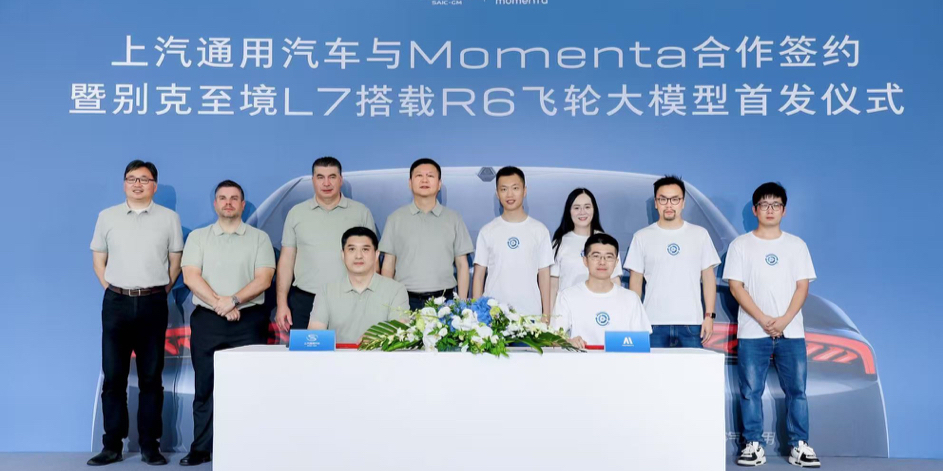
Core Insights - The collaboration between joint venture automakers and local intelligent driving companies aims to enhance competitiveness in the increasingly important smart driving sector [2][3][5] - Recent partnerships include SAIC-GM's agreement with Momenta to integrate advanced driving assistance systems into their vehicles, such as the Buick Zhijing L7 [2][4] - The market share of domestic new energy vehicles reached 70% in July, while mainstream joint venture brands saw a decline to 3.6%, highlighting the urgency for joint ventures to innovate [3] Industry Trends - Joint venture automakers are increasingly partnering with local tech firms to leverage their R&D capabilities and better meet the demands of the Chinese market [2][3] - The trend of integrating local intelligent driving technologies into vehicles is seen as a strategic move to regain market share against rising domestic brands [3][6] - The collaboration is expected to yield significant advancements in driving assistance technologies, with a focus on safety and performance [5][6] Technological Developments - The Buick Zhijing L7 will feature the Momenta R6 flying model, which utilizes end-to-end reinforcement learning for advanced driving assistance [4] - The partnership aims to combine the strengths of both companies, with Momenta providing cutting-edge AI technology and SAIC-GM contributing extensive automotive engineering expertise [5][7] - The development of L3 level autonomous driving technology is underway, with plans to align product offerings with regulatory timelines [8]
一颗芯片,颠覆智驾江湖
半导体芯闻· 2025-08-22 11:28
Core Viewpoint - The emergence of Momenta's self-developed driving chip marks a significant shift in the domestic intelligent driving industry, transitioning from a software-only company to a full-stack supplier, posing new competitive challenges to existing players in the market [1][2][20]. Company Overview - Momenta, established in 2016, focuses on high-performance intelligent driving solutions, targeting both L2 and L4 markets, and has partnerships with major global automakers, including SAIC, BYD, and Toyota [2][3]. - The company holds the largest market share in urban NOA technology at 60.1%, with cumulative sales of 114,000 vehicles equipped with its technology [3][19]. Self-Developed Chip Significance - Momenta's self-developed chip is positioned for the mid-range market, offering cost advantages and compatibility with existing products, which enhances its competitive edge [6][19]. - The strategy of "downward integration" is expected to create stronger competitive barriers and higher value capture capabilities for the company [6][10]. Impact on Competitors - The introduction of Momenta's chip poses significant challenges to NVIDIA and Qualcomm, as it allows automakers to transition smoothly from their solutions, increasing competitive pressure on these established players [8][10]. - Domestic chip manufacturers like Horizon Robotics and Black Sesame are also facing heightened competition, as Momenta's software expertise may overshadow their advantages [10][11]. Implications for Automakers - Automakers are reevaluating the necessity and cost-effectiveness of in-house chip development in light of Momenta's competitive offerings, particularly for resource-constrained new entrants [12][14]. - The shift towards Momenta's integrated solutions may lead to a reassessment of self-research strategies among automakers, balancing differentiation with cost advantages [15][21]. Strategic Challenges Ahead - Momenta faces challenges in achieving large-scale production and meeting stringent automotive safety standards, which are critical for its long-term success [20][21]. - The competitive landscape is expected to intensify as established players like NVIDIA and Qualcomm may respond with price cuts or enhanced technology to counter Momenta's market entry [20][21].



Momenta自研芯片,打响智驾芯片淘汰赛
半导体行业观察· 2025-08-22 01:17
Core Viewpoint - The emergence of Momenta's self-developed driving chip marks a significant shift in the domestic intelligent driving industry, transitioning from a software-only company to a full-stack supplier, which introduces new competition and challenges for existing players in the market [2][3][27]. Group 1: Company Overview - Momenta, established in 2016, focuses on high-performance intelligent driving solutions, targeting both L2 and L4 markets, and has established partnerships with numerous leading automotive manufacturers globally, including SAIC, BYD, and Toyota [3][4]. - As of now, Momenta holds the highest number of high-level intelligent driving projects and partnerships among suppliers, with a cumulative sales volume of 114,000 vehicles equipped with its city NOA technology, leading the industry [4][26]. Group 2: Market Impact - Momenta's self-developed chip primarily targets the mid-range market, maintaining compatibility with existing mainstream products while offering cost advantages, which could enhance its competitive edge and operational efficiency [8][10]. - The entry of Momenta into chip development poses significant challenges to established players like NVIDIA and Qualcomm, as it allows for seamless transitions for automotive manufacturers from existing solutions to Momenta's offerings, potentially disrupting their market positions [12][14]. Group 3: Competitive Landscape - The competition landscape is shifting, with traditional chip manufacturers like Horizon and Black Sesame facing increased pressure from Momenta's integrated software and hardware solutions, which could undermine their market differentiation [14][15]. - Emerging chip companies, such as Weijing, Aixin Yuanzhi, and Xingchen, may find their market space further constricted as Momenta leverages its software expertise to optimize hardware solutions, creating a significant competitive barrier [15][28]. Group 4: Automotive Manufacturers' Strategies - Automotive manufacturers that have invested heavily in self-developed chips, like Xiaopeng and Li Auto, may need to reassess the value of their investments in light of Momenta's cost-effective and technologically superior solutions [18][20]. - The shift towards Momenta's offerings may prompt a reevaluation of self-development strategies among car manufacturers, potentially leading to a focus on key components rather than full in-house development [21][22]. Group 5: Industry Trends - The trend of software companies integrating hardware solutions is gaining momentum, as evidenced by Momenta's successful transition, which may influence other players in the industry to adapt their business models accordingly [23][25]. - The competitive dynamics in the intelligent driving sector are evolving, with companies needing to balance differentiation and cost-effectiveness in their strategies to remain viable in a rapidly changing market [28].

没有高效的技术和行业信息渠道,很多时间浪费了。。。
自动驾驶之心· 2025-08-21 23:34
Core Insights - The article emphasizes the importance of efficient information collection channels for individuals seeking to transition into the autonomous driving industry, highlighting the establishment of a comprehensive community that integrates academic content, industry discussions, open-source solutions, and job opportunities [1][3]. Group 1: Community and Resources - The community serves as a platform for cultivating future leaders in the autonomous driving field, providing a space for academic and engineering discussions [3]. - The community has grown to over 4,000 members, offering a blend of video content, articles, learning paths, Q&A, and job exchange [1][3]. - A variety of resources are available, including a complete entry-level technical stack and roadmap for newcomers, as well as valuable industry frameworks and project proposals for those already engaged in research [9][11]. Group 2: Learning and Development - The community has compiled extensive resources, including over 40 open-source projects and nearly 60 datasets related to autonomous driving, along with mainstream simulation platforms and various technical learning paths [16]. - Specific learning routes are available for different aspects of autonomous driving, such as perception, simulation, and planning control, catering to both beginners and advanced practitioners [17][16]. - The community also offers a series of video tutorials covering topics like sensor calibration, SLAM, decision-making, and trajectory prediction [5]. Group 3: Job Opportunities and Networking - The community has established internal referral mechanisms with multiple autonomous driving companies, facilitating job placements for members [5]. - Continuous job sharing and position updates are provided, creating a complete ecosystem for autonomous driving professionals [13]. - Members can freely ask questions regarding career choices and research directions, receiving guidance from experienced peers [82].
上汽集团与奥迪携手布局豪华电动车市场
Zhong Guo Zheng Quan Bao· 2025-08-21 20:11
Core Viewpoint - The automotive industry is undergoing significant transformation, with SAIC Group leveraging smart upgrades, platform updates, and ecosystem restructuring to achieve new reform results, as evidenced by the launch of new electric vehicle models [1]. Group 1: Market Restructuring - SAIC Group and Audi have jointly developed the luxury electric vehicle brand AUDI, with the E5 Sportback pre-sale starting at a competitive price of 235,900 yuan, breaking the previous price barrier in the luxury electric vehicle market [1]. - The E5 Sportback aims to capture market share in the luxury electric vehicle segment, which has been limited by higher starting prices of previous models [1]. Group 2: Acceleration of Electrification - The E5 Sportback features advanced technology, including a front and rear permanent magnet synchronous motor that accelerates from 0 to 100 km/h in just 3.4 seconds, and a maximum range of 773 km thanks to the integration of CATL's CTP battery technology [2]. - The vehicle supports rapid charging, achieving 370 km of range in just 10 minutes, facilitated by an 800-volt high-voltage platform [2]. Group 3: Intelligent Features - The E5 Sportback is equipped with the new AUDI OS operating system and Qualcomm Snapdragon 8295 digital cockpit chip, providing an interactive smart cockpit experience with advanced voice control capabilities [3]. - The vehicle incorporates a comprehensive driver assistance system developed in collaboration with Momenta, featuring 27 perception hardware components, including laser radar and multiple cameras, supported by NVIDIA Orin-X chip computing power [3]. Group 4: Manufacturing and Market Expansion - The E5 Sportback is produced at the SAIC Audi manufacturing base, which combines German precision with Chinese manufacturing, featuring high automation and a fully digital production management system, with an annual production capacity of 360,000 vehicles [3]. - To ensure market success, SAIC Audi plans to expand its dealer network to 240 stores across over 100 core cities by the end of the year [3].

上汽通用“牵手”Momenta,别克至境L7将化身“AI驾驶宗师”
Xin Lang Cai Jing· 2025-08-21 06:47
Core Insights - SAIC-GM has signed a strategic cooperation agreement with Momenta to enhance advanced driver assistance systems tailored for Chinese roads and users [1] Group 1: Strategic Partnership - The collaboration aims to leverage technological integration and safety expertise to develop advanced driving technologies [1][4] - This partnership signifies Buick's commitment to combining global automotive expertise with local innovation to lead in the new energy vehicle market [4] Group 2: Product Launch - Buick's high-end electric sub-brand "Zhijing" will launch its first intelligent luxury sedan, the Zhijing L7, featuring the Momenta R6 flying model based on end-to-end reinforcement learning [2] - The Zhijing L7 will offer full-scene driving assistance capabilities, including "no-break" urban NOA and the industry's first "no-stop one-button parking" feature [2][3] Group 3: Technological Advancements - The Momenta R6 flying model utilizes 3 billion kilometers of real-world driving data and 70 million key data points to enhance its decision-making and adaptability in complex driving scenarios [2] - The vehicle can effectively handle challenging situations such as close-cutting, blind spots, and other high-risk scenarios, providing a seamless driving experience [2][3] Group 4: User Experience Enhancements - The Zhijing L7's advanced features include smooth driving performance akin to experienced human drivers, precise recognition in narrow road conditions, and efficient toll booth navigation [3] - The "no-stop one-button parking" feature allows for real-time parking space recognition and optimal trajectory planning, significantly improving parking efficiency [3]
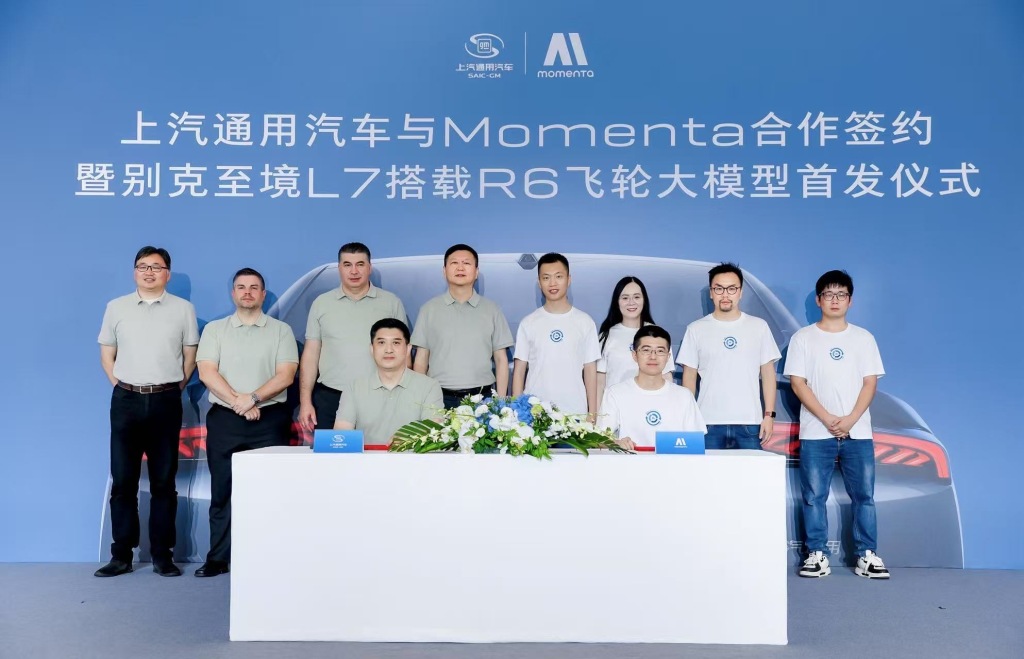
上汽通用与Momenta官宣合作 本土智驾辅助系统全面上车
Jing Ji Guan Cha Wang· 2025-08-20 16:28
Core Viewpoint - SAIC-GM has signed a strategic cooperation agreement with Momenta to deepen collaboration in the field of assisted driving, marking a significant step in adopting local technology solutions for intelligent driving in their vehicles [3][4] Group 1: Partnership Details - The first model to feature Momenta's R6 Flywheel model will be the Buick high-end electric sub-brand "Zhijing" L7, which will showcase advanced assisted driving capabilities [3][4] - Momenta has become a prominent player in the domestic intelligent driving supply market, with partnerships extending to various brands including Toyota and Honda, but SAIC-GM's investment in Momenta gives it a unique position [3][4] Group 2: Technology Overview - The R6 Flywheel model is based on 3 billion kilometers of real-world driving data and utilizes 70 million data points through reinforcement learning, aiming to surpass human driving capabilities [4][5] - The intelligent driving system in the Zhijing L7 includes a comprehensive sensor suite with 12 ultrasonic radars, 12 cameras, 3 millimeter-wave radars, and 1 lidar, designed with high redundancy for enhanced safety and performance [7][8] Group 3: Development History - SAIC-GM's development of intelligent driving systems has evolved through three stages, starting with the introduction of Super Cruise in North America, leading to the development of a second-generation system for the Buick GL8 [6] - The collaboration with Momenta represents an advancement in SAIC-GM's capabilities in intelligent driving, integrating Momenta's expertise in perception and algorithm models with SAIC-GM's experience in vehicle control [6]