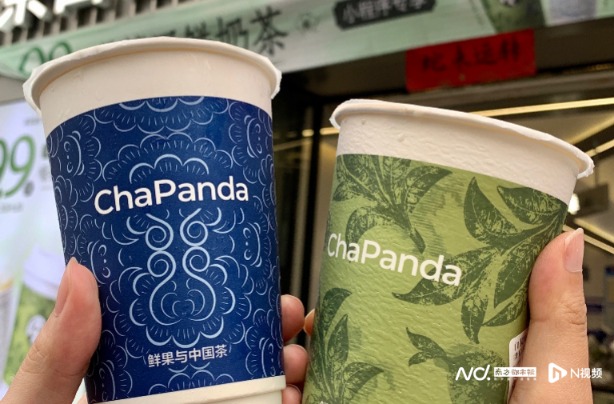
茶百道

Search documents
海底捞允许宠物上桌,“它经济”真的来了?
36氪未来消费· 2025-09-29 09:25
Core Viewpoint - The article highlights the innovative approach of Haidilao in launching a pet-friendly themed restaurant, reflecting the growing market demand for pet-inclusive dining experiences and the company's efforts to differentiate itself in a competitive industry [4][10]. Group 1: Haidilao's Pet-Friendly Themed Store - Haidilao opened its first pet-friendly themed store in Longhua District, Shenzhen, featuring designated areas for large and small pets, as well as a pet beauty and photo zone [4]. - The store staff demonstrated exceptional service by being knowledgeable about pet dietary needs and actively engaging with pets, which sets it apart from other restaurants that merely allow pets [5]. - The restaurant offers a dedicated pet menu with items priced around 20-30 yuan, while maintaining the same pricing for regular menu items, surprising pet owners [6]. Group 2: Market Trends and Consumer Behavior - The pet-related business market in China has grown significantly, from 97.8 billion yuan in 2015 to 592.8 billion yuan in 2023, with projections of reaching 811.4 billion yuan by 2025, driven by young consumers who view pets as family [7]. - The shift in consumer preferences has led to an increase in demand for pet-friendly services, transforming "pet-inclusive consumption" from a niche to a mainstream trend [7]. Group 3: Competitive Landscape and Financial Performance - Other beverage brands, such as Starbucks and Manner, have also ventured into the pet-friendly market, indicating a broader trend within the industry [8]. - Haidilao's financial performance showed a revenue of 20.703 billion yuan in the first half of 2025, a decrease of 3.7% year-on-year, while net profit fell by 13.7% due to initial adjustments in service and product innovation [8]. - Despite the financial challenges, revenue from "other restaurant operations" surged from 182 million yuan to 597 million yuan, reflecting the success of Haidilao's new brand initiatives and themed stores [8]. Group 4: Consumer Feedback and Future Outlook - Many pet owners now prioritize Haidilao as their first choice for hotpot dining, valuing pet-friendliness even over taste and price [11]. - Some concerns were raised regarding the management of pet areas and the clarity of pet menu item descriptions, indicating areas for improvement [11]. - Overall, consumer sentiment towards the pet-friendly concept remains positive, and Haidilao plans to continue expanding its themed store offerings in the future [11].


餐饮、潮玩及家电行业周报-20250928
Haitong Securities International· 2025-09-28 15:18
Investment Rating - The report assigns an "Outperform" rating to multiple companies including Pop Mart, Anta Sports, and Haidilao, while Budweiser APAC is rated "Neutral" [1]. Core Insights - The report highlights significant developments in the F&B, designer toys, and home appliances sectors, including Amap waiving annual entry fees for F&B merchants and MINISO's plan to spin off TOPTOY for public listing [5][6]. - Key performers this week include XIABUXIABU (+8.6%) and HISENSE V.T. (+12.7%), while underperformers include Green Tea Group (-9.8%) and MINISO (-11.1%) [2][6]. Summary by Sections Industry News - Amap announced a one-year waiver of annual entry fees for all F&B merchants nationwide, along with various support services [5]. - Guoquan proposed a share buyback of up to HK$100 million, citing that the current stock price does not reflect the company's intrinsic value [5]. - MINISO plans to spin off its subsidiary TOPTOY for independent listing on the Hong Kong Stock Exchange [5]. - Xiaomi's major home appliances have officially entered the European market, with the opening of its first direct store in Germany [5]. - Hisense commenced construction of its largest overseas industrial park in Thailand, aimed at expanding its footprint in ASEAN and globally [5]. Weekly Performance of Key Companies - Top performers include XIABUXIABU (+8.6%) in the F&B sector and HISENSE V.T. (+12.7%) in the home appliance sector [6]. - Underperformers include Green Tea Group (-9.8%) in the F&B sector and MINISO (-11.1%) in the designer toys sector [6].
强园区、促开放、优环境 成都青白江100条新政加快建设营商环境新高地
Mei Ri Jing Ji Xin Wen· 2025-09-28 13:06
Core Viewpoint - Chengdu Zhongtai New Materials Co., Ltd. is accelerating the construction of its metal products R&D and production base in Qingbaijiang, with an expected output value exceeding 1 billion yuan after it officially operates next year [1] Group 1: Project Development - The Qingbaijiang metal products R&D and production base project has progressed rapidly since its approval on January 6, achieving significant milestones in just over eight months [1] - The project is part of a broader initiative to enhance the business environment in Qingbaijiang, which is seen as a key area for high-quality development [1][2] Group 2: Policy Initiatives - On September 28, Qingbaijiang District announced 100 new policies aimed at optimizing the business environment, focusing on park development and service improvements [1][2] - Over 50% of the new policies are dedicated to supporting park construction and industrial development, including mechanisms to enhance service and reduce operational costs [2] Group 3: Economic Impact - In the first half of the year, the five main industries in Qingbaijiang generated over 30 billion yuan in revenue, with foreign trade in the five major port trade industries reaching 10.24 billion yuan, a growth of 52.8% [4] - The rapid development of the Chengdu International Railway Port Economic and Technological Development Zone is a priority for Qingbaijiang, contributing to the establishment of a modern industrial system [2][4] Group 4: Cross-Border Trade and Logistics - The Qingbaijiang area is enhancing its international logistics capabilities, with a focus on building a multi-modal transport network to facilitate cross-border trade [7][8] - The region has established a comprehensive international freight network, connecting over 126 cities abroad and 30 cities domestically, with more than 35,000 trains operated [8] Group 5: Business Environment and Services - Qingbaijiang District emphasizes a first-class business environment as a key competitive advantage, providing comprehensive support for enterprises from project initiation to production [3][9] - The district is implementing a "business-friendly government service" model, focusing on meeting enterprise needs and reducing administrative burdens [11]
1688平台将推出全球首个跨境电商AI智能体;霸王茶姬全球最大超级茶仓落地香港|36氪出海·要闻回顾
3 6 Ke· 2025-09-27 23:00
Group 1: E-commerce Innovations - Alibaba's 1688 platform is set to launch the world's first cross-border e-commerce AI agent named "Ao Xia," which will reduce product selection time from days to minutes by using visual recognition and semantic analysis [2] - Taobao is investing 1 billion yuan in marketing subsidies for its Double 11 event, aiming to help 100,000 merchants double their overseas sales, with a focus on 20 countries and regions [2] - Poland's e-commerce market is projected to reach 35.2 billion euros (approximately 294.39 billion yuan) in 2024, with cross-border e-commerce transactions accounting for nearly 20% of total online sales [9] Group 2: Market Expansion and New Store Openings - Bawang Chaji has opened its largest "super tea warehouse" in Hong Kong, marking its seventh store in the region, with plans for more openings in the coming months [3] - Cha Baidao has opened its first store in Paris, achieving nearly 500,000 yuan in sales in its first week, with plans for additional locations [4] - Yadi Group is set to enter the Japanese market with electric two-wheelers priced around 210,000 yen, significantly cheaper than local brands [6] Group 3: Strategic Partnerships and Collaborations - YTO Airlines has partnered with Freightos WebCargo, becoming the first private all-cargo airline in China to join the platform, enhancing digital booking and payment services for over 25,000 freight forwarding companies [5] - ByteDance and Mercedes-Benz have announced a strategic partnership covering various fields, including smart driving and digital marketing [5] - UBTECH and Yunzhihui Technology have signed a global strategic cooperation agreement to promote humanoid robots in China and globally [6] Group 4: Financing and Investment Activities - Xingmai Innovation has completed a 1 billion yuan A+ round of financing to enhance technology development and expand overseas markets, with products now available in 38 countries [7] - Haiguo Tuzhi Research Institute has secured nearly 10 million yuan in angel round financing for its solar energy storage vehicle project, which has already received initial orders in Bangladesh [8] - Resai Intelligent has completed a multi-million Pre-B round financing to expand its 3D printing solutions for dental applications [9]

中国公司全球化周报|1688平台将推出全球首个跨境电商AI智能体/霸王茶姬全球最大超级茶仓落地香港
3 6 Ke· 2025-09-27 14:02
Group 1: Company Developments - Alibaba's 1688 platform is set to launch the world's first cross-border e-commerce AI product named "Ao Xia," which is currently in internal testing and expected to go live in November 2025. This AI will significantly reduce the product selection cycle from days to minutes by using visual recognition and semantic analysis [3]. - Taobao is accelerating its globalization efforts for this year's Double 11 shopping festival, investing 1 billion yuan in marketing subsidies to help 100,000 merchants double their overseas sales. The platform will operate in 20 countries and regions simultaneously, offering a "0 return and refund, 0 operational cost" model for merchants [3]. - Bawang Tea Ji has opened its largest "super tea warehouse" in Hong Kong, marking its seventh store in the region. The brand plans to open over ten new stores in Hong Kong in the coming months, aiming for rapid market expansion [4]. - Cha Baidao has opened its first store in Paris, achieving nearly 500,000 yuan in sales during its first week. The brand is also planning additional locations in the city [4]. - Pop Mart has launched its official e-commerce platform in Mexico, focusing on the Latin American market, with a significant increase in revenue from the Americas, which surged by 1142.3% year-on-year [4]. - Yadi Group is set to enter the Japanese market in November, offering electric two-wheelers at competitive prices, aiming to meet new emissions standards [7]. Group 2: Investment and Financing - Xingmai Innovation has completed a 1 billion yuan A+ round of financing, which will be used for technology development and expanding overseas markets. The company has entered 38 countries and has over 2,000 offline stores [8]. - Haiguo Tujizhi Research Institute has secured nearly 10 million yuan in angel round financing for its solar energy storage vehicle project, which has already received initial orders in Bangladesh [8]. - Yousi Animation has raised several million yuan in angel round financing to enhance its AI technology and expand into overseas markets, particularly targeting the Japanese market for its animated content [8]. - Antai Weijing has completed a several hundred million yuan B round of financing to accelerate the development of its high-precision surgical robot platform [8]. - Laisai Intelligent has raised several million yuan in Pre-B round financing to expand its 3D printing solutions for dental applications in international markets [8]. Group 3: Market Trends and Policies - Poland has emerged as one of the fastest-growing e-commerce markets in the EU, with a projected market size of 35.2 billion euros in 2024, and cross-border e-commerce transactions accounting for nearly 20% of total online sales [9]. - Vietnam is proposing a new e-commerce law focusing on regulating live-stream sales and consumer protection, with the market expected to reach 25 billion USD in 2024 [10].


1688平台将推出全球首个跨境电商AI智能体;霸王茶姬全球最大超级茶仓落地香港|36氪出海·要闻回顾
36氪· 2025-09-27 13:34
Group 1 - Alibaba's 1688 platform is set to launch the world's first cross-border e-commerce AI agent named "Ao Xia," which is currently in internal testing and expected to go live in November 2025. This AI product will significantly reduce the product selection cycle from days to minutes by using visual recognition and semantic analysis [5] - Taobao is accelerating its globalization efforts for this year's Double 11 shopping festival, investing 1 billion yuan in marketing subsidies to help 100,000 merchants double their overseas sales. The platform has seen a 200% year-on-year growth in new overseas users since April [5] - Bawang Tea Ji has opened its largest "super tea warehouse" in Hong Kong, marking its seventh store in the region, with plans for more locations to enhance its market presence [6] Group 2 - Pop Mart has launched its official e-commerce platform in Mexico, featuring core IP products and responding to the growing demand in the Latin American market, with a reported revenue increase of 1142.3% in the Americas [7] - Yadi Group is set to enter the Japanese market in November with its electric two-wheelers, priced approximately 210,000 yen, which is about 30% cheaper than local competitors [9] - Starry Innovation has completed a 1 billion yuan A+ round of financing, aiming to expand its smart pool cleaning robot products into 38 countries [10] Group 3 - Poland has emerged as one of the fastest-growing e-commerce markets in the EU, with a projected market size of 35.2 billion euros in 2024, and cross-border e-commerce transactions accounting for nearly 20% of total online sales [13] - Vietnam's Ministry of Industry and Trade is discussing a draft e-commerce law aimed at regulating live commerce and enhancing market transparency, with the e-commerce market expected to reach 25 billion USD in 2024 [14]



柠檬缺货背后:蜜雪冰城和新茶饮们的供应链大考
Zhong Guo Jing Ying Bao· 2025-09-26 19:49
Core Insights - The recent shortage of lemon water at Mixue Ice City has raised concerns among consumers, as the company sells over 1 billion cups annually, highlighting the vulnerability of the supply chain in the beverage industry [1][2][5] Supply Chain Issues - The shortage is attributed to delays in imported lemons due to weather conditions and the local lemon harvesting season not aligning with demand, leading to supply constraints in various cities including Sichuan, Guangdong, and Jiangsu [1][2] - Mixue Ice City relies heavily on a single source for lemons, with approximately 70% of its annual lemon procurement of about 115,000 tons coming from Anju, Sichuan, which accounts for nearly 10% of the national lemon production [2][3] Market Dynamics - The price of lemons has surged, with the average wholesale price reaching 15 yuan per kilogram, double the price from the previous year, driven by increased demand from both beverage and food processing industries [3][4] - The rapid expansion of the tea beverage market, growing at 20% annually, is outpacing the growth of lemon planting areas, which are expected to increase by only 8% by 2025, leading to a mismatch in supply and demand [4][5] Competitive Landscape - Other tea beverage companies, such as Cha Bai Dao and Gu Ming, have established robust supply chains and diversified sourcing strategies to mitigate risks associated with raw material shortages [6][7] - The need for new tea beverage companies to develop resilient supply chains and reduce dependency on single sources is emphasized, as consumer trust may decline with frequent product shortages [5][6] Strategic Recommendations - Companies are encouraged to engage in large-scale procurement to lower costs and explore multiple sourcing channels to avoid reliance on a few suppliers [7] - The establishment of "order-based agriculture" and investment in upstream cultivation, as seen with Mixue Ice City's initiatives in Sichuan, can enhance supply chain stability [6][7]
2025茶饮行业市场规模、竞争格局及供需现状分析报告
Sou Hu Cai Jing· 2025-09-26 11:15
Industry Overview - In 2023, China's ready-to-drink tea market reached a scale of 258.5 billion yuan, with a compound annual growth rate (CAGR) of 19.0% from 2018 to 2023. It is expected to grow to 573.2 billion yuan by 2028, with a CAGR of 17.3% from 2023 to 2028 [1][10][21]. Growth Drivers - The growth of the ready-to-drink tea market is driven by four main factors: rising temperatures, substitution of soft drinks, release of demand in lower-tier markets, and the addictive nature of ready-to-drink tea [1][10][21]. - Rising average temperatures and an increase in extreme hot days stimulate tea consumption, as tea is often an impulsive purchase [12][16]. - Ready-to-drink tea is increasingly replacing soft drinks, with 87.4% of respondents reporting increased consumption of ready-to-drink tea and 56.2% indicating a decrease in soft drink consumption [16][21]. - The demand in lower-tier markets is gradually being met as quality ready-to-drink tea shops expand into these areas, with a growth rate of 30.7% from 2018 to 2023 [17][21]. - Ready-to-drink tea has a certain level of addictiveness, leading to high frequency and loyalty in consumption, with current consumption levels in China significantly lower than in developed countries [21][25]. Competitive Landscape - The market concentration among the top five brands (CR5) is significant, reaching 49% in 2024, with the leading brand, Mixue Ice City, holding a market share of 20.9% [1][27][32]. - The competition is characterized by a clear structure in the low-price segment, intense competition in the mid-price segment, and price reductions among high-end brands seeking survival [27][32]. - The franchise model has become the preferred expansion strategy, allowing brands to leverage local resources and reduce costs [32][62]. Market Segmentation - The low-price segment is dominated by Mixue Ice City, which has established a strong cost advantage through scale and supply chain efficiency [37][41]. - The mid-price segment is highly competitive, with brands like Gu Ming, Cha Bai Dao, and Hu Shang A Yi emerging as key players, each with unique strategies [46][55]. - High-end brands have been forced to lower prices to remain competitive, with significant changes in pricing strategies observed among brands like Heytea and Nayuki [58][60]. Future Outlook - The ready-to-drink tea market has the potential to exceed 700 billion yuan in the medium term, with a projected market size of 713 billion yuan based on population growth and increased consumption [22][26]. - The industry is expected to experience a phase of consolidation, with smaller brands being phased out as larger brands continue to expand [8][62].


“微利时代”下,餐饮品牌如何破局?
Hu Xiu· 2025-09-26 03:38
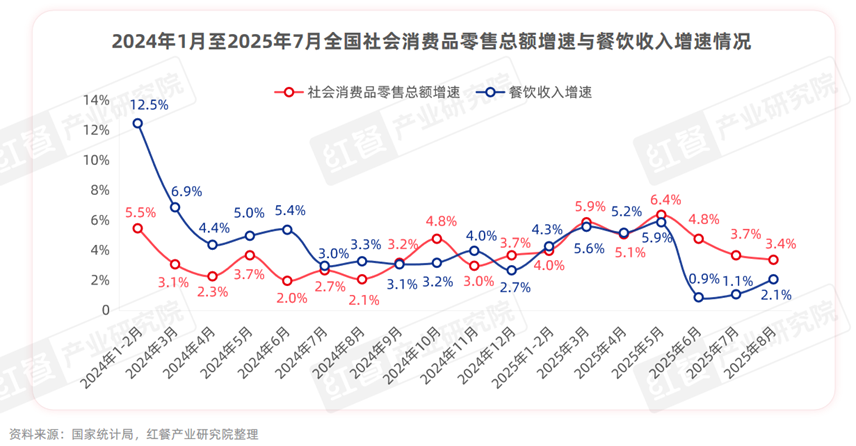
Core Insights - The Chinese catering industry is experiencing a slowdown in growth, with a significant decline in revenue growth rates and a shift in consumer spending habits [2][16][18] - The industry is undergoing a transformation characterized by increased chain operations, innovative marketing strategies, and a focus on product differentiation [5][24][35] Market Overview - National catering revenue from January to August 2025 reached 3.6 trillion yuan, with a year-on-year growth of 3.6%, down 3 percentage points from the same period in 2024 [2] - The number of catering outlets in China exceeded 7.6 million by August 2025, a decrease of 1.9% compared to 2024 [3] Chain Operations - The chain rate in the catering industry has accelerated, with the overall chain rate increasing from 15% in 2020 to an estimated 25% in 2025 [5][6] - The fast food segment saw a 4 percentage point increase in chain rate from 2023 to 2024, reaching 29% [6] Delivery Market Dynamics - The national food delivery market exceeded 1.27 trillion yuan in 2024, growing by 6.2% year-on-year, and is expected to exceed 1.4 trillion yuan in 2025 [9][10] - Daily food delivery orders peaked at over 200 million by August 2025, doubling from 2024 [10] Consumer Behavior - Consumer spending on dining is becoming more cautious, with a significant drop in the proportion of consumers expecting to increase their dining expenditures in 2025 [16][18] - The average per capita consumption in the catering sector fell to 36.6 yuan by August 2025, a decrease of 7.7% from 2024 [18] Industry Trends - The catering industry is witnessing a "listing wave," with several major brands going public in 2025, although many are facing financial challenges [19][22] - The average lifespan of catering outlets has decreased, with many businesses closing within two years of operation [22] Product Innovation - Brands are focusing on product innovation, with over 5,263 new products launched from January to July 2025 [25][28] - Regional ingredients and flavors are becoming key areas for product development [28][29] Marketing Strategies - Short drama marketing is emerging as a new trend, with many brands producing series to engage consumers [35] - User-generated content (UGC) marketing is gaining popularity, with brands launching interactive campaigns to enhance consumer engagement [37] Digital Transformation - The catering industry is increasingly adopting digital and AI technologies to enhance operational efficiency and customer engagement [38][41] - Brands are implementing digital systems for supply chain management and customer relationship management [39][42] International Expansion - Chinese catering brands are exploring overseas markets, with over 30 brands opening their first international locations since 2024 [43] - However, many brands are adopting a more cautious approach to international expansion in 2025 [45][46] Segment Highlights - The "small stir-fry" segment is gaining popularity, particularly in Jiangxi cuisine, with significant social media engagement [52] - The hot pot market is experiencing a decline in outlet numbers and average spending, while smaller hot pot formats are thriving [55][58] - The fast food segment is growing steadily, driven by consumer demand for value [61] - The ready-to-drink beverage market is stabilizing, with tea drinks entering an adjustment phase while coffee drinks continue to grow [64][67]
茶饮企业加入咖啡价格战 咖啡企业奶茶化 9块9或成生死线
Nan Fang Du Shi Bao· 2025-09-25 14:10
Core Viewpoint - The Chinese coffee market is undergoing a significant "value deconstruction," with prices being driven down to as low as 4.9 yuan, transforming coffee from a luxury item into an accessible consumer good [1][6][28] Group 1: Market Dynamics - Luckin Coffee and Kudi initiated a price war by normalizing the 9.9 yuan coffee price, which has now been further undercut by tea brands like Cha Bai Dao and Gu Ming, bringing prices down to 6.9 yuan and 4.9 yuan [1][3][6] - The coffee market is expanding under the influence of low prices, leading to a bifurcation between affordable and premium offerings [1][7] - The shift in consumer behavior has moved from "going out for coffee" to "picking up coffee on the way," indicating a change in consumption scenarios [6][28] Group 2: Competitive Landscape - Tea brands are entering the coffee market, leveraging their existing customer base and aiming for increased sales, with Gu Ming reporting a 10% average sales increase after introducing coffee [3][5] - The ongoing "subsidy war" in the delivery sector is further driving down prices, making coffee more appealing to consumers who are already purchasing tea [5][28] Group 3: Profitability Concerns - The price war raises questions about profitability, as the cost of quality coffee beans often exceeds the selling price, leading to concerns about how companies can sustain profits [10][14] - Kudi's coffee cost structure indicates that selling coffee at 9.9 yuan may not cover costs unless sales volumes are sufficiently high, suggesting a reliance on scale for profitability [11][14] - Despite the price pressures, major brands like Luckin and Kudi continue to report significant revenues, although their profit margins are under strain due to aggressive pricing strategies [27][28] Group 4: Future Trends - The coffee market is likely to see a split between low-cost, high-frequency consumption brands and premium, experience-focused independent cafes [28][29] - Consumer perceptions are also diverging, with some viewing coffee as a daily necessity while others still value the premium experience associated with high-end coffee [29]