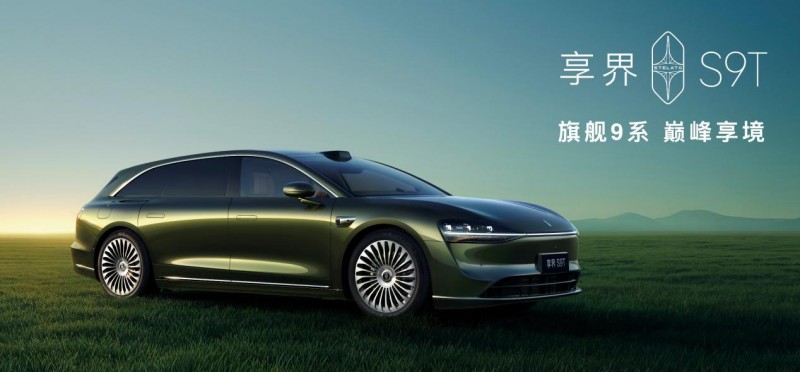
奔驰

Search documents
当车展回归理性,人们发现奔驰还是那个奔驰
凤凰网财经· 2025-12-18 14:38
Core Viewpoint - The Guangzhou Auto Show this year reflects a shift in focus from sensationalism to substantive product offerings, with Mercedes-Benz showcasing a commitment to quality and innovation in a more stable market environment [1][2][6]. Group 1: Product Innovation and Strategy - Mercedes-Benz distinguishes itself from competitors by offering substantial upgrades across its vehicle lineup, including the long-wheelbase C-Class, which features a 2.0T engine, heated front seats, and advanced parking assistance [4]. - The brand's strategy emphasizes that intelligence and luxury are not optional but essential, with the long-wheelbase C-Class being the first in its segment to feature the Qualcomm 8295 smart cockpit chip and the third-generation MBUX system [7][9]. - Mercedes-Benz's commitment to safety and quality is evident in its rigorous testing protocols, including 15,000 simulation tests and over 150 real vehicle crash tests, ensuring that safety and quality are not compromised regardless of the powertrain [11][22]. Group 2: Market Position and Value Retention - The brand's strong resale value is highlighted by the E-Class, which ranks first in the mid-size sedan category for three-year resale value, indicating that Mercedes vehicles are seen as reliable assets in the second-hand market [16][17]. - The high resale value is supported by a unified global manufacturing standard, extensive after-sales network, and classic design language that avoids rapid aesthetic obsolescence [17]. - In an era of uncertainty, the predictability and reliability of Mercedes-Benz vehicles are positioned as a luxury in themselves, appealing to consumers seeking long-term partnerships in mobility [18]. Group 3: Philosophical Approach to Luxury - Mercedes-Benz's definition of luxury transcends its historical legacy, rooted in a philosophy that emphasizes systematic innovation and a unified strategy across its product matrix [20]. - The brand's approach to luxury is characterized by a deep understanding of human needs, focusing on safety, comfort, and quality without compromise, which has allowed it to navigate industry cycles and technological revolutions effectively [22][23]. - As the automotive industry shifts from disruptive narratives to value-driven storytelling, Mercedes-Benz's stability and forward-thinking approach stand out, prioritizing real value and dependable experiences for consumers [23].

吉利,加码固态电池
DT新材料· 2025-12-18 14:13
| 中国未来产业崛起引领全球新材料创新发展 | | --- | | 2026.06.10 -> 06.12 上海新国际博览中心(N1-N5)馆 | | 2026未来产业新材料博览会 | (FINE),围绕机器人、汽车、无人机、数据中心、航空航天、AI、新能源等未 | | | --- | --- | --- | | 来产业共性需求特设6大展区, | N3 先进电池与能源材料展区 聚焦 | 固态 | | 电池 | 、钠电池、钙钛矿、液流电池、电容器 等 | | | , | 欢迎咨询:18957804107 | | 【DT新材料】 获悉,近日, 吉利 在固态电池赛道动作频频,除对 2026-2027年度固态电池电芯研发物料进行采购 招标外,12月9日,据"吉利招标"信息, 浙江 绿色智行科创有限公司 (下称"绿色智行")发布招标公告",对2026-2027年度固态电池电芯研发物料进行招标。 该项目总投资7100万元,主要用于固态电池阶段性实验成果的放大性测试,以验证电池稳定性、阻抗性以及使用寿命,摸索最佳数据,为规模化生产提供依据。 公告同时显示,该项目电池主要分为两类: 60Ah电池和<1Ah电池。60Ah电池每 ...

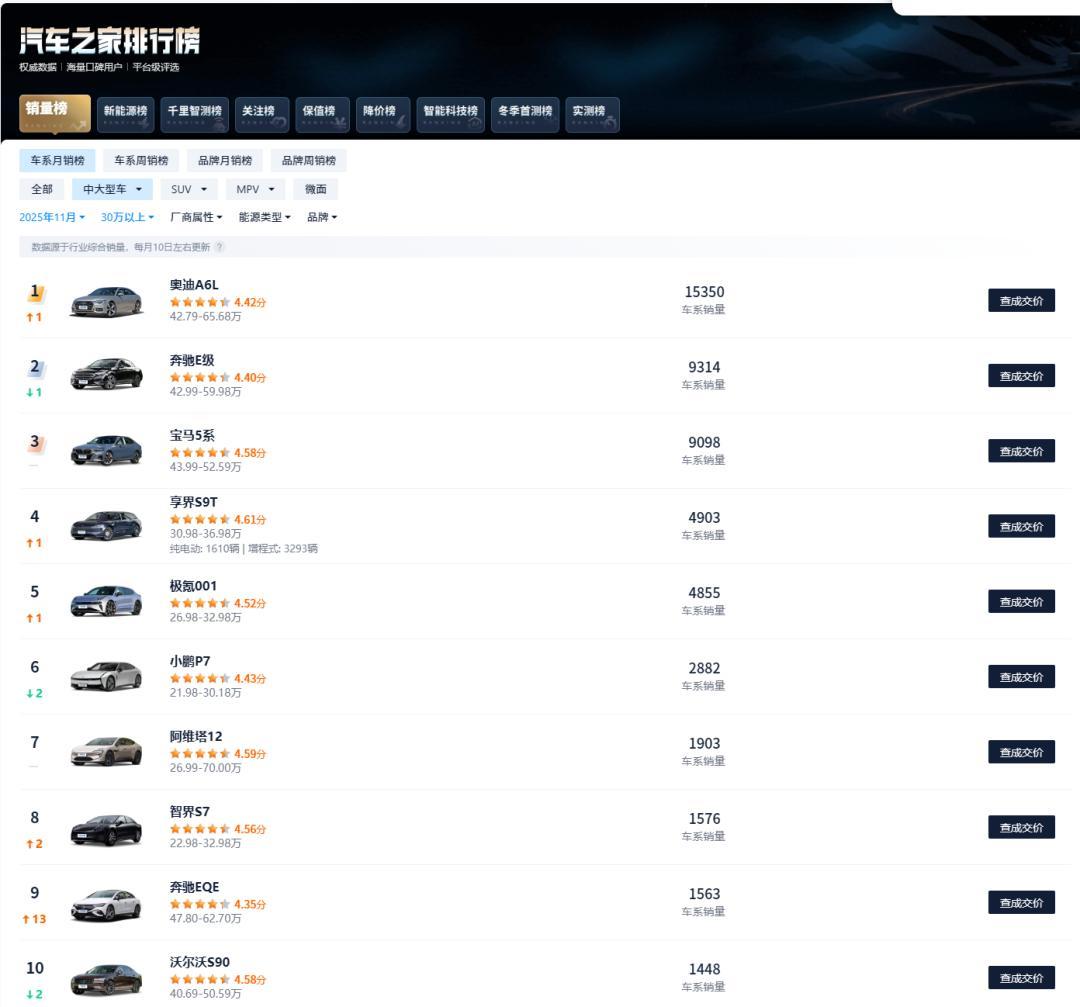
享界破局BBA,豪华车的“SBBA时代”来了吗?
Jing Ji Guan Cha Bao· 2025-12-18 13:54
Core Insights - The emergence of the "Xiangjie" brand signifies a shift in the luxury car market, challenging the long-standing dominance of traditional luxury brands like BBA (Benz, BMW, Audi) [1][2] - The brand's rapid success is attributed to its innovative approach, focusing on technology and user experience rather than merely replicating traditional luxury standards [2][16] Market Dynamics - The luxury sedan market above 300,000 yuan is witnessing a decline in traditional luxury brands' market share, while Xiangjie models, particularly the S9 and S9T, are achieving record sales [1][11] - Over 90% of the more than 100 dealers applying to join the Xiangjie network come from traditional luxury brand backgrounds, indicating a significant shift in dealer sentiment [11][12] Product Differentiation - Xiangjie S9 and S9T are designed to cater to different user needs, with the S9 focusing on luxury and business use, while the S9T targets outdoor and lifestyle-oriented consumers [3][4] - The brand emphasizes a "technology + experience" approach, aiming to redefine luxury standards through advanced technology and personalized user experiences [2][3] Consumer Insights - Over 70% of Xiangjie S9 users are former BBA owners, highlighting the brand's appeal to high-net-worth individuals seeking better user experiences [7][10] - The target demographic includes successful professionals and families, with a significant portion of female and younger consumers, indicating a shift in consumer preferences towards practicality and technology [9][10] Strategic Partnerships - The collaboration between BAIC Group and Huawei has created a robust ecosystem that enhances product development and manufacturing capabilities, ensuring seamless integration of technology [14][15] - This partnership allows Xiangjie to leverage Huawei's technological expertise, resulting in a unique product offering that stands out in the competitive landscape [14][15] Industry Reconfiguration - Xiangjie is not merely a new player but a market disruptor, redefining the rules of the luxury car segment and challenging the established hierarchy [13][16] - The brand's success reflects a broader trend of traditional luxury brands facing challenges from new entrants that offer innovative solutions and better value propositions [12][16]
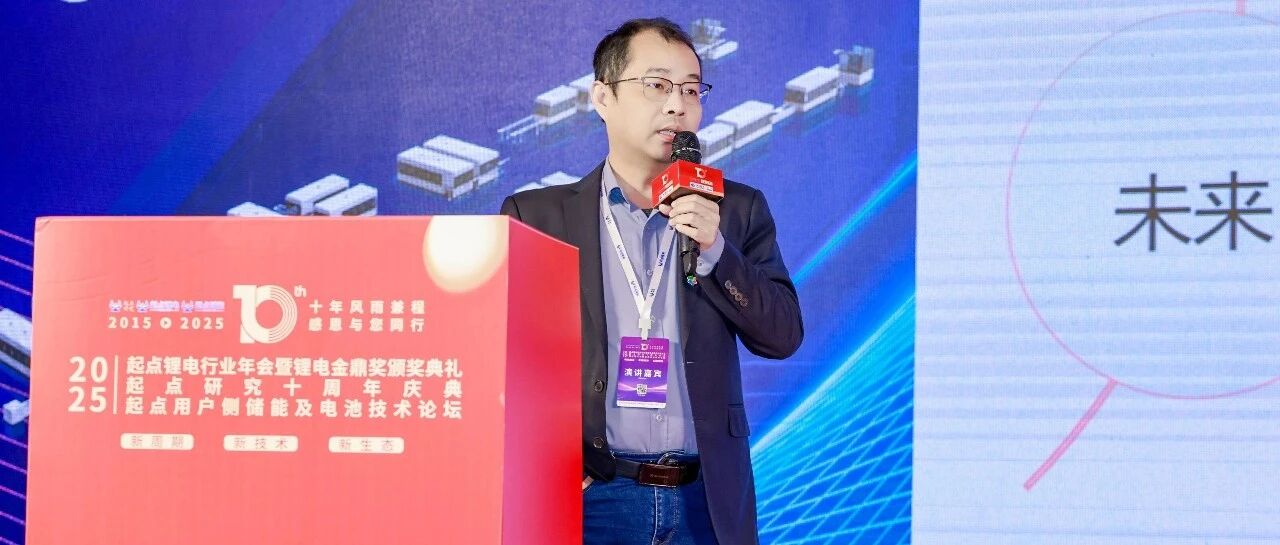
江西远东电池 总经理 相江峰:高比能圆柱电池开发进展
起点锂电· 2025-12-18 06:40
Core Viewpoint - The article discusses the advancements and market trends in cylindrical battery technology, highlighting the growth potential in various applications and the competitive edge of domestic manufacturers in China [1][2]. Group 1: Market Overview - The cylindrical battery market is projected to reach 15 billion units in 2024, with international markets accounting for 60% and domestic markets for 30% to 40%. By 2025, the market is expected to exceed 16 billion units, representing a growth of 13% [4]. - Key applications for cylindrical batteries include electric vehicles, power tools, and smart home devices, with significant growth anticipated in low-altitude economy and AI applications [4][5]. Group 2: Technological Advancements - China has made significant strides in battery technology, particularly in the use of silicon-based materials, which have a theoretical capacity of 4200 mAh. The industry has transitioned from traditional graphite to silicon-carbon composites [7][10]. - The latest advancements include the development of second and third-generation silicon-oxygen materials, which have improved initial efficiency but still face challenges in cycle performance [10]. Group 3: Competitive Positioning - Domestic manufacturers, such as Far East Battery, have achieved a production capacity of 6000 mAh for 21700 cells, surpassing international competitors who have reached 5800 mAh [14][17]. - The company claims to have a lower internal resistance of 13.5 mΩ compared to competitors, enhancing performance and longevity of their batteries [17]. Group 4: Future Trends - The future of battery technology is expected to focus on full-tab designs and solid-state batteries, with projections indicating that the company will lead in these innovations [19]. - The company has reported an annual output value of nearly 60 billion yuan and plans to mass-produce 6500 mAh cells by 2025 [19].
冲击高端轿车市场 中国汽车品牌迎来“大考”
Zhong Guo Qing Nian Bao· 2025-12-18 00:57
Core Viewpoint - The Chinese automotive market is witnessing a shift towards high-end electric vehicles, with companies like Lantu aiming to compete directly with established luxury brands such as BBA (Benz, BMW, Audi) [2][9] Group 1: Market Dynamics - Statistics indicate that the demand for vehicle upgrades and exchanges has become the main driver of consumption in the Chinese automotive market [2][6] - In November, domestic luxury car retail reached 240,000 units, with the penetration rate of electric vehicles rising to 38.8%, up from 32.9% year-on-year [10] - The market is experiencing intense competition, with leading companies engaging in price wars to capture market share, leading to sustained pressure on overall profit margins [12] Group 2: Company Developments - Lantu's flagship sedan, the Zhaiguang L, was launched with a price range of 279,900 to 309,900 yuan, positioning it to compete with traditional luxury car models [2][9] - The Zhaiguang L features advanced technology, including an 800V system, 5C ultra-fast charging, and a 63kWh large-capacity battery, making it a significant player in the PHEV segment [10] - Lantu aims to establish itself as a leading high-end electric vehicle brand, emphasizing the need for Chinese brands to enhance their market presence and brand image [4][11] Group 3: Future Outlook - Analysts predict that the Chinese automotive market will face a critical turning point by 2025, with a focus on technological advancements in battery technology and smart driving features [12][13] - The government is expected to continue supporting automotive consumption policies, which will provide a favorable environment for the growth of high-end electric vehicles [12]
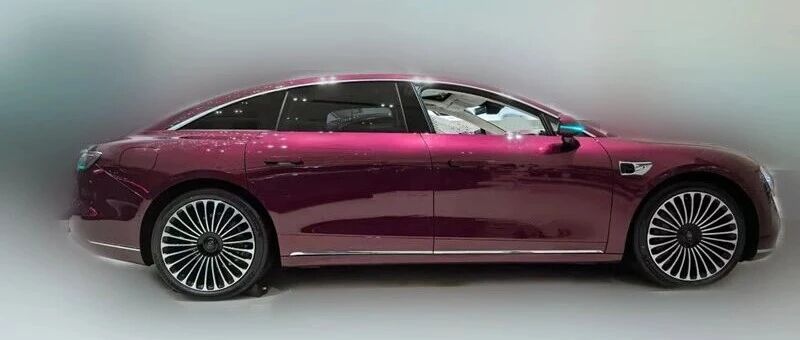
享界S9:客户内敛低调不差钱,竞品对比BBA轿车
车fans· 2025-12-18 00:30
Sales Performance - The company sold a total of 12 vehicles last month, with 5 units of the S9 and 7 units of the S9T sold [3] - The most popular configuration is the Max version, with colors being 寰宇红 (Cosmic Red) and 鎏金黑 (Golden Black) [16] Customer Demographics - The primary customers are business owners who already own multiple SUVs and are looking to purchase sedans [4] - Customers tend to be forward-thinking yet cautious, with a decisive approach to purchasing [6] Competitive Landscape - The S9 competes primarily with the BBA (Benz, BMW, Audi) brands, with a focus on changing the market dynamics in the 300,000 to 400,000 RMB sedan segment [11] - Customers often compare the S9 with the Mercedes E-Class, citing concerns about brand recognition and resale value for electric vehicles [12][14] Customer Preferences - Customers appreciate the interior and handling of the S9, with many recognizing the brand's commitment to quality and technology [8] - The most common reasons for choosing the S9 over competitors include the lack of a comparable offering from BBA with Huawei's intelligent driving technology [8] Pricing and Costs - The starting price for the S9 is 310,000 RMB, with additional costs for the intelligent driving package and insurance bringing the total to approximately 332,000 RMB for the base model [19] - Maintenance costs for the range-extended version are around 700 RMB per service, while the pure electric version costs about 650 RMB per service every 20,000 kilometers [21] Customer Incentives - Existing car owners can receive 10,000 points (equivalent to 1,000 RMB) for recommending purchases [22] - Special incentives are available for large enterprises and military personnel, offering additional points that can be redeemed for discounts [25][26]
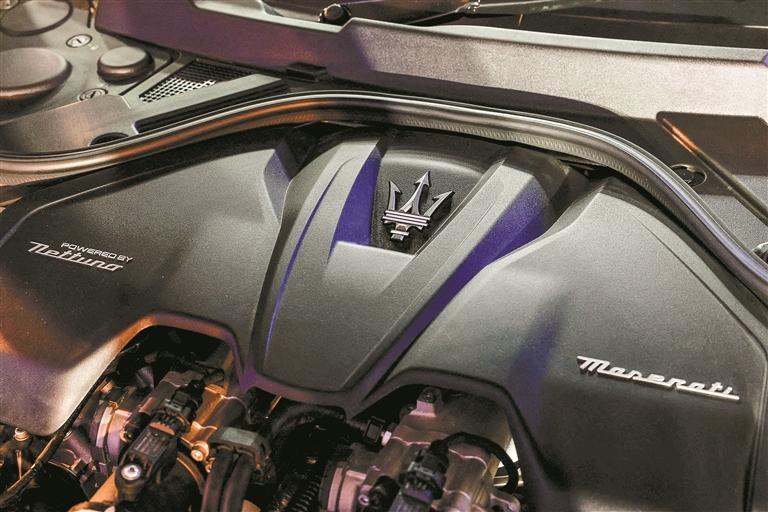
玛莎拉蒂“骨折价”仍难挽销量颓势 “海神三叉戟”折戟中国市场
Shen Zhen Shang Bao· 2025-12-17 17:41
Core Insights - Maserati has significantly reduced the prices of its Grecale SUV models, with the gasoline version dropping from 650,800 RMB to 388,800 RMB, and the electric version from 898,800 RMB to 358,800 RMB, representing discounts of approximately 40% and 60% respectively [2][3] - Despite the price cuts generating buzz on social media, actual sales activity in Maserati's Shenzhen flagship store has been lackluster, indicating that the "buying frenzy" may be more of a marketing gimmick than reality [3] - The drastic price reductions are seen as a desperate measure to clear out inventory, particularly of 2022 models, raising concerns about the long-term viability of these vehicles due to potential parts shortages and high maintenance costs [3][5] Sales Performance - Maserati's sales in China have plummeted from over 14,400 units in 2017 to just 1,228 units in 2024, with only 1,023 units sold in the first three quarters of 2025, averaging less than 100 units per month [5][7] - The brand's entry-level model, which used to start at over 2.46 million RMB, now competes in the 400,000 to 500,000 RMB range, facing competition from advanced domestic electric vehicle brands [5][6] Competitive Landscape - Domestic electric vehicles, such as the AITO M8 and NIO ES8, offer superior technology and features at similar price points, making Maserati's Grecale appear less attractive in comparison [6] - The Grecale's actual range is around 400 kilometers, and its technology lags behind competitors, lacking features like online updates and advanced driving capabilities [6] Brand Strategy and Market Position - Maserati's strategic direction in China has been inconsistent, with frequent changes in leadership and marketing focus, which has diluted its luxury brand image and alienated core customers [7] - The brand's product development has stagnated, with its first electric model, the Grecale Folgore, being launched in 2024 on an outdated platform, while its gasoline models have not seen significant updates in years [7] - The decline in imported luxury car sales in China reflects a broader trend affecting brands like Mercedes-Benz and BMW, with a reported 32% drop in sales for imported vehicles in the first half of 2025 [7]
今日新闻丨欧盟将放弃2035年内燃机禁令!日本将按车重对电车征税!工信部进一步对隐藏式门把手做出限制!
电动车公社· 2025-12-17 15:04
关注 「电动车公社」 和我们一起重新思考汽车 《今日新闻》将会每天给大家带来几条当日重磅新闻,并附上社长的简单评论。关注「电动车公社」,新能源圈大事小事 ,看我们就够啦~ 今日新闻要点: 欧盟将放弃2035年内燃机禁令 近日, 欧盟委员会决定,将原定2035年全面禁售燃油车的"零排放"目标,放宽至 较2021年碳排放水平减少90%。 这也就意味着,插混/增程车型可以在 2035年后继续售卖,车企无需完全停产内燃机,但需大幅降低尾气中的碳排放。 据悉,欧盟转变态度的主要原因包括: 2.大众、奔驰、保时捷等欧洲车企利润率大幅下滑,强行禁燃可能加剧经营压力; 1、 欧盟将放弃2035年内燃机禁令; 日本将按车重对电车征税; 工信部进一步对隐藏式门把手做出限制; 3.基建严重不足,充电桩缺口高达580万个,车桩比仅为18:1, 锂资源87%依赖进口,供应链脆弱性凸显。 欧盟此次政策转变,本质是现实发展与激进目标的不对等,新能源行业发展速度跟不上预期,政策就不得不为实际让路。产业转型是一个长期的过程,技术发 展也需要时间。未来汽车产业的技术路线趋于多元化,转型期的阵痛,每一家车企都需要面对。 日本将按车重对电车征税 近 ...

首批真正“自动驾驶”车型确定了,以后出事谁担责?
凤凰网财经· 2025-12-17 13:47
Core Viewpoint - The approval of the first L3-level conditional autonomous driving models in China marks a significant step towards the commercialization of L3 autonomous driving technology, transitioning from testing to practical application [1][2]. Group 1: Approved Models and Their Features - The two approved models are the Changan SC7000AAARBEV and the Arcfox BJ7001A61NBEV, with specific operational capabilities in designated areas [2]. - The Changan model can operate in congested traffic environments at a maximum speed of 50 km/h, limited to certain routes in Chongqing [2][5]. - The Arcfox model can operate at a maximum speed of 80 km/h on highways and urban expressways, limited to specific routes in Beijing [2][5]. Group 2: Strategic Locations and Data Collection - Changan's focus on Chongqing, known for its complex traffic conditions, aims to tackle real-world challenges in autonomous driving [5][6]. - Arcfox's operations in Beijing, a hub for smart vehicle policy innovation, allow for testing in a more standardized environment [5][6]. - The simultaneous efforts in both cities are intended to gather diverse data to support the development of legal and technical standards for autonomous vehicles [6]. Group 3: Future Operations and Market Strategy - The two models will undergo pilot operations in their respective regions, with monitoring and safety measures in place by the Ministry of Industry and Information Technology [7]. - Initial L3 functionalities may be offered through specific service models like Robotaxi or premium ride services, rather than direct sales to individual consumers [7][8]. - The market anticipates that L3 vehicles will initially be available under restricted conditions, allowing for data collection and risk monitoring [7][8]. Group 4: Legal and Responsibility Framework - The transition from L2 to L3 represents a critical shift in driving automation, with L3 allowing for conditional autonomous driving where the system takes over driving tasks [9][10]. - The responsibility for accidents during L3 operation is a key issue, with current legal frameworks facing challenges in defining liability [16][19]. - In international contexts, companies like Mercedes have begun to assume liability during L3 operation, indicating a potential shift in responsibility dynamics in China as well [16][19].
2025年30-40万新能源汽车终端优惠车型盘点
Zhong Guo Neng Yuan Wang· 2025-12-17 11:47
Core Insights - The popularity of travel cars in the domestic market has significantly increased, with a focus on convenience, versatility, and appealing design among consumers [1] - The price range of 300,000 to 400,000 yuan has become a key budget segment for high-quality travel cars, with competition centered around space, long-range performance, intelligent driving assistance, and cabin experience [1] Group 1: Enjoy S9T - The Enjoy S9T is the first travel car from Hongmeng Zhixing, combining elegance and spaciousness, equipped with advanced technologies such as Huawei's ADS 4 and a new platform [4] - It features 30 storage spaces and a trunk capacity of 729L, expandable to 1677L, accommodating large items like golf bags and bicycles [4] - The vehicle offers a range of smart features, including a smart cockpit with multiple screens and advanced audio systems, enhancing user interaction and convenience [5] Group 2: Performance and Safety - The Enjoy S9T boasts a 0-100 km/h acceleration time of 3.95 seconds and a braking distance of 33.95 meters, with enhanced stability and comfort [6] - It has a maximum range of 801 km for the pure electric version and 1305 km for the range-extended version, with efficient energy consumption [6] - The vehicle is equipped with comprehensive safety features, including a collision avoidance system and a robust body structure, ensuring high safety standards [7][8] Group 3: NIO ET5T - The NIO ET5T maintains a family design with a hatchback style, offering battery options of 75 kWh and 100 kWh, with a range of 530-700 km [10][11] - It supports NIO Assisted Driving capabilities and features a minimalist interior with a focus on comfort and usability [10] Group 4: Mercedes-Benz E-Class - The Mercedes-Benz E-Class travel version emphasizes luxury and driving quality, featuring the MBUX intelligent system and a range of engine options [12] - While it lacks in energy efficiency and smart features compared to newer models, it remains attractive for its brand reputation and craftsmanship [12] Group 5: Purchase Recommendations - For urban commuting and weekend trips, the Enjoy S9T is recommended due to its smart features and flexibility [13] - For family users considering long-distance travel, the NIO ET5T is a viable alternative, though it is slightly less comprehensive in smart features [13] - For those prioritizing traditional luxury and driving experience, the Mercedes-Benz E-Class is still appealing despite its limitations in energy efficiency [13] Group 6: Next Steps for Consumers - Consumers are advised to visit offline stores for real vehicle experiences, focusing on trunk space and driving assistance performance [16] - Evaluating the suitability of pure electric or range-extended powertrains based on personal usage and charging conditions is recommended [16] - A thorough assessment of financial options, delivery timelines, and after-sales service policies is essential for overall cost evaluation [16]