蜜雪冰城

Search documents
钟睒睒,杀入600亿新赛道
创业家· 2025-12-02 10:38
Core Viewpoint - Nongfu Spring is expanding its business into the edible ice market, investing 28.42 million yuan to build a production line with an annual capacity of 7,000 tons, capitalizing on the growing popularity of ice cups among consumers, particularly the younger demographic [6][8][15]. Group 1: Business Expansion - Nongfu Spring plans to invest 28.42 million yuan to expand its edible ice production capacity, utilizing existing facilities in Hangzhou [6][8]. - The new production line will focus on producing 160g ice cups, with an expected output of 5,600 tons, and 2kg bags of high-transparency ice, with an output of 1,400 tons [8]. - The ice cup category has seen a sales growth of over 300% for two consecutive years, indicating a strong market demand [6][13]. Group 2: Market Trends - The ice cup market is experiencing rapid growth, with a significant increase in orders for ice cup combinations with alcoholic and non-alcoholic beverages, showing year-on-year growth rates of 267% and 261% respectively [13][15]. - The edible ice market is projected to reach a sales scale of over 63 billion yuan by 2026, with an expected growth rate of 39% in the next three years [14]. Group 3: Competitive Landscape - Major players like Mengniu and Yili have entered the ice cup market, intensifying competition and potentially leading to price reductions [17][20]. - The production cost of ice cups is relatively low, but the profit margins are tight, with production costs around 0.6 to 0.7 yuan per cup and wholesale prices around 1 yuan [18][20]. - The entry of large beverage companies into the ice cup market may lead to a price war, with predictions of further price reductions in the coming years [21].



云姨夜话丨2025年资本市场里的新“罐子生意”“盒子生意”
Sou Hu Cai Jing· 2025-12-01 12:37
Group 1: Company Developments - Suzhou Jiangtian Packaging Technology Co., Ltd. successfully passed the IPO review on the Beijing Stock Exchange, with Nongfu Spring as its largest customer, accounting for a significant portion of its revenue [3] - Jiangtian Technology had previously undergone five rounds of guidance from Anxin Securities for a proposed listing on the ChiNext, revealing past financial irregularities such as loan transfers and non-genuine trade background in bill transactions [3] - New Tianli Technology Co., Ltd. has recently passed the review by the Beijing Stock Exchange, producing plastic containers for popular brands like Mixue Ice City and Xiangpiaopiao [4][5] Group 2: Industry Trends - The label printing industry in China has a relatively low entry barrier and low industry concentration, with key materials like high-temperature PET film and anti-counterfeiting holographic materials being heavily reliant on imports [3] - International label giant Avery Dennison plans to increase its smart label chip packaging capacity in China by 800 million pieces per year by 2027, potentially squeezing the market space for domestic manufacturers [3] - The new tea beverage sector has seen a surge in IPOs, with major brands like Gu Ming and Mixue Ice City listing on the Hong Kong Stock Exchange and NASDAQ in early 2025, marking the year as a significant period for new tea drink IPOs [6]


社服行业 2026 年度投资策略:新复苏,新生态,新供给
Huachuang Securities· 2025-12-01 09:19
Core Insights - The report highlights three core trends in the consumer services industry: "New Recovery, New Ecology, and New Supply" [6] - Structural factors are aiding certain sectors in stabilizing and improving operations, indicating a gradual recovery from the bottom [7] - The integration of online platforms with offline operations is reshaping the industry ecosystem, enhancing competition and operational efficiency [8] Industry Overview - The consumer services sector has seen a slight revenue increase of 2.57% year-on-year, totaling 183.23 billion yuan in the first three quarters of 2025, despite a 12.7% decline in net profit [20][22] - The sector's performance has been mixed, with tourism and education sectors showing significant growth, while the hotel and restaurant sectors faced slight declines [16][19] New Recovery - The hotel industry is experiencing a rebound due to increased tourism demand and a stabilization in average daily rates (ADR), with occupancy rates showing signs of improvement [31][57] - The Macau gaming market has shown strong recovery, with gross gaming revenue (GGR) reaching 24.086 billion MOP in October 2025, driven by non-gaming attractions [32][44] - The duty-free market is benefiting from policy optimizations, with sales in Hainan reaching 2.425 billion yuan in October 2025, reflecting a 34.86% year-on-year increase [32][38] New Ecology - Major players like Alibaba, Meituan, and JD.com are competing in the instant retail space, each leveraging their strengths to enhance online and offline integration [42] - The restaurant industry is witnessing a shift towards standardized and professional supply chains, with the chain restaurant rate increasing from 15% in 2020 to 23% in 2024 [46][48] New Supply - The tourism sector is transitioning from a "sightseeing + ticket" model to one focused on content innovation and immersive experiences, with companies like Sanxia Tourism and Haichang Ocean Park leading this change [50][53] - The sports industry is evolving to combine spectator and participatory sports, creating new social engagement opportunities through digital platforms [54] Investment Recommendations - Key recommendations include focusing on leading hotel chains like Jinjiang Hotels and ShouLai Hotels, and monitoring companies with strong supply chain advantages in the restaurant sector [6][8] - The report suggests that innovative companies in tourism, sports, and education sectors, particularly those utilizing AI and content innovation, are worth attention for potential growth [8][50]






VC/PE期待已久的退出盛宴,正在到来
母基金研究中心· 2025-12-01 09:00
Group 1 - The core viewpoint of the article highlights the resurgence of the Hong Kong IPO market in 2025, providing a long-awaited exit window for VC/PE investors, with Hong Kong's IPO fundraising reaching $36 billion, making it the top global exchange [2] - The report indicates that the IPO activities in mainland China and Hong Kong accounted for 16% and 33% of the global total, respectively, with over 20 A-share companies expected to debut in Hong Kong, raising more than $17 billion [2] - The article notes a significant reduction in the IPO failure rate in Hong Kong, leading to increased investor interest in listing companies on this exchange, particularly in the consumer and technology sectors [2][3] Group 2 - The article discusses the strong performance of new consumer companies in the Hong Kong market, with notable stocks like Mixue Ice City, Pop Mart, and Laopu Gold reaching new highs [3] - It mentions the Hong Kong Stock Exchange's new listing rules that facilitate biotech and specialized technology companies, allowing unprofitable firms to go public, which has contributed to the market's vibrancy [3] - The report states that from January to November 2025, there were 191 IPOs in A-shares and Hong Kong, involving 1,114 investment institutions, with an average IRR of 47.14% [4] Group 3 - The article highlights a shift in exit strategies among investment institutions, with many adopting "flexible exit" approaches, moving away from rigid buyback agreements [6][9] - It describes various flexible exit methods, such as transferring investment amounts to new ventures of founders instead of enforcing buybacks, and implementing installment repayment plans for companies with stable cash flows [7] - The article emphasizes that the current environment has led to a systemic issue regarding buybacks, with many institutions advocating for more collaborative solutions rather than punitive measures [9]

蜜雪冰城试点卖早餐,或将复用供应链、拓展消费场景,港股消费ETF(513230)震荡攀升
Mei Ri Jing Ji Xin Wen· 2025-12-01 02:32
Group 1 - The Hong Kong stock consumer sector showed strong fluctuations, with the Hong Kong consumer ETF (513230) rising over 1% [1] - Leading stocks included Lao Pu Huang Jin, which surged nearly 5%, and Tongcheng Travel, which increased by approximately 3.5% [1] - Other notable gainers were Alibaba, Chow Tai Fook, Shenzhou International, Smoore International, and China Resources Beer, while Xiaomi Group, Miniso, Mixue Group, and Li Auto experienced declines [1] Group 2 - Mixue Ice City has introduced a "breakfast series" in select cities, including Dalian, Xi'an, Nanning, and Hangzhou, featuring products priced at 5 yuan [1] - The breakfast initiative is seen as an attempt to leverage the supply chain and expand consumption scenarios, reflecting a trend towards all-day operations in the new tea beverage and restaurant sectors [1] - This move may encourage more brands to explore category extensions and expand their operational scenarios [1] Group 3 - Zhongyou Securities remains optimistic about consumer investment opportunities, highlighting two categories: new consumption opportunities and cyclical recovery plays [2] - New consumption opportunities include sectors like trendy toys, gold and jewelry, and new tea beverages, which align with current consumer trends towards personalization and cultural export [2] - Cyclical recovery plays focus on sectors such as liquor and travel, which may benefit from ongoing consumer stimulus policies and economic recovery [2]
中国消费者(HA):中国仍在消费不足吗
Sou Hu Cai Jing· 2025-12-01 00:46
Core Conclusion - The notion of "insufficient consumption in China" is a distorted perception amplified by pricing and statistical methods. Bank of America provides extensive data showing that the true picture of Chinese consumption is not "volume shrinkage," but rather "high volume, low price." Total commodity consumption has reached or even surpassed that of the US, Japan, and South Korea; service consumption has met basic standards but still has gaps in quality. The main contradiction in the current market is the mismatch between "mass supply" and "upgraded demand." Companies focusing on the four key areas of "Efficiency, Experience, Service, Globalization (E2SG)" will thrive through cycles [1]. Group 1: Commodity Consumption - China's total commodity consumption is impressive, with certain categories outperforming developed countries. For example, per capita egg consumption is 128.5 g/day, which is 6% higher than the US and 42% higher than the global average. Sulfur consumption is 1117.9 g/day, which is 3.2 times that of the US. Seafood consumption is 114 g/day, nearly double that of the US. However, dairy consumption is only 86.9 g/day, which is 1/7 of the US level, but this gap is mitigated by plant proteins and eggs. The ownership of cooking appliances is 2.14 times the global average and 1.22 times that of the US. The number of new energy vehicles is 7.7 per thousand people, surpassing the US by 1.66 times and Japan by 8.75 times [3][4]. Group 2: Service Consumption - In terms of service consumption, China has met basic standards but still has quality gaps. The average housing area per person is 49 m², slightly below the US's 65 m² but higher than the UK and France. Medical visits average 6.8 times per year, exceeding the US by 3.4 times. Education duration is 15.5 years, on par with the US and Japan, but extracurricular spending is only $140/year, which is 1/28 of South Korea's. The prices for leisure and entertainment, such as concerts and exhibitions, have increased by 53%, indicating a significant supply-demand gap in high-quality offerings [5][6]. Group 3: Misconceptions of Consumption - The illusion of "insufficient consumption" stems from three main sources: 1. Low prices: Most goods/services are priced at only 20%-60% of US prices (e.g., mobile plans at 15%, taxis at 20%, utilities at 24%). 2. Supply chain advantages: China's role as the "world's factory" and innovations in distribution (like community group buying) continue to drive prices down. 3. Statistical discrepancies: If government transfer payments are included, the actual consumption to GDP ratio aligns with that of South Korea, which is approximately 40% [6]. Group 4: Mismatches and E2SG Investment Framework - There are three core mismatches in the market: 1. Supply vs. Demand: There is an oversupply of mass-market products, but insufficient emotional value and experience. 2. Channels vs. Communication: Fragmented media and ineffective traditional marketing require precise targeting and content-driven e-commerce. 3. Expectations vs. Reality: While income expectations are weak, there is a high demand for quality, necessitating affordable yet high-quality offerings [7]. Group 5: E2SG Investment Tracks - The E2SG investment framework emphasizes four key dimensions for companies to succeed in a "high volume, low price" market: 1. Efficiency: Achieving low costs and quick turnover through supply chain optimization and scale effects. 2. Experience: Creating differentiation through product innovation and capturing emotional consumption needs. 3. Service: Filling the gap in high-quality supply. 4. Globalization: Leveraging China's high volume and low price advantage to expand into international markets [10][11][12]. Group 6: Recommended Companies - Bank of America has identified seven companies with long-term competitive advantages across various sectors, including: - Pop Mart: Strong IP operation capabilities and global expansion, with an expected EPS growth of 30% by 2026. - Midea: Leading in global white goods with supply chain efficiency, focusing on overseas OBM business growth. - Geely: Rich in new energy vehicle reserves, planning to launch over 10 new models by 2026 with a target growth of 50%-80%. - Huazhu Group: Benefiting from leisure travel demand recovery and expanding through a light asset model, with a projected 21% CAGR in profits from 2024-2026. - Trip.com Group: Leading in OTA with expected 45% growth in international business revenue over the next six years. - Tencent Holdings: Dominating digital entertainment with stable mobile game revenue and AI-driven efficiency improvements. - Damai Entertainment: Leading in live entertainment ticketing with a projected 60% CAGR in profits from 2025-2028 [20][21].





《疯狂动物城2》单日票房突破7亿元;蜜雪冰城试点卖早餐丨消费早参
Mei Ri Jing Ji Xin Wen· 2025-11-30 23:24
Group 1: Box Office Performance - "Zootopia 2" has achieved a single-day box office of over 700 million yuan, surpassing "Avengers: Endgame" to become the highest single-day box office for imported films in China's history and the highest for non-Spring Festival films [1] Group 2: Breakfast Initiative by Mixue Ice City - Mixue Ice City has launched a trial breakfast series in select cities, including Dalian, Xi'an, Nanning, and Hangzhou, with products priced at 5 yuan each, indicating a strategy to reuse supply chains and expand consumption scenarios [2] Group 3: Shareholder Benefits from Emei Mountain A - Emei Mountain A is offering free admission to its scenic area and cable car for shareholders holding 500 shares or more, aiming to convert shareholders into core consumers and enhance market engagement [3] Group 4: Beyond Meat Exits Chinese Market - Beyond Meat has announced the termination of its operations in China, reflecting challenges in global performance and product experience, which may undermine investor confidence in its global strategy [4]
耐用消费产业行业研究:消费品供需适配性方案提供消费板块切换与成长方向
SINOLINK SECURITIES· 2025-11-30 11:32
Consumer Macro Strategy - The overall performance of the discretionary consumption sector is flat as the year-end approaches, but high-end consumption, including duty-free shopping in islands, is expected to gradually stabilize overall consumption [2][10] - The implementation plan released on November 26 aims to enhance the adaptability of supply and demand for consumer goods, with a goal to optimize the supply structure by 2027, creating three trillion-yuan consumption fields and ten hundred-billion-yuan consumption hotspots [2][10] - By 2030, a high-quality development pattern of mutual promotion between supply and consumption is expected to be established, with consumption steadily contributing to economic growth [2][10] New Consumption Manufacturing - The pet economy continues to thrive, with companies like Guobao Pet investing in high-end pet food factories in New Zealand, enhancing competitiveness in international markets [23][24] - The AI and 3D printing sector is rapidly evolving, with significant advancements expected in consumer-grade 3D printing by 2026, driven by companies like Huina Technology and Snapmaker [25][26] - The integration of AI with 3D printing is being promoted in educational settings, expanding the supply space for the industry [25] Light Industry Manufacturing - The home appliance sector is facing weak domestic demand, but there are opportunities for companies with overseas production capabilities and brand advantages as demand recovers [26][27] - The new tobacco sector is experiencing growth, particularly in e-cigarette exports to the U.S., which saw a significant increase in October [27][28] - The packaging industry is showing signs of profitability improvement despite a slight decline in revenue, driven by leading companies capturing market share from smaller firms [28] Textile and Apparel - The apparel sector is experiencing fluctuations in consumer demand, with a focus on companies that can demonstrate unique advantages in the market [30][31] - The export market remains under pressure due to trade tensions, but leading textile manufacturers are expected to present investment opportunities as they maintain strong positions in the industry [31] Beauty and Personal Care - The beauty sector shows positive fundamentals, with a 9.6% year-on-year increase in retail sales for cosmetics in October, although valuations have been affected by the new consumption sector [32][33] - The medical beauty segment is expanding, with new products gaining regulatory approval, indicating growth potential in the market [33] Home Appliances - Focus on two directions: resilient white goods leaders with strong cash flow and black goods leaders benefiting from optimized domestic sales and stable costs [34][35] - The white goods sector is facing pressure in domestic sales, while black goods are seeing improvements in average prices and export recovery [36][37]
幸运咖破万店,咖啡市场迎来“农村包围城市”的胜利
虎嗅APP· 2025-11-30 03:09
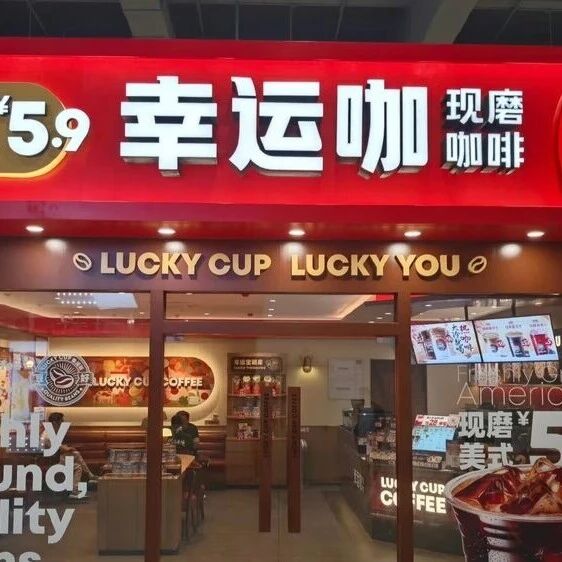
Core Viewpoint - The article discusses the rapid expansion of the coffee brand Lucky Coffee, which has reached over 10,000 stores globally in just 10 months, becoming the third local coffee chain to join the "10,000-store club" after Luckin and Kudi [2][3]. Expansion and Market Position - Lucky Coffee's journey to 10,000 stores was not smooth, facing challenges due to unclear positioning in its early years. A significant turnaround occurred in 2020 when the general manager of Mixue Ice City, Zhang Hongfu, redefined the brand's strategy [3][4]. - The brand established a "high-quality and affordable" positioning, with prices set between 6-8 yuan, targeting lower-tier markets and student demographics. This strategy led to a rapid expansion, with 579 new stores added in 2022 [4]. - In 2023, the coffee industry faced intensified price wars, causing Lucky Coffee to lose its competitive edge temporarily. However, a promotional campaign in mid-2024 helped revive sales [5][6]. Cost Control and Franchise Model - Lucky Coffee's pricing strategy includes a cup of Americano priced at 6.9 yuan in first-tier cities, lower than discounted prices from competitors. The brand maintains a gross margin of 48% even at lower prices due to effective cost control [9]. - The company benefits from a robust supply chain, with coffee bean procurement costs significantly lower than the industry average. A 40 billion yuan procurement agreement with Brazil further strengthens its cost control [9][10]. - The franchise model is unique, with no revenue sharing from individual stores, reducing management costs for franchisees. The initial investment for a franchise is approximately 127,000 yuan, making it accessible for more entrepreneurs [10]. Market Challenges and Competition - As Lucky Coffee expands into first- and second-tier cities, it faces a different competitive landscape, with established players like Luckin holding a significant market share [14][16]. - The brand's perception as a "cheap coffee" option poses challenges in brand positioning, especially compared to competitors that have successfully launched popular products [15][20]. - The coffee market is entering a phase of intensified competition, with new entrants and existing brands seeking to differentiate themselves through product innovation and operational efficiency [16][17]. Future Outlook - After reaching the 10,000-store milestone, Lucky Coffee faces new challenges, including profitability pressures in high-rent areas and rising raw material costs. The brand must navigate internal competition and maintain quality across its expanding network [19][21]. - The company has launched numerous new products, but many lack significant market impact, highlighting the need for stronger product development to enhance brand value [20].
上市不满一年,分红比融资还多,古茗疯狂撒钱,这谁看不迷糊?
Sou Hu Cai Jing· 2025-11-29 06:51
哈喽,大家好,老庐今天得跟大伙聊个新茶饮圈的"反常操作":古茗又在"撒钱"了,11月14日古茗董事 会扔出重磅消息,建议派发每股0.93港元的特别股息,总金额直奔22.1亿港元。 这数字有多夸张?要知道,古茗今年2月在港交所上市时,募资净额才约18亿港元。 上市不到一年,分出去的钱比融来的还多,这操作在新茶饮圈里简直少见,更别提这已是它今年第二次 大额分红,1月上市前就分了17.4亿元。 两次累计超41亿港元,创始人王云安及核心团队拿走了约30亿,这都超过了公司近一年半累计的31亿元 归母净利润。 一边给消费者搞百万免单,一边给股东豪掷数十亿,古茗这波"壕气"背后,到底是真赚钱还是在"提前 兑现"? 分红碾压同行:新茶饮圈独一份的"大方" 在新茶饮行业,分红从来不是常态,古茗的力度更是"独树一帜"。 老庐翻遍了同行财报,茶百道2024年4月上市后3次分红合计才近11亿元,沪上阿姨今年5月上市后中期 分红仅7112万元。 而蜜雪冰城、奈雪的茶、霸王茶姬这些头部品牌,上市以来压根没搞过类似规模的分红。 要知道,古茗这两次分红加起来,已经超过了它近一年半的归母净利润,这种"把利润全分出去"的激进 策略,在行业里找不 ...