
Stellantis N.V.

Search documents
调整2035“燃油车禁售令” 欧盟减碳进程受产业现实阻滞
Jing Ji Ri Bao· 2025-12-26 03:22
Core Viewpoint - The European Commission has adjusted its "Automotive Industry Package," changing the 2035 ban on combustion engine vehicles to a target of 90% reduction in carbon emissions compared to 2021 levels, allowing for the continued sale of certain non-pure electric vehicle models in the EU market, marking a significant revision of the EU's green transportation transition plan [1] Group 1: Policy Adjustments - The new proposal allows for the sale of various traditional powertrain technologies, including plug-in hybrid vehicles, range-extended electric vehicles, mild hybrid vehicles, and internal combustion engine vehicles that meet specific low-carbon fuel standards [1] - A more flexible transitional reduction target is set for 2030 to 2032, aiming to balance emission reductions with industry sustainability [1] Group 2: Economic Impact - The automotive industry contributes 7% to the EU's GDP and provides nearly 14 million jobs, highlighting its significance to the EU economy [2] - The adjustments are seen as a way to enhance the competitiveness of the automotive sector and create demand for cleaner commercial vehicles, thereby strengthening the EU's manufacturing and supply chains [2] Group 3: Industry Reactions - Some major European automakers support the proposal, viewing the relaxation of a single technology route as beneficial for addressing market pressures, with companies like Volkswagen and BMW acknowledging the feasibility of internal combustion technology in the near future [3] - Conversely, some manufacturers, such as Volvo, criticize the reversal of any bans as a betrayal, arguing it undermines confidence in future regulations [3] Group 4: Environmental Concerns - Environmental groups criticize the adjustment as a retreat from the EU's leadership in climate policy, arguing that the 90% reduction target undermines the push for electric vehicle adoption and could slow down emission reduction efforts [4] - The proposal has sparked mixed reactions among EU member states, with countries like Germany and Italy welcoming it, while Spain opposes it due to its ongoing transition to electric vehicles [4] Group 5: Future Considerations - The plan must undergo review by the EU Council and European Parliament before becoming law, a process expected to take months and likely to involve further discussions and revisions on details such as compensation mechanisms and market regulation [5] - The adjustments reflect a policy balancing act between climate goals and industrial realities, highlighting the tension between long-term policy commitments and immediate industry pressures [5]
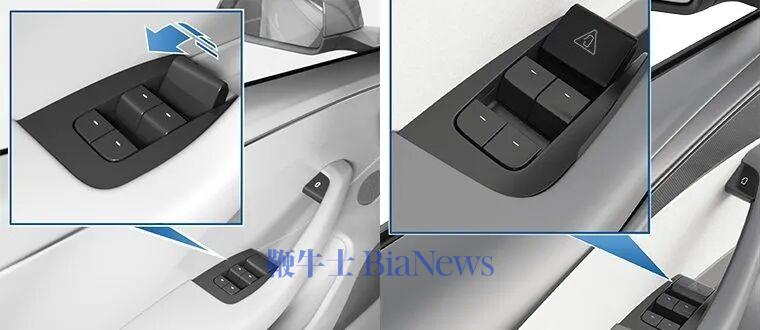
极简创新还是致命隐患?特斯拉隐藏式车门面临拷问
Xin Lang Ke Ji· 2025-12-26 00:22
Core Viewpoint - Tesla's hidden door handle design, once celebrated as innovative, is now facing unprecedented scrutiny from regulators and the public due to safety concerns related to emergency access in accidents [1][6][21]. Group 1: Regulatory Investigations - The National Highway Traffic Safety Administration (NHTSA) has initiated a defect investigation into the emergency door release mechanism of the 2022 Model 3, affecting approximately 180,000 vehicles [1][4]. - This investigation follows a complaint from a Tesla owner who experienced a fire and was unable to locate the hidden emergency door handle, resulting in severe injuries [2][4]. - NHTSA has previously investigated the Model Y for similar issues, receiving reports of 12-volt battery failures causing door handle malfunctions [4]. Group 2: Fatal Incidents - A Bloomberg investigation revealed that at least 15 individuals have died in accidents over the past decade due to being unable to open Tesla doors, with over half of these fatalities occurring in the past year [1][6]. - Specific incidents include a Model S crash in Wisconsin where victims could not escape a burning vehicle due to malfunctioning door handles [7][10]. - Another incident involved a Cybertruck crash in California, where victims died from smoke inhalation after being trapped inside the vehicle [8][10]. Group 3: Design Philosophy and Criticism - Tesla's design philosophy, influenced by Elon Musk's admiration for minimalist aesthetics, led to the adoption of hidden door handles, which were intended to enhance the vehicle's futuristic appeal [12][16]. - Critics, including safety experts, have long warned about the potential dangers of hidden door handles, emphasizing that they complicate emergency exits [21][23]. - The automotive industry has seen a trend towards electronic door handles, with approximately 70 models in the U.S. adopting this technology, despite safety concerns [19][20]. Group 4: Industry Response and Changes - In response to increasing scrutiny, Tesla is reportedly redesigning the door handles to integrate both electronic and mechanical release mechanisms for easier access in emergencies [25][26]. - Other automakers, such as General Motors and Ford, are also revising their door handle designs to improve visibility and functionality in emergencies [31][33]. - The need for industry-wide safety standards is highlighted, as current assessments focus on crash prevention rather than the ease of passenger escape post-accident [35][36].


欧盟减碳进程受产业现实阻滞
Jing Ji Ri Bao· 2025-12-25 22:03
Core Viewpoint - The European Commission has adjusted its "Automotive Industry Package," changing the 2035 ban on combustion engine vehicles to a target of 90% reduction in carbon emissions compared to 2021 levels, allowing for the continued sale of certain non-pure electric vehicle models in the EU market, marking a significant revision of the EU's green transportation transition plan [1] Group 1: Policy Adjustments - The new proposal allows for the sale of various traditional powertrain technologies, including plug-in hybrid vehicles, range-extended electric vehicles, mild hybrid vehicles, and internal combustion engine vehicles that meet specific low-carbon fuel standards [1] - The plan includes more flexible transitional reduction targets from 2030 to 2032, aiming to balance emission reductions with industry sustainability [1] - The European Commission emphasizes that the plan provides a pragmatic policy framework to achieve carbon neutrality by 2050 while granting manufacturers greater flexibility [1] Group 2: Industry Reactions - Some major European automakers support the proposal, viewing the relaxation of a single technology route as beneficial for addressing market pressures; Volkswagen calls the proposal "economically reasonable," while BMW acknowledges the feasibility of internal combustion technology in the foreseeable future [3] - However, some manufacturers and industry associations criticize the proposal; Volvo, which has heavily invested in electrification, views any reversal of bans as a "betrayal," and Stellantis argues that the plan fails to address deep-seated issues in the light commercial vehicle sector [3] Group 3: Environmental and Political Perspectives - Environmental groups criticize the adjustment as a retreat that undermines the EU's reputation as a global climate leader, arguing that the 90% reduction target could slow the adoption of electric vehicles and impact the overall climate neutrality goal for 2050 [4] - Political reactions among EU member states are mixed; countries like Germany and Italy welcome the proposal as aligning with current industry realities, while Spain opposes it due to its ongoing transition to electric vehicles [4] - The European Parliament's Green Party expresses concerns that undermining the future of electric vehicles is a significant error that could harm public health and competitiveness [4] Group 4: Future Outlook - The plan must undergo review by the EU Council and European Parliament before becoming law, a process expected to take several months and likely to involve further discussions and revisions on details such as compensation mechanisms and market regulation [5] - The adjustment reflects a policy trade-off between climate goals and industrial realities, highlighting the tension between long-term policy aspirations and practical implementation amid global technological competition [5]
They Make $35K And Were Gifted A $50K Jeep. Their Dilemma Is To Sell Or To Drive For 15 Years. 'That's Awfully Optimistic With A Jeep'
Yahoo Finance· 2025-12-24 16:45
A young Canadian couple is wrestling with a big decision after being handed the keys to a 2023 Jeep Wrangler worth over 50,000 Canadian dollars ($36,000). The couple, currently living debt-free on a modest income of CA$35,000 per year, is unsure whether to keep the car or sell it to boost their house fund. Gifted A Jeep, But Saving For A Home Scott from Edmonton, Alberta, called into “The Ramsey Show” for advice. He’s a plumbing apprentice while his wife stays home with their 5-month-old son. They're r ...
今日新闻丨零跑十周年内部信曝光!魏牌蓝山智能进阶版上市,限时售价27.58-30.28万元!
电动车公社· 2025-12-24 16:05
Core Viewpoint - The article highlights the significant achievements of Leap Motor in its ten years of operation, emphasizing its ambitious goal of reaching annual sales of one million vehicles by 2026 and the importance of continuous innovation, quality, and global market expansion [6][9][13]. Group 1: Leap Motor's Achievements - Leap Motor celebrated its tenth anniversary, achieving nearly 600,000 vehicle sales in the past year and is expected to achieve annual profitability [6][8]. - The company has successfully implemented core technologies such as LEAP3.5 central domain control and 800V high-voltage platform, demonstrating its capability for rapid mass production [6][8]. - Leap Motor's B10, B01, Lafa5, and updated models C16, C11, and C10 have seen significant sales success, with the C10 reaching a monthly sales peak of 20,000 units [6][8]. Group 2: Global Expansion - Leap Motor has accelerated its global expansion, entering 35 overseas markets and establishing over 800 overseas stores, with annual overseas deliveries expected to exceed 60,000 units [7][8]. - The collaboration with Stellantis Group is yielding synergistic effects, positioning Leap Motor as a competitive player in the global market [7][8]. Group 3: Future Goals and Strategies - The company aims to enhance its capabilities in technology innovation, product quality, overseas market expansion, and organizational efficiency to meet its sales target of one million vehicles by 2026 [9][10]. - Leap Motor emphasizes the need for continuous innovation and maintaining high product quality to become a benchmark in the industry [9][10]. - The company recognizes the importance of adapting to global markets and enhancing user experience to build a strong reputation [9][10].


中国Robotaxi驶入欧洲腹地
Zhong Guo Qi Che Bao Wang· 2025-12-24 10:36
Core Viewpoint - Chinese autonomous driving companies are making significant strides in the European market, with key players like WeRide, Pony.ai, and Baidu's Apollo making substantial progress in deploying autonomous taxi services and forming strategic partnerships to enhance their market presence [3][4][5][6][7]. Group 1: Market Entry and Expansion - WeRide has received Switzerland's first pure driverless Robotaxi license, allowing it to operate in Zurich, marking a significant milestone for Chinese autonomous driving firms in Europe [3][4]. - By 2025, WeRide, Pony.ai, and Baidu's Apollo are expected to launch major projects across various scenarios, including airport shuttles and urban commuting, establishing a comprehensive presence in the European market [4][5]. - WeRide has already secured autonomous driving licenses in seven countries, including Switzerland, France, and the UAE, covering all operational levels from testing to commercial deployment [4][5]. Group 2: Strategic Partnerships - Pony.ai is leveraging Luxembourg as a strategic hub, having established a European R&D center and secured the first L4 Robotaxi testing permit in Luxembourg [6]. - Baidu's Apollo has formed strategic partnerships with Lyft and Uber to facilitate the deployment of autonomous vehicles in Germany and the UK, highlighting a collaborative approach to market entry [7][10]. - WeRide's collaboration with Renault in France exemplifies a successful integration of Chinese technology into local contexts, providing autonomous shuttle services during major events [9][10]. Group 3: Technological Advantages - The competitive edge of Chinese companies lies in their self-developed technologies, which enhance operational efficiency and adaptability to complex driving conditions [8]. - WeRide's Robotaxi utilizes a multi-sensor fusion system for reliable performance in adverse weather, while Pony.ai generates vast amounts of simulation data to improve its models [8]. - Baidu's sixth-generation autonomous vehicles are equipped with advanced perception capabilities, achieving high decision-making accuracy in complex road environments [8]. Group 4: Operational Experience and Data - Chinese companies have accumulated extensive operational experience, with Baidu's Apollo reporting over 240 million kilometers of autonomous driving globally [9]. - WeRide has logged approximately 55 million kilometers of autonomous driving, while Pony.ai has recorded 500,000 hours of fully driverless operation [9]. - This operational data provides a strong foundation for Chinese firms to establish credibility and confidence in the European market [9]. Group 5: Challenges and Regulatory Landscape - Chinese autonomous driving companies face significant regulatory challenges in Europe, including compliance with GDPR and the upcoming AI Act, which impose strict data protection and operational standards [11][12]. - Building public trust in autonomous vehicles is crucial, as European consumers tend to be more cautious compared to their Chinese counterparts [12]. - Cost pressures related to operational expenses and regulatory compliance in Europe present additional hurdles for achieving profitability in the market [12].


十载自研铸剑!零跑如何以中国智造改写全球车市格局?
Xin Lang Cai Jing· 2025-12-24 10:34
Core Insights - Leap Motor celebrates its 10th anniversary in December 2025, achieving nearly 600,000 annual sales and continuous quarterly profitability, marking its transformation from a newcomer to a leader in the electric vehicle market [1][24] - The company's journey reflects the broader shift of Chinese automotive brands from followers to leaders, emphasizing self-research, customer-centricity, and global expansion as key strategies [1][24] Group 1: Self-Research and Innovation - Leap Motor's decade-long journey symbolizes the commitment of Chinese brands to core technology independence, with founder Zhu Jiangming establishing a "full self-research" approach from the outset, covering 65% of vehicle costs through in-house development [3][26] - The company focuses on addressing user pain points, such as winter driving challenges in northern China, by implementing cold-resistant sealing strips and intelligent temperature control systems [5][28] - Self-research has led to cost advantages, allowing Leap Motor to pass on 10% gross margin savings to consumers while maintaining a healthy gross margin of 14%-15% on vehicles [7][30] Group 2: Customer-Centric Approach - Leap Motor adopts a "good but not expensive" philosophy, prioritizing product quality and user experience over short-term marketing gimmicks, which has helped it maintain the top position in new energy vehicle deliveries for eight consecutive months [10][32] - The product lineup effectively meets consumer needs, with models like the T03, C11, B10, B01, and Lafa5 addressing various market segments, achieving significant sales milestones [11][34] - The service system is designed around user needs, simplifying domestic channels and leveraging Stellantis' network for overseas operations, enhancing customer trust through comprehensive service offerings [13][36] Group 3: Global Expansion - Leap Motor's globalization accelerates as it expands into 35 countries, achieving 60,000 overseas deliveries and setting a new benchmark for Chinese automotive exports [14][35] - The company collaborates with Stellantis to penetrate key markets in Europe and South America, with plans for extensive dealership networks in Brazil and Chile [16][39] - Leap Motor's success abroad is supported by the overall growth of the Chinese automotive industry, which now holds a 38% global market share, showcasing the brand's ability to compete internationally [18][42] Group 4: Future Vision and Goals - Looking ahead, Leap Motor aims to become a world-class automotive company focused on sustainable development, with a sales target of 1 million vehicles by 2026 and a commitment to continuous innovation and quality [17][44] - The company emphasizes the importance of maintaining an agile organization while deepening its self-research efforts and enhancing product quality to meet global standards [19][44] - Leap Motor's growth story is a testament to the transformation of the Chinese automotive industry, which has evolved from catching up to leading in the electric vehicle sector [22][46]
欧洲市场不信“电动车才是未来”?数据打脸!
Guan Cha Zhe Wang· 2025-12-24 09:56
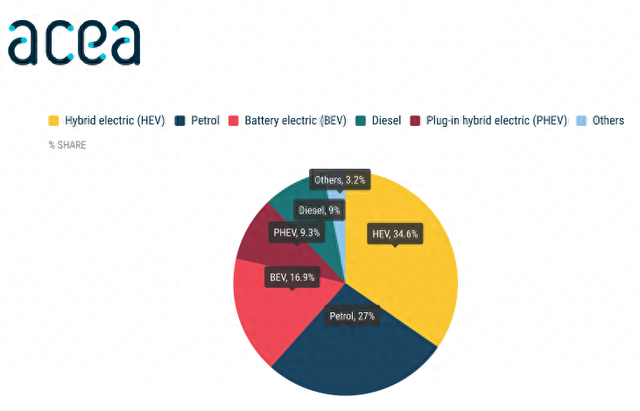
Core Insights - The European automotive market is experiencing a significant shift towards electric and hybrid vehicles, with pure electric vehicles (EVs) accounting for 16.9% of the market share, an increase of 3.5 percentage points from the previous year [1][4] - Hybrid vehicles have surpassed one-third of the market share, indicating a strong preference among EU consumers [1][4] - The total market share for fuel vehicles has decreased to 36.1%, down 9.7 percentage points compared to the same period last year [1][4] Market Performance - In the first 11 months of the year, the EU registered 9.86 million new cars, a year-on-year increase of 1.4% [4] - Pure electric vehicle registrations reached 1.6624 million, marking a 27.6% increase year-on-year [4] - The largest four markets (Germany, Belgium, Netherlands, and France) accounted for 62% of the electric vehicle registrations, with Germany seeing a 41.3% increase [4] Hybrid and Plug-in Hybrid Vehicles - The registration of new hybrid vehicles rose to 3.4089 million, a 14.5% increase year-on-year, representing 34.6% of the total market [4] - Plug-in hybrid vehicle registrations reached 912,700, up 33.1% year-on-year, making up 9.3% of new car registrations [6] Fuel Vehicle Decline - Gasoline vehicle registrations totaled 2.6657 million, down 18.6% year-on-year, with a market share of 27% [6] - Diesel vehicle registrations fell to 890,000, a 24.4% decline, representing only 9% of the market [7] Company Performance - Volkswagen Group registered 2.7311 million new cars in the EU, a 5% increase, maintaining a market share of 27.7% [8] - Stellantis Group registered 1.541 million vehicles, a 5.5% decline, with a market share of 15.6% [8] - BYD saw a remarkable 240% increase in registrations, totaling 110,700 vehicles, the highest growth rate among all automotive groups [8] Market Trends - The shift towards electric vehicles is becoming a prominent trend in the European market, despite the EU's recent decision to abandon the 2035 ban on internal combustion engine vehicles [10] - The demand for electric vehicles is increasingly being met by Chinese manufacturers like SAIC and BYD, impacting the expansion of local European brands in the electric vehicle segment [10] - Despite tariffs of up to 35.3% on Chinese electric vehicle imports, the competitive pricing and quality of Chinese electric vehicles have solidified their position in the European market [10]

奔驰固态电池供应商完成SPAC合并协议,明年将在美国上市
Sou Hu Cai Jing· 2025-12-24 09:51
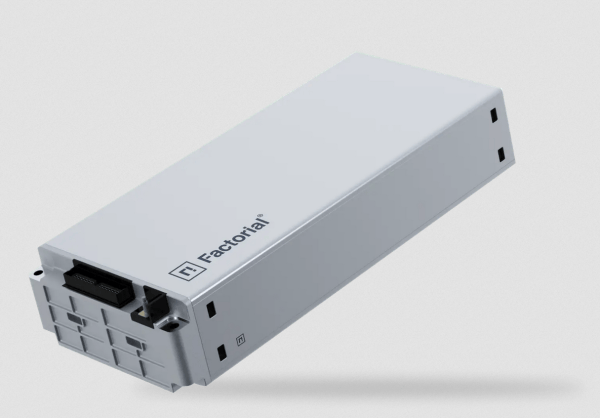
Factorial的产品Factorial Energy 自2021年起,Factorial Energy便与奔驰建立战略合作伙伴关系。2023年10月,Factorial Energy向奔驰交 付了超过1000个100+Ah锂金属固态电池的A样品。这是全球首批通过UN 38.3安全测试的100+Ah锂金属 电池,可实现391Wh/kg的能量密度。 【文/观察者网 潘昱辰 编辑/高莘】12月24日,美国固态电池开发商Factorial Energy宣布与特殊目的收购 公司(SPAC)Cartesian Growth Corporation III (CGCT) 完成最终业务合并协议,该交易预计于2026年年 中完成。其后将于美国纳斯达克交易所挂牌上市,股票代码"FAC"。 Factorial Energy的估值约为11亿美元(约合人民币77亿元),此次合并还将带来1亿美元(约合人民币7 亿元)的资金。该公司表示,在纳斯达克上市后将加速固态电池技术的规模化生产和商业化应用,并实 现从实验室到量产的关键跨越。 Factorial Energy于2019年由美国康纳尔大学化学博士及MBA黄思宇(Siyu Huang ...
欧盟调整禁燃令,减排承诺打折背后的困境
2 1 Shi Ji Jing Ji Bao Dao· 2025-12-24 06:18
Core Insights - The EU has adjusted its "ban on combustion engines" from a 100% zero-emission target by 2035 to a 90% reduction, reflecting a compromise between climate goals and industrial realities [1][2] - Ford has announced a significant write-down of $19.5 billion, halting production of its electric flagship model F-150 Lightning, highlighting the challenges faced by traditional automakers in the electric vehicle (EV) market [1][5] - The adjustments in both the EU and Ford signal a retreat from aggressive electrification strategies, potentially opening a favorable window for Chinese electric vehicle manufacturers [1][6] EU Policy Adjustments - The European Automobile Manufacturers Association (ACEA) has been a key lobbyist for the EU's policy shift, citing low sales of EU-produced electric vehicles and inadequate charging infrastructure as major concerns [2] - The new EU plan maintains a long-term carbon neutrality goal for 2050 but significantly relaxes immediate targets, allowing for a compensation mechanism that permits up to 10% of emissions to be offset through alternative fuels and technologies [2][3] - The policy also introduces incentives for small, affordable electric vehicles produced in the EU, indicating a balanced approach to support both existing industries and the transition to electric mobility [3] Market Dynamics - As of October 2025, hybrid electric vehicles (HEVs) hold a 34.6% market share in the EU, while battery electric vehicles (BEVs) only account for 16.4%, indicating consumer preference for more practical hybrid options [4] - Ford's financial losses are attributed to the cancellation of electric vehicle models and the closure of a battery joint venture, marking a significant shift in its electrification strategy towards hybrids and range-extended vehicles [5] - Other traditional automakers, such as General Motors and Stellantis, are also pivoting towards hybrid technologies, reflecting a broader trend in the industry [5] Opportunities for Chinese Manufacturers - Chinese electric vehicle manufacturers like BYD and SAIC MG are experiencing significant growth in the EU market, with BYD's new car registrations increasing by 239.6% year-on-year [6] - The shift in the EU's policy landscape may provide new opportunities for Chinese companies to expand their market presence, leveraging their competitive advantages in cost and innovation [6][7] - The EU's "battery booster" plan aims to develop a local battery supply chain, which could also benefit competitive Chinese component manufacturers looking to establish production in Europe [7] Strategic Implications - Traditional European automakers face the challenge of balancing profitability from existing combustion engine vehicles while accelerating the adoption of hybrid technologies [7] - The evolving landscape necessitates that Chinese manufacturers remain adaptable to diverse technological pathways and market demands [7] - The automotive industry's transformation is ongoing, with the ultimate winners likely to be those who can navigate market dynamics with technological foresight and financial resilience [7]
