小米

Search documents
应可逐步部署。
ZHONGTAI INTERNATIONAL SECURITIES· 2026-01-08 11:39
Market Performance - The Hang Seng Index and the China Enterprises Index fell by 0.9% and 1.1% respectively, with brokerage stocks retreating after a previous rise[1] - The Dow Jones dropped by 0.9%, while the Nasdaq increased by 0.2%, and the S&P 500 fell by 0.3%[2] Oil Market Impact - Concerns over oil prices arose as Trump announced Venezuela would supply 30-50 million barrels of oil to the U.S., affecting market sentiment[2] - Oil stocks declined due to these market worries[1] Automotive Sector Trends - The automotive sector showed mixed performance, with smart driving-related stocks performing well, while traditional vehicle manufacturers faced declines of 1-4%[4] - Concerns about a potential drop in car sales and renewed price wars negatively impacted the overall automotive sector[4] Semiconductor and Chip Prices - Samsung Electronics warned of a memory chip supply shortage, predicting a price increase of 60-70% for DRAM in Q1 compared to Q4 of the previous year[1] - Chip prices are expected to continue rising, benefiting companies like Huahong Semiconductor and ASMPT[1] Pharmaceutical Sector Developments - The Hang Seng Healthcare Index rose by 3.7%, driven by the innovative drug sector and favorable regulatory announcements from the National Medical Products Administration[5] - The approval of 76 innovative drugs by 2025 marks a historical high, surpassing the 48 approved in 2024[5]
德赛西威股东的“进”与“退”:44亿元定增吸引21家机构投资者,本土大股东却相继减持
Mei Ri Jing Ji Xin Wen· 2026-01-08 11:25
Group 1 - The company, Desay SV, is facing a dual situation of a 4.4 billion yuan private placement plan while its major shareholders are planning to reduce their stakes, with the second largest shareholder having already reduced their holdings multiple times in 2023 [1][2] - The first major shareholder, Guangdong Desay Group, plans to reduce its holdings by up to 7.106 million shares, which is approximately 1.19% of the company's total share capital [1] - Desay Group's last significant reduction in holdings occurred during its restructuring in 2020, and this marks the first time it plans to reduce its stake in the secondary market since the company's listing in 2017 [2] Group 2 - The private placement will issue approximately 41.89 million shares at a price of 105 yuan per share, raising around 4.4 billion yuan for projects including the construction of an automotive electronics base and the development of intelligent automotive electronic systems [3] - Desay SV is also planning to issue H-shares and list on the Hong Kong Stock Exchange as part of its internationalization strategy, which aims to accelerate overseas business expansion [3] - The company has reported that its overseas sales revenue as a percentage of total revenue has remained relatively stable from 2022 to the first half of 2025, indicating a slow pace of international growth [3] Group 3 - Desay SV has secured new project orders from major international automotive companies like Toyota, and its production facilities in Germany are operational while a factory in Spain is expected to be completed by the end of 2025 [4] - The company aims to penetrate key overseas markets such as Europe, Japan, and Southeast Asia, with a focus on establishing its capabilities in the intelligent sector [4] Group 4 - The automotive industry is increasingly prioritizing smart technology, with intelligent cockpits becoming a core factor influencing consumer purchasing decisions, as highlighted by industry reports [6] - A significant percentage of potential car buyers (71%) express interest in features like "smart interactive seating," indicating a shift in consumer preferences towards advanced technological features in vehicles [6] - Desay SV faces competition not only from traditional automotive giants like Bosch and Continental but also from tech companies such as Huawei and Xiaomi, which are entering the cockpit ecosystem with their own operating systems [6]
大模型第一股登陆港交所!市值突破500亿
机器人圈· 2026-01-08 10:13
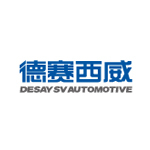
Core Viewpoint - The successful IPO of Zhiyuan Technology marks a significant milestone in the hard technology sector, demonstrating that core technological innovation can attract capital market recognition despite short-term losses [11]. Group 1: Company Overview - Zhiyuan Technology, known as the "first global large model stock," debuted on the Hong Kong Stock Exchange on January 8, 2026, with an opening price of 120 HKD, a 3.27% increase from its issue price of 116.20 HKD, and a market capitalization that briefly exceeded 52.8 billion HKD [2]. - The company originated from Tsinghua University's Knowledge Engineering Laboratory, with a strong foundation in data and knowledge graph technology, and was officially established in 2019 [3]. - The core team, referred to as the "Tsinghua team," includes many members with Tsinghua backgrounds, and the team has published over 500 high-impact papers with more than 58,000 citations [3]. Group 2: Technological Development - Zhiyuan Technology chose to pursue independent innovation by developing its own GLM (General Language Model) pre-training architecture, which outperforms existing Western technologies in robustness and controllability [6]. - The company released China's first open-source model, GLM-130B, in 2022, which was recognized in global evaluations and has since launched several other models, achieving over 60 million downloads globally by 2025 [6]. Group 3: Business Model and Financial Performance - Zhiyuan Technology employs a unique "three-legged" business model targeting enterprise clients (To B), developers (To D), and end consumers (To Device), serving over 12,000 enterprises and 2.7 million developers [7]. - Financially, the company's revenue grew from 57.4 million RMB in 2022 to 312.4 million RMB in 2024, with a compound annual growth rate of 130% and a gross margin of 64.6% in 2023 [7]. - Despite significant revenue growth, the company reported increasing adjusted net losses, from 97 million RMB in 2022 to 2.466 billion RMB in 2024, primarily due to high R&D costs [7]. Group 4: Investment and Market Impact - Prior to its IPO, Zhiyuan Technology completed eight rounds of financing, raising over 8.3 billion RMB, with investments from major players like Meituan, Ant Group, and Tencent [8]. - The company's market valuation increased significantly, with its valuation rising from 2.8 billion RMB in the B round to over 50 billion HKD post-IPO, reflecting a 17-fold increase [8]. - The IPO of Zhiyuan Technology is expected to reshape investment logic in the hard technology sector, encouraging further capital inflow into Chinese AI core assets [11]. Group 5: Future Outlook - Zhiyuan Technology plans to allocate 70% of the IPO proceeds to the development of general AI models and 10% to optimizing its MaaS platform [12]. - The company aims to enhance its core capabilities and expand its applications, with a focus on domestic chip optimization and training [12]. - The successful IPO of Zhiyuan Technology is anticipated to pave the way for other large model companies to go public, indicating a sustained investment trend in hard technology [12].

禾赛规划2026年产能将翻番至400万台 ADAS与机器人业务同步推进
Yang Shi Wang· 2026-01-08 09:58
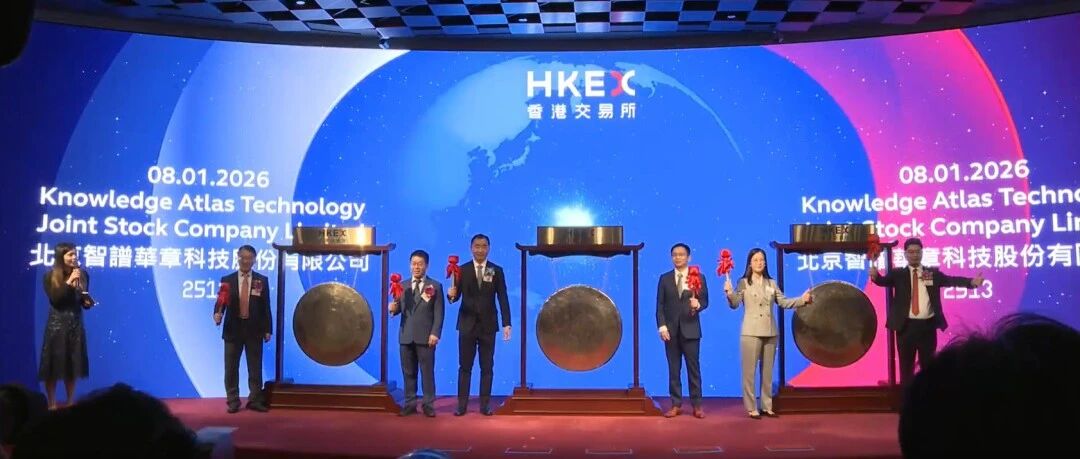
Core Insights - Hesai Technology announced plans to double its annual production capacity from 2 million units in 2025 to 4 million units in 2026 to meet the growing demand for LiDAR in ADAS and robotics [1][3] Group 1: Company Achievements - Hesai is the first global company to achieve an annual production of over 1 million units and cumulative deliveries exceeding 2 million units of LiDAR [3] - In 2025, Hesai delivered over 1.6 million units, with the highest monthly delivery exceeding 200,000 units [3] - The company has seen its annual delivery volume double for five consecutive years, with ADAS products accounting for approximately 1.4 million units and robotics products over 200,000 units in 2025 [3] Group 2: Production Capabilities - The company’s self-developed manufacturing capabilities are a key factor in its planned production capacity increase [3] - Hesai has established a comprehensive center integrating R&D and manufacturing, which supports large-scale production [3] - The fully automated production line can produce one LiDAR unit every 10 seconds, enhancing efficiency [3] Group 3: New Developments and Partnerships - At CES, Hesai showcased its new generation L3 automotive-grade LiDAR solutions, including the ETX and FTX models, which are designed for flexible integration into vehicles [5] - The company has secured production contracts with 24 OEMs for over 120 vehicle models, including major brands like Li Auto, Xiaomi, and Toyota [5] - Hesai's latest ATX model has received over 4 million orders and is set to begin mass production in April 2026 [5] Group 4: Market Trends - The robotics industry is experiencing rapid growth driven by AI, with stable and precise environmental perception becoming essential [6] - Hesai's LiDAR technology is being utilized in various autonomous driving applications, including Robotaxi and autonomous trucks, with some vehicles planning to use up to 8 LiDAR units [6] - The JT series of mini 360° LiDAR has been widely validated in the market, with over 200,000 units shipped since its launch [6]


涨疯了,一盒内存条堪比上海一套房!
Jin Tou Wang· 2026-01-08 09:35
Core Viewpoint - The rising cost pressure in the automotive industry is primarily driven by memory prices rather than metal raw materials, with significant price increases in memory components impacting the overall cost of smartphones, computers, and cars [1][4]. Group 1: Memory Price Increases - The price of a 265G DDR5 server memory module has reached 40,000, with a box of 100 costing 4 million, comparable to the price of a house in some areas of Shanghai [4]. - The price of 16GB DDR4 memory modules surged by 1800% last year, while DDR5 modules increased by over 500% [1][5]. - The demand for memory in AI applications is significantly higher, with a single AI server requiring 8-10 times more memory than a standard server, leading to a supply shortage [5][7]. Group 2: Impact on Consumer Electronics - The increase in memory prices is expected to lead to higher prices for smartphones and computers, with memory accounting for 10%-20% of hardware costs [4]. - Smartphone manufacturers like Xiaomi, OPPO, and others have already raised prices by 100 to 600 yuan for new models since last October due to rising costs [7]. - The global smartphone shipment volume is projected to decline by 2.1% in 2026 due to these price increases [7]. Group 3: PC Market Dynamics - Major PC manufacturers such as Dell and Lenovo are planning price increases ranging from 10% to 30% for commercial PCs [9]. - The domestic memory manufacturers like Yangtze Memory Technologies and ChangXin Memory are gaining market share due to their price advantages of 15%-20% [9]. Group 4: AI Infrastructure and Market Competition - Tech giants like Apple, Google, and Amazon are aggressively competing for memory supply, with procurement teams stationed in South Korea to secure long-term contracts [11]. - Samsung and SK Hynix are maintaining a strong stance on pricing, opting for quarterly pricing rather than long-term contracts, which has led to significant price increases [11]. - The current memory price surge is expected to persist until 2026, with predictions of price hikes of up to 70% from major manufacturers [9][11].


高盛:中国股票今年还有20%涨幅空间
3 6 Ke· 2026-01-08 08:10
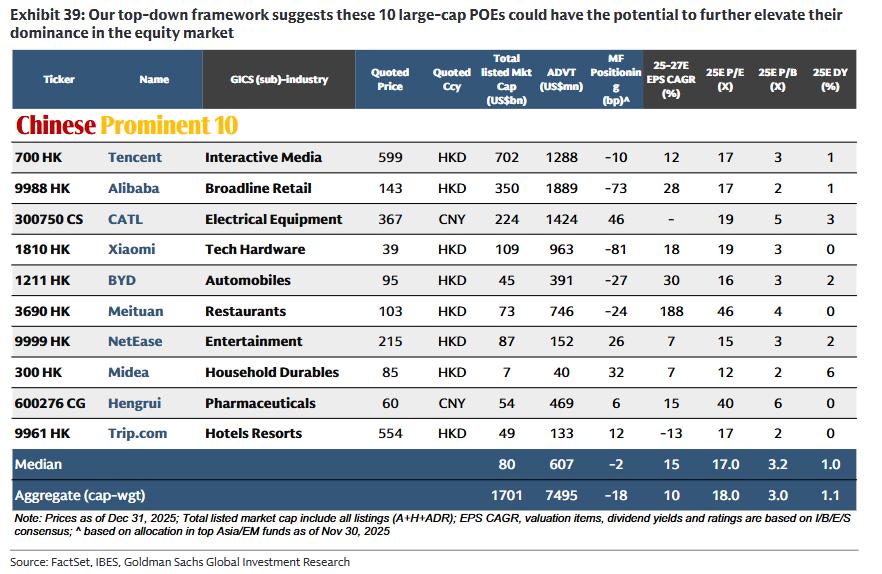
Group 1: Market Outlook - Goldman Sachs predicts that Chinese stocks will be supported by artificial intelligence and policy measures, with the MSCI China Index expected to rise by 20% by the end of 2026, and the CSI 300 Index projected to increase by 12% to 5200 points [1] - As of the first trading day of 2026, the CSI 300 Index has already risen by 3.5%, reaching a four-year high, while the MSCI China Index has increased by approximately 3.6%, outperforming the S&P 500 [1] Group 2: Earnings-Driven Growth - The core argument of Goldman Sachs' report is that returns in 2026 will be primarily driven by earnings growth, supported by artificial intelligence, "going global" strategies, and anti-involution policies [2] - Five major capital flows are expected to support the market: net southbound capital inflows potentially reaching a record $200 billion; domestic asset reallocation bringing about 3 trillion RMB into the stock market; total dividends and buybacks nearing 4 trillion RMB; global active funds possibly increasing their allocation to Chinese stocks; and IPO financing exceeding $100 billion [2] Group 3: Investment Logic - On a macro level, Goldman Sachs has raised its forecast for China's real GDP growth in 2026, citing resilient exports as a key driver, with a trend towards diversification and quality improvement in export destinations [4] - The report indicates that the valuation of the MSCI China Index and CSI 300 has recovered to mid-cycle levels, with forward P/E ratios of 12.4x and 14.5x, respectively, around or slightly above the 10-year average [4] Group 4: Sector and Company Insights - Goldman Sachs expects the TMT sector (technology, media, and telecommunications) to have the highest earnings growth forecast at approximately 20%, driven by AI-related revenue growth and increased capital expenditures [5] - The firm holds an "overweight" view on several sectors, including technology hardware, media/entertainment, internet retail, materials, and insurance, benefiting from various supportive factors [5] - A list of ten leading Chinese companies comparable to the "Big Seven" in the U.S. stock market includes Tencent, Alibaba, CATL, Xiaomi, BYD, Meituan, NetEase, Hengrui Medicine, and Trip.com, with a total market capitalization of $1.7 trillion, accounting for 40% of the MSCI China Index [6]


【投资】如何积极把握港股投资机遇
中国建设银行· 2026-01-08 07:52
Core Viewpoint - The article emphasizes the potential of the Hong Kong stock market, particularly in the technology sector, as a significant option for global asset allocation by 2025, highlighting its strong performance and attractiveness to investors [1]. Group 1: Investment Opportunities in Hong Kong Technology - The Hong Kong stock market is expected to attract more overseas funds, especially in the technology sector, due to the Federal Reserve's decision to resume interest rate cuts [3]. - In 2025, southbound funds are projected to have a cumulative net purchase of HKD 1,393.55 billion in Hong Kong stocks, marking a historical annual high, with technology being a key focus area [3]. - The Hang Seng Technology Index, which includes major tech companies like Alibaba, Tencent, and Xiaomi, is seen as a representative index for the Hong Kong tech market, indicating significant growth potential amid the AI wave [6][7]. Group 2: Performance and Valuation - The Hang Seng Technology Index has shown a cumulative increase of 30.85% since the beginning of 2023, outperforming the Hang Seng Index, which rose by 27.57% during the same period [15]. - The current Price-to-Earnings (P/E) ratio of the Hang Seng Technology Index is 22.74, which is considered reasonable compared to its historical average and other major technology indices like the Nasdaq 100 [19][21]. - The article provides a comparison of the Hang Seng Technology Index's P/E ratio with other indices, indicating its investment value [19][21]. Group 3: Sector Distribution and Growth Potential - The Hang Seng Technology Index covers a balanced distribution across various sectors, including software services, semiconductor, and media and entertainment, indicating a diverse investment landscape [9][12]. - The technology sector is characterized by high growth attributes and performance elasticity, making it an attractive investment option in the current market environment [14].

“全球大模型第一股”智谱盘中破发后快速拉升
Xin Lang Cai Jing· 2026-01-08 05:25
Core Viewpoint - The article discusses the successful debut of Zhipu AI, referred to as the "first global large model stock," on the Hong Kong Stock Exchange, highlighting its initial trading performance and future plans for model development [1][4]. Company Overview - Zhipu AI, established in 2019, focuses on developing advanced general large models (AGI) with GLM at its core, covering text, multimodal, and application-oriented model services [2][5]. - The company has launched significant models, including the 130 billion parameter model GLM-130B and the open-source chat model ChatGLM [2][5]. Financial Performance - According to a Frost & Sullivan report, Zhipu ranks first among independent general large model developers in China based on projected revenue for 2024 [2][5]. - Revenue is expected to grow from 57.4 million yuan in 2022 to 312.4 million yuan in 2024, reflecting a compound annual growth rate (CAGR) of over 100% [2][5]. - However, the company has faced substantial losses, with reported losses of 144 million yuan, 788 million yuan, 2.958 billion yuan, and 2.358 billion yuan for the years 2022, 2023, 2024, and the first half of 2025, respectively [2][5]. Market Reception - Zhipu's IPO attracted significant market attention, with the public offering portion recording an oversubscription of approximately 1159.46 times [2][5]. - Due to high demand, the number of publicly offered shares increased to 7.4839 million, accounting for 20% of the total global offering [2][5]. Shareholder Structure - The company's shareholders include major players such as Meituan, Ant Group, Alibaba, Tencent, Xiaomi, and leading investment firms like Junlian Capital, Sequoia China, Hillhouse Capital, Qiming Venture Partners, and Shunwei Capital [3][6].
全球大模型第一股,大逆转!
中国基金报· 2026-01-08 05:10
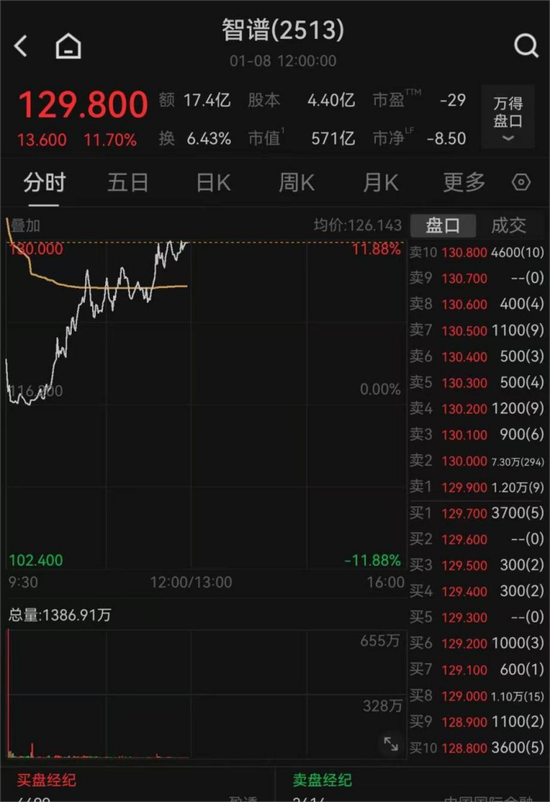
Core Viewpoint - The article discusses the debut of Zhipu AI, referred to as the "first global large model stock," on the Hong Kong Stock Exchange, highlighting its initial performance and future plans for model development [2][4]. Group 1: Company Overview - Zhipu AI, established in 2019, focuses on developing advanced general large models (AGI) with GLM at its core, covering text, multimodal, and application-oriented model services [4]. - The company has launched several models, including the GLM-130B with hundreds of billions of parameters and the open-source chat model ChatGLM [4]. Group 2: Financial Performance - Zhipu's revenue is projected to grow from 57.4 million yuan in 2022 to 312.4 million yuan in 2024, reflecting a compound annual growth rate (CAGR) of over 100% [4]. - The company has reported significant losses, with losses of 144 million yuan in 2022, 788 million yuan in 2023, 2.958 billion yuan in 2024, and 2.358 billion yuan in the first half of 2025 [4]. Group 3: Market Response and Stock Performance - On its listing day, Zhipu's stock opened at 120 HKD per share, briefly dipped to 116.1 HKD, and then closed at 129.8 HKD, marking an 11.7% increase and a total market capitalization of 57.1 billion HKD [2][3]. - The public offering was highly oversubscribed, with a subscription rate of approximately 1159.46 times, leading to an increase in the number of shares offered to 748,390, accounting for 20% of the total global offering [4].

多家车企密集降价促销
YOUNG财经 漾财经· 2026-01-08 04:05
Core Viewpoint - Multiple automotive companies are launching aggressive discount promotions to counter the impact of the new energy vehicle purchase tax adjustments scheduled for 2026 [3][6]. Group 1: Promotions and Discounts - Tesla China has introduced purchase incentives for the Model 3/Y/Y L, offering a "7-year ultra-low interest" financing plan with a minimum down payment of 79,900 yuan and monthly payments starting at 1,918 yuan [3]. - GAC Group has announced promotional activities for its self-owned brands, including a maximum of 70,000 yuan in "government-enterprise subsidies" for vehicles like GAC Trumpchi [3]. - NIO's Firefly brand is providing benefits such as a 2,000 yuan purchase tax subsidy and rewards for repeat buyers [4]. - Xiaomi has launched promotions for its YU7 and SU7 Ultra models, with financing options including "3 years 0 interest" and a down payment starting at 74,900 yuan [4]. - BMW has implemented a significant price reduction across 31 models, with the BMW iX1 seeing a price drop from 299,900 yuan to 228,000 yuan, a reduction of 24% [5]. - Volvo is offering a limited-time promotion for the XC70, including a direct purchase tax subsidy of 14,000 yuan [5]. - Wuling Motors is providing full purchase tax subsidies for several new energy models, along with additional trade-in and financing incentives [5]. Group 2: Market Outlook - The automotive industry anticipates a decline in the market due to the new energy vehicle purchase tax policy changes and the withdrawal of national subsidies by the end of 2025 [6]. - Despite initial cautious forecasts, the introduction of vehicle scrappage and trade-in subsidies earlier than expected has led to a more optimistic outlook for the 2026 automotive market [6]. - The combination of substantial promotional efforts by car manufacturers and government incentives is expected to support continued growth in the Chinese automotive market in 2026 [6].