三星

Search documents
存储芯片荒难解!惠普(HPQ.US)等PC大厂据称首次考虑中国大陆供应商
智通财经网· 2026-02-05 22:24
Group 1 - Major PC manufacturers, including HP, Dell, Acer, and Asus, are considering sourcing memory chips from Chinese manufacturers due to supply shortages and rising costs in the tech industry [1][2] - HP has begun certifying products from Changxin Memory Technologies (CXMT) as a potential alternative supply source, with plans to monitor the memory chip supply situation until mid-2026 [1][2] - Dell is also certifying CXMT's DRAM products amid concerns of continued price increases for memory chips through 2026 [2] Group 2 - Acer and Asus are open to using memory chips from Chinese manufacturers, with Asus requesting assistance from its Chinese partners for notebook memory chip procurement [2] - Many PC manufacturers view Chinese memory chip companies as potential "saviors" for the consumer electronics industry, as leading manufacturers like Micron, Samsung, and SK Hynix prioritize supply for AI giants [2] - The ongoing supply constraints and cost pressures are forcing manufacturers to diversify their supply sources and rethink long-term procurement strategies [2] Group 3 - The price surge of storage chips is impacting the consumer electronics market, with IDC predicting a 4.9% contraction in the PC market by 2026, following an 8.1% growth last year [2] - Market expectations indicate that the price increase for storage chips will continue, with Counterpoint forecasting a further 40% to 50% rise in Q1 of this year after a 50% increase last year [3]

江波龙37亿元募资,存储龙头向“芯”突围
Bei Jing Shang Bao· 2026-02-05 14:09
Core Viewpoint - The storage industry is experiencing a strong cycle driven by AI, with companies like Jiangbolong showing significant profit growth and strategic fundraising to enhance technology capabilities [1][3]. Group 1: Company Performance - Jiangbolong's 2025 annual profit is expected to increase by 150.66% to 2.1082 billion yuan, marking a significant turnaround [1]. - The company anticipates a net profit of 1.25 billion to 1.55 billion yuan for the year, with a fourth-quarter net profit of approximately 650 million to 870 million yuan [5]. Group 2: Market Dynamics - The current cycle is driven by AI-induced demand for DRAM, differing from past cycles characterized by inventory fluctuations, suggesting a longer duration for this upturn [3]. - The global semiconductor storage market is projected to grow from $165.5 billion in 2024 to $184.8 billion in 2025, reflecting an 11.7% year-on-year increase [3]. Group 3: Price Trends - TrendForce predicts a 55% to 60% quarter-on-quarter increase in general DRAM contract prices in Q1 2026, with NAND flash prices expected to rise by 33% to 38% [4]. - Major manufacturers like Micron, Samsung, and SK Hynix have raised storage product contract prices by up to 30% in late 2025, indicating a clear upward trend in pricing [4]. Group 4: Industry Supply and Demand - AI technology is driving increased demand for SSDs among cloud service providers, while HDD supply shortages are pushing these providers to switch to SSDs, leading to a surge in NAND Flash demand [6]. - The supply chain is expected to remain constrained, with limited contributions to output growth from increased capital expenditures by manufacturers due to the lag in capacity construction [6]. Group 5: Domestic Industry Development - China's storage market accounts for over 20% of global demand, but domestic production remains insufficient, particularly in high-end storage products related to AI [7]. - Jiangbolong's fundraising of 3.7 billion yuan is aimed at enhancing capabilities in NAND Flash controller chip design and storage chip packaging and testing, addressing key technological gaps in the domestic industry [7][8].

三星AR眼镜定档2026:谷歌加持,剑指Meta,憋大招还是赶晚集?
3 6 Ke· 2026-02-05 12:47
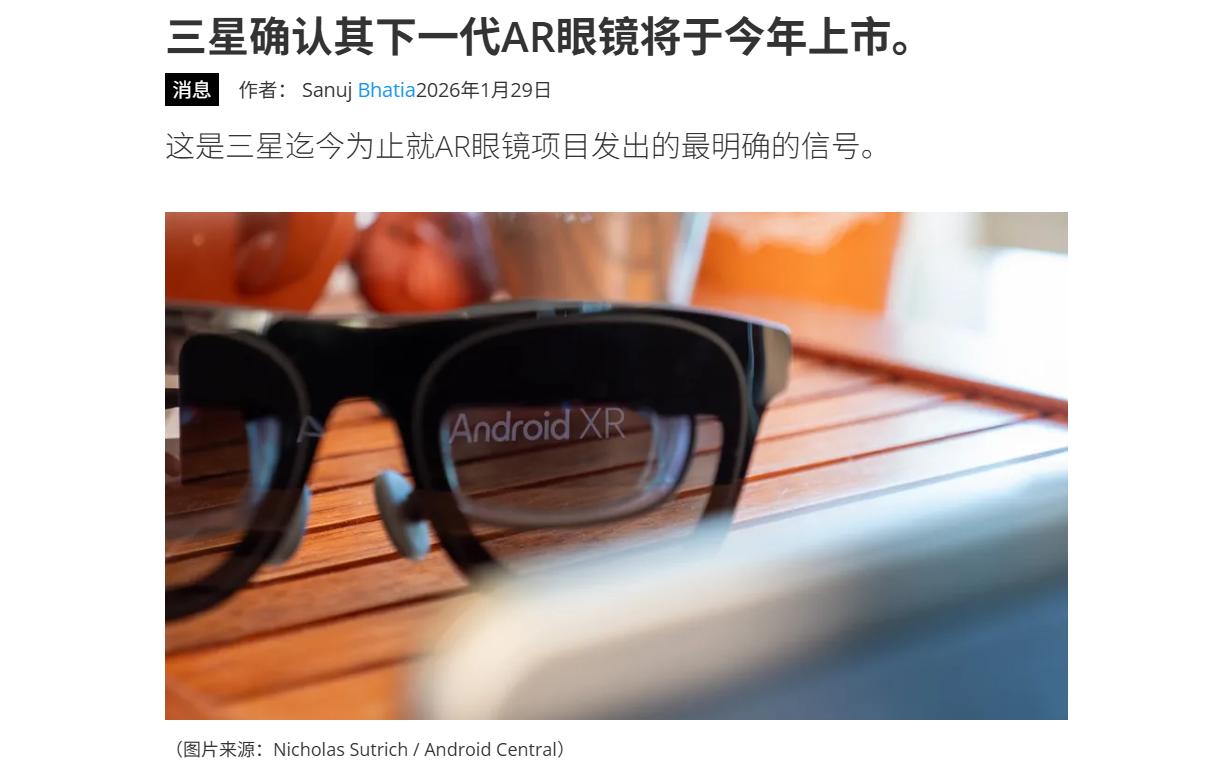
Core Viewpoint - The article discusses the rising trend of AI glasses in the tech industry, highlighting Samsung's upcoming entry into the market with its first AI glasses set to launch in 2026, aiming to provide a rich, immersive multi-modal AI experience [1][3]. Group 1: Market Context - The AI glasses market is currently competitive, with major players like Apple, Meta, and various Chinese startups actively developing and selling products [1]. - Samsung has been relatively quiet in this space but has confirmed its plans to enter the market, indicating a significant shift in strategy [1][3]. Group 2: Product Features - Samsung's AI glasses are designed to weigh around 50 grams, which is comparable to Meta's product and aims to ensure user comfort [6]. - The glasses are expected to be powered by the Qualcomm Snapdragon AR1 Gen 1 chip, suitable for basic AI functions like voice processing and image recognition [9]. - The device will feature a 12-megapixel Sony camera, primarily for AI applications rather than high-quality photography [9]. - Battery capacity is approximately 155mAh, similar to Meta's offering, indicating a focus on casual, intermittent use rather than extended sessions [10]. Group 3: Competitive Advantages - Samsung's integration with its Galaxy ecosystem and Google's software support, including the Android XR system and Gemini AI model, positions it favorably against competitors [14][19]. - The existing user base of Samsung devices provides a significant potential market for the new glasses, as current users may prefer a seamless integration with their existing devices [15][17]. Group 4: Strategic Timing - Samsung's delayed entry into the AI glasses market is attributed to its need for a mature product that meets high standards, contrasting with the rapid iteration seen in smaller companies [26]. - The collaboration with Google and the timing of the product launch are seen as critical to establishing a strong foothold in the emerging AR glasses market [28][29].
存储行业深度跟踪报告:26全年预计供给偏紧状态持续,产业链公司整体展望乐观
CMS· 2026-02-05 11:14
Investment Rating - The report maintains a positive outlook on the storage industry, suggesting that the overall performance of companies in the supply chain will be optimistic due to a tight supply situation expected to continue into 2027 [1]. Core Insights - The storage industry is projected to experience a significant increase in demand driven by AI applications, with a compound annual growth rate (CAGR) of approximately 20% for global storage bits, particularly in data centers transitioning to a ZB-level expansion cycle [15][18]. - The supply side is characterized by limited new capacity in 2026, with a forecasted growth of about 20% in bit shipments for both DRAM and NAND, leading to a sustained supply-demand mismatch [49][56]. - The report highlights a notable increase in inventory levels among downstream manufacturers, with strategic stockpiling to address anticipated demand in 2026 [9][60]. - Price trends indicate a significant rise in contract prices for DRAM and NAND, with expectations of a 90-95% and 55-60% increase respectively in Q1 2026, driven by strong server demand [9][30]. Demand Side Summary - The demand for storage is expected to grow exponentially due to AI inference, with NAND becoming increasingly critical in data centers [10][15]. - The global storage market size is anticipated to reach nearly $300 billion in 2026, reflecting a year-on-year growth of 39% [15][19]. - Data center storage capacity is projected to shift from EB to ZB levels, with significant contributions from AI-driven applications [18][22]. Supply Side Summary - Capital expenditures from major manufacturers are set to increase significantly in 2026, with Samsung, SK Hynix, and Micron expected to invest $20 billion, $20.5 billion, and $13.5 billion respectively [49][56]. - Despite increased capital spending, effective capacity release is expected to be delayed until 2027, maintaining a seller's market [49][56]. - The report notes that the shipment growth for DRAM and NAND is expected to be around 20%, with server applications accounting for over 45% of shipments [50][51]. Inventory Side Summary - The report indicates a significant divergence in inventory levels across the supply chain, with tight inventory conditions expected to persist throughout 2026 [9][60]. - Downstream manufacturers, particularly in mainland China, are actively increasing their inventory levels to prepare for the anticipated supply-demand gap in 2026 [9][60]. Price Side Summary - The report anticipates a continued upward trend in storage prices, with significant increases in contract prices expected due to ongoing supply constraints and strong demand from AI applications [9][30]. - The overall price index for storage products has shown a rapid increase since the second half of 2025, with expectations of further price hikes across all categories [9][30]. Sales Side Summary - The report forecasts a substantial increase in revenue and profit for major manufacturers in the storage industry, driven by the ongoing demand surge and strategic inventory management [9][60]. - The overall industry revenue for DRAM and Flash is projected to reach $551.6 billion in 2026, reflecting a 134% year-on-year increase [9][60].

高通(QCOM):FY26Q1业绩符合预期,内存短缺拖累下游需求
EBSCN· 2026-02-05 11:09
Investment Rating - The report maintains a "Buy" rating for Qualcomm (QCOM.O) [6] Core Insights - Qualcomm's FY26Q1 performance met expectations, but the guidance for FY26Q2 fell short due to adverse impacts from memory shortages and price increases affecting downstream demand [1] - FY26Q1 Non-GAAP revenue was $12.252 billion, a 5% year-over-year increase, with Non-GAAP net profit at $3.781 billion [1] - The guidance for FY26Q2 is projected Non-GAAP revenue of $10.2 to $11 billion, below the consensus estimate of $11.16 billion [1] Summary by Sections QCT Mobile Business - FY26Q1 mobile business revenue was $7.824 billion, up 3% year-over-year, driven by increased shipments of Snapdragon chips [2] - Qualcomm secured a 75% supply share for high-end smartphone chips for Samsung's upcoming series [2] - The guidance for FY26Q2 mobile revenue is approximately $6 billion, with expectations of growth being constrained by memory chip shortages [2] QCT IoT Business - FY26Q1 IoT revenue reached $1.688 billion, a 9% year-over-year increase, primarily due to higher shipments in edge networking and consumer products [3] - The company continues to expand into vertical applications in edge networking and industrial IoT, with new products launched at CES 2026 [3] - The PC segment saw the release of the Snapdragon X2 Plus chip, enhancing performance significantly [3] QCT Automotive Business - FY26Q1 automotive revenue was $1.101 billion, a 15% year-over-year increase, attributed to higher shipments of vehicles equipped with Qualcomm's smart cockpit technology [4] - Qualcomm signed a long-term supply agreement with Volkswagen Group, expanding its supply to brands like Audi and Porsche [4] - The company is collaborating with CARIAD and Bosch to develop autonomous driving systems [4] Financial Forecast and Valuation - The report forecasts GAAP net profits of $11.5 billion, $12.5 billion, and $13 billion for FY2026, FY2027, and FY2028 respectively, with growth rates of 107.7%, 8.4%, and 4.2% [4] - The current price corresponds to FY2026-2028 P/E ratios of 14X, 13X, and 12X [4]

ISE直击:TCL华星、京东方晶芯、海信、友达、三星、LG、索尼等30家显示企业亮点一览
WitsView睿智显示· 2026-02-05 10:39
参展的中国厂商包括 TCL华星、 京东方晶芯、海信、 利亚德、洲明科技、雷曼光电、艾比森、AET 阿尔泰、青松光电、希达电子、优派科技、兆驰晶显、国星光电、Kinglight晶台、诺瓦星云、卡莱特 及凯视达等;与此同时,三星、LG、索尼、Christie、松下、夏普、达科、C SEED、巴可等国际厂商 亦同台亮相,共同呈现全球视听与显示产业的发展趋势。 据LEDinside观察,多家厂商围绕零售、商显、教育、娱乐等应用场景设置展区,展示各类创新展示产 品,其中,MIP、 COB产品进一步普及,MIP 0.9显示屏,Micro LED COB一体机等身影频现,COG产 品画质等性能表现再升级;而纹理屏、曲面屏、球形屏、双面屏、透明屏和折叠屏等创意显示屏琳琅 满目,相关展位门庭若市;另外,用户对产品的"节能"效果关注度与重视程度进一步提升。 TCL华星 TCL华星携商业显示、艺术展示、赛事直播、教育办公等多场景显示解决方案亮相。 其中,163英寸高画质MLED显示屏产品面向高端商业展示和赛事直播,采用低反射封装材料和像素级 混合驱动,实现37500:1对比度和24bit色深,大尺寸设计减少拼接缝隙,提升视觉沉浸感 ...




韩国自动驾驶的突围之路:借道中韩合作,冲刺 2027
3 6 Ke· 2026-02-05 10:18
Core Insights - The article highlights the significant collaboration between South Korea and China in the autonomous driving sector, marked by the signing of 32 cooperation agreements during a business forum in Beijing [1][13]. - South Korea aims to achieve Level 4 (L4) autonomous driving commercialization by 2027, positioning itself among the top three global players in the industry [4][16]. Group 1: South Korea's Strategic Framework - South Korea has developed a comprehensive strategy for autonomous driving that includes top-level design, roadmaps, and pilot implementations since 2013 [4]. - Recent policies include the "Plan to Enhance the Competitiveness of the Autonomous Vehicle Industry," which aims for L4 commercialization by 2027, and the designation of Gwangju as the first "city-wide" autonomous driving test city [4][5]. - The government has introduced a regulatory framework that allows for relaxed regulations for Level 3 (L3) and L4 vehicles, empowering local governments to designate pilot areas [5]. Group 2: Commercialization and Application Scenarios - South Korea has seen rapid advancements in autonomous driving applications across various sectors, including public transport and logistics [6][10]. - Seoul is set to launch a daytime autonomous bus route by September 2025, featuring fully automated vehicles without drivers [6]. - The logistics sector has expanded significantly, with autonomous freight trucks now covering 5,224 kilometers of highways, and plans for robot and drone deliveries by 2026 and 2027, respectively [10]. Group 3: Technological Advancements and Infrastructure - South Korea's strength in autonomous driving is supported by its robust capabilities in semiconductors, communications, and automotive manufacturing [9]. - The country is embracing "Physical AI," integrating sensors, vehicle control, and road infrastructure with AI to minimize discrepancies between simulation and real-world conditions [11]. - The establishment of cooperative intelligent transport systems (C-ITS) has been a key focus, with extensive infrastructure already in place to enhance safety and efficiency [12]. Group 4: Sino-Korean Collaboration - The collaboration between Chinese and South Korean companies marks a shift from isolated technical exchanges to a more integrated ecosystem [13]. - Notable partnerships include Lenovo's collaboration with SWM for L4 Robotaxi development and the strategic alliance between Mushroom Carlink and LG Electronics for autonomous vehicle deployment [13]. - This partnership leverages China's data accumulation and cost control expertise alongside South Korea's regulatory framework and supply chain advantages [14]. Group 5: Challenges and Strategic Responses - Despite rapid progress, South Korea faces challenges in transitioning from experimental technologies to large-scale industrial applications [15]. - Issues such as accident liability, data privacy, and public acceptance of autonomous vehicles remain critical hurdles [15]. - South Korea's dual strategy of "open cooperation and technological breakthroughs" aims to address these challenges while enhancing its competitive position in the global market [16]. Group 6: Future Outlook - The collaboration between South Korea and China is seen as a pivotal moment in the global autonomous driving landscape, potentially reshaping industry dynamics [17]. - The next two years are expected to be a "harvest period" for Sino-Korean cooperation in autonomous driving, with the potential emergence of a new global leader in the sector [17].

业绩爆表+扩产加码!这个赛道的机会藏不住了
格隆汇APP· 2026-02-05 10:15
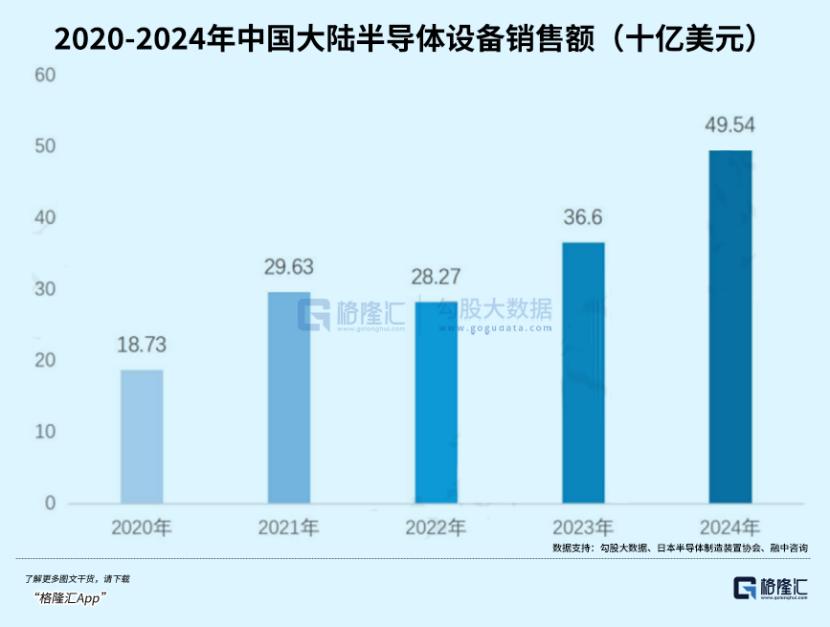
Core Viewpoint - The semiconductor equipment industry is entering a high-growth cycle driven by AI computing demand, domestic substitution, and global capacity expansion, with significant performance improvements from both international and domestic companies [4][7][21]. Group 1: Industry Performance - ASML reported a net sales of €32.7 billion in 2025, a 16% year-on-year increase, with a backlog of €38.8 billion in unfulfilled orders [4]. - Samsung's semiconductor business saw a 33% increase in operating profit, while SK Hynix's Q4 operating profit surged by 137% year-on-year [4]. - Domestic semiconductor equipment companies like Jinhaitong and Changchuan Technology also announced significant performance increases [4]. Group 2: Demand Drivers - The scale application of generative AI has drastically reshaped storage demand, with AI server DRAM needs being eight times that of regular servers and NAND needs three times higher [6]. - High Bandwidth Memory (HBM) is emerging as a core growth engine, with a projected CAGR of 33% from 2024 to 2030, potentially capturing 50% of the DRAM market by 2030 [6]. - Major global storage manufacturers are ramping up production, with Samsung's capital expenditure for 2025 expected to increase by 89% and SK Hynix raising its annual capital expenditure to $20.3 billion [6]. Group 3: Domestic Substitution Progress - The domestic semiconductor equipment localization rate is expected to reach 35% in 2024, doubling from 16.4% in 2022, with etching equipment localization at 23% and CMP equipment at 30%-40% [7]. - China has maintained its position as the largest semiconductor equipment market globally for five consecutive years, with sales expected to reach $49.54 billion in 2024, accounting for 42.34% of the global market [7]. Group 4: Future Trends - The global DRAM industry capital expenditure is projected to reach $61.3 billion in 2026, a 14% year-on-year increase, while NAND Flash capital expenditure is expected to be $22.2 billion, up 5% [9]. - ASML's order situation reflects high industry prosperity, with €13.2 billion in new orders in 2025, including €7.4 billion for EUV lithography machines, and a backlog extending to 2027 [9]. - The global semiconductor equipment market is projected to reach $117 billion in 2024, with a CAGR of 8.4% from 2025 to 2033, potentially growing to $224.93 billion by 2033 [9]. Group 5: Key Segments - The etching equipment market, representing 22% of the front-end equipment market, is expected to reach a domestic market size of ¥48.67 billion in 2025 [12]. - Thin film deposition is also experiencing rapid growth, with a global market size of $12.68 billion, driven by domestic leaders like TuoJing Technology [12]. - Testing and packaging equipment are benefiting from advanced process promotion and capacity expansion, with companies like Changchuan Technology and Huafeng Measurement Control covering multiple semiconductor fields [12]. Group 6: Material and Component Localization - The localization rate of core semiconductor equipment components is expected to rise from 10% to 20% in 2024, with Anji Technology's CMP polishing liquid achieving a 15% global market share [14]. - Continuous breakthroughs in supporting segments are enhancing the competitiveness of domestic equipment, fostering a collaborative development advantage across the entire industry chain [14]. Group 7: Strategic Outlook for 2026 - The advanced process competition is intensifying, leading to a surge in demand for high-end equipment, with global semiconductor giants pushing for 2nm and below processes [17]. - Policy and capital are driving domestic substitution deeper into high-end segments, with significant support for key technologies and substantial financing events in the semiconductor equipment sector [18]. - The demand structure is optimizing, with emerging fields like AI computing centers and electric vehicles creating new growth opportunities, while domestic companies expand into overseas markets [19].


业绩爆表+扩产加码,这个赛道的机会藏不住了
3 6 Ke· 2026-02-05 10:12
Core Insights - The semiconductor equipment industry is experiencing significant growth driven by AI computing power, domestic substitution, and global capacity expansion, marking a definitive growth cycle for the sector [1][14]. Group 1: Industry Performance - ASML reported a net sales of €32.7 billion in 2025, a 16% year-on-year increase, with a backlog of orders reaching €38.8 billion, of which €25.5 billion is from EUV [1]. - Samsung's semiconductor business saw an operating profit increase of 33%, while SK Hynix's Q4 operating profit surged by 137% [1]. - Domestic semiconductor equipment companies like Jinhaitong and Changchuan Technology also reported significant performance improvements [1]. Group 2: Demand Drivers - The scale application of generative AI has drastically reshaped storage demand, with AI servers requiring 8 times more DRAM and 3 times more NAND than regular servers, and each AI server needing up to 2TB of storage [2]. - HBM (High Bandwidth Memory) is emerging as a key growth driver, with a projected CAGR of 33% from 2024 to 2030, potentially capturing 50% of the DRAM market by 2030 [2]. - Major global storage manufacturers are ramping up production, with Samsung's capital expenditure for 2025 expected to increase by 89% and SK Hynix raising its capital expenditure to $20.3 billion [2]. Group 3: Domestic Market Dynamics - The domestic semiconductor equipment localization rate is projected to reach 35% in 2024, up from 16.4% in 2022, with etching equipment localization at 23% and CMP equipment at 30%-40% [3]. - China has maintained its position as the largest semiconductor equipment market globally for five consecutive years, with sales expected to reach $49.54 billion in 2024, accounting for 42.34% of the global market [3]. Group 4: Future Outlook - The global DRAM industry capital expenditure is forecasted to reach $61.3 billion in 2026, a 14% increase year-on-year, while NAND Flash capital expenditure is expected to be $22.2 billion, a 5% increase [5]. - ASML's order situation reflects high industry prosperity, with €13.2 billion in new orders in 2025, and a backlog extending to 2027, supporting future capacity releases [5]. - The global semiconductor equipment market is projected to reach $117 billion in 2024, with a CAGR of 8.4% from 2025 to 2033, potentially growing to $224.93 billion by 2033 [5]. Group 5: Key Trends - The competition in advanced processes is intensifying, with global semiconductor giants focusing on 2nm and below, driving demand for high-end semiconductor equipment [10][11]. - Policy and capital support are crucial for the advancement of domestic substitution, with significant investments in key technologies and local government subsidies for R&D [12]. - The demand structure is diversifying, with emerging fields like AI computing centers and electric vehicles driving growth, while domestic companies are expanding into overseas markets [13].



日媒:四大PC厂商首次考虑采购中国内存芯片
Sou Hu Cai Jing· 2026-02-05 09:31
Core Viewpoint - Major PC manufacturers are considering sourcing memory chips from Chinese manufacturer Changxin Storage due to global supply constraints and rising costs in the tech industry [2][3]. Group 1: Manufacturer Actions - HP has begun certifying products from Changxin Storage to prepare for alternative supply options, monitoring the memory chip supply situation until mid-2026 [2]. - Dell is also in the process of certifying Changxin Storage's DRAM products, driven by concerns over sustained price increases throughout 2026 [3]. - Acer is willing to use memory chips from Chinese manufacturers if their mainland partners procure them, as they aim to reduce costs [3]. - ASUS has requested its mainland production partners to assist in sourcing memory chips for certain laptop projects [3]. Group 2: Market Context - The memory chip shortage has created an opportunity for Chinese electronics manufacturers to play a more significant role in the supply chain, with some brands asking their partners to help expand procurement sources [3]. - Major memory chip producers like Micron, Samsung, and SK Hynix prioritize capacity for AI giants such as Nvidia, Google, and Amazon, leaving the consumer electronics market in a challenging position [3]. Group 3: Importance of Memory Chips - DRAM and NAND flash memory chips are essential components for all types of electronic devices, with DRAM playing a critical role in system performance through fast data access, while NAND serves as the primary storage for laptops and computers [4].