中国人寿

Search documents
广发银行召开2026年工作会议、全面从严治党暨纪检工作会议
Jin Rong Jie Zi Xun· 2026-02-01 03:05
Core Viewpoint - The meeting held by Guangfa Bank emphasizes the implementation of the "333 strategy" and the importance of high-quality development, while also focusing on strengthening party leadership and risk management [2][3][4]. Group 1: Meeting Overview - The meeting took place on January 30-31, 2026, in Beijing, focusing on the work summary of 2025 and the deployment of key tasks for 2026 [1]. - Key figures present included Cai Xiliang, Chairman of China Life Group, and Lin Chaohui, Vice President of China Life Group and Secretary of Guangfa Bank [1]. Group 2: Achievements in 2025 - Guangfa Bank made significant progress in high-quality development, with personal comprehensive AUM exceeding 1 trillion yuan and a good growth trend in corporate loans [2]. - The bank's asset quality improved, with both the non-performing loan balance and rate continuing to decline [2]. Group 3: Strategic Focus for 2026 - The bank aims to enhance political leadership, value creation, and risk prevention while pushing for high-quality development [2][3]. - 2026 is identified as a critical year for the bank's transformation and development, with a focus on implementing the "333 strategy" and achieving a strong start to the "15th Five-Year Plan" [3]. Group 4: Party Leadership and Compliance - The meeting highlighted the importance of strengthening party leadership and implementing strict governance measures to support high-quality development [4]. - Continuous efforts will be made to combat corruption and enhance the supervisory and disciplinary framework within the bank [4].
港股1月行情收官,南向资金净流入近690亿港元
Huan Qiu Wang· 2026-02-01 03:00
Core Viewpoint - The Hong Kong stock market demonstrated strong resilience in January 2026, with significant net inflows from southbound funds driving the Hang Seng Index up by 6.85% to 27,387.11 points, marking a nearly 7% monthly increase [1][2]. Fund Flow Analysis - In January, southbound fund flows exhibited clear phase characteristics, with net inflows exceeding 50 billion HKD on multiple days in early January due to favorable domestic policies, RMB appreciation, and AI industry valuation recovery expectations [2]. - Mid-January saw a temporary decline in fund accumulation due to rising geopolitical risks and valuation corrections in certain sectors, leading to net sell-offs in cyclical stocks like China Mobile and Zijin Mining [2]. - By late January, the Hang Seng Index successfully broke through the 27,000-point mark, supported by surging AI computing demand and better-than-expected earnings from leading consumer companies, with daily net inflows from southbound funds exceeding 30 billion HKD [2]. Industry Performance - The Hong Kong stock market in January reflected a "high prosperity track and policy dividend sector resonance" pattern, with the technology sector leading the gains [3]. - Notable performers in the technology sector included Longi Green Energy, which surged by 61.90% due to increased global AI data center demand, and Zhiyuan AI, which saw a 94.66% increase post-listing [3]. - In the consumer sector, new consumption leader Mingming Hen Mang rose by 73.71%, supported by store expansion and improved profitability, while Pop Mart benefited from a surge in demand for IP derivatives, increasing by 19.13% [3]. - In the financial and real estate sectors, China Life surged by 27.39% due to governance optimization and improved capital expectations, while China Jinmao and New World Development rose by 42.98% and 56.53%, respectively, benefiting from policy optimizations [3]. Fund Outflow Insights - The materials and telecommunications sectors faced significant pressure, with Zijin Mining experiencing a net sell-off of 4.565 billion HKD and China Mobile declining by 2.33% due to intensified industry competition, leading to a total southbound fund reduction of over 16.9 billion HKD [5]. Institutional Perspectives - Multiple institutions noted that the performance of the Hong Kong stock market in January validated the logic of "fundamental recovery + liquidity resonance," with expectations for continued structural rebounds in February [6]. - Everbright Securities highlighted that the current market is in an "earnings vacuum period," with high growth expectations in new economy sectors supported by policy catalysts [6]. - CITIC Securities advised monitoring the potential impact of a peak in lock-up expirations on liquidity in February, while emphasizing the allocation value of quality leaders like Tencent and Alibaba [6]. - Huatai Securities pointed out that Hong Kong stock valuations remain low globally, with a risk premium rate of 3.99% for the Hang Seng Index, significantly higher than the S&P 500, suggesting a dual drive of "profit growth + valuation enhancement" as southbound and foreign fund inflows become more balanced [6]. IPO Market Activity - The IPO market in Hong Kong remained active in January, with 12 companies listed by January 26, raising a total of 34.747 billion HKD, a year-on-year increase of 480.87% [7]. - Notable listings included domestic GPU company Birun Technology and AI model company Zhiyuan, attracting long-term investments from international funds [7]. - The market anticipates that the IPO fundraising scale in 2026 could exceed 300 billion HKD, with hard technology enterprises continuing to dominate the listing trend [7].



保险行业12月保费:产寿25Q4保费增速均有所放缓,看好寿险2026年新单增长
Soochow Securities· 2026-02-01 00:45
Investment Rating - The report maintains an "Overweight" rating for the insurance industry, indicating a positive outlook for the sector in the next 6 months [1]. Core Insights - In December 2025, the growth rate of insurance premiums for both life and property insurance slowed down, but there is optimism for new business growth in life insurance by 2026 [1]. - The total premium income for personal insurance companies in 2025 reached CNY 46,491 billion, reflecting a year-on-year increase of 9.1%, while the fourth quarter saw a significant slowdown in growth to just 0.3% [5]. - The report anticipates a strong performance for listed insurance companies in the 2026 New Year, driven by the ongoing trend of "deposit migration" and the attractiveness of insurance products compared to bank deposits [5]. - Health insurance premiums grew by 2% in 2025, but the fourth quarter saw a slight decline of 0.1% year-on-year [5]. - Property insurance premiums reached CNY 17,570 billion in 2025, with a year-on-year increase of 3.9%, but the growth rate in the fourth quarter dropped to 0.5% [5]. - The report highlights that the liability side and asset side of insurance companies are continuously improving, with significant upward potential in valuations [5]. Summary by Sections Personal Insurance - The original premium income for personal insurance companies in 2025 was CNY 46,491 billion, with a year-on-year growth of 9.1% [5]. - The fourth quarter saw a premium income of CNY 5,191 billion, with a growth rate of only 0.3%, a decline of 24.7 percentage points from the previous quarter [5]. - December 2025 saw a monthly premium income of CNY 2,152 billion, marking a year-on-year increase of 6.0% [5]. Health Insurance - Health insurance premiums in 2025 increased by 2.0%, but the fourth quarter experienced a slight decline of 0.1% [5]. - The report notes that the health insurance market has significant growth potential due to product innovation and scientific pricing [5]. Property Insurance - Property insurance premiums totaled CNY 17,570 billion in 2025, with a year-on-year increase of 3.9% [5]. - The fourth quarter saw a growth rate of only 0.5%, a decline of 4.1 percentage points from the previous quarter [5]. - December 2025 recorded a monthly premium income of CNY 1,413 billion, with a year-on-year increase of 4.4% [5]. Market Outlook - The report suggests that the market demand remains strong, and the optimization of liability costs will alleviate pressure from interest rate spreads [5]. - The valuation of insurance stocks is currently at historical lows, with the insurance sector's estimated valuation for January 30, 2026, ranging from 0.67 to 0.88 times PEV and 1.15 to 2.38 times PB [5].





海外策略周报:地缘问题延续促使全球多数市场震荡较多-20260131
HUAXI Securities· 2026-01-31 12:54
证券研究报告|海外策略周报 [Table_Date] 2026 年 1 月 31 日 [Table_Title] 地缘问题延续促使全球多数市场震荡较多 1[Table_Title2] --海外策略周报 [Table_Summary] 全球市场一周主要观点: 由于一些地区地缘问题的延续未决, 本周全球多数市场震荡。本周美股科技股波动较多。虽然本周 微软出现了较大调整,目前 TAMAMA 科技指数市盈率仍有 35.94,仍然处于高于 35 的区间。费城半导体指数市盈率上升至 47.83,逐步逼近 50 这个区间。纳斯达克指数的市盈率为 41.66,仍然处于 40 以上的区间。由于美股科技股估值偏高,叠 加特朗普关税政策的不确定性影响,美股科技指数中期仍积蓄 一定的回调压力。目前标普 500 席勒市盈率达到 40.81,较长时 间处于 40 以上区间。由于特朗普的经济、关税、外交等多方面 政策的不确定性较大,且美股估值仍然偏高,美股中金融、消 费、工业等行业里面一些偏高位资产中期维度仍存在震荡消化 的可能性。由于格陵兰岛的地缘问题尚未解决,本周欧洲多数 市场出现了明显震荡。由于欧洲经济偏疲软,欧洲多个重要市 场股指 ...
保险行业2025年1-12月保费数据点评:25年产寿险保费稳健,资负共振推动保险估值修复
GUOTAI HAITONG SECURITIES· 2026-01-31 09:59
Investment Rating - The report maintains an "Overweight" rating for the insurance industry [2][3]. Core Insights - The demand for savings is driving growth in life insurance premiums, while the growth rate of property insurance premiums is slowing down, with a further increase in the proportion of non-auto insurance [3]. - The report anticipates a valuation recovery for insurance stocks driven by the resonance of assets and liabilities, maintaining the "Overweight" rating [3]. Summary by Sections Premium Income - In 2025, the total premium income for the insurance industry reached 611.94 billion yuan, a year-on-year increase of 7.4%. Life insurance premiums accounted for 436.24 billion yuan, up 8.9% year-on-year, primarily driven by strong demand for insurance savings [4]. - The breakdown of life insurance premiums includes 355.57 billion yuan for life insurance, 76.99 billion yuan for health insurance, and 3.68 billion yuan for accident insurance, with year-on-year changes of 11.4%, -0.4%, and -9.8% respectively [4]. - In December, life insurance premiums were 168.3 billion yuan, a year-on-year increase of 10.1%, attributed to some insurance companies striving to meet annual business targets [4]. Property Insurance - The total premium income for the property insurance sector was 175.70 billion yuan, a year-on-year increase of 3.9%, with a decline in growth rate of 1.7 percentage points compared to 2024 [4]. - The income from auto insurance and non-auto insurance was 94.09 billion yuan and 81.61 billion yuan respectively, with year-on-year growth rates of 3.0% and 5.0% [4]. - In December, property insurance premiums were 141.3 billion yuan, a year-on-year increase of 4.4%, with auto insurance premiums at 97.7 billion yuan, up 2.2% [4]. Investment and Valuation Outlook - The report expects strong demand for insurance savings to drive growth in new business value (NBV) in 2026, particularly through the bank insurance channel, which will significantly contribute to the value growth of listed insurance companies [4]. - The stabilization of long-term interest rates, combined with insurance companies increasing their allocation to high-quality equity assets, is expected to positively impact investment returns [4]. - The report highlights that the insurance sector has been systematically undervalued, and it anticipates a recovery in insurance stock valuations driven by favorable sales conditions and rising asset-side interest rates [4]. Recommendations - The report recommends overweight positions in China Ping An, China Pacific Insurance, New China Life, and China Life Insurance [4].
Jobseeker snubs job offer with no weekends, furious recruiter hits back, denies future interview: ‘Already on blacklist'
MINT· 2026-01-31 08:06
Company Overview - China Life Insurance Company Limited is a major state-owned insurance company in China, employing nearly 100,000 individuals, including 7,586 with postgraduate degrees and 71,710 with bachelor's degrees [4] Recruitment Incident - A jobseeker shared an experience online where a recruiter from China Life made excessive demands, stating that the applicant "did not deserve weekends off" due to their limited qualifications [2][3] - The incident occurred on the job platform Boss Zhipin, which specializes in online recruitment and is publicly listed [2] Response and Consequences - Following the viral nature of the conversation, Boss Zhipin issued a statement on January 19, indicating that the recruiter had made inappropriate remarks and received a formal warning [3] - China Life confirmed that the matter is under investigation, highlighting the scrutiny faced by the company due to the recruiter's actions [3]


LP圈发生了什么
投资界· 2026-01-31 07:46
Core Insights - The article highlights the recent developments in Limited Partner (LP) investments across various regions in China, showcasing significant capital commitments and the establishment of new funds aimed at fostering innovation and supporting emerging industries. Group 1: Major Fund Establishments - Shanghai's state-owned assets invested 4.71 billion RMB in 17 selected sub-funds, with a total fund size of 22.89 billion RMB, leveraging nearly 200 billion RMB in social capital [2] - Nanjing plans to create an "4+N" industrial fund cluster with a total scale exceeding 200 billion RMB, focusing on key industry development and project investments [3] - Up to 10 billion RMB was raised for the Yizhuang Aerospace Industry Fund, targeting commercial aerospace sectors [8] Group 2: Sector-Specific Funds - A 10 billion RMB fund was established in Chengdu for quantum technology, focusing on nurturing the quantum industry chain [14] - The establishment of a 20 billion RMB electronic basic industry fund by China Electronics Technology Group aims to support the semiconductor sector [12][15] - A 50 billion RMB artificial intelligence fund in Kunshan will focus on core AI hardware and infrastructure [5] Group 3: Regional Investment Initiatives - The establishment of a 5 billion RMB fund in Sichuan for technology transformation aims to support innovative projects [6] - Urumqi's 2 billion RMB fund will target sectors like petrochemicals and new materials to enhance regional development [10] - The 3 billion RMB low-altitude flight industry fund in Shaanxi is set to support unlisted enterprises [16] Group 4: Strategic Partnerships and Collaborations - China Life Insurance announced a commitment of approximately 12.5 billion RMB to two new private equity funds, focusing on technology and real estate [20] - The establishment of a 40 billion RMB fund in Dazhou aims to foster new productive forces through public selection of fund managers [26] - The West (Chongqing) Science City High-tech Fund is set to invest in sectors like smart vehicles and biomedicine, with a focus on building industry clusters [27]
黄石监管分局同意中国人寿大冶支公司灵乡营业部变更营业场所
Jin Tou Wang· 2026-01-31 02:49
一、同意中国人寿保险股份有限公司大冶支公司灵乡营业部将营业场所变更为:湖北省黄石市大冶市灵 乡镇宫台村灵乡大道东153号。 二、中国人寿保险股份有限公司应按照有关规定及时办理变更及许可证换领事宜。 2026年1月30日,国家金融监督管理总局黄石监管分局发布批复称,《关于中国人寿(601628)保险股 份有限公司大冶市支公司灵乡营业部机构变更营业场所的请示》(国寿人险鄂黄石发〔2026〕1号)收 悉。经审核,现批复如下: ...
华尔街见闻早餐FM-Radio | 2026年1月31日
Hua Er Jie Jian Wen· 2026-01-30 23:27
华见早安之声 请各位听众升级为见闻最新版APP,以便成功收听以下音频。 黄金暴跌10%,回吐本周所有涨幅、重回4900美元下方。现货白银一度跳水36%、跌至73美元下方,随后反弹,日内仍跌超26%。纽铜回吐昨日全部涨幅, 日内跌5%。原油一度跟随商品下跌,但美伊局势下,原油日内转涨。原油1月涨超14%,六个月来首次月度上涨,创2023年7月以来最好单月表现。 亚洲时段,沪指跌1%,创业板V型反弹涨超1%,算力硬件反弹,黄金、基本金属掀跌停潮,恒指跌2%,科网股普跌。 要闻 中国 中共中央政治局召开会议,中共中央总书记习近平主持会议。 市场概述 特朗普提名沃什出任美联储主席,引爆市场鹰派预期,美国PPI通胀数据意外抬头,美股跌,美元创去年5月以来最大单日涨幅,贵金属暴跌。 绩后苹果涨0.46%;闪迪一度高开21%,收涨近7%。 10年期美债收益率上行1.21个基点,两年期美债收益率跌3个基点。美元涨0.84%,创2025年5月以来最大日涨幅,1月累计跌约1.3%。 比特币一度跌至8.1万美元,随后反弹回升至昨日尾盘价格附近,1月跌约4%,创2019年以来最长月度连跌。 与美启动新一轮经贸磋商?中方回应。 商务部 ...


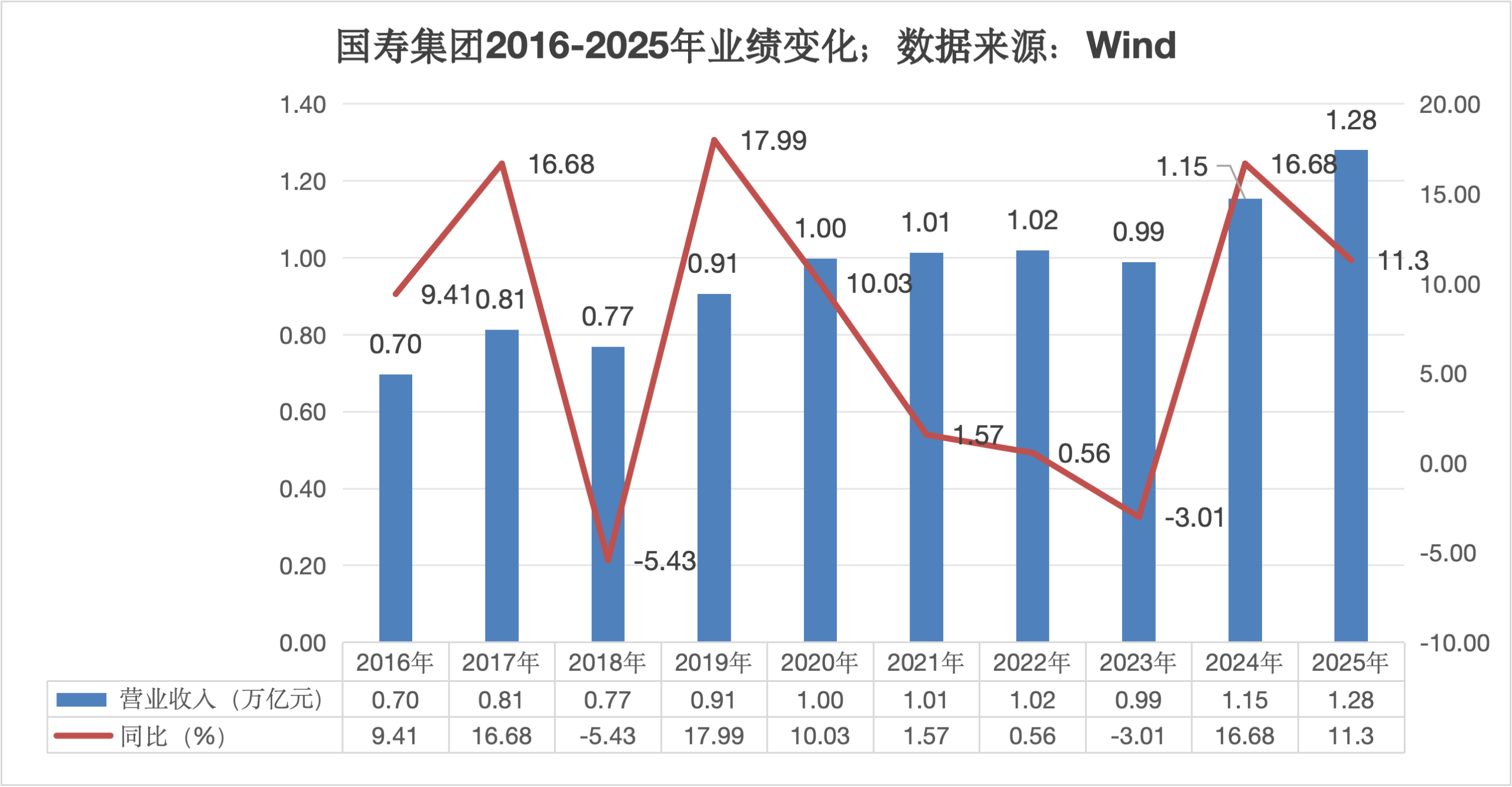
国寿集团营收增长11.3%,“数智变革”持续提速
Hua Er Jie Jian Wen· 2026-01-30 17:02
站在"十四五"收官与"十五五"开局的交汇点,资产规模突破8万亿大关的保险巨擘中国人寿,正试图通过一场深度的"数智变革"来重塑其增长逻辑。 1月28-29日,中国人寿召开2026年工作会议,披露集团合并营业收入已达1.28万亿元、同比增长11.3%,合并投资收益4011亿元、增长17.6%。 在监管评级方面,国寿旗下的寿险、财险、养老险及资产公司均维持了行业最高等级,反映出其在规模跃升的同时,对风险防控的底线思维未放松; 从资产端看,截至2025年底,中国人寿合并总资产达8.56万亿元,管理资产规模高达17.5万亿元,在利率中枢下行、优质资产稀缺的周期依然保持了两位数 的资产增速。 规模的扩张并非唯一目标。 集团董事长蔡希良在会上强调,全系统要全面推进数智变革,聚焦数据、算法、算力、平台、生态、场景六大关键要素; 这一部署释放了一个明确信号,在保险业传统的"人海战术"和"重资产驱动"模式触及天花板后,国寿正试图通过技术手段优化管理体系与商业模式。 信风了解到,所谓"数智变革",其核心在于通过组织运营的敏捷透明和风险感知的实时全域,引领公司成为"数字时代保险新锐"; 这不仅是应对市场竞争的策略,更是其"333战略 ...