
地平线

Search documents
世界模型能够从根本上解决VLA系统对数据的依赖,是伪命题...
自动驾驶之心· 2025-09-23 11:37
Core Viewpoint - The article discusses the ongoing debate between two approaches in the autonomous driving sector: VLA (Vision-Language Action) and WA (World Model), highlighting that both are fundamentally reliant on data, but differ in their methodologies and implications for the future of autonomous driving [1][2]. Summary by Sections VLA vs. WA - The autonomous driving landscape is splitting into two camps by 2025: companies like Xiaopeng, Li Auto, and Yuanrong Qixing are betting on the VLA approach, while Huawei and NIO are advocating for the WA model [1]. - WA is claimed to be the ultimate solution for achieving true autonomous driving, but the article argues that it is merely a rebranding of data dependency [1]. Data Dependency - Both VLA and WA are based on the premise that "data determines the upper limit" of capabilities [2]. - VLA relies on real-world multimodal data to train reasoning abilities, while WA requires a combination of real data and simulated data to enhance its capabilities [2]. - The industry is confused about the distinction between "data form" and "data essence," leading to misconceptions about the reliance on data [2]. Industry Misconceptions - The article emphasizes that the discussion should not focus on whether data is needed, but rather on how to efficiently utilize data [2]. - VLA and WA represent different methods of data collection and usage, with data remaining the core competitive advantage in autonomous driving until true artificial intelligence is realized [2]. Community and Resources - The "Autonomous Driving Knowledge Planet" community has over 4,000 members and aims to grow to nearly 10,000 in two years, providing a platform for technical exchange and sharing of knowledge in the autonomous driving field [4][10]. - The community offers resources such as learning routes, technical discussions, and access to industry experts, facilitating knowledge sharing among newcomers and advanced practitioners [4][11].


新技术伴生新模式 中国新能源汽车从“新”出海
Shang Hai Zheng Quan Bao· 2025-09-22 18:48
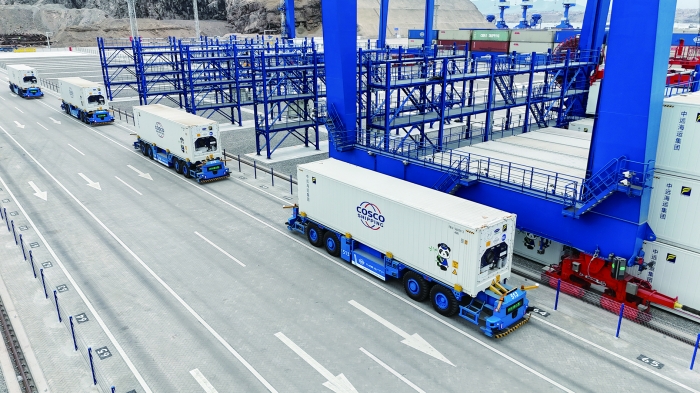
Core Viewpoint - The article highlights the innovative transformation of China's electric vehicle (EV) industry as it expands into international markets, particularly through the deployment of intelligent driving technology in Peru's Chancay Port, marking a significant step in the globalization of Chinese EV companies [3][4][5]. Group 1: Industry Expansion - China's EV industry is experiencing a shift towards innovative overseas expansion, with a focus on autonomous driving technology and green logistics solutions [4][6]. - The Chancay Port project in Peru represents a collaboration between China and Peru, establishing South America's first green smart port, which enhances Peru's connectivity between land and sea [5][6]. - The introduction of 50 intelligent driving new energy trucks at Chancay Port signifies the first large-scale deployment of such vehicles for port operations outside China [5][6]. Group 2: Technological Advancements - The intelligent driving system developed by the company is recognized for its advanced capabilities in perception, planning, and control, achieving industry-leading standards [6]. - The system is designed to operate effectively in adverse weather conditions, ensuring stable performance in rain, fog, and dust [6]. - The autonomous trucks are capable of performing complex maneuvers with precision, surpassing human drivers in parking accuracy [6]. Group 3: Market Impact - The operational efficiency of Chancay Port has improved significantly, reducing shipping times from Peru to Asia from 35 days to approximately 23 days, thereby lowering logistics costs and enhancing international competitiveness [6]. - The success of the Chancay project has attracted international attention, with local employees expressing fascination with the autonomous vehicles, indicating a growing acceptance of EV technology in new markets [7]. - The article emphasizes the potential for Chinese EV companies to create new growth opportunities by embracing innovative overseas business models and fostering international partnerships [4][6][16]. Group 4: Broader Industry Trends - The article discusses the broader trend of Chinese automotive companies, including chip manufacturers, expanding their presence in international markets, with significant investments in local production facilities in Europe [9][10][11]. - The establishment of a European headquarters by a Chinese chip manufacturer signifies a strategic move to enhance local operational capabilities and support Chinese automakers in global markets [10]. - The article notes that the Chinese EV industry is evolving from simple vehicle exports to a comprehensive "full ecosystem" approach, including battery technology, smart driving systems, and localized production [15][16].

自驾方向适合去工作、读博还是转行?
自动驾驶之心· 2025-09-22 10:30
Core Viewpoint - The article discusses the decision-making process for individuals in the autonomous driving field regarding whether to pursue a PhD, continue working, or switch careers, emphasizing the importance of foundational knowledge and practical experience in the industry [2][3]. Group 1: Career Decisions - The article highlights two critical questions for individuals considering a career in autonomous driving: the availability of foundational knowledge and practical experience in their current environment, and their readiness to take on pioneering research roles if pursuing a PhD [2][3]. - It points out that many academic mentors may lack deep expertise in autonomous driving, which can hinder students' development if they do not have a solid foundation [2]. - The article suggests that students should assess their preparedness to independently explore and solve problems, especially in cutting-edge research areas where few references exist [2][3]. Group 2: Community and Resources - The "Autonomous Driving Heart Knowledge Planet" community is introduced as a resource for beginners, offering a comprehensive platform for learning, sharing knowledge, and networking within the autonomous driving field [3][5]. - The community has over 4,000 members and aims to grow to nearly 10,000 in the next two years, providing a space for technical sharing and job-seeking interactions [3][5]. - Various practical questions and topics are addressed within the community, including entry points for end-to-end systems, multi-modal models, and the latest industry trends [5][16]. Group 3: Learning and Development - The community offers a structured learning system with over 40 technical routes covering various aspects of autonomous driving, including perception, simulation, and planning control [7][14]. - It provides access to numerous resources, including video tutorials, technical discussions, and job opportunities, aimed at both beginners and those looking to advance their skills [8][18]. - The community also facilitates connections with industry leaders and experts, enhancing members' understanding of the latest developments and job market trends in autonomous driving [12][92].
工信部公开征求组合驾驶辅助标准意见,小米大批量召回SU7标准版
Zhong Guo Qi Che Bao Wang· 2025-09-22 01:44
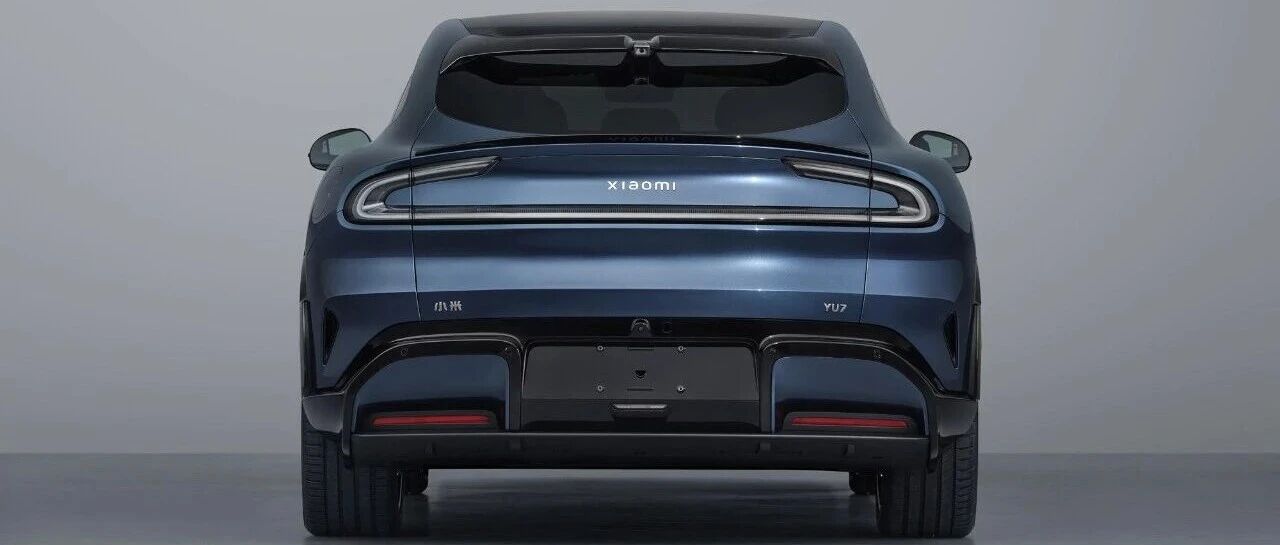
Group 1: Industry Developments - Jingu Co. established a wholly-owned subsidiary, "Hangzhou Jingu Embodied Intelligence Technology Co., Ltd.," to enter the embodied intelligence sector, focusing on humanoid, quadruped, service, and specialized application robots, leveraging its material technology for cost-effective solutions [2] - The U.S. Department of Transportation plans to propose three new federal motor vehicle safety standards in Spring 2026, aimed at updating regulations for autonomous vehicles without manual controls, reflecting a commitment to reshape the regulatory framework for autonomous driving [2] - Tesla's Robotaxi service is now open to the public in the U.S., following a pilot program in Texas, which could accelerate the adoption of autonomous driving technology and reshape the global transportation landscape [3] Group 2: Strategic Partnerships and Collaborations - Pony.ai announced a partnership with Qatar's national transport company Mowasalat to advance autonomous driving technology in Qatar, adapting its technology to local conditions [4] - Changan Automobile launched the "Tianshu Intelligent" brand, planning to explore applications for industrial robots and family service robots by 2030, marking a shift from vehicle manufacturing to smart living services [5][6] - Uber and Momenta are set to test a joint Robotaxi project in Munich, Germany, with plans for a full launch in 2026, indicating a significant step for Chinese autonomous driving technology in international markets [9][10] Group 3: Regulatory and Safety Initiatives - The China Automotive Engineering Research Institute introduced a "smart driving pyramid grading evaluation system," providing a structured assessment of autonomous driving capabilities to guide industry development and consumer choices [7][8] - The Ministry of Industry and Information Technology is soliciting public opinions on mandatory national standards for intelligent connected vehicles, aiming to strengthen safety measures in the industry [19] - Xiaomi announced a recall of over 116,000 SU7 electric vehicles due to safety concerns with the L2 highway navigation assistance feature, demonstrating a commitment to consumer safety and industry standards [22] Group 4: Market Movements and Financial Activities - Hesai Technology completed a dual listing on the Hong Kong Stock Exchange, raising over 4.16 billion HKD, marking the largest IPO in the global lidar industry [17] - Alibaba Group made a strategic investment in Hello's Robotaxi business, enhancing collaboration in autonomous driving and accelerating the commercialization of Robotaxi services [20][21] - Horizon Robotics established its European headquarters in Munich, enhancing its operational capabilities for the global market and supporting Chinese automotive companies in Europe [11]



地平线明年发布并争取量产舱驾一体芯片;OPPO Find X9系列显示屏将由深天马独供丨智能制造日报
创业邦· 2025-09-20 03:06
Group 1 - Northrop Grumman's "Cygnus" cargo spacecraft successfully docked with the International Space Station, delivering approximately 5000 kilograms of scientific materials and supplies, marking the company's 23rd resupply mission for NASA [2] - The OPPO Find X9 series will feature displays exclusively supplied by Tianma, with pre-orders already initiated [2] - Jiangsu Province launched its largest user-side energy storage station, capable of storing 240 megawatt-hours, which can meet the daily electricity needs of about 25,000 households [2] - Horizon Robotics plans to release a new integrated cockpit chip in 2026, with mass production expected next year, representing a significant advancement in intelligent driving technology [2]


独家丨地平线明年发布并争取量产舱驾一体芯片;比亚迪补强智舱团队,斑马智行原 CTO 加入
晚点Auto· 2025-09-19 11:49
Group 1 - Horizon is set to release a new integrated cockpit and driving chip in 2026, which is expected to be the most complex chip designed by the company to date [3] - The new chip development is led by Horizon's VP and Chief Architect Su Qing, focusing on defining computing power based on software algorithm requirements, which is becoming a mainstream development model in the autonomous driving chip sector [3][4] - The integrated cockpit and driving chip aims to reduce data transmission latency and simplify vehicle hardware design, offering a cost advantage over separate chips for mid-to-low-end autonomous driving and cockpit systems [5] Group 2 - Qualcomm is a major player in the integrated chip market, with its Snapdragon 8775 chip offering AI computing power of 72 Tops, and an upgraded version, the SA8797, providing 320 Tops, which is set to be used by companies like Li Auto and Leap Motor [4][5] - Horizon's lower-tier chips (J2/J3) still account for a significant portion of its shipments, with an expected shipment volume of around 4 million units in 2025, split evenly between low-tier and mid-to-high-tier solutions [5][6] - BYD is actively integrating its cockpit and driving teams to develop its own integrated chip products, with plans to launch a One-Board solution that combines cockpit and driving functions on a single PCB [6][7] Group 3 - BYD's "Heavenly Eye" driving assistance system is categorized into three platforms based on computing power and configuration, with plans to mass-produce the B platform by 2025, potentially offering advanced driving features at lower price points [7][8] - BYD aims to maintain its scale through smart technology, planning to introduce high-level driving assistance features at competitive prices as it faces increasing competition in the electric vehicle market [8]


国产人形机器人,用的哪家处理器?
3 6 Ke· 2025-09-19 10:47
Group 1 - The humanoid robot market is on the verge of explosive growth, with a projected market size of approximately 9 billion in 2025, expected to soar to 150 billion by 2029, reflecting a compound annual growth rate (CAGR) exceeding 75% [2] - The core drivers of this market growth will be industrial handling and medical applications, highlighting the importance of advanced processing capabilities in humanoid robots [2][5] - The performance of processors is critical as it directly influences the intelligence level and application potential of humanoid robots, making them the foundational element of the robotics industry [1][5] Group 2 - The current processor supply for humanoid robots is dominated by NVIDIA and Intel, while domestic chip manufacturers are still in the catch-up phase [6] - Tesla is noted for its capability to develop its own chips, such as the Dojo chip for AI model training and the FSD chip for real-time operations in robots, while other manufacturers primarily rely on Intel and NVIDIA chips [6][8] - The Jetson Orin series from NVIDIA is widely used, providing up to 275 TOPS of computing power, significantly enhancing the capabilities of humanoid robots [9][10] Group 3 - Domestic manufacturers are accelerating the development of their own humanoid robot chips to compete with foreign dominance, focusing on integrating general intelligence with practical application needs [10][11] - The RK3588 and RK3588S chips from Rockchip have been adopted by several humanoid robot manufacturers, showcasing their potential in the robotics field [11] - The RDK S100 development kit from Horizon Robotics integrates both "brain" and "cerebellum" functions into a single SoC, simplifying hardware architecture and reducing development costs [12][14] Group 4 - The trend towards "brain-cerebellum fusion" architecture aims to enhance the synchronization and efficiency of humanoid robots by integrating cognitive decision-making and motion control into a unified system [15][17] - Current challenges in the humanoid robot market include insufficient data accumulation, hardware architecture optimization, high costs, and safety concerns, which need to be addressed for large-scale commercialization [18][19][20]


汽车视点丨从智能车到聚合智能“三大件” 千亿美元市场蓄势“井喷”
Xin Hua Cai Jing· 2025-09-19 09:47
Core Insights - The integration of smart vehicles, humanoid robots, and low-altitude aircraft is expected to become a new engine for China's economic growth, with a projected global market size of nearly $240 billion by 2030, and China's market exceeding $120 billion [1] Industry Trends - The fusion of industries is accelerating, with major Chinese automotive companies like XPeng, Chery, GAC Group, Geely, FAW Group, and Changan entering the low-altitude aircraft and humanoid robot sectors [2] - XPeng's humanoid robot IRON showcased its coffee-making skills at the Munich Auto Show, while Chery's humanoid robot Mornine is being used as a sales assistant in dealerships [2] - Geely's subsidiary WoFei ChangKong is nearing certification for its eVTOL model AE200-100, expected to achieve airworthiness certification by 2026 [2] Technological Integration - The convergence of technologies such as new energy and artificial intelligence is breaking down the boundaries between different industries [3] - The essence of this integration lies in three aspects: shared technology origins, interconnected supply chains, and application fusion [5] - The overlap in supply chains between smart vehicles and humanoid robots is estimated at 60%-70%, with common components in perception, computation, algorithms, batteries, communication, and materials [5] Future Outlook - The humanoid robot and low-altitude aircraft markets are in their early stages but are expected to grow rapidly, potentially becoming significant economic drivers for export and growth [7] - The current state of the general robotics market is likened to the early days of smart driving technology, indicating a period of rapid development and innovation [7] - Cost reduction is crucial for the growth of these industries, with current humanoid robot prices ranging from $30,000 to $100,000, and low-altitude aircraft priced around $2 million [7] - The goal is to leverage the automotive supply chain to create manufacturing advantages for these three sectors, aiming for a significant reduction in costs within five years [7]
2025“凤凰之星”国际评审建言中国品牌塑造:四点建议很关键
凤凰网财经· 2025-09-19 02:53
Core Insights - The "2025 Phoenix Star Listed Company Selection" aims to highlight the core competitiveness and influence of Chinese listed companies, supporting the healthy development of mainland and Hong Kong stock markets [1] - The selection process involves a rigorous evaluation by experts from Claremont Graduate University, enhancing the academic credibility of the awards [1] - The final results will be announced on September 23, following a public voting phase [1] Group 1: Innovation - The "Best Innovative Listed Company" award focuses on companies that drive industry progress and create new value for customers through innovation [2] - Bernard Jaworski emphasizes that innovation is crucial for building sustainable competitive advantages, especially in a rapidly changing technological landscape [2] - Companies should explore innovation sources beyond technology, including business models and customer experiences, to systematically integrate innovation into their strategies [4] Group 2: Global Expansion - Successful international expansion for Chinese companies relies on leveraging domestic advantages while implementing localized global strategies [5][6] - Jaworski cites Midea Group as an example of effective global strategy through acquisitions and localized product design, enhancing its global presence [6] - Combining local strengths with adaptive strategies in overseas markets can create sustainable global competitive advantages for Chinese firms [6] Group 3: Brand Influence - Enhancing global brand influence is essential for Chinese companies to match their market position and social contributions [7] - Building a strong global brand requires integrating corporate social responsibility into brand strategy, which fosters trust and long-term value [7][9] - Companies like BYD exemplify the successful fusion of innovation and sustainability in their branding, which is crucial for expanding their global market presence [9] Group 4: Challenges and Recommendations - Chinese companies face challenges in enhancing global brand influence, including biases from the "country of origin effect" and cultural differences [10] - Recommendations for improving brand influence include developing a coherent brand narrative, focusing on customer value, leveraging local advantages, and utilizing digital platforms for brand recognition [10] - The selection event is supported by various organizations, and the results will be showcased through media channels to promote successful business cases globally [11]

“智能三大件”产业加速融合 剪刀差效应有望重现
Zheng Quan Shi Bao· 2025-09-18 17:52
Core Viewpoint - The integration of smart vehicles, smart robots, and low-altitude flying vehicles is accelerating, with the potential to significantly reduce costs and enhance technological development through shared supply chains and resources [1][2][3]. Group 1: Industry Integration - The three industries—smart vehicles, smart robots, and low-altitude flying vehicles—exhibit deep coupling in technology, resources, and application scenarios, primarily supported by artificial intelligence [2][3]. - The supply chain overlap between smart vehicles and smart robots exceeds 60%, with some companies reaching 70%, indicating a strong potential for cross-industry technology reuse [3][4]. - The integration of these industries is expected to replicate the "cost-volume" scissors effect seen in electric vehicles, where component costs have decreased significantly, leading to increased sales [4][5]. Group 2: Cost Reduction Potential - If the cost of flying cars can be controlled to around 200,000 yuan, it would align with ground transportation pricing, as indicated by industry experts [1][5]. - The price of laser radar has dropped from 100,000 yuan in 2019 to 800 yuan today, showcasing the potential for cost reductions in related technologies [4]. - The mass production capabilities of electric vehicle components are expected to facilitate significant cost reductions in smart robots, potentially halving the time from prototype to mass production [5][6]. Group 3: Collaborative Development - Companies are encouraged to establish global manufacturing advantages and promote cross-industry collaboration to enhance technological integration and supply chain efficiency [6][7]. - The establishment of the EAI 100 Innovation Center in Wuhan aims to foster collaboration among over 300 companies in the smart industry, focusing on technology development and standardization [7][8]. - Local governments are recognizing the trend of integration among these industries and are initiating policies to support collaborative development [7].