巨子生物

Search documents
中国品牌正通过IP运营、技术创新与供应链升级,捕捉全球Z世代“价值+体验”消费偏好
Mei Ri Jing Ji Xin Wen· 2025-11-05 05:42
Core Insights - Hong Kong stock market indices showed a slight decline, with the Hang Seng Index down 0.28%, the Hang Seng China Enterprises Index down 0.31%, and the Hang Seng Tech Index down 0.8% as of midday on November 5 [1] Group 1: Market Performance - The Hong Kong Consumption ETF (513230) experienced a minor decline, with constituent stocks showing mixed performance, including notable gains from Kang Shifu Holdings, Laoputang, Mixue Group, Li Ning, and Giant Bio, while Bilibili, Xpeng Motors, and Zhongsheng Holdings faced declines [1] - The Hong Kong Consumption ETF tracks the CSI Hong Kong Stock Connect Consumption Theme Index, encompassing major players in internet e-commerce and new consumption sectors, including Pop Mart, Laoputang, Miniso, Tencent, Kuaishou, Alibaba, and Xiaomi, highlighting a strong tech and consumption attribute [2] Group 2: Brand Recognition - Snapchat and Kantar released the first "Top 50 Global Brands Favorite Among Generation Z in China" list, with Tencent, Xiaomi, and SHEIN ranking in the top three for gaming, 3C, and e-commerce categories respectively [1] - The list reflects the emotional connection, category characteristics, and preferences of Generation Z across various markets, including Europe and the Middle East, indicating a shift in brand globalization from sales-driven to deep cultural recognition [1] - Tencent's gaming strategy focuses on IP-driven engagement through global IPs like "Honor of Kings," while Xiaomi aligns its 3C brand strategy with young consumer values, and SHEIN addresses high inventory challenges with a flexible supply chain model [1]


2026将迎“史上最长”春节假期,聚焦“文旅+赛事”、“文旅+美食”、“文旅+演艺”
Mei Ri Jing Ji Xin Wen· 2025-11-05 03:05
Market Overview - Hong Kong stock market opened under pressure with Hang Seng Index down 0.97%, National Enterprises Index down 1.07%, and Hang Seng Technology Index down 1.75% [1] - Popular ETFs showed mixed performance, with Hong Kong Consumption ETF (513230) experiencing a decline of nearly 1% [1] Holiday Impact - The State Council announced the holiday schedule for 2026, featuring a nine-day Spring Festival holiday, the longest in history [1] - Following the announcement, online travel booking platforms saw a doubling in search volume for train tickets and international flights during the New Year and Spring Festival periods [1] Investment Opportunities - Xinda Securities highlighted that service consumption is crucial in combating deflation, with cultural tourism being a key area of focus [1] - The tourism sector is experiencing steady growth, with new consumption engines emerging from combinations of "cultural tourism + events," "cultural tourism + food," and "cultural tourism + performances" [1] ETF Composition - Hong Kong Consumption ETF (513230) tracks the CSI Hong Kong Stock Connect Consumption Theme Index, encompassing major players in internet e-commerce and new consumption sectors [2] - The ETF includes leading companies across various fields, such as Pop Mart, Lao Pu Gold, and Miniso, as well as e-commerce giants like Tencent, Kuaishou, Alibaba, and Xiaomi, highlighting its strong tech and consumption attributes [2]
医美专家视角:终端机构运营情况及材料趋势
2025-11-05 01:29
Summary of Medical Aesthetic Industry Conference Call Industry Overview - The medical aesthetic industry is experiencing a slowdown in growth, with leading chain institutions and light medical aesthetic models still maintaining growth. Single stores or non-compliant institutions are facing difficulties, and the proportion of channel medical aesthetics is decreasing [1][2][12]. Key Insights and Arguments - Revenue growth for institutions is up 6% year-on-year, with increased customer flow but a decrease in average transaction value (ATV) by approximately 6%. First-tier cities performed particularly well, with an expected annual growth rate of about 10% for chain institutions [1][2][3][4]. - Promotional activities were advanced to September, significantly boosting revenue, with the repurchase rate of existing customers rising to 61% [1][5]. - The pricing strategy varies significantly among products, with low-priced products used for customer acquisition and high-priced products maintaining profit margins. Institutions attract new customers with low initial prices, then revert to original prices for subsequent treatments [1][9][10]. - Regulatory tightening has led to reduced advertising expenditures in traditional channels, shifting focus to customer referrals and internal membership management systems, resulting in decreased marketing costs but improved ROI [1][11]. Market Dynamics - The industry is expected to focus more on profit margins rather than solely on revenue growth, with a projected overall revenue growth of less than 10% by 2026 and a potential further decline in ATV [3][25]. - The customer demographic has shifted, with a 16% year-on-year increase in customer flow in September, and a notable rise in the proportion of returning customers [5]. - High-end products like collagen and hyaluronic acid are expected to see increased procurement, while non-compliant products will be suspended [3][25]. Product Performance - Different price segments are performing well, with significant growth in customer acquisition products such as water light needles and photon rejuvenation [6][8]. - The price of some products has decreased, such as the Ningbo Weimei 4mg product, while high-end products have maintained stable pricing [8][9]. - The market for botulinum toxin has shown stable growth, with annual growth rates exceeding 10% from 2023 to 2025, despite strict regulations limiting advertising [24]. Future Trends - The industry is expected to develop more healthily and sustainably, with a focus on compliance and quality. Non-compliant small institutions may be eliminated due to increased regulatory scrutiny [12][13]. - Mergers and acquisitions are occurring, particularly among traditional institutions that have not adapted to the light medical aesthetic trend [14]. - Institutions prefer self-built stores over acquiring local existing institutions to maintain brand consistency and leverage operational advantages [15]. Conclusion - The medical aesthetic industry is navigating a complex landscape of regulatory changes, shifting consumer preferences, and competitive pressures. Institutions are adapting by refining their marketing strategies, focusing on customer retention, and optimizing product offerings to ensure sustainable growth in a challenging environment [12][30].
格局生变,优选成长
Haitong Securities International· 2025-11-04 09:08
Group 1: Industry Overview - The cosmetics retail sales in China grew by 3.9% year-on-year from January to September 2025, slightly underperforming the overall retail market by 0.6 percentage points, indicating a stable demand environment [4][14]. - Online platforms like Tmall and Douyin are experiencing a shift, with Tmall showing signs of recovery due to flash sales and member subsidies, while Douyin's growth has slightly slowed down [17][20]. - The demand for high-end and cost-effective products is increasing, while the mid-range segment is facing pressure due to a more conservative consumer environment [5][41]. Group 2: Competitive Landscape - The trend of domestic brands replacing foreign ones is slowing down, with leading foreign brands like L'Oréal and Estée Lauder showing signs of recovery in the Chinese market [23][24]. - The growth of domestic brands is becoming more differentiated, with some brands like Proya and Shiseido experiencing declines, while others like Youngor and Shanghai Jahwa continue to grow [23][24]. - The industry is witnessing an acceleration in the multi-brand matrix among leading companies, which is expected to increase market concentration [27][28]. Group 3: Key Companies - The report highlights several companies with strong growth potential, including Ruya Chen, Shumei Co., and Maogeping, which are expected to benefit from their brand strength and market positioning [3][54]. - Companies like Dekang Oral Care and Shanghai Jahwa are noted for their stable fundamentals and potential for marginal improvement, while others like Jinbo Biological and Huaxi Biological are anticipated to reach turning points [54]. - Ruya Chen's self-owned brand, Zhenjia, has shown significant growth, with a revenue increase of 345% year-on-year in Q3 2025, indicating strong brand development capabilities [60].


巨子生物(02367) - 截至2025年10月31日止股份发行人的证券变动月报表
2025-11-04 08:43
致:香港交易及結算所有限公司 公司名稱: 巨子生物控股有限公司 呈交日期: 2025年11月4日 I. 法定/註冊股本變動 | 1. 股份分類 | 普通股 | 股份類別 | 不適用 | | 於香港聯交所上市 (註1) | | | 是 | | | --- | --- | --- | --- | --- | --- | --- | --- | --- | --- | | 證券代號 (如上市) | 02367 | 說明 | | | | | | | | | | | 法定/註冊股份數目 | | | 面值 | | | 法定/註冊股本 | | | 上月底結存 | | | 5,000,000,000 | USD | | 0.00001 | USD | | 50,000 | | 增加 / 減少 (-) | | | | | | | USD | | | | 本月底結存 | | | 5,000,000,000 | USD | | 0.00001 | USD | | 50,000 | 本月底法定/註冊股本總額: USD 50,000 股份發行人及根據《上市規則》第十九B章上市的香港預託證券發行人的證券變動月報表 截至月份: 2025年 ...
「医美茅台」市值蒸发千亿,中产女性不买单了?
3 6 Ke· 2025-11-03 13:12
Core Viewpoint - Aimeike is at a critical transformation juncture, facing significant challenges after reporting its worst half-year and quarterly results, leading to a substantial decline in market confidence and valuation [2][3][12]. Financial Performance - In Q3 2025, Aimeike reported revenue of 565 million, a year-on-year decline of 21.27%, and a net profit of 304 million, down 34.61%. For the first nine months of 2025, revenue totaled 1.865 billion, a decrease of 21.49%, with net profit at 1.09 billion, down 31.05% [3][5]. - The company's market capitalization has plummeted to approximately 48.5 billion, a staggering drop of about 131.5 billion from its peak valuation of 180 billion in 2021, representing a cumulative decline of 73% [3][5]. Product Performance - Aimeike's core products, "Haitai" and "Ruhua Tianzi," have seen significant revenue declines. In the first half of 2025, "Haitai" generated 744 million, down 23.79%, while "Ruhua Tianzi" brought in 493 million, down 23.99% [6][8]. - Despite maintaining high gross margins above 90%, the revenue drop has raised concerns about the sustainability of Aimeike's growth model [8][10]. Competitive Landscape - The competitive advantage of Aimeike's core products is diminishing, with new entrants like Huaxi Biological's "Runzhi·Gege" entering the market, challenging the previously monopolistic position of "Haitai" [10][11]. - The emergence of alternative technologies, such as recombinant collagen, poses a threat to Aimeike's market share in the hyaluronic acid segment, further pressuring its performance [11]. Strategic Moves - To seek new growth avenues, Aimeike acquired 85% of South Korean company REGEN for 1.9 billion USD, aiming to enhance its product portfolio and international market access [12][13]. - This acquisition has led to a significant increase in goodwill from 278 million at the end of 2024 to 1.65 billion by the end of Q3 2025, marking a 493.44% increase [12]. Legal Challenges - Aimeike is embroiled in a legal dispute with REGEN's former distributor, which could impact the integration and future profitability of the acquisition, as the distributor is seeking 1.6 billion in damages [13].


械三证书护航,巨子生物的新布局
新财富· 2025-11-03 11:07
Core Viewpoint - The article discusses the recent developments and challenges faced by Juzhi Biotechnology, particularly focusing on its flagship product, collagen sticks, and the impact of a public controversy on its market performance and future strategies [2][3][10]. Product Development - Juzhi Biotechnology launched the upgraded collagen stick 2.0, which includes recombinant type IV collagen, aiming to enhance sales as the original version faced price decline risks [2]. - The company anticipates a significant increase in sales, projecting the gross merchandise volume (GMV) of collagen sticks could reach 30 billion [2]. Market Response and Controversy - Following allegations of product ingredient misrepresentation, the stock price of Juzhi Biotechnology fluctuated between 40-50 HKD per share, with mixed investor sentiments regarding its valuation [5]. - Despite the controversy, the market response was muted, with minimal media coverage and public discussion, indicating a lack of significant backlash [3][4]. Sales Performance - Recent sales data showed that Juzhi's brands achieved a combined GMV of 10.8 billion, with a slight overall increase, although one brand experienced a decline [6]. - The controversy led to a decrease in new customer acquisition during promotional events, with costs for acquiring new customers rising significantly [10]. Strategic Adjustments - In response to market conditions, Juzhi is adopting a cautious approach, controlling inventory levels and not heavily investing in promotional activities for upcoming sales events [17]. - The company is also focusing on building a membership system and expanding its presence in medical aesthetics through physical experience stores [17]. Regulatory Developments - Juzhi Biotechnology received approval for its class III medical device, recombinant type I collagen freeze-dried fibers, which is expected to enhance its product offerings in the medical aesthetics sector [20][24]. - The product is designed for facial dermal filling, addressing dynamic wrinkles, and has shown significant effectiveness in clinical trials [23]. Industry Outlook - The medical aesthetics market is becoming increasingly competitive, with multiple companies vying for market share, which may impact Juzhi's growth potential [25].

自然堂赴港IPO:家族持股超八成,过度依赖单一品牌
Sou Hu Cai Jing· 2025-11-03 09:12
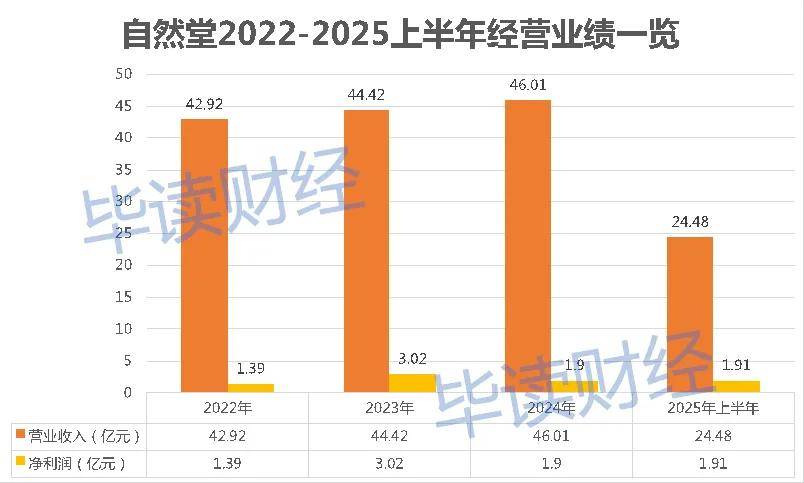
Group 1 - The core point of the article is that Jala Group, known for its brand Naturals, is facing significant challenges despite its upcoming IPO, including weak performance, low profit margins, and heavy reliance on marketing over research and development [1][11][12] - Jala Group's revenue growth has been sluggish, with projected revenues of 42.92 billion, 44.42 billion, and 46.01 billion from 2022 to 2024, reflecting an average annual growth rate of only about 3.5%, significantly lower than the overall growth rate of the domestic beauty industry [4][5][7] - The company's net profit margins are low, with figures of 3.24%, 6.80%, and 4.13% from 2022 to 2024, and only reaching 7.81% in the first half of 2025, indicating operational inefficiencies and cost structure issues [7][8][9] Group 2 - Jala Group has heavily invested in marketing, with sales and marketing expenses reaching 24.45 billion, 24.06 billion, and 27.16 billion from 2022 to 2024, accounting for over 54% of annual revenue, yet this has not translated into significant revenue growth [8][9][10] - The company's research and development spending has decreased, with R&D expenses dropping from 1.2 billion in 2022 to only 0.4 billion in the first half of 2025, resulting in a declining R&D expense ratio from 2.8% to 1.7%, which is well below the 3%-5% standard of international beauty giants [9][10][11] - Jala Group's over-reliance on its core brand Naturals is evident, with revenue contributions from this brand accounting for 94.6%, 95.9%, and 95.4% from 2022 to 2024, indicating a lack of effective growth from its other brands [10][11][12] Group 3 - The company is struggling to transition to a high-end market, with attempts to launch premium products failing to resonate with consumers, as evidenced by poor sales of its high-priced Gold Diamond Micro-sculpting series [11][12][13] - Jala Group's governance structure raises concerns, as the founding family's control over 87% of voting rights may hinder strategic flexibility and professional decision-making, especially in an industry that increasingly values scientific research and data-driven approaches [12][13][14] - The upcoming IPO represents a significant milestone for Jala Group, but achieving a true high-end brand status requires overcoming challenges related to brand dependency, marketing-heavy strategies, and governance issues [13][14]
“医美茅台”市值蒸发千亿,中产女性不买单了?
首席商业评论· 2025-11-03 03:50
Core Viewpoint - Aimeike, known as the "Maotai of the medical beauty industry," has reported disappointing financial results, with significant declines in both revenue and net profit for Q3 2025, raising concerns about its growth prospects and market position [2][5][8]. Financial Performance - In Q3 2025, Aimeike's revenue was 565 million, a year-on-year decline of 21.27%, and net profit was 304 million, down 34.61%. For the first three quarters of 2025, revenue totaled 1.865 billion, a decrease of 21.49%, with net profit at 1.09 billion, down 31.05% [2][8]. - The company's stock price fell to 157.05 yuan per share on the day of the report, a drop of 3.97%, and has since decreased by 73% from its peak market value of 180 billion in 2021, now valued at approximately 48.5 billion [2][5]. Product Performance - Aimeike's core products, "Haitai" and "Ruhua Tianzi," have seen significant revenue declines. For the first half of 2025, "Haitai" generated 744 million, down 23.79%, while "Ruhua Tianzi" brought in 493 million, down 23.99% [8][9]. - Despite maintaining high gross margins above 90%, the revenue drop and slight margin decline indicate growing concerns about the company's revenue structure and overall growth momentum [9][10]. Competitive Landscape - Aimeike's market dominance is being challenged as competitors like Huaxi Biological have introduced similar products, eroding the unique advantages previously held by "Haitai" [11][13]. - The emergence of alternative technologies, such as recombinant collagen, poses a threat to Aimeike's core offerings, further pressuring its performance [13]. Strategic Moves - Aimeike's acquisition of REGEN aims to enhance its product portfolio and international market access, but it has led to a significant increase in goodwill from 278 million to 1.65 billion, a rise of 493.44% [14][15]. - The company is currently embroiled in a legal dispute with its former distributor, which could impact the integration of REGEN and future revenue streams [15]. Conclusion - Aimeike is at a critical juncture, facing declining performance from its flagship products while struggling to establish new growth drivers amidst increasing competition and technological advancements [15].
山西女首富的胶原蛋白卖不动了,公司市值5个月蒸发200亿
2 1 Shi Ji Jing Ji Bao Dao· 2025-11-02 15:30
Core Insights - The commercialization of Jinbo Bio (832982.BJ) remains a significant issue as the company faces industry-wide challenges despite maintaining revenue growth [1][12] - The third-quarter report indicates a revenue of 1.296 billion yuan, a year-on-year increase of 31.10%, and a net profit of 568 million yuan, up 9.29% [1] - The overall growth rate has noticeably slowed compared to previous years, reflecting a broader trend among collagen companies [1][12] Financial Performance - In Q1 2025, Jinbo Bio reported revenue growth of 62.51%, net profit growth of 66.25%, and a 70.92% increase in net profit excluding non-recurring items [3] - By Q2, these figures dropped significantly, with revenue growth at 30.44%, net profit growth at 7.36%, and net profit excluding non-recurring items at 6.96% [4] - The third quarter saw a revenue increase of 13.36%, but net profit excluding non-recurring items fell by 16.72%, and cash flow net amount decreased by 8.05% [6] Product and Market Dynamics - The performance fluctuations are attributed to changes in product contributions, particularly the decline in revenue from Wei Yimei, the only approved Class III recombinant collagen injection in China, which generated 645 million yuan in revenue, a 34.7% increase but a significant drop in growth rate [7] - Conversely, the functional skincare segment has emerged, achieving 121 million yuan in revenue, a 152.39% increase compared to the previous year, although its contribution to overall performance remains limited [8] Stock Market Performance - Jinbo Bio's stock price experienced significant volatility, peaking at 577.50 yuan per share on May 21, with a market capitalization exceeding 50 billion yuan, reflecting a nearly 180% increase for the year [9] - However, by October 31, the stock price had fallen to 251.28 yuan per share, with a market capitalization of 28.91 billion yuan, representing a decline of over 20 billion yuan from its peak [10] Strategic Adjustments - Jinbo Bio possesses a strong advantage in raw materials and technology, particularly with its recombinant human collagen technology, which has been validated through regulatory approvals [14] - The company has historically focused on B2B pharmaceutical and medical device development, neglecting brand building and channel expansion in the consumer market [15] - Recently, Jinbo Bio has begun to pivot towards the consumer market, with initiatives including collaborations with key opinion leaders and participation in e-commerce platforms, indicating a strategic shift to enhance brand recognition and market presence [15]