
SHEIN

Search documents
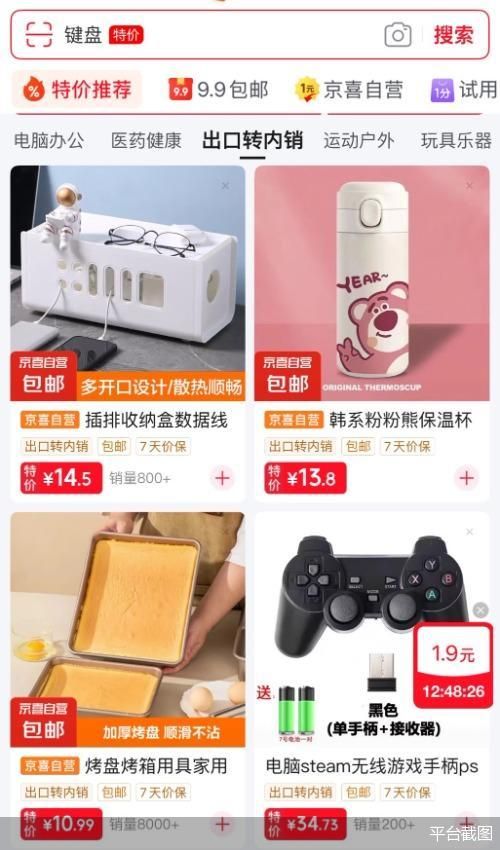
多渠道合力托举、调产品转内销 外贸商家化解关税暴击
Bei Jing Shang Bao· 2025-04-28 13:43
Core Insights - Foreign trade merchants are adjusting their strategies in response to rising tariffs from the U.S., leading to significant inventory pressures and a shift towards domestic sales channels [1][10] - Companies are collaborating with e-commerce platforms and live-streaming agencies to clear inventory and innovate product offerings to meet domestic consumer demands [1][6] Group 1: Impact of U.S. Tariffs - The surge in U.S. tariffs has led to some American clients canceling orders, resulting in significant inventory accumulation for companies, with one merchant reporting nearly 1 million yuan worth of goods stuck in warehouses [3][9] - Companies that previously relied heavily on U.S. markets are now pivoting to domestic e-commerce, with one company noting a shift in sales ratio from 3:7 (domestic to international) to a more balanced approach [4][6] Group 2: E-commerce Platform Support - Major e-commerce platforms like Taotian, 1688, Pinduoduo, and JD.com are offering support to help foreign trade merchants transition to domestic sales, including incentives such as traffic and commission rewards [6][7] - JD.com's Jingxi has launched a plan to support 10,000 foreign trade factories in shifting to domestic sales, emphasizing the importance of keeping production lines operational to avoid significant losses [6][7] Group 3: Product Adaptation and Innovation - Merchants are adapting their product designs to cater to domestic consumer preferences, with one company modifying umbrella designs to appeal to local tastes [4][5] - Companies are also innovating their product lines, such as introducing new types of garbage bags to attract overseas consumers, demonstrating a focus on product differentiation [5][7] Group 4: Challenges in Domestic Market - Despite efforts to enter domestic markets, certain product categories face challenges due to differing consumer preferences, particularly in outdoor goods that may not resonate with local buyers [9][10] - Some merchants are resorting to deep discounts to clear excess inventory, indicating difficulties in transitioning to domestic sales effectively [9][10] Group 5: Future Outlook - Companies are closely monitoring policy changes regarding tariffs, with some expressing a willingness to shift focus back to international markets if tariffs are reduced [8][10] - The impending changes to U.S. customs policies, including increased tariffs on low-value packages, are causing uncertainty and prompting merchants to reconsider their strategies [10]


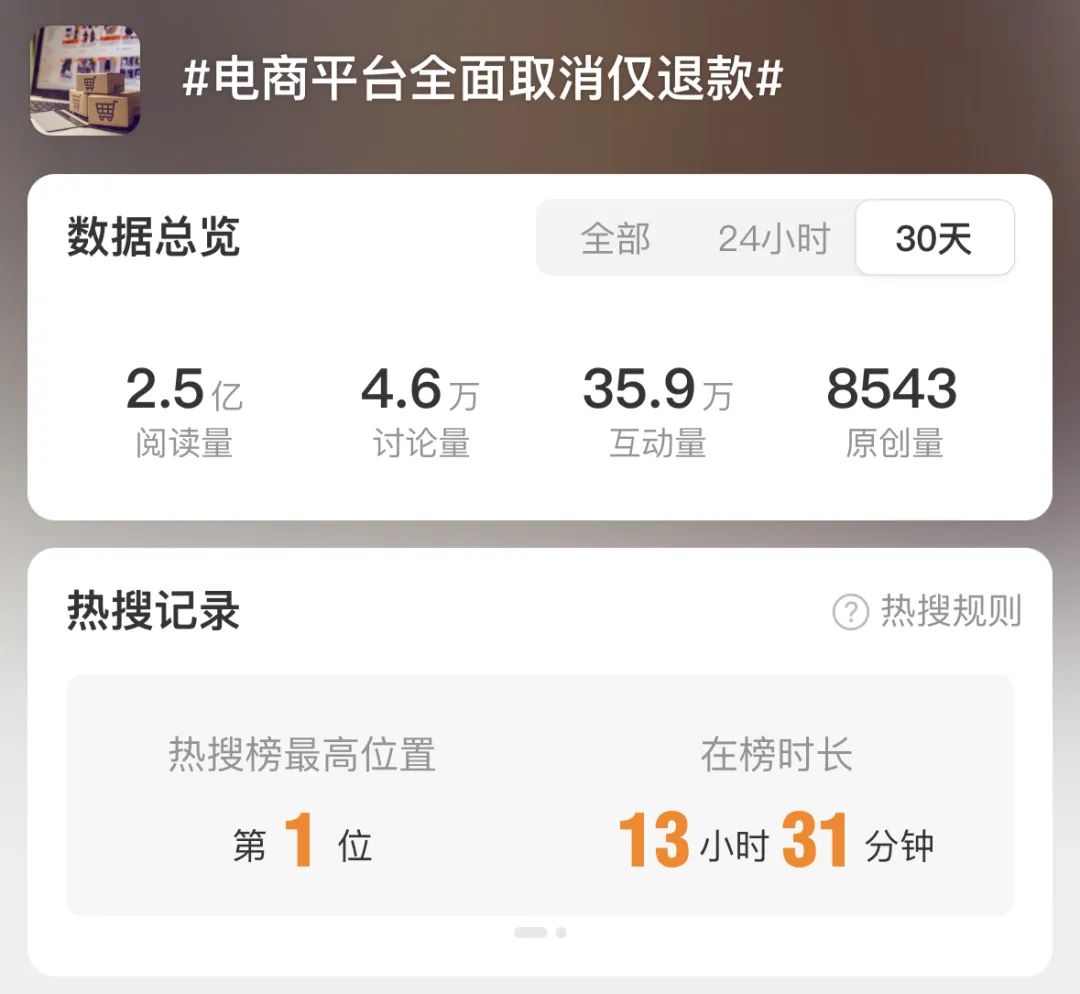
闭店的淘宝卖家,没能等到“仅退款”取消这一天
3 6 Ke· 2025-04-28 11:03
Group 1 - The controversial "refund only" policy has been completely phased out by major e-commerce platforms in April, with platforms like Taobao, Pinduoduo, JD.com, Douyin, and Kuaishou updating their after-sales rules to prioritize merchants in handling refund requests [1][3] - Taobao was the first to implement the "refund only" model in 2021, which initially boosted GMV but ultimately led to significant losses for many sellers, contributing to a wave of store closures that continues into 2025 [3][4] - The closure of numerous Taobao stores, including those of prominent influencers, reflects a broader trend of declining profitability and increasing operational challenges faced by e-commerce sellers [4][7][10] Group 2 - The rising return rates in the clothing industry have severely impacted seller confidence, with some sellers reporting return rates soaring from 30% to as high as 80% after the introduction of new policies [11][13] - High advertising costs and an increasingly competitive promotional environment have further strained the profitability of many sellers, leading to a situation where they are "losing money to gain visibility" [14][15] - Despite the challenges, some sellers are finding success through innovative models such as content e-commerce and cross-border e-commerce, with examples of brands achieving significant sales growth on platforms like Douyin and TikTok [15][20][21]
关税恶果终由美国消费者买单!亚马逊(AMZN.US)近千商品价格飙升30%
智通财经网· 2025-04-28 03:17
Group 1 - The core viewpoint of the articles highlights the impact of the Trump administration's tariff policies on consumer prices in the U.S., particularly through online shopping platforms like Amazon, where prices have increased significantly due to tariffs on Chinese goods [1][2] - SmartScout data indicates that since the second week of April, nearly a thousand products on Amazon have seen an average price increase of close to 30%, affecting various categories from electronics to clothing [1] - Amazon's CEO Andrew Jassy has acknowledged that U.S. tariff policies are expected to raise prices on many consumer goods, with some tariffs reaching as high as 145% on certain Chinese imports [1] Group 2 - Amazon responded to the price increase claims by stating that the affected products represent only 1% of its top 100,000 best-selling items, with most price adjustments being around 6%, suggesting that the reported average increase is skewed by a few high-priced items [2] - Other e-commerce platforms, such as SHEIN and Temu, have also raised prices or added "tariff surcharges" in response to the U.S. tariff policies, reflecting the broader challenge retailers face due to increased costs [2] - The uncertainty surrounding tariff rates and the duration of these policies complicates long-term planning for businesses, as restructuring supply chains or relocating production can be costly and time-consuming [2] Group 3 - Analysts from Oxford Economics suggest that while tariffs on Chinese goods may eventually decrease from their current levels, the timeline for such changes remains unclear [3]

3月社零稳健复苏,关税倒逼电商平台调整运营模式
Minmetals Securities· 2025-04-28 02:47
Investment Rating - The investment rating for the leisure services sector is "Positive" [5] Core Insights - The consumer market is showing steady recovery, with March retail sales reaching 40,940.5 billion yuan, a year-on-year increase of 5.9% [11][12] - The rural consumption growth rate continues to outpace urban areas, driven by the rural revitalization strategy [14][24] - The service consumption and cultural tourism markets are driving steady growth, with a significant increase in travel during the Qingming holiday [26][29] - The new energy vehicle market is experiencing rapid growth, with a retail penetration rate of 51.1% in March, supported by government subsidies [31][32] - The online retail market is showing strong growth momentum, with total online retail sales reaching 1.3 trillion yuan in March, a year-on-year increase of 8.9% [34][35] Summary by Sections Social Retail - In March 2025, the total retail sales of consumer goods reached 40,940.5 billion yuan, with a cumulative increase of 4.6% year-on-year for the first three months [12][22] - Rural consumption in March was 5,345.1 billion yuan, growing 5.3% year-on-year, indicating stronger resilience compared to urban areas [14][24] - Essential goods such as grain and oil saw a significant increase of 13.8% in retail sales, while beverage sales increased by 4.4% [21][24] Travel and Services - The service consumption market continued its strong momentum, with a year-on-year increase of 4.9% in service retail sales compared to goods retail [26] - During the Qingming holiday, 126 million people traveled, spending 57.549 billion yuan, reflecting a year-on-year increase of 6.3% and 6.7% respectively [29][30] Low Carbon and New Energy - In Q1 2025, the cumulative retail sales of new energy passenger vehicles reached 2.414 million units, a year-on-year increase of 37% [31] - The penetration rate of new energy vehicles reached 51.1% in March, with government policies stimulating demand through subsidies [31][32] E-commerce - The total online retail sales in March reached 1.3 trillion yuan, with physical goods sales at 1.13 trillion yuan, marking a year-on-year increase of 6.9% [34] - The adjustment of operational models in response to high tariffs has led to a shift towards semi-managed logistics, reducing costs significantly [35]
《搜狐网-琅琊新闻网》 2025全球贸易变局下,Voghion助力中国卖家破局欧洲市场
Sou Hu Cai Jing· 2025-04-28 00:16
Core Insights - The article highlights the challenges faced by traditional foreign trade enterprises in the U.S. due to new tariff policies, prompting Chinese sellers to seek emerging markets for growth. Voghion, a cross-border e-commerce platform focused on Europe, is positioned as a key player for these sellers to navigate global competition [1]. Group 1: Market Performance - Voghion has rapidly gained a foothold in the European market since its establishment in 2021, achieving a top ten ranking in app downloads within a month and surpassing 10,000 daily orders. By 2025, its operations have expanded to over 40 countries, including major markets like the UK, France, and Germany. In 2024, Voghion's app downloads in Europe exceeded 20 million, with over 4 million monthly active users and more than 20,000 cross-border sellers [3][6]. - The platform targets the middle-class demographic in Europe, focusing on a differentiated positioning of "quality and cost-effectiveness," successfully filling the market gap between low-cost fast fashion brands like SHEIN and high-priced standard products from Amazon [3]. Group 2: Competitive Strategy - Voghion leverages technology to enhance platform intelligence, utilizing AI algorithms for personalized user recommendations. For instance, it tailors product suggestions to French consumers' preferences for design and environmental sustainability, significantly increasing click-through rates for relevant categories [6]. - The platform employs a localization strategy, breaking language barriers with smart translation and providing customer service in over ten languages. It has established localized teams in key markets like Germany and France to optimize market penetration and resource integration [6]. Group 3: Support for Sellers - To assist Chinese sellers in overcoming trade barriers and reducing costs, Voghion has introduced a "zero-threshold entry + full-chain empowerment" policy, covering critical aspects from product selection to marketing [8]. - The platform utilizes big data analysis to identify growth opportunities and collaborates with over 40 Chinese industrial hubs to launch a "global small commodity express," prioritizing products with supply chain advantages [8]. - Voghion offers flexible cooperation models, including full and semi-managed options, with no entry fees or rent, catering to businesses of various sizes [9]. Group 4: Future Expansion - Amid rising trade protectionism, Voghion aims to deepen its presence in the European market while building competitive advantages and innovative support models for sellers. Its 2025 globalization strategy includes plans to expand into Southeast Asia and Latin America, promoting the integration of "Chinese manufacturing" into "global branding" [9].

低价不再是出海四小龙的必选之路
虎嗅APP· 2025-04-28 00:04
十年前的一个夜晚,深圳坂田的一间办公室里,陈跃云盯着电脑屏幕上的"Transpeed"商标抢注通知,指尖发冷。 这个靠低价策略一度冲上速卖通机顶盒品类TOP1的品牌,曾为他带来年销500万美元的业绩。但此刻,被人恶意抢注打乱了陈跃云的出海节奏,更致 命的是,市面上出现了许多同类型产品,价格战让利润越来越薄。 "没有品牌的白牌出海,终究是给他人做嫁衣。"他说。仓库里堆积的机顶盒零件,像一座座沉默的墓碑,祭奠着中国制造"薄利多销"时代的困局。 当年陈跃云面临的困局如今正摆在千千万万的出海中企前。 走低价路线,还行得通吗?这似乎是当下许多中国企业不得不面对的拷问。回望几年前,凭借极具性价比的产品,曾一度成为低价创新的典范。那 时,低价策略似乎是打开海外市场的金钥匙,凭借成本优势迅速抢占市场份额。 然而,时过境迁,全球贸易环境日渐复杂、地缘政治更为紧张。低价产品曾经依赖的政策红利也在逐渐消失。 出品|虎嗅商业消费组 作者|周月明 编辑|苗正卿 题图|AI生成 美国市场就是典型例子。当对华关税加征至145%以及800美元以下产品关税豁免政策取消后,已经有大量商家叫苦不迭。 "若取消800美元以下关税豁免政策,每件货物还 ...
低价不再是出海四小龙的必选之路
Hu Xiu· 2025-04-27 13:52
Core Viewpoint - The article discusses the shift in strategy for Chinese companies going overseas, moving away from low-price competition to focusing on brand building and technological innovation as a means to capture higher-end markets [2][10]. Group 1: Challenges Faced by Chinese Companies - Ten years ago, a Chinese entrepreneur faced challenges due to trademark registration issues and intense price competition in the overseas market, leading to diminishing profits [1]. - Many Chinese companies are currently grappling with the same dilemma of whether low-price strategies are still viable in the face of increasing global trade complexities and geopolitical tensions [2]. - The U.S. market exemplifies this challenge, with tariffs on Chinese goods rising to 145% and the removal of exemptions for products under $800, significantly increasing costs for low-priced products [2][12]. Group 2: Transitioning Strategies - Companies like Magcubic have recognized the need to pivot from low-price strategies to brand development and technological differentiation to survive in competitive markets [3][4]. - The introduction of new technologies, such as improved LCD screens, has allowed companies to offer competitive products at lower costs compared to established brands, thus validating the shift towards quality and brand [5][6]. - The trend of moving towards higher-end markets is not limited to individual companies; platforms like SHEIN and Temu are also adjusting their strategies to target higher price points and better quality products [11][12]. Group 3: Examples of Successful Transition - Magcubic's new projectors, utilizing advanced technology, have successfully penetrated the market with a price point significantly lower than competitors, demonstrating the effectiveness of this new approach [5][6]. - Midea's U-shaped air conditioner, designed for the North American market, showcases how innovation can lead to successful entry into high-end segments, despite higher pricing compared to traditional products [9][10]. - Companies are increasingly focusing on enhancing product design, cultural value, and brand storytelling to elevate their offerings and appeal to higher-end consumers [10]. Group 4: Market Dynamics and Future Outlook - The article highlights a broader trend among Chinese companies and platforms to abandon the low-price model in favor of strategies that emphasize quality and brand recognition [10][11]. - The competitive landscape is evolving, with platforms like AliExpress and Temu also aiming to support brands in achieving higher sales through subsidies and marketing strategies [16][19]. - The future of Chinese manufacturing and export strategies may hinge on shedding the "cheap" label and embracing innovation and brand development as core components of their business models [19].
美国施压印度,要求全面开放电商市场;美国三大零售巨头CEO齐赴白宫,商讨关税影响丨Going Global
创业邦· 2025-04-27 11:51
整理丨赵晓晓 本周(2024.04.21-2025.04.27)出海大事件包括 :TikTok削弱美国高管权力,将电商业务进一步集中 于中国管理层;越南工贸部拟向Temu、SHEIN等平台发放运营许可证;SHEIN澳洲年销售额突破10 亿澳元;TikTok Shop计划进军日本;蚂蚁拟斥资28.1亿港元,要约收购香港券商耀才证券;字节跳 动据报考虑在巴西建设大型数据中心;京东物流连开韩国仁川、利川两大海外仓;日版"大众点 评"Tabelog登陆微信小程序;特朗普会见沃尔玛、塔吉特等零售商讨论关税;美国施压印度,要求全 面开放电商市场以达成贸易协议等。 出海四小龙 TikTok削弱美国高管权力,将电商业务进一步集中于中国管理层 据报道,TikTok Shop美国业务负责人Nico Le Bourgeois将被纳入木青的管理之下, Le Bourgeois还 将继续负责与美国本地商家的合作事务,但要向木青汇报。 木青此前是抖音电商副总裁,最近接管了TikTok美国电商的多个核心团队,包括创作者合作和代理商 关系团队,如今还将全面接管美国运营。Le Bourgeois于2023年加入TikTok,最初他与前Meta ...


跨境电商平台在美已集体涨价
华尔街见闻· 2025-04-27 10:28
在特朗普政府掀起关税战下,美国普通民众的购物正迎来"涨价潮",连曾经实惠的网购也变得更昂贵了。 继美国亚马逊网站近千种商品涨价后,另外两家来自中国的跨境电商平台SHEIN、拼多多旗下TEMU也已上调了部分在美商品售价。 在4月16日,华尔街见闻就注意到,TEMU、SHEIN均向美国用户发出了涨价通知,称由于最近全球贸易规则和关税的变化,运营成本有所增加,公司将从4月 25日起进行价格调整。 如今4月25日期限一过,调价政策落地,不少美国网友在社交媒体上感叹, 一夜之间购物车里的东西都变贵了。 有人发现,在SHEIN平台上一套4月24日标价为4.39美元的泳装,25日已经涨价至8.39美元,提价幅度达到91%。而在TEMU上列出的两把露台椅,24日标价 为61.72美元,到25日标价已提升至70.17美元。 不过,据华尔街见闻了解,SHEIN、TEMU平台上商品价格上涨还不是普遍现象,或许价格上涨将是一个逐步推进的过程。 除了TEMU、SHEIN外,国际电商巨头亚马逊上的卖家,早就开始了涨价的动作。 根据SmartScout数据,自4月9日以来,美国亚马逊网站上近1000种商品的价格出现明显上涨,涵盖服装、家居 ...
出海周报丨政策明确:发展游戏出海业务;Manus获超5亿元融资,开拓新市场;消息称TikTok将进军日本电商
2 1 Shi Ji Jing Ji Bao Dao· 2025-04-27 09:47
Industry Overview - The General Administration of Customs has launched a five-month special action to facilitate cross-border trade, covering goods trade, digital trade, and green trade, in response to the complex foreign trade situation expected in 2025 [1] - The State Council has emphasized the development of the gaming industry for overseas markets, focusing on the entire industry chain from IP creation to game production, distribution, and overseas operations [2] Major Companies - Butterfly Effect, the parent company of Manus, has completed a financing round of $75 million (approximately 550 million RMB), with a valuation rising to nearly $500 million (approximately 3.66 billion RMB), aimed at expanding into the U.S., Japan, and Middle Eastern markets [3] - TikTok plans to enter the Japanese online shopping market, preparing to recruit sellers for its e-commerce platform TikTok Shop, which has already launched in France, Germany, and Italy [4] - Cainiao Overseas Warehouse has introduced a cross-border "green channel" to assist foreign trade merchants in expanding overseas markets, offering VIP pricing and up to 60 days of free rent for key categories [5] - iQIYI is focusing on developing its IP ecosystem and expanding its overseas market presence, while also entering the content e-commerce sector [7] Financial Performance - Bubble Mart reported a 165%-170% increase in overall revenue for Q1 2025, with overseas revenue growing by 475%-480% [12] - Transsion Holdings achieved a revenue of 68.72 billion RMB in 2024, a year-on-year increase of 10.31%, with net profit at 5.55 billion RMB, reflecting a modest growth of 0.22% [13] - Starry Technology reported a Q1 2025 net profit of 47.03 million RMB, down 45.35% year-on-year, despite a revenue increase of 36.65% [11] - Lege's Q1 2025 net profit was 51.77 million RMB, a decrease of 35.17% year-on-year, with revenue growing by 37.69% [10] Automotive Sector - BYD aims for a total vehicle sales target of 5.5 million units in 2025, with an overseas market target of 800,000 units [16] - Avita plans to enter over 50 countries this year, with a target of 15,000 units in overseas sales [17] - Xiaomi is establishing a research and design center in Europe, specifically in Munich, to support its automotive development [15]