福田汽车

Search documents
经济日报:自动驾驶“准入许可”不等于大规模量产
Xin Lang Cai Jing· 2025-12-27 02:14
Core Viewpoint - The issuance of the first L3-level highway autonomous vehicle special license plates in Beijing marks a significant milestone in China's autonomous driving development, transitioning from technical validation to mass production application [1][4]. Group 1: L3-Level Autonomous Driving Overview - L3-level autonomous driving represents a critical transition from "driving assistance" to "autonomous driving," allowing the system to perform driving tasks under certain conditions without continuous driver monitoring [2]. - The first three quarters of this year saw a 21.2% year-on-year increase in new car sales with L2-level driving assistance features, achieving a penetration rate of 64% [2]. Group 2: Regulatory Framework and Testing - The Ministry of Industry and Information Technology (MIIT) has issued strict limitations on the operational scenarios, road types, urban areas, and speed limits for the two approved models, emphasizing a cautious regulatory approach [3]. - There is a distinction between "road test licenses" issued by local authorities and "product access licenses" from national departments, with the latter being significantly more challenging to obtain [3]. Group 3: Future Implications and Challenges - The successful implementation of L3-level autonomous driving requires not only technological advancements but also supportive policies, industry ecosystems, and infrastructure [4]. - The current pilot approach is characterized by "small-scale initiation and conditional implementation," indicating that mass production is not imminent despite the recent approvals [4].


忠阳车评“准入许可”不等于大规模量产
Jing Ji Ri Bao· 2025-12-27 00:18
Core Viewpoint - The issuance of the first L3-level autonomous driving vehicle license plates in Beijing marks a significant milestone in China's autonomous driving industry, transitioning from technology validation to mass production application [2][3]. Group 1: Regulatory Developments - The Ministry of Industry and Information Technology has officially granted the first L3-level conditional autonomous driving vehicle permits, allowing specific models from Changan Automobile and BAIC Group to conduct pilot tests on designated highways in Beijing and Chongqing [2][3]. - The L3-level autonomous driving is a critical transition from "driving assistance" to "autonomous driving," where the system can perform driving tasks under certain conditions without continuous driver monitoring [3]. Group 2: Market Context - In the first three quarters of the year, the sales of new passenger cars equipped with L2-level driving assistance features increased by 21.2%, achieving a penetration rate of 64% [3]. - The approval of these two autonomous driving models is seen as a recognition of technological maturity and a response to societal expectations for future smart mobility [3]. Group 3: Implementation and Limitations - The permits come with strict limitations regarding operational scenarios, road types, urban areas, and speed limits, indicating a cautious approach to the rollout of L3-level autonomous driving [4][5]. - The current pilot program does not open these vehicles to the general public but is limited to specific organizations conducting trial operations, emphasizing a careful regulatory framework to ensure safety [4][5]. Group 4: Future Outlook - The true commercialization of L3-level autonomous driving requires not only technological breakthroughs but also supportive policies, industry ecosystems, and infrastructure [5]. - The current approach of "small-scale initiation with conditional implementation" reflects the complexity and safety risks associated with autonomous driving systems, indicating that widespread adoption is still a long way off [5].


“准入许可”不等于大规模量产
Jing Ji Ri Bao· 2025-12-26 22:07
Core Viewpoint - The issuance of the first L3-level autonomous driving vehicle license plates in Beijing marks a significant milestone in China's autonomous driving industry, transitioning from technology validation to mass production applications [1][2]. Group 1: Industry Development - The L3-level autonomous driving represents a critical transition from "driving assistance" to "autonomous driving," allowing the system to perform driving tasks under certain conditions without continuous driver monitoring [2][3]. - The approval of two L3-level autonomous models by the Ministry of Industry and Information Technology (MIIT) is a recognition of technological maturity and a response to societal expectations for smart mobility [2][3]. - The sales of new passenger cars equipped with L2-level driving assistance features have increased by 21.2% year-on-year, with a penetration rate of 64% in the first three quarters of the year, indicating a growing market for advanced driving technologies [2]. Group 2: Regulatory Framework - The MIIT has imposed strict limitations on the operational scenarios, road types, urban areas, and speed limits for the approved models, ensuring a cautious approach to the deployment of autonomous driving technology [3][4]. - The distinction between "road testing licenses" issued by local authorities and "product access licenses" from national departments is crucial, with the latter being significantly more challenging to obtain, highlighting the rigorous standards for L3-level vehicles [3]. - The current pilot approach for L3-level autonomous driving is characterized by "small-scale initiation and conditional implementation," emphasizing that obtaining a license does not equate to immediate mass production capabilities [4]. Group 3: Future Outlook - The true widespread adoption of L3-level autonomous driving requires not only technological breakthroughs but also supportive policies, regulatory frameworks, and infrastructure development [4]. - The symbolic significance of the recent approvals extends beyond the two models, indicating that the industry still faces a long journey before achieving large-scale commercialization of L3-level autonomous driving [4].
星闪:让万物互联“飙”进未来
Xin Lang Cai Jing· 2025-12-26 16:58
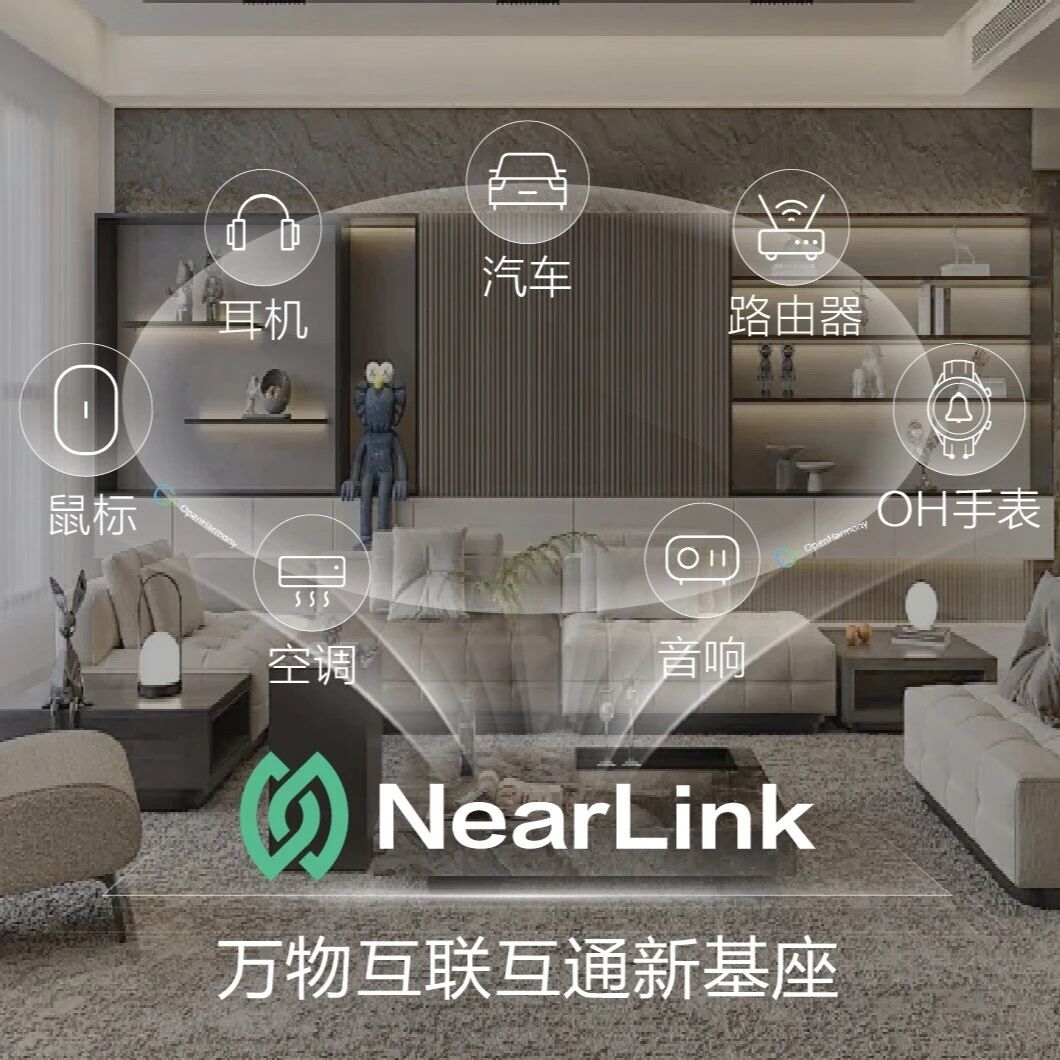
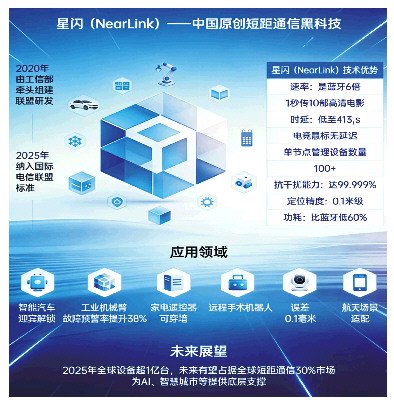
Core Viewpoint - The article highlights the emergence of "NearLink," a Chinese-developed short-range wireless communication technology that significantly enhances connectivity and performance for smart devices, addressing the limitations of existing technologies like Bluetooth and Wi-Fi [2][3]. Group 1: Technology Development - NearLink was initiated in 2020 by the Ministry of Industry and Information Technology, gathering over 400 organizations, including Huawei and China Mobile, to develop a faster, more responsive, energy-efficient, and stable short-range communication technology [2]. - The first technical standard for NearLink was published in 2022, and in 2023, Huawei launched the first terminal product supporting NearLink, enabling high-quality lossless audio transmission [3]. Group 2: Performance Metrics - NearLink operates in two modes: one for low-power scenarios with transmission speeds six times faster than traditional Bluetooth, and another for high-speed needs capable of transmitting 8K ultra-high-definition video [4]. - The latency of NearLink can reach as low as 20 microseconds, making it 1500 times faster than traditional Bluetooth and 500 times faster than Wi-Fi, surpassing human neural response speed [4]. Group 3: Application Scenarios - NearLink can connect up to 4096 devices simultaneously, significantly outperforming traditional Wi-Fi routers, which can only handle 32 devices [6]. - In smart home applications, devices using NearLink can operate seamlessly without interference, even in environments with many connected devices [6]. Group 4: Energy Efficiency - NearLink is designed to be energy-efficient, consuming 60% less power than traditional Bluetooth and 80% less than Wi-Fi, leading to extended battery life for devices [8]. - For instance, smartwatches equipped with NearLink can have their battery life extended by 30%, and industrial sensors can see battery life increase from three months to eight months [8]. Group 5: Industry Impact - In the automotive sector, NearLink enhances vehicle key functionalities, improving accuracy and responsiveness for features like automatic unlocking and guest welcome [10]. - In industrial applications, NearLink facilitates real-time data transmission, significantly reducing operational delays and improving efficiency in manufacturing and healthcare settings [11]. Group 6: Future Prospects - To achieve widespread adoption comparable to Bluetooth and Wi-Fi, NearLink needs to expand its ecosystem and reduce costs, as the current chip price is approximately 15 yuan, nearly double that of traditional Bluetooth chips [12]. - The anticipated reduction in chip costs by 30% by 2026 is expected to make NearLink more accessible to consumers and encourage broader adoption across various device categories [12].
奇瑞比肩法拉利?征战地表最难汽车赛事!竟是为了吊打日系?
电动车公社· 2025-12-26 15:33
Core Viewpoint - The article discusses the strategic entry of Chery's high-end brand, Exeed, into the racing domain, specifically the Le Mans 24-hour endurance race, highlighting its significance for technological advancement and brand positioning in the automotive industry [3][10][66]. Group 1: Exeed's Racing Strategy - Exeed has signed a strategic cooperation agreement with the Le Mans organizing body, ACO, to participate in the Le Mans 24-hour endurance race [6][9]. - The "EXEED Le Mans Plan" will be executed in three phases: 1. Launching the "Exeed Unified Race" in 2026 to build a Le Mans-certified track in Wuhu, China, and start local talent selection [9]. 2. Joining the Asian Le Mans Series (ALMS) in 2027 to refine technical teams and vehicle performance [9]. 3. Forming the "Exeed Le Mans Team" in 2028 with the goal of competing in the main event of the Le Mans 24-hour race [9][11]. Group 2: Significance of Le Mans - The Le Mans 24-hour endurance race, established in 1923, is one of the oldest and most influential automotive events globally, alongside F1 and WRC [12]. - Unlike the Nürburgring, which focuses on lap speed, Le Mans emphasizes endurance, requiring teams to cover the maximum distance over 24 hours, testing both speed and reliability [15][17][30]. Group 3: Financial and Technical Implications - Participating in Le Mans is extremely costly, with LMH prototypes costing over 100 million yuan for development and nearly 1 billion yuan annually for team operations [35][36]. - Chery aims to enhance its technical capabilities through participation, as many automotive technologies seen in production vehicles have originated from innovations developed in Le Mans [37][39][50]. Group 4: Technological Advancements - Exeed is focusing on hybrid technology, with plans to leverage its high-efficiency engines and solid-state battery technology to gain a competitive edge in the race [61][62]. - The solid-state battery, expected to be mass-produced next year, boasts an energy density of 600 Wh/kg, which is double that of traditional lithium batteries [62][63]. Group 5: Brand Positioning and Future Goals - Chery's ambition is to position Exeed as a luxury brand comparable to established players like BMW, Benz, and Audi (BBA) [66]. - The company aims to build a comprehensive luxury brand system that emphasizes performance, value experience, and emotional expression, reflecting the spirit of endurance racing [66].

汽车行业跟踪报告:客车:25年出口高景气,新能源客车出口空间大
ZHESHANG SECURITIES· 2025-12-26 11:58
Investment Rating - The industry rating is "Positive" (maintained) [4] Core Insights - The overall bus export in November was 8,000 units, a year-on-year decrease of 5%, while the cumulative export for the first eleven months was 93,000 units, showing a year-on-year increase of 26%. The export of new energy buses in November was 1,100 units, down 6% year-on-year, but the cumulative export for the first eleven months reached 15,000 units, up 58% year-on-year, indicating a high level of bus export activity and rapid growth in new energy segments [1][11] - The market for fuel buses is expected to remain strong, particularly in regions like the Middle East, Southeast Asia, and Africa, with a projected year-on-year growth of 21% in fuel bus exports before October 2025. The new energy bus market is also expanding, especially in Europe, where the penetration rate is expected to rise significantly [4][30] - The report highlights that the new energy bus export market is expected to grow, with projections indicating that by 2025, the market share of Chinese new energy bus exports could reach over 26%, and by 2027, it could rise to 33%, corresponding to an export scale of 6,000 units [5][40] Industry Data Update - The export of large and medium buses in October was 4,000 units, showing a year-on-year increase of 14%. The export of light buses in October was 5,000 units, up 25% year-on-year, with a cumulative export of 43,000 units for the first ten months, reflecting a year-on-year increase of 43% [1][20] - The domestic sales of large and medium buses in November reached 8,000 units, a year-on-year increase of 16%, with cumulative sales of 54,000 units for the first eleven months [1][22] Company Data Update - Yutong Bus sold 35,000 large and medium buses in the first eleven months, a year-on-year increase of 2%. The company expects to achieve sales of 40,000 units in 2024, a growth of 27% [2][27] - King Long Automobile reported sales of 28,000 large and medium buses in the first eleven months, a year-on-year increase of 1%, with an expected sales target of 29,000 units in 2024, reflecting a growth of 28% [2][29] - Zhongtong Bus sold 11,000 large and medium buses in the first eleven months, a year-on-year increase of 11%, with an expected sales target of 10,000 units in 2024, reflecting a growth of 58% [3][29] Industry Space - The report identifies significant market opportunities for fuel buses in underdeveloped countries, while the new energy bus market is expected to see substantial growth in Europe, Latin America, and Asia, with projections indicating a total demand of 17,000 units by 2024 and 37,000 units by 2027 [4][40] - In Europe, the market for large and medium buses is projected to reach 47,000 units in 2024, with a new energy penetration rate of 16%, expected to rise to 25% by 2027, corresponding to sales of 19,000 new energy buses [4][34] - The report anticipates that by 2027, the export volume of Chinese new energy buses could reach 17,000 units, with a compound annual growth rate of 39% from 2024 [40]


杜绝“赔本赚吆喝” 价格合规为汽车业反内卷再加码
Zhong Guo Qi Che Bao Wang· 2025-12-26 11:42
Core Viewpoint - The automotive industry is undergoing a regulatory shift to combat "involution" competition, with the release of the "Automotive Industry Price Behavior Compliance Guidelines (Draft for Public Comment)" aimed at standardizing pricing practices and promoting healthy market development [2][10]. Group 1: Industry Response and Impact - Major automotive companies such as BYD, Xpeng Motors, and BAIC Group have responded positively to the guidelines, committing to eliminate price fraud and unfair competition [2][13]. - The guidelines are expected to provide a foundation for the healthy development of the automotive market by addressing long-standing issues of price competition [2][11]. Group 2: Current Market Challenges - The automotive market has faced significant challenges, with 43.5% of dealers reporting losses in 2023, and this figure is projected to remain high in 2024 [3]. - Price undercutting has become a common issue, with 74.4% of dealers experiencing some level of price inversion, leading to financial strain and reduced service quality [3][4]. Group 3: Guidelines Specifics - The guidelines prohibit selling below cost and outline specific pricing behaviors that are deemed unacceptable, such as using discounts and subsidies to manipulate market conditions [5][7]. - The guidelines also emphasize the need for clear and transparent rebate policies from manufacturers to dealers, addressing concerns over complex and lengthy rebate processes [6][7]. Group 4: Regulatory and Compliance Measures - The guidelines call for the establishment of internal price compliance management mechanisms within automotive companies to prevent pricing violations and enhance brand integrity [9]. - There is a focus on ensuring that online automotive sales platforms adhere to pricing regulations to protect consumer rights and maintain fair competition [8][9]. Group 5: Future Outlook - The implementation of the guidelines is expected to lead to a more rational promotional environment, with a decrease in aggressive price-cutting strategies observed in the market [10][11]. - Analysts predict that the guidelines will help restore profitability in the automotive sector, with a potential recovery in dealer margins and overall industry health [11][12].



获批11天后46辆长安深蓝大规模上路 L3自动驾驶迈入“实证”阶段
Xin Lang Cai Jing· 2025-12-26 11:21
Group 1 - The L3 level autonomous driving is transitioning from a testing phase focused on engineering research to a verifiable, regulatory, and evaluable empirical stage, with the first batch of vehicles officially registered and on the road [1] - The first L3 level autonomous driving dedicated license plate was issued in Chongqing, with subsequent special license plates granted in Beijing for L3 level highway autonomous vehicles [1] - The first batch of L3 level autonomous driving vehicles includes 46 from Deep Blue Automotive and three from BAIC Arcfox, with the latter conducting a live broadcast of its first test on December 23 [1] Group 2 - There is optimism in the industry regarding the approval of other seven joint ventures for L3 level driving, with a second batch of conditional permits expected to be issued in the first quarter of next year [2] - The Ministry of Industry and Information Technology (MIIT) and other departments have initiated trials for intelligent connected vehicles, with nine joint ventures, including Changan and BAIC, being part of the first batch [2] - GAC Group has begun L3 conditional autonomous driving highway testing for its A800 model, with a maximum testing speed of 120 km/h, having received approval from local authorities [2] Group 3 - The support from the upstream supply chain is crucial for advancing the commercialization of L3 technology, with companies like Huayi Technology successfully developing IMU products and GNSS for enhanced vehicle positioning accuracy [3] - Haohan Deep has delivered V2X identity security management systems and autonomous vehicle safety monitoring systems in various regions, contributing to the safety assurance of L3 and above autonomous vehicles [3] Group 4 - The automotive industry is increasingly focusing on intelligence as a core competitive factor, with L3 level autonomous driving seen as the true starting point for global competition in this field [4] - Industry experts emphasize the importance of a verification phase before moving to fully autonomous driving, advocating for a gradual approach to policy and regulatory alignment [4]
L3级自动驾驶,是可以跳过,还是无法绕过?
虎嗅APP· 2025-12-26 10:15
Core Viewpoint - The automotive industry is experiencing a divided attitude towards L3 autonomous driving technology, with some viewing it as a temporary phase while others recognize its importance for industry transformation and regulatory experience accumulation [2][8][15]. Group 1: L3 Autonomous Driving Development - The first batch of L3 autonomous vehicles is expected to be tested in specific areas of Beijing and Chongqing within a month [2]. - Industry leaders like Su Qing and He Xiaopeng suggest that L2 technology can efficiently transition to L4, potentially bypassing L3 altogether [4][8]. - The Chinese automotive industry association emphasizes that the implementation of L3 is crucial for the transformation of the automotive supply chain and regulatory experience [8][9]. Group 2: Industry Actions and Reactions - BAIC is one of the first companies to receive L3 approval, aiming to create a replicable operational model for nationwide deployment [9][10]. - Following the approval of L3 vehicles, other companies like Xiaomi and XPeng have shown interest in obtaining L3 testing licenses, although only two companies have received national-level approval [10]. - The launch of L3 vehicles is expected to significantly impact the automotive industry's ecosystem, including vehicle design, supply chain, and production models [15][16]. Group 3: Technical and Regulatory Considerations - The transition from L3 to L4 requires higher perception capabilities and complex decision-making in extreme scenarios [14][18]. - L3 is seen as a critical level for achieving fully autonomous driving, establishing a clear liability framework for accidents [15]. - The automotive industry must accumulate experience and refine systems at the L3 stage to meet the regulatory demands of higher-level autonomous driving [18].


星闪的2025:终端破亿,国标发布,一场无线短距通信的产业级跃迁
36氪· 2025-12-26 09:55
Core Viewpoint - The article emphasizes that transformative technologies, like the new wireless short-range communication technology "Star Flash," often become essential infrastructure that is taken for granted rather than being constantly highlighted as groundbreaking innovations [1][3]. Group 1: Technology Evolution - The development of Star Flash follows a clear industrial evolution path, marked by the establishment of the International Star Flash Alliance in September 2020, its commercial launch in 2023, and the release of the Star Flash 2.0 standard in March 2025 [5]. - Star Flash's approach is characterized by a "slow start, heavy standards, and later explosion" strategy, allowing it to bridge gaps between devices and systems in the AI-driven digital transformation wave [5][12]. Group 2: Standardization and Industry Consensus - The competition in wireless short-range communication is fundamentally a competition at the standards level, focusing on how devices can collaborate under a unified set of rules [7][9]. - The release of the Star Flash 2.0 standard signifies a critical industrial leap, integrating key capabilities into a standardized framework that can be reused across various scenarios [16][17]. Group 3: Ecosystem Development - As of 2025, Star Flash has crossed the critical threshold of 100 million devices, indicating its transition from a validated technology solution to a widely adopted connectivity foundation across multiple sectors [21][22]. - The Star Flash ecosystem has attracted over 1,200 partners since the establishment of the International Star Flash Alliance, forming a complete collaborative network that includes chips, modules, terminals, and applications [19]. Group 4: Application Scenarios - In smart home scenarios, Star Flash enhances the integration of appliances, enabling precise control and interaction, as demonstrated by products like the Haier air conditioner that utilizes Star Flash's capabilities for improved user experience [23]. - In the consumer electronics sector, Star Flash 2.0 provides a stable wireless audio experience, allowing high bitrate and low-latency audio transmission, as seen in products like Huawei's FreeBuds Pro 5 [25]. - In the automotive industry, Star Flash is reshaping core interaction scenarios, with over 50 vehicle models adopting the Star Flash digital key technology, showcasing its broad applicability [29]. Group 5: Future Prospects - The combination of Star Flash and open-source HarmonyOS is seen as a critical step towards building a new generation of interconnected systems, enhancing both connectivity and system-level collaboration [35][37]. - The integration of Star Flash with HarmonyOS allows for seamless interaction across diverse devices, paving the way for a more interconnected and intelligent ecosystem [38].