地平线

Search documents
Momenta自研芯片已点亮并装车,性能对标英伟达Orin|36氪独家
3 6 Ke· 2025-08-12 23:22
Group 1 - Momenta has developed its own advanced driving assistance chip, which has recently been activated and is undergoing vehicle testing, positioning it against mainstream chips like Nvidia's Orin-X and Qualcomm's 8650 [1] - The chip's design allows for minimal modifications to the PCB, facilitating rapid mass production once it passes further tests [1] - Momenta's strategy for self-developed chips is primarily defensive, focusing on cost reduction and efficiency improvements rather than aggressive market capture [3] Group 2 - Momenta is expanding its international presence, with projects in Germany, the UK, Thailand, and Australia, and is nearing the SOP stage for its German project [2][7] - The company aims to reduce the cost of its urban driving assistance solutions to around 5,000 yuan, enhancing development efficiency and integration with its software [4] - Momenta has secured partnerships with major automotive manufacturers like BMW, Mercedes-Benz, and Toyota, which will help dilute the high costs associated with chip development [5] Group 3 - The company is also pursuing L4 autonomous driving technology, having established partnerships with Uber for Robotaxi services outside of China, which could significantly enhance its data collection and market valuation [8] - Momenta's major shareholder, SAIC Group, is supporting its overseas expansion, with plans to sell vehicles through MG channels in Europe [7] - The company is actively preparing for a potential public listing, which could reshape the landscape of the autonomous driving technology market [8]

外资车企携新车、前沿技术亮相上海车展 坚定信心深耕中国市场
Xin Hua Wang· 2025-08-12 05:57
Group 1 - The Shanghai International Automobile Industry Exhibition showcases nearly 1,000 domestic and foreign enterprises from 26 countries, featuring over 100 new vehicles and cutting-edge technologies [2] - Multinational automotive companies like BMW, Audi, and Continental are demonstrating their commitment to the Chinese market through localized products and significant investment plans [2][3] - The exhibition serves as a platform for global automakers to present advancements in smart and electric vehicles, with companies like Continental and Aptiv unveiling localized solutions tailored for China's complex driving conditions [2][3] Group 2 - China has maintained its position as the world's largest automobile production and sales country for 16 consecutive years, with new energy vehicles accounting for over 40% of total new car sales [3] - The rapid development of new energy and smart connected vehicles, along with a complete industrial chain and a wealth of technological talent, attracts foreign enterprises to engage in collaborative innovation [3] - The active participation of foreign companies in the Shanghai Auto Show reflects China's strong appeal to the global automotive industry and will further promote the integration of China's automotive sector with the global market [3][4] Group 3 - Foreign companies are restructuring their relationship with the Chinese market through deep localization, moving beyond mere technology transfer to collaborative innovation with local partners [4] - This "mutual engagement" is expected to elevate China's automotive industry to the high end of the global value chain while opening new growth avenues for multinational enterprises [4] - The scale and innovative dynamism of the Chinese market will determine the competitiveness of global automakers over the next decade [4]


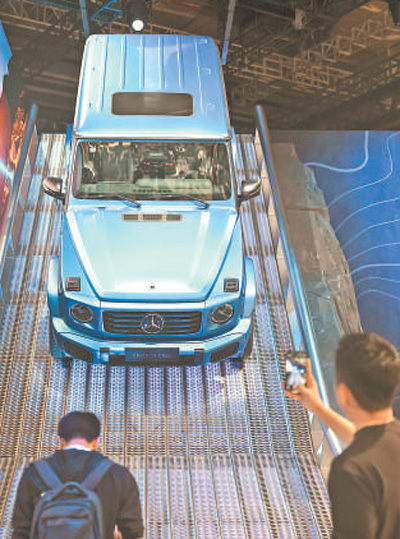
芯片有后门风险!中国车企集体加速替换英伟达芯片!
是说芯语· 2025-08-11 23:41
Core Viewpoint - The article discusses the increasing efforts of Chinese automotive manufacturers and chip companies to develop and adopt domestic products in response to the U.S. government's tightening export controls on high-tech products, particularly in the automotive chip sector [1][3]. Group 1: Impact of U.S. Export Controls - The U.S. government is intensifying scrutiny and restrictions on exports of high-tech products, including chips, to China, which is affecting the development of domestic autonomous driving and other technologies [1]. - Chinese automotive manufacturers, such as XPeng and NIO, are replacing foreign chips from companies like NVIDIA with self-developed chips in their latest models [1][3]. Group 2: Rise of Domestic Chip Companies - At least 10 Chinese chip companies are focusing on the automotive market as a core development area, including Horizon Robotics, Huawei HiSilicon, and others, which are rapidly expanding their client base among domestic car manufacturers [1]. - Major Chinese chip foundries like SMIC and Hua Hong Semiconductor are benefiting from this trend, with SMIC's automotive and industrial application chip manufacturing revenue increasing from less than 3% to 10% over three years [1]. Group 3: Market Share and Projections - According to estimates, the share of domestic brands in the total supply of automotive chips in China is expected to rise from approximately 9% in 2024 to 15-20% in 2025, with a potential increase to 50% within five years [3][4]. - Horizon Robotics is emerging as a significant competitor to NVIDIA in the smart driving market, currently holding a 33.97% market share in L0 to L2 level intelligent driving solutions in China [6]. Group 4: Technological Advancements and Challenges - Chinese companies are making strides in producing advanced automotive chips, with products like the "Starry Sky No. 1" high-level auxiliary driving chip achieving AI computing power of 512 TOPS, filling a gap in the domestic market [7]. - Despite initial integration challenges with domestic chips, the adoption rate is expected to increase as companies seek to reduce costs for lower-end models [4]. Group 5: Future Projections for Chip Self-Sufficiency - Projections indicate that China's self-sufficiency rate for microcontroller (MCU) chips will rise from 19% in 2024 to 67% by 2030, while the self-sufficiency rate for silicon carbide power switch chips is expected to grow from 5% to 74% in the same period [7][8]. - The rapid electrification and digitalization of Chinese automobiles are creating opportunities for new companies focused on designing logic chips for infotainment systems and autonomous driving features [8].

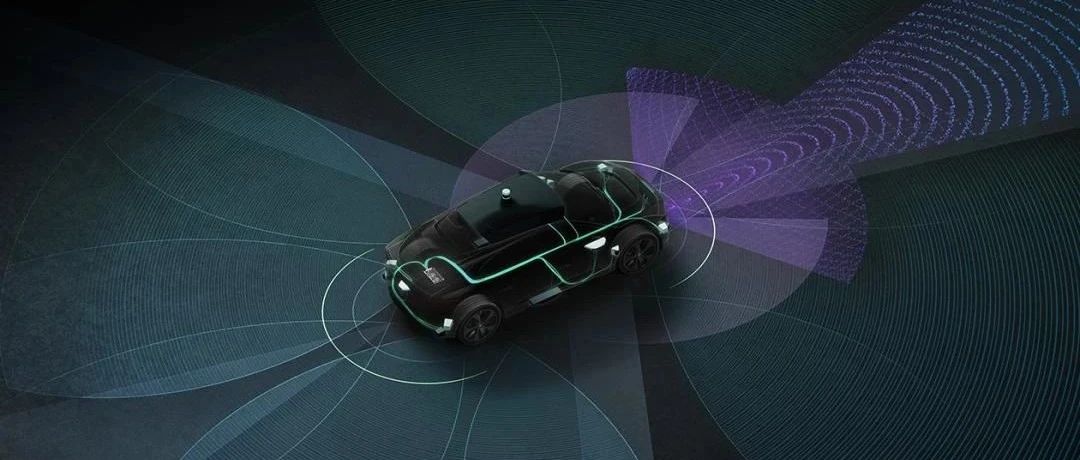
聚焦机器人与AI视觉 奥比中光上半年营收翻倍净利润大增
Zheng Quan Shi Bao Wang· 2025-08-11 13:35
Core Insights - The rapid development of AI large models has led to significant progress for the company, marking a "turning point" in its operations [1] - In the first half of 2025, the company reported revenue of 435 million yuan, a year-on-year increase of 104.14%, and a net profit of 60.19 million yuan, up 212.77% [1] Group 1: Business Development - The company has signed a cooperation agreement with Horizon Robotics and its subsidiary, Diguo Robotics, to deepen collaboration in the field of robot intelligence [2] - The company has developed a comprehensive range of 3D visual perception products for various types of robots, including service robots, industrial robots, and humanoid robots [2] - The company is building a "robot and AI visual industry platform" to enhance research and development in 3D visual perception technology [2] Group 2: Service Robots - The company has established partnerships with several domestic and international service robot clients, covering applications such as lawn mowing, hotel delivery, and commercial cleaning [3] - In collaboration with RoboCare, a leading Korean nursing robot company, the company has launched multiple robot products aimed at elderly care [3] - The company's 3D visual sensors have been successfully integrated into humanoid robots, with notable achievements such as winning the world's first humanoid robot marathon [3] Group 3: Industry Applications - The company is accelerating the promotion and implementation of 3D visual perception technology across various industries, driven by advancements in large model technology and intelligent device upgrades [4] - The company has strengthened market promotion efforts, leading to increased applications of 3D visual sensors in offline retail, self-service kiosks, and other payment scenarios [4] - As a core supplier for Alipay's "tap to pay" service, the company has facilitated the large-scale implementation of this innovative payment method in elevator scenarios [4][5] Group 4: Innovation and Patents - The company is in a critical development phase for 3D visual perception, with numerous potential applications and market opportunities [6] - At the 2025 World Robot Conference, the company launched new perception products for the robotics sector, including the PulsarME450 and Gemini345Lg [6] - The company has applied for a total of 1,903 patents, including 990 invention patents, and has obtained 1,112 patents, with a focus on enhancing its core technologies [7]

“AI共益时代”,中国与东盟如何碰撞新火花?
21世纪经济报道· 2025-08-11 07:33
Core Viewpoint - The article emphasizes the increasing importance of regional cooperation, particularly between China and ASEAN, in response to changes in global trade influenced by tariffs. It highlights the significance of the 2025 Standard Chartered China Enterprises Summit, which focuses on the theme "Harnessing ASEAN for Mutual Success" and discusses the impact of advanced technologies on the global value chain and the new economic paradigm [1]. Group 1: Technology and Investment - Artificial intelligence (AI) technology significantly enhances efficiency and reduces costs, leading to profound changes in the financial industry. Over the past decade, global supply chain models have evolved, with China increasing its foreign investments in manufacturing centers worldwide. Standard Chartered provides comprehensive support for companies venturing abroad, including cross-border payments, risk management, and business expansion, particularly in ASEAN and India [2]. - The integration of finance, AI, big data, and the automotive industry is highlighted as interdependent, progressing together [4]. - The ultimate form of internationalization is localization, as demonstrated by Alibaba Cloud's partnerships with over 120 overseas universities, which focus on building joint skill centers to serve students and local clients, thereby empowering local talent development [6]. Group 2: Automotive Industry Developments - The automotive sector in China has undergone significant upgrades over the past decade, with the penetration rate of mid-to-high-end technologies reaching 80%. The strategy for international expansion involves assisting overseas automotive companies in establishing foundational Advanced Driver Assistance Systems (ADAS) capabilities, with a gradual five-year plan to transition to Advanced Driver AD (autonomous driving) [8]. Group 3: AI and Cultural Considerations - The concept of "AI in a day, human in a year" reflects the importance of training models that not only possess high IQ but also consider cultural backgrounds and diversity. This balance is deemed crucial for the development of intelligent systems [10].
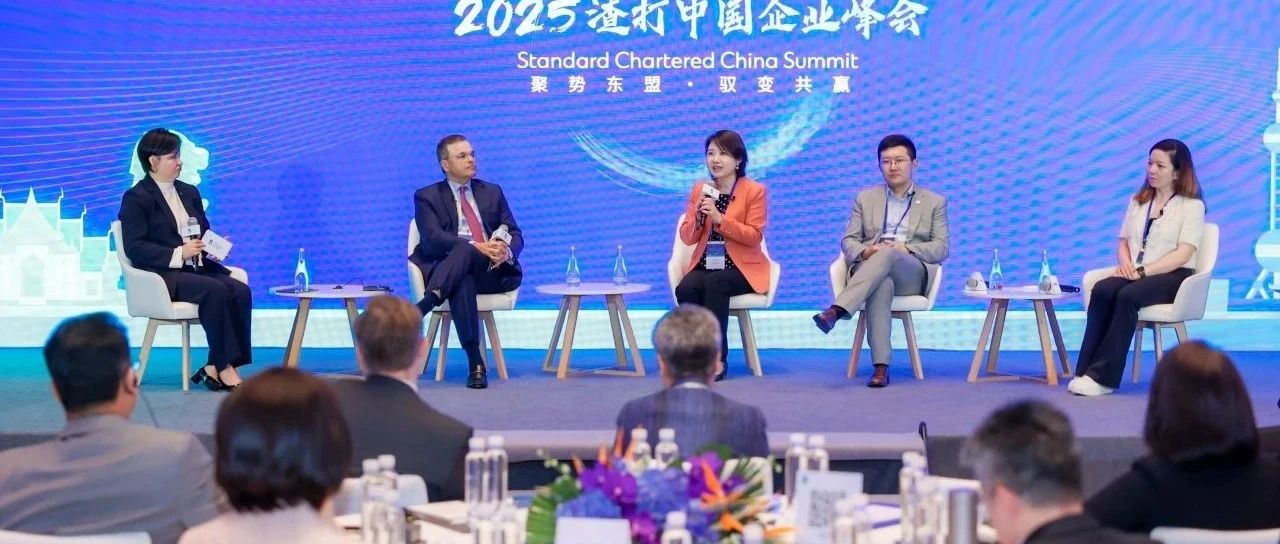
“AI共益时代”,中国与东盟如何碰撞新火花?
2 1 Shi Ji Jing Ji Bao Dao· 2025-08-11 04:29
Group 1 - The importance of regional cooperation is increasingly highlighted as global trade is affected by tariff changes, with China and ASEAN strengthening their connections in manufacturing, service trade, finance, and technology [1] - The 2025 Standard Chartered China Enterprise Summit focuses on the theme "Harnessing ASEAN for Mutual Success," where industry leaders and experts discuss the impact of advanced technologies on the global value chain and define a new paradigm for the global economy [1] - Artificial intelligence (AI) technology significantly enhances efficiency and reduces costs, leading to profound changes in the financial industry, while China increases its foreign investments in global manufacturing centers [2] Group 2 - Standard Chartered provides comprehensive support for companies expanding overseas, including cross-border payments, risk management, and business development, facilitating entry into markets like ASEAN and India [2] - The interdependence of finance, cloud computing, the automotive industry, and AI big data is emphasized, indicating a collaborative advancement among these sectors [4] - The ultimate form of internationalization is localization, as demonstrated by Alibaba Cloud's partnerships with over 120 overseas universities to build joint skill centers that serve local students and clients [6] Group 3 - The automotive industry in China has undergone significant upgrades, with a high penetration rate of advanced technologies, and aims to assist overseas automotive companies in enhancing their basic Advanced Driver Assistance Systems (ADAS) capabilities [6] - The training of AI models is likened to nurturing the next generation of intelligence, emphasizing the importance of cultural background and diversity in the development of these models [8]
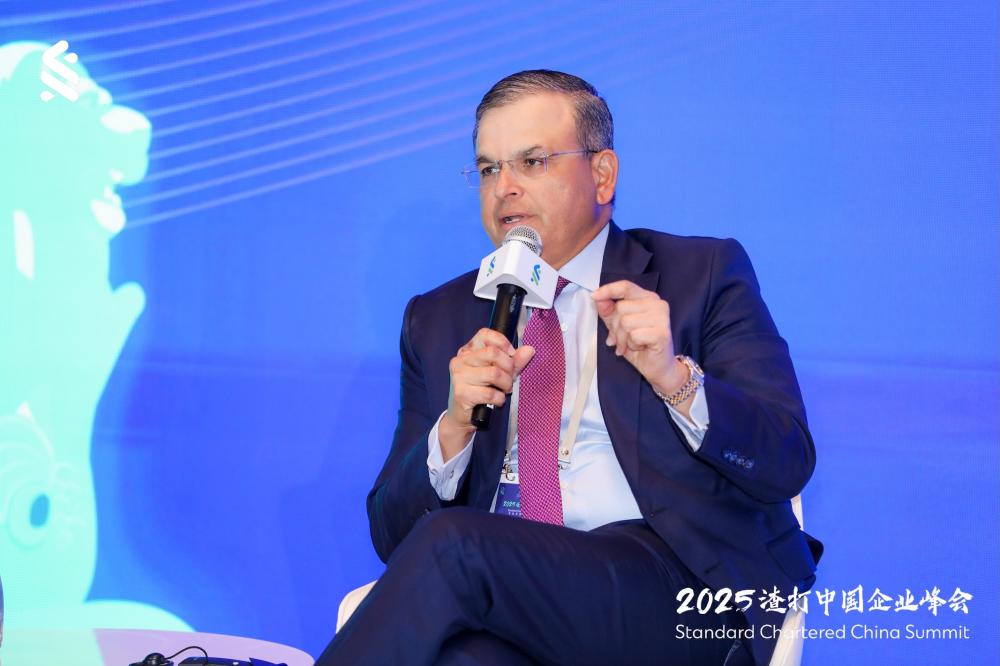
最后通知!关于第十届中国汽车零部件贡献奖—铃轩奖申报
汽车商业评论· 2025-08-09 23:06
Core Viewpoint - The 10th Lingxuan Award aims to recognize outstanding contributions in the automotive parts industry, with an extended application deadline to August 31, 2025, to encourage more submissions and showcase industry innovation [5][16]. Group 1: Award Overview - The Lingxuan Award has received over 150 valid applications since its launch on June 13, 2025, and is expected to surpass last year's 200 applications, reflecting a diverse ecosystem of current industry innovations [5][16]. - The award has evolved into a unique evaluation system for China's automotive parts industry, serving as a crucial reference for supply chain decisions among major manufacturers [5][7]. Group 2: Evaluation Process - The evaluation committee, led by notable industry figures, includes procurement leaders and experts from mainstream automotive companies, ensuring that the assessment aligns closely with industry practices [7][9]. - The evaluation will consider six dimensions: advancement (30%), adaptability (20%), reliability (20%), service capability (10%), brand strength (10%), and market share (10%) [9][53]. Group 3: Award Categories - The award categories cover ten core components of new energy smart connected vehicles, divided into forward-looking and mass production categories, focusing on technological advancement and market applicability [11][48]. - The award ceremony will take place during the annual New Automotive Technology Cooperation Ecosystem Exchange Conference, where winners will be announced [9][11]. Group 4: Industry Trends - The current application data indicates a significant innovation vitality in the automotive supply chain, with forward-looking technology cases accounting for 60%, a 12% increase from the previous year [16]. - Emerging companies contributed over 20% of the applications, showcasing breakthroughs in key areas such as advanced autonomous driving chips and AI interaction systems, injecting new energy into the domestic supply chain [16].
“中国芯片企业已能完美替代外国竞争对手”
Guan Cha Zhe Wang· 2025-08-08 09:37
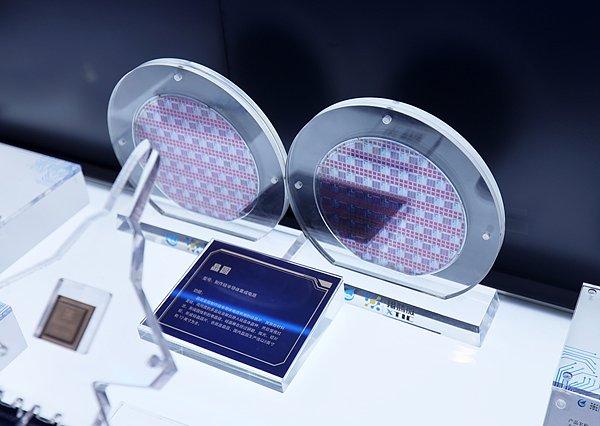
Core Viewpoint - Chinese chip companies are rapidly gaining market share and surpassing foreign competitors despite Western technological restrictions, with some companies achieving tenfold growth in the past two years, particularly in power and analog chip sectors [1][2]. Financial Performance - In Q2 2025, the company reported a total revenue of $2.209 billion, representing a year-on-year increase of 16.2%. The gross margin was 20.4%, a decrease of 2.1 percentage points quarter-on-quarter, and the capacity utilization rate was 92.5%, an increase of 2.9 percentage points [1]. - The company anticipates a moderate revenue growth of 5%-7% in Q3, with a slight decline in gross margin to 18%-20% [1]. Market Demand and Supply - The demand from Chinese customers is increasing, leading to a tight supply situation for wafers, expected to last until at least October. Domestic products are now able to "perfectly replace" those from foreign competitors [1][2]. - Some domestic clients, particularly in the power semiconductor sector, have increased their monthly orders from approximately 2,000 to 20,000 8-inch wafers over two years, with domestic clients accounting for over 50% of the company's 8-inch wafer orders [3]. Industry Trends - The company is assisting domestic clients in transitioning to more efficient 12-inch wafer technology to alleviate supply pressures [3]. - There is a significant rise in demand for storage-related chips, such as NAND flash memory controllers, despite a stagnation in the smartphone chip market [3]. Future Outlook - The company has high confidence in the order outlook for Q4 2025, despite uncertainties in end-user demand predictability [4]. - The industrial and automotive sectors accounted for approximately 10.6% of the company's revenue, with a 20% quarter-on-quarter increase in automotive chip shipments [4]. - The company expects that the impact of U.S. tariffs will be less than 1.3% of its revenue, contrary to initial concerns about demand for mass-market products [4][5].

日媒:中国车企正加速换“芯”,以替代英伟达等产品
Guan Cha Zhe Wang· 2025-08-08 02:17
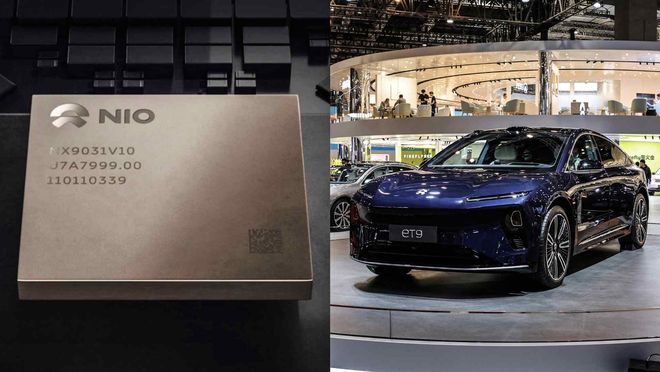
Group 1 - Chinese automotive manufacturers and chip companies are accelerating the replacement of foreign chip products, particularly from Nvidia [1] - Domestic chip developers such as Horizon Robotics, Huawei HiSilicon, and others are gaining traction among local automotive manufacturers [1][3] - The revenue from automotive and industrial application chips for domestic foundries has increased from less than 3% in 2020 to 10% currently [1] Group 2 - Chinese automakers, including Xpeng and NIO, are investing in self-developed chips, with projections indicating that by 2025, Chinese brands could account for 15%-20% of the total automotive chip supply [3] - The U.S. government has imposed restrictions on the export of advanced chips to China, impacting the options available for Chinese chip developers [4] - Nvidia faces ongoing regulatory challenges and scrutiny from the Chinese government, despite resuming supply of its H20 chip to China [6] Group 3 - China is expected to increase its self-sufficiency in microcontroller (MCU) chips from 19% in 2024 to 67% by 2030, with significant growth in domestic production of silicon carbide power switch chips [8] - The market for automotive digitalization is rapidly expanding, providing opportunities for new entrants in the chip sector [8] - There are challenges in producing advanced technologies like smart cockpit and autonomous driving chips due to manufacturing capacity limitations [8]
smart感知项目合作已终止?元戎启行回应:假消息,已报警
Mei Ri Jing Ji Xin Wen· 2025-08-07 07:59
Core Insights - The collaboration between Yuanrong Qihang and Smart has been terminated due to unmet performance expectations of Yuanrong's perception products and insufficient customization support [1] - Yuanrong Qihang has denied the termination claims, labeling them as "false news" and has reported the matter to the authorities [1] - Smart's market performance has been declining, with a 19.37% year-on-year drop in sales in China, failing to meet its annual target [2] Group 1: Company Collaborations and Performance - Yuanrong Qihang and Smart initially announced a strategic partnership to develop an AI-driven intelligent driving system, focusing on end-to-end algorithm models [1] - Smart's global sales are projected to increase by 7% to 129,700 units in 2024, but the Chinese market is struggling significantly [2] - The collaboration termination reflects the challenges faced by intelligent driving suppliers in meeting automotive manufacturers' expectations [3] Group 2: Industry Trends and Challenges - The intelligent driving industry is experiencing a shift, with automotive companies increasingly investing in self-developed driving solutions while also seeking external partnerships [3] - Predictions indicate that by 2025, the penetration rate of partially and conditionally automated vehicles in China will exceed 50%, and by 2030, it is expected to surpass 70% [2] - The competition among automotive manufacturers is evolving from merely having advanced features to focusing on the practicality and cost-effectiveness of those features [4]