
奔驰

Search documents
固态电池
数说新能源· 2025-11-17 08:15
Core Insights - The automotive industry is making significant advancements in solid-state battery technology, with multiple companies planning to implement this technology in their vehicles by 2027 or 2028 [1][2][3]. Group 1: Company Developments - Changan Automobile's Vice President, Deng Chenghao, anticipates small-scale demonstration operations of solid-state batteries by 2027 [1]. - Dongfeng Motor plans to conduct mid-term tests with solid-state batteries by December 2027, with a production target of 350Wh/kg solid-state batteries by September next year [1]. - CATL has stated that its solid-state battery technology is industry-leading, with small-scale production expected by 2027 [1]. - Chery's Rhino S solid-state battery is set to complete vehicle verification by 2027 [1]. - Toyota's Carbon Neutrality Engineering Development Center President announced that the company is on track to launch its first mass-produced vehicle with solid-state batteries by 2027 or 2028 [1]. - Nissan has achieved performance equivalent to double the current battery range with its next-generation solid-state battery prototypes, aiming for large-scale production by 2028 [1]. - BMW has launched the world's first test vehicle equipped with solid-state batteries (ASSB), the BMW i7, for road testing in Munich [1]. - Mercedes-Benz, in collaboration with Factorial, has developed the Solstice battery (450Wh/kg) that can exceed 1000 kilometers on a single charge [1]. - Samsung plans to begin large-scale production of solid-state batteries in 2027 [1]. - GAC Group announced successful manufacturing processes for solid-state batteries, with plans to officially equip them in the Haopu model by 2026 [1]. Group 2: Future Projections - BYD plans to start small-scale production of sulfide solid-state batteries for the mid-to-high-end electric vehicle market in 2027, with mainstream applications expected by 2030 [2]. - Hive Energy's Chairman Yang Hongxin believes that small-scale demonstration vehicle installations of solid-state batteries can be achieved by 2027 [2]. - Guoxuan High-Tech's Chief Scientist Zhu Xingbao suggested that if a composite technology route is adopted, vehicle installations could be possible as early as 2026 [2].


“十几万就能开上保时捷”,年轻人盯上二手豪车
Di Yi Cai Jing· 2025-11-17 08:05
Core Insights - The second-hand luxury car market is experiencing significant price drops, with average transaction prices decreasing by over 16% year-on-year in the first nine months of the year, surpassing declines in domestic and joint venture brands [1][2] - The trend of "three years at half price" for second-hand luxury cars has become common, attracting younger buyers who are drawn to the affordability of high-end brands [2][3] - Despite the lower purchase prices, the high maintenance and operating costs of luxury vehicles have led to concerns about affordability, with many buyers finding they can afford the car but struggle with ongoing expenses [2][13] Market Trends - The proportion of 90s buyers in the second-hand luxury car market has increased from 23% in 2019 to 47% in 2024, indicating a growing interest among younger consumers [2] - Popular models like the Porsche Macan and Panamera are seeing significant price reductions, with some models selling for less than 30% of their original prices [3][4] - The competitive landscape has intensified, with dealers facing pressure to price vehicles competitively, leading to thin profit margins on popular models [4][5] Pricing Dynamics - The price of second-hand luxury cars is closely tied to the new car market, with significant discounts on new models leading to accelerated depreciation of used vehicles [7][14] - The highest resale value among luxury brands is held by Porsche, with a three-year depreciation rate of 33.8%, while brands like Infiniti have seen values drop to as low as 36.5% [6][12] - The market for second-hand electric luxury cars is volatile, with prices fluctuating rapidly due to brand perception and market sentiment [8][10] Consumer Behavior - High-net-worth individuals are still the primary buyers of high-end luxury cars, focusing on vehicle condition and rarity rather than ongoing costs [13] - There is a growing segment of consumers looking for affordable luxury options, with many second-hand luxury cars priced below 200,000 yuan, appealing to budget-conscious buyers [13][14] - The high operating costs associated with luxury vehicles, including fuel and maintenance, are becoming a significant concern for potential buyers [13][15]
前日本沙迪克生产厂长创业对标阿特拉斯,服务吉利、奔驰,核心产品出货已超10W台|36氪首发
Sou Hu Cai Jing· 2025-11-17 01:12
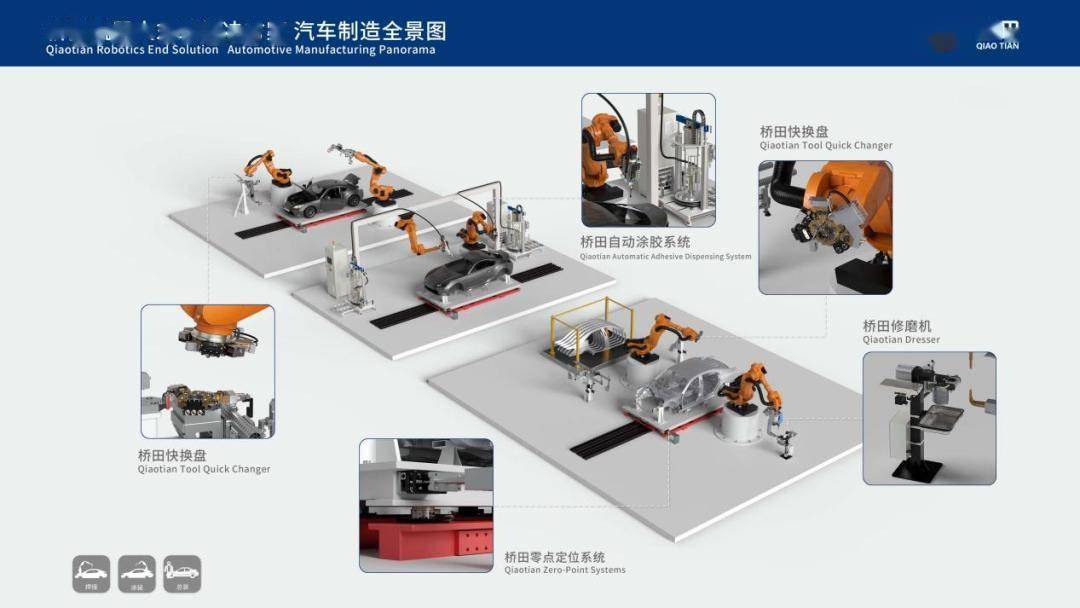
Financing Information - "Qiaotian Intelligent" recently completed A+ round financing of several tens of millions of RMB, exclusively invested by Zhejiang Chuangtou [1] - The funds will be primarily used for mass production of magnetic mold changing systems, R&D of new products, and capacity expansion [1] - The company previously secured nearly 100 million RMB in angel round financing from Geely Houtong Capital, Wan Niu Capital, and Midea Capital [1] Company Overview - Established in 2016 and headquartered in Shanghai, "Qiaotian Intelligent" has developed three core product lines: body assembly and welding robot end solutions, high-frequency quick mold changing and industrial connectors, and precision assembly systems in the three-electric field [1][5] - The company's core product, the robot end quick change device, has been integrated into mainstream OEM supply chains since 2020, with an average product launch cycle of 1-1.5 years [1] Market Landscape - The robot end device market is predominantly led by foreign brands, with significant potential for domestic alternatives due to the mismatch in product update speed and localized service response [6] - The domestic market is characterized by a large and fragmented landscape, where large companies do not focus on single products, and small companies struggle to scale across multiple categories [6] Company Performance - "Qiaotian Intelligent" expects a revenue growth of 59.34% in 2024, with continued significant growth anticipated in 2025 [7] - The robot quick change device accounts for approximately 60% of sales, with cumulative shipments exceeding 100,000 units by October 2025, leading the domestic niche market [7] Team Background - The founder and chairman, Liu Xiaoping, has 20 years of industry experience, previously serving as a production director and technical director at Shadek in Japan [8] - The core team combines industry experience with academic backgrounds, including former technical experts from major OEMs and R&D talents from prestigious universities [9] Strategic Direction - The company aims to transition from hardware to software, focusing on the mass production of magnetic mold changing systems and other high-tech barrier products [11][12] - The strategy includes systematic integration of quality technology companies with revenues between 20 million and 500 million RMB, aspiring to create a smart equipment platform centered around "Qiaotian" [11] Investor Perspective - Zhejiang Chuangtou recognizes "Qiaotian Intelligent" for its continuous R&D innovation in the robot end product field, breaking the foreign monopoly and gaining recognition from numerous automotive OEMs [13]

重新定义汽车产业边界
Jing Ji Ri Bao· 2025-11-15 21:45
Core Insights - The 2025 Japan Mobility Show showcases a transformation in the automotive industry, redefining vehicles as multifunctional spaces rather than just transportation tools [1][2][3] Group 1: Innovations in Vehicle Design - Sharp's LDK+ concept car aims to utilize the 95% of time vehicles spend parked, featuring a living room-like design with a rotating driver's seat and integrated technology for entertainment and meetings [1] - Hino Motors' Poncho Dot electric vehicle is designed to address public transport shortages, featuring flexible seating arrangements for various community needs, including cargo transport and medical services [2] - Toyota's Sea Lion concept vehicle incorporates medical technology to facilitate remote healthcare, addressing challenges in rural medical access [2] Group 2: Future Mobility Solutions - SkyDrive's electric flying car is set to reduce travel time significantly between Beppu and Yufuin, with plans for operation by 2028 and aspirations for autonomous driving by 2030 [2] - The Japan Mobility Show, rebranded from the Tokyo Motor Show, features over 500 exhibitors, including major Japanese automakers and international brands like BYD and BMW [3]
英美联手封锁人民币,企图稳美元霸权,中国早已手握王牌
Sou Hu Cai Jing· 2025-11-15 09:10
Core Viewpoint - The London Metal Exchange (LME) has implemented an emergency ban on non-dollar denominated metal options, which has significant implications for the global metal trading landscape and the rise of the Renminbi (RMB) as a settlement currency [2][4]. Group 1: Impact of LME's Ban - The LME's ban is seen as a targeted move by the U.S. to curb the penetration of the RMB in strategic metal settlements, reflecting a shift in the global metal industry dynamics [4][6]. - The ban has forced companies like Volkswagen and China Aluminum to incur additional costs, with aluminum contracts increasing by €200 per ton due to the need to convert to dollars [7]. - French company Total Energy faced a $30 million loss due to currency fluctuations when forced to switch to dollar settlements for rare earths previously agreed in RMB [9]. Group 2: Shift in Trading Dynamics - The LME's internal data shows that the trading volume of RMB-denominated metal options has increased from 0.3% in 2020 to 8.7% in 2024, indicating a growing acceptance of RMB in the metal trading sector [11]. - The LME's pricing power is perceived to be weakening, as evidenced by the increasing push from Chinese companies to engage in cross-border arbitrage with the Shanghai Metal Exchange [11][13]. - China's dominance in the metal industry is underscored by its significant share in global consumption and production, with 54% of refined copper and 70% of rare earth oxide production [13][15]. Group 3: RMB's Growing Influence - The RMB's role in international transactions is bolstered by China's position as both the largest buyer and seller of key metals, enhancing its bargaining power for RMB settlements [17]. - The shift to RMB settlements is exemplified by the automotive sector, where European companies have increased their RMB transactions from 5% to 22% in 2023 due to supply chain stability concerns [19]. - China's strategic agreements with countries like Chile for copper procurement are increasingly favoring RMB settlements, with a 30% increase in annual procurement volume under RMB terms [24][26]. Group 4: Future Outlook - The LME's ban has inadvertently accelerated the adoption of RMB in global metal transactions, with a reported 23% drop in metal options trading volume at the LME following the ban [32]. - The RMB's share in global metal settlements is projected to rise from 7% to 15% by the end of 2024, while the dollar's share is expected to decrease from 82% to 72% [34]. - The ongoing evolution of the global metal pricing structure is moving towards a dual system of "dollar + RMB," indicating a significant shift in the monetary landscape [34][36].

车企亟待驶出“极端营销”怪圈
Jing Ji Ri Bao· 2025-11-14 21:45
Core Viewpoint - The article discusses the pitfalls of extreme marketing in the automotive industry, emphasizing that genuine communication and brand integrity are more effective than sensational tactics [1][2][3][4]. Group 1: Marketing Practices - High-level marketing should not rely on creating concepts or extreme performances, but rather focus on sincere dialogue and enhancing brand value through cultural and aesthetic contributions [1][3]. - The automotive industry is experiencing a trend of extreme marketing tactics as companies seek to stand out in a saturated market, often leading to questionable practices [1][2]. Group 2: Consumer Perception - Extreme marketing can mislead consumers, as exaggerated scenarios do not accurately reflect real-world vehicle performance, potentially damaging brand trust [2][3]. - Consumers may question the authenticity of marketing claims when faced with unrealistic demonstrations, leading to skepticism about product safety and reliability [2][3]. Group 3: Industry Implications - The reliance on extreme marketing reflects a loss of focus on core automotive values such as safety, stability, and reliability, which are essential for building consumer trust [3][4]. - The automotive industry's history shows that no brand has achieved greatness solely through extreme marketing; lasting success is built on technological innovation and user value [4]. Group 4: Recommendations - To combat the trend of extreme marketing, both regulatory bodies and companies need to promote self-discipline and focus on high-quality development rather than sensational tactics [4].
八赴进博会!爱立信解码5G转型:从“卖流量”到“卖服务”的产业新路径
Huan Qiu Wang· 2025-11-14 04:17
Core Insights - Ericsson has participated in the China International Import Expo for the eighth consecutive year, showcasing over 80 differentiated connectivity cases and the latest achievements in AI and network integration [1] - The company emphasizes a shift from "selling connectivity" to "selling services" to address the revenue challenges faced by operators in the 5G era [3][4] - Ericsson anticipates achieving 6G commercial deployment around 2030, with a core network evolution based on 5G SA [3][12] Differentiated Connectivity - The essence of differentiated connectivity is to provide customized services based on specific application and user needs, moving away from the homogeneous service model of 4G [3][4] - This model allows users to pay for enhanced experience, predictability, and control, similar to subscription services in other industries [4] AI and Network Integration - AI is positioned as a critical technology for enabling differentiated connectivity, with Ericsson advocating for a dual empowerment approach: "Networks for AI" and "AI for Networks" [5] - AI can predict over 95% of network failures, improve spectrum and capacity efficiency by approximately 15%, and reduce energy consumption by 14% [7] 5G Private Networks - Ericsson is focusing on 5G private networks for the B2B market, with successful implementations in high-end manufacturing scenarios, such as Airbus production facilities [8] - The unique value of 5G private networks is highlighted through specific applications, such as remote control of torque parameters in manufacturing [8] Emerging Devices and Market Trends - New devices like embodied intelligence and AI glasses have specific network requirements, such as higher uplink bandwidth and low latency for real-time interactions [9] - The future is expected to see a cluster of AI-based applications and devices driving network demand, creating a positive feedback loop between devices and networks [11] Market Opportunities and Challenges - China is recognized as a leading market in 5G SA construction and B2B application exploration, but faces challenges in nationwide deployment due to its vast territory and large user base [12] - The promotion of eSIM technology in China is seen as gradual, requiring consideration of consumer acceptance and market dynamics [12] Conclusion - Ericsson views China not only as a significant market but also as a source of innovation, aiming to leverage differentiated connectivity and AI integration to transition the mobile communication industry from "scale leadership" to "value leadership" [12]


10月乘用车批发价格趋稳,价格竞争持续降温
Ge Long Hui· 2025-11-14 01:15
Core Insights - The passenger car market in October shows a continued stabilization in prices, with a decrease in competitive pricing, indicating a shift towards refined operations rather than aggressive price competition [1][2] - The average discount rate for the passenger car market in October 2025 is reported at 18.5%, a slight decrease of 0.3% month-on-month, with average wholesale prices dropping by 500 yuan [1] - New energy vehicles (NEVs) demonstrate significantly better price stability compared to traditional fuel vehicles, with NEVs maintaining a discount rate of 12.8% and average prices showing a year-on-year increase of 1300 yuan [1][2] Market Dynamics - There is a notable differentiation in pricing strategies among brands, with domestic new energy brands like AITO, Xiaomi Auto, and Xpeng maintaining discount rates below 10%, while joint venture brands have discount rates exceeding 20% [2] - The average price for domestic new energy brand AITO increased by 1900 yuan, contrasting with the price declines observed in joint venture brands such as FAW-Volkswagen and Buick [2] - The SUV segment is experiencing intense competition, with major models like the Volkswagen Tayron and Mercedes-Benz GLC seeing significant price drops, with average prices falling between 4200 to 8300 yuan [2]
汽车行业跟踪报告:10月乘用车批发价格趋稳,价格竞争持续降温
GUOTAI HAITONG SECURITIES· 2025-11-13 11:55
Investment Rating - The report maintains an "Overweight" rating for the automotive industry [2][4]. Core Insights - In October, the price competition in the passenger car market continued to ease, indicating a structural differentiation within the industry. The average discount rate for new cars was 18.5%, a decrease of 0.3% month-on-month, with the average wholesale price slightly declining by 500 yuan, remaining stable year-on-year [2][5]. - The stability of prices for new energy vehicles (NEVs) is significantly better than that of traditional fuel vehicles. The average discount rate for traditional energy vehicles was 26.3%, with a month-on-month price drop of 900 yuan and a year-on-year increase of nearly 1600 yuan. In contrast, NEVs maintained a discount rate of 12.8%, with prices remaining relatively unchanged month-on-month and a year-on-year increase of 1300 yuan [5]. - There is an increasing divergence in pricing strategies among brands, with domestic new energy brands having lower discount rates compared to joint venture brands. For instance, brands like AITO, Xiaomi Auto, and Xpeng had discount rates below 10%, while joint venture brands like FAW-Volkswagen and Buick had discount rates above 20% [5]. - The competition in the SUV market remains intense, with major models like the Volkswagen Tayron and Mercedes-Benz GLC seeing significant price drops, with average prices declining by 4200-8300 yuan and discount rates increasing by 1.1%-1.9% [5].
国泰海通:10月乘用车市场价格竞争持续缓和 维持行业“增持”评级
Zhi Tong Cai Jing· 2025-11-13 11:29
Core Insights - The passenger car market is transitioning from price competition to refined operations, with a trend of "anti-involution" expected to continue into Q4 [1] - The overall market shows a stabilization in prices, with the average discount rate for passenger cars at 18.5%, a decrease of 0.3% month-on-month [1][2] - There is a significant structural differentiation within the industry, with domestic new energy brands having a notably lower discount rate compared to joint venture brands [1][2] Market Trends - In October, the average discount rate for traditional energy vehicles remained high at 26.3%, with an average price decrease of 900 yuan month-on-month and an increase of nearly 1600 yuan year-on-year [2] - New energy vehicles maintained a stable discount rate of 12.8%, with average prices showing little change month-on-month and a year-on-year increase of 1300 yuan [2] - The price strategies among different brand camps are increasingly differentiated, with domestic new energy brands like AITO and Xpeng having discount rates below 10% [2] Segment Analysis - The SUV market is experiencing intense competition, with major models like the Volkswagen Tayron and Mercedes-Benz GLC seeing average prices drop to historical lows, with declines ranging from 4200 to 8300 yuan [3] - Average discount rates for popular SUV models such as the Volkswagen Tiguan L and Buick Envision Plus have increased, reaching 25.7% and 29.2% respectively [3]
