小红书

Search documents
三大头部互联网企业交锋,AI时代可观测边界出现了吗?
3 6 Ke· 2025-10-22 09:31
Core Insights - The evolution of observability technology is significantly influenced by AI, particularly through the capabilities of large language models (LLMs) [1][2][3] - AIOps is transitioning from experimental phases to practical applications, highlighting the dual empowerment between AI and observability technology [1][2] Group 1: AI's Impact on Observability - AI enhances observability by automating data extraction and analysis, achieving accuracy rates of 80%-90% in generating SQL queries from clear context [1][2] - The shift from manual to AI-driven analysis allows engineers to focus on complex problem-solving rather than routine tasks [2][3] - AI introduces new observability requirements, such as the need for efficient storage of trace data generated by AI systems [2][3] Group 2: Observability's Role in AI - Observability systems must evolve to diagnose AI model performance issues, such as identifying errors in document retrieval during workflows [2][3] - The integration of LLMs provides a foundational capability that accelerates the development of observability solutions [3][4] - Future observability systems are expected to create a complete feedback loop from discovery to resolution, enhancing operational efficiency [4][5] Group 3: Challenges and Opportunities - The reliance on high-quality data is critical, as poor data quality can significantly impair AI's analytical capabilities [25][28] - The relationship between traditional algorithms and LLMs is collaborative, with each serving distinct roles in observability [12][14] - Achieving "semi-autonomous" operations within three to five years is feasible, but full autonomy remains a long-term goal [37][36] Group 4: Trust and Implementation - Building trust in AI systems requires extensive practical testing and validation to ensure reliability in real-world applications [15][16] - The transition to AI-driven observability necessitates a cultural shift within organizations, emphasizing collaboration between AI and human expertise [20][21] - Effective data governance and standardization are essential for maximizing the potential of AI in observability [28][29]
上海社零增速持续提升,消费强劲复苏有这些支撑
Di Yi Cai Jing· 2025-10-22 09:28
Group 1: Economic Growth and Consumer Trends - Shanghai's retail sales increased by 4.3% year-on-year in the first three quarters, with significant growth in July to September at 7.8%, 13%, and 9.2% respectively, contributing to a 2.6 percentage point increase in growth rate compared to the first half of the year [1] - The city's GDP grew by 5.5% year-on-year in the third quarter, outperforming the national average, driven by effective growth-stabilizing policies and a transition from traditional to modern economic drivers [1] - The "trade-in" subsidy policy significantly boosted retail sales in categories such as sports and entertainment, furniture, and home appliances, with increases of 27.7%, 22.1%, and 28.2% respectively [1] Group 2: Innovation in Consumption - Shanghai is recognized as the largest consumer city in China, with a strong demand-side resilience and rapid innovation in consumption driven by platforms like Xiaohongshu and Pinduoduo [2] - The "Shanghai International Animation Month" and the transformation of Rebirth Island into a "pain island" exemplify the innovative consumption landscape, supported by a cultural consumption boom [2] - The "content attracts users, commercial feedback to content" cycle is a core growth path for Xiaohongshu, further reinforced by the "Hujiao Policy" released in July [2] Group 3: Automotive and Tourism Sector Performance - SAIC Motor Corporation achieved a 20.5% year-on-year increase in cumulative sales from January to September, with September sales reaching 440,000 units, a 40.4% increase [3] - The tourism sector in Shanghai saw a significant increase in inbound visitors, with 6.366 million tourists in the first three quarters, a 37% year-on-year growth [3] Group 4: Airport and Travel Statistics - As of October 11, the number of inbound foreign travelers at Shanghai ports exceeded the total for the previous year, with over 50% entering through visa-free policies [4] - Shanghai Airport's passenger throughput surpassed 100 million in the first nine months, with a daily average of 406,000 passengers during the National Day and Mid-Autumn Festival holidays, marking a 9.3% year-on-year increase [4] Group 5: Future Economic Outlook - The economic outlook for Shanghai remains positive, with expectations of sustained growth contingent on maintaining a competitive edge in global technology and further activating domestic consumption potential [4]

双11的十七年之变:从“价格战”到“体验战”
Sou Hu Cai Jing· 2025-10-22 07:17
Core Insights - The "Double 11" shopping festival has evolved from a one-day event into a nearly two-month shopping season, reflecting changing consumer behaviors and market dynamics [2][9][29] - E-commerce platforms are adopting new strategies to rejuvenate the festival, including simplifying promotional rules, enhancing delivery efficiency through instant retail, and leveraging AI technology for better shopping experiences [12][13][22] Group 1: Changes in Consumer Behavior - Consumers are becoming more rational, focusing on essential purchases rather than impulse buying, with many stating they will not stockpile items just to meet discount thresholds [9][10] - The perception of "Double 11" has shifted, with consumers feeling that frequent promotions throughout the year reduce the urgency to wait for this specific event [11] Group 2: E-commerce Platform Strategies - Major platforms like JD.com and Tmall have started their promotions earlier, with JD.com reporting a 47.6% increase in active users and over 70% growth in orders for home appliances and electronics within just five days of launching [3][5] - Tmall's pre-sale on October 15 led to significant sales, with 80 brands achieving over 100 million yuan in sales within the first hour [5] - Douyin has extended the shopping season to 57 days, combining it with the Mid-Autumn Festival, while other platforms like Kuaishou and Xiaohongshu have also adjusted their promotional timelines [6] Group 3: Simplification of Promotion Rules - E-commerce platforms are simplifying their promotional rules to enhance consumer participation, introducing direct discounts and eliminating the need for minimum purchase requirements [11][12] - This shift aims to reduce the complexity that previously deterred consumers and increased operational costs for merchants [12] Group 4: Adoption of Instant Retail and AI Technology - Instant retail is becoming a key focus, with platforms like JD.com enhancing their delivery capabilities to meet consumer demands for speed [14][16] - AI technology is being integrated into various aspects of e-commerce, from product recommendations to customer service, improving efficiency and user experience [18][20][22] Group 5: International Expansion - As domestic growth slows, e-commerce platforms are increasingly looking to international markets, with Alibaba launching "Double 11" in 20 countries and regions simultaneously [23][24] - The company is investing 1 billion yuan in marketing subsidies to help 100,000 merchants double their overseas sales, indicating a strong commitment to global expansion [24][28] Group 6: Future of Double 11 - The festival is transitioning from a mere sales event to a platform for exploring new retail models, emphasizing speed, intelligence, and international reach [29] - The evolving nature of "Double 11" reflects a broader trend in consumer expectations and market strategies, aiming to maintain relevance in a changing retail landscape [29]



2025年中国私域电商行业趋势白皮书
艾瑞咨询· 2025-10-22 00:04
Core Insights - The private domain e-commerce industry is experiencing rapid growth due to the saturation of user growth and rising customer acquisition costs, necessitating refined and differentiated operational strategies to meet user demands and enhance brand competitiveness [1][2][11] Industry Overview - Development Background and Drivers - The number of online shopping users in China reached 970 million in 2024, with a penetration rate close to 90%, indicating limited natural growth potential. This shift has led the e-commerce industry to transition from acquiring new users to managing existing ones [2] - Private domain e-commerce, characterized by lower customer acquisition costs and a focus on long-term user value, aligns with the industry's current demand for lifecycle management and refined operations [2] Demand Side - User Needs - Users are increasingly prioritizing advanced needs such as service quality and personalized experiences, which are reflected in their preferences for after-sales service, product variety, and fulfillment efficiency [4] Supply Side - Brand Focus - In the era of stock competition, brands are placing greater emphasis on digital and channel operational capabilities to enhance competitiveness through private domain layouts [6][7] Policy Environment - The government has introduced various policies to promote the healthy development of the private domain e-commerce sector, encouraging participation from individuals and small businesses [9][10] Industry Characteristics - The private domain e-commerce sector has evolved through technological iterations and policy regulations, entering a new phase characterized by AI empowerment and the integration of public and private domains [11][12] Operational Model - Private domain e-commerce drives growth through a comprehensive and refined operational model that enhances user lifecycle value, focusing on multi-channel customer acquisition, user asset management, and trust-building through personalized content [14] Market Space - The industry is projected to grow to 2.3 trillion yuan in 2024, with a growth rate of 6.3%. By 2025, the transaction scale is expected to exceed 3 trillion yuan, driven by consumption incentives and technological advancements [17][18] Participant Ecosystem - The private domain e-commerce ecosystem consists of brands, store owners, platforms, and consumers, with platforms playing a crucial role in connecting these parties [20] Platform Insights - Player Types - Various platform types, including comprehensive, vertical, and brand-specific players, serve as core suppliers of goods and services within the private domain e-commerce ecosystem [23] Market Landscape - Leading platforms in the private domain e-commerce space have established core advantages through marketing innovation, user recognition, and supply chain capabilities [26] User Insights - The majority of private domain e-commerce users are women aged 24-39, with a significant portion having a good educational background and middle to high income levels [40] Consumer Behavior - Users primarily purchase daily consumables, with price discounts, product variety, and personalized service experiences driving increased purchase frequency [42][43] Store Owner Insights - Female store owners, predominantly aged 31-40 and well-educated, are motivated by self-improvement and economic independence through private domain e-commerce [50][55] Merchant Value Analysis - Nearly 90% of surveyed merchants have initiated private domain layouts, with significant contributions to revenue and long-term value creation through reduced customer acquisition costs and enhanced brand competitiveness [58] Future Trends - The industry is expected to see a shift towards refined operations, increased integration of AI technology, and exploration of cross-border opportunities as brands seek to expand their market boundaries [67][70][72]

一场大会打通“湛江制造”出海路,头部平台全都来了!
Sou Hu Cai Jing· 2025-10-21 14:56
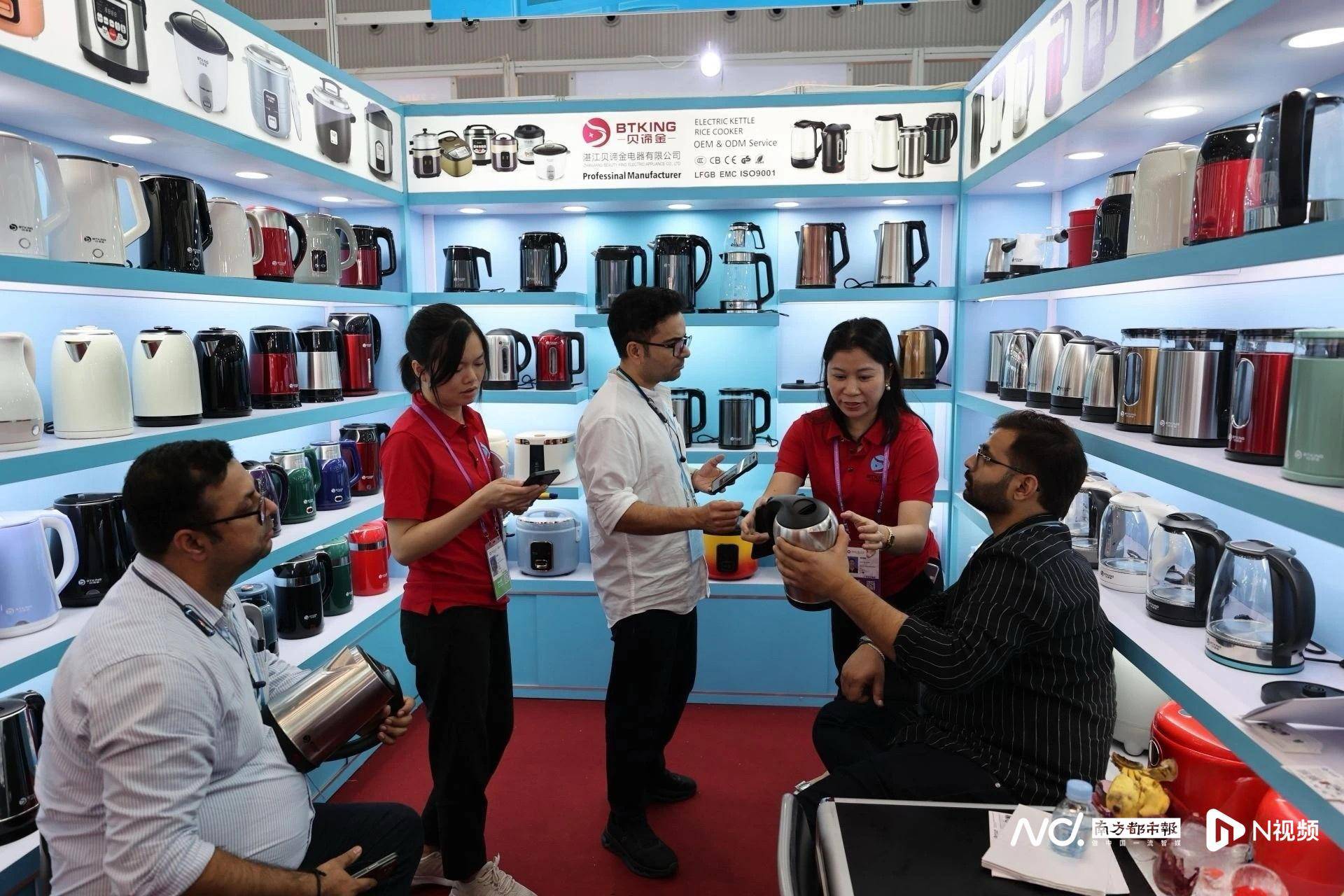
Core Insights - The conference on October 22, 2025, aims to promote high-quality economic development in Zhanjiang through cross-border e-commerce, aligning with the "Hundred Million Project" strategy [1][3] - Zhanjiang's unique geographical advantages and industrial foundation position it as a strong player in the cross-border e-commerce sector, with notable industries like small home appliances and down products [3][4] Group 1: Event Overview - The conference is co-hosted by the Guangdong Provincial Council for the Promotion of International Trade, the Zhanjiang Municipal Committee of the Communist Party of China, and the Zhanjiang Municipal Government [1] - The event will gather various stakeholders, including government, enterprises, academia, and research institutions, to create a "Digital Silk Road" for Zhanjiang's industries [1][3] Group 2: Industry Potential - Zhanjiang is recognized as a key support point in the coastal economic belt of western Guangdong, leveraging its natural deep-water port and strong industrial clusters [3] - The region's products, such as those from the Lianjiang small home appliance sector, are undergoing digital transformation to integrate into global supply chains [3][4] Group 3: Policy Support - The conference will provide comprehensive policy guidance and support, with experts explaining RCEP origin rules and tax refund policies to help businesses reduce export costs [4] - A one-stop policy service platform will be established to ensure efficient implementation of various business-friendly policies [4] Group 4: Product Showcase - A special exhibition area will be set up to showcase Zhanjiang's quality products, including small home appliances and agricultural products, facilitating direct business negotiations [4] Group 5: Talent Development - The conference will include training sessions led by industry experts, covering essential topics such as platform operations, logistics solutions, and brand building to enhance cross-border operational capabilities [4]
招募小红圈圈主,小红书又要对兴趣社交“下手”
3 6 Ke· 2025-10-21 12:46
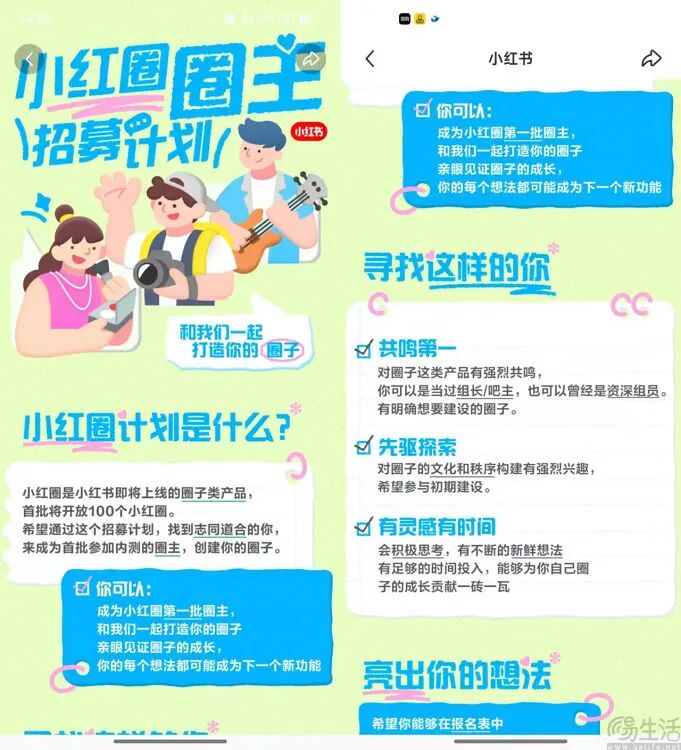
Core Insights - Xiaohongshu is actively expanding its social features, recently launching a recruitment plan for community leaders as part of its new "Xiaohongquanquan" product aimed at enhancing user engagement and reducing churn [1][4] - The platform's previous attempts in the social domain have faced challenges, but it continues to explore opportunities in interest-based social networking, which has shown promising growth in user engagement [3][6] Group 1: Product Development and Strategy - Xiaohongshu's new community product, "Xiaohongquanquan," will initially open 100 groups and seeks leaders who resonate with the community concept and are willing to invest time in its development [1] - The platform aims to connect content, e-commerce, and local services through this community initiative, potentially expanding its commercialization opportunities [4] - Interest-based social interactions have shown a significant increase, with group chat daily active users growing nearly 70% year-on-year, indicating a shift towards more engaging content [6] Group 2: Challenges and Market Competition - Despite the potential of interest-based communities, Xiaohongshu faces significant challenges, as many similar products in the market have failed, highlighting the difficulty of sustaining such platforms [8] - The platform must navigate the risk of communities becoming insular and self-sufficient, which could hinder broader engagement and monetization efforts [8] - Competitors like Douyin and Kuaishou are also pursuing social features, and the return of WeChat's "Shake" function indicates a competitive landscape for social networking [10][12] Group 3: User Experience and Retention - Users seeking social connections on Xiaohongshu desire a low-pressure experience, but the current environment may complicate this, as users must sift through content to find suitable connections [10] - The challenge remains for Xiaohongshu to provide compelling reasons for users to stay on its platform rather than migrating to WeChat for social interactions [12]
小红书一路暴涨,员工身价翻倍,赚翻了
Xin Lang Cai Jing· 2025-10-21 10:50
Core Insights - Xiaohongshu is approaching its IPO as indicated by the recent increase in employee stock options and valuation growth [3][4][5] - The company has made significant organizational changes to enhance its e-commerce strategy, reflecting a commitment to integrating community and commerce [7][9][10] Group 1: Employee Stock Options and Valuation - Xiaohongshu has raised employee stock option prices three times this year, with the latest option grant price set at $25 per share and an exercise price of $2 per share, resulting in a profit of $23 per share [3][4] - The company's valuation has surged from $26 billion to $31 billion in just three months, marking a 19% increase [4][5] - The last public financing round in 2021 valued Xiaohongshu at $20 billion, indicating a significant upward trajectory in its market valuation [4] Group 2: E-commerce Strategy and Organizational Changes - Xiaohongshu has undergone multiple strategic shifts in its e-commerce approach, with a notable restructuring in August 2023 that elevated the e-commerce division to a primary department [8][9] - The company has decided to focus on a "buyer economy," emphasizing the role of individual buyers and influencers in driving sales through trust and community engagement [9][10] - Recent data shows that Xiaohongshu's live-streaming e-commerce has seen a 1.6 times increase in the number of million-level live-streaming rooms compared to the same period last year, showcasing its growth potential [13] Group 3: Market Positioning and Differentiation - Xiaohongshu is carving out a unique niche in the e-commerce landscape by focusing on community-driven commerce rather than traditional impulsive buying [14][19] - The platform has launched initiatives like the "Xiaohong Card," which offers discounts at selected local businesses, further diversifying its service offerings [21][22] - The company is also expanding into the two-dimensional culture space, indicating a strategic move to capture a younger audience and enhance user engagement [17][19]

小红书员工身价再涨
华尔街见闻· 2025-10-21 10:13
Core Viewpoint - The article highlights the significant increase in valuation and employee incentives at Xiaohongshu, indicating strong market expectations and potential for future growth [1][3][12]. Valuation Adjustments - Xiaohongshu has raised its employee stock option grant price to $25 per share, with a strike price remaining at $2, resulting in a profit of $23 per share [1]. - The company has adjusted the option grant price multiple times in 2025, starting from $13.5 in March, increasing to $18 in June, and now $25 in October, marking a doubling of option value within the year [2]. - The repurchase price for options for both current and former employees has also increased significantly, with a 75% rise for former employees from $10 to $17.5 [2]. Valuation Growth - Xiaohongshu's valuation has surged from $170 billion to $310 billion within a year, representing an increase of over 82% [4]. - Recent reports indicate a 19% increase in valuation over three months, reaching $310 billion, compared to $260 billion three months prior and $200 billion at the beginning of the year [3][4]. User Growth and Market Position - The influx of users, particularly from the U.S. market, has contributed to Xiaohongshu's growth, with daily active users peaking at 1.3 million in January 2025 and maintaining a 114% increase compared to December 2024 [6]. - By mid-2025, Xiaohongshu's monthly active users surpassed 350 million, providing a solid foundation for commercial monetization [6]. Profitability Improvements - Xiaohongshu achieved a net profit of $500 million in 2023 and is projected to double its profits to $3 billion by 2025 [7]. - The company's revenue primarily comes from advertising and e-commerce, with advertising accounting for nearly 80% of total revenue in 2022 [8]. Strategic Developments - Xiaohongshu has launched a "lifestyle e-commerce" strategy and established a "big business sector" to enhance its commercial capabilities [9][8]. - The company is actively exploring new avenues for commercialization, particularly in the e-commerce space [8]. IPO Prospects - Xiaohongshu's IPO plans have garnered attention, with speculation about a potential listing in Hong Kong after previous attempts to go public in the U.S. [10][11]. - The establishment of an office in Hong Kong is seen as a strategic move towards facilitating cross-border business and market expansion [11].

小红书员工身价再涨
美股IPO· 2025-10-21 10:03
Core Viewpoint - The article highlights the significant increase in the valuation of Xiaohongshu, a unicorn company, driven by its employee incentive adjustments and user growth, indicating strong market expectations for its future performance [1][5][13]. Valuation and Employee Incentives - Xiaohongshu has raised its employee stock option grant price to $25 per share, with a strike price remaining at $2, resulting in a profit of $23 per share [3]. - The company has adjusted the stock option grant price multiple times in 2023, from $13.5 in March to $18 in June, and now to $25 in October, reflecting a doubling of option value within the year [4]. - The repurchase price for stock options for departing employees has increased from $10 to $17.5, a 75% rise, benefiting both current and former employees [4]. Valuation Growth - Xiaohongshu's valuation surged by 19% in three months, reaching $31 billion (approximately ¥220.87 billion) in September 2023, up from $26 billion in June and $20 billion in January [6]. - Over the past year, the valuation has increased from $17 billion to $31 billion, representing an over 82% growth [6]. User Growth and Market Performance - The influx of users, particularly from the U.S. market, has contributed to Xiaohongshu's growth, with daily active users peaking at 1.3 million in January 2025, and maintaining a 114% increase compared to December 2024 [7]. - By mid-2025, Xiaohongshu's monthly active users exceeded 350 million, marking a historical high and providing a broader space for commercial monetization [7]. Profitability and Revenue Sources - Xiaohongshu turned a profit in 2023, achieving a net profit of $500 million, with expectations to double this to $3 billion by 2025 [8][9]. - The company's revenue primarily comes from advertising and e-commerce, with advertising accounting for nearly 80% of total revenue in 2022, although this share slightly decreased in 2023 [10]. IPO Prospects - Xiaohongshu's IPO plans have garnered attention, with rumors of a potential listing in Hong Kong after previous attempts to go public in the U.S. were halted [11][12]. - The establishment of an office in Hong Kong is seen as a strategic move towards its IPO, although the company emphasizes its importance for business operations rather than solely for listing purposes [12].

合合信息推出多模态文本智能技术落地方案,助力AI实现智能推理
2 1 Shi Ji Jing Ji Bao Dao· 2025-10-21 08:29
Core Insights - The development of multimodal large models is becoming a significant direction in AI, with a recent forum focusing on "Multimodal Text Intelligence Models" attracting considerable attention from experts and scholars [1][4]. Group 1: Multimodal AI Development - Multimodal AI integrates various forms of information, including text, images, audio, and video, to enhance understanding and communication [4]. - The 2025 Gartner AI maturity curve indicates that multimodal AI will become a core technology for enhancing applications and software products across industries in the next five years [4]. Group 2: Technical Innovations - The "Multimodal Thinking Chain" technology presented by Harbin Institute of Technology breaks down reasoning logic into interpretable cross-modal steps, leading to more accurate conclusions [4]. - A systematic OCR illusion mitigation solution was introduced to improve the visual text perception capabilities of multimodal large models [4]. Group 3: Practical Applications - The "Multimodal Text Intelligence Technology" solution by Hehe Information aims to provide a comprehensive understanding of multimodal information, addressing the challenges of semantic disconnection and layout relationships in complex scenarios [15]. - This technology extends the processing of text from traditional documents to various media, including reports, financial statements, and videos, enhancing AI's ability to understand and interpret complex information [14][15]. Group 4: Industry Impact - The demand for AI systems is shifting from mere functionality to business empowerment, with the "Multimodal Text Intelligence Technology" solution designed to evolve AI from a supportive tool to a decision-making business partner [15]. - Applications of this technology have been initiated in sectors such as finance, healthcare, and education, focusing on intelligent reconstruction of business processes through precise perception and reliable decision-making [15].