
361度

Search documents
2025年中国运动服行业贸易分析:出口规模有所下滑,欧美是最大的出口市场
Qian Zhan Wang· 2025-06-22 05:10
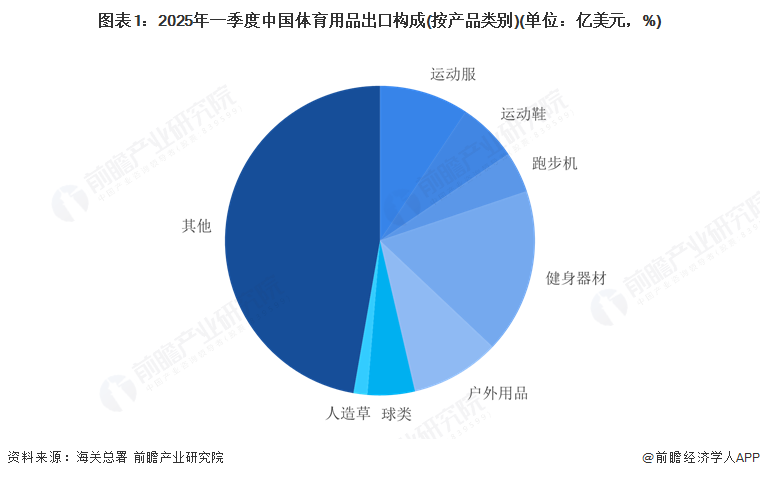
Core Viewpoint - The export scale of Chinese sportswear has recently declined, with significant fluctuations observed over the years, influenced by global trade policies and market competition [2][6]. Export Scale and Trends - In Q1 2025, the export value of sportswear from China reached $6.97 billion, making it a significant contributor to the sports goods export sector, second only to fitness equipment and outdoor products [1]. - The export value of sportswear from China was stable at around $2 billion from 2015 to 2019, but saw a sharp decline in 2020 due to the pandemic. A notable recovery occurred in 2021-2022, followed by a downturn in 2023-2024, with a 7.54% year-on-year decrease in the first four months of 2025 [2]. Major Export Destinations - The United States remains the largest market for Chinese sportswear, with an export value of $5.97 billion in 2024, accounting for 25.82% of total exports. The UK and Germany follow with $1.40 billion (6.05%) and $1.03 billion (4.45%) respectively [6][7]. - Other countries like Spain, Australia, and the Netherlands also contribute to the export market, while exports to Russia, Japan, and France have decreased [6]. Company Performance and International Strategy - Companies in the sportswear sector show varied performance in international markets. For instance, Jiasheng Group and Jialinjie have high overseas revenue shares of 62.27% and 85.17%, respectively, while Li Ning and 361 Degrees have less than 2% [8]. - Anta has established a significant presence in Southeast Asia and is expanding into the US and Europe, with 243 overseas stores by the end of 2024. Li Ning is more cautious in its international strategy, with overseas revenue accounting for less than 10% [9][12]. - Xtep focuses on the Southeast Asian low-end market, while 361 Degrees has expanded its sales network to 1,365 locations in the Americas and Europe, launching an independent overseas e-commerce site [12][13].

九富深耕港股十年,境内外一站式服务受青睐
Ge Long Hui· 2025-06-18 02:42
Group 1: Market Overview - The Hong Kong stock market has experienced a strong surge since the beginning of the year, with a significant increase in the number of IPOs and total fundraising amount from January to May, with 27 new stocks listed, marking a substantial year-on-year increase [1] - Multiple factors, including the implementation of various policies by the central and Hong Kong regulators and the continuous influx of domestic and foreign capital, have contributed to the robust performance of the Hong Kong stock market, further solidifying its status as a global financial center [1] Group 2: Company Profile - Jiufu - Jiufu has established itself as a leader in the financial public relations industry, successfully managing the first "A + H simultaneous issuance" and the first "full circulation issuance of H shares and A shares" in the domestic market [3] - The company has actively expanded into overseas markets, becoming the first domestic financial public relations company to set up a branch in Hong Kong, enhancing its cross-border service capabilities [3] - Jiufu has played a significant role in the Hong Kong IPO service sector, assisting 7 out of the 27 companies that have gone public this year, including Jiangsu Hongxin, which is recognized as the "first stock of Jiangsu supermarket" [3][4] Group 3: Client Base and Services - Jiufu's client base spans major sectors such as consumer goods, TMT, automotive manufacturing, and biomedicine, with notable projects including the IPO of China Resources Beverage, the largest drinking water company in China, and Jitu Express, the first express delivery company to go public [4] - The company has maintained long-term relationships with over 70 Hong Kong-listed companies, including major state-owned enterprises and industry leaders, with a significant proportion of clients having engaged Jiufu for over five years [5][6] - Jiufu's methodology and efficient operational model have made it a preferred partner for clients seeking strategic advice and overseas service implementation [6] Group 4: Future Outlook - According to Deloitte China, the Hong Kong market is expected to attract more large A-share listed companies, leading domestic enterprises, and overseas companies to go public, with an estimated 80 new stocks expected to be listed in 2025, further boosting fundraising activities [6] - Jiufu aims to continue its commitment to becoming the most respected capital market value operation service provider in China, assisting enterprises with global perspectives in attracting top-tier capital and achieving overseas capital operations [6]
中国跑鞋:把国际品牌卷入价格战的下半场
3 6 Ke· 2025-06-16 12:06
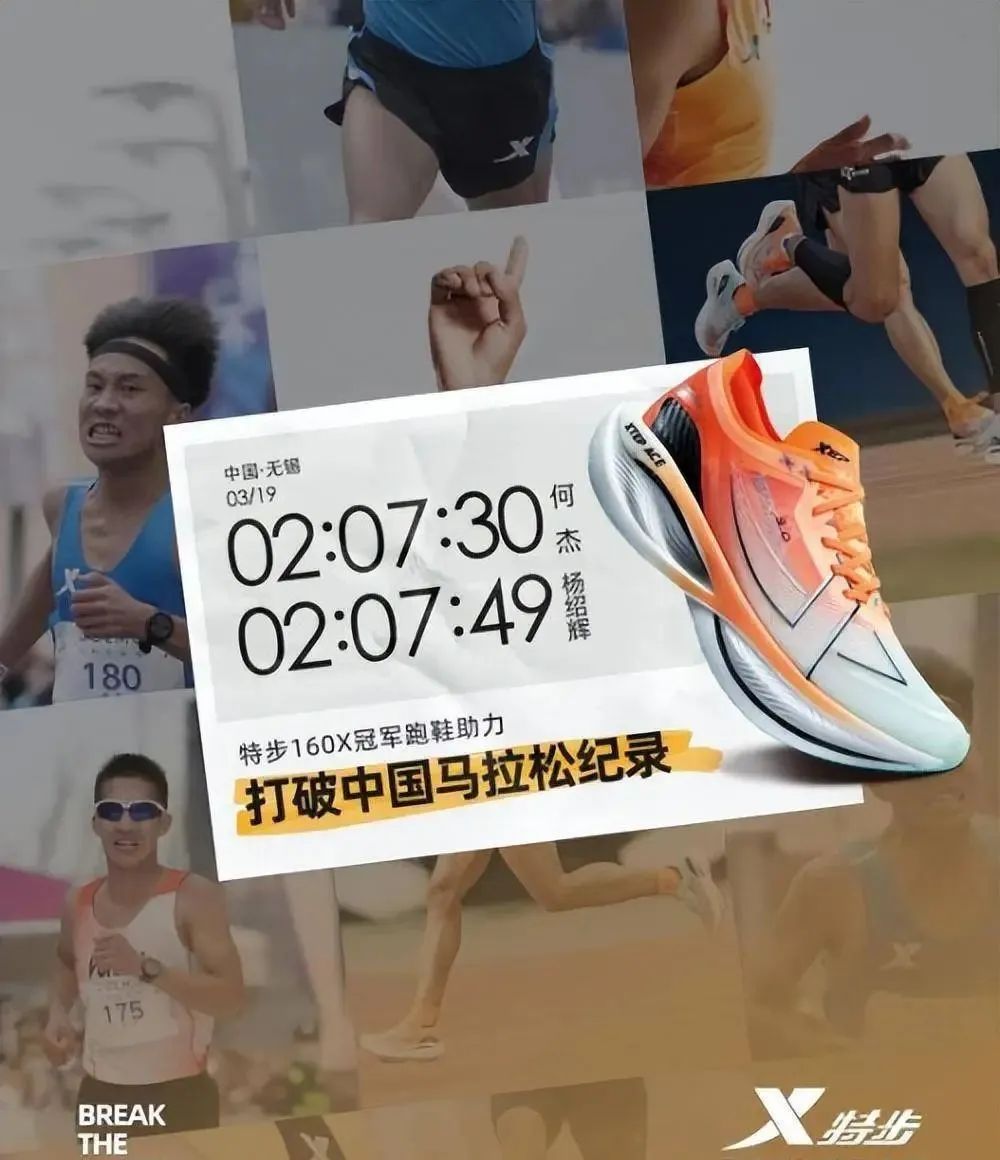
Core Insights - The article highlights the rise of domestic Chinese running shoe brands, particularly Xtep, which have gained significant market share and performance recognition, challenging established international brands like Nike and Adidas [1][9][25] Group 1: Market Performance - In the 2025 Xiamen Marathon, Xtep shoes had a wearing rate of 42.8%, while Nike's Vaporfly series accounted for only 19% [3] - Over 50% of the sub-three-hour finishers wore the Xtep 160X family, indicating a strong preference for domestic brands among elite runners [3][11] Group 2: Pricing and Value Proposition - International brands maintain high prices due to extensive marketing and brand history, with Nike spending over $1 billion annually on athlete endorsements, which constitutes 30% of its total marketing budget [5][7] - Domestic brands offer similar or superior performance at significantly lower prices, with Xtep's 160X 5.0 PRO priced at ¥2,299 compared to Nike's equivalent at ¥2,299, showcasing a price difference of 40%-60% for comparable performance [8][9] Group 3: Technological Advancements - Domestic brands have made significant technological advancements, such as Xtep's use of aerospace-grade PI fibers in carbon plates, enhancing durability and performance [12][15] - The Xtep ACE midsole technology boasts an energy return rate of 85%, surpassing Nike's 80%, and is produced using a unique 100% PEBA foaming technique [15][17] Group 4: Supply Chain and Innovation - The Chinese running shoe industry benefits from a highly efficient supply chain, allowing rapid prototyping and product iteration, which is significantly faster than international brands [20][21] - The collaborative ecosystem in regions like Jinjiang enables quick adjustments to designs and materials, fostering innovation and reducing costs [20][23] Group 5: Market Transformation - The shift from "Chinese manufacturing" to "Chinese innovation" is reshaping the global running shoe market, with domestic brands redefining value perceptions and competitive dynamics [25][27] - The article emphasizes that this transformation allows more runners, both professional and amateur, to access high-performance shoes at reasonable prices, democratizing the sport [25][27]



拼多多:把“消费降级”倒过来
雪豹财经社· 2025-06-15 11:54
Core Viewpoint - The article emphasizes that homogeneous competition leads to inefficiency and does not create new demand, highlighting the need for businesses to adapt to changing consumer preferences rather than relying on price competition [2][4][5]. Group 1: Homogeneous Competition and Market Dynamics - Homogeneous competition arises when businesses lower costs to compete on price, leading to a mismatch between supply and demand [2][4]. - The growth of online shopping in China has plateaued, with the penetration rate only increasing by about 2% from 2020 to 2024, indicating that the e-commerce sector has reached its demographic dividend peak [5]. - The overall growth rate of online retail has slowed, with a reported 8.3% year-on-year increase in physical goods online retail sales for the first ten months of 2024, marking a historical low [5][8]. Group 2: Successful Case Studies - Brands like "大黄蜂" and "缺牙齿" have found growth opportunities by aligning their products with consumer needs rather than competing solely on price, achieving significant sales increases [11][12]. - "缺牙齿" has seen an average annual sales growth of over 50%, demonstrating that understanding consumer demand can lead to success even in a slowing market [12]. Group 3: E-commerce Platform Dynamics - Pinduoduo excels at matching supply and demand, which is crucial for its success in the competitive e-commerce landscape [15][27]. - The platform has shifted from being a hub for white-label products to a space that accommodates brands positioned between white-label and well-known brands, creating a new market segment [19][21][27]. - Pinduoduo's initiatives, such as the "千亿扶持" plan, aim to support new quality merchants who can adapt to changing consumer trends and provide competitive products [26][27]. Group 4: Consumer Behavior and Market Opportunities - There is a growing demand for personalized products, and consumers are willing to pay a reasonable premium for items that meet their specific needs [21][25]. - The article suggests that businesses that can identify and respond to these evolving consumer preferences will find opportunities for growth in the current market environment [21][27].


25W24周观点:美国对部分钢制家电品类加征50%关税-20250615
Huafu Securities· 2025-06-15 09:58
Investment Rating - The report maintains an "Outperform" rating for the home appliance sector [7]. Core Insights - The U.S. has imposed a 50% import tariff on certain steel-based home appliances, effective June 23, which includes washing machines, dishwashers, refrigerators, ovens, dryers, freezers, kitchen garbage disposers, and welding racks. This tariff applies globally, with the exception of the UK, which faces a 25% additional tax. Companies using domestically sourced steel can benefit from exemptions [3][11][17]. - The tariff aims to protect the U.S. steel industry, potentially benefiting companies with domestic production capabilities, such as Haier, while having a limited impact on overall global production capacity in the short term [3][17]. Summary by Sections 1. Tariff Impact - The tariff will be assessed based on the value of steel components in appliances rather than the total product price, affecting products with higher steel content more significantly. For example, refrigerators may see an estimated total tariff of about 65% due to various tariffs combined [11][12][13]. 2. Market Trends - The home appliance sector experienced a decline of 1.4% this week, with specific segments like white goods and kitchen appliances seeing drops of 0.8% and 2.8%, respectively. Meanwhile, raw material prices for copper and aluminum changed by -1.4% and +2.2% respectively [4][24]. 3. Investment Recommendations - The report suggests focusing on several areas for investment: 1. Major appliances benefiting from trade-in programs, recommending companies like Midea Group, Haier, Gree Electric, Hisense, and TCL [18]. 2. The pet industry, which is expected to remain resilient, with recommendations for companies like Guibao Pet and Zhongchong Co [18]. 3. Small appliances and branded apparel, which may see a rebound in demand, with a focus on leading brands like Bear Electric and Supor [18]. 4. Electric two-wheelers, which are expected to improve in domestic sales, with recommendations for companies like Ninebot and Yadea [18]. 4. Global Manufacturing Dynamics - The report highlights that Chinese manufacturers maintain a significant advantage in global production, particularly in major appliances and tools, with recommendations for Midea, Haier, and others [19][23]. 5. Company Performance - The report tracks the performance of key companies in the home appliance sector, noting that Haier has substantial domestic production capacity in the U.S., which may mitigate the impact of tariffs compared to competitors with lower U.S. exposure [13][17].
纺织服装行业周报:重磅发布中期投资策略,关注纺服新成长方向-20250615
Shenwan Hongyuan Securities· 2025-06-15 07:15
Core Insights - The report emphasizes the acceleration of domestic demand recovery as a key investment theme for 2025, highlighting emerging growth directions in the textile and apparel industry [10][11] - The textile and apparel sector outperformed the market recently, with the SW textile and apparel index rising by 0.1% from June 9 to June 13, 2025, surpassing the SW All A index by 0.5 percentage points [4][10] - The report identifies specific companies and sectors within the textile and apparel industry that are expected to benefit from the recovery, including outdoor sports brands and home textiles [10][11] Industry Performance - The textile and apparel sector showed a mixed performance, with the SW apparel and home textiles index declining by 1.0% and the SW textile manufacturing index down by 1.4%, both underperforming the SW All A index [4][10] - Recent industry data indicates that from January to April 2025, the total retail sales of clothing, shoes, hats, and knitted textiles reached 493.9 billion yuan, reflecting a year-on-year growth of 3.1% [21][24] - In terms of exports, from January to May 2025, China exported textiles and apparel worth 116.67 billion USD, a year-on-year increase of 1.0%, with textile yarns, fabrics, and products accounting for 58.48 billion USD, up 2.5% [27][28] Company Recommendations - The report recommends several companies for investment, including Anta Sports, Bosideng, and 361 for outdoor sports, as well as home textile brands like Luolai Life and Mercury Home Textiles [10][11] - Notable mentions include Nobon Co., which is highlighted for its growth potential in the personal care and home cleaning sectors, and Zhejiang Natural, which is recommended for its outdoor equipment manufacturing [10][11] - The report suggests that large OEMs like Huayi and Shenzhou have already established independent dual-circulation production layouts, making them less susceptible to tariff impacts and positioning them for growth [9][10] Market Dynamics - The report notes that the recent recovery in textile exports is primarily due to the resumption of previously paused orders rather than a significant increase in new orders, indicating a structural rather than a broad-based recovery [9][10] - The report highlights the importance of domestic consumption recovery as a critical driver for the textile and apparel sector in 2025, with various local governments implementing measures to stimulate consumer spending [10][11] - The report also discusses the impact of international trade dynamics, particularly the ongoing challenges posed by unilateral tariffs from the U.S. and the recent legal rulings affecting these tariffs [8][9]
【港股收评】三大股指齐跌!科网股领跌,医药股逆市上扬
Jin Rong Jie· 2025-06-12 09:20
Market Overview - The Hong Kong stock market experienced a collective decline on June 12, with the Hang Seng Index falling by 1.36%, the Hang Seng China Enterprises Index down by 1.53%, and the Hang Seng Tech Index decreasing by 2.2% [1] - Various sectors, including short video, cloud computing, and tech stocks, saw significant drops, with Kuaishou-W down 5.87% and Alibaba-W down 3.21% [1] Sector Performance - The consumer sector faced pressure, with notable declines in beer, sports goods, and airline stocks. Budweiser APAC dropped 6.39%, while Meituan-W fell by 1.95% [1] - The automotive industry, including lithium batteries and smart driving concepts, also saw a downturn, with China Graphite down 12.36% and Xpeng Motors-W down 6.66% [2] - Chip and robotics stocks experienced declines, with Horizon Robotics-W down 3.9% and SMIC down 2.04% [2] Gainers - Pharmaceutical stocks showed resilience, with China Biologic Products rising by 19.29% due to anticipated significant business developments [3] - Other biopharmaceutical companies like Junshi Biosciences and Zai Lab also saw substantial gains, with increases of 12.35% and 8.65% respectively [3] Gold and Precious Metals - Gold and precious metals stocks rose, driven by global gold purchasing trends and rising gold prices. Zijin Mining increased by 4.93% [4] - The global demand for gold as a reserve asset has surged, with central banks increasing their gold holdings amid geopolitical tensions [4] Notable Stocks - Cloudfin Financial, associated with Ant Group, surged by 54.24% following reports of plans to apply for stablecoin licenses in Singapore and Hong Kong [4] - Jiuyuan Gene saw a remarkable increase of 43.73%, marking its fourth consecutive day of gains [5]
2025年纺织服装行业中期投资策略:内需复苏加速窗口,新成长方向浮现
Shenwan Hongyuan Securities· 2025-06-10 02:14
Group 1 - The report highlights the acceleration of domestic demand recovery, indicating a significant investment opportunity in the textile and apparel industry for 2025 [3][4] - The SW textile and apparel index increased by 5.5% from January 1 to June 6, 2025, outperforming the Shenwan All A index by 3.6%, ranking 11th among all industries [4][8] - The report identifies several high-growth areas, including high-performance outdoor apparel, discount retail, sleep economy, and maternal and infant consumption, with specific company recommendations [4][5][24] Group 2 - The outdoor apparel market is projected to reach 102.7 billion yuan in 2024, growing by 17% year-on-year, with a low current penetration rate of 25%, indicating substantial growth potential [4][29] - The discount retail sector is highlighted as a resilient area within the consumer market, with brands like Hailan Home showing strong performance through their JD Outlet model [43][46] - The report emphasizes the importance of core manufacturing capabilities in response to tariff changes, suggesting that companies with overseas expansion capabilities will benefit [4][5][24] Group 3 - The textile manufacturing sector is experiencing a mixed performance due to fluctuating tariffs, but leading companies maintain their competitive advantages [4][5] - The report notes that the domestic retail environment is improving, with a 4.7% year-on-year increase in total retail sales in the first four months of 2025, and a 3.1% increase in apparel retail sales [20][23] - The report suggests that the high-performance outdoor apparel segment is characterized by a fragmented market, with the top 10 brands holding only 27.2% market share, indicating opportunities for growth among domestic brands [33][36]
“童装第一股”安奈儿连亏5年后 创始人计划出让控股权
Zhong Guo Jing Ying Bao· 2025-06-09 10:15
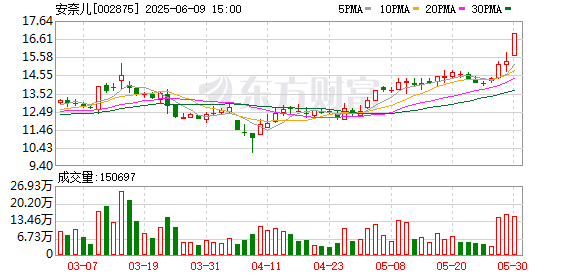
Core Viewpoint - The founder couple of Anner, known as the "first stock of children's clothing," is planning to transfer 13.03% of their shares, relinquishing control of the company amid continuous losses over the past five years totaling over 500 million yuan [2][11]. Company Overview - Anner has experienced five consecutive years of losses, with total losses exceeding 500 million yuan, and has not successfully completed any mergers or acquisitions during this period [2][11]. - The company's revenue peaked at 1.327 billion yuan in 2019 but has since declined to 639 million yuan in 2024 [11]. - The founders' shareholding has decreased from 59.59% at the time of the company's IPO in 2017 to 27.38% after recent share transfers [3][5]. Shareholding Changes - The founders plan to transfer control to an investment management company, with the specific details of the transfer yet to be finalized [2][3]. - The couple has previously engaged in multiple share reductions, cashing out over 550 million yuan through various transactions [5][6]. Market Position and Competition - Anner is not considered a leader in the children's clothing market, with competitors like Semir and Anta achieving revenues exceeding 10 billion yuan [11][12]. - The company has faced significant challenges in expanding its store network, closing more stores than it opened in 2024 [12]. Strategic Insights - Analysts suggest that the new ownership could bring opportunities for growth, but the company must address its weaknesses in market positioning, channel expansion, and product innovation to compete effectively [13][14]. - The children's clothing market in China is projected to grow to 276.8 billion yuan by 2025, indicating potential for brands like Anner to capture market share if they adapt strategically [14].

“新晋江系”在拼多多突围,高质价比潮鞋圈粉年轻人
Nan Fang Du Shi Bao· 2025-06-09 00:22
Core Viewpoint - The rise of new brands from Jinjiang, leveraging the support of platforms like Pinduoduo, is reshaping the competitive landscape in the footwear industry, particularly in niche markets such as children's shoes and casual footwear [1][2]. Group 1: New Brand Development - New brands from Jinjiang are rapidly growing by developing their own brands and capitalizing on the rise of Pinduoduo, focusing on high quality and cost-effectiveness to attract consumers [1]. - These brands are strategically avoiding direct competition with established players like Anta by targeting niche segments such as children's shoes and casual footwear [1][3]. Group 2: Market Challenges - Traditional manufacturers like Dahuangfeng have faced stagnation in online sales growth since 2021 due to increased competition from established brands entering the children's shoe market [3]. - The competitive landscape in Jinjiang has intensified as major brands expand into new categories, impacting smaller players' growth [3][4]. Group 3: Transformation and Strategy - Many small and medium-sized manufacturers in Jinjiang are being forced to transform their business models, shifting from wholesale to online retail to adapt to changing market dynamics [4][5]. - Companies are increasingly focusing on brand establishment and online presence to capture market share, with some opting for acquisitions to revitalize existing brands [5][6]. Group 4: Pinduoduo's Role - Pinduoduo's initiatives, such as the "Billion Support Plan," are providing significant resources to support new quality brands, helping them reduce operational costs and enhance their market competitiveness [8]. - The platform's aggressive marketing and support strategies have led to increased sales for brands like Gongniu and Dahuangfeng, with expectations of reaching sales targets exceeding 100 million yuan [9]. Group 5: Future Outlook - The emergence of new brands and the continued support from platforms like Pinduoduo suggest a promising future for Jinjiang's footwear industry, with expectations of more brands entering the market and achieving significant sales growth [2][10].