
GEV

Search documents
FPX: High-Beta Growth Tech Will Persist
Seeking Alpha· 2025-10-04 10:16
Group 1 - The First Trust US Equity Opportunities ETF (NYSEARCA: FPX) aims to provide investors exposure to the 100 largest, most liquid, and best-performing US companies that have recently been listed [1] - The ETF is designed to capture investment opportunities in newly public companies, focusing on those with strong performance metrics [1] Group 2 - Michael Del Monte, a buy-side equity analyst with over 5 years of experience, emphasizes the importance of considering the entire investment ecosystem rather than evaluating companies in isolation [1]


AIDC燃气轮机:燃气轮机海外需求强劲,中国供应链加速切入
2025-09-15 14:57
Summary of Gas Turbine Industry Conference Call Industry Overview - The global gas turbine market is projected to reach approximately $20 billion in 2024, with a high market concentration where Mitsubishi Heavy Industries, Siemens Energy, and GEV hold over 75% of the market share, and about 90% in the heavy-duty segment above 50 MW [1][6][11] - The global gas turbine installed capacity is expected to show cyclical fluctuations closely tied to oil and gas prices, with an estimated capacity of 70 GW in 2024, increasing to 80 GW from 2025 to 2027, and a significant rise in demand from data centers anticipated to add around 20 GW annually from 2028 to 2030 [1][7][10] Key Insights and Arguments - The manufacturing cost structure of gas turbines indicates that blades account for the largest share at 35%, followed by control systems at 18%, and disks at 17% [1][8] - The rapid growth of electricity consumption in U.S. data centers is expected to exceed 10% of total electricity consumption by 2028, with gas turbines likely becoming the primary power source due to the inability of renewable energy sources to meet stable demand in the short term [1][10] - Cumulative demand for gas turbines in U.S. data centers is projected to exceed 20 GW between 2025 and 2028, with global demand and installed capacity expected to reach around 50 GW during the same period [1][11] Competitive Landscape - The core supply chain for gas turbines is predominantly overseas, with companies like PCC, Howmet, IHI, and GEV leading the turbine blade market, while Chinese suppliers like Yingliu and Wanze have smaller scales [1][9] - Chinese companies such as Yingliu (turbine blades), Haomai Technology (heavy-duty turbine steel components), and Hangya Technology (compressor blades) are positioned to benefit from market growth and expand their market share [1][4][14] Development and Opportunities for Chinese Companies - China's gas turbine technology is relatively underdeveloped for capacities above 30 MW, with more maturity in capacities below 30 MW due to the country's abundant coal resources [1][5] - Chinese enterprises have opportunities to penetrate the global supply chain, with Yingliu holding substantial orders and Haomai Technology expected to maintain high growth rates in the coming years [1][14][16] Future Outlook - Major industry players like GEV, Siemens Energy, and Mitsubishi Heavy Industries anticipate sustained demand from data centers at least until 2030, with GEV planning to expand production significantly to meet this demand [1][13] - Companies like Jereh and Linde are also focusing on the power generation sector, with Jereh establishing a team dedicated to the U.S. data center market [1][17][18] Noteworthy Chinese Enterprises - Key Chinese companies to watch in the gas turbine manufacturing sector include Linde, Haomai Technology, Jereh, Hangyu Technology, Hangya Technology, and Wanze, all of which are expected to benefit from the increasing demand driven by AI computing power [1][19]
AIDC催化产业持续高景气,国内燃机部件龙头空间打开
2025-09-10 14:35
Summary of Conference Call on Gas Turbine Industry Industry Overview - The gas turbine industry is experiencing significant growth driven by AI demand and increased capital expenditures from global and domestic cloud service providers [1][2][4][5][6] Key Points Capital Expenditure Growth - Global cloud service providers' capital expenditure is projected to reach $330 billion in 2024, a 22% year-over-year increase [1][5] - The four major North American cloud service providers (Amazon, Microsoft, Google, Meta) will see a combined capital expenditure of $201.9 billion, up 56% year-over-year, with a 73% increase in the first half of the year [1][2][5] - Domestic cloud service providers, including Alibaba, Tencent, and Baidu, are expected to increase capital expenditure by 105% to $26.5 billion in 2024 [1][6] Market Dynamics - The global gas turbine market is valued at approximately ¥200 billion, dominated by Siemens, GEV, and Mitsubishi Heavy Industries, which hold around 80-90% market share [1][3] - Global gas turbine sales are expected to reach 55.5 GW in 2024, a 38% increase from 2023 [4] Profitability and Order Backlog - Starting in 2023, the North American gas price index has been rising, leading to improved gross margins and net profits for major gas turbine companies from 2024 onwards [1][7] - GEV's backlog has extended to 2028, with new orders in 2024 expected to grow by 113% to 20.2 GW, indicating a strong demand [7] - Siemens and Mitsubishi Heavy Industries also report significant order backlogs, with new orders reflecting a 1:2 ratio [7][8] Production Expansion Plans - Major companies are planning to expand production capacity, with Siemens aiming for a 30% increase over the next two years and Mitsubishi Heavy Industries planning to double its capacity [8] Upstream Component Market - The upstream component market, particularly high-temperature alloy blades, is dominated by U.S. companies like Howmet and PCC, which have high barriers to entry and strong profitability [2][9] - Howmet's profitability has significantly improved in Q2 2024, indicating a supply-demand imbalance and rising prices [9] Opportunities for Domestic Companies - Chinese companies, such as Yiniu Co. and Haomai Technology, are positioned to benefit from overseas supply shortages and concentrated competition [10] - Other domestic companies to watch include Lian De Co., Fangya Technology, Dongfang Electric, and others, which are expected to experience rapid growth due to their R&D investments [10]
风电:Q2开始兑现业绩,景气加速向上
2025-08-18 01:00
Wind Power Industry Conference Call Summary Industry Overview - The wind power industry is experiencing a significant performance rebound starting from Q2 2025, driven by a rebound in bidding prices since Q3 2024, with companies like XinQiangLian reporting over 500% year-on-year growth in Q2 2025 [1][2] - Domestic wind power demand is robust, with an expected installed capacity of at least 115GW by the end of the 14th Five-Year Plan, comprising 105GW from onshore and 10GW from offshore wind [1][2] - The change in bidding rules by state-owned enterprises and the anti-involution initiative have led to a price increase of over 10%, enhancing industry profitability [1][2] Key Points on Company Performance - Wind turbine companies are seeing significant profit recovery due to rising bidding prices and declining raw material costs, with potential net profit margin recovery of 3-5 percentage points [4][8] - Recommended companies include Dongfang Cable, Haili Wind Power, and Daikin for components, as well as Yunda, Mingyang, and Goldwind for wind turbine manufacturing [4][8] - The European renewable energy market has raised its installation targets, expecting a cumulative capacity of 300GW by 2050, with offshore wind power projected to grow at a compound annual growth rate of 30% from 2025 to 2030 [5][6] Opportunities and Challenges in Overseas Markets - Chinese wind power companies face both opportunities and challenges in overseas markets, particularly in Europe, where high installation targets and prices exist [5][6] - The average selling price in Europe is significantly higher than in China, with Vestas pricing at approximately €1.2 per watt (around ¥9,000), indicating substantial profit potential for secured overseas orders [6] - Challenges include high market entry barriers in Europe, but regions like the Middle East and Southeast Asia are more receptive to Chinese orders, offering better profitability [6] Recent Developments - In the domestic market, several offshore wind projects have commenced, with expectations of reaching 10GW of installed capacity in 2025, more than doubling from 2024 [7] - The Central Financial Committee has prioritized offshore wind power as a key area for marine industry development, supporting deep-sea economic growth with relevant policies [7] - Chinese wind turbine companies have made significant progress in projects in the UK and France, with favorable conditions such as increased bidding prices and government support for local manufacturing [7] Industry Concerns - Key concerns include the valuation and profit outlook for wind turbine companies, with many currently in a profit rebound phase [8][9] - The recent issuance of Document No. 136 has created uncertainty regarding future wind power prices, leading to a temporary halt in wind farm transactions, although acceptance of wind farms remains high [8] - There are worries about rising component prices affecting turbine profitability; however, the actual price increases have been limited, and the cost performance is expected to remain stable [8] - Concerns about demand in 2026 are mitigated by positive bidding trends, particularly in offshore wind, indicating a sustained growth cycle for the next two to three years [8]
招商证券:海外电力装备企业新增订单有所放缓 数据中心及燃机需求仍强劲增长
智通财经网· 2025-08-14 07:42
Group 1: Overall Industry Performance - The revenue and profit margins of power equipment companies continue to grow, with most companies having a substantial backlog of orders [1] - New order growth is slowing down, with Siemens Energy's new orders increasing by 24% year-on-year, while GEV's new orders declined by 32% due to high base effects and project cancellations [1][3] - Companies like Eaton and Mitsubishi Electric are experiencing a decline in new orders, but their base orders remain strong [1] Group 2: Data Center Demand - Eaton's data center orders in the U.S. have surged by 55%, supported by acquisitions of modular power shell manufacturers and solid-state transformer technology companies [2] - Schneider's data center sales and potential demand have also seen double-digit growth, contributing to overall positive sentiment in the data center sector [2] - GEV anticipates that the accelerating demand for data centers will support the growth of its electrification business throughout the year [2] Group 3: Gas Turbine Orders - GEV's gas turbine new orders have nearly doubled year-on-year, with total backlog capacity reaching 55 GW, expected to hit 60 GW by year-end [3] - Siemens Energy's new orders also grew by 17% year-on-year, with approximately 3 GW of new orders coming from data centers [3] - Both GEV and Siemens Energy are experiencing rising prices for gas turbines, with backlogs amounting to 3-4 times their 2024 revenue [3] Group 4: Long-term Outlook - The overseas electrical equipment market is expected to maintain a high level of prosperity, driven by AI data centers and infrastructure upgrades in Europe and the U.S. [4] - Companies are strategically positioning themselves to capitalize on the growing demand for data centers and the need for equipment upgrades as renewable energy penetration increases [4]


应流股份20250807
2025-08-07 15:03
Summary of Conference Call for 应流股份 Industry Overview - The global AI data center capital expenditure is surging, particularly in Europe and the US, leading to a strong demand for gas turbines due to insufficient grid stability, with natural gas becoming the primary energy source [2][5] - The global gas turbine market is highly concentrated, with GEV (USA), Siemens Energy (Germany), and Mitsubishi Heavy Industries (Japan) holding 80%-90% market share [2][6][8] - The gas turbine industry is expected to see a market space of approximately $28.1 billion (around 200 billion RMB) in 2024 [8] Key Points and Arguments - In 2024, global cloud infrastructure service spending is projected to reach $330 billion, a year-on-year increase of 22%, with the four major US CSPs (Google, Amazon, Meta, Microsoft) increasing capital expenditure by 75% [2][5][7] - GEV's order backlog has reached levels sufficient to sustain operations until 2028, with a 113% year-on-year increase in new gas orders for 2024 [2][6][10] - Siemens Energy reported a 60% year-on-year increase in new gas business orders for the first half of 2025, indicating a strong demand trend [2][9] - The gas turbine blade industry is experiencing intense competition, with companies like Howmet and PCC expanding slowly, while Homate's gross margin has improved due to increased demand [2][11] Company-Specific Insights - 应流股份 is focusing on the gas turbine blade sector as its primary growth curve for the next three years, with potential expansion into the aerospace engine blade market in the future [3][12] - The company has seen explosive order growth since the second half of last year, reflecting strong downstream demand and price increases [3][15] - 应流股份 has been approved for convertible bond issuance to expand production capacity, which is expected to significantly enhance blade output and revenue potential in the coming years [3][15] Additional Important Information - The overall industry is experiencing high demand across various dimensions, including AI data center capital expenditure and gas turbine blade manufacturing, with significant improvements in gross margins and performance [2][14] - 应流股份 is well-positioned to capitalize on market opportunities due to the slow expansion of competitors and the high energy consumption and pollution associated with casting processes [3][13] - Market valuation concerns exist for 应流股份, currently estimated at 40 times earnings, but with significant growth potential projected over the next three years [2][16]

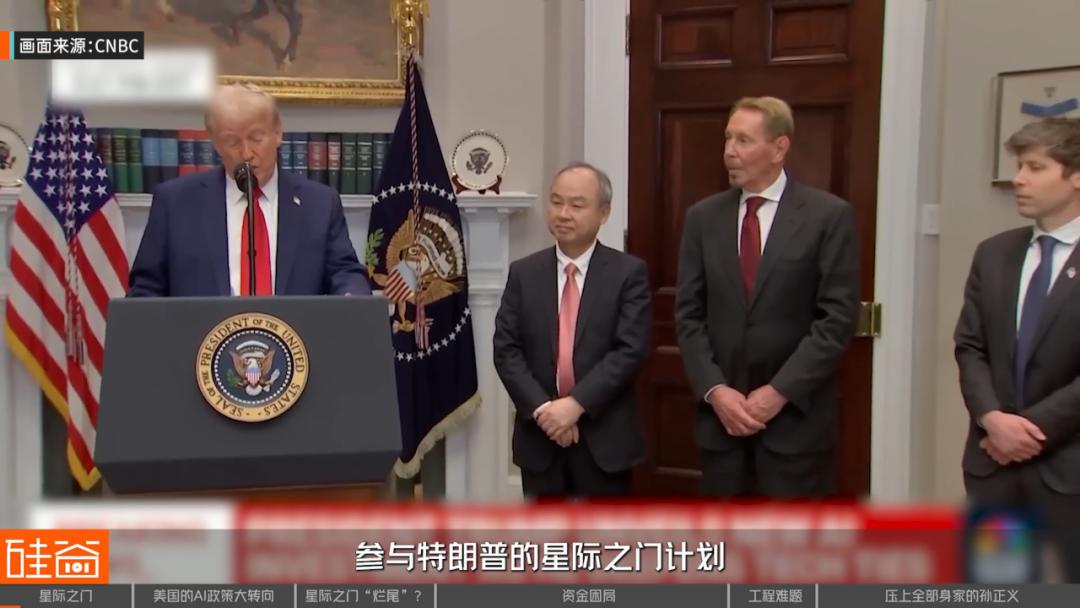
星际之门的烂尾危机:盟友分歧、融资困局与工程死结
3 6 Ke· 2025-07-29 03:30
Group 1 - The "Stargate" project, announced by Trump with a $500 billion investment, has made little progress in six months, with its goals significantly reduced [3][15][16] - The project aims to build a nationwide AI infrastructure in the U.S., involving major players like OpenAI, SoftBank, Oracle, and the UAE's MGX fund [7][8][31] - OpenAI has signed a $30 billion data center agreement with Oracle, bypassing SoftBank, highlighting internal conflicts within the "Stargate" initiative [18][24] Group 2 - Trump's AI policies have reversed many of Biden's regulations, emphasizing the importance of AI as a national strategy [8][10][11] - The "Stargate" plan is compared to the 19th-century U.S. railroad construction, aiming to establish a comprehensive data center network across the country [13][20] - The project faces significant funding challenges, with SoftBank and OpenAI's combined investments only covering a fraction of the total required [20][24][25] Group 3 - The engineering challenges include securing sufficient power and resources for the proposed data centers, which require massive amounts of electricity [27][28] - SoftBank's founder, Masayoshi Son, has heavily invested in the project, betting his fortune on its success despite past failures [23][30] - The overall AI capital expenditure among major tech companies has surged, indicating a broader trend of investment in AI infrastructure [33]


机械行业周报:看好燃气轮机、机器人、工业母机和工程机械-20250727
SINOLINK SECURITIES· 2025-07-27 07:29
Investment Rating - The report maintains a positive outlook on the mechanical equipment sector, with specific recommendations for companies such as Yingliu Co., Sany Heavy Industry, XCMG, Zoomlion, LiuGong, and Hengli Hydraulic [11]. Core Insights - GEV's new gas turbine orders increased by 35.56% year-on-year in the first half of 2025, indicating a strong demand in the gas turbine industry [25]. - Tesla's humanoid robot, Optimus Gen3, is set to launch a prototype within three months, with production expected to start in early 2026, which is anticipated to positively impact the robotics industry [25]. - The commencement of the Yaxia Hydropower Station project, with an estimated total investment of 1.2 trillion yuan, is expected to accelerate the recovery of domestic engineering machinery sales [25]. - The "Industrial Mother Machine+" initiative is driving domestic substitution and industrial upgrades, particularly in sectors like aerospace and new energy vehicles [25]. - The report highlights a robust demand for engineering machinery, with excavator sales showing resilience and growth in both domestic and international markets [30]. Summary by Sections Market Review - The SW Mechanical Equipment Index rose by 2.56% over the past week, outperforming the CSI 300 Index, which increased by 1.69% [14][15]. Key Data Tracking - General machinery sector remains under pressure, while engineering machinery shows a steady upward trend with excavator sales increasing by 13.3% year-on-year in June 2025 [23][30]. - The gas turbine sector is experiencing a robust upward trend, with GEV's new orders indicating a significant recovery [50]. Industry Dynamics - The report notes a stable growth in railway equipment investments, maintaining around 6% growth in 2025 [39]. - The shipbuilding sector is showing signs of marginal improvement after a period of decline, with new ship price indices stabilizing [41]. - Oil service equipment is showing signs of bottoming out, with global rig counts increasing, indicating a recovery in oil service demand [42].





美国缺电预期走强,重申核能机遇
HTSC· 2025-07-24 15:42
Investment Rating - The report maintains an "Overweight" rating for the nuclear energy sector in the U.S. and a "Buy" rating for specific companies such as KAP and CGN Mining [1][5][12] Core Insights - The expectation of electricity shortages in the U.S. is strengthening, with the PJM electricity market's recent capacity auction clearing at the maximum level, highlighting concerns over electricity supply and the need for base-load power sources [1][2] - The U.S. government, under the "AI National Policy," emphasizes the importance of energy infrastructure development, including nuclear fission and fusion technologies, positioning nuclear energy as a critical driver for economic growth and AI development [2][3] - Various stakeholders in the U.S. are increasingly supportive of new nuclear power projects, with significant announcements from energy developers and state officials indicating a shift from strong expectations to tangible developments in nuclear capacity [3] Summary by Sections Electricity Supply and Demand - The U.S. Department of Energy's report indicates an expected addition of 101 GW of electricity load by 2030, while only 22 GW of base-load capacity is planned, revealing a significant gap in electricity supply [1] - The PJM market's capacity auction results show a price of $329.17/MW-day for 134.3 GW of base-load power, a 22% increase from the previous year, reflecting heightened electricity shortage expectations [1] Nuclear Energy Development - The U.S. nuclear energy sector is poised for revival, with new projects and expansions being planned, including applications for new AP1000 reactors and commitments from major operators to advance nuclear projects [3][5] - The report highlights the strategic importance of nuclear energy in the context of U.S. economic and technological advancements, particularly in relation to AI [2] Investment Recommendations - Recommended stocks include CGN Mining and KAP, with additional mentions of companies across the nuclear energy supply chain, such as Cameco, Doosan Energy, and GE Vernova [5][8] - The report projects significant profit growth for KAP, with expected net profits of 649, 874, and 1,151 million for 2025-2027, respectively, and a target price of $58.91 per share [9]
应流股份20250716
2025-07-16 15:25
Summary of Conference Call for Yingliu Technology Industry Overview - The demand for gas turbines, optical modules, and PCBs is driven by large-scale investments in overseas data centers, positively impacting related US stock sectors [2][4] - The domestic military aviation engine sector is expected to see growth in new model deliveries despite 2025 being a small year for military products [2][6] - The domestic civil aviation engine market exceeds 100 billion RMB, currently reliant on imports, with domestic engines like the Changjiang series maturing [2][6][7] - The global market for civil aviation engines is highly concentrated, dominated by GE Aviation, Pratt & Whitney, and Rolls-Royce, with high demand but limited delivery capacity [2][7] Company Insights - Yingliu Technology has diversified its operations across military engines, gas turbines, oil and gas, mining, and nuclear power, establishing a platform development model [3][9] - The company’s order backlog increased from 150-200 million RMB at the end of Q3 last year to 1.2 billion RMB by the end of Q1 this year, indicating strong demand [3][9] - Recent long-term contracts with Siemens and other overseas clients extend production schedules to 2028-2029, expected to significantly boost future performance [3][10] Financial Performance - The company has maintained high R&D investment levels since 2017, averaging 300-400 million RMB annually, with capital expenditures rapidly increasing to 4.5 billion RMB [3][11] - The nuclear power business has shown rapid growth, with expectations of significant order releases in the next two to three years, maintaining a growth rate of around 20% [3][12][14] Future Prospects - The company is entering a harvest period, with a strong order book and expected profitability improvements in Q3 [3][13] - The low-altitude sector is being fully developed, with large orders signed in the first half of the year, anticipated to turn from losses to profits in the coming years [3][15] - The nuclear fusion business is also being explored, with collaborations for materials and equipment development, providing additional growth potential [3][14] Key Contracts and Collaborations - Significant contracts signed with major players like Siemens and GEV reflect the increasing demand for gas turbines and the need for domestic companies to support main engine manufacturers [3][8][10] Conclusion - Yingliu Technology is well-positioned for growth with a diversified portfolio, strong order backlog, and strategic investments in R&D and capital expenditures, indicating a positive outlook for future performance across various sectors [3][13][15]