地平线

Search documents
国产“硬核”成果登场,千款国产汽车芯片集中亮相
Bei Jing Ri Bao Ke Hu Duan· 2025-04-28 14:23
4月27日,2025上海国际汽车工业展览会中国芯展区(以下简称"中国芯展区")正式向公众开放,上千 款国产汽车芯片集中亮相。 汽车芯片应用可视化透明车模、国产汽车芯片网红打卡墙、填补国内高端车载以太网网络芯片空白的国 产芯片……在展区里,国产芯片形成了一道靓丽的"硬核"风景。 在车展展区的活动舞台,东土科技孵化并入股的神经元公司发布了全自主研发的国产车规级交换机芯片 ——KD6610系列,填补了国内高端车载以太网网络芯片空白。据悉,神经元此前推出的KD6630作为国 内首款车规级自主可控以太网交换芯片,已经开始在汽车产业中发挥重要作用。国家新能源汽车技术创 新中心此前向神经元公司提出采购10万片KD6630车规Switch芯片,这一订单标志着该国产芯片正式进 入定点上车阶段。在车展期间,该芯片还获得了由中国汽车芯片联盟等机构颁发的"2025年度影响力汽 车芯片"奖。 活跃在上海车展的芯片企业还有不少,从专注于车规级智能汽车计算芯片的国内头部企业,如地平线、 黑芝麻智能等,到国际芯片巨头英特尔、高通等,均带着最新产品亮相。 随着汽车智能化、网联化程度的不断提高,汽车芯片市场需求持续增长。相关机构预测,未来几年全 ...
L3商业化元年,智能驾驶"急刹车"
3 6 Ke· 2025-04-28 10:33
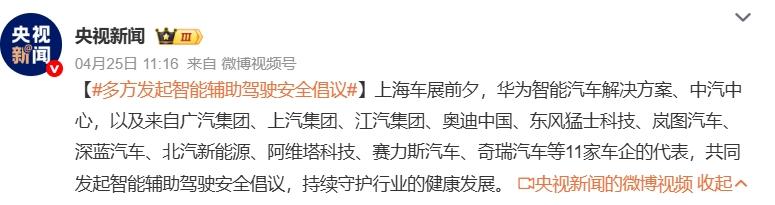
Core Viewpoint - The automotive industry is shifting its narrative from "intelligent driving" to "assisted driving," emphasizing safety and realistic capabilities over exaggerated claims [1][4][22]. Group 1: Industry Trends - During the recent Shanghai International Auto Show, companies like Deep Blue Automotive and BYD have downplayed their previous "high-level intelligent driving" claims, opting for terms like "assisted driving" instead [1][4]. - Key terms such as "safety redundancy," "scene optimization," and "standardized promotion" have emerged as focal points in consumer discussions, indicating a shift towards verifying actual reliability rather than just flashy features [2][4]. Group 2: Regulatory Developments - The Ministry of Industry and Information Technology of China has emphasized the need for automotive manufacturers to adhere to strict guidelines regarding the promotion and testing of intelligent driving systems, aiming to eliminate misleading advertising [4][22]. - New regulations in cities like Beijing and Wuhan have been introduced to clarify responsibilities in the event of accidents involving L3-level autonomous vehicles, which is expected to increase consumer confidence in using such technologies [18][20]. Group 3: Consumer Awareness and Education - There is a growing concern that consumers are not adequately educated about the limitations and proper use of intelligent driving systems, leading to dangerous misconceptions [7][9]. - Many consumers report that sales representatives do not provide sufficient information about the operational boundaries and safety measures of intelligent driving features, which can create a false sense of security [7][9]. Group 4: Investment and Market Dynamics - The investment enthusiasm for intelligent driving technologies peaked in 2021 but has since declined as stakeholders recognize the complexities involved in transitioning from "intelligent driving" to "fully autonomous driving" [11][12]. - Companies like Xpeng and Huawei are actively pursuing L3-level intelligent driving solutions, with plans for commercial rollout in the coming years, indicating a strategic pivot towards more achievable goals in the market [18][22]. Group 5: Technical Challenges - The industry faces significant technical hurdles in achieving true autonomous driving, with current systems still far from being able to replace human drivers effectively [16][17]. - The limitations of existing algorithms and the need for extensive testing and validation highlight the gap between current capabilities and consumer expectations [14][16]. Group 6: Future Outlook - The shift towards a more regulated and safety-focused approach in the intelligent driving sector is seen as a necessary evolution for sustainable growth [23]. - As the industry moves away from "function over safety," there is potential for a more mature market that balances technological advancement with consumer education and regulatory compliance [23].

理想汽车2024年至今的变化
数说新能源· 2025-04-28 08:10
一、去年复盘得出的结论 去年5月份,用李想本人的思维框架复盘过一次MEGA,总结有这么几点问题: 1、违背了安全感底线原则 面对民间广泛传播的1500+1500、大螺栓等安全质疑,理想从始至终都没做过正面回应。而彼时,华为 正用主动安全能力拿下了小鹏经营多年的国内智驾第一心智,并将"安全就是最大的豪华"这一理念唱响 全国、深入人心。 2、违背了旗舰产品价值感、向往感原则 MEGA作为旗舰产品,相对自家的L系列,优势极其有限!同款小电视、二排左侧没有小桌板、没有电 吸/电动门、城市几乎没有超充站…… L9有的配置旗舰产品MEGA不一定有,MEGA有的L9基本都有,给不到新的情绪价值、拉不起更高的 向往感。 当时不少能接受外观的人看了实车后,普遍得出一个结论:这个价不值。 3、全行业树敌、急于求成 当时李想本人、理想的几个KOL,输出了大量的暴论,跟踪过理想的都知道。李想本人、理想公司以 及理想的KOL,包括相信李想的人,都陷入了颅内狂热高潮的状态。 4、节奏全乱套、销售脱离一线。 题外话:本人早前对OKR、矩阵组织就有一定了解,所以当李想在2023年初的汽车百人大会大谈理想 组织架构心得时,本人一度以为理想内部 ...

2025上海车展:超20家“闯”入整车馆,供应商走向台前
Bei Jing Shang Bao· 2025-04-28 05:43
Core Insights - The automotive industry is undergoing a transformation with the rise of new energy vehicles and smart driving technologies, leading to a shift in the roles of supply chain companies [1][3][4] Group 1: Industry Trends - The 2025 Shanghai Auto Show features a significant increase in the area dedicated to automotive technology and supply chains, now accounting for nearly one-third of the exhibition space [1][2] - A total of 23 suppliers have entered the vehicle exhibition area, marking an increase of 16 companies compared to the 2021 Shanghai Auto Show, highlighting the growing importance of suppliers in the automotive sector [1][2] - The integration of smart driving, power batteries, and intelligent cockpits is becoming crucial for the transformation of the automotive industry [1][3] Group 2: Supplier Collaborations - Major automotive manufacturers are increasingly collaborating with leading supply chain companies to enhance their technological capabilities, as evidenced by partnerships announced during the auto show [3][4] - Notable collaborations include General Motors' Buick and Cadillac, as well as Toyota and Honda, all partnering with the intelligent driving solution company Momenta to deploy L2 urban auxiliary driving technology [3][4] - The presence of international suppliers such as Sony, Intel, and Mobileye at the auto show indicates a growing interest in the Chinese market and the importance of global competition in the automotive supply chain [4][7] Group 3: Technological Innovations - CATL unveiled several new battery technologies, including sodium-ion batteries and the second-generation supercharging battery, which are designed to support future levels of autonomous driving [4][5] - Horizon Robotics introduced its latest L2 urban auxiliary driving system, showcasing a full-stack solution that aims to enhance driving automation in complex urban environments [6] - The auto show also featured new products from various suppliers, including a central computing platform from Black Sesame Intelligence and a new generation of battery management systems from Xinwangda [6][7]
共建智能汽车新生态:跨国供应商深度融入中国汽车产业版图
Zhong Guo Qi Che Bao Wang· 2025-04-28 00:23
Group 1: Industry Trends - The auto show emphasizes innovation technology and intelligent safety as core themes, highlighting a consensus in the industry where both multinational giants and local companies are actively expanding their collaboration networks to integrate into the Chinese automotive ecosystem [2] - The automotive industry is undergoing a transformation period where electric vehicle sales are expected to surpass those of fuel vehicles, with companies like Valeo leveraging their technological and resource advantages to provide differentiated support [9][11] Group 2: Company Collaborations - Intel is intensifying its focus on the Chinese automotive market by forming strategic partnerships with various companies, including Hezhima Intelligent and BOS Semiconductors, to build a comprehensive smart vehicle ecosystem [3][6] - Intel and Hezhima Intelligent jointly launched a cabin-driving integration platform that supports L2+ to L4 level assisted driving solutions, with plans for reference design release and mass production preparation by Q2 2025 [5] - Bosch and Horizon signed a strategic cooperation memorandum to develop a new multifunctional camera platform based on Horizon's chip, aiming for mass production by mid-2026 [8] - Valeo has established a strong presence in China with 27 production bases and 13 R&D centers, with over 60% of its business orders in 2024 coming from local OEMs, making China its largest single-country market [9][11] Group 3: Technological Innovations - Intel's collaboration with BOS aims to integrate AI accelerator chips into SDV SoC to enhance in-vehicle AI performance, accelerating the application of AI technology in the automotive sector [6] - Bosch's upgraded auxiliary driving solution based on Horizon's chips can achieve up to 128 TOPS of computing power, with plans for deployment by the end of 2025 [8] - Valeo's CEO emphasizes China's role as a leader in electric vehicles, advanced driving assistance, and smart lighting, driving global trends in these areas [11] Group 4: Market Dynamics - The collaboration among multinational suppliers like Intel, Bosch, and Valeo with local innovators is accelerating the innovation iteration of smart automotive technologies, propelling the Chinese automotive industry to higher levels [11]


移动未来:AI催生“新物种”
Guang Zhou Ri Bao· 2025-04-27 19:04
Core Insights - The integration of AI in the automotive industry is transforming production efficiency and quality control, with companies like Li Auto and NIO achieving significant improvements in precision and operational efficiency through AI-driven inspection systems [1][2] - The automotive sector is predicted to see deeper integration of AI technologies by 2025, evolving towards "smart mobility entities" and fostering the emergence of new automotive innovations [1][2] Group 1: AI in Production and R&D - NIO's new factory has implemented large-scale autonomous operations for vehicle transfer, enhancing production efficiency and precision to 0.1 mm through AI inspection [2] - AI is increasingly recognized as a key driver in reducing costs and improving efficiency in battery development, particularly in solid-state battery research [2][3] - The introduction of virtual quality inspectors has led to a 20% increase in production efficiency and a 25% reduction in operational costs for Li Auto [2] Group 2: AI Enhancing Driving Experience - Consumer expectations for automotive intelligence have shifted towards usability and enjoyment, with AI becoming a competitive factor in the industry [4] - AI models like DeepSeek are improving voice interaction in vehicles, reducing response times significantly and enhancing user experience [4] - AI is revolutionizing vehicle control systems, enabling real-time adjustments based on environmental feedback, with companies like Zhiji Auto leading in this innovation [5] Group 3: Future of Automotive Robotics - The future of vehicles may involve robotic forms, with companies like GAC Group developing humanoid robots for various applications, indicating a trend towards integrating robotics with automotive technology [6][7] - The collaboration between humanoid robots and electric vehicles is expected to create new market opportunities, with significant cost reductions possible through shared supply chains [7] Group 4: AI Supply Chain Ecosystem - The rise of AI in the automotive sector emphasizes the importance of a robust supply chain, with domestic suppliers gaining influence and recognition [8] - Companies like Pony.ai and Hesai Technology are showcasing advanced autonomous driving systems and lidar solutions, highlighting the growing role of tech firms in the automotive supply chain [8]
上海车展解码“中国智造”新范式
Zheng Quan Ri Bao· 2025-04-27 16:40
Group 1 - The 2025 Shanghai International Automobile Industry Exhibition has become the largest automotive exhibition globally, showcasing nearly 1,000 companies from 26 countries and regions, reflecting a significant evolution of the Chinese automotive industry from a "market follower" to a "standard setter" [1][2] - The shift in the automotive industry is characterized by a transition from performance competition to an integrated experience across all scenarios, with innovations such as BYD's "megawatt flash charging" technology and XPeng's split flying car [1][2] - Chinese brands are reshaping industry discourse through "full-stack self-research," exemplified by Huawei's ADS4 system and SenseTime's R-UniAD technology, indicating a maturation of the "human-vehicle-home" ecosystem [2][3] Group 2 - The boundaries of the automotive industry are dissolving, with deep collaborations between tech companies and automakers transforming vehicles into mobile smart terminals, as seen with Changan's "Tianheng chassis" and Mercedes' "super brain" [2] - The international presence of Chinese automotive brands is growing, with positive feedback from Middle Eastern and Norwegian dealers, highlighting the dual output of "technology + culture" from Chinese companies [2][3] - The 2025 Shanghai Auto Show symbolizes China's transition from a "manufacturing giant" to an "intelligent manufacturing powerhouse," showcasing innovations like flying cars and humanoid robots [3][4]



割草机器人:园林行业“自动驾驶”,AI赋能下的新兴赛道
Tianfeng Securities· 2025-04-27 14:12
Industry Rating - The report maintains an "Outperform" rating for the electric equipment industry, specifically for robotic lawn mowers [1]. Core Insights - The robotic lawn mower market is experiencing significant growth, with a projected sales increase of 28% in 2023 and 2024, leading to an estimated global sales volume of approximately 180 million units by 2024, with a penetration rate of less than 10% [2][11]. - The economic advantages of robotic lawn mowers are notable, as their total cost of ownership becomes lower than that of electric and gasoline mowers after two years of use [3][31]. - The competitive landscape is evolving, with major players like Husqvarna and Worx holding about 90% of the market share, but new entrants like Ninebot are rapidly increasing their sales [2][18]. Summary by Sections Industry Space & Competitive Landscape - North America and Europe are the primary markets for lawn mowers, with traditional mower shipments around 25 million units in 2021 and robotic mower sales of 1.1 million units in 2022 [2][11]. - The average lawn area in Europe is 300-400 square meters, while in the U.S. it is 600-1000 square meters, affecting the suitability of robotic mowers in these regions [2][17]. - The market is currently dominated by Husqvarna, Gardena, and Worx, which collectively hold a 90% market share [18]. Economic Viability - The initial purchase cost of robotic mowers is higher than that of electric and gasoline mowers, but their operational costs are lower over time [3][29]. - For a 500 square meter lawn, the purchase price of a robotic mower is approximately 1,000 euros, while electric and gasoline mowers cost 200 euros plus 50 euros for cables and 300 euros plus 20 euros for fuel, respectively [29][31]. - The total cost in the first year for robotic mowers ranges from 1,155 to 1,190 euros, compared to 835-840 euros for electric mowers and 940 euros for gasoline mowers [31]. Technological Advancements - The integration of lithium battery technology and AI is driving innovation in robotic mowers, enhancing their efficiency and functionality [3][33]. - The report highlights the importance of advanced positioning technologies like RTK and VSLAM for improving navigation and obstacle avoidance in robotic mowers [4][39][46]. - Ninebot's EFLS system combines satellite positioning with multiple sensor signals for precise navigation, addressing key challenges in lawn care [5][51]. Product Comparison - Ninebot's robotic mowers are competitively priced starting at 999 euros in Europe, offering a cost advantage over Husqvarna's products, which start at 2,148 euros [6][60]. - The report notes that Ninebot's products are designed for boundary-less mowing, which enhances user experience compared to traditional wired models [78]. Winning Companies - Companies that successfully integrate hardware and software, understand the lawn care industry, and have cost advantages in their technology are likely to succeed [7]. - The report recommends focusing on companies that lead in AI chip development and those with strong brand and distribution channels [7].
【汽车】2025上海车展开幕,聚焦智能化主旋律——汽车和汽车零部件板块跟踪报告(倪昱婧)
光大证券研究· 2025-04-27 13:12
点击注册小程序 查看完整报告 我们认为,1)以旧换新政策发力下预计2025E销量提振前景依然可期,车展前后新车密集上市,或有望催 化行业景气度向上抬升;2)中美关税冲突或短期对板块情绪造成扰动,看好2025E全年智能化主线带动板 块成长可能性及相关投资机会。 特别申明: 本订阅号中所涉及的证券研究信息由光大证券研究所编写,仅面向光大证券专业投资者客户,用作新媒体形势下研究 信息和研究观点的沟通交流。非光大证券专业投资者客户,请勿订阅、接收或使用本订阅号中的任何信息。本订阅号 难以设置访问权限,若给您造成不便,敬请谅解。光大证券研究所不会因关注、收到或阅读本订阅号推送内容而视相 关人员为光大证券的客户。 报告摘要 事件: 4月23日,第二十一届上海国际汽车工业展览会在上海国家会展中心正式开幕。本届车展以"拥抱创新 共赢 未来"为主题,参展车辆总数约1,300辆,其中新能源车占比超70%。车展亮相重点车型包括:1)新势力: 蔚来(ET9/乐道L90/萤火虫)、小鹏(P7+旗舰版、2025款X9/G6/G9)、理想(MEGA Home家庭特别 版/MEGA Ultra智能焕新版/L6智能焕新版)、零跑(B10/B0 ...
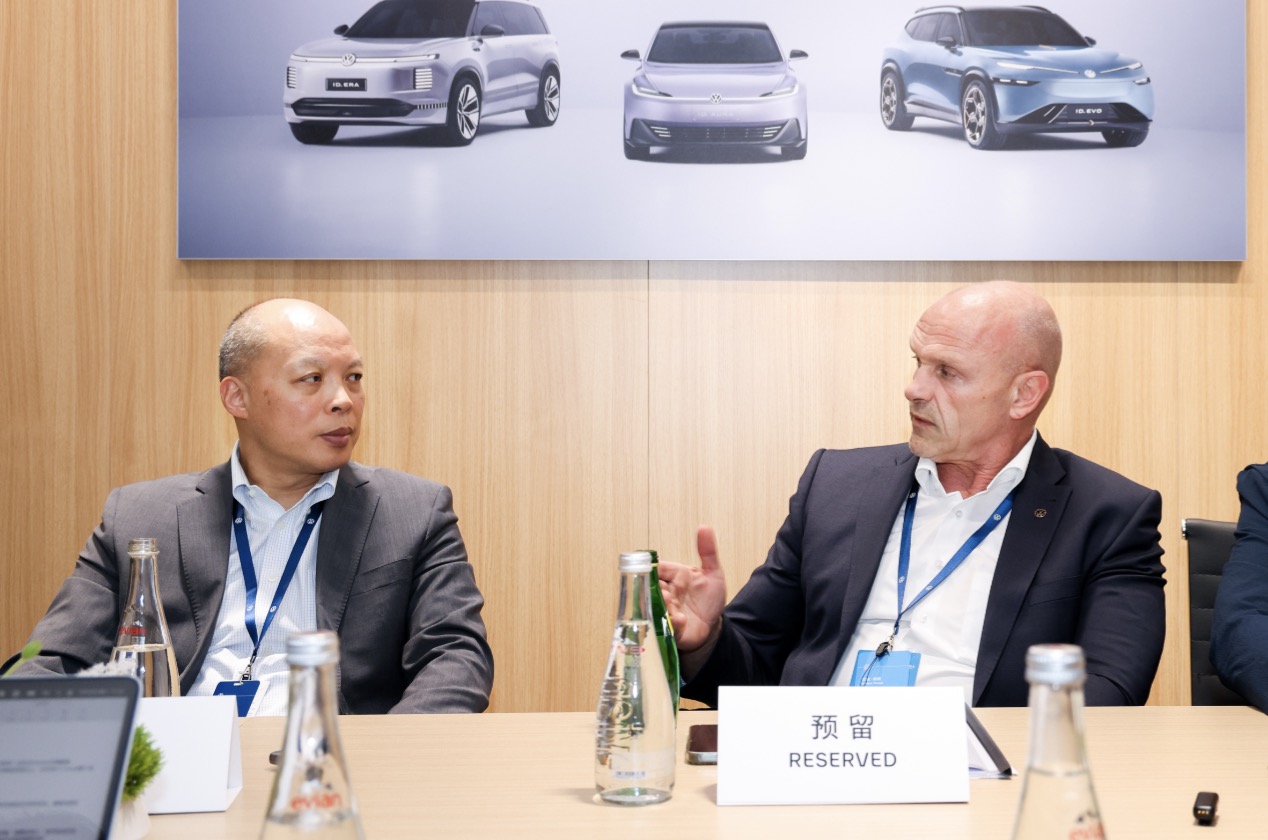
大众中国CTO吴博锐解密中国“狼堡”运作法则 | 2025上海车展
Xin Lang Cai Jing· 2025-04-27 12:20
Core Insights - The establishment of Volkswagen China Technology Company (VCTC) marks a significant shift in Volkswagen's strategy, allowing for independent technical decision-making and development capabilities in China, which is crucial for the company's future in the electric vehicle market [1][3] - The first model based on the new CMP platform and CEA architecture, ID.AURA, was unveiled at the Shanghai Auto Show, indicating a new phase in Volkswagen's approach to meet local consumer demands [1][6] Group 1 - VCTC's formation allows for a more localized approach to vehicle development, with the Chinese team now having the authority to independently develop electric vehicles tailored to local market needs [1][3] - The collaboration between VCTC, CARIAD China, and XPeng Motors aims to accelerate the development of the CEA electronic architecture, which is essential for modern vehicle functionality [4][5] - The transition of technical responsibilities from the German headquarters to VCTC is expected to enhance decision-making efficiency and align with the fast-paced demands of the Chinese automotive market [3][4] Group 2 - CARIAD China is building core modules for consumer-facing features, with a focus on advanced driver assistance systems, and has established a joint venture with Horizon Robotics for this purpose [5][6] - The development cycle for vehicles and components is projected to be shortened by 30% under the VCTC model, allowing Volkswagen to compete with local brands that have significantly reduced their development timelines [6] - Volkswagen plans to launch 3 to 5 models utilizing the CEA architecture by 2026, aiming to enhance brand recognition and acceptance in the Chinese market [6]