奇瑞汽车

Search documents
新飞度遭“疯抢”背后:1月车市燃油车销量回暖
Mei Ri Jing Ji Xin Wen· 2026-02-11 14:01
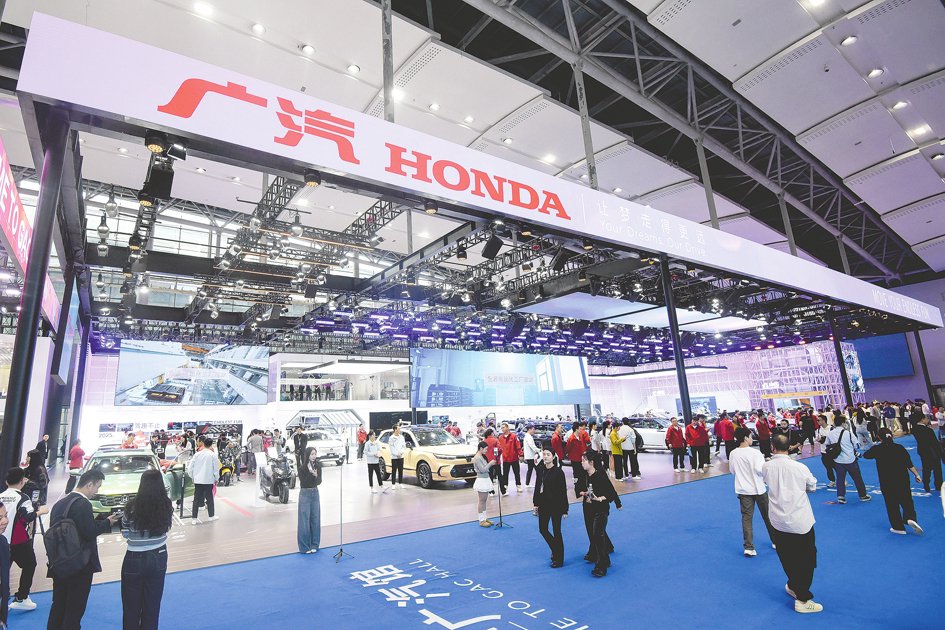
Core Viewpoint - The domestic automotive market is witnessing a shift as fuel vehicles are increasingly adopting intelligent features to compete with electric vehicles, driven by consumer demand for smart driving capabilities and the rising market share of electric vehicles [1][10]. Group 1: Market Trends - Consumers are showing a preference for fuel vehicles equipped with advanced intelligent configurations, leading to a notable change in purchasing behavior [1]. - Sales personnel from a dealership reported a shift in customer interest, with fewer customers exclusively seeking electric models [3]. - The new Honda Fit, priced at 66,800 yuan, sold out its initial 3,000 units within 20 days, indicating strong demand for competitively priced fuel vehicles [4][5]. Group 2: Pricing Strategies - The resurgence of fuel vehicles is significantly driven by aggressive pricing strategies, with many models seeing price reductions of around 30% to 40% [7][9]. - The average discount for fuel vehicles in January reached 23.7%, a year-on-year increase of 1.8 percentage points, with 10 models experiencing price cuts [9]. Group 3: Intelligent Features - Fuel vehicles are increasingly incorporating advanced technologies such as driver assistance systems and smart cockpit features, aiming to shed the perception of being less intelligent than electric vehicles [10][11]. - Major automakers, including Volkswagen and Geely, are implementing the "oil-electric intelligence" strategy, showcasing that fuel vehicles can also be equipped with smart features [10]. Group 4: Sales Performance - In January 2026, fuel vehicle sales showed a significant increase, with SAIC Group selling 242,000 units, a year-on-year growth of 19.19% [12]. - Geely's fuel vehicle sales reached 134,400 units, with the "China Star" series contributing over 100,000 units to this figure [12]. - The market share of the top five fuel vehicle brands increased from 29% in 2020 to 37% in 2025, indicating a strengthening position for leading brands in the fuel vehicle segment [13].

从通道到枢纽:中资券商的港股大航海时代
市值风云· 2026-02-11 10:12
Core Viewpoint - The Hong Kong stock market has become the most comprehensive market for foreign capital to allocate Chinese assets, providing a "one-stop" opportunity for international investors to access China's growth [3][4]. Group 1: Market Dynamics - In 2024, the Hong Kong stock market raised approximately HKD 87.6 billion, a year-on-year increase of 89% [4]. - In 2025, the market saw a significant surge in IPO fundraising, reaching HKD 2,856.93 billion, a year-on-year increase of 224%, reclaiming the top position globally for IPO fundraising [4]. - The number of companies waiting for IPOs in Hong Kong has exceeded 350, indicating sustained capital vitality in the market [4]. Group 2: Sectoral Trends - In 2025, 117 companies successfully listed on the Hong Kong stock market, with new economy sectors like hard technology (27%), healthcare (23%), and new consumption (25%) becoming the main contributors [5][7]. - The traditional sectors such as infrastructure and real estate are gradually declining in proportion [5]. Group 3: Role of Chinese Securities Firms - The A+H listing model became a powerful engine for the Hong Kong IPO market in 2025, with 19 A-share companies raising nearly HKD 1.4 billion, contributing to nearly half of the total fundraising [8]. - Chinese securities firms have transitioned from participants to dominant players in the market, with a market share of approximately 56% among the top ten IPO underwriters [8][10]. - The number of licensed Chinese securities firms in Hong Kong has increased from 8 in 2007 to 111 by 2024, indicating significant growth in the sector [10]. Group 4: Competitive Advantages - Chinese securities firms leverage their "home advantage" and offer comprehensive end-to-end solutions, from identifying new economy companies for listing to providing seamless A+H share services [10]. - The case of CATL's secondary listing in Hong Kong exemplifies the shift of Chinese firms from "supporting roles" to "pricing leaders" in major IPOs [11][13]. - The independent service capability of Chinese securities firms is highlighted by the successful IPO of Sanhua Intelligent Controls, which did not hire foreign underwriters [13]. Group 5: Financial Performance - The brokerage industry is expected to see significant profit increases in 2026, with CITIC Securities projected to earn HKD 30.051 billion, a year-on-year increase of 38.46% [18]. - Other firms like Guotai Junan and GF Securities are also expected to report substantial profit growth [18]. Group 6: Strategic Transformation - A trend of capital increase among Chinese securities firms is evident, with at least five firms announcing capital increases totaling nearly HKD 20 billion, marking a new high [20][21]. - This capital influx indicates a strategic shift towards higher-yield capital business, moving from a low-risk, low-return model to a more integrated service provider role [21][22]. - The Hong Kong market serves as a strategic training ground for Chinese securities firms to enhance their capabilities in pricing, market-making, and risk management [22][23].




天龙股份收购负资产标的再收监管函 外部股东“折价”退出合理性存疑 业绩承诺和增资流向或引发中小股东担忧
Xin Lang Cai Jing· 2026-02-11 08:56
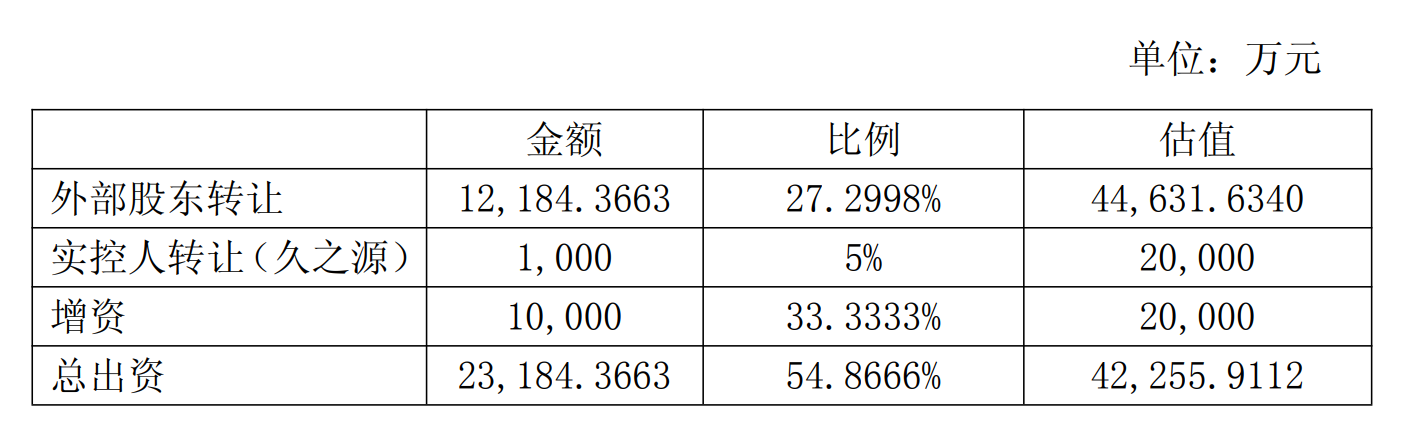
出品:新浪财经上市公司研究院 作者:光心 2026年2月5日,天龙股份收购及增资苏州毫米波的事项再次收到上交所问询。 上次监管函主要关注标的公司的业务质量与作价合理性,而此次则对收购交易可能存在的利益输送发起拷问。 监管对此有所疑虑也是理所当然,苏州毫米波连年亏损、净资产为负,如此质地给出3.23亿元的投前估值,其溢价着实不小。 此外,在此次并购案中还出现一些疑点,比如标的公司外部财务投资人"折价"出售股权、业绩对赌条款设置复杂但实际效力却略显微弱、首期增资款一大半 将流向出资人控股股东等,这些看似有悖市场常理的事件是否具备合理性?还有待天龙股份给出回复。 标的公司净资产为负且持续亏损 业务放量依赖单一大客户 从财务角度来看,标的公司或许并不具备较大的投资吸引力,"负资产"、"持续亏损"等负面标签缠身。 苏州毫米波的利润表现与其所处行业的业务特征有关。 一方面,毫米波雷达行业具有国外巨头垄断、国内格局分散的特点,其业务放量极大程度上依赖与下游大客户的关系绑定。 据QYResearch调查,2024年Bosch、Continental、Denso、Hella、Veoneer全球前五大供应商占据69%的市场份额, ...

“我不是车企”——聚焦车企新一轮转型
Zhong Guo Qi Che Bao Wang· 2026-02-11 02:10
Core Viewpoint - The automotive industry is undergoing a significant transformation, with companies shifting their focus from traditional vehicle manufacturing to becoming AI technology firms, reflecting a broader trend towards integrating AI into their business models [1][5][10]. Group 1: Company Transformations - Li Auto is restructuring its organization to focus on "embodied intelligence," moving away from its previous identity of creating "mobile homes" and aiming to become one of the top three intelligent companies globally [3][4]. - XPeng Motors has set its sights on becoming an AI technology company, emphasizing its commitment to AI and autonomous driving as core components of its future strategy [3][4]. - Chery Automobile is transitioning from "Technology Chery" to a "Global AI Technology Company," showcasing its AI strategy and technological advancements [4][5]. Group 2: Industry Trends - The shift towards AI technology is not limited to new car manufacturers; traditional automakers are also accelerating their transformations, with companies like Geely integrating AI into their operations [4][5]. - The automotive market is experiencing intense competition, with over 160 brands in China, leading to a need for differentiation through AI technology to avoid price wars and product homogenization [7][8]. - The trend of transitioning to AI technology companies is becoming a survival strategy for automakers, as the traditional automotive business model faces challenges from rising costs and market saturation [10][11]. Group 3: Strategic Implications - The integration of AI into automotive products is seen as essential for creating competitive advantages and enhancing user experiences, with AI-driven innovations becoming a standard expectation in the industry [9][12]. - Companies are recognizing that the future of automotive value lies in software and AI technology rather than hardware, necessitating a shift in focus to maintain relevance in the evolving market [11][12]. - The transition to AI technology firms is viewed as a critical step for automakers to enhance their market positioning and adapt to the changing landscape of the automotive industry [13][14]. Group 4: Future Directions - The development of a "smart ecosystem" is a key goal for automotive companies, aiming to integrate vehicles with smart home and office technologies to provide seamless user experiences [15][16]. - The future automotive landscape will see companies not only manufacturing vehicles but also leveraging AI to create intelligent, interconnected platforms that meet evolving consumer needs [16].



欧盟汽车市场迎来电动化转型“拐点”
Ren Min Ri Bao· 2026-02-11 00:27
据统计,2025年德国纯电动汽车新车注册量同比实现43.2%增长。德国联邦政府近日又重新启动电动汽 车购置补贴。根据车辆类型、家庭人口和收入水平等分级标准,2026年1月1日起,新注册的纯电动汽 车、部分插电式混动汽车及增程式电动汽车的补贴金额在1500至6000欧元之间。德国联邦环境部部长卡 斯滕·施耐德表示,该补贴计划总规模为3年内30亿欧元,预计可为最多约80万辆电动汽车提供支持,有 望加快电动汽车普及进程,为德国汽车工业提供有力支撑。 2025年,西班牙纯电动汽车新车注册量同比增长77.1%。西班牙政府发布了《西班牙汽车2030计划》, 计划在2026年投资4亿欧元提供电动汽车购买直接补贴,投资3亿欧元建设更多充电站,还将在现有激励 计划基础上追加拨款5.8亿欧元支持电动汽车及电池产业项目,目标是到2035年将该国电动汽车生产份 额提升至95%。 2025年7月起,法国实施电动汽车"生态补贴",最高可达每辆车4200欧元。2025年10月1日起,凡是购买 在欧洲生产并搭载欧洲本土制造电池的电动汽车,还可额外获得1000欧元补贴。今年,电动汽车"生态 补贴"还将提升至最高5700欧元。 跨国企业也在加紧 ...
新车20分钟订单超1万辆,QQ停产12年后再“复活”
Mei Ri Jing Ji Xin Wen· 2026-02-10 10:36
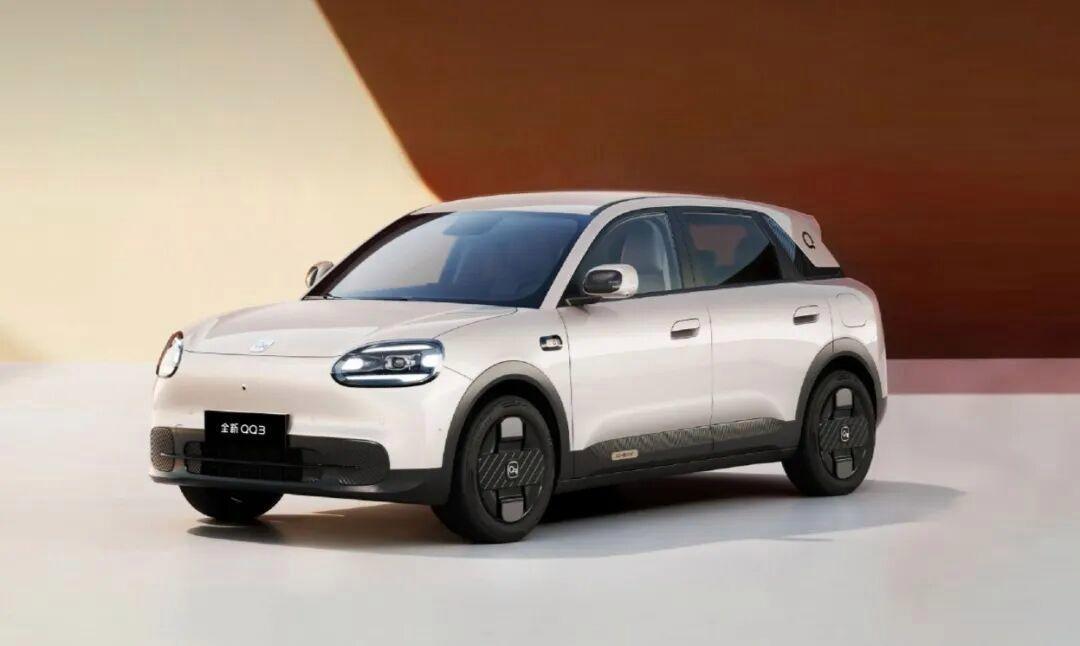
停产12年后,奇瑞经典QQ车型正式回归。 日前,奇瑞全新QQ3开启盲订,20分钟订单超1万辆,3小时累计订单约2.7万辆。"我们要把奇瑞QQ打造成中国的MINI、中国的Smart,打造成属于中国的 经典。"在发布会上,奇瑞汽车董事长尹同跃明确表示,希望这一经典IP(具有商业价值的创意内容或品牌)成为属于中国的汽车符号。 图片来源:乘联分会官网 时间回溯至2003年,彼时国内车市仍被"捷达、富康、桑塔纳"老三样牢牢主导。奇瑞QQ以不足5万元的定价切入市场,凭借小巧灵动的设计和高性价比成 为自主品牌爆款,累计销量达154万辆,是奇瑞创业时期"打江山"的核心车型。2011年后,随着市场供给的不断丰富,奇瑞QQ销量开始逐步走低。2014 年,奇瑞QQ正式停产。 如今,奇瑞重启QQ并非偶然之举,而是其品牌战略布局的重要落子。历经十余年发展,奇瑞已构建起星途、捷途、iCAR等多元化品牌矩阵,此次QQ 的"复活",填补了当前奇瑞在小车领域的产品空白。 实际上,QQ的回归在2025年就已经有了苗头。2025年7月,奇瑞内部对组织架构进行了调整。《每日经济新闻》记者当时从奇瑞一位工作人员处获悉,为 了实现战略聚焦、资源整合、强 ...
崔东树:政策引导与市场驱动 预计2026年新能源乘用车将实现高质量发展
智通财经网· 2026-02-10 09:19
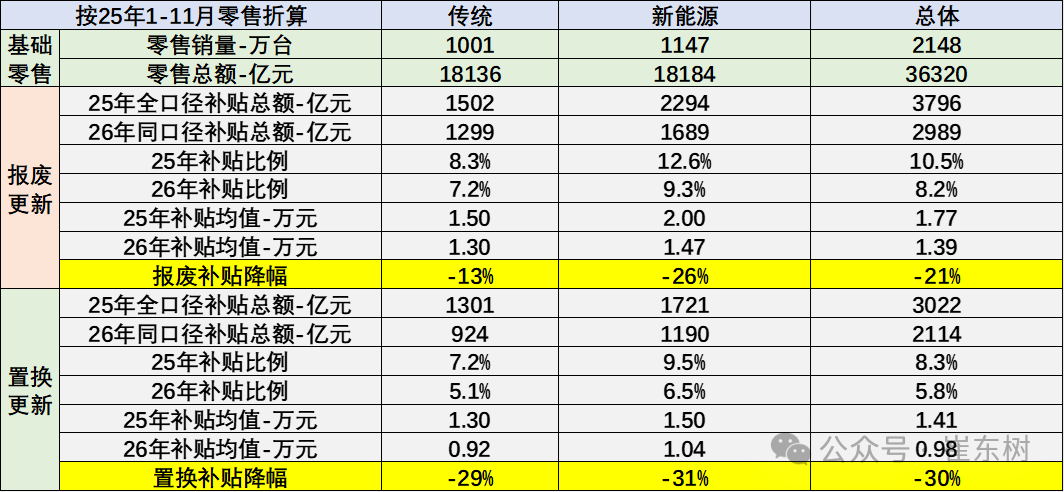
Core Insights - The 2026 vehicle replacement policy is a significant boost for the automotive market, promoting high-end development and enhancing fiscal efficiency through a shift from fixed subsidies to tiered subsidies based on vehicle value [1][3]. Group 1: Policy Impact - The new policy aims to stabilize large-scale consumption and release replacement potential, contributing to steady growth while promoting green and low-carbon initiatives [1][2]. - The average subsidy for passenger vehicle replacements is expected to decrease by approximately 30%, while the average subsidy for scrapping is projected to decline by about 20% [2][3]. - The transition to a tiered subsidy system is designed to improve fiscal efficiency, ensuring better allocation of funds and reducing waste from low-priced vehicles benefiting from subsidies [3][4]. Group 2: Market Trends - In 2025, over 11.5 million vehicles benefited from the replacement subsidy, with nearly 60% being new energy vehicles, indicating a strong market shift towards electrification [3]. - The commercial vehicle sector is expected to perform better in 2026 due to the continuity of favorable policies, while the passenger vehicle segment faces a decline in the number of new models [5][6]. - The number of new passenger vehicle models is decreasing from 92 in 2024 to 83 in 2026, reflecting a trend towards higher-end and larger vehicles [5][6]. Group 3: Product Development - New energy passenger vehicles are increasingly characterized by larger sizes and improved range, with a notable absence of small electric vehicles under 1090 kg in recent releases [8][10]. - The introduction of long-range electric vehicles, particularly those exceeding 700 km, is becoming more common, indicating a shift towards higher performance in the electric vehicle market [10][14]. - The energy density and efficiency of new energy vehicles are improving, with some models achieving a power consumption of around 10 kWh per 100 km [12][15]. Group 4: Tax and Subsidy Structure - The tax exemption directory for commercial vehicles shows growth in new models, particularly in trucks and buses, compared to the previous year [4][6]. - The structure of the subsidy system is evolving to favor higher-priced vehicles, ensuring that funds are allocated to more valuable replacements [3][4]. Group 5: Competitive Landscape - The competitive landscape is shifting as traditional fuel vehicles face increasing pressure from new energy vehicles, which are rapidly advancing in technology and market presence [1][3]. - The introduction of diverse new models in the narrow hybrid segment is establishing a solid foundation for future growth, with many new products featuring lower energy consumption [16].

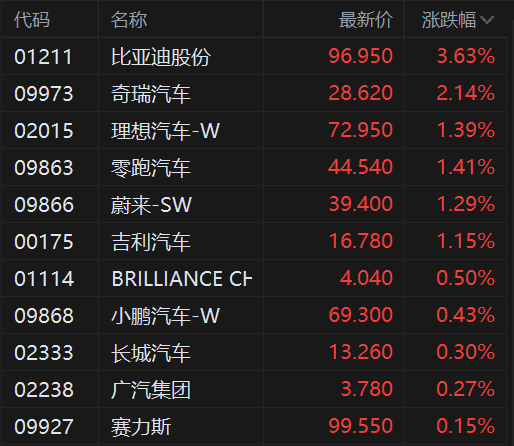
汽车股普涨 比亚迪股份涨约4%
Zhong Guo Qi Che Bao Wang· 2026-02-10 09:09
Group 1 - The core viewpoint of the article highlights a collective rise in Hong Kong automotive stocks, with notable increases in companies such as BYD, Chery, and NIO, following a recent meeting by the Ministry of Commerce regarding automotive consumption [1] Group 2 - BYD shares increased by approximately 4%, while Chery Automotive rose over 2%, and other companies like Leap Motor, NIO, and Geely saw gains exceeding 1% [1] - The Ministry of Commerce plans to implement policies to support and innovate the automotive sector, including optimizing the vehicle trade-in program and conducting pilot reforms in automotive consumption [1] - By 2026, the Ministry aims to enhance industry management systems and promote measures to expand and improve automotive consumption through a combination of existing and new policies [1]
威迈斯:公司信息更新报告业绩符合预期,海外市场持续放量-20260210
KAIYUAN SECURITIES· 2026-02-10 04:25
Investment Rating - The investment rating for the company is "Buy" (maintained) [1] Core Insights - The company achieved a net profit attributable to shareholders of 557 million yuan in 2025, representing a year-on-year growth of 39.2%, which is in line with expectations. The total revenue for 2025 was 6.34 billion yuan, showing a slight year-on-year decline of 0.5% [6] - The company is a leading player in the domestic vehicle-mounted power supply market and is benefiting significantly from the growth of the European new energy vehicle market. The company has adjusted its strategic focus towards global expansion, allocating more resources to faster-growing overseas markets [7] - The company has established deep cooperation with various domestic and international clients, including Stellantis Group, Li Auto, Changan Automobile, and others. The installed capacity of the company's OBC (On-Board Charger) in 2025 was 1.821 million units, accounting for 14.9% of the market share [7] Financial Summary - The company reported total revenue of 5.523 billion yuan in 2023, with a year-on-year growth of 44.1%. The projected revenue for 2024 is 6.372 billion yuan, with a growth rate of 15.4%. The expected revenue for 2025 is 6.342 billion yuan, indicating a slight decline [9] - The gross profit margin is expected to improve from 21.9% in 2025 to 25.0% by 2027, while the net profit margin is projected to increase from 8.8% in 2025 to 12.0% in 2027 [9] - The company's earnings per share (EPS) is projected to be 1.33 yuan in 2025, increasing to 2.03 yuan by 2027, with corresponding P/E ratios of 23.4 and 15.4 respectively [9]

汽车股普涨 比亚迪股份涨约4% 商务部召开座谈会推动汽车消费
Ge Long Hui· 2026-02-10 03:02
Group 1 - The core viewpoint of the news is that the Hong Kong automotive stocks experienced a collective rise, driven by positive signals from the Ministry of Commerce regarding future automotive consumption policies [1] - The Ministry of Commerce held a meeting to discuss automotive circulation and consumption, indicating a commitment to support and reform the automotive sector by 2026 [1] - Analysts interpret the signals from the meeting as a positive indication for automotive consumption support policies, providing a clear expectation for industry stabilization and structural growth direction [1] Group 2 - BYD shares rose approximately 4% to a latest price of 96.950, while Chery Automobile increased by over 2% to 28.620 [2] - Other automotive companies also saw gains, including Li Auto (1.39% increase), Leap Motor (1.41% increase), NIO (1.29% increase), and Geely (1.15% increase) [2] - The overall positive trend in the automotive sector reflects investor confidence in the upcoming policy changes and market support initiatives [1][2]