
海信

Search documents
中国供应链何处去?|暗涌看世界
暗涌Waves· 2025-05-25 06:03
Core Viewpoint - The article emphasizes the critical importance of supply chains in the current geopolitical landscape, particularly in light of the U.S. customs' new origin verification system and the ongoing trade tensions. Companies must adapt their supply chain strategies to mitigate risks associated with changing tariffs and regulations [1][4]. Group 1: Supply Chain Migration - Supply chain migration is largely a forced response to external geopolitical pressures, with many Chinese companies hastily expanding overseas due to U.S. tariffs [6][8]. - The competition for supply chain security is intensifying, with countries prioritizing safety over cost and efficiency, leading to the emergence of parallel supply chains in Southeast Asia and India [8][16]. - The migration of supply chains is not just a loss for China; it also reflects a reallocation of global production capacities, with companies like Apple shifting significant portions of their manufacturing to India and Vietnam [13][14]. Group 2: Knowledge Flow and Connection - The article highlights that the true essence of supply chains lies in the flow of knowledge rather than just logistics or cost efficiency. Successful supply chains require strong connections between upstream and downstream partners [22][29]. - Companies must focus on building relationships that enhance collaboration and innovation across the supply chain, rather than merely competing on price [35][36]. Group 3: Mergers and Acquisitions - Mergers and acquisitions are identified as effective strategies for Chinese companies to achieve globalization, allowing them to integrate into local markets and build brand presence [38][39]. - Successful integration post-acquisition is crucial, as demonstrated by companies like Hisense, which navigated local challenges while optimizing operations in foreign markets [40][41]. Group 4: Future Strategies - Companies are encouraged to adopt a long-term strategic mindset when considering overseas expansion, focusing on sustainable growth rather than short-term gains [43][44]. - The ability to adapt to different national contexts and labor markets will be essential for companies aiming to thrive in the global landscape [44].



消费新趋势下的投资机遇
2025-05-20 15:24
Summary of Key Points from Conference Call Records Industry Overview - The consumer sector in China is exhibiting a "weak beta alpha" characteristic in 2025, making it easier for institutional investors to identify individual stock opportunities, particularly in the beauty and personal care segment which has seen significant gains due to favorable policies and market recovery [1][4] - The consumer industry is experiencing notable sub-sector differentiation, with emerging consumption trends in areas such as pet products, skincare, and IP-related products performing well, while traditional sectors like certain liquor and seasoning products are declining [1][5] Core Insights and Arguments - The food and beverage industry is showing clear signs of differentiation, with health products like ergothioneine gaining popularity, and the dairy sector potentially reversing its cycle as milk prices are expected to rise [1][6][7] - The small food sector is also experiencing structural differentiation, with companies like Youyou Foods and Yanjin Puzhi leveraging new channels, while innovative categories like konjac products are gaining attention [1][8] - The beauty and home care segment is performing strongly, with companies such as Juzhi Biotechnology, Shangmei Runben, and others expected to see growth rates of around 30% [1][10] Emerging Trends - The agricultural market is focusing on four main areas: the pet market with high growth rates, the reversal of the meat and dairy cycle, post-breeding cycles, and animal health companies [1][12] - The潮玩 (trendy toy) industry is benefiting from interest-driven consumption trends, with leading IPs expanding their market presence. Companies like Pop Mart are recommended due to their comprehensive industry chain layout and successful overseas market penetration [1][13][14] Additional Important Insights - The chain discount sector is improving efficiency by eliminating intermediaries, leading to lower prices and smoother distribution, with companies like COPA and Wan Cheng showing potential [1][9] - The home care product competitive landscape is changing significantly, with new entrants like Duowei sanitary napkins achieving high sales on launch [1][11] - The tea beverage sector is seeing a resurgence, with frequent IPOs and strong performance from leading companies like Mixue Ice City, which is expanding its market presence [1][15] Investment Opportunities - The home appliance industry is witnessing opportunities driven by technological innovation, particularly in AI applications and robotics, with companies like Midea and Gree leading the charge [1][16][17][18] - Other new consumption sectors worth noting include capital economy-related stocks and the electronic cigarette market, as well as various "AI+" related segments [1][19] Conclusion - The overall sentiment in the consumer sector is positive, with various sub-sectors showing potential for growth and investment opportunities, driven by changing consumer preferences and favorable economic policies [2][3]
不酿老酒“跨界”造机器人,青岛这家头部民企引关注
Qi Lu Wan Bao Wang· 2025-05-20 07:16
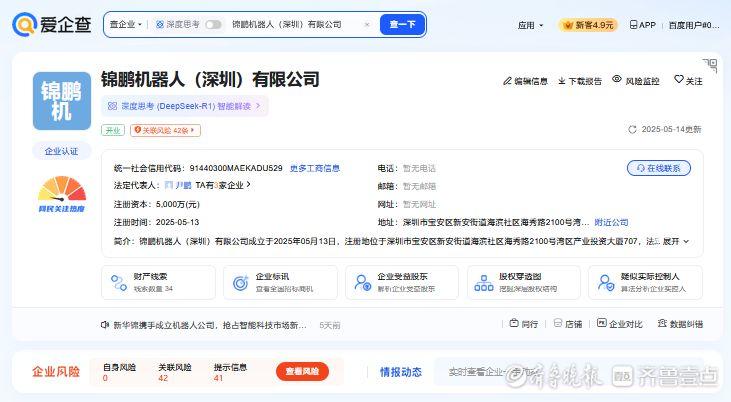
Group 1 - Xinhua Jin Group has established a new robot company, Jinpeng Robotics, in collaboration with two Guangzhou firms, marking a significant cross-industry move [1][3] - The registered capital for Jinpeng Robotics is 50 million yuan, with Xinhua Jin holding a 51% stake, indicating its role as the controlling shareholder [1] - Xinhua Jin's main business is in hair products and textile exports, which are not closely related to the robotics industry, making this move a bold attempt to diversify [1][3] Group 2 - Xinhua Jin's recent financial performance has been poor, with a reported revenue of 1.637 billion yuan in 2024, a decline of 30.97% year-on-year, and a net loss of 134 million yuan, a staggering drop of 354.59% [3] - The parent company, Xinhua Jin Group, achieved a revenue of 46.6 billion yuan in 2024, but the listed company's contribution was less than 4%, highlighting the need for new growth drivers [3] - Previous attempts to enter the graphite new materials sector faced challenges, with production halted since 2022 due to licensing issues, further emphasizing the urgency for Xinhua Jin to find new avenues for growth [3][4] Group 3 - The recent sale of the Jimo Huangjiu Factory to Qingdao Beer for 665 million yuan is seen as a strategy to optimize asset structure and alleviate financial pressure [4] - The pledging of 3 million shares by the controlling shareholder, Lujin Group, for operational funding has raised concerns in the capital market, with a high pledge ratio of 42.43% for the company overall and 98.05% for core shareholders [3][4] - The competitive landscape in the robotics industry is intensifying, with traditional foreign trade companies like Xinhua Jin facing challenges in technology accumulation and market penetration [5]


辰奕智能(301578) - 301578辰奕智能投资者关系管理信息20250513
2025-05-13 11:45
Financial Performance - The company achieved total revenue of 873 million, a year-on-year increase of 21.29% [2] - Operating profit decreased by 44.70% to 56 million compared to the previous year [2] - Net profit attributable to shareholders fell by 47.90% to 47 million [2] Product Performance - Revenue from infrared remote controls was 235 million, while wireless remote controls generated 432 million [2] - Smart products, including educational products, contributed 16.64 million, with other smart products like game controllers and smart switches generating 168 million, showing slight increases of 0.79% and 1.93% respectively [2] - Domestic sales increased by 13.32%, reaching 454 million, while international sales totaled 420 million [2] Market Trends and Future Outlook - The Chinese television market saw a shipment of 35.96 million units in 2024, a decline of 1.6% year-on-year, but retail sales increased by 12.3% to 120.2 billion [5] - The demand for smart home devices is expected to continue growing, providing ongoing momentum for the smart remote control industry [3][4] - National policies like "Made in China 2025" and "Internet of Things 12th Five-Year Plan" are anticipated to drive the development of smart products in the home appliance sector [4] R&D and Innovation - R&D investment accounted for 4.69% of total revenue in 2024 [7] - The company is focusing on developing technologies such as 2.4GHz, Bluetooth, and voice recognition to enhance product offerings [8] International Business and Challenges - Export revenue constituted 48.07% of total revenue, with less than 3% of total revenue coming from the U.S. market [8] - The latest U.S. tariff policies have had minimal impact on the company's current performance [8] Strategic Initiatives - The company is implementing a stock incentive plan focused on revenue growth to motivate employees and drive performance [6] - Plans to expand overseas operations include establishing a manufacturing base in Vietnam to support global delivery [3]
美的系再添一员?安得智联冲刺港交所,何享健家族IPO版图将扩容
Sou Hu Cai Jing· 2025-05-10 03:53
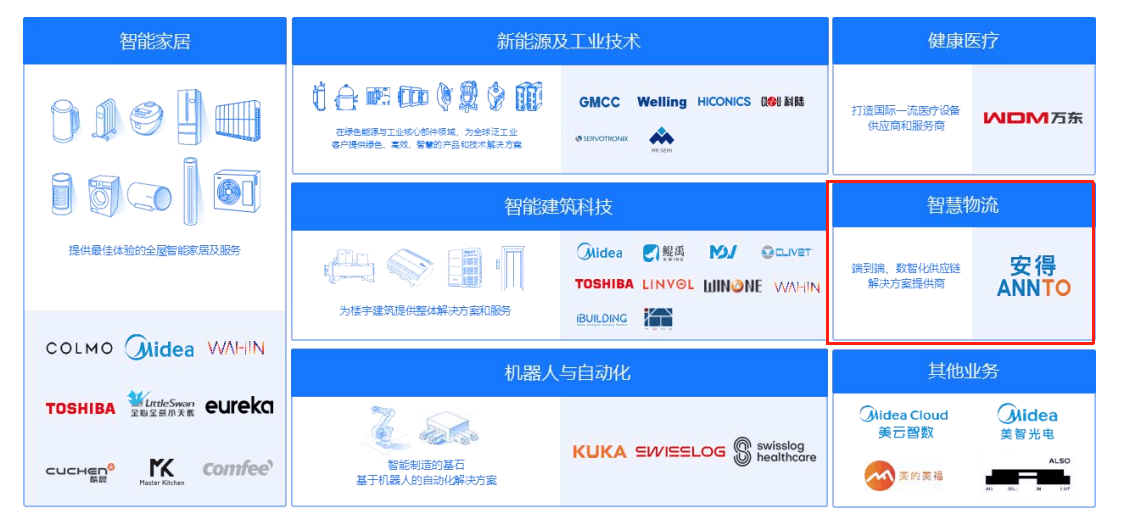
Group 1 - Midea Group is accelerating its IPO expansion plan, targeting the Hong Kong Stock Exchange for its logistics subsidiary, Ande Intelligent Logistics, after previously planning to list on the Shenzhen Stock Exchange [1][2] - Midea Group has evolved from a small plastic production company in 1968 to a global technology group covering smart home, building technology, industrial technology, robotics, and innovative businesses [1] - The founder's family, He Xiangjian, ranks 41st globally on the Hurun Global Rich List with a wealth of 255 billion RMB, maintaining the title of the richest family in Foshan [1] Group 2 - Ande Intelligent Logistics, established in 2000, focuses on providing supply chain solutions and has built a nationwide service network with over 800 million square meters of warehouse space and more than 300,000 vehicles [2][4] - Financial data shows Ande Intelligent Logistics achieved revenues of 14.189 billion RMB, 16.224 billion RMB, and 18.663 billion RMB from 2022 to 2024, with net profits of 215 million RMB, 288 million RMB, and 380 million RMB respectively [4] - The decision to list on the Hong Kong Stock Exchange is influenced by its lower listing thresholds and more flexible review processes compared to the A-share market [4] Group 3 - Midea's ToB business is seen as a second growth curve, with revenue surpassing 400 billion RMB in 2024, and the share of commercial and industrial solutions revenue rising from 18.5% in 2020 to 25.5% [4] - Midea plans to spin off multiple subsidiaries, including Ande Intelligent Logistics, for independent listings within the next three years [5] - A strategic cooperation agreement was signed between Midea and Hisense to enhance collaboration in AI applications, advanced manufacturing, and smart logistics, which may support Ande's IPO efforts [5]

智能家居行业双周报:以旧换新再加码,福建省自主扩围21类-20250429
Guoyuan Securities· 2025-04-29 03:34
Investment Rating - The report maintains a "Recommended" rating for the smart home industry [8][27]. Core Insights - The smart home industry is experiencing rapid growth driven by three main factors: continuous release of demand for consumption upgrades and elderly-friendly renovations, technological innovations, and strong policy support [27]. - Recent policy changes in Fujian Province have expanded the scope of the old-for-new appliance program, providing a 15% subsidy on the final sales price for 21 categories of home appliances [3][18]. - The first quarter saw a 19.3% year-on-year growth in the retail sales of household appliances and audio-visual equipment, indicating the effectiveness of the consumption upgrade policies [4][19]. Summary by Sections Market Review - In the two weeks from April 14 to April 25, 2025, the Shanghai Composite Index rose by 1.76%, while the smart home index increased by 1.06%, underperforming the Shanghai index by 0.69 percentage points [2][13]. - Year-to-date, the smart home index has increased by 0.22%, outperforming the Shanghai Composite Index by 1.91 percentage points [13][14]. Industry Policy Tracking - On April 22, 2025, Fujian Province announced an adjustment to the old-for-new appliance policy, expanding the subsidy to 21 categories of appliances, with a maximum subsidy of 2000 yuan per product [3][18]. Industry News Tracking - The first quarter of 2025 saw significant growth in the household appliance sector, with a 19.3% increase in retail sales, reflecting the positive impact of the old-for-new policy [4][19]. - Gree Electric's board of directors has undergone a leadership change, with Dong Mingzhu re-elected as chairperson [20]. - Cixi's small appliance sector has shown resilience against U.S. tariff pressures, with domestic sales growing over 30% [21]. Investment Recommendations - Leading home appliance companies like Haier, Midea, Gree, and Hisense are demonstrating strong resilience due to their globalized operations and localized production capabilities [5][26]. - The report emphasizes that the smart home industry is set to benefit from the ongoing demand for smart home solutions, driven by technological advancements and changing consumer preferences [27].

珠城科技(301280):业绩稳健增长 汽车、工业连接器加速突破
Xin Lang Cai Jing· 2025-04-29 02:50
Core Insights - The company reported steady growth in operating performance, with a slight decline in profitability in Q1 2025, achieving revenue of 448 million yuan, a year-on-year increase of 24.51%, and a net profit attributable to shareholders of 54 million yuan, up 12.49% year-on-year [1] Group 1: Business Performance - In Q1 2025, the company's gross profit margin was 24.45%, a decrease of 2.04 percentage points year-on-year, while the net profit margin was 12.91%, down 1.31 percentage points year-on-year but up 1.4 percentage points quarter-on-quarter [1] Group 2: Industry Position and Strategy - The company's home appliance connector business accounted for 96.64% of revenue in 2024, focusing on major clients such as Midea, Haier, Gree, and Xiaomi, benefiting from a 19.5% year-on-year increase in China's home air conditioner production [2] - The company is actively seizing opportunities for domestic substitution in high-end connectors, with a 33.23% year-on-year increase in connector sales in 2024, and has filed 19 new patents in Q1 2025 to enhance product quality and manufacturing capabilities [2] Group 3: Expansion and New Ventures - The acquisition of a 20% stake in Deweijia in February 2024 positions the company to accelerate its automotive high-frequency and high-speed connector business, driven by increasing demand for advanced in-car entertainment and smart driving systems [2] - A new subsidiary, Foshan Zhucheng Intelligent Technology Co., has been established to develop connectors for industrial robots, with initial supply agreements in place with companies like UBTECH and KUKA [3] - The company plans to focus on humanoid robots, smart vehicles, and industrial AI, aiming to cultivate new business areas through mergers and acquisitions over the next 3-5 years, driving growth alongside its core home appliance connector business [3] Group 4: Financial Projections - The company is expected to achieve revenues of 2.041 billion yuan, 2.726 billion yuan, and 3.259 billion yuan from 2025 to 2027, with net profits attributable to shareholders projected at 231 million yuan, 282 million yuan, and 352 million yuan respectively, indicating a robust growth outlook [4]
京东方A(000725) - 009-2025年4月22日投资者关系活动记录表-1
2025-04-23 07:14
Financial Performance and Shareholder Returns - In 2024, the company plans to distribute cash dividends of 18.7 billion RMB, accounting for 35% of the net profit attributable to the parent company [3][36] - The company aims to repurchase and cancel shares worth between 15 billion to 20 billion RMB annually [3][36] - From 2015 to 2024, the company has implemented cash dividends for 10 consecutive years, totaling nearly 22 billion RMB [3][37] - The company has repurchased A shares for over 5.6 billion RMB and B shares for nearly 1 billion HKD from 2020 to 2024 [3][37] Depreciation and Cash Flow - In 2024, the company's depreciation is expected to be approximately 38 billion RMB, with an increase anticipated due to new projects being put into operation [2] - The net cash flow from investment activities remains high, projected to exceed 30 billion RMB in 2024 [5][6] Strategic Development and Market Position - The company is focusing on the "Screen and IoT" strategy, aiming to integrate more functionalities into displays and expand into various application scenarios [7][8] - The company has established a "1+4+N+Ecosystem" development framework, emphasizing semiconductor display as the core capability [8][9] - The company is actively pursuing high-potential areas such as IoT innovation, sensing, MLED, and smart medical engineering [9][10] Market Trends and Product Development - The global automotive display panel shipment is expected to reach 230 million units in 2024, with a year-on-year growth of 6.3% [31] - The company aims to produce 1.7 billion OLED units in 2025, up from 1.4 billion in 2024 [32] - The company has successfully launched Micro LED products, achieving high brightness and contrast ratios, and plans to continue expanding this technology [28][55] Risk Management and Market Adaptation - The company has a robust risk management mechanism to address potential market challenges, including a dedicated team for monitoring risks [26][34] - The direct export to the US is minimal, thus limiting the impact of US tariffs on the company's operations [19][24] Innovation and Future Outlook - The company is committed to advancing technologies such as Micro LED and exploring new applications in the healthcare sector [28][55] - The company is optimistic about the future of the semiconductor display industry, focusing on sustainable growth and technological advancements [47]

国泰君安:传统家电嵌套AI大模型提升人机交互能力 期待企业布局机器人化方向
智通财经网· 2025-03-26 09:14
Group 1 - The core theme of AWE is "AI Technology, AI Life," highlighting the integration of visual technology with large models, leading to significant improvements in human-machine interaction capabilities for traditional products [1][2] - Major appliance companies are actively entering the robotics sector, leveraging their strong technical foundations and in-house component manufacturing capabilities to enhance their business structures and break through traditional business ceilings [1][4] - The introduction of new AI-driven products, such as AI glasses and toys, indicates a trend towards rapid iteration and innovation in the appliance sector, with companies like Haier and TCL showcasing advanced AI models [1][2] Group 2 - Large enterprises are expanding their product categories, with companies like Gree and Hisense launching innovative products such as a cooling range hood and a three-compartment washing machine, respectively [2] - The marketing strategies of traditional appliance brands are evolving to appeal to younger consumers, with a focus on product aesthetics, as seen in Gree's rose pink air conditioner and Vatti's colored water heaters [3] - The emergence of humanoid robot prototypes, such as the one from Midea Group, showcases the industry's commitment to advancing robotics and automation capabilities [2][4] Group 3 - Investment recommendations favor leading appliance companies that are well-positioned in the robotics growth sector, with a focus on long-term growth potential and a redefined valuation framework [4] - Companies like Midea Group, Boss Electric, Hisense Visual, and Vatti are highlighted as key players in the evolving market, alongside emerging sectors like smart home devices and AI companion toys [4]

快手-W:4Q收入符合预期,可灵商业化加速-20250326
HTSC· 2025-03-26 06:00
Investment Rating - The report maintains a "Buy" rating for the company with a target price of 68.73 HKD [7][24]. Core Insights - The company's 4Q revenue increased by 8.7% year-on-year to 35.38 billion RMB, aligning with consensus expectations of 35.7 billion RMB. The gross margin improved by 0.9 percentage points to 54%, and adjusted net profit rose by 13.3% year-on-year to 4.7 billion RMB, also meeting expectations [1][19]. - For 2025, total revenue is expected to grow by 11% year-on-year, with advertising revenue and GMV growth rates slowing to 14% and 13%, respectively. Adjusted net profit is projected to reach 20.6 billion RMB [1][20]. - The company is anticipated to accelerate revenue growth starting in 2Q 2025, driven by AI commercialization opportunities in areas such as 2C subscriptions, 2B e-commerce advertising, and API calls, which could contribute an additional 400 to 800 million RMB in revenue [1][20]. Revenue and Business Segments - E-commerce and other revenue growth slowed to 14.1% year-on-year in 4Q, below expectations by 3.5%. The e-commerce GMV grew by 14.4% year-on-year, with the share of general merchandise e-commerce increasing to 30% [2]. - The number of active e-commerce merchants increased by over 25% year-on-year, with significant growth in GMV from small and medium-sized businesses driven by new policies [2]. - The AI capabilities of the company are expected to enhance advertising efficiency, with a 13.3% year-on-year increase in advertising revenue in 4Q, although this was 2% below expectations [3]. Financial Forecasts and Valuation - The revenue forecast for 2025 has been adjusted upward by 0.6%, while the adjusted net profit forecast has been reduced by 12.6% to 20.6 billion RMB due to increased investments in AI [20][22]. - The report introduces a new valuation for 2027, projecting revenue and adjusted net profit of 163.8 billion RMB and 28.3 billion RMB, respectively [20]. - The target price of 68.73 HKD is based on a sum-of-the-parts (SOTP) valuation, with the advertising business valued at 53.36 HKD per share, the e-commerce business at 8.75 HKD, and the live streaming business at 4.87 HKD [24][25].
