耐世特

Search documents
2026年1月海外金股推荐:关注科技催化
GOLDEN SUN SECURITIES· 2026-01-06 06:24
Recent Key Events - The Federal Reserve announced a 25 basis point interest rate cut, lowering the target range to 3.50%-3.75%, with expectations for further cuts in 2026 and 2027 [1][9] - Japan's central bank raised its policy rate from 0.5% to 0.75%, the highest in 30 years, indicating a move towards achieving a 2% inflation target [1][9] Smart Driving Catalysts - On December 15, the Ministry of Industry and Information Technology approved two L3 autonomous driving models, Changan Deep Blue SL03 and BAIC Alpha S, for trial operations [2][10] - Tesla tested a Robotaxi service in Austin without a safety driver, marking a significant milestone in autonomous driving [2][10] - Waymo is reportedly in talks to raise over $15 billion, with a valuation nearing $100 billion [2][10] Consumer Goods Replacement Policy - The National Development and Reform Commission announced a large-scale equipment update and consumer goods replacement policy for 2026, including subsidies for electric and fuel vehicles, as well as various household appliances [3][11] Current Investment Recommendations - **Beike-W (2423.HK)**: Positioned as a restructuring force in the brokerage service industry, with significant growth potential in the existing real estate market [4][25] - **China Qinfa (0866.HK)**: Benefits from improved coal quality and expected price recovery, with significant growth opportunities [4][28] - **Alibaba-W (9988.HK)**: Steady model iteration and sustained interest in the Qianwen APP, with strong growth in e-commerce and cloud services [4][32] - **Tencent Holdings (0700.HK)**: Launching a mini-program growth plan to support developers in creating AI applications, with strong revenue growth [4][36] - **Kuaishou (1024.HK)**: Recent product launches received positive market feedback, with strong revenue growth driven by e-commerce [4][40] - **Google-A (GOOGL.O)**: Leading capabilities in AI models with continued penetration in edge applications, strong revenue growth in cloud services [4][44] - **Chipsun Technology (1478.HK)**: Expanding optical scenarios and building integrated capabilities, with significant revenue growth [4][49] - **Hesai (HSAI.O)**: Positive shipment growth in lidar products, indicating a strong long-term outlook [4][52]
耐世特20260105
2026-01-05 15:42
Key Points Summary of the Conference Call Company Overview - The company discussed is **Nexteer Automotive**, focusing on its **Robotaxi** project and steering systems. Industry Insights - The **Robotaxi** line control steering system is expected to ship tens of thousands of units by **2025**, priced between **3,000-4,000 RMB**. This system utilizes a dual actuator solution, offering better cost performance [2][5] - The production capacity is initially planned for tens of thousands of units, with potential adjustments to over **100,000** based on Full Self-Driving (FSD) commercialization and regulatory conditions [2][3] - The line control steering standard will take effect on **July 1, 2025**, accelerating technology promotion [9] Core Business Developments - In **2026**, Nexteer is collaborating closely with companies like **Li Auto**, **Geely (ZEEKR)**, and **Xiaomi** on line control steering projects, with more orders expected to be secured by the end of **2025** [2][7] - The domestic market's growth rate is slowing, which may impact performance, but a diversified customer base is expected to mitigate risks [2][13] Financial Performance and Projections - The company anticipates continued price pressure in **2025**, but expects to maintain growth due to strong clients like **BYD** and **Xiaomi**, with Xiaomi's revenue contribution nearing that of BYD [2][13] - The North American market is recovering slowly, with profit margins in the mid-single digits, affected by tariffs, inflation, and supply chain issues, but a target profit margin of over **10%** is set for the future [3][14][15] - The effective tax rate is expected to decrease from **40%** in the first half of **2025** to around **30%**, with a long-term goal of below **20%** [15][27] Market Dynamics - The overseas market is progressing slowly, with only **T Company** making significant advancements in line control steering technology [11] - The domestic market is advancing faster than overseas, with integrated solutions priced similarly in both markets [12] Challenges and Risks - The potential increase in tariffs from **Mexico** could impact costs, but the direct effect on the company is limited as only a small percentage of revenue is affected [28][30] - The company aims to pass on increased costs to customers, with about **3%** of revenue impacted by tariffs [29] Future Outlook - The company is optimistic about the future of line control steering systems, especially with the rise of autonomous vehicles and partnerships with key players in the market [8] - The timeline from order acquisition to commercial production is expected to shorten significantly, with some projects potentially launching within a year [9] Additional Notes - The impact of **Beijing Yizhuang's** share reduction on the company's long-term investment logic is acknowledged, but short-term stock price volatility is expected [16][17] - The company is actively working on the **EMB (Electric Brake)** and **ENB (Electric Brake)** systems, with expectations for commercial production by **2027** [23][25]
国补落地及2026年消费趋势判断
2026-01-04 15:35
Summary of Conference Call Notes Industry Overview - The conference call primarily discusses the **automobile** and **home appliance** industries in China, focusing on government subsidy policies and their implications for market dynamics and consumer behavior [1][2][20]. Key Points on Government Subsidies - **2025 National Subsidy Funding**: The funding mainly comes from special government bonds, with a total government debt of **14 trillion RMB**. The narrow deficit is **5.66 trillion RMB**, and special bonds amount to **1.8 trillion RMB** [2][3]. - **Subsidy Strategy Changes**: The automobile industry will see a shift to a high-price, high-subsidy and low-price, low-subsidy model, which is expected to reduce demand. The subsidy for electric vehicles and traditional vehicles will be adjusted based on vehicle price [2][14]. - **Impact on Tax Revenue**: Consumer subsidies are expected to increase sales and tax revenues, but the tax revenue growth rate is projected to be **2%**, lower than the nominal GDP growth rate of **4%**, indicating fiscal pressure [9]. Automobile Industry Insights - **Market Trends**: The automobile sector is expected to face a decline in domestic demand by **3-4%** in 2026, but the penetration rate of new energy vehicles is anticipated to increase by **4-5%**. Exports are expected to grow by **15%**, with new energy vehicle exports increasing by **35%** [14][19]. - **Investment Opportunities**: Key growth areas include international expansion, high-end market development, and smart technology integration, particularly in L4 autonomous driving [15][17]. - **Consumer Behavior**: There is a significant consumer wait-and-see attitude, with **40-60%** of consumers hesitant to make purchases, leading to inventory buildup [19]. Home Appliance Industry Insights - **Subsidy Policy Changes for 2026**: The number of subsidized categories will be reduced from **12 to 6**, focusing on energy-efficient products. The maximum subsidy per product will decrease from **2000 RMB to 1500 RMB** [20]. - **Market Performance**: The home appliance sector showed mixed results in 2025, with overall sales growth in the first half but a decline in the second half due to tightening policies and high base effects [21]. - **Future Outlook**: If the government continues to provide **80 billion RMB** in subsidies, the home appliance market is expected to see modest growth, with air conditioning sales projected to increase by **4.7%** under reduced subsidy effectiveness [22]. Competitive Landscape - **Market Dynamics**: The competitive landscape in the home appliance industry is shifting towards larger companies like Midea and Haier, which are enhancing shareholder returns through dividends and stock buybacks. Emerging markets and new product exports are becoming crucial for growth [24]. - **Investment Potential**: The two-wheeler market and emerging products like robotic vacuums are highlighted as having strong investment potential due to resilient demand and low valuations [23]. Conclusion - The conference call emphasizes the cautious approach of the government in adjusting subsidy policies to stabilize investment and consumption while addressing fiscal pressures. The automobile and home appliance industries are adapting to these changes, with a focus on innovation and international expansion as key growth strategies.
汽车行业周报(2025/12/29-2026/1/2):汽车“以旧换新”政策延续,按比补贴利好中高端车型-20260103
GUOTAI HAITONG SECURITIES· 2026-01-03 14:01
Investment Rating - The report maintains an "Overweight" rating for the automotive industry [4][21]. Core Insights - The continuation of the "old-for-new" vehicle policy is expected to benefit mid-to-high-end models, with subsidies adjusted based on vehicle price ratios [2][18][19]. - Polestar, a high-end electric vehicle company, secured $300 million in financing, indicating strong interest in the European electric vehicle market [20]. - The report emphasizes the importance of differentiating vehicle models in a competitive market, particularly as the effects of the "old-for-new" policy diminish [21]. Summary by Sections Industry Weekly Market Review - The automotive index rose by 1% in the past week, while the new energy vehicle index remained flat. The automotive parts index increased by 2%, and the commercial vehicle index also rose by 1% [11][12]. - In the past month, the automotive index increased by 5%, with the automotive parts index up by 7% [11][12]. "Old-for-New" Vehicle Policy Continuation - The policy will continue into 2026, with subsidies for scrapping and replacing vehicles adjusted to a percentage of the vehicle price, benefiting mid-to-high-end models [18][19]. Financing for High-End Electric Vehicle Companies - Polestar announced a $300 million investment from Bilbao Bizkaia Kutxa and NATIXIS, highlighting the growing interest in electric vehicles in Europe [20]. Investment Strategy and Recommendations - The report suggests focusing on companies with high cost-performance ratios and emerging technologies, recommending leading firms such as 德昌电机控股 and 豪能股份 [21]. - It also highlights the importance of differentiation in vehicle models, recommending 长城汽车, 上汽集团, and 零跑汽车 [21]. - The report identifies opportunities in the data center power supply sector, recommending 潍柴动力 and 玉柴国际 [21]. - In the automotive parts sector, it suggests investing in耐世特 and 亚太股份 due to their growth potential [21].






【华龙汽车】汽车行业点评:百度无人车布局英国,看好2026年产业爆发
Xin Lang Cai Jing· 2025-12-29 13:44
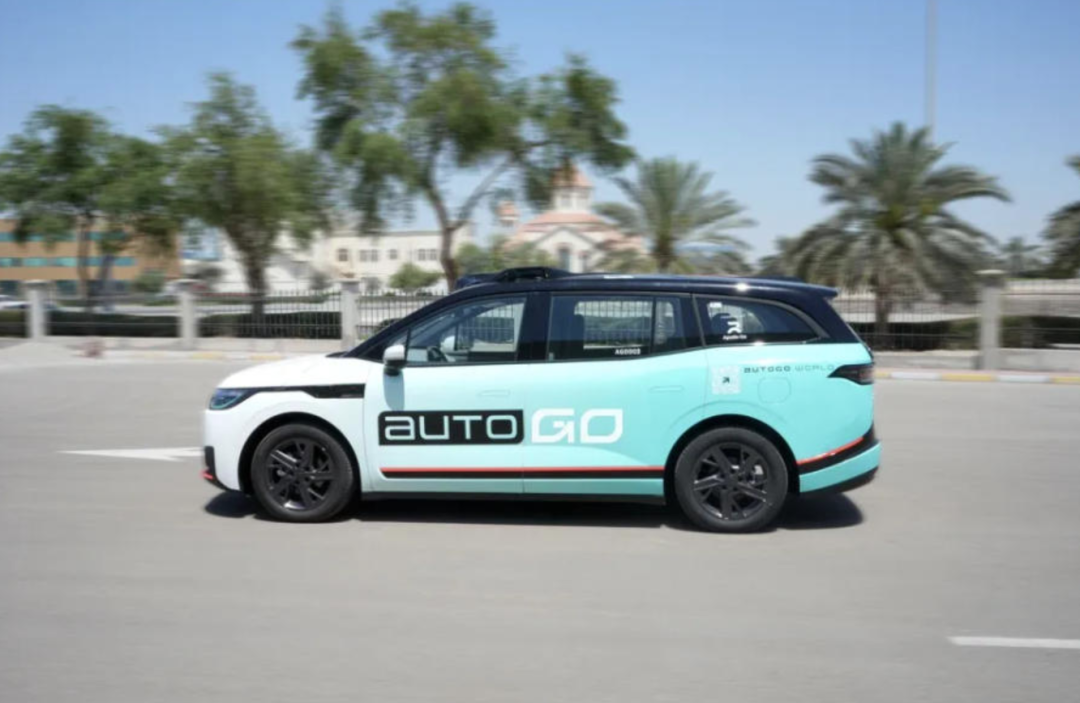
Core Viewpoint - The collaboration between Uber, Lyft, and Baidu marks a significant step in the global expansion of domestic Robotaxi operators, with plans to test autonomous taxis in the UK by mid-2026 using Baidu's Apollo Go RT6 model [2][3][8]. Group 1: Industry Developments - The partnership with Uber and Lyft allows domestic Robotaxi operators to leverage L4 autonomous driving technology for global market expansion [3][9]. - Companies like Pony.ai and WeRide have already begun international operations, with Pony.ai partnering with local transport services in the Middle East [3][10]. - The successful deployment of over a thousand vehicles in cities like Wuhan and Abu Dhabi has led to positive financial outcomes for leading operators, achieving unit economics (UE) profitability [4][10]. Group 2: Financial Performance and Projections - Major players in the Robotaxi sector are achieving profitability on a per-vehicle basis, with significant reductions in vehicle costs contributing to this trend [4][11]. - Pony.ai's seventh-generation Robotaxi has seen a cost reduction of over 70% compared to previous models, with further reductions expected by 2026 [4][11]. - The expansion of fleets and the alleviation of operational pressures are anticipated to drive growth in the Robotaxi market in 2026 [4][11]. Group 3: Investment Recommendations - The acceleration of international expansion by domestic Robotaxi operators is expected to lead to rapid fleet growth in 2026, with a positive outlook for operators and related supply chain companies [5][11]. - Specific stocks to watch include XPeng Motors, Desay SV, Huayang Group, Bertel, Joyson Electronics, Pony.ai, Horizon Robotics, Nexperia, and Top Group [5][12].

汽车行业点评报告:百度无人车布局英国,看好2026年产业爆发
CHINA DRAGON SECURITIES· 2025-12-29 09:12
Investment Rating - The report maintains an investment rating of "Recommended" for the automotive industry [2]. Core Insights - Baidu's collaboration with Uber and Lyft to launch a Robotaxi pilot project in the UK in 2026 is a significant development, indicating a global expansion strategy for domestic Robotaxi operators [3][4]. - The report highlights that leading domestic Robotaxi operators are achieving positive unit economics (UE) per vehicle, driven by fleet expansion and reduced vehicle costs, with expectations for rapid growth in fleet size in 2026 [4]. - The report emphasizes the potential for improved operational performance and market expansion for Robotaxi operators, particularly in regions where traditional ride-hailing costs are significantly higher than in China [4]. Summary by Sections Industry Overview - The report discusses the strategic importance of partnerships with international ride-hailing platforms for domestic Robotaxi operators, facilitating their global market expansion [4]. - It notes that the first L3 level vehicles have received approval for mass production, marking a significant step towards the widespread application of autonomous driving technology [2]. Market Dynamics - The report indicates that leading players in the Robotaxi sector are achieving profitability on a per-vehicle basis, with companies like Luobo Kuaipao and Xiaoma Zhixing reporting positive unit economics in specific cities [4]. - The cost of autonomous driving kits has decreased significantly, with Xiaoma Zhixing reporting a reduction of over 70% compared to previous generations, further supporting profitability [4]. Investment Recommendations - The report suggests focusing on key companies such as XPeng Motors, Desay SV, Huayang Group, Bertel, Junsheng Electronics, Xiaoma Zhixing, Horizon Robotics, Nexperia, and Top Group, as they are expected to perform well in the growing Robotaxi market [4][6].




东吴证券:全球化纵深与AI破局 汽车零部件开启第二增长极
Zhi Tong Cai Jing· 2025-12-29 04:05
Core Viewpoint - The report from Dongwu Securities indicates that the overall Beta of the sector is expected to weaken by 2026, with structural opportunities being more favorable than overall opportunities. The focus should be on three technological main lines: "Intelligent Driving (L2++/L3/L4) + Liquid Cooling (AIDC) + Humanoid Robots," along with the long-term certainty of "going global" [1]. EPS Dimension - The stock market is seeking alpha through cyclical resilience, prioritizing product companies with high competitiveness that can enhance market share and companies that can increase average selling prices (ASP) by entering high-value sectors through internal and external growth [2]. - Globalization is expected to open growth opportunities in the automotive parts sector, with a focus on enhancing growth potential and risk resistance by prioritizing production capacity in Europe, North America, and Southeast Asia. With profit recovery and deeper customer engagement, companies may transition to global Tier 1/platform leaders between 2026 and 2030. Recommended companies include Fuyao Glass, Xingyu Co., Minth Group, Joyson Electronics, and Xingyuan Magnesium, with New Spring Co. as a focus [2]. PE Dimension - Intelligent Driving: The penetration of L2++ is accelerating, with L3 regulations and urban NOA speeding up, and L4-level smart vehicles rapidly coming to market. The focus should be on chips, domain controllers, core sensors, and drive-by-wire chassis, emphasizing systematic capabilities in cost, algorithms, and safety redundancy. Recommended companies include Horizon Robotics, Black Sesame, and Desay SV, with Bertel and Nexperia as points of interest [3]. - Robotics: Transitioning from "0 to 1" to "1 to 10," benefiting from supply chains involving large models, actuators, reducers, lead screws, and force sensors. The focus should be on automotive parts leaders with "technology synergy + manufacturing collaboration." Recommended companies include Top Group, Joyson Electronics, and Shuanghuan Transmission, with interest in Yapp Automotive Parts and Daimay Co. [3]. - Liquid Cooling: Growth in AI capital expenditure and increased power consumption in AIDC; the liquid cooling temperature control market is projected to reach hundreds of billions by 2030. The automotive parts sector should focus on thermal management, pipelines, and quick connectors, emphasizing system integration and cost reduction capabilities. Recommended companies include Minth Group, Yinlun Co., and Feilong Co. [3].

港股新能源汽车概念走强
第一财经· 2025-12-29 01:43
| 资料 | 成分 | 资讯 | 相关基金 | 月度收益 | | --- | --- | --- | --- | --- | | 小鹏汽车-W | | 80.000 | 5.12% | 0.00% | | 9868.HK | | | | | | 零跑汽车 | | 52.000 | 4.12% | -0.769 | | 9863.HK | | | | | | 厨来-SW | | 39.880 | 3.75% | 1.019 | | 9866.HK | | | | | | 比亚迪股份 | | 96.900 | 3.53% | 0.319 | | 1211.HK | | | | | | 吉利汽车 | | 17.480 | 3.31% | 1.339 | | 0175.HK | | | | | | 理想汽车-W | | 67.050 | 3.07% | 0.079 | | 2015.HK | | | | | | 均胜电子 | | 18.420 | 2.45% | -0.169 | | 0699.HK | | | | | | 耐世特 | | 6.670 | 1.21% | 0.769 | | 1316.HK | | | ...

东吴证券:全球化纵深×AI破局 汽车零部件开启第二增长极
Zhi Tong Cai Jing· 2025-12-28 07:49
Core Viewpoint - The automotive parts sector is expected to see a weakening overall Beta by 2026, with structural opportunities being more favorable than total market opportunities. The focus should be on "intelligent driving (L2++/L3/L4) + liquid cooling (AIDC) + humanoid robots" as key technological lines, along with long-term certainty in overseas expansion [1]. Summary by Categories EPS Dimension - Companies should seek alpha through high-competitiveness products that enhance market share and those that can increase average selling price (ASP) by entering high-value sectors through internal and external growth [2]. - Globalization is expected to enhance growth potential and risk resilience in the automotive parts sector, particularly in Europe, North America, and Southeast Asia. With profit recovery and deeper customer engagement, companies may transition to global Tier 1/platform leaders between 2026 and 2030. Recommended companies include Fuyao Glass (600660), Xingyu Co., Ltd. (601799), Minth Group, Joyson Electronics (600699), and Xingyuan Magnesium (301398), with New Spring Co., Ltd. (603179) as a focus [2]. PE Dimension - Intelligent Driving: The penetration of L2++ is accelerating, with L3 regulations and urban NOA speeding up, and L4-level smart vehicles being rapidly deployed. Companies should prioritize chips, domain controllers, core sensors, and drive-by-wire systems that demonstrate systematic capabilities in cost, algorithms, and safety redundancy. Recommended companies include Horizon Robotics, Black Sesame (000716), and Desay SV Automotive, with Bertel (603596) and Nexperia as points of interest [3]. - Robotics: Transitioning from "0 to 1" to "1 to 10," benefiting from large models and supply chains including actuators, reducers, lead screws, and force sensors. Focus should be on automotive parts leaders with "technology synergy + manufacturing collaboration." Recommended companies include Top Group (601689), Joyson Electronics, and Shuanghuan Transmission (002472), with YaPu Co., Ltd. (603013) and Daimay Co., Ltd. (603730) as points of interest [3]. - Liquid Cooling: Growth in AI capital expenditure and increased power consumption in AIDC are expected to create a market space of hundreds of billions for liquid cooling temperature control by 2030. The automotive parts sector should focus on thermal management, pipelines, and quick connectors, emphasizing system integration and cost reduction capabilities. Recommended companies include Minth Group, Yinlun Machinery (002126), and Feilong Co., Ltd. (002536) [3].
【策略报告】汽车零部件2026年投资策略:全球化纵深×AI破局,汽零开启第二增长极
东吴汽车黄细里团队· 2025-12-28 06:24
Core Viewpoint - The overall Beta of the automotive parts sector is expected to weaken in 2026, with structural opportunities being more favorable than total opportunities. The humanoid robot sector opens up valuation elasticity for automotive parts, focusing on three main technology lines: "Intelligent Driving (L2++/L3/L4) + Liquid Cooling (AIDC) + Humanoid Robots," along with the long-term certainty of "going overseas." Traditional advantageous tracks should be selectively laid out based on "performance realization + new order production" [3][8]. EPS Dimension - In the existing market, companies with high competitiveness that enhance market share and those that enter high-value tracks through internal and external expansion to increase ASP should be prioritized. The globalization of automotive parts opens up growth space, with a focus on production capacity in Europe, North America, and Southeast Asia, significantly enhancing growth potential and risk resistance. Companies are expected to transition to global Tier 1/platform leaders between 2026-2030. Recommended companies include Fuyao Glass, Xingyu Co., Minth Group, Joyson Electronics, and Xingyuan Zhuomag, with New Spring Co. as a focus [4][8]. PE Dimension - Intelligent Driving: The penetration of L2++ is accelerating, with L3 regulations and urban NOA speeding up, and L4-level smart vehicles rapidly landing. Focus on chip + domain control + core sensors + steer-by-wire chassis (systematic capabilities in cost/algorithm/safety redundancy). Recommended companies include Horizon Robotics, Black Sesame, and Desay SV. Companies to watch include Bertel and Nexperia [5][9]. - Robotics: Transitioning from "0→1" to "1→10," benefiting from large models + actuators/reducers/lead screws/force sensors, with a focus on automotive parts leaders that have "technological synergy + manufacturing collaboration." Recommended companies include Top Group, Minth Group, and Shuanghuan Transmission, with a focus on Yapu Co. and Daimay Co. [5][9]. - Liquid Cooling: AI capital expenditure growth and AIDC power consumption increase; the liquid cooling temperature control market is expected to reach hundreds of billions by 2030. Automotive parts should focus on thermal management/pipes/quick connectors, emphasizing system integration and cost reduction capabilities. Recommended companies include Minth Group, Yinlun Co., and Feilong Co. [5][9]. Emerging Industries - The expansion of emerging industries is expected to be less than anticipated, with downstream demand also falling short of expectations, and increasing geopolitical uncertainties [7]. Globalization - The global light vehicle market has a capacity of nearly 80 million units. The overseas light vehicle market is vast, with the 2024 overseas light vehicle production expected to reach 51.7 million units, accounting for 66% of the global market. The globalization of automotive parts is crucial for achieving significant revenue scales [47][49][50]. Conclusion - The automotive parts sector is entering a phase where structural opportunities are prioritized over total market growth. Companies focusing on intelligent driving, robotics, and liquid cooling technologies are expected to lead the way, while globalization will enhance growth potential and resilience against risks [3][4][5][8].