
格力电器

Search documents
西部证券晨会纪要-20251222
Western Securities· 2025-12-22 02:54
Group 1: Market Strategy and Economic Outlook - The report suggests that the market is entering a cyclical transition, similar to Japan in 1978, with a recommendation to continue investing in sectors that are expected to reach new highs [1][10] - The anticipated "spring rally" in the A-share market is supported by favorable economic policies and the return of cross-border capital, which could lead to a "Davis Double" effect in the consumer sector [3][21] - The report emphasizes the importance of cyclical recovery in the economy, with a focus on sectors such as non-ferrous metals, new consumption, and high-end manufacturing [10][21] Group 2: Company-Specific Insights - The report on Ecovacs (科沃斯) forecasts revenues of 18.923 billion, 21.973 billion, and 24.919 billion CNY for 2025, 2026, and 2027 respectively, with corresponding net profits of 1.954 billion, 2.306 billion, and 2.777 billion CNY, indicating significant growth potential [2][13] - Ecovacs is expected to benefit from improvements in its cleaning business, the development of its consumer robotics matrix, and synergies from its supply chain layout [13] - The report highlights the potential for the liquid cooling industry to experience significant growth in 2026, with a focus on companies that have technological barriers and can enter major domestic and international supply chains [4][26] Group 3: Industry Trends and Projections - The liquid cooling market is projected to reach a conservative estimate of 6.9 billion to an optimistic 9.7 billion USD by 2026, driven by advancements in GPU technology and increasing demand for efficient cooling solutions [23][24] - The report indicates that the domestic liquid cooling server market is expected to exceed 10 billion USD by 2028, with a compound annual growth rate of 47.6% from 2023 to 2028 [25] - The consumer electronics sector is experiencing a recovery, with a focus on innovative products and market expansion, particularly in the context of the upcoming CES 2026 [32][34]

扩大内需战略解读与推荐
2025-12-22 01:45
Summary of Key Points from Conference Call Records Industry Overview - The focus is on the **expansion of domestic demand** as a long-term structural reform strategy to address challenges such as declining demographic dividends and globalization pressures. The shift is from supply-driven to demand-driven, emphasizing the need to supplement both upstream R&D and downstream consumption [1][2][3]. Core Insights and Arguments - **Increase in Resident Income**: A critical factor for expanding domestic demand. Policies like trade-in subsidies may have a short-term effect but can lead to over-reliance on such measures. The emphasis should be on increasing wage and asset income through fiscal reforms to achieve broad-based benefits [1][6]. - **Consumer Trends**: By 2026, service consumption, high-end consumption, and emerging self-reward consumption are expected to perform well. Policies may favor sectors like tourism and dining, while a declining real estate market could enhance purchasing power for younger consumers [1][9]. - **Investment Focus**: Effective investments are anticipated in water conservancy, energy, municipal infrastructure, and core technology sectors such as AI, biomedicine, and quantum communication. The green transition is expected to unlock consumption potential in areas like eco-tourism and energy-efficient appliances [1][11]. Industry-Specific Insights Home Appliance Sector - The home appliance industry is projected to experience a downturn in the second half of 2025 due to trade-in policies, but a recovery is expected in early 2026 as subsidies are renewed, leading to a replenishment cycle [1][12][13]. - **Sales Data**: By November 2025, air conditioner sales grew by approximately 2%, while refrigerator sales declined by about 1%. The overall industry saw a decline in the latter half of the year, particularly in Q4, where air conditioner sales dropped over 20% [12][13]. Fiscal Policy and Consumer Behavior - The fiscal reform is expected to shift focus from incremental taxation to more comprehensive measures, such as property and capital gains taxes, which will gradually influence overall household income and consumption [7][8]. - The effectiveness of subsidies is questioned, as they may lead to a crowding-out effect on autonomous consumption. For instance, a 300 billion yuan subsidy led to a 2.7 trillion yuan increase in retail sales, but the non-subsidy portion contributed negatively [6]. Investment Recommendations - **Home Appliances**: Companies like Midea, Haier, TCL, and Hisense are recommended for their strong domestic and international performance. The expectation is that these companies will benefit from the renewed subsidy policies in 2026 [15]. - **New Consumption Trends**: Focus on emerging brands in personal care and health products, as well as established brands with significant market barriers, such as Mao Geping and Shanghai Jahwa [18]. - **Health and Wellness Sector**: Companies like Xianle Health and Ximai Foods are highlighted for their growth potential in the health and wellness market, driven by the aging population and increasing health awareness [19][21]. Additional Insights - **Transportation Sector**: The aviation industry is expected to benefit directly from increased demand, while the shipping industry will see indirect benefits from heightened domestic trade activities [28]. - **Agricultural Sector**: Recommendations include focusing on the pet industry and functional ingredients, with companies like Zhongchong and Bailong Chuangyuan showing strong growth potential [31]. Conclusion - The overall sentiment is optimistic regarding the expansion of domestic demand, with significant investment opportunities across various sectors, particularly in health, home appliances, and new consumption trends. The emphasis on increasing resident income and effective fiscal reforms will be crucial in driving this growth [26][27].
2025年中国除湿机行业政策、发展历程、产业链、发展规模、市场集中度、重点企业及发展趋势研判:随着应用场景的不断拓展,需求不断增加,增长潜力强劲[图]
Chan Ye Xin Xi Wang· 2025-12-22 01:16
Core Viewpoint - The dehumidifier market in China is experiencing significant growth due to increasing awareness of indoor environmental quality, technological advancements, and expanding applications in various sectors such as biomedicine, data centers, and new energy battery production [1][6]. Industry Definition and Classification - Dehumidifiers, also known as moisture removers, consist of components such as compressors, heat exchangers, air duct systems, water tanks, controllers, and casings [2][4]. - They can be categorized based on usage scenarios (household, commercial, industrial), dehumidification methods (refrigeration, wheel, solution), and functionalities (standard, cooling, temperature control, multifunctional) [3][4]. Market Demand and Supply - In 2024, China's dehumidifier production is projected to reach 12.95 million units, with a demand of 1.83 million units and a market size of 2.566 billion yuan; by 2025, production is expected to be 12.09 million units, demand 1.75 million units, and market size 2.407 billion yuan [6][8]. - The household dehumidifier segment dominates the market, accounting for approximately 63.91% in 2024, with commercial and industrial dehumidifiers making up 18.36% and 17.73%, respectively [8]. Industry Development Environment - The Chinese government has implemented various policies to encourage the development of the dehumidifier industry, including measures to promote green and intelligent home appliance consumption [4][5]. Industry Chain - The upstream of the dehumidifier industry includes key raw materials and components such as compressors, fans, heat exchangers, water tanks, and controllers, while the midstream involves manufacturing, and the downstream applications span households, commercial, and industrial sectors [10][11]. Competitive Landscape - The domestic dehumidifier market features a mix of major home appliance companies (e.g., Midea, Gree, Haier) and specialized brands (e.g., Deye, Oujing) [14][15]. - The market is characterized by a "domestic-led + imported high-end coexistence" structure, with domestic brands focusing on mid-to-high-end markets and imported brands targeting high-end segments [14][15]. Key Companies - Deye Technology Co., Ltd. is a leading player in the dehumidifier market, focusing on innovation and high-end industrial dehumidifiers, with a projected total cost of 635 million yuan for its products in 2024 [12][17]. - Oulun Electric Co., Ltd. has established a comprehensive product system covering household, commercial, and industrial dehumidifiers, with dehumidifier revenue accounting for approximately 55.15% of its total revenue in 2024 [19]. Industry Trends - The dehumidifier industry is moving towards smart, energy-efficient, and environmentally friendly solutions, with a focus on enhancing user experience and expanding market demand [20][21]. - There is a trend towards customized products for specific scenarios and the integration of multiple functions, such as dehumidification combined with air purification and temperature control [21][22]. - The industry is expected to see increased concentration, with leading companies leveraging technology and scale to maintain competitive advantages, while niche players may find opportunities in specialized markets [22][23].






家电周报:iRobot破产重组,追觅科技实控人收购嘉美包装-20251221
Shenwan Hongyuan Securities· 2025-12-21 13:15
Investment Rating - The report maintains a positive outlook on the home appliance sector, indicating that the sector has outperformed the CSI 300 index, with a 0.2% increase in the home appliance index compared to a 0.3% decrease in the CSI 300 index [4][5]. Core Insights - The home appliance sector is experiencing a mixed performance, with leading companies like Zhejiang Meida, Aojiahua, and Biyi Co. showing significant gains, while companies like Lek Electric and Huaxiang Co. are facing declines [4][7]. - The acquisition of Jiamei Packaging by the actual controller of Chasing Technology for 2.282 billion yuan is a notable industry development, with commitments for stable profit growth [10]. - iRobot, a leading global brand in robotic vacuum cleaners, has filed for bankruptcy protection and is expected to be acquired by Shenzhen Shanjun Company, highlighting competitive pressures from Chinese firms [11]. - November sales data for major appliances show significant declines in both volume and revenue, with air conditioners, refrigerators, and washing machines all experiencing substantial drops [35][37][40]. Summary by Sections Industry Performance - The home appliance sector has outperformed the broader market, with a 0.2% increase in the sector index against a 0.3% decline in the CSI 300 index [4][5]. - Key companies leading the gains include Zhejiang Meida (up 12.2%), Aojiahua (up 8.1%), and Biyi Co. (up 4.1%), while Lek Electric (-10.9%), Huaxiang Co. (-4.7%), and Sanhua Intelligent Control (-3.5%) faced declines [4][7]. Industry Dynamics - Jiamei Packaging was acquired for 2.282 billion yuan, with commitments for a minimum net profit of 1.2 billion yuan from 2026 to 2030 [10]. - iRobot's bankruptcy highlights the competitive landscape, with its revenue of $146 million in Q3 2025 and a loss of $22 million, alongside a cash reserve of only $25 million [11]. Sales Data Observations - November data shows a significant decline in sales for major appliances: air conditioners down 47.4% in volume and 55.7% in revenue, refrigerators down 44.6% in volume and 51.7% in revenue, and washing machines down 42.0% in volume and 50.0% in revenue [35][37][40]. - The average prices for air conditioners, refrigerators, and washing machines have also decreased, indicating a challenging market environment [35][37][40].
家用电器行业周度跟踪:关注11月海外边际修复及26年1月CES智能终端创新-20251221
Western Securities· 2025-12-21 11:36
Investment Rating - The industry investment rating is "Overweight" and has been maintained from the previous rating [5][10]. Core Insights - The report highlights a recovery in overseas markets in November and anticipates innovations in smart terminals at CES 2026 [4]. - The white goods sector is experiencing stable operations, with a focus on value configuration despite a year-on-year decline in retail sales [2]. - Companies like Midea and Haier are noted for their proactive strategies and strong overseas momentum, while Gree and Aux are recognized for their potential value [2][3]. Summary by Sections White Goods - Retail sales in November showed a year-on-year decline of 19%, influenced by policy changes and high base effects [2]. - Production volumes for refrigerators, air conditioners, washing machines, and color TVs were reported at 9.44 million, 15.03 million, 17.45 million, and 12.01 million units, with respective year-on-year changes of +5.6%, -23.4%, -5.0%, and +5.5% [2]. - Export volumes for the same categories were 6.72 million, 2.7 million, 9.15 million, and 3.16 million units, with year-on-year changes of +5.6%, -28.0%, -1.3%, and +20.3% [2]. Company Developments - Midea has restructured its organization, establishing a "New Energy Division" to enhance its B-end strategy [3]. - Haier's overseas strategy is showing results, with a 34% increase in washing machine sales in Southeast Asia [3]. - Hisense's new manufacturing facility in Changsha has commenced operations, with a total investment of 10 billion yuan [3]. Consumer Technology - The report notes a positive outlook for consumer technology, particularly in the cleaning segment, with iRobot's acquisition by Shanchuan to mitigate risks [4]. - Anker's sales have shown recovery, with a 2.7% increase in Q3 and a 1.4% increase in October-November [4]. Investment Recommendations - The report recommends focusing on white goods, particularly Haier, Midea, and Gree, due to their strong market positions and potential benefits from overseas interest rate cuts [8]. - It also suggests selecting consumer technology stocks like Ecovacs and Anker, while keeping an eye on the 3D printing industry for growth opportunities [8].
家电行业2025W50周报:家空内外销均有所承压,iRobot官宣破产重组-20251221
GUOTAI HAITONG SECURITIES· 2025-12-21 11:36
Investment Rating - The industry investment rating is "Overweight" [5] Core Insights - The home appliance industry is experiencing pressure in both domestic and international sales, with iRobot announcing bankruptcy restructuring, which will be acquired by Chinese manufacturer Shanjun Robotics [2][5] - In November, the retail sales of home appliances and audio-visual equipment reached 100 billion yuan, a year-on-year decline of 19.4%, while the cumulative annual sales reached 1,074.9 billion yuan, with a year-on-year increase of 14.8% [5] - The production and sales data for home air conditioners in November showed a production of 10.577 million units, a year-on-year decrease of 36.7%, and sales of 10.492 million units, a year-on-year decrease of 31.8% [5] Summary by Sections Investment Recommendations - Key drivers for investment include overseas expansion and smart home technology, recommending leading companies in the robotic vacuum sector: Roborock (21.1X 2025 PE) and Ecovacs (21.5X) [5] - Companies with stable performance and upward potential include Ninebot (20.6X), Anfu Technology (41.7X), Hailong Cold Chain (14.6X), and Beiding Co. (30.4X) [5] - For companies with robust operations and high dividends, recommendations include TCL Electronics (12.2X), Hisense Visual (12.9X), Midea Group (13.5X), and Haier Smart Home (12.2X) [5] - Companies diversifying into new sectors include Rongtai Health (18.7X) and Wanlong Magnetic Plastic (18.9X) [5] Market Performance - The retail sales growth rate further narrowed in November, with the total retail sales of consumer goods reaching 43,898 billion yuan, a year-on-year increase of 1.3% [5] - The domestic market faces pressure from the decline in national subsidies and high base effects, while the export market is constrained by high base effects and inventory reduction in some overseas markets [5] Company Developments - iRobot has announced its bankruptcy and will be acquired by Shanjun Robotics, with the restructuring process expected to be completed by February 2026 [5] - The founder of Chasing Technology, Yu Hao, plans to acquire 54.90% of Jiamei Packaging, with a total transaction value of approximately 2.282 billion yuan [5]



野村- 耐用品26年投资策略 - 坚定出海搏增长,关注美洲与新兴市场机遇
野村· 2025-12-21 11:01
Investment Rating - The report maintains a positive investment outlook for companies focusing on overseas markets, particularly in the Americas and emerging markets, despite challenges in domestic sales [4][5]. Core Insights - The report emphasizes the importance of "going abroad" as a key strategy for growth, with expectations for better investment returns from overseas-focused companies in 2026, especially as domestic demand faces pressures from policy and market conditions [4][5]. - It identifies three main factors suppressing domestic sales of durable goods: the depletion of government subsidies, high base effects, and weak housing transaction demand [5][6]. - The report suggests that companies with strong operational performance and low valuations, as well as those benefiting from policy or technological catalysts, are potential investment opportunities [5][6]. Summary by Sections 2025 Review - The report notes that the home appliance and light industry sectors have underperformed compared to the CSI 300 index, primarily due to weakening domestic demand and external tariff disruptions [9][11]. - It highlights that the home appliance sector has faced challenges from declining government subsidies and ongoing tariff issues, leading to a significant drop in export performance [9][10]. 2026 Outlook - The report anticipates that domestic housing demand will continue to decline, with new housing starts and sales expected to drop by 4.8% in 2026 [36][39]. - It predicts that the overseas sales performance of home appliance and furniture companies may improve in the second quarter of 2026, driven by base effects and potential recovery in the U.S. housing market [78][80]. - The report emphasizes that companies with significant exposure to the U.S. and emerging markets are likely to benefit from improving demand conditions [80][81]. Recommended Stocks - The report recommends furniture companies with a presence in the U.S., Latin America, and Europe, such as Kuka Home, which are expected to benefit from a recovery in U.S. housing transactions [7]. - It also suggests consumer electronics and home appliance companies with operations in Latin America, North America, and Southeast Asia, including Anker Innovations and Haier Smart Home, ranked by their exposure to these markets [7]. - Lastly, it highlights export-oriented companies in Europe, such as Ecovacs and Roborock, noting that while growth potential is strong, profitability may be pressured by increased competition [7].



“高息现金牛”策略:分红能力与意愿的双重验证
ZHONGTAI SECURITIES· 2025-12-21 10:13
Group 1: Allocation Demand in Low-Interest Rate Environment - The demand for dividend-related assets is expected to continue increasing, driven by the need for stable cash returns in a low-interest rate and asset scarcity environment [4][9]. - As of December 17, 2025, the tracking scale of dividend index ETFs approached 200 billion, while cash flow-related products reached 24.8 billion since their issuance in February of the same year [9]. Group 2: Comparison of Dividend and Free Cash Flow Indices - The report outlines the selection rules for the CSI Dividend Index and the National Index Free Cash Flow, emphasizing liquidity and consistent dividend payments over the past three years [12]. - The performance comparison shows that both dividend and cash flow indices outperformed the overall market during periods of market downturns, indicating their defensive characteristics [15]. Group 3: Relationship Between Dividend Capability and Willingness - There is a significant positive correlation between dividend yield and free cash flow, indicating that companies with high cash flow are more willing to distribute dividends [51]. - The analysis shows that companies with a history of consistent dividends and strong cash flow tend to have more stable and superior long-term stock price performance [59]. Group 4: "High-Yield Cash Cow" Strategy Construction - The "High-Yield Cash Cow" strategy involves selecting stocks based on high free cash flow rates and consistent dividend payments, excluding financial and real estate sectors [59]. - The strategy has shown strong performance, with the "Cash Cow 50 High Yield 30" combination achieving an annualized return of 25.9% since 2014, outperforming the CSI Dividend Index by 13.5% [62].




避免被卡脖子,空调铝代铜不可逆,焊接技师发话:一分钱一分货
Xin Lang Cai Jing· 2025-12-20 19:15
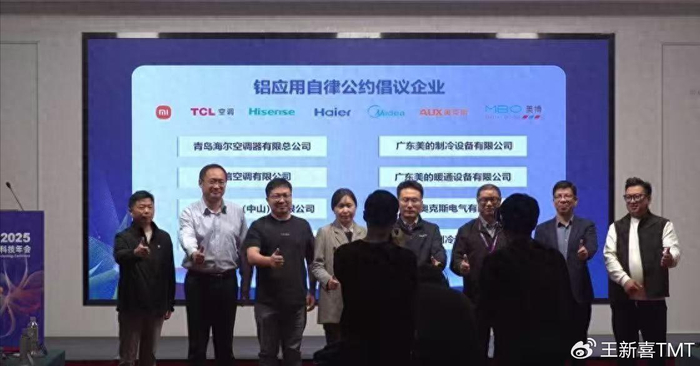
Core Viewpoint - The Chinese air conditioning industry is undergoing an unprecedented material and process transformation, with major brands signing a self-regulatory agreement to promote the use of aluminum instead of copper in air conditioning systems [1] Industry Overview - Traditionally, air conditioning products have relied heavily on copper, with copper consumption in the domestic air conditioning industry accounting for 10.7% of China's total copper consumption, approximately 1.723 million tons in 2023 [3] - The shift to aluminum is driven by the high cost of copper, which constitutes 20%-27% of manufacturing costs, and the fact that China imports 80% of its copper while producing 60% of the world's electrolytic aluminum [4][9] Technical Challenges - The debate over aluminum replacing copper stems from aluminum's inferior thermal conductivity, corrosion resistance, and mechanical durability compared to copper [4] - Concerns have been raised about the reliability of critical components, such as the four-way valve, if aluminum is used instead of copper, as welding between dissimilar metals poses significant challenges [6] Cost Analysis - The cost difference between copper and aluminum is substantial; for a typical 1.5 HP air conditioner, the copper components can cost around 400 yuan, while aluminum components may only cost about 34.5 yuan, leading to a price difference of approximately 365.5 yuan per unit [8] - This cost advantage makes aluminum an attractive option for manufacturers looking to compete on price [8] Strategic Implications - The transition to aluminum is not only a cost-saving measure but also a strategic move to reduce dependency on imported copper, as China consumes 50% of the world's copper but has only 4%-5% of global copper reserves [9] - The increasing demand for copper in other industries, such as electric vehicles and renewable energy, is further straining the supply available for air conditioning [12][14] Future Outlook - While aluminum's thermal and electrical properties are only 60% of those of copper, its lighter weight and lower cost present significant opportunities for innovation [24] - The automotive industry has already made strides in aluminum-copper material innovation, suggesting that similar advancements could be made in the air conditioning sector [25] - The ability of manufacturers to enhance the durability and quality of aluminum air conditioners will be crucial in determining their competitiveness in the market [25]
估值周报:最新A股、港股、美股估值怎么看?-20251220
HUAXI Securities· 2025-12-20 14:52
Group 1: A-share Market Valuation - The current PE (TTM) of the A-share market is 16.26, with a median of 13.54 and a maximum of 30.60 since January 2010[11][15]. - The PE (TTM) for the Shanghai Composite Index is 14.06, while the CSI 300 is at 13.29, indicating a relatively low valuation compared to historical averages[11][15]. - The A-share market's risk premium rate is currently at 0.70%, reflecting a stable investment environment[18]. Group 2: Hong Kong Stock Market Valuation - The Hang Seng Index has a current PE (TTM) of 11.78, with a median of 10.30 and a maximum of 22.67 since January 2010[57][56]. - The Hang Seng Technology Index shows a current PE (TTM) of 23.10, indicating a higher valuation compared to the broader market[63]. - The current valuation of key Hong Kong stocks like Tencent and Alibaba shows a median PE of 35.56 and 22.14, respectively[77]. Group 3: U.S. Stock Market Valuation - The S&P 500 Index has a current PE (TTM) of 28.80, with a median of 21.14 and a maximum of 41.99 since January 2010[82][81]. - The NASDAQ Index shows a current PE (TTM) of 40.84, indicating a high valuation compared to historical data[87]. - The Dow Jones Industrial Average has a current PE (TTM) of 30.16, reflecting a strong market performance[93]. Group 4: Sector Valuation Insights - Non-bank financials, food and beverage, and non-ferrous metals sectors have lower PE ratios, indicating potential undervaluation[25]. - The technology sector, including computing and electronics, shows higher PE ratios, suggesting overvaluation compared to historical norms[25]. - The current PB (LF) for the banking sector is at 0.54, indicating a low valuation relative to book value[28].