
vivo

Search documents
黄仁勋“救了”雷军,但苦了明年买手机的人
3 6 Ke· 2025-11-20 09:28
Core Insights - The price increase of the Redmi K90 series is attributed to the significant rise in memory costs, which has affected multiple smartphone manufacturers [2][6][24] - The surge in memory prices is primarily driven by the booming demand for AI-related products, particularly from companies like NVIDIA, which has led to a reallocation of production capacity away from traditional memory products [7][12][24] - The smartphone market is expected to experience a polarization, with high-end brands like Apple and Huawei less affected by memory price increases compared to budget brands like Xiaomi and OPPO, which may struggle to maintain profitability [13][17][24] Price Increases and Market Dynamics - The Redmi K90 standard version is priced at 2599 yuan, which is 300 yuan more than its predecessor, with additional costs for higher storage options [2] - Many smartphone manufacturers, including Xiaomi, OPPO, and Vivo, are facing pressure to increase prices due to rising memory costs, with some already raising prices for flagship models [18][19] - TrendForce predicts that the overall smartphone prices will increase by 5%-15% in 2026, with an average increase of around 500 yuan per device [18][24] Impact of AI on Memory Prices - The demand for AI computing has drastically increased the need for high-bandwidth memory (HBM), leading manufacturers to prioritize HBM production over traditional memory types [9][12] - The profit margins for HBM are significantly higher than those for standard mobile memory, incentivizing manufacturers to allocate more resources to AI-related products [12][11] - The current memory price surge is expected to last longer than typical cycles due to cautious production expansion by suppliers fearing an AI bubble [24] Consumer Experience and Product Adjustments - Many smartphone manufacturers are resorting to reducing specifications in new models to offset rising costs, which has become a common practice in the industry [19][22] - The reduction in features, such as screen resolution and camera quality, reflects a broader trend of cost-cutting measures in response to increased material costs [22] - The high-end brands like Apple and Huawei are less likely to pass on costs to consumers, maintaining their pricing strategies without significant adjustments [16][17]



vivo携手顺丰升级“顺回收” 以旧换新+保值换新升级消费体验
Sou Hu Cai Jing· 2025-11-20 06:11
Core Insights - Vivo has launched an innovative one-stop service for users to exchange old devices for new ones, addressing key pain points in the device upgrade process [1][3][9] Group 1: User Experience Enhancement - The collaboration between Vivo and SF Express aims to create a seamless experience for users, focusing on convenience, transparency, and security in the device exchange process [1][3] - The "Shunhuishou" service has been upgraded to integrate Vivo's "Value Exchange" plan, effectively addressing issues such as opaque pricing and long reimbursement cycles [3][5] Group 2: Service Efficiency - The new service allows for a rapid exchange process, with the potential for users to receive their new devices within one hour, significantly reducing the traditional 3-5 day wait time [7] - Users can initiate the exchange through the Vivo app, which has over 200 million active users, facilitating a direct connection between the brand and consumers [5][9] Group 3: Financial Accessibility - The "Value Exchange" plan allows users to pay an additional fee of 299 yuan when purchasing a new device, enabling them to receive a discount of 70%-80% on the new device price if their old device meets the condition of being at least 90% new [7] - The service also includes measures to protect user privacy during the exchange process, ensuring that old devices are securely wiped before being resold or recycled [7][9]


中国全面拥抱 eSIMs:苹果引领智能手机新时代
Counterpoint Research· 2025-11-20 04:14
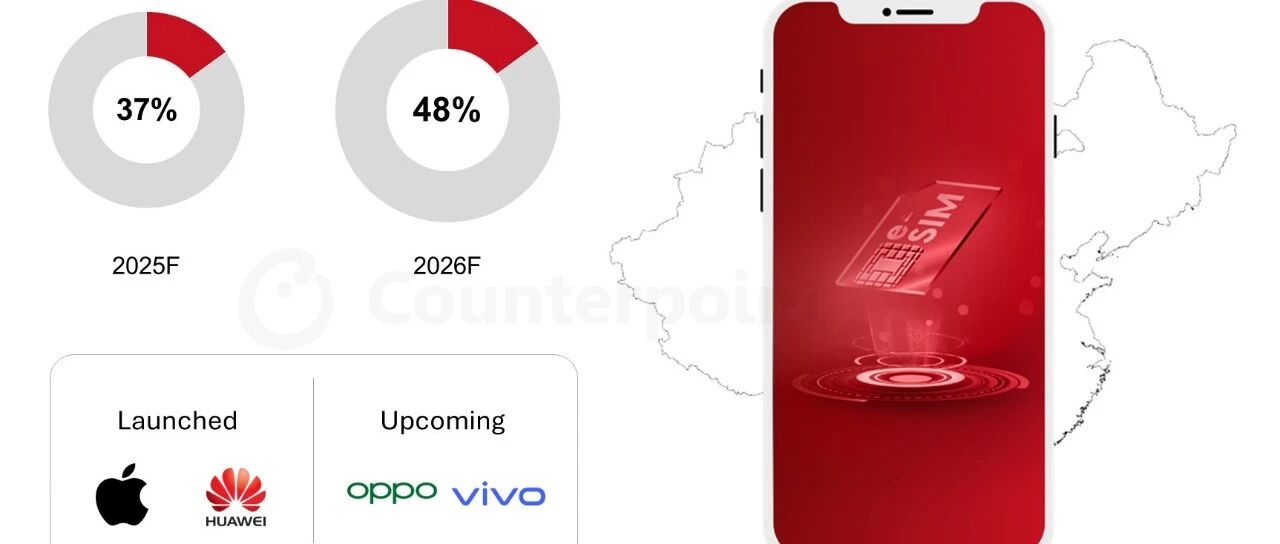
Core Insights - The article discusses the cautious adoption of eSIM technology in China due to regulatory and data security concerns, with a significant breakthrough expected in 2025 when eSIM trials for smartphones will commence [4][5][6]. Group 1: eSIM Technology in China - China has been hesitant to adopt eSIM technology in smartphones due to concerns over user identity verification and network regulation, leading to a preference for dual physical SIM card slots [5]. - The introduction of eSIM is expected to enhance device design by allowing for larger batteries and improved features, as eSIM integration eliminates the need for a SIM card slot [7][9]. Group 2: Market Impact and Projections - The approval of eSIM trials in China marks a new phase for the domestic market, with projections indicating that eSIM smartphones will account for 37% of global smartphone sales by 2025, increasing to 48% by 2026 [11]. - Apple's launch of the iPhone 17 Air, the first iPhone in China to support only eSIM, is anticipated to accelerate the adoption of eSIM technology among local brands and telecom operators [7][11]. Group 3: Competitive Landscape - The shift towards eSIM is expected to reshape the global smartphone industry, with Chinese manufacturers likely to gain a competitive edge as they adapt to this technology [11]. - As eSIM technology matures and carrier support increases, it is expected to penetrate mid-range and budget devices, moving beyond high-end models [9].

小米 17 Ultra黑科技曝光,手机摄影三大趋势已明?
3 6 Ke· 2025-11-20 04:11
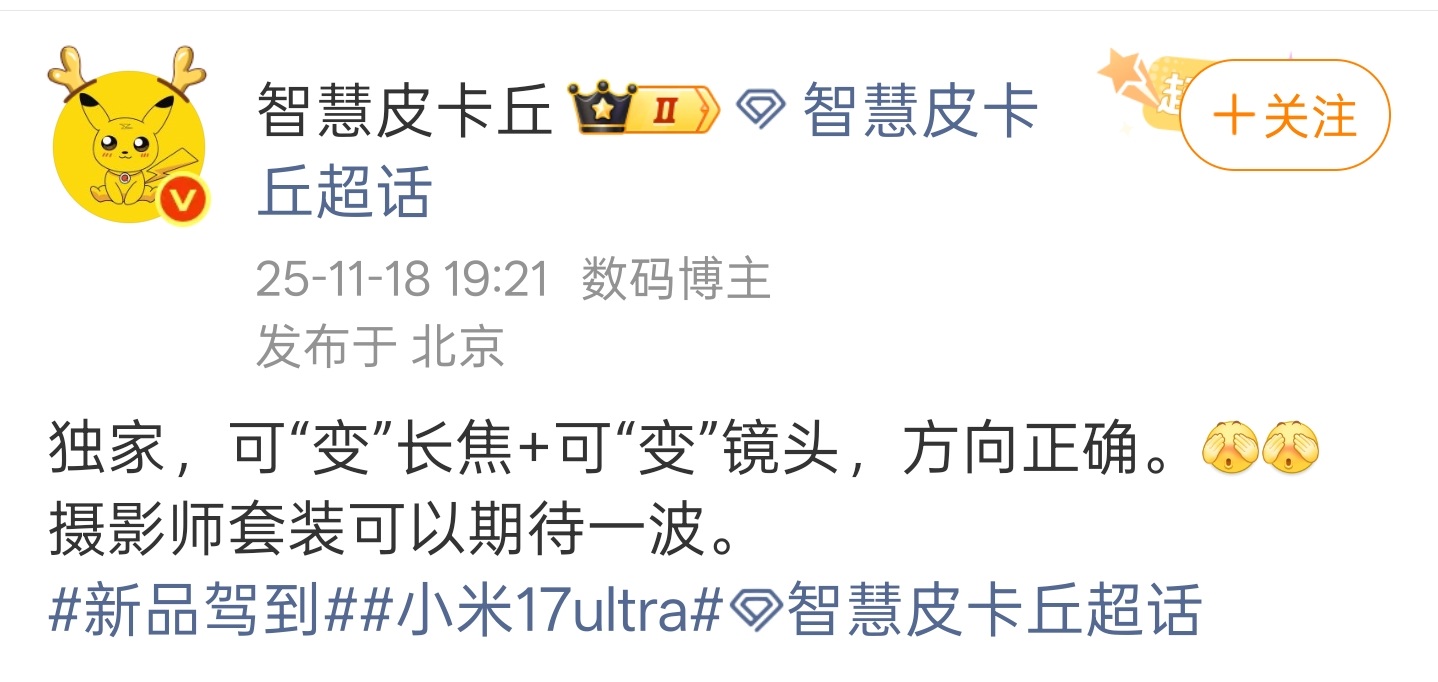
Core Viewpoint - Xiaomi's upcoming 17 Ultra smartphone is expected to feature innovative imaging technology, specifically a "variable focal length" and "variable lens" system, which aims to enhance photography capabilities in mobile devices [1][12]. Group 1: Variable Focal Length Technology - The "variable focal length mobile camera system" represents an optimization of traditional optical zoom technology, allowing for seamless adjustment of focal lengths between 3x to 7x, thus addressing quality gaps in conventional multi-camera setups [5][6]. - This technology enhances hardware utilization by enabling a single variable focal length lens to perform the functions of multiple fixed focal length lenses, thereby freeing up space for other components like batteries and heat dissipation systems [5][12]. - Consistency in image quality and color across different focal lengths is achieved, minimizing discrepancies that often arise from using multiple lenses, which is particularly beneficial for users who process large volumes of photos [6][12]. Group 2: Market Context and Competitive Landscape - The exploration of variable focal length technology is not new; previous attempts by brands like Nokia and later Xiaomi and OPPO have laid the groundwork, indicating a market demand for flexible zoom capabilities [6][8]. - The current trend in mobile imaging is shifting from merely stacking lenses to optimizing single-lens performance, which could redefine the development logic of mobile photography [16][18]. - The competitive landscape among domestic flagship brands has evolved into a comprehensive competition involving hardware development, algorithm optimization, and user insights, with each brand addressing different pain points in mobile photography [18][20]. Group 3: Future Trends in Mobile Photography - The future of mobile photography is expected to see three major trends: integration of technology, professional experience simplification, and scene-specific optimizations, allowing users to achieve high-quality results across various environments [20][22]. - The advancements in imaging technology are likely to democratize high-quality photography, enabling users to create professional-grade images without the need for expensive equipment [22].
段永平传奇
3 6 Ke· 2025-11-20 01:58
Group 1 - The article highlights the philanthropic efforts of Duan Yongping, who donated 220 million RMB to Beijing Normal University, emphasizing his connection to education and his mother's influence [2][4]. - Duan Yongping has donated over 1 billion RMB to various universities over the past two decades, showcasing his commitment to education and knowledge [4]. Group 2 - Duan Yongping's early life involved significant hardships, including relocating to rural areas, which shaped his understanding of hard work and perseverance [5][6][8]. - He faced challenges in his education, initially failing to pass the college entrance exam but later succeeding and attending Zhejiang University, where he developed a strong foundation in knowledge [9][12][14]. Group 3 - Duan Yongping transformed a struggling factory into a successful gaming company by focusing on the production of small gaming consoles, which led to the creation of the "Little霸王" learning machine [21][28]. - The "Little霸王" brand became a household name, achieving a market share of nearly 80% in its segment, demonstrating effective marketing and product positioning [30][34]. Group 4 - After leaving the "Little霸王" company, Duan Yongping founded BBK Electronics, implementing an employee stock ownership plan to foster loyalty and collaboration [40][41]. - BBK Electronics quickly gained market leadership in various product categories, including telephones and VCDs, underlining Duan Yongping's strategic vision [46][49]. Group 5 - Duan Yongping transitioned to investing in the U.S. stock market, achieving significant returns, particularly with his investment in NetEase, which turned $200,000 into over $100 million [50][51]. - He adopted investment principles similar to Warren Buffett, focusing on companies with strong business models and long-term value [51][53]. Group 6 - Duan Yongping is recognized as a mentor to many successful entrepreneurs in China, instilling in them a philosophy of integrity and long-term thinking in business [55][57]. - His influence extends to major companies like OPPO and Vivo, where his teachings on doing the right thing and maintaining focus have been embraced [56][58].


2025年第45周:数码家电行业周度市场观察
艾瑞咨询· 2025-11-20 00:04
Group 1: eSIM Technology - eSIM technology marks the transition to a "cardless era" in smartphones, with major manufacturers like Huawei and OPPO quickly adapting to this trend [2][3] - The launch of Apple's iPhone Air has prompted domestic manufacturers to develop eSIM-compatible devices, although consumer response indicates a preference for functionality over extreme thinness [2][3] Group 2: AI in Mobile Technology - Mobile AI is evolving from traditional voice assistants to self-evolving AI-native phones, becoming a key player in the smart economy [4] - Companies like Honor and Huawei are leveraging edge-cloud collaboration to enhance AI capabilities in various consumer scenarios, indicating a shift towards intelligent service hubs [4] Group 3: Edge Computing and AI Applications - A significant percentage of Chinese enterprises believe generative AI will disrupt their business within the next 18 months, with many already implementing it [5] - Edge computing is becoming essential for AI applications, addressing latency, cost, and compliance issues, with predictions that 80% of CIOs in Asia-Pacific will rely on edge services by 2027 [5] Group 4: Robotics and AI - The humanoid robot industry in China is making strides in hardware production and cost control, but still lags behind the U.S. in intelligent models and software ecosystems [6][7] - The competition in humanoid robotics will hinge on breakthroughs in "embodied intelligence," with both countries vying for leadership in AI and robotics [6][7] Group 5: AI in E-commerce - AI-driven e-commerce products are gaining traction, but user experience remains a challenge, with competition focusing on information distribution and execution capabilities [8] - The future of AI e-commerce will revolve around understanding consumer needs, although widespread adoption may take time [8] Group 6: AI Emotional Companionship - AI applications for emotional companionship are rising in popularity, with Chinese entrepreneurs leveraging hardware supply chains to accelerate deployment [9] - The user base for generative AI in China has grown significantly, indicating a strong market potential for emotional AI applications [9] Group 7: AI Headphones Market - The AI headphones market has rapidly transitioned from concept to scale, with a significant portion of products priced below 500 yuan [10] - The market is diversifying, with different brands targeting various segments, but user satisfaction remains mixed [10] Group 8: Virtual Idols and AI - The AI virtual idol sector is experiencing a resurgence, significantly lowering production costs and time [12] - Successful cases demonstrate the potential for virtual idols to become global IPs, although challenges in content quality and consistency remain [12] Group 9: Smart Glasses Market - The year 2025 is projected to be pivotal for smart glasses, with numerous manufacturers entering the market [13] - Key challenges include privacy concerns and technological limitations, which must be addressed for widespread adoption [13] Group 10: Humanoid Robots and Chip Demand - The humanoid robot industry is expected to grow rapidly, with significant demand for AI chips, particularly in motion control and visual sensing [17] - Domestic manufacturers are gradually catching up in the chip supply chain, although high-end AI chips still rely on international suppliers [17] Group 11: Global Expansion of Chinese Home Appliances - Chinese home appliance companies are diversifying their overseas presence to mitigate risks and enhance competitiveness [18] - Digital technology is a key driver of this strategy, with companies like Midea and TCL leading the way in global manufacturing and R&D [18] Group 12: AI Chip Industry Dynamics - The AI chip industry in China is characterized by a practical approach, focusing on technology implementation and industrial empowerment [19][20] - The competition will center on third-party markets, with a shift towards specialized chips and ecosystem development [19][20] Group 13: Meta's AI Strategy - Meta is adjusting its strategy in the AI sector by laying off staff and recruiting top talent to enhance its model development capabilities [21] - The company's future success will depend on its ability to translate investments and talent into technological breakthroughs [21] Group 14: Hisense's Financial Performance - Hisense reported steady revenue growth in its recent quarterly results, driven by advancements in display technology and high-end product sales [22] - The company is well-positioned for future growth, particularly in the commercial display sector [22] Group 15: Alibaba's AI Glasses - Alibaba's Quark AI glasses have begun pre-sales, integrating various services from its ecosystem [24] - The product is seen as a significant step in showcasing Alibaba's AI capabilities and ecosystem collaboration [24] Group 16: Midea's R&D Investment - Midea plans to invest over 50 billion yuan in R&D over the next three years, focusing on AI and embodied intelligence [25] - The company aims to enhance its global competitiveness and technological leadership through this investment [25] Group 17: Huawei's HarmonyOS 6 - Huawei's HarmonyOS 6 has been launched with significant upgrades in performance and connectivity features [26] - The company is actively working to expand its global market share and reshape the operating system landscape [26] Group 18: New Stone's Autonomous Delivery Vehicles - New Stone has secured significant funding to expand its autonomous delivery vehicle operations, projecting substantial growth in demand by 2027 [27][28] - The company is focusing on algorithm upgrades and global market expansion to meet future demand [27][28] Group 19: Tesla's Compensation Plan - Tesla's proposed compensation plan for CEO Elon Musk has drawn scrutiny, with significant performance targets set for stock incentives [29] - The plan aims to ensure Musk's focus on the company's transition to autonomous driving and robotics [29] Group 20: Qualcomm's AI Chip Launch - Qualcomm has introduced new AI inference chips targeting a rapidly growing market, emphasizing energy efficiency and cost [30] - The company is expanding its presence in various sectors, including smart driving and IoT, to mitigate potential revenue challenges [30] Group 21: NVIDIA's Market Position - NVIDIA has achieved a remarkable market valuation, driven by surging demand for AI computing power [31] - However, concerns about potential market bubbles and geopolitical risks pose challenges for the company's future growth [31] Group 22: Haier's IPO Plans - Haier is preparing for an IPO of its industrial internet platform, aiming to raise significant capital for further development [33] - The platform has already made substantial contributions to various industries, indicating strong market potential [33] Group 23: Xiaomi's Growth Strategy - Xiaomi aims to enter the global top 100 companies within five years, focusing on high-end technology and chip development [34] - The company is also expanding its global presence and product offerings to drive growth [34] Group 24: Ant Group's AI Strategy - Ant Group is shifting its focus from digital payments to intelligent payments, leveraging AI as a core strategy [36] - The company aims to integrate AI with user needs to capture new opportunities in the AI era [36]





荣耀五周年,竞逐万亿元人形机器人市场新蓝海
Zhong Guo Zheng Quan Bao· 2025-11-19 14:01
Core Insights - Honor has successfully transformed from a mid-range smartphone brand to a leading player in the high-end smartphone market, focusing on AI terminal ecosystems and innovative technologies [1][2][4] Group 1: Market Position and Strategy - Honor's CEO announced the "Alpha Strategy" in March, aiming to transition from a smartphone manufacturer to a global AI terminal ecosystem company, with over $10 billion planned for ecosystem development over five years [2][4] - By Q3 2025, Honor's smartphone shipments in China reached approximately 9.9 million units, ranking fifth in the market, driven by the success of the Honor 400 and X70 series [2] - In the global smartphone market, Honor, along with Samsung, Apple, and Transsion, contributed to a 3% year-on-year increase in shipments, with each brand's shipments rising by over 2 million units compared to 2024 [2] Group 2: High-End Smartphone Market - The high-end smartphone segment, priced above $600, saw an 8% year-on-year increase in sales in the first half of 2025, marking a historical high [3] - The foldable smartphone market is maturing, with Honor capturing a 11.2% market share in China, ranking second, thanks to the performance of the Magic V5 and Magic V Flip series [3] Group 3: AI and Ecosystem Development - Honor's transition to an AI terminal ecosystem company is seen as a forward-looking strategy, with AI becoming a critical competitive factor in the industry [4][8] - The launch of the Magic8 series, which integrates AI capabilities across various scenarios, signifies Honor's commitment to enhancing user experience through AI [4] - Honor's "1×3×N" strategy aims to create a cross-brand, cross-scenario, and cross-device intelligent interconnected ecosystem, leveraging partnerships with companies like Alibaba and BYD [6][8] Group 4: Manufacturing and Global Expansion - Honor established a smart manufacturing production line in just 211 days, with over 85% of processes automated, showcasing high efficiency in smartphone production [9] - Honor's global expansion has accelerated, with operations in over 100 countries, and its foldable smartphones have gained significant recognition in the European market, achieving a 377% year-on-year sales increase in 2024 [9][10] - By December 2024, Honor's overseas sales surpassed domestic sales for the first time, with a 11% year-on-year growth in the European market despite an overall decline in smartphone shipments [10][11]

雷军吐槽涨价实在太多了!中芯国际赵海军:存储芯片产能紧张逼得手机厂商不敢下单【附全球存储芯片行业市场分析】
Qian Zhan Wang· 2025-11-19 06:51
Core Viewpoint - The global storage chip price surge, driven by AI computing demand, is pushing the smartphone industry into a dilemma, with manufacturers facing supply chain pressures and rising costs [2][9]. Group 1: Industry Overview - Starting in the second half of 2025, a significant price increase in global storage chips is expected, primarily due to the surge in AI computing demand [2]. - Major smartphone manufacturers like Xiaomi, OPPO, and vivo are experiencing inventory levels below the two-month safety line, with some DRAM stocks even less than three weeks [2]. - Upstream suppliers such as Micron, Samsung, and SK Hynix are reportedly increasing prices by nearly 50%, forcing manufacturers to make tough decisions between accepting price hikes or risking supply shortages [2]. Group 2: Company Responses - Xiaomi has already felt the impact of rising costs, with the Redmi K90 standard version priced at 2599 yuan, a 300 yuan increase from the previous K80 model [3]. - Xiaomi executives have publicly warned about the storage cost crisis, with forecasts indicating that storage costs will continue to rise significantly in the coming year [3][9]. - The storage chip industry is characterized by high technical and capital intensity, leading to a market dominated by major players like Samsung, SK Hynix, and Micron [3]. Group 3: Market Dynamics - The global storage chip market is highly concentrated, with Samsung holding a 43.03% share in the DRAM sector and 34% in NAND [7]. - Morgan Stanley highlights that upstream manufacturers like SK Hynix and Samsung will benefit from profit margin expansion due to their strong pricing power, while downstream sectors, including PCs and smartphones, will face severe cost pressures [9]. - The ongoing price surge has forced smartphone manufacturers into a dilemma of maintaining supply or protecting profit margins, with Xiaomi's price adjustment reflecting the collective challenges faced by the industry [9].



存储芯片价格疯涨50% 手机会继续涨价吗?
Zhong Guo Jing Ying Bao· 2025-11-19 06:48
Core Viewpoint - The global consumer electronics market is facing challenges due to rising storage prices, leading to downward adjustments in production and shipment forecasts for smartphones and laptops in 2026 [1][2]. Group 1: Market Forecast Adjustments - TrendForce has revised its 2026 global smartphone and laptop production forecasts from a growth of 0.1% and 1.7% to declines of 2% and 2.4% respectively [1]. - The ongoing inflation and strong upward cycle in memory prices are expected to increase overall production costs, which may lead to higher end-product prices and further impact consumer demand [1][2]. Group 2: Procurement Strategies of Manufacturers - Several smartphone manufacturers, including Xiaomi, OPPO, and vivo, have reportedly paused their storage chip purchases due to high price increases, with some DRAM inventories falling below three weeks [2][3]. - Analysts suggest that it is unlikely for manufacturers to halt procurement entirely, as doing so would risk losing market share; instead, they may opt to raise product prices to cover rising component costs [2][3]. Group 3: Cost Impact on Smartphone Pricing - The price increase of storage chips is expected to raise smartphone production costs by an additional 5% to 7% in the coming year, following an 8% to 10% increase in 2025 [5][6]. - Recent smartphone launches have seen price hikes across various brands, indicating that the cost pressures from rising storage prices are being passed on to consumers [4][5]. Group 4: Financial Performance of Companies - Transsion Holdings reported a revenue increase of 22.6% in Q3, but a net profit decline of 11.06%, attributing this to competitive pressures and rising supply chain costs [7]. - Xiaomi's Q3 financial report indicated a rise in sales costs due to increased prices of core components, reflecting the broader industry trend of rising costs impacting profitability [7][8]. Group 5: Market Dynamics and Trends - The high-end smartphone segment is better positioned to absorb cost increases due to higher profit margins, while mid-range and low-end models are more vulnerable to cost fluctuations [6][8]. - The ongoing supply constraints in the storage market may lead to a market reshuffle, favoring larger brands while smaller players struggle to secure resources [8].
业绩增长失速净利润近“腰斩” 传音控股欲寻港股上市脱困
Guan Cha Zhe Wang· 2025-11-19 06:39
Core Viewpoint - Transsion Holdings, known as the "King of African Mobile Phones," is facing significant financial challenges despite its past success in the African market and is planning to issue H-shares for listing on the Hong Kong Stock Exchange to enhance its international brand image and diversify financing channels [1][4]. Financial Performance - For the first three quarters of 2025, Transsion Holdings reported a revenue of 49.543 billion yuan, a slight decrease of 3.33% year-on-year, while net profit plummeted by 44.97% to 2.148 billion yuan, nearly halving [1][2]. - The company's net profit has been in negative growth for six consecutive quarters since Q2 2024, attributed to intensified market competition and rising supply chain costs, leading to a record low gross profit margin of 19.47% [2][3]. Market Dynamics - Transsion's core market, the mid-to-low-end segment priced between $100 and $200, is under severe pressure from domestic competitors like Xiaomi, Huawei, OPPO, and Vivo, which are aggressively entering the African market [3][7]. - The company has seen a significant reduction in institutional investors, with 609 fewer institutions holding shares by the end of September 2025 compared to the end of Q2 2025, indicating a cautious market sentiment [2]. Strategic Initiatives - The planned H-share issuance aims to raise funds for R&D in AI and product iteration, with a 17.26% year-on-year increase in R&D expenses to 2.139 billion yuan for the first three quarters of 2025 [4][5]. - Funds will also be allocated to expand international marketing and sales, as well as to enhance the ecosystem of IoT and AI through new product categories [4][8]. Future Outlook - The success of the Hong Kong listing and subsequent fundraising is uncertain, as the company must effectively utilize the raised capital to upgrade its product structure and expand its business footprint [5][6]. - Transsion is transitioning from a hardware manufacturer to a technology ecosystem company, leveraging digital services like Boomplay to enhance brand recognition and user retention [7][8].
