技术性熊市

Search documents
北极星股价跌4.87%至60.74美元,创60日新低
Xin Lang Cai Jing· 2026-02-27 22:21
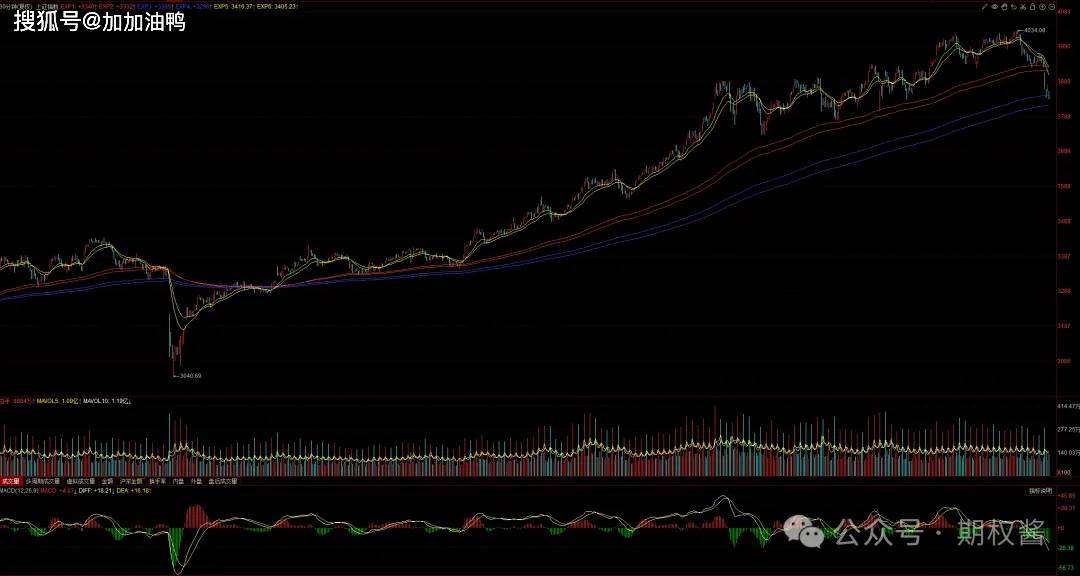
当日北极星所属的汽车板块整体下跌2.21%,而美股三大指数均显著收跌(道琼斯指数跌1.05%,纳斯 达克指数跌0.92%)。行业与市场的系统性下跌进一步放大了个股的波动,尤其是对业绩敏感度较高的 制造业标的。 来源:经济观察网 经济观察网 根据截至2026年2月27日的行情数据,北极星(PII.N)股价当日下跌4.87%,收报60.74美 元,盘中最低触及60.22美元,创下60日新低。这一现象主要与以下因素相关: 公司估值 从技术面看,北极星股价在2026年1月中旬已确认进入技术性熊市格局,其股价连续跌破60日线和120日 线,且两条均线形成空头排列。截至2月27日,股价运行在所有主要均线下方,60日线与120日线死叉格 局延续,技术性熊市信号强化,加剧了抛压。 行业板块情况 以上内容基于公开资料整理,不构成投资建议。 资金面情况 2月27日北极星成交额达6146万美元,换手率1.78%,量比1.19,显示交投活跃度提升但以卖出为主导。 近期股价连续下跌(近5日累计跌幅8.43%)可能触发了部分投资者的止损盘,加剧了日内破位下行。 公司基本面 北极星当前市盈率(TTM)为-7.43,显示盈利承压。尽管公司股 ...
2 月 26 日恒生科技指数大跌 2.87%,科技股普遍走低,怎么看?
Sou Hu Cai Jing· 2026-02-26 12:26
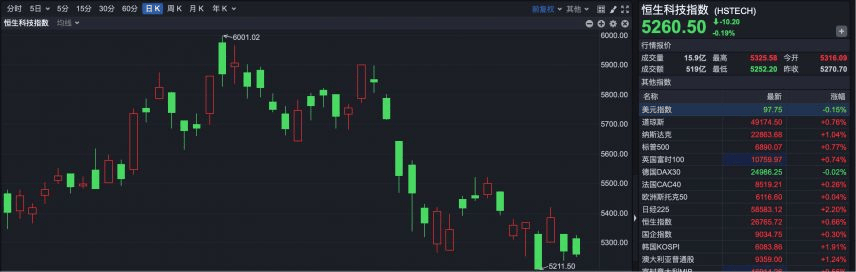
香港金融市场的一切行为和现象,都要立足于两点:一是联系汇率制度下,香港作为大陆美元流动性的节拍器,其金融市场与国际市场的联动效应明显。二 是在当下人民币国际化背景下,香港作为全球最大的离岸人民币交易中心,其金融市场的结构性变化,也反应了南向资本的长期性布局,以及人民币货币政 策的阶段性宏观方向。 因此,从盘面看2026年2月26日,恒生科技指数大幅低开后持续走弱,收盘报5109.33点,单日大跌2.87%,下跌151.17点,成交额达673.52亿港元,创下近期 新低。这在我看来非常正常,而且本身就是中长期结构调整趋势的延续,毕竟自2025年以来,该指数累计下跌已近25%,已经具备短期的"技术性熊市"特 征。 而从国际市场角度看,全球流动性收紧与美元资产吸引力提升,也就是我说的美联储的"紧缩性宽松"的特点越来越明显,叠加AI冲击下的"无就业经济繁 荣"特点,是本轮指数下跌的核心外部诱因。 恒生科技指数作为离岸成长型指数,对全球资金流向和利率波动极为敏感,而美联储政策一直是其关键变量。近期沃什被提名为美联储新主席,市场普遍预 期其政策倾向偏鹰派,将延缓降息节奏,而随着米兰等鸽派、库克等鹰派对于经济数据的矛盾性特 ...

咋滴?跌入“技术性熊市”的恒生科技,也成了老登?
Xin Lang Cai Jing· 2026-02-26 00:11
炒股就看金麒麟分析师研报,权威,专业,及时,全面,助您挖掘潜力主题机会! 来源:基本面力场 昨天看到一个帖子,给力场君了得够呛,就是一个小调查:如何了解到恒生科技的?有"朋友介 绍"、"平台推荐"、"偶然发现"等几个选项,结果跟帖最多的回应则是"仇人陷害"。 这还真不能怪有投资者戏言,在恒生科技里面"躲牛市",行情数据摆在这里:从去年10月高点至今,恒 生科技已经持续回撤近20%,2026年以来的表现更是在全球大类资产中将近垫底。 力场君依稀记得有个提法叫"技术性熊市",是指股指从阶段高点回落20%,但尚未被确认为全面熊市的 市场状态,这被视为市场进入"谨慎区间"的信号,提示投资者重新评估风险,但并不意味着长期趋势必 然逆转。 力场君还记得在去年年初,在A股春节休市期间,外资争相流入港股、买进恒生科技成分股,让这些曾 经代表了中国科技最先进生产力的企业,率先带领中国科技资产演绎定价重估的叙事。怎么,这才一年 时间,也变成老登了? 这两天看到中金公司(601995.SH)的一篇文章,还是挺有意思的,力场君特来总结做个分享。这篇文 章的标题就起得很好——《恒生科技,"旧时代" 的落幕,还是新价投的起点?》,在这篇 ...
市场波动后,还有哪些指数比较低估?
雪球· 2026-02-09 08:29
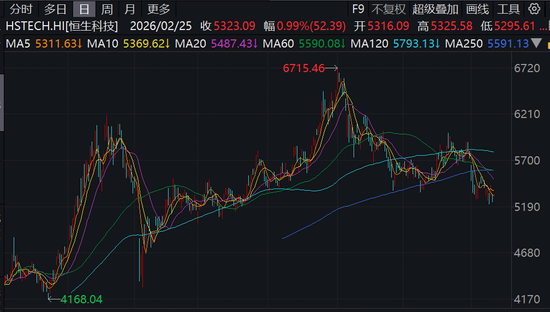
Group 1: Market Overview - The market experienced significant fluctuations last week, particularly in precious metals, technology stocks, and US stocks [4] - The Hang Seng Tech Index has entered a technical bear market, with a decline of -21.56% from its recent high of 6715.46 points to a low of 5267.63 points [4] Group 2: Index Valuation - Major broad-based indices are generally at normal or higher valuation levels, with the Shanghai Composite Index and CSI 300 at below 50 degrees, indicating low relative valuation [7] - The Hang Seng Index (82.1 degrees), Sci-Tech 50 (82.2 degrees), and State-Owned Enterprises Index (82.7 degrees) are at higher valuation levels, suggesting caution in investment decisions [7] - The overall market represented by the CSI All A is at 62.3 degrees, indicating limited low-valuation opportunities [7] Group 3: Global Index Valuation - Compared to domestic indices, global broad-based indices are at higher valuation levels, with major indices in the US, UK, Germany, and Japan also showing elevated valuations [9] - The high valuations in global markets may lead to increased volatility with any external disturbances [9] Group 4: Dividend Indices - The CSI Dividend Index has a PE ratio around 10 and a dividend yield of 4.89%, which is historically low, indicating a need to wait for better opportunities [11] - The dividend yield of Hong Kong stocks remains higher than that of A-shares, influenced by market factors and tax considerations [12] Group 5: Strategy Indices - Among strategy indices, the Dividend Quality index is currently undervalued, while the 300 Value and 50 Fundamentals indices are relatively low [13] - The AH strategy, which involves arbitrage between A and H shares, is currently at a historically high valuation level [14] Group 6: Industry Indices - The pharmaceutical and consumer sectors are currently at lower valuation levels, with leading consumer indices still undervalued despite some recent rebounds [15] - The technology sector, represented by tech leaders and the All-Information Index, is at historically high valuation levels, driven by advancements in AI and cloud computing [18] Group 7: Other Indices - The agricultural sector, represented by indices like the CSI Livestock and CSI Agriculture, is at a low valuation level, reflecting its status as a "necessity consumer goods" sector [20] - The demand in the agricultural sector is relatively stable, which presents both advantages and limitations in terms of elasticity [21]

ZFX山海证券:关键技术位失守 金银牛市遭重创
Xin Lang Cai Jing· 2026-02-06 12:53
Group 1 - The precious metals market has experienced significant turmoil, with both gold and silver prices breaking through key support levels, indicating structural weakness following a historic sell-off [1][3] - Gold prices fell by $187, a decline of 3.78%, closing at $4,776.40, while silver saw a more severe drop of 19.56%, retreating to around $70.93 [1][3] - The extreme volatility in silver, nearing a 20% drop, suggests it is on the brink of a technical bear market, highlighting the risk amplification effect due to its high beta characteristics [1][3] Group 2 - Despite President Trump's reaffirmation of support for interest rate cuts and the nomination of Kevin Warsh as Federal Reserve Chairman, the technical collapse has overshadowed potential monetary policy benefits [2][4] - The market is currently undergoing a painful phase of speculative position liquidation, with fundamental support appearing weak [2][4] - ZFX Shanhai Securities identifies $4,700 for gold and $70 for silver as critical levels for bulls; failure to stabilize at these points may lead to deeper value reassessment [2][4]

恒生科技创六个月新低,为何又步入技术性熊市?
Ge Long Hui· 2026-02-06 05:20
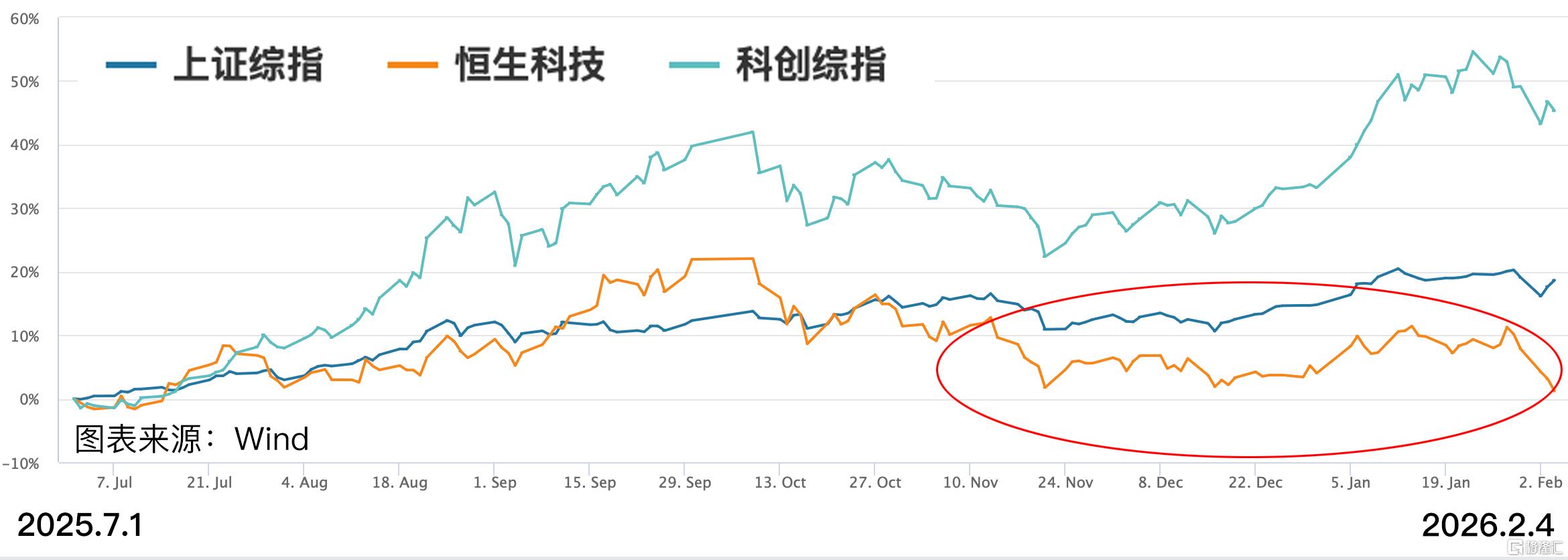
Core Viewpoint - The Hang Seng Tech Index has experienced a significant decline, entering a technical bear market, while A-shares have shown a contrasting upward trend, raising questions about the performance of the tech sector in Hong Kong compared to mainland China [1][3]. Group 1: Index Performance - The Hang Seng Tech Index peaked at 6715 points on October 3, 2025, but has since fallen to 5366 points by February 4, 2026, marking a decline of over 20% [1]. - In contrast, the Shanghai Composite Index rose from a low of 3815 points on December 16, 2025, to 4102 points, achieving a gain of over 6% [1]. - The tech-focused indices in mainland China, such as the Sci-Tech 200 and Sci-Tech 100, have shown impressive gains of 19.30% and 18.49%, respectively [1]. Group 2: Valuation and Fund Flows - The dynamic price-to-earnings ratio (PE-TTM) of the Hang Seng Tech Index decreased from 24.56 times on September 30, 2025, to 22.87 times, indicating a valuation at the 27.27% percentile over the past decade [3]. - Despite the decline in the index, net inflows from southbound funds have remained positive, with inflows of 925 billion, 1219 billion, 229 billion, and 690 billion yuan over the last four months [3]. Group 3: Component Stock Performance - Among the 30 constituent stocks of the Hang Seng Tech Index, only 5 stocks have risen, while 25 have declined, with significant drops in companies like Li Auto, NIO, and Xiaomi, all experiencing declines exceeding 30% [3]. - Major holdings such as Alibaba, Meituan, and Tencent have also seen substantial declines, with Alibaba down 9.89% and Tencent down 15.84% [3]. Group 4: Market Sentiment and Fund Allocation - Recent rumors regarding increased taxes on internet value-added services have negatively impacted market sentiment, despite being refuted by credible sources [6]. - Some funds have adjusted their regional allocations, reducing exposure to Hong Kong stocks like Alibaba while increasing positions in U.S. stocks such as Google, reflecting a shift in investment strategy [6][9]. - The latest quarterly reports indicate a trend of reallocating assets from Hong Kong to U.S. markets, particularly in sectors like AI and technology, which have shown better performance [9][13].

金银大跌,技术性熊市来袭,专家放心首饰黄金
Sou Hu Cai Jing· 2026-02-04 17:04
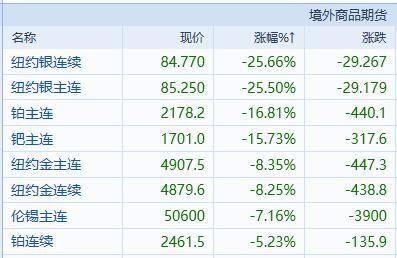
Core Viewpoint - The recent political change, specifically the nomination of Kevin Warsh as the Federal Reserve Chairman by President Trump, has led to a significant and rapid decline in precious metal prices, with silver dropping over 36% and gold falling by up to 12% [1][8]. Market Reaction - The market's reaction was swift and severe, with platinum and palladium also experiencing declines of approximately 17% and 15% respectively. This level of drop is unprecedented since 1980, marking a historical moment in abnormal trading [1]. - The market categorized Warsh as a "hawk," anticipating tighter monetary policies, which would strengthen the dollar and negatively impact precious metals [1][8]. Market Vulnerability - The fragility of the market is evident, as asset prices often follow a "boom-bust" cycle. A small trigger can lead to widespread panic, especially in leveraged financial derivatives like gold futures [2][4]. - The risk can be analyzed in three layers: highly financialized gold (futures and leveraged products), investment-grade bullion (less volatile), and jewelry (least affected) [4]. Technical Market Analysis - Silver has entered a technical bear market, having dropped over 20% from its peak, while gold is close to this threshold [6]. - The market's emotional response to news can lead to irrational selling, highlighting the importance of monitoring trading volumes and support levels for future actions [4][12]. Broader Implications - The nomination of Warsh has implications beyond the U.S., affecting global currency flows and asset allocation. His hawkish stance could challenge the prevailing logic of currency depreciation that has supported rising gold and silver prices [8][9]. - The interplay of speculative, industrial, and emotional capital in the metals market can lead to structural vulnerabilities, especially during external shocks [9]. Investment Perspective - Gold should not be viewed merely as a profit-making tool but as a means of value preservation and risk aversion. Its true value is realized during geopolitical risks or currency depreciation expectations [9]. - Investors are advised to remain calm and avoid impulsive actions, particularly in high-leverage products, and to wait for clearer market signals before making decisions [12].
黄金与AI,谁才是真正的泡沫?
Sou Hu Cai Jing· 2026-02-03 03:40
Group 1 - The international gold price has experienced significant volatility, dropping from $5626.8 to $4423, marking a decline of over 20% and transitioning from a bull market to a bear market [2] - According to technical bear market criteria, a price drop of over 20% from recent highs indicates a bear market, with the threshold set at approximately $4501 based on the peak price [2] - The rapid fluctuations in gold prices this year are linked to expectations of a rebound in the US dollar index, which historically shows an inverse relationship with gold prices [2] Group 2 - There is no standardized valuation model for gold in the global market, making its price movements heavily influenced by the US dollar index, geopolitical situations, and market sentiment [2] - In contrast to the gold market, there are numerous valuation models available for assessing stock market investment value, such as forward P/E ratios and PEG ratios for growth companies, and P/E and P/B ratios for mature companies [3] Group 3 - The presence of a bubble in the gold market can be assessed by monitoring the US dollar index for new upward cycles, central banks' gold purchases, and the proportion of gold in global foreign exchange reserves [3] - The assessment of whether AI has a bubble is based on three indicators: its impact on industry development and production efficiency, the creation of real market demand, and sustained earnings growth in AI-related companies [4][5] Group 4 - The current AI development wave is driving a new technological revolution, significantly enhancing production efficiency and creating substantial incremental demand across various industries [5] - Companies involved in AI infrastructure, including computing power, AI servers, and storage chips, are experiencing continuous earnings growth, indicating real market demand driven by AI advancements [5] Group 5 - The stock market serves as an economic barometer, with stock prices reflecting the operational status of listed companies; as long as market demand persists and earnings growth outpaces valuation increases, the AI sector is not considered to be in a bubble [5] - A potential bubble may form when earnings growth significantly lags behind valuation increases, signaling a need for caution in investment strategies [5][6]

金银迎史诗级大跌或一夜跨入“技术性熊市”,专家:持有首饰类实物黄金无须担忧
Sou Hu Cai Jing· 2026-01-31 06:13
Group 1 - The core point of the article is the significant drop in international precious metal prices, with silver falling over 36% and gold dropping more than 12%, marking the largest single-day decline since 1980 [1] - The initial trigger for this decline was the announcement of Kevin Warsh's nomination as the next Federal Reserve Chairman, which alleviated market concerns about the Fed's independence and strengthened the dollar, negatively impacting gold and silver prices [1] - The precious metals market is currently experiencing a panic sell-off phase, characterized by irrational trading behavior, and the potential for further declines remains [5] Group 2 - The non-ferrous metals sector has seen a rise of over 30% since the beginning of the year, leading to significant profit-taking, with many stocks experiencing sharp declines on the news of falling precious metal prices [2] - On the day of the price drop, the non-ferrous sector in the A-share market fell by 7.89%, with 39 stocks hitting the daily limit down and 45 stocks declining by over 9% [2] - The volatility in precious metal prices is expected to have a cascading effect on the A-share market, particularly impacting the already declining non-ferrous sector [1][2] Group 3 - The recent surge in gold and silver prices was unprecedented, and the subsequent drop is seen as a natural correction, with silver already entering a technical bear market due to its significant price drop [4] - The impact of the price drop is most severe on leveraged products like paper gold and gold futures, while physical gold and silver jewelry are less affected due to their intrinsic value [4] - Investors are advised to wait for signs of stabilization and support levels before making any decisions, as the current market conditions are highly uncertain [5][6]
大跌的过后的A股,下周能否迎来反弹?
Sou Hu Cai Jing· 2025-11-23 08:02
Market Overview - The main theme of the A-share market this week is a significant decline [1] - The Shanghai Composite Index fell from 4000 to 200, breaking through key support levels of 3930, 3900, and 3850, closing at a minimum on Friday [2] - The STAR Market experienced the largest adjustment, dropping 14% from its peak of 1588.83, with a potential technical bear market looming if it falls another 6% [3] - The ChiNext Index fell below 3000 points, marking a 12% adjustment from its highest point [4] - The CSI 1000 index saw a limited adjustment of only 5.59%, with most declines occurring on Friday [5] Global Market Context - The A-share market's decline is part of a broader trend, as global markets also experienced significant adjustments this week [6] - The Nasdaq fell by 6.52%, the S&P 500 by 4.18%, and the Hang Seng Index by 6.32%, with the Hang Seng Tech Index suffering a 19.26% drop, nearing a technical bear market [7][8] Investor Sentiment and Future Outlook - Despite the declines, the A-share market's adjustment is more pronounced due to its previous three-month gains [9] - There is uncertainty regarding whether the bull market is still intact, with questions about potential rebounds in the A-share market next week [9] - On Friday evening, U.S. stocks showed signs of recovery, suggesting possible market stabilization [11] - The Federal Reserve's internal divisions regarding interest rate cuts add to the uncertainty, with no clear answers on whether a rate cut will occur in December [12] Cryptocurrency Market - Bitcoin experienced a drop to $80,000 but recovered to around $86,000, indicating a temporary alleviation of liquidity concerns [13] Technical Analysis - A rebound in the A-share market is anticipated early next week, as Friday's decline triggered some panic selling [14] - The market's ability to maintain trading volumes between 1.5 trillion to 2 trillion indicates ongoing market activity [15] - The AI technology sector's weakening has led to a lack of a dominant market theme, resulting in a structurally volatile market until a new main theme emerges [16] - The recent decline confirmed a short-term downward trend across various indices, with the Shanghai Composite Index's support level at 3820 being critical [18]