结构性调整

Search documents
身处结构性调整与新旧动能转换的关键阶段,王府井去年业绩预亏
Bei Ke Cai Jing· 2026-01-29 11:49
Core Viewpoint - Wangfujing is expected to report a net loss attributable to shareholders ranging from -45 million to -23 million yuan for 2025, reflecting the pressures of structural adjustments and the transformation of business models in the retail industry [1]. Group 1: Financial Performance - For 2025, Wangfujing anticipates a net profit loss between -45 million and -23 million yuan due to ongoing structural adjustments and the transition to new business models [1]. - The company plans to recognize goodwill impairment for the Qianxi asset group, estimating the impairment amount to be between 5 million and 10 million yuan, which will impact the net profit for 2025 [1]. Group 2: Business Strategy and Operations - Wangfujing is undergoing significant changes in the retail sector, focusing on business model iteration and upgrading existing operations, which has led to short-term financial pressures due to the time lag between investment and benefit realization [1]. - The company will close three stores due to lease expirations and two additional stores as part of its strategic transformation, which will negatively affect revenue and increase personnel-related costs in 2025 [2]. - In 2025, Wangfujing plans to open three new outlet and shopping center stores, as well as three duty-free shops, while continuing to adjust its department stores [2]. - The new leasing standards have resulted in higher initial costs for long-term lease stores, significantly impacting the financial performance of newly opened and renewed stores [2].

JPM医疗健康大会2026前瞻:美国医疗板块的新阶段
GLP1减重宝典· 2026-01-11 03:02
Core Viewpoint - The U.S. healthcare industry is transitioning from a phase of systemic pressure to structural recovery, with a focus on profit restoration rather than a return to high growth. Market pricing logic is shifting from "comprehensive defense" to "selective allocation" [4][5][8]. Industry Overview - The healthcare sector has faced valuation pressure not due to demand collapse but because of profit model squeezes. Factors include structural changes in service utilization post-pandemic, rising costs from complex treatments, and delayed pricing adjustments in government healthcare programs [7][10]. - By the second half of 2025, adverse factors are expected to be absorbed by the market, with conservative profit expectations and stable balance sheets across most sub-sectors [7][11]. Managed Care - Managed care has been the most pressured sub-sector, reflecting tensions in the U.S. healthcare system regarding costs, pricing, and risk allocation. It includes senior Medicare plans, Medicaid for low-income populations, and individual insurance exchanges [9][10]. - The profitability outlook for managed care has been significantly downgraded, but the current information suggests that the profit clearing process is sufficiently advanced, with a focus on improving unit economics in senior Medicare [11][13]. Healthcare Services and Drug Distribution - This sector has shown stronger stability compared to managed care, with visible cash flow and underlying demand remaining intact due to aging populations and chronic disease management [14][16]. - The shift towards high-complexity treatments has increased service prices and long-term demand stickiness, benefiting larger service platforms. The capital structure remains stable, providing downside protection for valuations [16][17]. Pharmaceuticals and Medical Devices - The outlook for pharmaceuticals and medical devices is cautious, with pressure stemming from policy expectations and valuation compression rather than significant fundamental deterioration. The market has largely priced in uncertainties related to drug pricing negotiations and reimbursement rules [17][19]. - The pharmaceutical sector remains undervalued relative to the market, while the medical device sector is experiencing notable differentiation, with market pricing increasingly reliant on individual company execution and product cycles [19]. Mergers, Capital Structure, and Investment Insights - The current M&A and capital allocation logic in the healthcare industry is shifting from scale expansion to efficiency enhancement, focusing on strengthening existing product lines and service capabilities [20][22]. - Companies that actively manage their capital structures and cash flows are more likely to gain market recognition, with a focus on stable cash flow and efficiency improvements becoming critical for investment decisions [22]. Conclusion - The 44th J.P. Morgan Global Healthcare Conference will serve as a calibration point for the market, emphasizing cost control, pricing discipline, and capital allocation over growth targets. The results will become the primary pricing basis in this evolving landscape [22].


一万亿顺差和工业利润下降,哪个是真实的中国?
Xin Lang Cai Jing· 2025-12-29 01:58
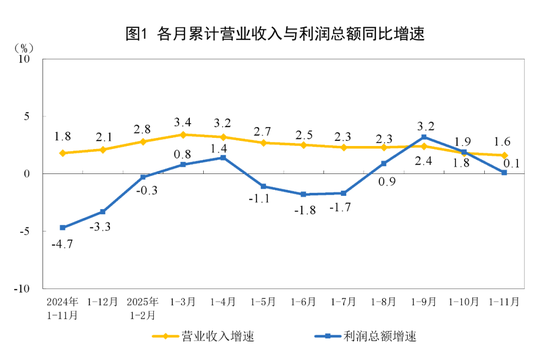
Group 1 - In the first eleven months of 2025, the total profit of industrial enterprises above designated size in China reached 66,268.6 billion yuan, showing a year-on-year growth of 0.1% [1][17] - However, in November alone, the profit of industrial enterprises decreased by 13.1% year-on-year, indicating a potential decline in total profits for December 2025 [3][19] - The sectors experiencing the most significant profit declines include textiles (-8.2%), apparel (-27.1%), footwear (-15.7%), wood processing (-30.9%), and furniture manufacturing (-22.7%), which have historically been major contributors to China's export earnings [3][19] Group 2 - On a positive note, the profit of high-tech manufacturing industries increased by 10.0% year-on-year during the same period [4][20] - Industries related to the "Artificial Intelligence+" initiative saw remarkable profit growth, with electronic industrial equipment manufacturing profits rising by 57.4%, and semiconductor device manufacturing profits increasing by 97.2% [5][21] - The smart consumer device manufacturing sector also experienced significant growth, with profits increasing by 54.0%, including smart vehicle equipment (105.7%) and smart drones (76.6%) [5][21] Group 3 - China's trade surplus reached 1.08 trillion USD in the first eleven months of 2025, marking the first time it exceeded 1 trillion USD in history [6][23] - Exports to the EU amounted to 508.05 billion USD, a year-on-year increase of 8.1%, while exports to ASEAN reached 599.03 billion USD, growing by 13.7% [7][23] - Notably, exports of integrated circuits grew by 25.6% to 1.29 trillion yuan, and automotive exports increased by 17.6% to 896.91 billion yuan [7][23] Group 4 - The apparent contradiction between the trade surplus and declining industrial profits reflects a structural adjustment within the Chinese economy, transitioning from traditional sectors to emerging fields [9][25] - The ongoing "reconstruction" of the economy is characterized by the rise of high-tech manufacturing as a new driving force, while traditional industries face inevitable decline [11][26] - The depth and breadth of this reconstruction will determine the future landscape of the Chinese economy [15][30]
2025年关下的车市:20家车企撒钱补贴 市场旺季为何消失?
2 1 Shi Ji Jing Ji Bao Dao· 2025-12-14 15:11
Core Viewpoint - The automotive market is experiencing a tug-of-war between increased rigid expenditures due to the phasing out of purchase tax exemptions and the continuation of national subsidy policies like "trade-in" programs, although details remain uncertain [1] Group 1: Policy Changes and Market Reactions - From January 1, 2026, the purchase tax for new energy vehicles will shift from full exemption to a 50% reduction, with the current tax rate of 10% effectively becoming 5%, and the exemption cap dropping from 30,000 yuan to 15,000 yuan [1] - The Central Economic Work Conference held on December 10-11 confirmed the optimization of policies including the continuation of "trade-in" subsidies, setting a tone for the extension of current national subsidies beyond 2025 [1] - Over 20 automakers, including Zeekr, Xiaomi, and AITO, have launched "purchase tax guarantee" policies, promising to cover tax differences for customers who lock in orders by the end of the year, with a maximum coverage of 15,000 yuan [1] Group 2: Market Performance and Expectations - Despite proactive measures from automakers, there remains cautious sentiment regarding the fourth-quarter market outlook, with NIO's founder stating that the industry is unlikely to see the same tail effect as last year [2] - Data from the China Passenger Car Association indicates that from December 1-7, retail sales of passenger cars fell by 32% year-on-year and 8% month-on-month, with new energy vehicle sales also declining [2][3] - The anticipated "tail effect" has turned into a "flat tail," with November retail sales of passenger cars at 2.225 million units, down 8.1% year-on-year and 1.1% month-on-month [4] Group 3: Supply Chain and Production Challenges - The automotive market is facing a supply chain crunch, particularly in battery supply, as companies scramble to secure batteries for production [4][5] - The demand for batteries is rapidly shifting towards high-end products, but the expansion of high-end production capacity is limited due to technological barriers [5] - The storage market is experiencing explosive growth, diverting battery production capacity away from the automotive sector, with global storage cell shipments increasing by 98.5% year-on-year in the first three quarters of 2025 [5] Group 4: Future Market Trends and Growth Projections - The automotive industry is expected to see a slowdown in growth, with UBS predicting a decline in domestic passenger car sales growth from 8% in 2025 to -2% in 2026 [7][8] - The overall market growth forecast has been adjusted downward, with expectations of a 3% to 5% increase in automotive sales for the current year, and achieving 3% growth next year considered a reasonable target [8] - Future opportunities are anticipated to arise from structural adjustments and value exploration, with a focus on developing charging infrastructure and tapping into lower-tier markets [8]
【机构策略】A股市场可能面临新一轮横盘调整
Zheng Quan Shi Bao Wang· 2025-11-03 01:04
Group 1 - CITIC Securities believes that the current index level of 4000 points is significantly better than the same level in 2015, with a notably lower valuation, suggesting that there is no need to overly focus on the index itself [1] - The report highlights three key areas for investment: upgrading traditional manufacturing, Chinese companies going abroad, and edge AI, while short-term attention should be given to potential rebound opportunities following the third quarter reports [1] - Caixin Securities indicates that the market is shifting from macro-driven logic to a fund-driven logic due to the concentration of macro events, with institutional funds likely to take profits in high-valuation sectors, leading to a potential rebalancing of market styles [1] Group 2 - CITIC Jiantou notes that after a period of high market sentiment and the realization of three major benefits, the A-share market is at a high position and may face a new round of horizontal adjustment due to a lack of favorable news [2] - The report mentions that the allocation ratio in the electronic industry exceeds 25%, the innovation and entrepreneurship board exceeds 40%, and the growth style exceeds 60%, all at their highest levels since 2010, which may trigger structural adjustments [2] - From a seasonal effect perspective, the report suggests that as year-end profits are often realized, large-cap value styles tend to dominate [2]
中信建投:市场可能面临新一轮横盘调整,建议投资者暂缓加仓
Mei Ri Jing Ji Xin Wen· 2025-11-03 00:25
Core Viewpoint - CITIC Securities indicates that after a surge in market sentiment and the realization of three major benefits in late October, the A-share market is currently at a high level and may face a new round of sideways adjustment due to a lack of favorable news in the near term, suggesting investors should pause on increasing positions [1] Group 1: Market Position and Trends - The A-share market's main line and style may experience a shift, with the electronic industry allocation exceeding 25%, the innovation and entrepreneurship board over 40%, and the growth style surpassing 60%, all at the highest levels since 2010, potentially leading to structural adjustments [1] - From a seasonal effect perspective, profit-taking typically occurs at year-end, favoring large-cap value styles [1] Group 2: Investment Outlook for November - Three key themes are highlighted for November: 1. Prosperity clues: Focus on the new energy sector (energy storage, solid-state batteries) and non-bank financials (brokerage, insurance) [1] 2. Year-end portfolio adjustments: Attention should be given to sectors with the smallest gains over the first ten months and lower fund allocation ratios, such as coal, oil and petrochemicals, public utilities, food and beverages, and transportation [1] 3. Short-term switches: Short-term focus on sectors that saw the largest declines in October, with limited overall gains for the year and lower fund allocation ratios, including media, beauty care, and automotive [1]

中信建投:市场可能面临新一轮横盘调整 建议投资者暂缓加仓
Di Yi Cai Jing· 2025-11-03 00:21
Core Viewpoint - CITIC Construction Investment indicates that after a surge in market sentiment in late October and the realization of three major benefits, the A-share market is now at a high level and may face a new round of sideways adjustment due to a lack of favorable news in the near term, suggesting investors should pause on increasing positions [1] Group 1: Market Position and Trends - The A-share market's main lines and styles may undergo a shift, with the electronic industry allocation exceeding 25%, the innovation and entrepreneurship sector over 40%, and the growth style surpassing 60%, all at the highest levels since 2010, potentially leading to structural adjustments [1] - From a seasonal perspective, as year-end profits are often realized, large-cap value styles tend to outperform [1] Group 2: Investment Focus for November - Three key areas are highlighted for November: 1. **Economic Prosperity Clues**: Focus on new energy (energy storage, solid-state batteries) and non-bank financial sectors (brokerage, insurance) [1] 2. **Year-End Portfolio Adjustment**: Attention should be given to sectors with the smallest gains over the first ten months and lower fund allocation ratios, such as coal, oil and petrochemicals, public utilities, food and beverages, and transportation [1] 3. **Short-Term Switch**: Short-term focus on sectors that experienced the largest declines in October, with limited overall gains for the year and lower fund allocation ratios, including media, beauty care, and automotive [1]
政策引导落后产能退出,结构性调整深入推进,石化ETF(159731)迎布局新机会
Sou Hu Cai Jing· 2025-10-17 06:15
Core Viewpoint - The petrochemical industry is experiencing a decline, with the China Securities Index for the petrochemical industry down approximately 1.4%, indicating a challenging market environment for many companies in this sector [1] Industry Summary - The decline in the petrochemical industry is attributed to policy constraints leading to the gradual exit of some small independent refineries, alongside a peak in demand for refined oil products. This shift is expected to favor large integrated refining and chemical enterprises [1] - The pure soda ash industry is facing profitability pressures due to slowing demand growth and large-scale capacity waiting to be launched, exacerbated by ongoing policy guidance aimed at phasing out outdated capacities. Natural soda ash producers are anticipated to benefit from this trend [1] Company Summary - The petrochemical ETF (159731) and its linked funds (017855/017856) closely track the China Securities Index for the petrochemical industry, with the basic chemical industry accounting for 61.93% and the oil and petrochemical industry for 30.84% of the index [1] - The top ten weighted stocks in the index include Wanhua Chemical, China Petroleum, Salt Lake Industry, Sinopec, CNOOC, Juhua Co., Zangge Mining, Kingfa Technology, Hualu Hengsheng, and Baofeng Energy, collectively representing 55.12% of the index [1]
稳居前三!山西汾酒半年报营利“双增”,省外收入占比超六成!
Sou Hu Cai Jing· 2025-09-01 14:02
Core Viewpoint - Shanxi Fenjiu achieved double growth in revenue and net profit in the first half of 2025, maintaining its position among the top three in the industry despite overall pressure in the liquor sector [2][10]. Group 1: Financial Performance - The company reported a revenue of 23.964 billion yuan, a year-on-year increase of 5.35%, and a net profit of 8.505 billion yuan, up 1.13% [2]. - The core product, the "Fenjiu series," generated sales revenue of 23.391 billion yuan, reflecting a 5.75% increase, accounting for 98% of total revenue [3]. - Revenue from the domestic market reached 8.732 billion yuan, growing by 4.04%, while revenue from outside Shanxi was 15.143 billion yuan, increasing by 6.15% [4][6]. Group 2: Market Position and Trends - The proportion of revenue from outside Shanxi increased from 62.96% in 2024 to 63.42% in 2025, indicating effective national expansion [5]. - The liquor industry is experiencing significant differentiation, with leading companies like Shanxi Fenjiu showing resilience while smaller firms face challenges [7][8]. - Among 17 listed liquor companies, only a few, including Shanxi Fenjiu, reported growth in both revenue and net profit, contrasting with the decline seen in many others [9]. Group 3: Strategic Initiatives - Shanxi Fenjiu is focusing on management transformation, production optimization, national expansion, technological innovation, and cultural development to drive high-quality growth [10]. - The company is implementing lean management across its production chain and enhancing supply chain resilience by establishing backup procurement channels [10]. - The national expansion strategy is being advanced with a focus on key markets and brand penetration through targeted promotional projects [10].


贝莱德范华:全球市场已进入更为复杂的结构性调整阶段
2 1 Shi Ji Jing Ji Bao Dao· 2025-08-18 10:53
Group 1 - The current macro environment reflects a deep transformation in global markets, influenced by geopolitical tensions and disruptive trends like artificial intelligence [1][3] - BlackRock emphasizes the need for deeper scenario analysis in asset allocation processes, focusing on short-term certainties amidst uncertainty [3][4] - In the context of market volatility, BlackRock sees opportunities for excess returns (Alpha) and highlights the importance of flexible position management [4][5] Group 2 - BlackRock identifies three key themes to navigate the current market: seeking certainty in uncertain environments, strategically managing macro risks, and adapting to the failure of traditional anchors [3][4][5] - The firm expresses a preference for U.S. equities and short-term U.S. bonds, while also emphasizing the value of gold during high volatility periods [3][4] - In the Chinese market, BlackRock is focused on structural opportunities, particularly in the photovoltaic sector and the growth potential from artificial intelligence [6]