购买力平价(PPP)

Search documents
中金:八问八答,透视居民消费率
中金点睛· 2026-03-08 23:36
Core Viewpoint - The article emphasizes the need to increase China's resident consumption rate, which has been persistently lower than the international average, as a key focus of current economic policy aimed at boosting domestic demand and achieving a balanced economy [2][6]. Group 1: Characteristics of Low Consumption Rate - China's resident consumption rate was 39.9% in 2024, significantly below the average of 52.8% among 44 sample economies [6][8]. - The consumption rate has shown a slight upward trend since 2011, aligning with the U-shaped pattern observed in international experiences, but this trend has not been sustained in recent years [8][6]. Group 2: Causes of Low Consumption Rate - Public service subsidies are identified as a primary reason for the low consumption rate, with China's social transfer payments accounting for only 7.0% of GDP in 2023, compared to 12.5% for the sample average [10][9]. - Price differences, particularly low prices in China, do not significantly explain the low consumption rate, as adjustments for purchasing power parity (PPP) only marginally increase the consumption rate to 42.0% [13][12]. - Statistical methods, such as the change from historical cost to virtual rent for housing, have only slightly improved the consumption rate, indicating that measurement issues are not the main cause [20][19]. Group 3: Disposable Income and Consumption Rate Discrepancies - The share of disposable income in GDP is relatively high at 60.8% in 2023, but the initial distribution of income is low, with labor compensation and property income being insufficient [37][25]. - The property income share is particularly low at 3.2%, with dividend income at only 0.5%, indicating a need for policies to enhance wealth distribution [33][32]. Group 4: Structural Reasons for Low Consumption Rate - The allocation of public resources has favored investment over consumption, leading to an imbalance in demand and supply [59][60]. - Income inequality and demographic changes, such as an aging population and low birth rates, further suppress consumption potential [63][62]. Group 5: Policy Recommendations for Increasing Consumption Rate - Policies should focus on both cyclical and structural aspects, enhancing consumer capacity and willingness, and aligning supply-side and demand-side strategies [69][68]. - Specific measures include increasing fiscal and monetary support, optimizing public resource allocation, and improving social security systems to boost consumer confidence and spending [70][69].


谁说美国佛系?GDP被反超35%,造船业落后断层,死盯中国也没用!
Sou Hu Cai Jing· 2026-02-25 10:23
Group 1 - The core argument is that the United States is not losing its ambition to maintain its global dominance, but rather is intensifying efforts to prevent China from becoming the world's leading power [1][4][6] - The U.S. is engaging in actions such as technological blockades and trade barriers to sustain its hegemonic status, driven by a fear of losing its long-held position as a global leader [6][7] - According to purchasing power parity (PPP), China's economy has already surpassed that of the U.S. by 130% to 135%, indicating a significant shift in global economic power [9][11] Group 2 - China's total electricity generation is currently 2.5 times that of the U.S., and its industrial electricity consumption is six times higher, highlighting a stark contrast in industrial capabilities [15][17] - The U.S. faces a substantial challenge in its shipbuilding industry, with its capacity being only about 1% of China's, reflecting the consequences of decades of deindustrialization [29][31] - The article emphasizes that the U.S. anxiety stems from its relative decline in power and an inability to accept a multipolar world where both nations can coexist with their respective strengths [35]

中国生产和制造了几乎所有的东西,为何美国经济仍比中国强大?
Sou Hu Cai Jing· 2026-02-17 09:38
Core Insights - China's manufacturing output is projected to account for nearly 30% of global production by 2025, while the U.S. will be around 13%, highlighting China's dominance in manufacturing despite a lower GDP compared to the U.S. [1][3] - By 2025, China's GDP is expected to exceed $20 trillion, while the U.S. GDP will be approximately $30 trillion, resulting in a significant gap of $9 trillion [3][5] - The disparity in GDP figures is influenced by currency exchange rates, with the nominal GDP calculation favoring the U.S. due to the stronger dollar [5][7] Group 1: Manufacturing and Economic Output - China's manufacturing sector is not just a national industry but a global manufacturing hub, producing a wide range of goods from solar panels to toys [1][3] - The purchasing power parity (PPP) method shows that China's GDP could reach approximately 40.7 trillion international dollars by 2024, surpassing the U.S. [7] - The U.S. maintains a significant advantage in controlling the value chain, with major global companies headquartered there, which impacts GDP calculations [11][19] Group 2: Currency and Financial Dynamics - The U.S. dollar serves as the primary global trade and reserve currency, allowing the U.S. to leverage its currency for economic advantages [13][15] - The U.S. has a substantial overseas direct investment of $9.7 trillion, which is three times that of China, enhancing its global economic influence [15] - The ability of the U.S. to print dollars and influence global markets creates a unique economic position that China is still working to overcome [13][15] Group 3: Innovation and Future Prospects - China is transitioning from being a manufacturing powerhouse to focusing on innovation and technology, with significant investments in R&D, particularly in sectors like electric vehicles and telecommunications [17][19] - The competitive landscape suggests that while the U.S. currently leads in nominal GDP, China's advancements in manufacturing capabilities and innovation may shift the balance in the coming years [21] - The future economic competition will hinge on technological control and the ability to influence global markets, rather than just GDP figures [21]

李迅雷:高估的美元在走弱,人民币该如何应对 | 立方大家谈
Sou Hu Cai Jing· 2026-02-05 05:47
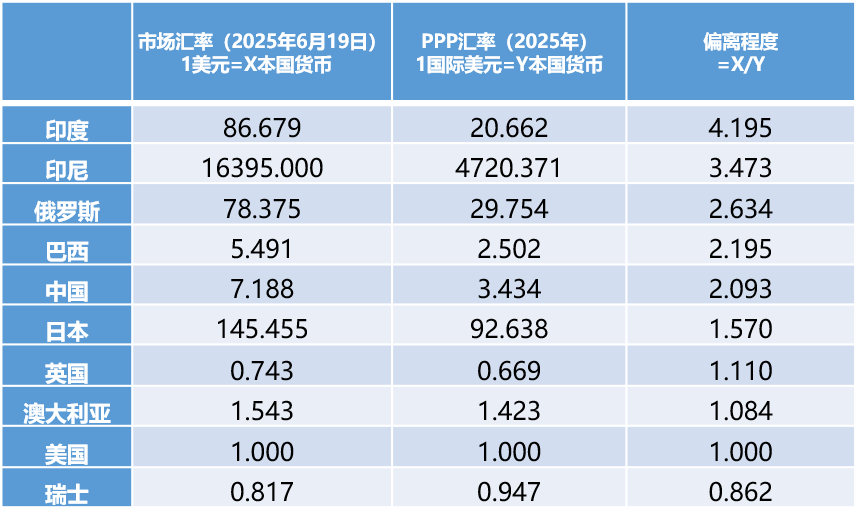
Core Viewpoint - The article argues that the common belief that the renminbi (RMB) will depreciate significantly upon achieving free convertibility is misguided. Instead, it suggests that the RMB is undervalued and should be accelerated in its internationalization process, especially in the context of a weakening US dollar [1]. Group 1: Currency Valuation - The concept of Purchasing Power Parity (PPP) is introduced as a measure of currency valuation, comparing market exchange rates with PPP rates to assess actual purchasing power [2]. - A table shows that most currencies, including the RMB, are undervalued compared to their PPP rates, indicating a significant discrepancy between market rates and actual value [3]. - The article highlights that developed countries' currencies are closer to their PPP rates, while developing countries, including China, show a larger gap, suggesting a general undervaluation of their currencies [3]. Group 2: Factors Contributing to RMB Undervaluation - The article identifies weak liquidity as a primary reason for the RMB's long-term undervaluation, drawing parallels with historical examples of currency valuation based on circulation and liquidity [6][7]. - It notes that the RMB's market share in international payments is low, at only 2.89%, which is disproportionate to China's economic standing as the second-largest economy [8][9]. - The geographical concentration of RMB payments, primarily in Hong Kong, limits its global usage, further contributing to its undervaluation [12]. Group 3: Global Currency Dynamics - The article discusses the low percentage of global reserves held in RMB, which peaked at approximately $337.26 billion in 2021 but has since declined to about $249.68 billion, representing only 2.2% of global reserves [12][15]. - It contrasts the RMB's status with the US dollar, which dominates global reserves, holding around 60% of the total, indicating a significant disparity in global currency trust and usage [15]. - The article emphasizes that the RMB's low liquidity, limited circulation area, and small global holding scale explain the substantial gap between its market exchange rate and PPP [15]. Group 4: Future of RMB Internationalization - The article posits that accelerating the RMB's internationalization could enhance its status as a global reserve currency, despite concerns about potential capital outflows upon liberalization [33][37]. - It suggests that increasing the RMB's global demand through financial market openness and improving its credit rating could help balance its supply and demand, ultimately leading to a more favorable exchange rate [37][38]. - The article concludes that reforming the RMB's exchange rate system is essential to align with China's economic development and address structural issues [38].
再说说中美GDP的那点烂事
Sou Hu Cai Jing· 2026-02-03 11:47
Group 1 - The core argument is that while China's GDP is projected to grow, the gap between China's and the US's GDP is widening, with China's GDP expected to reach 19.63 trillion USD by 2025, compared to the US's projected 30 trillion USD [2] - The article discusses three common narratives regarding GDP comparisons: the first emphasizes China's lower per capita GDP compared to the US, the second argues that China's GDP surpassed the US when adjusted for purchasing power parity (PPP), and the third points out the differences in GDP calculation methods between the two countries [3][4] - The article critiques the use of PPP as a measure, stating that it lacks practical significance in real-world transactions, as no country uses PPP rates for international trade [4] Group 2 - The concept of per capita GDP is deemed misleading, as it does not reflect a country's influence or power in international relations, with the article highlighting that countries with the highest per capita GDP do not hold significant global sway [5] - Differences in GDP calculation methods between China and the US are explored, with China using the production method focused on actual value creation, while the US employs the expenditure method, which can inflate GDP figures through various assumptions [6][7] - The article provides data indicating that while the US GDP grew by 36% from 2020 to 2025, its electricity consumption only increased by 5%, suggesting a disparity in the quality of GDP growth compared to China's 38% increase in electricity consumption during the same period [9] Group 3 - The article argues that the US's approach to GDP calculation is driven by its need to maintain global financial dominance, while China's method reflects a focus on real economic output and stability [10] - It emphasizes that China's GDP statistics are more conservative, aiming to exclude speculative and financial elements, thereby prioritizing tangible economic growth [10]
人民币将大幅升值?一文看懂:人民币的真实购买力
Sou Hu Cai Jing· 2026-01-22 03:12
Core Viewpoint - The article argues that the perceived strength of the RMB is misleading, as it is primarily a reflection of low labor costs rather than the currency's inherent value [1][3][10]. Group 1: Currency Strength and Labor Costs - The recent appreciation of the RMB against the USD, with a rise of over 4% within the year, has led many to question whether a significant appreciation is forthcoming [1]. - The apparent purchasing power of the RMB is often misinterpreted; it is not due to the currency's strength but rather the low wages that allow for cheap services [3][10]. - The low cost of services in China, such as delivery and home services, is a result of systemic labor exploitation rather than a reflection of economic superiority [8][10]. Group 2: Consumer Experience vs. Labor Reality - From a consumer perspective, the RMB seems strong due to the affordability of services, but this is misleading as it is built on the back of low wages and overwork [4][12]. - The article highlights that the low prices consumers enjoy are a direct consequence of the exploitation of workers, creating a cycle where everyone is both an exploiter and the exploited [10][19]. - The narrative of the RMB's strength is challenged by the reality that many workers are trapped in low-paying jobs, which undermines the notion of a prosperous economy [21][25]. Group 3: Economic Strategy and Future Directions - China's economic strategy has historically focused on investment and exports, leading to a managed floating exchange rate that prevents drastic fluctuations in the RMB's value [15][17]. - The article suggests that the real measure of the RMB's strength should be based on the dignity and sustainability of labor rather than just currency exchange rates [23][25]. - Recent policy shifts indicate a focus on human capital investment, aiming to elevate labor conditions and create a more equitable economic environment [23].
中美GDP差了10万亿,中国不如美国?别急着下结论,关键还要看它
Sou Hu Cai Jing· 2025-12-22 11:08
Group 1 - The GDP gap between China and the US has widened from $6.4 trillion in 2023 to approximately $10.8 trillion, with the US aiming for $29.5 trillion and China at $18.7 trillion [1][3] - The apparent GDP difference is attributed to currency exchange rates rather than actual production, as China's real production activities are growing at a rate of 4.8%, while the US is at 2.0% [5][7] - The US economy is heavily indebted, with a national debt of $37.8 trillion, leading to over $1 trillion spent annually just on interest payments, which exceeds their military spending [8][11] Group 2 - China's GDP of $18.7 trillion is based on tangible production, with significant outputs in various sectors, contrasting with the US's inflated figures due to financial services and debt [13][19] - Purchasing Power Parity (PPP) indicates that by 2025, China's economy could reach $40.72 trillion, surpassing the US's $30.51 trillion, highlighting the efficiency of resource utilization in China [15][17] - China's agricultural production exceeds that of the US by approximately 10% for total grain output and 19 times for vegetable production, indicating a strong foundational economy [21][22] Group 3 - The structural differences between the US's "virtual" economy and China's "real" economy may not be apparent during stable times but could become critical during global supply chain disruptions or geopolitical tensions [24][26] - The US is attempting to bring back manufacturing and is aware of its economic vulnerabilities, while China has a robust global trade network that enhances its resilience [27][29] - China's advancements in sectors like new energy vehicles and high-end equipment manufacturing signify a shift from follower to leader in these industries, contributing to real productivity gains [31][32]

管涛:不宜押注人民币汇率的单边走势|宏观经济
清华金融评论· 2025-12-05 10:23
Core Viewpoint - The article discusses the recent performance of the Chinese yuan (RMB) against the US dollar, highlighting a rebound in the RMB exchange rate after a prolonged period of depreciation, and emphasizes the need for adaptability to a new normal of two-way fluctuations in the currency market [1][2]. Summary by Sections RMB Exchange Rate Performance - In 2023, the RMB has shown resilience against external shocks, with the onshore RMB appreciating by 1.55% in the first eleven months, the spot exchange rate rising by 3.10%, and the offshore RMB (CNH) increasing by 3.76% [1]. - The RMB exchange rate has experienced a significant narrowing of volatility, with the maximum fluctuation of the onshore midpoint rate at 1.9%, the lowest since 2016, and the spot rate's maximum fluctuation at 3.8%, also the lowest since 2016 [4]. Stability Measures and Market Reactions - The Chinese government has emphasized maintaining the RMB exchange rate at a reasonable and balanced level, which has led to reduced exchange rate elasticity and suppressed depreciation pressures [5][4]. - In September, the bank's foreign exchange settlement surplus surged to $73.4 billion, the second-highest since the 2015 exchange rate reform, but dropped to $27.3 billion in October, indicating that the market's expectations for RMB appreciation may have been overstated [8]. Factors Influencing Future RMB Trends - Several factors are contributing to the recent optimism regarding the RMB, including potential interest rate cuts by the Federal Reserve, discussions between Chinese and US leaders, and the possibility of a more stable US-China trade relationship [10][11]. - The Chinese economy is expected to continue its recovery, supported by proactive macroeconomic policies and structural reforms aimed at enhancing productivity and innovation [12]. Challenges and Uncertainties - Despite positive trends, the RMB faces uncertainties due to domestic economic challenges, external trade environment fluctuations, and the potential strength of the US dollar [13][14][15]. - The article suggests that while the RMB may break the 7.0 mark against the dollar, its ability to maintain stability below this level remains uncertain, depending on future policy directions and market conditions [16].

管涛:不宜押注人民币汇率的单边走势︱汇海观涛
Di Yi Cai Jing· 2025-11-30 12:53
Core Viewpoint - The Chinese yuan has shown resilience against external shocks in 2023, with a notable appreciation against the US dollar, leading to optimistic market sentiment regarding future exchange rate trends [1][12]. Group 1: Exchange Rate Trends - The yuan has appreciated by 1.55% in the onshore central parity rate and 3.10% in the spot exchange rate against the US dollar in the first eleven months of 2023 [1]. - The exchange rate volatility has significantly decreased, with the maximum fluctuation of the onshore central parity rate at 1.9%, the lowest since 2016 [2]. - The offshore yuan (CNH) has appreciated by 3.76% during the same period, indicating a general strengthening of the yuan [1]. Group 2: Market Sentiment and Influencing Factors - Recent developments, such as potential interest rate cuts by the Federal Reserve and positive diplomatic engagements between China and the US, have fueled market optimism for the yuan [7][8]. - The market has reacted positively to the prospect of a stable economic environment, with expectations of further yuan appreciation if the Federal Reserve continues its easing policies [8]. Group 3: Economic Context and Policy Implications - The Chinese government aims to maintain the yuan's stability within a reasonable range, as highlighted in the Central Economic Work Conference [2]. - The "14th Five-Year Plan" emphasizes the need for macroeconomic stability and growth, which supports the yuan's fundamental strength [9]. - The potential for a more flexible exchange rate policy could lead to wider fluctuations in the yuan's value, depending on economic conditions and external factors [12].
美国咨询专家:就算中国制造业原地踏步20年,等着美国追赶,美国也追不上中国的脚步
Sou Hu Cai Jing· 2025-11-29 15:11
Core Viewpoint - The article argues that the United States cannot regain its manufacturing dominance over China, despite political efforts and subsidies, due to fundamental structural issues in the U.S. economy and manufacturing sector [1][2]. Group 1: Manufacturing Comparison - According to purchasing power parity (PPP), China's manufacturing output was $8.4 trillion last year, while the U.S. was only $2.6 trillion, indicating a threefold gap [6][7]. - To catch up with China, the U.S. would need to achieve a continuous 6% annual growth in manufacturing for 20 years, which is deemed unrealistic for a developed economy like the U.S. [8][10]. Group 2: Economic Strategy - The U.S. has focused on quick profits through finance, IP licensing, and software, leading to a hollowing out of its manufacturing base [11][12]. - In contrast, China's manufacturing ecosystem allows for rapid production and supply chain efficiency, exemplified by the ability to source components quickly within a short radius [14]. Group 3: Policy Challenges - The U.S. is experiencing "policy schizophrenia," with inconsistent manufacturing policies that deter long-term investments [15][16]. - In contrast, China has maintained a consistent strategic direction over decades, which has strengthened its manufacturing capabilities [19]. Group 4: Conclusion - The article concludes that the U.S. is not losing its manufacturing jobs to China but is instead undermining its own industrial base through misguided priorities [20][22].