
美元信用风险

Search documents
专家:避险需求支撑下金价或继续走高
news flash· 2025-07-01 23:36
Core Viewpoint - The demand for safe-haven assets is expected to support gold prices, which have already seen a significant increase in the first half of 2025, marking the largest semi-annual gain since the second half of 2007 [1] Group 1: Gold Price Trends - In the first half of 2025, the London spot gold price rose by 25.7%, the highest semi-annual increase since the second half of 2007 [1] - The international gold price is anticipated to remain in a fluctuating upward channel in the second half of 2025 [1] Group 2: Market Demand Factors - Continued market demand for safe-haven assets is expected to provide long-term support for gold prices in the second half of 2025 [1] - Global central banks show a strong willingness to allocate gold, driven by increasing credit risks associated with the US dollar [1] Group 3: Strategic Asset Allocation - Central banks are likely to enhance their gold reserves due to strategic security and asset allocation needs [1]
国际金价上半年涨超25% 避险需求支撑下或继续走高
Zheng Quan Ri Bao· 2025-07-01 16:41
Core Viewpoint - The gold price has seen a significant increase in the first half of 2025, driven by geopolitical tensions, a weakening dollar, and central bank purchases, with expectations for continued upward movement in the second half of the year [1][2]. Group 1: Gold Price Trends - In the first half of 2025, the London spot gold price rose by 25.7%, marking the largest semi-annual increase since the second half of 2007 [1]. - The international gold price reached a historical high of $3,500 per ounce in April 2025, followed by a period of fluctuation in May and June [1]. - Currently, gold prices are oscillating between $3,200 and $3,400 per ounce, with increasing market competition between bulls and bears [1]. Group 2: Factors Influencing Gold Prices - The decline in confidence in the US dollar, with a 10.7% drop in the dollar index in the first half of 2025, has provided strong support for rising gold prices [1]. - Geopolitical conflicts have heightened market risk aversion, maintaining high demand for gold as a safe-haven asset [1][2]. - Central banks globally have shown a strong demand for gold reserves, with a net purchase of 256 tons in the first four months of 2025 [2]. Group 3: Central Bank Activities - As of the end of May 2025, China's gold reserves stood at 7,383 million ounces (approximately 2,296.37 tons), reflecting a month-on-month increase of 6,000 ounces (about 1.86 tons) [2]. - A survey by the World Gold Council indicated that 95% of central banks expect to continue increasing their gold holdings over the next 12 months, with nearly 43% planning to add to their reserves within the year [2].
十年国债ETF(511260)上一交易日净流入超5.0亿,市场关注降息周期下配置价值
Sou Hu Cai Jing· 2025-06-30 02:14
Group 1 - The core viewpoint of the article indicates that U.S. Treasury yields have shown a "first rise and then weak fluctuation" trend since May, influenced by three phases: initial rise due to improved trade policies and economic outlook, pressure on long-term rates from Moody's downgrade and poor 20-year bond auction, and a return to fundamentals with geopolitical risk premiums rising [1] - The 10-year U.S. Treasury yield is expected to maintain high volatility with limited downward space due to term premium support, reflecting a significant fiscal deficit pressure and increasing U.S. debt burden projected to reach $36.2 trillion by Q1 2025 [1] - The 10-year Treasury ETF tracks the 10-year Treasury index, which reflects price changes in the long-term Treasury market, serving as an important reference for fixed income investments [1]
美元指数今年以来累计跌超10%
Zhong Guo Zheng Quan Bao· 2025-06-27 20:54
Group 1 - The US dollar index has fallen over 10% this year, leading to significant increases in precious metal prices and a shift in global central bank reserves towards gold [1][2] - There is a divergence in market opinions regarding the future of the dollar, with some institutions predicting further depreciation due to monetary policy misalignment and external circulation issues, while others believe the fastest decline may be over and caution against potential rebounds [1][2] - Precious metals such as gold and silver have seen price increases exceeding 20% this year, with platinum prices rising over 50%, indicating a reallocation of global funds [2][3] Group 2 - The decline of the dollar is attributed to three main factors: relative economic advantages, monetary policy misalignment, and increasing credit risk associated with the dollar [2] - A survey by the Official Monetary and Financial Institutions Forum (OMFIF) indicates that the dollar's popularity among central banks has dropped, with 70% of respondents citing US political conditions as a barrier to dollar investment, leading to a record increase in gold holdings [3] - UBS suggests that ongoing uncertainty in US policies may weaken the appeal of the "American exceptionalism," recommending investors diversify into other currencies to mitigate excessive dollar exposure [3]
这一次,黄金为何没涨?
和讯· 2025-06-24 09:21
Core Viewpoint - The recent Israel-Iran conflict has led to fluctuations in international oil prices, while gold prices have shown limited response, indicating a shift in market dynamics regarding geopolitical tensions [1][2]. Group 1: Geopolitical Impact on Gold Prices - The Israel-Iran conflict, which lasted twelve days, saw a temporary ceasefire after significant military actions, yet gold prices did not sustain upward momentum as expected [1]. - Historical trends suggest that geopolitical tensions typically drive investors towards safe-haven assets like gold, but this time, gold prices peaked at $3,400 and then retreated to around $3,330 [1]. - Analysts attribute the muted response of gold prices to a combination of factors, including market expectations of geopolitical risks and a stabilizing U.S. dollar index [2]. Group 2: Market Dynamics and Investor Behavior - The market has partially priced in the geopolitical risks due to repeated conflicts in the Middle East this year, leading to a lack of significant safe-haven buying [2]. - Recent data indicates a slowdown in net inflows into gold ETFs and high levels of systematic trading positions in gold, suggesting a lack of buying momentum [2]. - The Federal Reserve's recent monetary policy decisions, including maintaining interest rates and a hawkish stance, have further pressured gold prices [2][3]. Group 3: Future Outlook for Gold Prices - Despite the recent decline, gold has shown a nearly 30% increase year-to-date, outperforming other major investment assets [3]. - Analysts believe that for gold prices to continue rising in the second half of 2025, various macroeconomic and event-driven factors must align, particularly concerning U.S. fiscal deficits and dollar performance [3][4]. - The potential for U.S. economic downturns and subsequent interest rate cuts by the Federal Reserve could enhance gold's appeal as a hedge against currency depreciation [4][5].


避险热度短暂熄火,黄金凭何稳坐中长期投资 “C 位”?
Di Yi Cai Jing· 2025-06-24 09:02
Core Viewpoint - The recent military actions by the U.S. against Iran have temporarily boosted gold prices, but the long-term relationship between the U.S. dollar and gold will be a key factor influencing gold's investment value [1][2][4]. Group 1: Short-term Market Reactions - Following the U.S. airstrikes on Iran, gold prices initially surged to around $3,400 per ounce but quickly retreated as the market assessed the limited risk of escalation in the conflict [2]. - The announcement of a ceasefire between Israel and Iran further reduced market anxiety, leading to a decline in gold prices [2]. Group 2: Long-term Gold Investment Trends - Since the onset of the Russia-Ukraine conflict in 2020, gold has gained favor as a safe-haven asset, with 95% of central banks planning to increase their gold holdings in the next 12 months, providing strong support for gold prices [3]. - The upcoming U.S. tariff negotiations and ongoing geopolitical risks are expected to create a safety net for gold prices [3]. Group 3: Dollar and Gold Relationship - The Federal Reserve's recent hawkish signals and the potential for limited interest rate cuts may exert downward pressure on gold prices if geopolitical risks remain contained [4]. - However, the increasing U.S. national debt and the use of monetary policy as a financial weapon are leading to a crisis of confidence in the dollar, prompting countries to adjust their foreign exchange reserves by increasing gold allocations [4]. - The significant growth in global central bank gold reserves over the past decade is diminishing the dollar's status as the primary reserve currency [4]. Group 4: Strategic Value of Gold - In the context of weakening dollar credibility, gold is positioned as a crucial asset for risk diversification and value preservation [5]. - The ongoing global uncertainties and shifts in U.S. monetary policy will continue to dominate the logic behind gold price movements [5].
国际金价重回3450美元一线,机构投资者如何看待后期走势?
Huan Qiu Wang· 2025-06-14 00:44
Group 1 - International precious metals futures generally rose, with COMEX gold futures up 1.48% to $3452.60 per ounce, and a weekly increase of 3.17% [1] - COMEX silver futures increased by 0.21% to $36.37 per ounce, with a weekly rise of 0.64% [1] - Analysts noted that escalating geopolitical tensions have heightened market risk aversion, supporting the safe-haven status of precious metals [1] Group 2 - Huishang Futures indicated that the safe-haven attribute of gold will limit its downside potential, predicting continued high-level fluctuations in gold prices [1] - The resilience of the U.S. economy may provide some support for silver's industrial demand, with potential for further correction in the gold-silver ratio [1] - Long-term factors such as stagflation risks, rising dollar credit risks, and central bank gold purchases are expected to provide core support for gold [1] Group 3 - New Century Futures reported that as of June 11, SPDR Gold ETF saw an outflow of 1.45 tons, indicating a bearish sentiment among institutional investors [4] - As of June 3, CFTC's non-commercial net long positions in gold increased by 13,721 contracts to 187,905 contracts, reflecting a bullish sentiment among speculators [4] Group 4 - Industrial Futures stated that the long-term outlook remains favorable for gold prices, maintaining a judgment of upward movement in the gold price's mid-term center [6] - The World Gold Council reported that in May, global physical gold ETFs experienced an outflow of approximately $1.8 billion, ending a five-month streak of net inflows [6] - The total assets under management for global gold ETFs fell to $374 billion by the end of May due to price volatility [6]
再破800元/克,普通人如何投资黄金?
Sou Hu Cai Jing· 2025-06-13 07:06
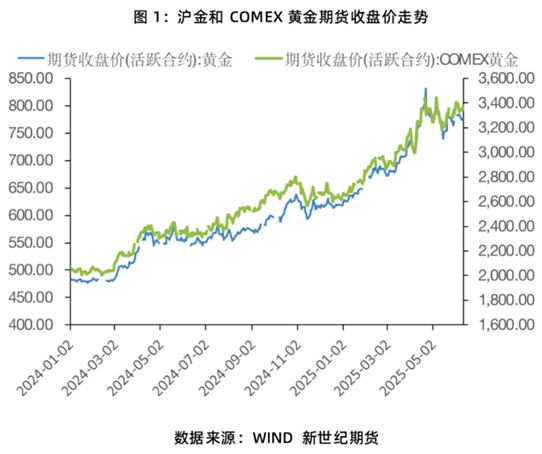
Core Insights - The European Central Bank (ECB) report highlights the rising international status of gold, which is projected to account for approximately 20% of global official reserves by the end of 2024, surpassing the euro's 16% share and becoming the second-largest reserve asset after the US dollar [1][4][7] Group 1: Global Central Bank Gold Holdings - Global central banks have purchased over 1,000 tons of gold for three consecutive years, doubling the average annual level from the 2010s, with current holdings nearing post-World War II highs [2][5] - By the end of 2024, global central bank gold holdings are expected to reach approximately 36,000 tons, close to the historical peak of 38,000 tons set in 1965 [5] Group 2: Factors Driving Gold Demand - The demand for gold as a reserve asset has surged since the onset of the Russia-Ukraine conflict, driven by geopolitical uncertainties and market volatility, with gold prices rising approximately 62% over the past year [4][11] - About two-thirds of central banks invest in gold for asset diversification, while around 40% do so to hedge against geopolitical risks [4][11] Group 3: Trends in Dollar and Gold Reserves - The dollar's share of global reserve assets has been declining, projected to fall by 10 percentage points over the past decade, with a 2 percentage point drop expected in 2024 alone [7][10] - The trend of de-dollarization among global central banks is becoming increasingly evident, as they seek to reduce reliance on the US financial system [7][10] Group 4: Future Projections for Gold Prices - Morgan Stanley predicts that gold prices could surge by 80% over the next four years, potentially reaching $6,000 per ounce, driven by significant capital inflows into gold [14][15] - Wells Fargo anticipates that gold prices will rise to $3,600 per ounce by the end of 2026, influenced by ongoing geopolitical conflicts and economic uncertainties [14][15] Group 5: Central Bank Strategies - Countries like Poland, Turkey, India, and China are leading the gold purchasing trend, with Poland's central bank recently increasing its gold reserves to 509 tons, surpassing the ECB's holdings [6][5] - Emerging economies in Africa are also beginning to accumulate gold to mitigate the impact of geopolitical tensions on their currencies [6][11]
189亿美债被抛售,背后的信号不简单!
大胡子说房· 2025-06-12 11:53
其实绝大多数人对形势的判断都错了。 从加征关税、技术围堵、制裁企业,到不断叫嚣 "脱钩"。 大家都以为是懂王带着美国想要和我们断绝关系。 但最近一件事,揭开了真相。 今年 3 月,东大 大幅抛售了 189 亿美元美国国债,持有规模降至 7654 亿美元。 这是东大自 2000 年跻身美债前两大持有国之后, 25 年来首次退居全球第三,被英国反超。 减持美债,其实是一个很关键的信号,它意味着此刻 —— 不是美国在和东大脱钩,而是东大,正在悄悄与美国脱钩。 曾经,我们一直是老美最坚定的 "债主"。 时间回到2008年,金融危机席卷 全球,华尔街风雨飘摇,但当时我们选择坚定地支持美国国债—— 持仓规模一度突破1.3万亿美元,规模首次超过日本,跃居全球第一,撑起了美元信用。 但风向,从2015年开始变了。 随着两个大国之间冲突的出现,我们的战略判断在悄悄发生转向: 对美元体系的信任,不再是无条件的; 对外汇储备的构成,也不再是一成不变。 于是,美债持有比例从高点回落,中国开始温和但持续地减持美债。 持有比例从2015年震荡下行,2022年4月跌破1万亿,2024年跌破8000亿。 3月份,海外资金买入美国国债的单月净 ...

各国央行购金支撑金价
Qi Huo Ri Bao Wang· 2025-06-11 00:57
Group 1 - Current US-China trade relations show significant signs of easing, leading to a reduction in safe-haven demand for gold, which is currently undergoing a phase of adjustment, although gold's safe-haven attributes will limit its downside potential [1] - Recent data indicates that the negative impact of tariff policies on the US economy is becoming evident, with the manufacturing PMI index remaining weak and the services PMI index experiencing its first contraction in a year [1][2] - The US manufacturing PMI for May is reported at 48.5, the lowest since November of the previous year, with new orders index at 47.6, highlighting the impact of tariff increases on demand [1] Group 2 - The ISM services PMI for May fell to 49.9, significantly below expectations, with the new orders index dropping to 46.4, marking the largest decline since June 2024 [2] - The US added 139,000 non-farm jobs in May, exceeding market expectations, while the unemployment rate remained stable at 4.2% [2] - Average hourly earnings increased by 0.4% month-on-month and 3.9% year-on-year, reflecting tightening labor supply rather than strong demand [3] Group 3 - China's foreign exchange reserves rose to nearly $3.3 trillion in May, with gold reserves increasing slightly to 73.83 million ounces, marking the seventh consecutive month of gold accumulation [4] - Since November 2022, China's central bank has cumulatively added 10.16 million ounces of gold, although the pace of accumulation has slowed in recent months [4] - Global gold demand, including over-the-counter investments, saw a slight year-on-year increase of 1% in Q1 2025, with central banks remaining significant buyers despite a slight slowdown [4]