
AI基建

Search documents
有色金属“开门红”,公募扎堆推新,机遇还是风险?
Di Yi Cai Jing· 2026-01-11 13:13
Core Viewpoint - The outlook for non-ferrous metals remains optimistic for 2026, with expectations of continued price increases driven by macroeconomic factors and supply-demand dynamics, despite concerns about high valuations and potential risks in the market [1][2][5]. Group 1: Market Performance and Trends - The non-ferrous metals sector has shown strong performance, with the China Nonferrous Metals Index rising over 8% since the beginning of the year, reaching a historical high of 3369 points on January 9 [1]. - In 2025, the China Nonferrous Metals Index recorded a cumulative increase of 91.67%, with leading stocks like Luoyang Molybdenum and Jiangxi Copper seeing price increases of 200.7% and 166% respectively [2]. - The futures market also reflected this trend, with LME copper futures prices increasing by over 40% in 2025, and LME tin and aluminum rising by 39% and 17% respectively [2]. Group 2: Investment Opportunities - Analysts suggest that the demand for metals such as copper and aluminum will continue to rise due to increased global electricity construction and investment in power infrastructure, which is expected to outpace GDP growth [2][6]. - The electric aluminum sector is anticipated to mirror the coal market's performance from 2022 to 2024, with limited supply and high dividend yields making it attractive for value investors [3]. - The ongoing macroeconomic environment, including potential interest rate cuts by the Federal Reserve, is expected to create a favorable backdrop for both precious and non-ferrous metals [6]. Group 3: Institutional Activity and Caution - There has been a surge in public fund applications for non-ferrous metal-themed ETFs, indicating strong institutional interest in the sector [4]. - Despite the positive sentiment, there is a growing caution among market participants regarding high valuations, with the price-to-book ratio of the non-ferrous sector rising from 2 to approximately 3.5 [6]. - Analysts recommend a balanced approach, advising against blindly chasing high valuations while recognizing the ongoing demand and investment opportunities in the sector [6][7].


2026格隆汇“全球视野”十大核心资产之GE Vernova(GEV)
Ge Long Hui· 2026-01-10 03:33
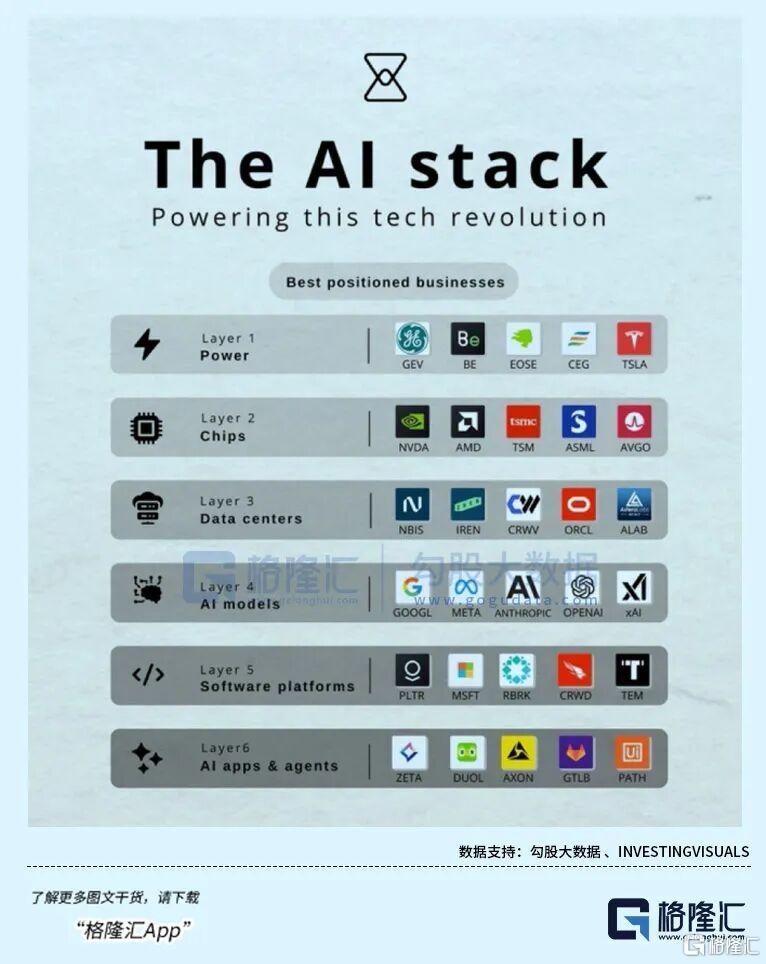
Core Viewpoint - GE Vernova has been selected as a benchmark asset in the energy infrastructure sector for the 2026 "Global Vision" top ten core assets, highlighting its transformation from a traditional industrial manufacturer to a key player in AI infrastructure [1] Group 1: Competitive Barriers - GE Vernova holds a dominant position in the gas turbine market, forming a "trilateral" structure with Siemens Energy and Mitsubishi Heavy Industries, controlling over 75% of the global CR3 market [2] - The company is the only giant capable of providing a complete solution from gas power generation to wind energy generation and grid transmission, creating a seamless connection that meets the stable power needs of AI data centers [2] - GE Vernova's service business benefits from a large installed base of gas turbines, generating high-margin service revenue through long-term contracts for parts replacement and maintenance [2][3] Group 2: Industry Trends - The demand for energy is expected to surge due to the explosion of AI computing power, with the International Energy Agency predicting that electricity consumption in data centers will double in the coming years [6] - The aging of electrical grid infrastructure in North America and Europe necessitates urgent upgrades, which GE Vernova's electrification business is well-positioned to address [6] - The transition to renewable energy will require gas turbines as a stable backup power source in the short term, while small modular reactors (SMRs) will support long-term growth [6] Group 3: Business Layout - The gas turbine business serves as the core profit pillar, benefiting from supply-demand imbalances and price increases of 15%-20% compared to 2023 [7] - The electrification business is the fastest-growing segment, with revenue growth exceeding 20% and a backlog of $26 billion in orders [7] - The SMR project is expected to generate significant future orders, particularly from tech giants seeking carbon neutrality [8] Group 4: Financial Outlook - GE Vernova anticipates revenue of $41-42 billion for 2026, with an EBITDA margin of 11%-13%, supported by the growth of both gas turbine and electrification businesses [9] - The company expects to achieve a cumulative free cash flow of $22 billion by 2028, with a generous shareholder return policy including a stock buyback authorization of $10 billion [8][9] Group 5: Investment Perspective - Investing in GE Vernova represents a strategic move into the future of AI infrastructure, as the company is positioned as a core asset in the energy sector amid the ongoing AI computing explosion, grid upgrades, and energy transition [15]


高盛CES总结会:AI基建的增量需求来自“具身智能”和“代理”
Hua Er Jie Jian Wen· 2026-01-08 11:27
Core Insights - The market is experiencing a deep evolution in AI infrastructure rather than a simple cyclical peak, with strong demand continuing but structural changes in drivers [1] - The focus for investors should shift from merely stacking computing power to hardware that supports longer context and more complex reasoning capabilities [1] Group 1: Nvidia - Nvidia's Rubin platform is set to ramp up production significantly in the second half of 2026, with assembly time reduced from 2 hours to approximately 5 minutes, breaking supply bottlenecks [2] - The new platform allows each GPU to access up to 16TB of context memory, a substantial increase from the previous 1TB, which is expected to greatly benefit the NAND market [2] - Nvidia is also advancing in physical AI with the release of the open-source model "Alpamayo" for L4-level autonomous driving development [2] Group 2: AMD - AMD is focusing on closing the gap with competitors, targeting "agent AI" and "physical AI" as key growth areas, with the MI400 series GPU set to launch in 2026 and the MI500 series in 2027 [3] - The company aims to offer competitive pricing with the MI440X GPU for enterprises and Ryzen AI Max for PCs, which is positioned against Nvidia's offerings [3] - The Ryzen AI Halo development platform will be available in Q2 2026, supporting models with up to 200 billion parameters for edge computing [3] Group 3: Micron - Micron is experiencing a strong supply-demand environment for DRAM, with pricing remaining firm and entering a supply allocation mode due to high demand [4] - The NAND market is expected to see significant growth driven by AI data center demand for SSDs, marking a shift in focus from HBM to NAND as an additional growth engine [4] Group 4: Marvell - Marvell is strengthening its position in data center interconnects through the acquisition of XConn Technologies for $540 million, expected to contribute revenue starting in the second half of 2026 [6] - The company has aggressive growth targets, projecting 25% and 40% year-over-year growth for its data center business in 2026 and 2027, respectively [6] Group 5: Analog Chips - The analog chip sector, exemplified by ADI, is facing a "bottoming" phase with channel inventory below 6 weeks, indicating a supply shortage [7] - Despite low inventory levels, OEM customers have not begun to replenish stock, leading to a cautious recovery outlook [7] - ON expects a normalization in pricing in 2026, while Skyworks is relying on its major customer to withstand market pressures [7] Group 6: Synopsys - The battlefield for chip design is shifting towards the integration of design and physical simulation, with Synopsys showcasing a collaborative product with Ansys for advanced packaging expected in the first half of 2026 [8] - This integration signifies a move beyond traditional logic design to precise simulations of the physical world [8]


汇成股份涨8.98%,成交额13.32亿元,近5日主力净流入8895.88万
Xin Lang Cai Jing· 2026-01-08 07:34
Core Viewpoint - The company, Hefei Xinhui Microelectronics Co., Ltd., is actively expanding its business in the semiconductor industry, particularly in advanced packaging and storage chip sectors, benefiting from the demand surge driven by AI infrastructure [2][3]. Group 1: Company Developments - On October 14, 2025, the company announced a strategic investment in Hefei Xinfeng Technology Co., Ltd., acquiring a 27.5445% stake and forming a partnership to develop 3D DRAM and other storage chip packaging services [2]. - The company is focusing on advanced packaging technologies, including Chiplet, Fan-out, 3D, and SiP, leveraging its expertise in bump manufacturing as a foundational technology [2]. - As of September 30, 2025, the company reported a revenue of 1.295 billion yuan, a year-on-year increase of 21.05%, and a net profit of 124 million yuan, up 23.21% [9]. Group 2: Business Operations - The main business of Hefei Xinhui Microelectronics is high-end integrated circuit packaging and testing services, with a revenue composition of 90.25% from display driver chip packaging [3][8]. - The company has established a significant customer base in the OLED sector, including major players like Novatek and Raydium [2]. - As of the latest report, overseas revenue accounted for 54.15% of total revenue, benefiting from the depreciation of the Chinese yuan [4]. Group 3: Market Performance - On January 8, the company's stock rose by 8.98%, with a trading volume of 1.332 billion yuan and a market capitalization of 15.815 billion yuan [1]. - The average trading cost of the stock is 16.54 yuan, with the stock price approaching a resistance level of 18.38 yuan, indicating potential for upward movement if the resistance is broken [7].

AI基建浪潮点燃绿电需求,绿电ETF(562550)冲击三连阳,上海电力领涨
Mei Ri Jing Ji Xin Wen· 2026-01-07 06:57
Core Viewpoint - The A-share market experienced a collective pullback on January 7, but the power sector showed resilience, with significant gains in related stocks and ETFs [1]. Group 1: Market Performance - The green energy ETF (562550) rose by 0.36%, while the power grid equipment ETF (159326) increased by 1.78% [1]. - Notable power stocks such as Shanghai Electric surged over 4%, with Inner Mongolia Huadian, Guiguan Electric, Jingneng Electric, and China Nuclear Power also seeing gains [1]. Group 2: Policy Developments - Relevant authorities issued guidelines to promote the consumption and regulation of renewable energy, aiming for a reasonable consumption of 200 million kilowatts of renewable energy annually by 2030 [1]. - The guidelines reinforce the "14th Five-Year Plan" goals for large-scale development of renewable energy and serve as a foundational policy to reshape the focus on renewable energy consumption and regulation [1]. Group 3: Demand Dynamics - The explosion of AI-driven computing power is reshaping the data center industry and is becoming a critical variable in the evolution of global energy consumption patterns, presenting unprecedented challenges and innovative opportunities for power infrastructure [1]. Group 4: Investment Outlook - Huatai Securities noted that the construction of a national unified electricity market is accelerating, with expected grid investments during the "14th Five-Year Plan" period to exceed 4 trillion yuan, a significant increase from 2.8 trillion yuan during the "13th Five-Year Plan" [1]. - The construction of the main grid is essential for achieving interconnection of the national grid framework and remains a key focus area for development [1].

制造成长周报(第41 期)银完成对OpenAI的400亿美元投资,蓝箭航天IPO获受理-20260105
Guoxin Securities· 2026-01-05 09:47
证券研究报告 | 2026年01月05日 制造成长周报(第 41 期) 优于大市 软银完成对 Open AI 的 400 亿美元投资,蓝箭航天 IPO 获受理 重点事件点评&重点关注:AI 基建、商业航天 事件 1-软银完成对 Open AI 的 400 亿美元投资:2025 年 12 月 30 日,软银 集团已于上周完成对 OpenAI 的最后一笔注资,金额约在 220 亿至 225 亿美 元之间,已完成对 OpenAI 的 400 亿美元投资承诺。 事件 2-蓝箭航天 IPO 获受理:2025 年 12 月 31 日,蓝箭航天 IPO 获受理: 拟募资 75 亿,需实现可复用火箭发射载荷成功入轨。 AI 基建点评:软银完成对 Open AI 的投资,xAI 收购第三座建筑,训练算力 将接近 GW,随着 AI 相关投资持续加码,AI 基建需求旺盛,相关产业链将继 续同步扩张受益。我们持续看好 AI 基建相关产业链,重点关注燃气轮机及 液冷方向。燃气轮机作为海外数据中心主用电源与备用电源将深度受益 AI 数据中心供电需求,GEV 超预期上修燃机订单与扩产也表明行业是超 长景气大周期。建议重点关注 AI 数据中 ...
有色金属基础周报:地缘冲击加剧全球不确定性,有色金属走势整体偏强运行-20260105
Chang Jiang Qi Huo· 2026-01-05 05:54
1. Report Industry Investment Rating No relevant content provided. 2. Core Viewpoints of the Report - Copper prices have entered a high - volatility and high - uncertainty stage dominated by sentiment in the short term. Although there is medium - to - long - term support from the supply side, current prices may be overvalued, and there is a risk of price correction. However, due to geopolitical impacts, copper prices may maintain a high - level wide - range oscillation pattern, with the Shanghai copper main contract fluctuating between 95,000 - 103,000 yuan/ton [3]. - Aluminum prices are mainly driven by fundamental expectations and capital behavior. In the short term, they may still be strong, but the upward pressure is large, and the upward space should be viewed with caution. Alumina is recommended to be observed, and aluminum alloy may be relatively weaker than aluminum prices [3][4]. - Zinc prices are expected to maintain an oscillatory trend. Supply is slightly stronger, but demand at the end of the year is weak, and the fundamental support is limited [3]. - Lead prices are expected to maintain a wide - range oscillation, and high - selling and low - buying operations within the range of 17,000 - 17,900 yuan/ton are recommended [3]. - Nickel prices have rebounded strongly, but the nickel industry remains in a state of over - supply, which suppresses the upward space of nickel prices. Both nickel and stainless steel are recommended to be observed [4]. - Tin prices are expected to continue a relatively strong oscillation. It is recommended to build positions at low prices and pay attention to the resumption of supply and the recovery of downstream demand [4]. - The price of industrial silicon has rebounded after breaking through the lower limit. Alumina's weak reality of over - supply will continue, and it is recommended to observe. The price of polysilicon has adjusted after breaking through the upper limit. The price of lithium carbonate is expected to continue to oscillate [4]. 3. Summary by Related Catalogs 3.1 Macroeconomic Data - **China**: In December 2025, China's five - year and one - year loan market prime rates (LPR) remained unchanged at 3.5% and 3%, respectively. From January to November, the profits of large - scale industrial enterprises increased by 0.1% year - on - year, and the profits of high - tech manufacturing increased by 10.0% year - on - year [13][15][16]. - **US**: In the third quarter of 2025, the US real GDP annualized quarterly growth rate was 4.3%, and the core personal consumption expenditure (PCE) price index annualized quarterly growth rate was 2.9%. As of December 6, 2025, the average weekly new employment in the US private sector was 11,500 [13][19][20]. 3.2 Geopolitical Events - On January 3, 2026, the US launched an air strike on Venezuela, captured Venezuelan President Maduro and his wife, and stated that it would "manage" Venezuela until a "safe" transition. The situation in Venezuela may have an impact on the global market, especially on gold and crude oil prices [24][25][27]. 3.3 Metal Market Analysis 3.3.1 Copper - **Price Trend**: The Shanghai copper main contract reached a historical high of over 100,000 yuan/ton before the holiday, then fell back. It is expected to maintain a high - level wide - range oscillation pattern [3]. - **Supply and Demand**: The supply of copper concentrates is in a tight situation, and there is an expected increase in demand from AI infrastructure and power grid upgrades in the long term. However, at present, downstream demand is weak, and social inventories have increased significantly [3]. 3.3.2 Aluminum - **Price Trend**: The Shanghai aluminum main contract shows an overall upward trend in oscillation. In the short term, it may still be strong, but the upward space is limited [3][54]. - **Supply and Demand**: Alumina is in a state of over - supply, and the destocking of aluminum ingots and aluminum rods is difficult. New domestic production capacity is still being put into operation, while demand from photovoltaic installations and the automotive industry has decreased [3][4]. 3.3.3 Zinc - **Price Trend**: Zinc prices oscillated in the previous week and are expected to maintain an oscillatory trend. The price range is expected to be between 22,800 - 23,500 yuan/ton [3]. - **Supply and Demand**: The processing fee of zinc concentrates has been declining, squeezing the profits of smelters. Demand has weakened due to environmental protection warnings in the north, and downstream enterprises maintain just - in - time procurement [3]. 3.3.4 Lead - **Price Trend**: The Shanghai lead main contract showed an oscillatory rebound trend, and it is expected to maintain a wide - range oscillation between 17,000 - 17,900 yuan/ton [3]. - **Supply and Demand**: LME and COMEX lead inventories decreased, while SHFE lead inventories increased slightly. The overall lead price is stable, and the replacement consumption is supported by the "trade - in" policy [3]. 3.3.5 Nickel - **Price Trend**: Nickel prices rebounded strongly. The prices of nickel ore, nickel iron, and stainless steel all showed an upward trend [4]. - **Supply and Demand**: The Indonesian nickel mining quota is expected to be reduced, and the rainy season may affect nickel ore shipments. The refined nickel market is in a state of over - supply, while the demand for nickel iron from stainless steel mills has increased [4]. 3.3.6 Tin - **Price Trend**: Tin prices showed an oscillatory decline, but the upward trend in the long term remains unchanged. It is expected to continue a relatively strong oscillation [4]. - **Supply and Demand**: The supply of tin concentrates is tight, and the downstream semiconductor industry is expected to recover. However, the demand from consumer electronics and photovoltaic industries is weak [4]. 3.3.7 Industrial Silicon, Alumina, Stainless Steel, and Lithium Carbonate - **Industrial Silicon**: The price has rebounded after breaking through the lower limit [4]. - **Alumina**: The weak reality of over - supply will continue, and it is recommended to observe [3][4]. - **Stainless Steel**: The price has rebounded strongly, but it is expected to maintain an oscillation after the macro - sentiment fades [4]. - **Lithium Carbonate**: The price is expected to continue to oscillate. Supply and demand are both changing, and attention should be paid to the impact of mining permits in Yichun [4].
智谱上市
小熊跑的快· 2026-01-04 07:13
继壁仞科技之后,又来一个新ai融资,理论上是2个,智谱和minimax。 智谱: 1.8日上市!发行价:116.2港元/股,全球发售3741.95万股H股,募资净额约41.734亿港元,IPO估值约518亿港元(约478亿人民币)。 新公司,过去几轮估值: 天使轮 2019年 未披露 君联资本等投资 A轮 2021年9月 未披露 融资过亿元,达晨财智等参投 B轮 2022年9月 25.8亿元 融资数亿元,君联、启明领投 C轮 2024年6月 210亿元 融资4亿美元,Prosperity7领投 C+轮 2024年8月 未披露 融资超10亿元,君联领投,腾讯等跟投 D轮 2024年12月 未披露 财务: 公司 收入来自通过 MaaS 平台提供大模型服务。该平台向用户开放矩阵式模型能力以及智能体工具套件,并支持本地化部署及云端部署等多种方式灵活 部署。 2022-2024年整体营业收入分别为0.57亿元、1.25亿元、3.12亿元,2022年至2024年营收复合年增长率达133.28%。 截至2025年上半年公司营收达1.91亿元,较2024年同期大幅增长325.0%, 其中本地化部署为营收核心支柱,营收大幅增长 ...

吴恩达定调AI工业时代,马斯克痛批疯狂,5.2万亿基建引爆人才战
Sou Hu Cai Jing· 2026-01-03 11:37
Core Insights - The article highlights the escalating competition for AI talent among major tech companies, with Meta's aggressive recruitment strategies leading the charge, and Elon Musk criticizing the exorbitant salaries being offered [1][3][5]. Group 1: AI Talent War - The AI talent market has reached unprecedented heights, driven by significant investments in infrastructure and technological advancements, with Meta officially igniting the talent war in July 2025 [3][9]. - Meta's CEO Mark Zuckerberg has personally engaged in recruiting efforts, offering compensation packages that exceed industry norms, including a notable $1.5 billion offer to OpenAI's former CTO [5][7]. - The competition intensified as other tech giants, including Microsoft and Musk's xAI, began poaching talent from each other, leading to a chaotic environment characterized by high salaries and aggressive recruitment tactics [7][9]. Group 2: Industry Investment and Growth - The AI industry is experiencing a massive capital expenditure surge, with spending exceeding $300 billion in 2025, primarily directed towards computational infrastructure [9][11]. - Major projects, such as OpenAI's $500 billion "Interstellar Gateway" initiative and Meta's $72 billion infrastructure investment, underscore the scale of investment in AI capabilities [9][11]. - Economic data indicates that nearly all GDP growth in the U.S. during the first half of 2025 is attributed to AI and data center investments, marking AI infrastructure as a core driver of the new industrial era [11][14]. Group 3: Talent Development and Challenges - The demand for AI talent is exacerbated by the rapid evolution of model inference capabilities and the widespread adoption of programming agents, which have increased the complexity of required skills [11][13]. - Wu Enda emphasizes the need for structured learning paths in AI, warning against hasty approaches that lead to inefficiencies and wasted efforts [14]. - The evolution of compensation for AI professionals reflects their rising value, with salaries for top talent projected to reach hundreds of millions by 2025, indicating a shift towards "star player contracts" in the industry [14].

2026年投资方向全景展望
雪球· 2026-01-01 05:24
Group 1 - The core viewpoint emphasizes a mid-term investment strategy focusing on hard technology, with a strong correlation between performance and growth, particularly in AI infrastructure and hardware sectors [4][5]. - Key sectors include optical modules, AI PCBs, and liquid cooling systems, which are expected to benefit from global demand for computing power [4][5]. - The article suggests that the AI industry chain is entering a phase of large-scale implementation, leading to a rigid growth in hardware demand and opening up new market opportunities for leading and secondary manufacturers [5]. Group 2 - For short to medium-term opportunities, the focus is on AI applications and software, particularly in AI + SaaS and industrial software, with a preference for companies that have overseas mapping logic and high performance realization [6][7]. - The article highlights the importance of domestic substitution in sectors like semiconductors, chip design, and AI hardware, driven by policy and technological breakthroughs [8][9]. - High elasticity sectors such as humanoid robots and AI power are noted for their potential, with a focus on real orders and commercialization processes [10]. Group 3 - The article outlines a short-term strategy driven by themes and event catalysts, including energy, strategic resources, and emerging topics like quantum computing and controllable nuclear fusion [13][14]. - The core logic for the cross-year mainline is based on the three-dimensional resonance of performance, capital, and industry, emphasizing the need for verifiable order increments and avoiding pure speculative trading [15]. Group 4 - The article suggests that companies like Zhongji Xuchuang, Xinyi Sheng, and Tianfu Communication have reached reasonable valuations and are positioned for a deepening industry phase from 2026 to 2027 [16]. - It emphasizes the need to closely monitor the progress of domestic upstream material suppliers entering the North American supply chain and the capacity release of secondary optical module manufacturers [16]. - The article also stresses the importance of tracking major AI players like Nvidia and Google for insights into the extension of the AI industry chain and the potential benefits for the A-share market [17]. Group 5 - The investment priority is outlined as mid-term (AI infrastructure + high elasticity) > wave opportunities (software or domestic substitution) > thematic (short-term speculation) [19]. - The core strategy is to use hard technology as a foundation while seeking returns from elastic sectors, focusing on the verification and realization of orders, performance, and industry logic [20]. - Key milestones for validation include Q1 and Q2 2026 financial reports and the pace of AI application commercialization, which may serve as a turning point for individual stock performance [21].
